


C&P Random Thread -

 can't believe I missed that post from leftride.
I Shoot with a Camera


Joined: Oct 2001
Posts: 23,087
Likes: 3,703
From: Vancouver BC



if it's from a different angle, and same distance, same light modifiers (if any), aiming at the same spot, then I would say yes. BUT suppose one is further than the other, then remember the "Inverse Square Law""Inverse Square Law" even at the same power, the light drops as the distance increases.
I did a little test and even though my 430ex is older than the yongnuo yn560 it does better in syncing and recycle time is faster. In 6 shots using cowboy studio triggers the 430 fired on all 6 but the yongnuo only fired twice. Not knocking on the yongnuo since its a good flash on a budget. A yn560 and external battery pack is about 90 bucks on amazon which is good if you are shooting with just hotshoe flashes on a softbox.
I just need a 28" soft box and I am good to go
I Shoot with a Camera
Joined: Oct 2001
Posts: 23,087
Likes: 3,703
From: Vancouver BC
Ah thanks man. No diffusers are going to be used though
I did a little test and even though my 430ex is older than the yongnuo yn560 it does better in syncing and recycle time is faster. In 6 shots using cowboy studio triggers the 430 fired on all 6 but the yongnuo only fired twice. Not knocking on the yongnuo since its a good flash on a budget. A yn560 and external battery pack is about 90 bucks on amazon which is good if you are shooting with just hotshoe flashes on a softbox.
I just need a 28" soft box and I am good to go
I did a little test and even though my 430ex is older than the yongnuo yn560 it does better in syncing and recycle time is faster. In 6 shots using cowboy studio triggers the 430 fired on all 6 but the yongnuo only fired twice. Not knocking on the yongnuo since its a good flash on a budget. A yn560 and external battery pack is about 90 bucks on amazon which is good if you are shooting with just hotshoe flashes on a softbox.
I just need a 28" soft box and I am good to go

Thread Starter
Moderator Alumnus


Joined: Mar 2002
Posts: 64,187
Likes: 14,330
Well that's about to change... I was one of the winners of a local blog photo contest and will be displaying a photo at a gallery in DC 
They're suggesting mpix.com for printing - has anyone use them before? It has to be acid-free, archival paper... not sure if WHCC does that?
They're suggesting mpix.com for printing - has anyone use them before? It has to be acid-free, archival paper... not sure if WHCC does that?
I Shoot with a Camera
Joined: Oct 2001
Posts: 23,087
Likes: 3,703
From: Vancouver BC

I miss my 03 CL-S :(
Joined: Feb 2002
Posts: 7,140
Likes: 445
From: Washington, DC


Thread Starter
Moderator Alumnus
Joined: Mar 2002
Posts: 64,187
Likes: 14,330

My first Avatar....
Joined: May 2006
Posts: 33,218
Likes: 9,154
From: NJ
Check if this guy still has it
http://photography-on-the.net/forum/...ighlight=100mm
My first Avatar....
Joined: May 2006
Posts: 33,218
Likes: 9,154
From: NJ
Thanks Guys. I think the lens does extend on the NON USM example. The AF is slower and noisier too.
I'll stick with a US model rather than pay less, and take the chance on it not being what i want it to be.
I'll stick with a US model rather than pay less, and take the chance on it not being what i want it to be.

Moderator
Joined: Oct 2004
Posts: 64,139
Likes: 3,386
From: Not Las Vegas (SF Bay Area)
Nvm it does get longer 
http://photography-on-the.net/forum/...d.php?t=452037
Optically there is very little difference between the 100mm macro USM and non-USM. The bigeest difference is that the USM version does not get physically longer when focusing closer. The non-USM version of the 100mm macro gets nearly twice as long physically when focused at 1:1 than when focused at infinity. The non-USM version gets physically longer the closer you focus the lens.
This is a decided disadvantage when trying to light your subject with natural light and/or flash. You can use a ringlite with both lenses but a ringlite delivers flat and unattractive lighting.
Also, since working distance is measured by Canon, from the film/sensor plane, the USM macro will allow for a greater working distance from the front of the lens to the subject being photographed. The USM version of the 100mm macro lens has decided advantages over the non-USM and is well worth the price difference between a used 100mm non-USM lens and the current 100mm USM macro lens.
This is a decided disadvantage when trying to light your subject with natural light and/or flash. You can use a ringlite with both lenses but a ringlite delivers flat and unattractive lighting.
Also, since working distance is measured by Canon, from the film/sensor plane, the USM macro will allow for a greater working distance from the front of the lens to the subject being photographed. The USM version of the 100mm macro lens has decided advantages over the non-USM and is well worth the price difference between a used 100mm non-USM lens and the current 100mm USM macro lens.
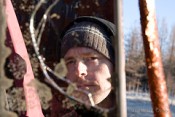
Creepy guy in the mirror.
Joined: Oct 2004
Posts: 2,631
Likes: 35
From: Ontario, Canada
Sorry if I am stating the obvious. USM does not have anything to do with country of origin. It stands for Ultrasonic Motor.

My first Avatar....
Joined: May 2006
Posts: 33,218
Likes: 9,154
From: NJ
 i saw it. was like
Yea with a USM lens, you don't hear the lens working when its auto focusing.
btw FYI, white lenses don't consider a person "professional"

Creepy guy in the mirror.
Joined: Oct 2004
Posts: 2,631
Likes: 35
From: Ontario, Canada
Thread Starter
Moderator Alumnus
Joined: Mar 2002
Posts: 64,187
Likes: 14,330
the next time you question why battery grips cost so much, have a look at how much Leica charges for their M9 "grip" - this is ONLY a grip - it does not hold batteries.
http://www.adorama.com/LCHGMM.html
http://www.adorama.com/LCHGMM.html
I Shoot with a Camera
Joined: Oct 2001
Posts: 23,087
Likes: 3,703
From: Vancouver BC
the next time you question why battery grips cost so much, have a look at how much Leica charges for their M9 "grip" - this is ONLY a grip - it does not hold batteries.
http://www.adorama.com/LCHGMM.html
http://www.adorama.com/LCHGMM.html
I miss my 03 CL-S :(
Joined: Feb 2002
Posts: 7,140
Likes: 445
From: Washington, DC
 I had them print 2 shots on regular paper and 2 on metallic. I can only use the regular paper on the show, but I wanted to see how it'd look on the metallic paper and I have to say the photo looks fantastic on metallic paper. I'm happy enough with the quality.
They have a 50% off deal certain sizes ending today with code FB50off
Last edited by einsatz; Jan 23, 2013 at 06:49 PM.

Moderator
Joined: Oct 2004
Posts: 64,139
Likes: 3,386
From: Not Las Vegas (SF Bay Area)
That's just silly looking,
It's like that one guy that made a setup where the 2 flashes were sticking over his left and right shoulder, like old school rabbit ear antennas.
If that makes sense.
I Shoot with a Camera
Joined: Oct 2001
Posts: 23,087
Likes: 3,703
From: Vancouver BC


Interesting....... may really look into this.
http://photography-on-the.net/forum/....php?t=1270039
http://photography-on-the.net/forum/....php?t=1270039
I haven’t been posting much here on POTN recently but did want to bring a new piece of flash gear to the attention of POTN’ers. If a powerful, bare bulb, remotely-controllable, non-TTL flash sounds interesting, read on.
Let’s get the disclaimer out of the way first: I’ve been working with Edward Tang of CheetahStand as a beta tester of his new CL-180 flash for the better part of a year now. I have absolutely no financial involvement with this product whatsoever and do not stand to profit from it in any way. Edward is a friend and I help him out with product development and testing every so often purely as a friend. As this flash can be viewed as a successor to the greatly missed “Sunpak 120J, I thought the soon-to-be available Cheetah Light CL-180 might be of interest to forum readers.
So what we have here is a shoe-mountable flash unit somewhat larger than a Nikon SB-910 or Canon 600EX. The Cheetah CL-180 is rated at a bit over 150Ws of power; slightly more than a Quantum QFlash. It’s a bare bulb unit as mentioned above and is able to accept a variety of head-mounted accessories which includes a standard 5” reflector, two types of snoot, folding 19” octabox/beauty dish, and a cleverly designed umbrella holder with dedicated reflector. It is also compatible with virtually all existing Quantum/Lumedyne mount accessories. The only exceptions I’ve encountered are the Lumedyne snoot and the Lumedyne ANEC mount adapter. The diameter of these two accessories is fractionally too large for the CL-180.
An additional potentially attractive accessory which I was unable to test is the Cells II transmitter. The Cells II enables high speed sync with Canon cameras.
Here's the flash with radio receiver and umbrella mount, battery pack, and transmitter:

Power output of the flash can be varied from 1:1 down to 1:128 in third stops using the rotating dial on the back of the unit. A focus assist lamp and audible recycle alert are also provided.
The accessory of greatest interest would have to be the radio transceiver set. The small receiver plugs into the side of the flash while the transmitter sits in the camera hotshoe. The transmitter can control various flash functions but, most noteworthy, is its ability to control flash power. The current flash power setting can be seen on the transmitter’s backlit LCD screen. Range is very good. The flash triggered reliably at unobstructed distances in excess of 500 feet during beta testing. Of course, multiple groups and multiple channels are supported.
This is a view of the flash from the back. Here it has the optional umbrella holder and reflector mounted:

Power for the CL-180 is provided by an external 4500mAh lithium-ion power pack. The pack has two power outlets and a removable battery cartridge. In my testing, a fully charged pack provided over 800 full power pops. Full power recycle time is approximately 2-1/2 seconds. With the appropriate cables (Quantum compatible cables will work) Nikon and Canon flash units can also be powered by the battery pack as can Quantum flash units.
The preceding should not be taken as a review. It’s intended as a product announcement. That said, I will add that the test units functioned flawlessly throughout the long beta test period. I believe Cheetah will have the CL-180 and accessories available some time later in February.
Let’s get the disclaimer out of the way first: I’ve been working with Edward Tang of CheetahStand as a beta tester of his new CL-180 flash for the better part of a year now. I have absolutely no financial involvement with this product whatsoever and do not stand to profit from it in any way. Edward is a friend and I help him out with product development and testing every so often purely as a friend. As this flash can be viewed as a successor to the greatly missed “Sunpak 120J, I thought the soon-to-be available Cheetah Light CL-180 might be of interest to forum readers.
So what we have here is a shoe-mountable flash unit somewhat larger than a Nikon SB-910 or Canon 600EX. The Cheetah CL-180 is rated at a bit over 150Ws of power; slightly more than a Quantum QFlash. It’s a bare bulb unit as mentioned above and is able to accept a variety of head-mounted accessories which includes a standard 5” reflector, two types of snoot, folding 19” octabox/beauty dish, and a cleverly designed umbrella holder with dedicated reflector. It is also compatible with virtually all existing Quantum/Lumedyne mount accessories. The only exceptions I’ve encountered are the Lumedyne snoot and the Lumedyne ANEC mount adapter. The diameter of these two accessories is fractionally too large for the CL-180.
An additional potentially attractive accessory which I was unable to test is the Cells II transmitter. The Cells II enables high speed sync with Canon cameras.
Here's the flash with radio receiver and umbrella mount, battery pack, and transmitter:
Power output of the flash can be varied from 1:1 down to 1:128 in third stops using the rotating dial on the back of the unit. A focus assist lamp and audible recycle alert are also provided.
The accessory of greatest interest would have to be the radio transceiver set. The small receiver plugs into the side of the flash while the transmitter sits in the camera hotshoe. The transmitter can control various flash functions but, most noteworthy, is its ability to control flash power. The current flash power setting can be seen on the transmitter’s backlit LCD screen. Range is very good. The flash triggered reliably at unobstructed distances in excess of 500 feet during beta testing. Of course, multiple groups and multiple channels are supported.
This is a view of the flash from the back. Here it has the optional umbrella holder and reflector mounted:
Power for the CL-180 is provided by an external 4500mAh lithium-ion power pack. The pack has two power outlets and a removable battery cartridge. In my testing, a fully charged pack provided over 800 full power pops. Full power recycle time is approximately 2-1/2 seconds. With the appropriate cables (Quantum compatible cables will work) Nikon and Canon flash units can also be powered by the battery pack as can Quantum flash units.
The preceding should not be taken as a review. It’s intended as a product announcement. That said, I will add that the test units functioned flawlessly throughout the long beta test period. I believe Cheetah will have the CL-180 and accessories available some time later in February.
