


Tilt-Shift Video: Pretty Cool


Thread Starter
Matt
Joined: Apr 2006
Posts: 2,663
Likes: 1
From: St. Louis, MO
Tilt-Shift Video: Pretty Cool
Tilt-shift lenses sit off-center of the film (or sensor) plane of your camera to produce photos with extremely limited depth of field, giving the effect of a macro shot of a tiny scene. When the effect is matched with the surreal speed boost of many stills strung together into a time-lapse movie, we get the other-worldly privilege of seeing real Australian beach goers as an elaborate Playmobil scape.
<object width="400" height="300"> <param name="allowfullscreen" value="true" /> <param name="allowscriptaccess" value="always" /> <param name="movie" value="http://vimeo.com/moogaloop.swf?clip_id=1785993&server=vimeo.com &show_title=1&show_byline=1&show_portr ait=0&color=&fullscreen=1" /> <embed src="http://vimeo.com/moogaloop.swf?clip_id=1785993&server=vimeo.com &show_title=1&show_byline=1&show_portr ait=0&color=&fullscreen=1" type="application/x-shockwave-flash" allowfullscreen="true" allowscriptaccess="always" width="400" height="300"></embed></object><br /><a href="http://vimeo.com/1785993?pg=embed&sec=1785993">Beached</a> from <a href="http://vimeo.com/keithloutit?pg=embed&sec=1785993">Keith Loutit</a> on <a href="http://vimeo.com?pg=embed&sec=1785993">Vimeo</a>.
Or Sydney Harbor in a bath tub...
<object width="400" height="225"> <param name="allowfullscreen" value="true" /> <param name="allowscriptaccess" value="always" /> <param name="movie" value="http://vimeo.com/moogaloop.swf?clip_id=1831024&server=vimeo.com &show_title=1&show_byline=1&show_portr ait=0&color=&fullscreen=1" /> <embed src="http://vimeo.com/moogaloop.swf?clip_id=1831024&server=vimeo.com &show_title=1&show_byline=1&show_portr ait=0&color=&fullscreen=1" type="application/x-shockwave-flash" allowfullscreen="true" allowscriptaccess="always" width="400" height="225"></embed></object><br /><a href="http://vimeo.com/1831024?pg=embed&sec=1831024">Bathtub III</a> from <a href="http://vimeo.com/keithloutit?pg=embed&sec=1831024">Keith Loutit</a> on <a href="http://vimeo.com?pg=embed&sec=1831024">Vimeo</a>.
http://gizmodo.com/5060074/amazing-t...ians-of-us-all
<object width="400" height="300"> <param name="allowfullscreen" value="true" /> <param name="allowscriptaccess" value="always" /> <param name="movie" value="http://vimeo.com/moogaloop.swf?clip_id=1785993&server=vimeo.com &show_title=1&show_byline=1&show_portr ait=0&color=&fullscreen=1" /> <embed src="http://vimeo.com/moogaloop.swf?clip_id=1785993&server=vimeo.com &show_title=1&show_byline=1&show_portr ait=0&color=&fullscreen=1" type="application/x-shockwave-flash" allowfullscreen="true" allowscriptaccess="always" width="400" height="300"></embed></object><br /><a href="http://vimeo.com/1785993?pg=embed&sec=1785993">Beached</a> from <a href="http://vimeo.com/keithloutit?pg=embed&sec=1785993">Keith Loutit</a> on <a href="http://vimeo.com?pg=embed&sec=1785993">Vimeo</a>.
Or Sydney Harbor in a bath tub...
<object width="400" height="225"> <param name="allowfullscreen" value="true" /> <param name="allowscriptaccess" value="always" /> <param name="movie" value="http://vimeo.com/moogaloop.swf?clip_id=1831024&server=vimeo.com &show_title=1&show_byline=1&show_portr ait=0&color=&fullscreen=1" /> <embed src="http://vimeo.com/moogaloop.swf?clip_id=1831024&server=vimeo.com &show_title=1&show_byline=1&show_portr ait=0&color=&fullscreen=1" type="application/x-shockwave-flash" allowfullscreen="true" allowscriptaccess="always" width="400" height="225"></embed></object><br /><a href="http://vimeo.com/1831024?pg=embed&sec=1831024">Bathtub III</a> from <a href="http://vimeo.com/keithloutit?pg=embed&sec=1831024">Keith Loutit</a> on <a href="http://vimeo.com?pg=embed&sec=1831024">Vimeo</a>.
http://gizmodo.com/5060074/amazing-t...ians-of-us-all







Big Block go VROOOM!
Joined: Oct 2003
Posts: 8,578
Likes: 1
From: Chicago Burbs
If you think about it, this is sort of an interesting example of psychology. Here we have an optics phenomenon that is so ingrained in our culture that we can't help but automatically associating subject scale with it.
Trending Topics



E92
Joined: May 2007
Posts: 8,039
Likes: 93
From: socal
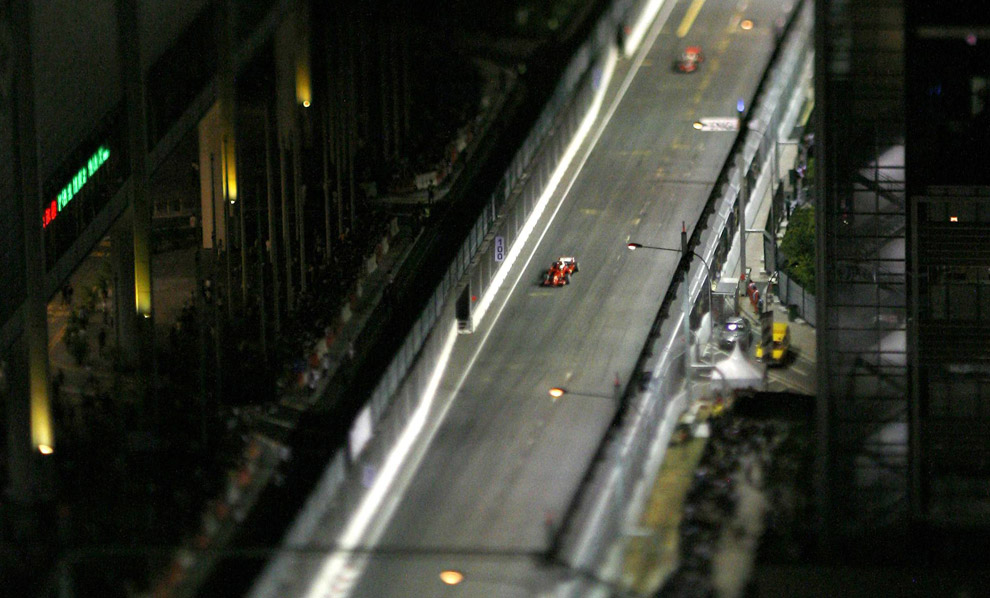
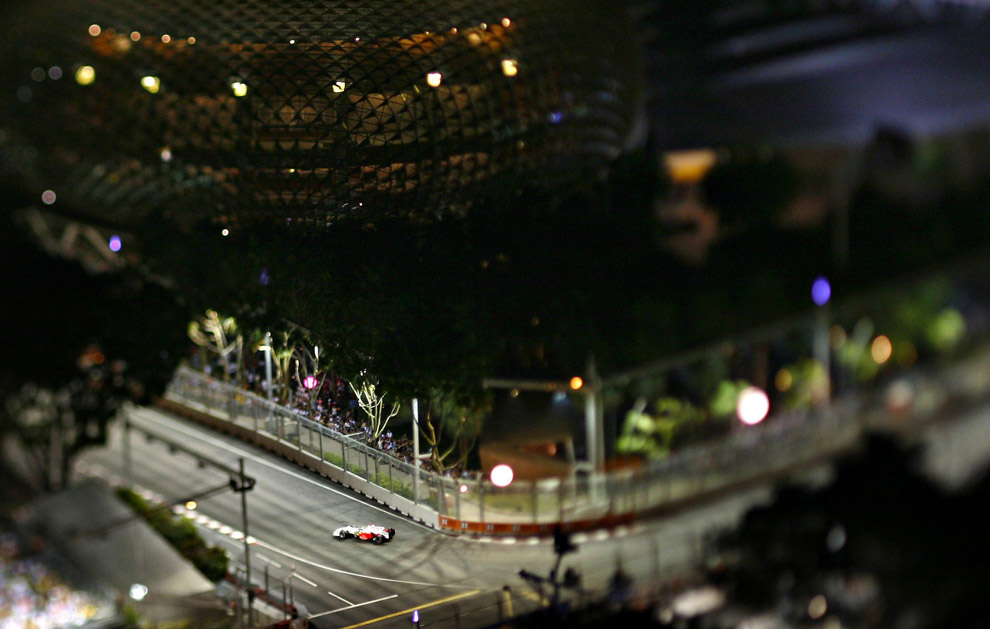
Not sure if I found this posted here or on some other site, but here are some pics from the singapore grand prix, and a few were taken with a tilt-shift lens. Such a cool effect. The other photos on the site are really good too, worth checking out.
http://www.boston.com/bigpicture/200...rand_prix.html
http://www.boston.com/bigpicture/200...rand_prix.html


Senior Moderator


Joined: Sep 2005
Posts: 9,296
Likes: 169
From: Toronto
very cool
It's weird, cause my best friend and I were talking about about these types of lenses today when we were at Nikon in TO. We were picking up his broken lens, which he decide not to have fixed. We, meaning him while I watched, took it apart and ended up fixing the damn thing ourselves. VERY cool experience. I will ask for the pics he took if he still has them. Sorry about the hijack.
It's weird, cause my best friend and I were talking about about these types of lenses today when we were at Nikon in TO. We were picking up his broken lens, which he decide not to have fixed. We, meaning him while I watched, took it apart and ended up fixing the damn thing ourselves. VERY cool experience. I will ask for the pics he took if he still has them. Sorry about the hijack.

nnInn
Joined: Mar 2006
Posts: 37,670
Likes: 1,084

now with four rings
Joined: May 2006
Posts: 1,745
Likes: 0
From: Bixby, OK


Not Registered
Joined: Feb 2002
Posts: 5,831
Likes: 87
From: Virginia
I've used this PS tutorial for editing pics. The vids are pretty cool.
http://www.tiltshiftphotography.net/...p-tutorial.php
http://www.tiltshiftphotography.net/...p-tutorial.php
Big Block go VROOOM!
Joined: Oct 2003
Posts: 8,578
Likes: 1
From: Chicago Burbs
Alright, let's see who's got their observin' eyes in today....
There's a fundamental difference between the effect produced in the tutorial bdog posted and the the beach video made with the tilt/shift lens. You don't even have to watch the video. You can see it in the static frame that's displayed.
Two hints:
-The video is showing something that only a tilt/shift lens is capable of doing on a SLR. I'm not referring to depth of field.
-You could theoretically change the gradient step in the tutorial to make the Photoshop effect look the same.
Anyone?
There's a fundamental difference between the effect produced in the tutorial bdog posted and the the beach video made with the tilt/shift lens. You don't even have to watch the video. You can see it in the static frame that's displayed.
Two hints:
-The video is showing something that only a tilt/shift lens is capable of doing on a SLR. I'm not referring to depth of field.
-You could theoretically change the gradient step in the tutorial to make the Photoshop effect look the same.
Anyone?
E92
Joined: May 2007
Posts: 8,039
Likes: 93
From: socal
Alright, let's see who's got their observin' eyes in today....
There's a fundamental difference between the effect produced in the tutorial bdog posted and the the beach video made with the tilt/shift lens. You don't even have to watch the video. You can see it in the static frame that's displayed.
Two hints:
-The video is showing something that only a tilt/shift lens is capable of doing on a SLR. I'm not referring to depth of field.
-You could theoretically change the gradient step in the tutorial to make the Photoshop effect look the same.
Anyone?
There's a fundamental difference between the effect produced in the tutorial bdog posted and the the beach video made with the tilt/shift lens. You don't even have to watch the video. You can see it in the static frame that's displayed.
Two hints:
-The video is showing something that only a tilt/shift lens is capable of doing on a SLR. I'm not referring to depth of field.
-You could theoretically change the gradient step in the tutorial to make the Photoshop effect look the same.
Anyone?


Photography Nerd
Joined: Sep 2003
Posts: 21,489
Likes: 11
From: Toronto
I don't want to spoil it, so keep guessing... 
 Instead of tilt and shift, this lens has been rotated to allow for swing and shift. The focal plane is now on an angle to the X-axis instead of the Y-axis. You could mimic the effect by changing the angle of the gradient in the tutorial instead of just leaving it straight up and down.
Instead of tilt and shift, this lens has been rotated to allow for swing and shift. The focal plane is now on an angle to the X-axis instead of the Y-axis. You could mimic the effect by changing the angle of the gradient in the tutorial instead of just leaving it straight up and down.
Not Registered
Joined: Feb 2002
Posts: 5,831
Likes: 87
From: Virginia
Unlike what Dan just said I was going to state you don't get a true bokeh effect with lights. Photoshop just blurs everything creating noise, while the actual lens still keep it's effect sharper?

Big Block go VROOOM!
Joined: Oct 2003
Posts: 8,578
Likes: 1
From: Chicago Burbs
OK, now that I've had a minute to draw a basic diagram, Dan nailed it with his response.
With regular lenses, your focal plane is always parallel to the camera's sensor/film plane. When you use a tilt/shift lens in this manner, your focal plane is "angled" within your scene and not parallel to the camera's sensor plane. What's really unique about this sort of application is that your depth of field extends out perpendicular to this angled focal plane.
IMO, what makes the beach example look "odd" isn't so much the shallow depth of field. It's that the shallow DoF is extending perpendicular to the angled focal plane.

Instead of tilt and shift, this lens has been rotated to allow for swing and shift. The focal plane is now on an angle to the X-axis instead of the Y-axis. You could mimic the effect by changing the angle of the gradient in the tutorial instead of just leaving it straight up and down.
IMO, what makes the beach example look "odd" isn't so much the shallow depth of field. It's that the shallow DoF is extending perpendicular to the angled focal plane.
Thread Starter
Matt
Joined: Apr 2006
Posts: 2,663
Likes: 1
From: St. Louis, MO



Thread
Thread Starter
Forum
Replies
Last Post
Sarlacc
Console & Computer Gaming
5
Sep 30, 2015 02:15 PM
