


Oil pan. Does this look normal

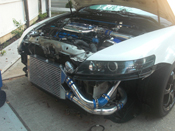
Oil pan. Does this look normal
I bought a used oil pan from ebay. It was listed as an 06 with 36000 miles. There looks to be marks of small cracks on the inside of the pan. You cant feel them with your finger but you can see them. Is this a common trait of aluminum over time?



Safety Car
Joined: Jan 2006
Posts: 4,442
Likes: 482
From: Houston, Texas
Turbo Bert,
I agree that it looks scary. However, it does look ok…. I think
The engine/trans cast pieces are very rough, crudely casted. Those lines look like casting/mold flaws.
Aluminum will not develop this appearance with time. It was there from the day it was casted.
If you are really concerned and want to test it, you could pour some water in it enough to cover the “crack” lines. Let it sit overnight. Next day, inspect the exterior for dampness. Perhaps put talc powder (baby powder) on the exterior. The powder should show any dampness.
I agree that it looks scary. However, it does look ok…. I think
The engine/trans cast pieces are very rough, crudely casted. Those lines look like casting/mold flaws.
Aluminum will not develop this appearance with time. It was there from the day it was casted.
If you are really concerned and want to test it, you could pour some water in it enough to cover the “crack” lines. Let it sit overnight. Next day, inspect the exterior for dampness. Perhaps put talc powder (baby powder) on the exterior. The powder should show any dampness.
Safety Car
Joined: Jan 2006
Posts: 4,442
Likes: 482
From: Houston, Texas
If you have any, or planning to go to Walmart soon..... it would be better to use Mineral Spirits to test for a leak instead of water. Water has too much surface tension to find it's way thru tight cracks.
Just place the pan with minerial spirits some place outside, away from house and garage, in case of a fire.
Just place the pan with minerial spirits some place outside, away from house and garage, in case of a fire.


94 DC4 RS LSV/Turbo
iTrader: (1)
Joined: Jul 2007
Posts: 11,734
Likes: 12
From: New York City | Stuck in Traffic
 my teggy had those "stress" appearing marks all over the trans housing... mainly near where the trans mount 3 holes are
---------------
ant... you do know a brand new one is $90... why'd you buy used???
just curious
Trending Topics
Thanks guys. After reading some other forums it appears that these marks are just casting flaws like you guys said. No worries here now
^If you can get a used one in mint shape for cheaper then why buy new for more money
^If you can get a used one in mint shape for cheaper then why buy new for more money


Instructor
Joined: Jun 2010
Posts: 120
Likes: 4
From: Union, NJ
OP, I'm curious as to why you're replacing the oil pan? Not a normal thing...I assume...?
^The drain fitting from the turbo is leaking. I want to get the fitting welded to the pan this time. Plus the threads from the drain hole are stripped a little bit and form a very small drip over time.
Ive read that you can. It probably doesnt need to be welded. Since Im the only one of the small group of turbo guys that have a leak, maybe the hondabond just needs more time to cure
Last edited by libert69; Jul 26, 2010 at 12:28 AM.
Safety Car
Joined: Jan 2006
Posts: 4,442
Likes: 482
From: Houston, Texas
I am not sure what the situation is exactly. But if you are referring to the current application of the Hondabond, it will not stop leaking with time (additional curing time).
Once an oil film finds it's way under the hondabond (or any sealant or epoxy), the seal is compromised and has failed. This is why curing time is so crucial. If the workpiece is placed in service before the sealant/epoxy has cured, the seal is too weak to fight against the fluid. Only once cured (as per directions on package) will the sealant/epoxy be at full strength and able to provide a robust seal.
Prep prior to application is crucial also. Rough-up (with sandpaper) the surfaces that will be in contact with the sealant/epoxy. Degrease those surfaces with a solvent such as brake cleaner, rubbing alcohol, etc.
Something else to be aware of - The seal can be broken during tightening. For example if you used the sealant/epoxy on a bung. After curing, you tighten the probe into the bung. During tightening, the bung will turn and thus destroy the seal.
I really love JB Weld. It you used JB Weld, I really doubt that you would break the seal once the JB Weld was cured. That stuff (JB Weld) has been around before I was born probably. It has been around a long time for a reason. It works great. Even Walmart sells JB Weld.
Once an oil film finds it's way under the hondabond (or any sealant or epoxy), the seal is compromised and has failed. This is why curing time is so crucial. If the workpiece is placed in service before the sealant/epoxy has cured, the seal is too weak to fight against the fluid. Only once cured (as per directions on package) will the sealant/epoxy be at full strength and able to provide a robust seal.
Prep prior to application is crucial also. Rough-up (with sandpaper) the surfaces that will be in contact with the sealant/epoxy. Degrease those surfaces with a solvent such as brake cleaner, rubbing alcohol, etc.
Something else to be aware of - The seal can be broken during tightening. For example if you used the sealant/epoxy on a bung. After curing, you tighten the probe into the bung. During tightening, the bung will turn and thus destroy the seal.
I really love JB Weld. It you used JB Weld, I really doubt that you would break the seal once the JB Weld was cured. That stuff (JB Weld) has been around before I was born probably. It has been around a long time for a reason. It works great. Even Walmart sells JB Weld.

Instructor
Joined: Jun 2010
Posts: 218
Likes: 1
From: Indy
I am an Engineer in the Aluminum Die Casting industry, and yes that looks pretty normal for older tool steel. Like others have said, the casting will not degrade with age, it was cast in the condition you see (flow lines, die breaks, washout, etc.).
Yes you can Aluminum weld, but it is very difficult. 9.5/10 we will scrap the castings if our only rework option is to weld.
But as long as it doesn't leak, it'll hold up just fine.
And you shouldn't need to weld or even sand it. If the die breaks don't come off by rubbing it with your fingers, it won't come off once installed.
Yes you can Aluminum weld, but it is very difficult. 9.5/10 we will scrap the castings if our only rework option is to weld.
But as long as it doesn't leak, it'll hold up just fine.
And you shouldn't need to weld or even sand it. If the die breaks don't come off by rubbing it with your fingers, it won't come off once installed.
Safety Car
Joined: Jan 2006
Posts: 4,442
Likes: 482
From: Houston, Texas
Just to clarify - We are discussing having a bung welded into the oil pan. Not having the "crack" welded-up.
Bert - I forgot to ask. What material is the bung? I am pretty sure that you can not weld dissimilar metals. Meaning that, you can not weld a steel bung into an aluminum pan.
Bert - I forgot to ask. What material is the bung? I am pretty sure that you can not weld dissimilar metals. Meaning that, you can not weld a steel bung into an aluminum pan.
Instructor
Joined: Jun 2010
Posts: 218
Likes: 1
From: Indy
 to me.

The fitting is aluminum as well. Heres a pic of how I sealed the fitting into the pan. There is a small layer of hondabond on the outside nut as well. Hondabond is just like a rtv sealant. Specs say it is oil resistant up to 600 degrees.
After reading your PM Inaccurate, Im wondering if there should be NO sealant on the inside of the pan.

After reading your PM Inaccurate, Im wondering if there should be NO sealant on the inside of the pan.

Safety Car
Joined: Jan 2006
Posts: 4,442
Likes: 482
From: Houston, Texas
Oh ok. Different stuff than I thought. This should pose no significant risk to the engine if any came loose. Not desirable, but ok in my opinion.
By having the sealant on the inside would not had caused it to leak. From the outside or inside, it would perform the same.
I am not sure why it is leaking. Perhaps the surface had a oily film before applying. Did you degrease the surface with solvent before applying?
If you want to avoid the work of replacing the pan, you could try the JB Weld on the outside of the current pan. JB weld is sold at all auto parts stores and Walmart too. If the AN Bulkhead is accessible from under the car, you can apply the JB Weld without removing the pan. Just be sure to spray the area real good with brake cleaner before applying. Wear safety glasses to prevent the cleaner from splashing into your eyes. Wipe dry with a clean paper towel. Allow to air dry a few minutes. Mix the JB Weld (epoxy with Part A and B). Apply. Cure as directed on package.
One caveat - The JB Weld is strong. Once applied, it will not come off even if you want it to. The AN Bulkhead will not come off either if you wanted it off.
However, the cleanest (workmanship wise) approach is to have the Bulkhead welded into the pan.
By having the sealant on the inside would not had caused it to leak. From the outside or inside, it would perform the same.
I am not sure why it is leaking. Perhaps the surface had a oily film before applying. Did you degrease the surface with solvent before applying?
If you want to avoid the work of replacing the pan, you could try the JB Weld on the outside of the current pan. JB weld is sold at all auto parts stores and Walmart too. If the AN Bulkhead is accessible from under the car, you can apply the JB Weld without removing the pan. Just be sure to spray the area real good with brake cleaner before applying. Wear safety glasses to prevent the cleaner from splashing into your eyes. Wipe dry with a clean paper towel. Allow to air dry a few minutes. Mix the JB Weld (epoxy with Part A and B). Apply. Cure as directed on package.
One caveat - The JB Weld is strong. Once applied, it will not come off even if you want it to. The AN Bulkhead will not come off either if you wanted it off.
However, the cleanest (workmanship wise) approach is to have the Bulkhead welded into the pan.
Last edited by Inaccurate; Jul 26, 2010 at 02:33 PM.
hondabond is a gasket maker. honda/acura uses it for securing the oil pan and other parts where they dont use an acutal gasket.
rodney installed the pan so I dont know exactly how he did everything. I do know that you can slightly wiggle the bulkhead fitting with your hand from the outside which is no good. Im thinking the nut on the inside of the pan came loose. The oil made its way around the nut and found a hole in the hondabond. Rodney made a mess with the sealant on the outside of the pan around the fitting lol. I would have to scrap/sand/dremel alot of it off if I wanted to use jb weld and try to make another seal. Plus its a very akward area to reach.
The other reason I wanted to change the pan was because a few of the threads from the drain bolt hole are stripped. Over the course of a few days a small drip will form from the drain hole.
rodney installed the pan so I dont know exactly how he did everything. I do know that you can slightly wiggle the bulkhead fitting with your hand from the outside which is no good. Im thinking the nut on the inside of the pan came loose. The oil made its way around the nut and found a hole in the hondabond. Rodney made a mess with the sealant on the outside of the pan around the fitting lol. I would have to scrap/sand/dremel alot of it off if I wanted to use jb weld and try to make another seal. Plus its a very akward area to reach.
The other reason I wanted to change the pan was because a few of the threads from the drain bolt hole are stripped. Over the course of a few days a small drip will form from the drain hole.

Safety Car
Joined: Jan 2006
Posts: 4,442
Likes: 482
From: Houston, Texas

The quote above is very scary.
I recommend that you don't even drive the car until you change the pan. The bulkhead nut could fall into the oil pan. From there, things get ugly. The bulkhead fall out, leaving a hole in the pan that oil will exit from, leaving your engine with no oil. Smaller change that the loose nut could get kicked up into the oil windage, meaning that the nut could hit a piston skirt and break the skirt..
You *must* remove the pan as soon as possible.

Not to be "that guy" but you just spent over 10k into your car, this piece is $80 new from the dealer. I would not do anything but the proper stuff/high end stuff to save yourself from hassle/problem. If its one thing I learned over the last years, its you get what you pay for. Just me.
Safety Car
Joined: Jan 2006
Posts: 4,442
Likes: 482
From: Houston, Texas
In his defense, these things are expected.
Modding a car will involve setbacks. Especially when it as complex as adding a turbocharger. Bert is among the first to install this turbo kit. He will surely run into “issues” because he is among the early adopters that are paving the way. Others that follow later will have the advantage of learning from these early adopters.
Modding a car will involve setbacks. Especially when it as complex as adding a turbocharger. Bert is among the first to install this turbo kit. He will surely run into “issues” because he is among the early adopters that are paving the way. Others that follow later will have the advantage of learning from these early adopters.
The quote above is very scary.
I recommend that you don't even drive the car until you change the pan. The bulkhead nut could fall into the oil pan. From there, things get ugly. The bulkhead fall out, leaving a hole in the pan that oil will exit from, leaving your engine with no oil. Smaller change that the loose nut could get kicked up into the oil windage, meaning that the nut could hit a piston skirt and break the skirt..
You *must* remove the pan as soon as possible.
This is why you gotta love Inaccurate. He will always give you the worst case scenario with everything so you can make sure you do it right lol

Not to be "that guy" but you just spent over 10k into your car, this piece is $80 new from the dealer. I would not do anything but the proper stuff/high end stuff to save yourself from hassle/problem. If its one thing I learned over the last years, its you get what you pay for. Just me.


Thread
Thread Starter
Forum
Replies
Last Post
IBankMouse
1G TSX (2004-2008)
8
Jun 13, 2020 12:53 PM
SidhuSaaB
3G TL Problems & Fixes
18
May 30, 2020 12:40 AM
ripit
4G TL Audio, Bluetooth, Electronics & Navigation
1
Sep 26, 2015 06:19 PM
STL TL-S
3G TL Problems & Fixes
9
Sep 23, 2015 08:52 PM
