


My TLX is here!!!!


Thread Starter
Intermediate
Joined: Apr 2014
Posts: 39
Likes: 16
From: Concord, CA
My TLX is here!!!!
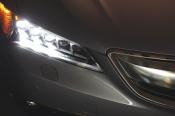
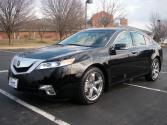
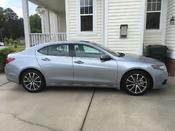
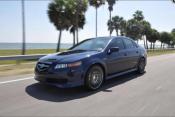
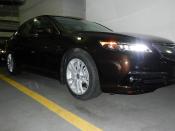
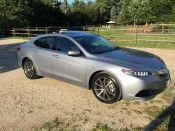
Finally, after 20 months and several days of a car search, it finally ended with a 2.4 TLX Tech in Black Copper Pearl w/ Parchment Interior. Today was the first day I drove it and babied it at 55-60 down the freeway to work this morning. Coming from a 2001 Accord, I feel like a million bucks behind the wheel. Im super excited to see what fun thi car will give me for the next 7-10 years!
PS; Excuse the dot in the middle of the photo, bad camera sensor in the iPhone. Time to upgrade to a 6
 TLX and JetStar by Mr. Airport, on Flickr
PS; Excuse the dot in the middle of the photo, bad camera sensor in the iPhone. Time to upgrade to a 6
TLX and JetStar by Mr. Airport, on Flickr






Racer
Joined: Dec 2005
Posts: 289
Likes: 52
From: NC
Finally, after 20 months and several days of a car search, it finally ended with a 2.4 TLX Tech in Black Copper Pearl w/ Parchment Interior. Today was the first day I drove it and babied it at 55-60 down the freeway to work this morning. Coming from a 2001 Accord, I feel like a million bucks behind the wheel. Im super excited to see what fun thi car will give me for the next 7-10 years!
PS; Excuse the dot in the middle of the photo, bad camera sensor in the iPhone. Time to upgrade to a 6
TLX and JetStar by Mr. Airport, on Flickr
PS; Excuse the dot in the middle of the photo, bad camera sensor in the iPhone. Time to upgrade to a 6
TLX and JetStar by Mr. Airport, on Flickr
Thread Starter
Intermediate
Joined: Apr 2014
Posts: 39
Likes: 16
From: Concord, CA
Racer
Joined: Dec 2005
Posts: 289
Likes: 52
From: NC
To protect that baby and give it an incredible deep shine if you did not get a paint sealant at purchase, I highly recommend the Zaino products and Z2. Not only is the shine incredible but last at least 4-6 months. I have tried just about every wax and paint sealant before discovering it. I have had so many friends and neighbors convert with everyone agreeing it is the best.
Thread Starter
Intermediate
Joined: Apr 2014
Posts: 39
Likes: 16
From: Concord, CA
To protect that baby and give it an incredible deep shine if you did not get a paint sealant at purchase, I highly recommend the Zaino products and Z2. Not only is the shine incredible but last at least 4-6 months. I have tried just about every wax and paint sealant before discovering it. I have had so many friends and neighbors convert with everyone agreeing it is the best.
Trending Topics
Racer
Joined: Dec 2005
Posts: 289
Likes: 52
From: NC
Only on line. The leather in a bottle is a great leather conditioner. It will not be a problem now but it makes older leather smell new. The tire perfect gloss is very good. It is not any different than other tire shine products but last longer and when wet will not throw reside on the side of your car.

Burning Brakes
Joined: Oct 2014
Posts: 881
Likes: 155
From: South Florida
Finally, after 20 months and several days of a car search, it finally ended with a 2.4 TLX Tech in Black Copper Pearl w/ Parchment Interior. Today was the first day I drove it and babied it at 55-60 down the freeway to work this morning. Coming from a 2001 Accord, I feel like a million bucks behind the wheel. Im super excited to see what fun thi car will give me for the next 7-10 years!
Drive Safe








Suzuka Master
Joined: Mar 2006
Posts: 5,204
Likes: 1,267
^^ Congrats on your new TLX! Looks really good...I like the photo of your TLX and the plane in the background, it creates a cool transportation effect.
As far as 'break in' period...many will say that the engine are already prepared to be driven hard from the dealer but I tend to follow the manual. Usually, the first couple of thousand kms, I will avoid hard acceleration/braking, avoid constant speed for long distances but that's about it.
As far as 'break in' period...many will say that the engine are already prepared to be driven hard from the dealer but I tend to follow the manual. Usually, the first couple of thousand kms, I will avoid hard acceleration/braking, avoid constant speed for long distances but that's about it.

Drifting
Joined: Oct 2003
Posts: 2,607
Likes: 536
During the first 600 miles (1,000 km) of operation,
avoid sudden acceleration or full throttle operation so
as to not damage the engine or powertrain.
Avoid hard braking for the first 200 miles (300 km).
You should also follow this when the brake pads are
replaced.

Intermediate
Joined: Aug 2014
Posts: 43
Likes: 22
Congrats OP!
Looks like the first thing you did was drive it onto a runway at your local airport lol
BTW, crazy that a 2001 Accord 3.0 V6 puts out 200hp with a 4spd auto and here we are, 14 years later with a TLX 2.4 I4 putting out 206hp with an 8spd DCT. Probably does similar 0-60 too, although I assume the Accord weighed much less
Edit: I just noticed your username! LMAOOO
Looks like the first thing you did was drive it onto a runway at your local airport lol
BTW, crazy that a 2001 Accord 3.0 V6 puts out 200hp with a 4spd auto and here we are, 14 years later with a TLX 2.4 I4 putting out 206hp with an 8spd DCT. Probably does similar 0-60 too, although I assume the Accord weighed much less
Edit: I just noticed your username! LMAOOO
Last edited by ShiftinAt8600; Nov 8, 2014 at 06:53 PM.


Summer is Coming
Joined: Jun 2005
Posts: 2,857
Likes: 647
From: Houston
Congrats on the new car OP.
Old school engine breaking in would say to vary the speed thereby varying the engine RPM so it somehow doesn't get used to a narrow RPM band. But with these new transmission all they want to do is keep the engine in a narrow band. To get it out of that band you need to get it into Sport or Sport + mode and change it up a bit. I'm not so sure all this breaking in period on modern engines with surface finishes from the factory already pretty precise are all that needed. I wonder what exactly is going to break in the first 600 miles that won't after 601 miles?
I wonder why they say to avoid hard braking for the first 200 miles. When the car comes from the factory with new discs and pads do they bed in the pads to the rotors? When you get new pads and rotors you need to break them in right away or they just don't bite. This has always been the case with me when I put new brakes on a car. Driving a car with new rotors and pads can be downright scary until they are bed. Even pads that have a break in coating. I wonder if this is why Honda has issues with pulsating (commonly called warped rotors) brakes? I wouldn't be so shy with the brakes.
In fact in general with a new car I think I'd just be paranoid about keeping it safe and not worry so much about these break in procedures.
^^ Congrats on your new TLX! Looks really good...I like the photo of your TLX and the plane in the background, it creates a cool transportation effect.
As far as 'break in' period...many will say that the engine are already prepared to be driven hard from the dealer but I tend to follow the manual. Usually, the first couple of thousand kms, I will avoid hard acceleration/braking, avoid constant speed for long distances but that's about it.
As far as 'break in' period...many will say that the engine are already prepared to be driven hard from the dealer but I tend to follow the manual. Usually, the first couple of thousand kms, I will avoid hard acceleration/braking, avoid constant speed for long distances but that's about it.
From the manual :
During the first 600 miles (1,000 km) of operation,
avoid sudden acceleration or full throttle operation so
as to not damage the engine or powertrain.
Avoid hard braking for the first 200 miles (300 km).
You should also follow this when the brake pads are
replaced.
During the first 600 miles (1,000 km) of operation,
avoid sudden acceleration or full throttle operation so
as to not damage the engine or powertrain.
Avoid hard braking for the first 200 miles (300 km).
You should also follow this when the brake pads are
replaced.
In fact in general with a new car I think I'd just be paranoid about keeping it safe and not worry so much about these break in procedures.
Suzuka Master
Joined: Mar 2006
Posts: 5,204
Likes: 1,267
^^ I will be the first to admit that I am not sure whether or not these "break in" period are actually required or not but for me, I'd rather take it easy the first few hundred km's just to be on teh safe side....Almost considering it as "preliminaries" before I ride it hard - Call me romantic! *LMAO*
Summer is Coming
Joined: Jun 2005
Posts: 2,857
Likes: 647
From: Houston
^^ I will be the first to admit that I am not sure whether or not these "break in" period are actually required or not but for me, I'd rather take it easy the first few hundred km's just to be on teh safe side....Almost considering it as "preliminaries" before I ride it hard - Call me romantic! *LMAO*


Instructor
Joined: Mar 2013
Posts: 151
Likes: 20
Huh. I always thought the varying speed part of the break-in was for the transmission.
I mean, what on earth could happen to the engine if you ran it at normal/low RPM? Nothing different from mid RPM range. The engine itself doesn't really do anything different at low vs mid RPM. At high RPM on our cars, VTEC kicks in, yo, but that's about it. Pistons move faster, but it's not as if they don't move quite fast at idle.
Meanwhile, Honda transmissions have always been quite similar to manuals. One gear per ratio. One synchro per gear. In an automatic, one clutchpack for each element (12, in a 6 speed auto). If you drive like the EPA does, the first few gears + top gear would be settled in, but all of the middle gears would be ignored. I'd assume something similar, though not as dire, for regular slush-o-matics.
That being said, with "learning" automatics, I'm sure Honda has programmed in some "first 600 miles break-in" programming into their cars (transmission and engine).
I mean, what on earth could happen to the engine if you ran it at normal/low RPM? Nothing different from mid RPM range. The engine itself doesn't really do anything different at low vs mid RPM. At high RPM on our cars, VTEC kicks in, yo, but that's about it. Pistons move faster, but it's not as if they don't move quite fast at idle.
Meanwhile, Honda transmissions have always been quite similar to manuals. One gear per ratio. One synchro per gear. In an automatic, one clutchpack for each element (12, in a 6 speed auto). If you drive like the EPA does, the first few gears + top gear would be settled in, but all of the middle gears would be ignored. I'd assume something similar, though not as dire, for regular slush-o-matics.
That being said, with "learning" automatics, I'm sure Honda has programmed in some "first 600 miles break-in" programming into their cars (transmission and engine).
Last edited by jshaw; Nov 11, 2014 at 06:02 PM.




Instructor
Joined: Jul 2014
Posts: 203
Likes: 55
From: Wash DC metro
Old school engine breaking in would say to vary the speed thereby varying the engine RPM so it somehow doesn't get used to a narrow RPM band. But with these new transmission all they want to do is keep the engine in a narrow band. To get it out of that band you need to get it into Sport or Sport + mode and change it up a bit. I'm not so sure all this breaking in period on modern engines with surface finishes from the factory already pretty precise are all that needed. I wonder what exactly is going to break in the first 600 miles that won't after 601 miles?
Well, even in these new tighter tolerance engines, sliding parts need time to become acclimated to each other. A rough example is pretending a cruddy rusty wheel on axle is being rolled for the first time. Wear of the rust will be higher for a few revolutions until things smooth out. We may think speed may not matter but the faster it turns the faster wear will happen but not necessarily at a linear rate but possibly an increasing one, with a byproduct being heat generated much more so at faster speeds. Like leaving your finger rubbing on a slow wheel indefinitely but glancing off a fast one burnt.
I wonder why they say to avoid hard braking for the first 200 miles. When the car comes from the factory with new discs and pads do they bed in the pads to the rotors? When you get new pads and rotors you need to break them in right away or they just don't bite. This has always been the case with me when I put new brakes on a car. Driving a car with new rotors and pads can be downright scary until they are bed. Even pads that have a break in coating. I wonder if this is why Honda has issues with pulsating (commonly called warped rotors) brakes? I wouldn't be so shy with the brakes.
Not everyone does new rotors each time, so even turned for resurfacing they will have those jagged cut lines that need smoothing out (see above). I believe pad material also deposits on the rotor possibly.
Well, even in these new tighter tolerance engines, sliding parts need time to become acclimated to each other. A rough example is pretending a cruddy rusty wheel on axle is being rolled for the first time. Wear of the rust will be higher for a few revolutions until things smooth out. We may think speed may not matter but the faster it turns the faster wear will happen but not necessarily at a linear rate but possibly an increasing one, with a byproduct being heat generated much more so at faster speeds. Like leaving your finger rubbing on a slow wheel indefinitely but glancing off a fast one burnt.
I wonder why they say to avoid hard braking for the first 200 miles. When the car comes from the factory with new discs and pads do they bed in the pads to the rotors? When you get new pads and rotors you need to break them in right away or they just don't bite. This has always been the case with me when I put new brakes on a car. Driving a car with new rotors and pads can be downright scary until they are bed. Even pads that have a break in coating. I wonder if this is why Honda has issues with pulsating (commonly called warped rotors) brakes? I wouldn't be so shy with the brakes.
Not everyone does new rotors each time, so even turned for resurfacing they will have those jagged cut lines that need smoothing out (see above). I believe pad material also deposits on the rotor possibly.
Huh. I always thought the varying speed part of the break-in was for the transmission.
I mean, what on earth could happen to the engine if you ran it at normal/low RPM? Nothing different from mid RPM range. The engine itself doesn't really do anything different at low vs mid RPM. At high RPM on our cars, VTEC kicks in, yo, but that's about it. Pistons move faster, but it's not as if they don't move quite fast at idle.
Various speeds have different resonant frequencies that cause vibration like an out of balance wheel has from 50-80 mph (though at much lower amounts) so we want to cover most of the rev range starting from idle. Plus the faster the speed, the force of any imbalance increases by (squared, cubed? engineers chime in here) so the reason for keeping under 2/3 - 3/4 redline.
Meanwhile, Honda transmissions have always been quite similar to manuals. One gear per ratio. One synchro per gear. In an automatic, one clutchpack for each element (12, in a 6 speed auto). If you drive like the EPA does, the first few gears + top gear would be settled in, but all of the middle gears would be ignored. I'd assume something similar, though not as dire, for regular slush-o-matics.
But the middle ones will still wear at the same proportional rate of use then, just less over time.
I mean, what on earth could happen to the engine if you ran it at normal/low RPM? Nothing different from mid RPM range. The engine itself doesn't really do anything different at low vs mid RPM. At high RPM on our cars, VTEC kicks in, yo, but that's about it. Pistons move faster, but it's not as if they don't move quite fast at idle.
Various speeds have different resonant frequencies that cause vibration like an out of balance wheel has from 50-80 mph (though at much lower amounts) so we want to cover most of the rev range starting from idle. Plus the faster the speed, the force of any imbalance increases by (squared, cubed? engineers chime in here) so the reason for keeping under 2/3 - 3/4 redline.
Meanwhile, Honda transmissions have always been quite similar to manuals. One gear per ratio. One synchro per gear. In an automatic, one clutchpack for each element (12, in a 6 speed auto). If you drive like the EPA does, the first few gears + top gear would be settled in, but all of the middle gears would be ignored. I'd assume something similar, though not as dire, for regular slush-o-matics.
But the middle ones will still wear at the same proportional rate of use then, just less over time.

Senior Moderator
Joined: Feb 2001
Posts: 5,461
Likes: 616
From: Long Island, NY
My only issue with the break in theories is that in days past, you would also follow the break in with an oil change to get rid of some of these wear particles. That made sense to me, but now, the recommendations are to break in the engine, but then just change the oil at its standard routine intervals.
In the end its probably a mute point. These cars will be retired for other reasons long before engine wear ever rears its head; provided of course that routine maintenance is performed.
In the end its probably a mute point. These cars will be retired for other reasons long before engine wear ever rears its head; provided of course that routine maintenance is performed.
Instructor
Joined: Jul 2014
Posts: 203
Likes: 55
From: Wash DC metro
My only issue with the break in theories is that in days past, you would also follow the break in with an oil change to get rid of some of these wear particles. That made sense to me, but now, the recommendations are to break in the engine, but then just change the oil at its standard routine intervals.
Instructor
Joined: Jul 2014
Posts: 203
Likes: 55
From: Wash DC metro
Just had a thought, I don't think I'd want to use VCM during break-in mileage as I'd want the rear bank to wear in at the same usage as the front (what little wear actually happens). Just stay off Econ mode right? Don't know if it matters, just my opinion.
Senior Moderator
Joined: Feb 2001
Posts: 5,461
Likes: 616
From: Long Island, NY
Yes, because apparently many mfrs now use 'break in' oils (special moly or zinc formulas? additive free mineral? Google Bob Is The Oil Guy and others) and changing factory fill oil early can screw things up as those in the know have said on other forums. The filter should catch pretty much all of it and there shouldn't be much with current new engines. You could change that out at 5k.
The recommendation for the first oil change will probably be closer to 10k miles based on the car's computer.
Instructor
Joined: Mar 2013
Posts: 151
Likes: 20
I've actually spent some time on BITOG. Has the break-in oil been substantiated? I am genuinely curious because my impression of it was that it depended on who you ask, and no one could ever give a definitive answer.
The recommendation for the first oil change will probably be closer to 10k miles based on the car's computer.
The recommendation for the first oil change will probably be closer to 10k miles based on the car's computer.
The answer, from both a Honda rep and the President of Blackstone Labs, note Honda was the only one to use any special break-in formulation in their factory oil.


Thread
Thread Starter
Forum
Replies
Last Post
mlody
5G TLX (2015-2020)
85
Dec 4, 2019 02:11 PM
joflewbyu2
5G TLX (2015-2020)
105
Aug 18, 2019 10:38 PM
