When you click on links to various merchants on this site and make a purchase, this can result in this site earning a commission. Affiliate programs and affiliations include, but are not limited to, the eBay Partner Network.
Replace the transmission pressure switches as preventative maintenance. When they begin to fail, they do not always simply fail and report an DTC error. They are an electro-mechanical switch, that wears, becomes weak, and falls out-of-specification. That causes excessive wear on the clutches, because the switches affect the shifting process of the transmission.
There are three types of pressure switch failure: Ø FAILED OPEN: electrical failure reports a DTC
Ø FAILED CLOSED: electrical failure reports a DTC
Ø FALLS OUT OF SPECIFIED-PRESSURE OPERATIONAL RANGE: mechanical wear causes the switch to function improperly, no DTC reported, extra or excessive wear occurs on the transmission clutches
WHY REPLACE THESE SWITCHES: Obviously if a DTC is reported, replacing the failed switch is required, in order to correct/ remove the DTC. The same trans pressure switch design has been used in all Honda/ Acura automatic transmissions since about the year 2000. The part numbers differ, depending upon the model vehicle, but when you look at the operational specs, there is little or no difference between the different switches. Also note that the same part number *is* used for several years and models of both Honda and Acura vehicles.
Each pressure switch contains both an electrical part, and a mechanical part. Electrical parts tend to fail *hard*, that is, they either work, or they don’t. Mechanical parts just wear, and no longer function at the original optimal specification, but they still *work*.
When a transmission pressure switch falls out of the specified-pressure operational range, it no longer shifts the transmission between gears as its supposed to do. That causes unnecessary wear on the transmission gear clutches. The only *solution* is to change the switch before trans clutch damage occurs.
Since every Honda trans since (about) 2000 uses these same design pressure switchs, it does not matter which vehicle model uses which transmission. There are dozens of threads, on many different Honda and Acura forums, discussing the replacement of trans pressure switches, either as PM (preventative maintenance) or to *fix* some real or perceived shift problem.
I changed my own 2009 RDX switches at around 52K miles, and 5+ years. Whether or not you change the switches in your own transmission, and at what mileage, must be your decision. You can read the LINKS below, and the secondary links, to help you make that decision.
LINKS FOR MORE INFORMATION: LINK: failed ’08 RDX 3rd gear pressure switch at 70K miles
LINK: graph of failing pressure switch, and specified operational pressure, pictures, post #574 and #599 has a link to a discussion of why a failing switch causes transmission wear. The pictures of the switches will help you *find* the switches on your own vehicle transmission, i.e., it helps if you know what you are looking for.
WHERE ARE THE SWITCHES LOCATED? The easiest switch to replace is the 3rd gear switch. Try that one first, to decide if you want to do the other two, which are more difficult.
The switches are screwed into the outer case of the transmission. Depending upon the year and model of vehicle, the switches can be replaced with some effort. Unclip the electrical connector, unscrew the switch, similar to removing a large bolt, and replace with a new switch, using a new aluminum crush washer.
The problem is simply accessing the required external area of the transmission case. That requires removal of either a few parts, or many parts, which obstruct direct access to the transmission case.
Each location of each switch depends upon the year, model, and configuration of the exact transmission in your own vehicle. So you need to obtain (from a dealer or online) a graphic diagram of your own transmission, and the exact switch part numbers, for your own vehicle.
But, in general, the three switches on a Gen-1 RDX are located: Ø Lower front driver-side of the case, near the transmission serial number, which is riveted to the case. Ø Top middle of the case Ø Rear passenger-corner top-side of the case
Please note that the specific descriptions below, are for my own 2009 RDX. Again, you must confirm location and switch part numbers for your own specific vehicle. The link above for the TL 5AT switches, shows pictures that are very similar to the 5AT RDX transmission in my own 2009 RDX – close enough.
4TH GEAR SWITCH: Located on the top center of the transmission case. Remove the engine air cleaner intake box, and it is located directly under. If a short handle ratchet wrench is used to remove and install the new switch, it is not necessary to remove the battery and cover. But if a torque wrench or longer handle wrench is used, there will not be sufficient space to swing the handle, without removing the battery.
A 12-point deep 22mm socket, that has been shortened by about 3/4 inch in length, is required.
If a torque wrench is not used, then lube the new aluminum sealing washer with ATF. Then tighten the new switch by turning it about 1/8 turn or 45 degrees after its finger-tight, possibly less. A 60 degree turn is one *flat* of the switch, from one flat to the next flat in the same position, where the socket fits on the switch. Try to estimate the 1/8 turn and imagine it in your mind, before beginning.
Remember, the threaded end of the switch is only 10mm, and is hollow. You do not want to either crack the switch, or strip the aluminum threads in the trans case. But you don’t want the switch to leak ATF. It’s a delicate balance.
3RD GEAR SWITCH: Located on the driver side lower front of the transmission case. Remove the front splash shield. Remove the driver side inner wheel well cover, which will also require removal of the wheel splash guard (if equipped). To assist removal of these parts, lift the front of the RDX, and support with jack stands. Turn the wheels fully to the left. That will allow access to all attachment bolts and clips.
The switch can then be removed using a socket and an extension straight through the wheel well. A torque wrench is easily used. Note the amount of rotation of the wrench handle, when tightening the switch, from finger tight to the proper torque. You can then use that same amount of rotation, when tightening the other two switches, so that a torque wrench is not required.
For the 2009 RDX the required pressure switch torque is 14 ft-lbs. I lubed the switch sealing washer with ATF, and used a torque of 130 in-lbs (10.8 ft-lbs). The decrease in torque, was because the washer was lubed, not dry.
2ND GEAR SWITCH: I HAVE NOT YET REPLACED THIS SWITCH. When I do manage to do so, I will post further information on my success. If anyone else does so in the meantime, I would certainly be interested in how you did it.
Located on the passenger side rear-corner of the top of the transmission case. To access, remove the battery. Remove the air filter intake box. Remove the Air pipe bypass outlet, and the Pump assembly purge jet (bolted to the side of the air intake pipe into the turbo).
Also, a few clamps and hoses will need to be loosened and moved to one side. Try not to disconnect hoses unless necessary – just unbolt the supports/ clamps and move aside if possible. There are enough parts that you may also wish to take a picture before starting, as it can be difficult to remember how to put everything back the way it was.
Use a SK 22mm stubby 12-point combi-wrench, length about 7 inches. I could not find this wrench locally, so used a longer wrench, and cut the open-end off with an air-wrench/ cutting wheel.
Thank you for this!I got the P0847 code the other day and the green blinking D. I ordered the 3rd gear switch and installed it today with ease thanks to this post. Interestingly, while I waited for the part to come in the blinking D stopped and the engine light went off and did not return. I changed the switch anyway.
Just wanted to say thanks again for another greate DIY write-up!
My wife's RDX threw a PO872 CEL and flashing "D" while driving home last night. Both indicators went away when the engine was shutdown and restarted. I also drove it to dinner last night and it shifted normally.
However, it is due (probably past due) for a transmission fluid change, so I'll go ahead and swap all 3 switches at the same time as the fluid change.
For the 4th gear switch I used a offset oxygen sensor tool to remove. https://m.harborfreight.com/3-8-eighth-inch-offset-oxygen-sensor-wrench-97177.html?utm_referrer=direct%2Fnot%20provided
2nd gear switch inused channel lock pliers to get loose and removed with fingers. Was a pain to reach to but got it done.
Does anyone know the updated oem part numbers for the three pressure switches?
This is what I have got so far:
28600-RAY-013 for 2nd & 3rd switches
28610-RKE-004 for 4th
90471-PW7-004 for 10mm washers
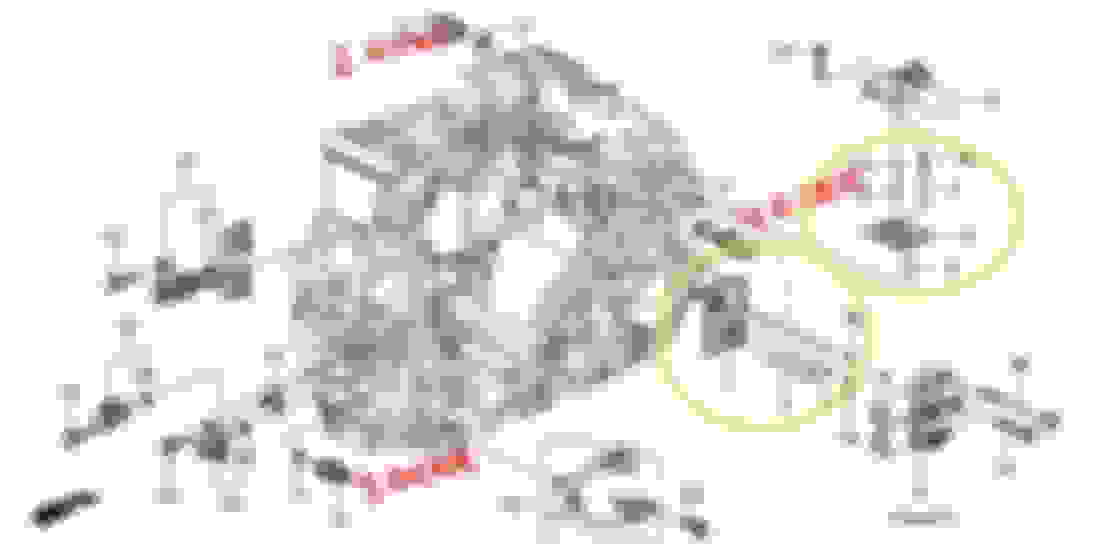
As you can see in the photos, the 2nd and 4th pressure switches share the same part number (#11 in the diagram) whereas the 3rd pressure switch has its own part number (#12 in the diagram).
This is a great write up, but pictures would be sooooo useful. I replaced the third and fourth pressure switches on my TL and would love do this to my wife's RDX as well.
How often are you getting your pressure switches replaced? I know for us TL owners, many recommend every 30,000 miles similar to when a 3x3 tranny drain/refill is recommended.
For those of you changing switches often, perhaps there is some other symptom? I'm at 150k with only fluid changes as prompted my the MID (which if I recall was first around 90k and again around 125k - I'm sure I'll be due again soon). No rough shifting or other issues at all. I get a switch could go bad, but I'd expect the replacement to last at least as long as the original.
Each gear has a transmission pressure switch so we have multiple switches that can go bad. Even my yaw sensor and brake pressure switch went bad once. I’m pretty sure, that’s one thing they’re know for going bad on Acura’s. I get all my matinence fluids changed at my dealership but I don’t follow the mid because I commute to work so I put about eighty miles a day in my RDX. Those city roads and salt in the winter really beat up my RDX.
I hope to do this next weekend. I've replaced the 3rd and 4th gear pressure switches on my TL, so I'm not extremely intimidated, except for the 2nd gear pressure switch.
Right, the 3rd and 4th pressure switches on the 3g TLs are easily accessible by removing the driver's side front wheel and pulling back the plastic covers. The RDX might not be as much fun to work on lol.
Now its my turn with this issue lol. How come the part numbers have changed? I'm thinking of doing all 3 at the same time.
I assume the part numbers changed because the parts were improved over time. Let us know if you are successful with the 4th Switch—I never was able to replace it successfully as it was hard to access.
I assume the part numbers changed because the parts were improved over time. Let us know if you are successful with the 4th Switch—I never was able to replace it successfully as it was hard to access.
I think if you take the wheel off and the liner it should be easy to get to
No, sorry.
But I may be able in the next couple of days, since part of the engine is disassemble, going to see if I see the harder's-te one and take pics.
No promisses.
Last edited by Poveiro; Mar 4, 2019 at 05:20 PM.
Reason: Hardeste one, Sorry maybe be badly spelled
That would be awesome! I think the 2nd and 4th pressure switches are "harder" to locate, so if you could share some pictures, that would be very useful.
ok, here you go.
But first, I assume no responsibility for any mistakes or errors of my part or yours, for the 3 gear, remove drivers side front wheel, put good stands to hold the car up, and if my memory serves me well, you can just push way part of the plastic cover to access the 3 gear switch.
On the 2 pictures I have a long screw driver touching the switch. @wusty23jd
Take note that my RDX is in part disassemble for turbo repair and things are out of the way and other things have been tossed way, so use something that is not moved as a locating point ( do not use tubes and wires)
Thank you! That's an awesome picture, because now I can see the shift solenoid as well. On my 2005 Acura TL I took the shift solenoids apart as well and cleaned the screens out.
It appears that once the air box and battery are removed, the pressure switch should be pretty accessible.
Last edited by wusty23jd; Mar 5, 2019 at 08:21 AM.
Thank you! That's an awesome picture, because now I can see the shift solenoid as well. On my 2005 Acura TL I took the shift solenoids apart as well and cleaned the screens out.
It appears that once the air box and battery are removed, the pressure switch should be pretty accessible.
@wusty23jd if you are going to do it, take better pictures so you can pass it on please.
I'm hoping to tackle this this weekend. I feel pretty confident, except for the 2nd gear pressure switch. Removing the Air pipe bypass outlet and the Pump assembly purge jet don't sound like a lot of fun lol.
I'm hoping to tackle this this weekend. I feel pretty confident, except for the 2nd gear pressure switch. Removing the Air pipe bypass outlet and the Pump assembly purge jet don't sound like a lot of fun lol.
its not difficult, if in doubt take pictures before disassemble and along the way. It will serve you after.
Someone said that this tool may help in the 2 one
Those images are not what I am referring to. The screens can be found when you take the top plate of the solenoids off. Please take note of the items circled within the below image:


 Diy – transmission pressure switches replacement