When you click on links to various merchants on this site and make a purchase, this can result in this site earning a commission. Affiliate programs and affiliations include, but are not limited to, the eBay Partner Network.
There are still no details concerning specs. Toyota did say it will share more info on the production version of the bZ4X later this year, though. Also new: We got an estimated sales time of 2022. The year of 2022 is as specific as Toyota is getting right now, so this crossover could theoretically begin sales at any point next year — let’s hope it’s sooner rather than later.
Everything else is simply a repeat of what Toyota talked about previously. The car was jointly developed with Subaru, has all-wheel drive and is riding on a new e-TNGA platform. We know it’s about the same size as a RAV4 and that Toyota plans to introduce seven more models with the bZ moniker by 2025.
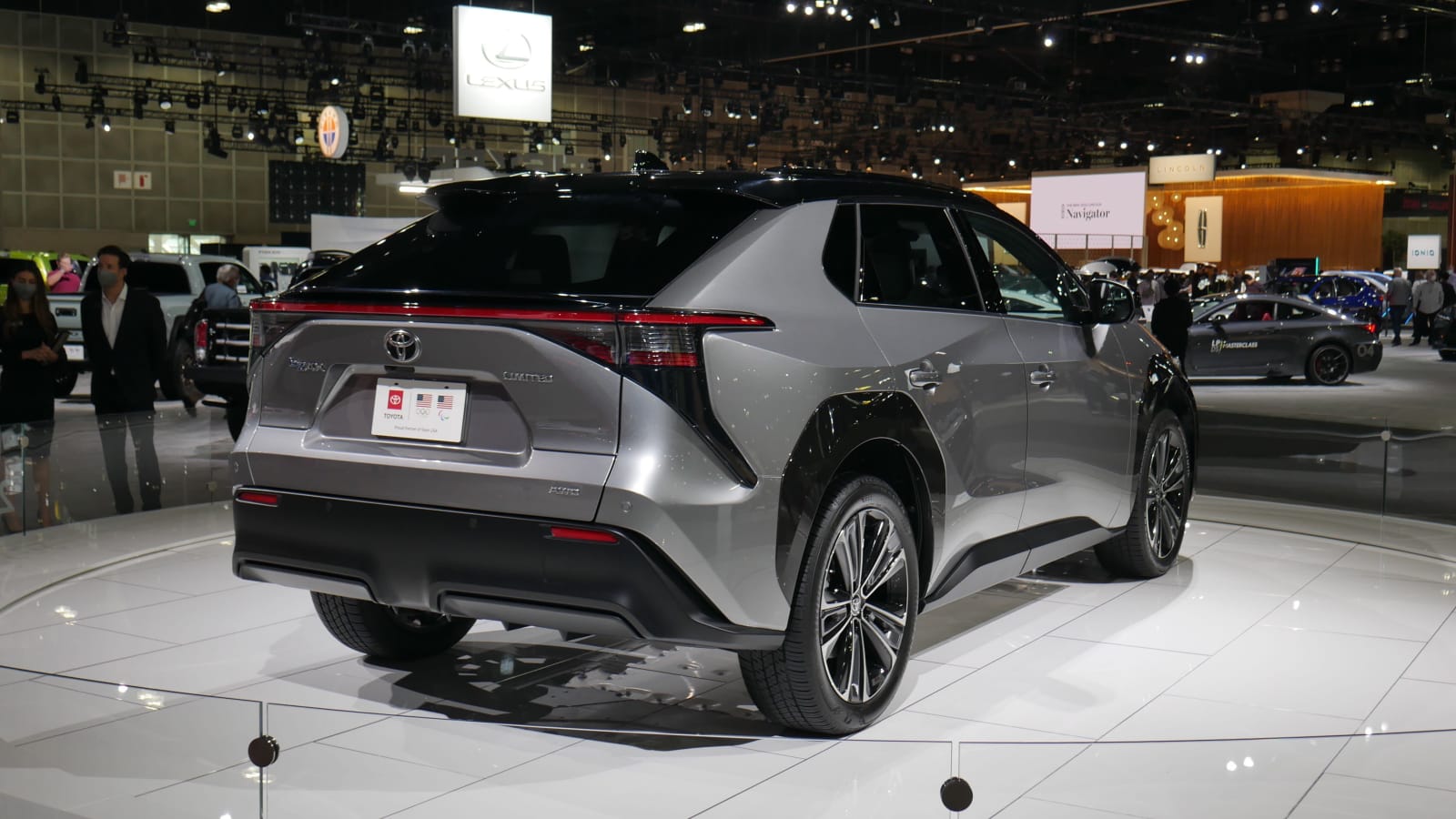
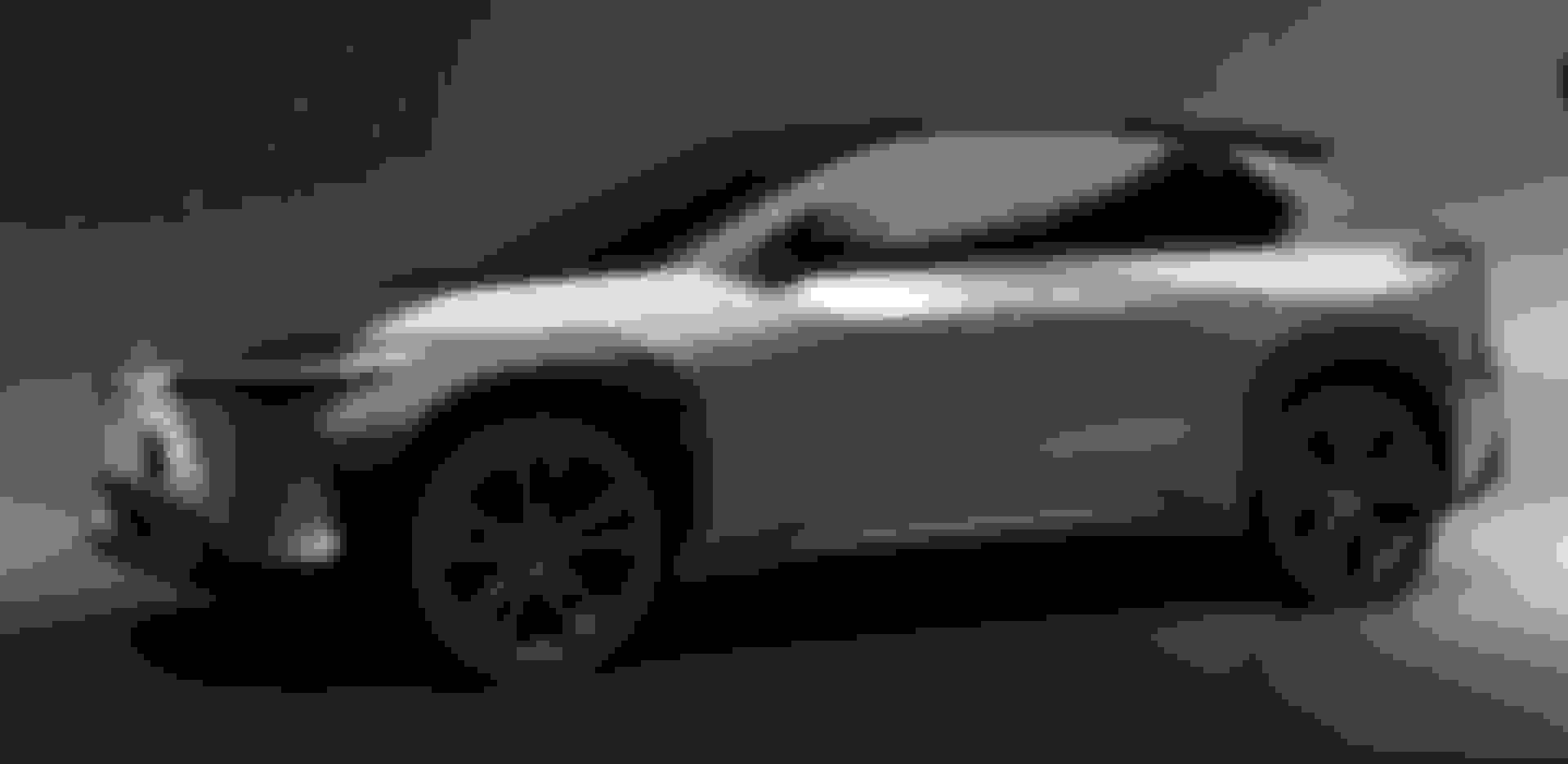
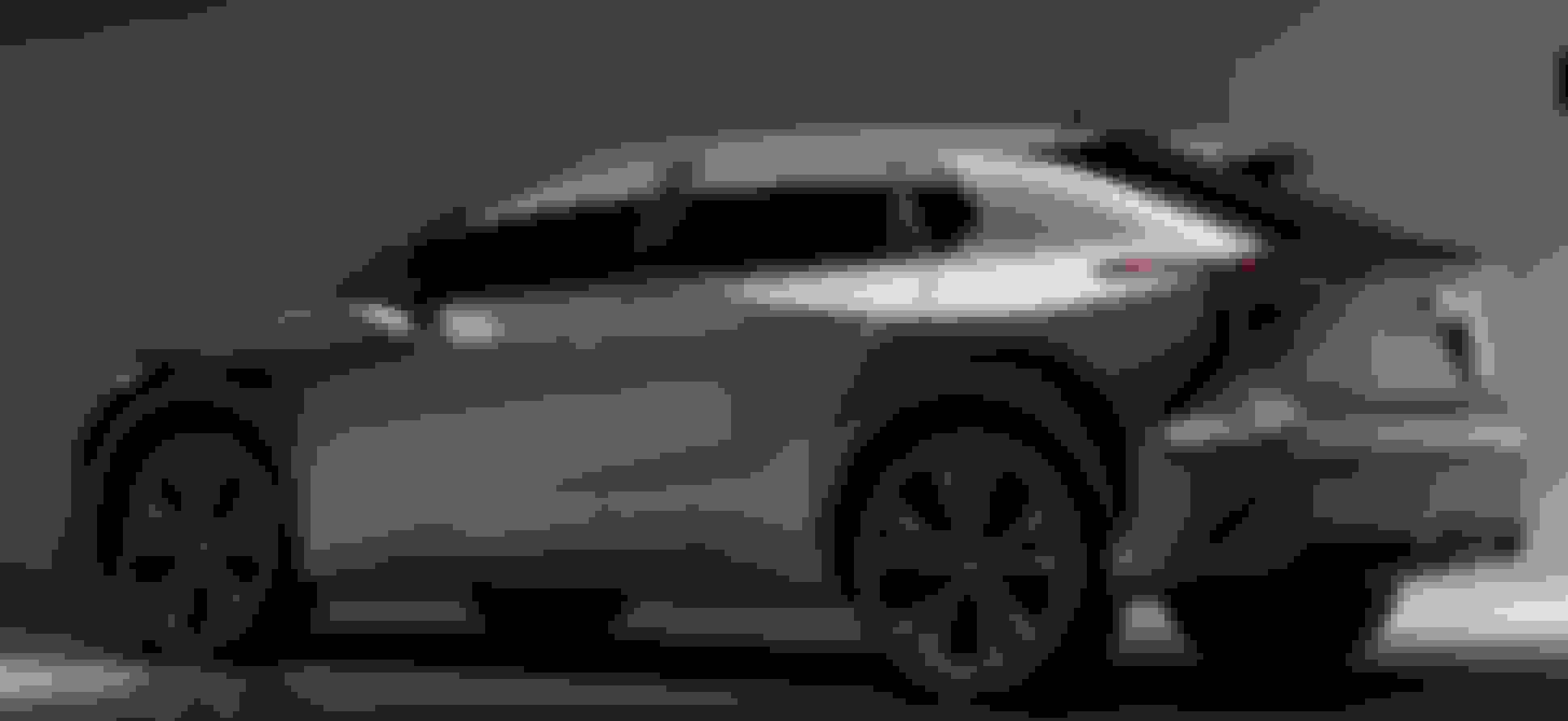
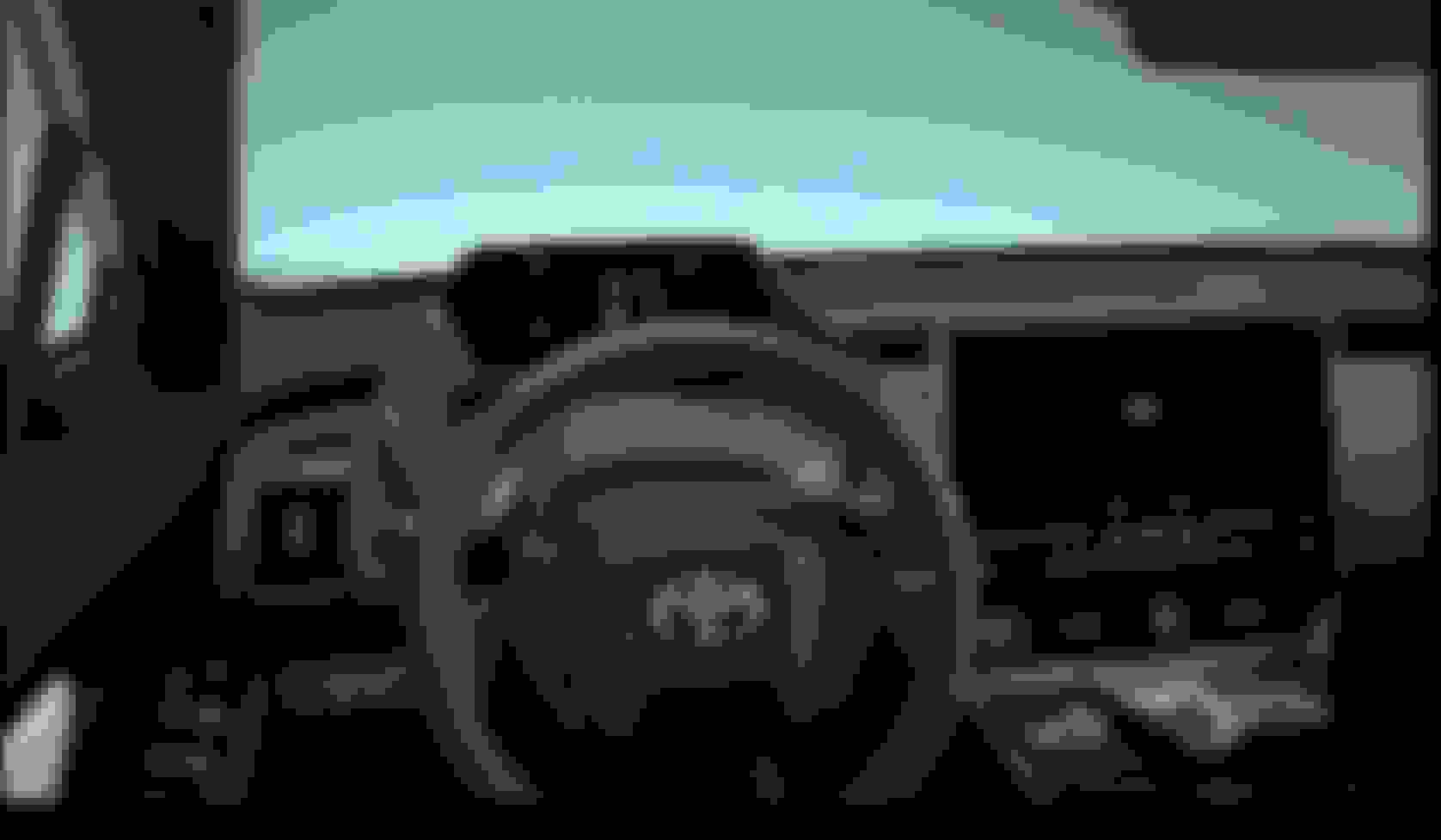
Beyond this, the photos are all we have to go on. The pictures Toyota released today are actually the same as what was released previously — Toyota simply changed the background color. That means that there’s even nothing new to see. Regardless, we’re glad to see the bZ4X BEV Concept on our shores, as Toyota says it’s now living at its North American HQ in Texas. There will be more to learn in this space as the year goes on, so stay tuned.
Toyota has unveiled the production version of its first purpose-designed EV, the bZ4X SUV. Those who liked the bZ4X Concept unveiled earlier this year will be happy to see that the production model sticks very close to the original recipe.
While the design speaks for itself in the photo gallery below, we’ll focus on the specifications because Toyota has provided many details about the electric SUV’s battery capacity, range, and performance.
The first model in Toyota’s new bZ (beyond Zero) sub-brand and the first of seven vehicles coming by 2025 developed entirely as BEVs, the bZ4X is a RAV4-sized utility vehicle that uses the carmaker’s new e-TNGA BEV dedicated platform co-developed with Subaru.
The battery is incorporated as an integral part of the chassis, beneath the vehicle floor, offering several advantages: low center of gravity, front/rear weight balance and high body rigidity. All these factors contribute to “excellent” safety, ride and handling, according to Toyota.
FWD and AWD variants powered by water-cooled 71.4 kWh battery
The high-density lithium-ion battery has a 71.4 kWh capacity and is water-cooled, a first for Toyota. It powers a front-mounted electric motor rated at 150 kW (204 PS/201 hp) and 265 Nm (195 lb-ft) of torque. According to Toyota, this enables the base bZ4X FWD model to accelerate from zero to 100 km/h (62 mph) in 8.4 seconds and reach a top speed of 160 km/h (99 mph).
Toyota will also offer an all-wheel-drive model with two 80 kW electric motors (one on each axle) developing a total of 160 kW (217.5 PS/214.5 hp) and 336 Nm (248 lb-ft) of torque. The bZ4X AWD does 0-100 km/h in 7.7 seconds and has the same top speed. Toyota says the AWD system co-developed with Subaru “provides added safety when driving in difficult conditions and gives the bZ4X genuine, class-leading SUV off-road driving ability.”
The driving range for the FWD variant is estimated at more than 450 km (280 miles) over the WLTP cycle, so it should be lower once the EPA measures it. Toyota says that customers should expect only a marginal reduction in battery performance—around 10% in 10 years of driving or 240,000 kilometers (149,130 miles), whichever comes first.
The first production Toyota with a steer-by-wire system
The bZ4X will also offer advanced technology features, including a solar panel roof to help charge the battery while driving or parked, third-generation Toyota Safety Sense suite of active safety and driver assistance systems, a new multimedia system with over-the-air (OTA) software updates, and a steer-by-wire system.
The latter, called One Motion Grip, does away with the mechanical linkage between the steering wheel and the front wheels, adjusting the tyre angle precisely according to the driver’s intention. It’s also said to provide more legroom, improve driving position freedom and ease of entry and exit. Available in select markets at launch, One Motion Grip replaces the traditional steering wheel with a yoke-like control that achieves full-lock with just a 150-degree turn, with no need for hand-over-hand turning.
The Toyota bZ4X will go on sale in mid-2022 in worldwide markets including the US, Europe, Japan, and China. Product details for the US market will be shared in mid-November, while the European premiere will take place on December 2.
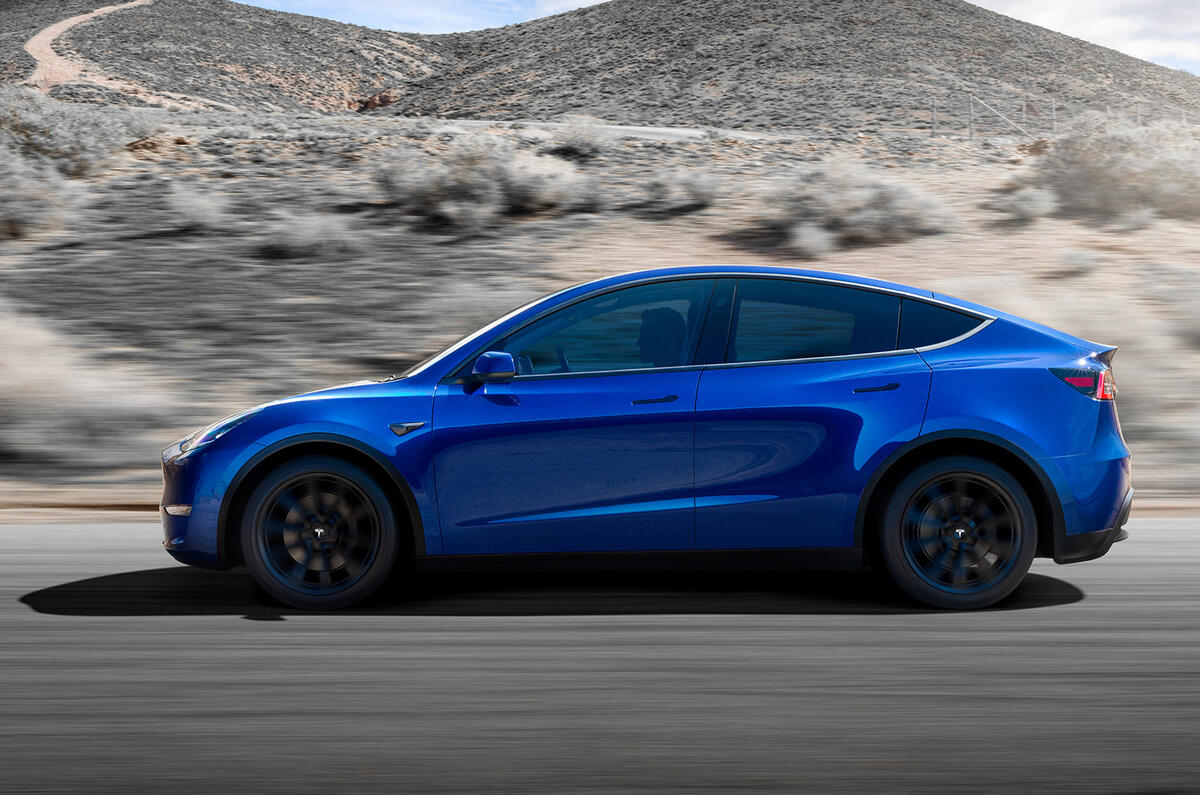
This BZ4 squarish design unlike old egg shape Teslas. which is 2nd generation Prius from 20 years ago design language. All Tesla efficiency is due to this design approach but in practical speeds it does not much advantage.
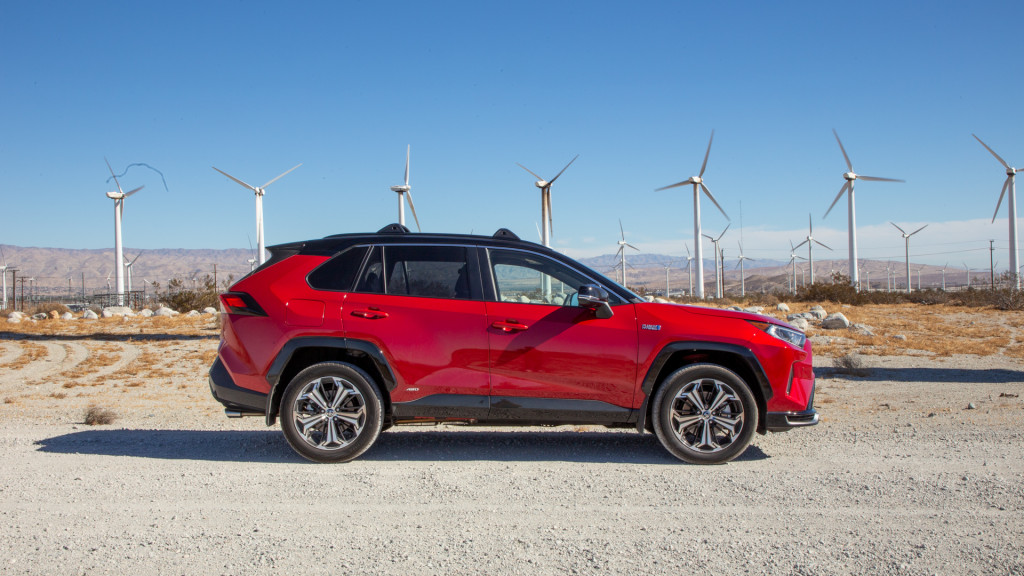
600 mile range on RAV4 prime consume 32 liters of fuel. which is 8.46 gallon. so basically it gives you 71 mpg at highway speed. Car is very long range and efficient and you can get 18inch rims from factory. you have to trust Toyota designs. They are decades ahead.
https://driving.ca/features/feature-...-rav4-primeAll those qualifications aside, here’s what I do know about the RAV4’s consumption. At a minimum, a full charge will get you 50 kilometres of EV range. At best, you might, as I did, hit 72 klicks. After the battery runs down, and the gas engine is warm — obviously quicker in summer than winter — the fuel economy on the highway runs around 5.0 to 6.0 L/100 km on the highway, only slightly worse in the city.
As for what works out to overall, I drove the RAV4 Prime exactly 1,000 kilometres before deciding to gas up (no, the gas tank wasn’t empty). The fill-up took 32 litres, which, long division being easy in this case, average out to 3.2 L/100 km overall.
As admirable as that is, it doesn’t account for the fact a) like an idiot, I inadvertently left the gas engine running an hour when the car was parked and b) being one of those disorganized types for whom a pure EV would be a disaster, I forgot to charge it on at least three occasions. Factor in that it was winter — that warming of engine and reduced range in EV mode — and one of my more frequent commutes was, as described above, just a few klicks past the Prime’s electric range, a summer city driving schedule would almost assuredly see an average less than 3.0 L/100 km, possibly even as low as 2.5 L/100 km.
With the unveiling of the upcoming Toyota bZ4X electric SUV in prototype form last week, the EV world got it best look at the brand's first mass-market battery-electric vehicle, one that will enter production in just a few months. The RAV4-sized bZ4X was revealed inside and out along with global specs, promising up to 310 miles of range in the WLTP cycle, and single- and dual-motor layouts, both powered by a 71.4-kWh battery. The SUV, developed along with Subaru and slated to receive a platform-shared version badged as the Subaru Solterra, will kick off Toyota's EV era, and will be joined by other models from the brand soon.
The reveal of the bZ4X also gave the EV world a look at something that it may or may not have been itching for—yoke-style steering—almost a year after Tesla showed off a similar setup in the refreshed Model S and Model X, which have begun arriving (to mixed reviews) over the summer.
Specifically, some users who've tried Tesla's yoke-style steering have noted that the learning curve can be steep, as the steering does not rotate uniformly around the hub but instead sits lower than its center at rest. Another common gripe was the fact that, unlike in F1 cars, the steering ratio remained the same and required drivers to regrip as they made turns in traffic, but without always finding a surface that was easy to grab. The difference between the yoke in F1 cars and in Tesla cars, as has been pointed out, boils down to the fact that F1 yokes require quite limited inputs, and do not require drivers to make two and a half or even three complete rotations. The steering in F1 cars just isn't geared like that.
Toyota's nominal reason for offering the yoke-style steering, believe it or not, was to make the instrument screen more visible. But its own take on the yoke arrived with an electronic steer-by-wire system that will, in fact, alter the steering ratio as needed. Toyota indicated that lock-to-lock, the yoke will only need to be turned 150 degrees—far less that the three complete turns usually required in cars today. Toyota says that the drivers will be able to change the steering characteristics via the drive mode selector, suggesting different settings that will be better suited for different types of driving.
"The steering feeling is improved through independently controlling the steering torque that the driver feels and the steering angle of the tires. Steering characteristics can be changed with drive mode select," the automaker promised.
Such a system, we suspect, would also need to offer a strong rotational resistance to prevent excessive input at highway speeds, which is also one of the reasons most automakers have not opted to offer yoke-style steering before, even coupled with steer-by-wire systems.
Of course, as "solved" as this issue may seem, we have to wonder just how users will get used to switching between steering ratio settings every day, so it remains to be seen just how well this system will be received by users who opt for it.
Toyota also claims that the steer-by-wire system will block "vibrations" from tires, which is another issue that we didn't know needed solving in this manner.
"System controls tire movement to ensure vehicle stability when driving on uneven surfaces or when Lane Tracing Assist is activated," the automaker adds.
Toyota also claims that the one-grip motion will result in more available legroom, as well as easier ingress and egress.
Steer-by-wire systems by themselves will not appear for the first time with this Toyota SUV, as in the recent past Infiniti was the one that introduced the most modern iteration of this concept to the mass market. The Infiniti Q50 introduced such a system in 2013, and a fairly complex one at that, with a fail-safe mechanical clutch that could connect to the steering in the event of an electronic failure. But such systems have not really caught on industry-wide, with equipment costs being one of the main hurdles. If it's not a system that buyers are clamoring for, the thinking goes, developing it and adding it to vehicles introduces new costs that someone has to foot at the end of the day.
If you're itching to try this system out at the dealer, you may have to wait a while. Toyota will offer this system first in China before other markets, so there's no guarantee it will make it stateside. But given the fact that Tesla seemingly started the yoke fad (if it is indeed a fad), we'd have to believe it'll make it here eventually.
I'm pretty sure everyone was panning Tesla's implementation of the yoke, not the yoke itself. Needing to cross your hands while turning, and the atrocious haptic buttons for the turn signal on the yoke were the biggest fails. All of which are addressed in Toyota's yoke.
In any case, it's bound for China only at this time.
Infiniti already had a variable ratio steer-by-wire system in the Q50 sold worldwide a few years back. But it had a failsafe mechanical linkage backup just in case.
My guess is if Toyota does bring the yoke to NA, they would need to implement the same backup system. Otherwise pushing a dead car off the road is gonna be a challenge.
This is the 2023 Toyota bZ4X, due to hit U.S. showrooms next year as Toyota's first all-electric 50-state SUV. No, you're not imagining things. This is the third time Toyota has revealed its new EV; the first was the prototype, and more recently we saw the Japanese-market model with its goofy yoke. Plus, we've seen the Subaru Solterra a few times, and that's basically the same thing. Today, we're looking at the Toyota variant that will actually be sold here, conventional steering wheel and all.
"With zero emissions and an exhilarating drive, the bZ4X is hitting the market at just the right time as we expand our already comprehensive electrified product lineup," said Toyota marketing VP Mike Tripp in the company's announcement. "As a human-centered company, Toyota remains committed to offering customers a diverse portfolio of products to meet their individual needs and move us toward a carbon neutral future."
The sheetmetal hides an architecture called e-TNGA that was developed jointly by Toyota and Subaru. In its standard configuration, the 4,232-pound bZ4X is powered by a single electric motor that zaps the front wheels with 150 kW (201 horsepower). Optionally, buyers can add an electric motor to the rear axle for through-the-road all-wheel-drive and a combined 160 kW (214 hp) output, with each motor contributing half.
That doubling the motor count adds so little power may seem strange, but the AWD motors are smaller, producing just 80 kW apiece. Hitting 62 mph from a stop takes 8.4 seconds with one motor and 7.7 with two, so the modest power improvement is obviously secondary to the benefits of all-wheel traction, even with a little more weight. The second motor adds roughly 190 pounds.
AWD or FWD, the total battery capacity remains the same. bZ4X gets a 71.4-kilowatt-hour lithium-ion battery pack rated for up to 250 miles on the front-wheel-drive model. Previous estimates suggested up to 310 miles for that variant (and 285 for the AWD model), but both numbers were obtained on the Japanese testing cycle. Toyota notes that plugging the crossover into a 150-kilowatt charger zaps the battery pack to 80% in about 30 minutes.
Toyota says the bZ4X will benefit from other modern tech, like over-the-air software updates and the company's latest suite of semi-automated driver assists. Look for it in showrooms by the middle of next year.
CARLSBAD, Calif. — Last summer, a whopping 40% of would-be electric vehicle buyers said they had heard of Toyota’s EV. Of that, 21% said they considered buying it. Funny thing was, the 2023 Toyota bZ4X wouldn’t be revealed for months, and we’re just reviewing it now. In other words, all those people were keen on a car that didn’t exist … which is more than those who had heard of the Chevy Bolt and Nissan Leaf, cars that actually existed for years.
Well, the bZ4X exists now. Unlike the second-generation Prius that popularized hybrids, there is very little revolutionary about Toyota’s first from-scratch EV. You won’t see any bladder-busting range numbers, wait-saving charge times or neck-snapping 0-60 sprints. This sucker is aimed straight at the average new car buyer rather than EV enthusiasts. You know, like the people who thought it was already on sale. To that end, it isn’t shaped like a Prius-like slug, nor a car from “Back to the Future Part II.”
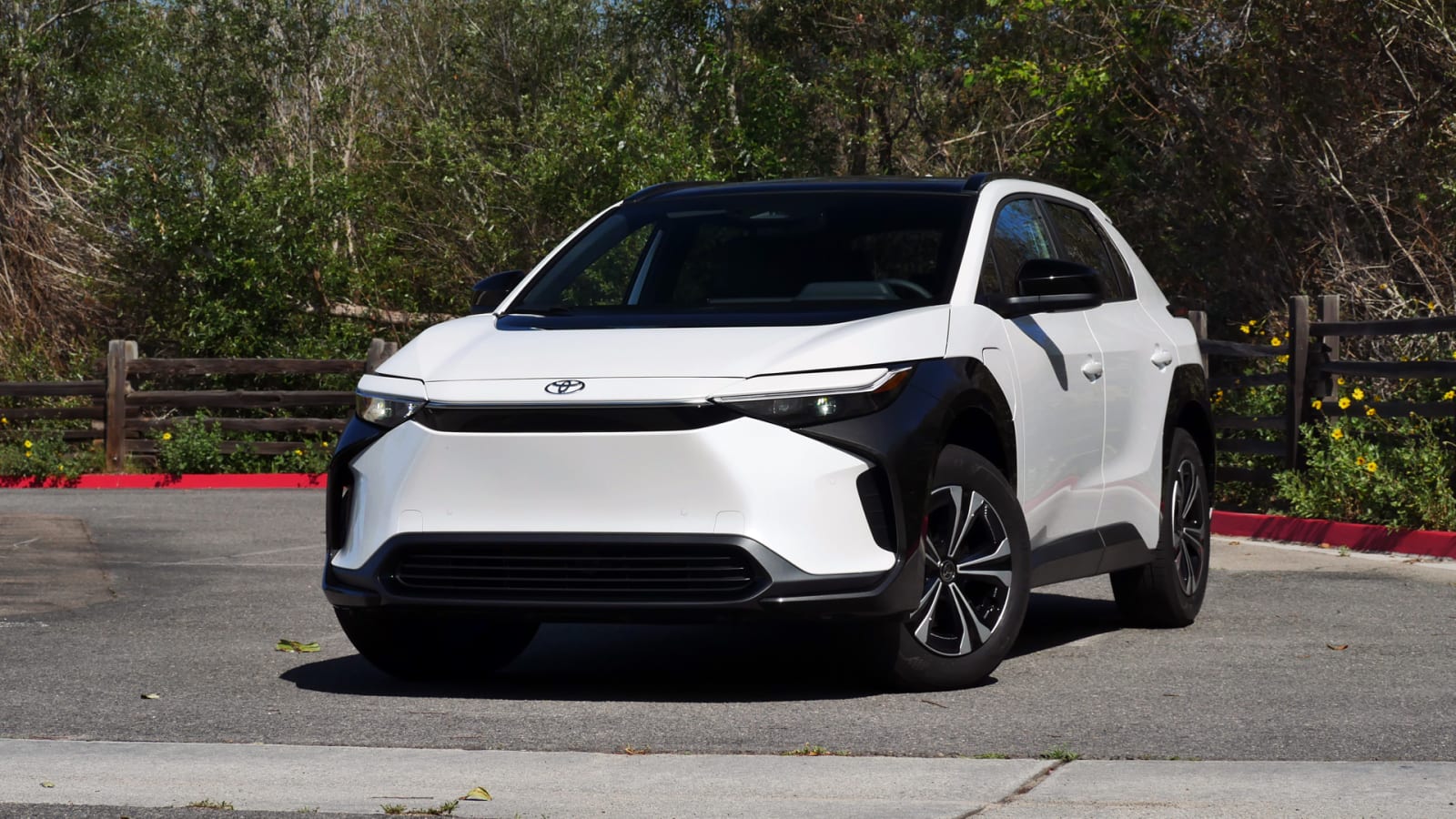
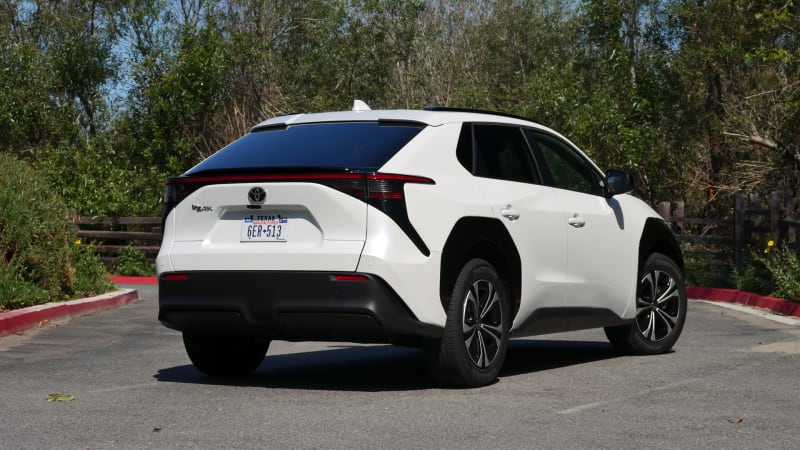
Nope, it basically looks like a RAV4, which isn’t such a bad idea considering Toyota moved 407,000 of those last year. Though it’s 3.7 inches longer with a 6.3-inch-longer wheelbase, and 2 inches lower in overall height, there is no denying the resemblance. To create some differentiation, Toyota added the prominent, metallic gray fender flares (yes, they’re obligatory) and erased the grille, creating a smooth, unadorned front end that also serves as the primary visual difference between the bz4X and the 2023 Subaru Solterra.
Ah yes, the Patagonia-adorned elephant in the room. This would be the second set of twins spawned by the Toyabaru alliance after the 86 and BRZ. However, whereas those cars are more-so the work of Subaru, the BZ4X and Solterra are by-and-large a Toyota joint. According to chief engineer Daisuke Ido, Subaru really only focused on the all-wheel-drive functionality and off-road capability of the twins, going so far as to share the Solterra’s X-Mode off-road drive modes with the bz4x. The Toyota doesn’t have quite as much ground clearance, but at 8.1 inches is only 0.2 closer to the ground than the Solterra. It’s also still higher than the compact SUV norm and basically a Power Wagon compared to the car-like Hyundai Ioniq 5 and Kia EV6.
The Solterra is only available with all-wheel drive, though, because Subaru. Toyota, on the other hand, offers a front-wheel-drive version as standard, which is where the b4ZX starts to really differentiate itself from the recent crop of new EVs. First, most of those come standard with a single rear motor and therefore rear-wheel drive. Second, their all-wheel-drive versions effectively add a front motor to the existing one at the back. Toyota does something completely different: The FWD model has one 150-kilowatt motor, while the AWD one has an 80-kW motor on each axle. The result is comparable power outputs of 201 horsepower with FWD and 214 hp with AWD, whereas the Ioniq 5, EV6 and Volkswagen ID.4 get big bumps with their added front motors.
Why is this significant? For those in wintery climates where rear-wheel drive is a liability, selecting all-wheel drive is a near certainty. Trouble is, doing so means paying a much heftier amount than normal since you’re also paying for a sizable performance increase. With Toyota, not only is front-wheel drive perfectly acceptable for winter, but the all-wheel-drive option costs the same $2,000 that you’d normally pay for AWD in a gas-powered SUV.
And besides price, the front-wheel-drive BZx4 has another advantage over the AWD version and the Solterra: range. EPA estimates peg the FWD XLE trim level at 252 miles and the Limited FWD at 242. The AWD XLE and Limited, respectively, are 228 and 222 miles, mirroring the Solterra. That’s a significant drop, and more, the FWD version is quicker to recharge with a maximum input of 150 kWh versus 100 kWh (both of which are considerably slower than the Ioniq 5 and EV6). What’s the deal? Well, the front-wheel-drive bX4Z actually has a different battery pack than the all-wheel-drive twins. Their capacities are similar at 71.4 kWh for FWD and 72.8 kWh for AWD, but they’re in fact different packs produced by different suppliers. Why? The answer is demand, as in Toyota couldn’t get enough of a single battery to supply all 13,000 or so Toyabaru EVs it intends to build for 2023. Perhaps that will change in the future.
For now, then, the front-wheel-drive Toyota b4Xz seems like the more competitive version, or at least, the more distinctive one. On the road, the main difference between the drivetrains comes down to good old-fashioned torque steer. Gun the FWD model mid-turn and the bZ4X goes all Saab on you, wrenching the tiny steering wheel in your hands as 196 pound-feet of torque instantly pours through the front wheels. With AWD, it’s drama-free. It’ll also hit 60 mph in 6.5 seconds versus 7.1, but that’s not really a difference you can detect. Certainly not like the multi-second drops of most competitors.
Once up to speed, you’d be hard-pressed to tell the difference. The ZXB4 basically feels like a more substantial RAV4, the result of being 576 pounds heavier than a comparable RAV4Hybrid with all that extra battery weight distributed evenly down low between a longer wheelbase as opposed to being spread out all over the place with an engine, transmission, battery, gas tank, etc. And before you scoff, remember that the latest RAV4 is actually a surprisingly pleasing little SUV to drive these days, with precise and nicely weighted steering paired with a suspension that maintains its composure if hustled. So be the bZX4. It’s not as engaging as the RAV4 Hybrid’s SE trim levels, though (including the RAV4 Prime), and you definitely shouldn’t expect the sort of fun-to-drive experience you’ll get in the Ioniq 5, EV6 or ID.4.
There are only two levels of regenerative braking: a default mode mimicking the behavior of a gas-powered car, and a heavy regen mode that must be selected at every start-up by pushing a center console button. It’s not pull-the-chute heavy, nor does it allow for full one-pedal driving (it’s probably akin to level 4 of 5 in the Hyundai/Kia cousins), but it slows naturally, and taking over with the pedal yourself is seamless. It’s actually better than the Mercedes EQS in this regard.
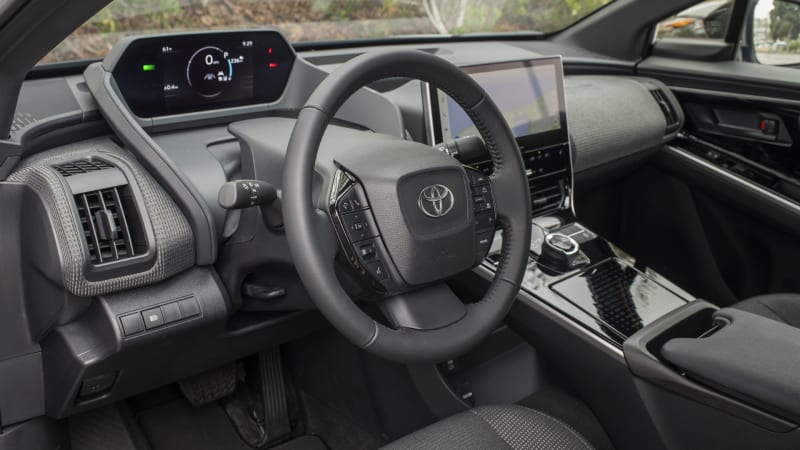
Step inside and you’ll find that Toyota has struck a nice balance between creating a unique, forward-looking cabin and one that is actually functional, as opposed to the Volkswagen ID.4. Basic controls are where they should be, there are separate displays for the instruments and infotainment, and there’s a sufficient amount of physical buttons to go with capacitive buttons that are illuminated and responsive. Again, unlike the ID.4. The infotainment system itself is a standard 12.3-inch widescreen unit, shared with the Toyota Tundra and more-or-less the Lexus NX (and the Solterra, which has a carbon copy cabin apart from a Subaru logo). We’d still like a split-screen view and a physical home button for escaping Apple CarPlay/Android Auto, but it generally works well and much better than the RAV4’s system.
Then things get weird, mostly for the acceptable. The dash top is covered in a nice gray fabric rather than hard plastic, rubbery plastic or pleather. Below is an optional radiant heater that heats up the cabin more quickly than the HVAC can manage. There’s a sky-high center console with ample storage below, and on top, an oddball door covering the wireless charging pad that provides a grate-like peek-a-boo view of your phone for some reason. There’s an abundance of fingerprint-attracting, sun-reflecting piano black trim that’s admittedly less weird and more annoying. The shifter is an entirely new take on changing gears (‘cause we needed another), requiring you to first push down before going right for Drive or left for Reverse. The steering wheel is notably small and mounted to a unique, tilt-and-telescoping xenomorph skull that sprouts from the spot on the dash where the instruments would be.
The 7-inch digital instrument display instead sits higher, just below the windshield, and therefore above the steering wheel rim. Multiple Toyota reps oddly made a point of asking if the rim was sufficiently low enough not to block the IP, to which I replied, “No problem at all. If anything it’s better than the usual layout that can block a bunch of the IP, like in the EV6.” I had clearly forgotten that Toyota apparently plans to offer the x4zB with a yoke, presumably because of this IP position. Guess the reps were fishing for feedback. Well, here’s some more: It’s not necessary. And yokes are dumb.
Despite its longer wheelbase, the bZ4X actually has less rear legroom than the RAV4 (35.3 vs 37.8), and headroom can be a bit tight. Its legroom also falls a very significant 4 inches short of the EV6 and Ioniq 5, but really, that speaks more to those being outliers. The Bee Zee Four Ex is ultimately pretty typical for a compact SUV. Its 27.7 cubic-feet of cargo space is basically identical to the EV6, which can hold this much stuff with that on-paper volume, and its similar fastback shape should make it similarly less suited for carrying tall items that the boxier, 37.5-cubic-foot RAV4 cargo area would swallow with ease.
Bz4x pricing starts at $43,215, including the $1,215 destination charge, for what is a very well-equipped small SUV. The Limited starts at $47,915 and really only adds a power driver seat, heated and ventilated front seats, all SofTex pleather upholstery (versus fabric/SofTex), enhanced parking cameras and bigger wheels that somewhat harshen the ride. You can live without it. All-wheel drive adds $2,000 to either trim level, and remember that for now, you can probably subtract $7,500 worth of federal tax credit (though Toyota is close to reaching the 200,000-unit threshold that begins the credit’s phase-out) plus potential state credits. This pricing is competitive with the basic ID.4, Ioniq 5 and EV6, but remember everything said above about front-wheel drive and the differences in motor power. Also, the AWD version may not go as far on a charge as its competitors can, but it also costs considerably less – the Ioniq 5 and EV6 in particular go deep into the $50,000 range.
Frankly, they can: They’re better cars. For the money, though, the ßẐIVχ is a strong contender and we’d say a superior choice to the ID.4. What about the Solterra? Well, if front-wheel-drive is the most compelling version, then it’s hard not to give the nod to Toyota.
Oh, and one more thing: bZ4X is a ridiculous name. Worse, it’s basically impossible to type. Go ahead, try it. I did, failed. Toyota is obviously well aware of the blowback, most of which was unrelated to the perils of a QWERTY keyboard, as it repeatedly attempted to explain the moniker during the press launch and in press materials. You see, “bZ” will be applied to a new sub-brand of electric vehicles from Toyota and stands for “Beyond Zero” (note they capitalize the damn B there) which “was developed with human-centricity at the heart, meaning it hopes to provide more than a mobility solution but also an innovative space for customers.” This was repeated in some variation as if we were all supposed to smack our heads and go, “Oh, well there you go.” The 4 then represents the vehicle’s size, not unlike a BMW 2 or 7 Series, while X stands for the type of vehicle – in this case, an SUV. I personally look forward to the bZ8C personal luxury coupe and bZ2W compact sport wagon.
Being able to decode the name is all well and good, but your car’s VIN can also be decoded. That doesn’t mean Toyota JT352EEA2302021 would be a good car name. Type it what you will, though, at least the 2023 Toyota bZ4X is a pretty good electric car. And hey, it actually exists!
One of the most remarkable things Toyota has to offer with the bZ4X is the battery pack warranty. The Japanese carmaker seems pretty confident that it will retain 90% of its capacity after ten years, or 240,000 kilometers (150,000 miles). Without any new tech, we wondered how. Toyota is quietly answering that: it said the AWD version would not fast charge under 32ºF (0ºC). 37 photos
The information is almost hidden in a document about five main aspects of the bZ4X. In a footnote, Toyota clarifies some of the variables involved with charging and warns that DC charging the EV more than twice a day would negatively affect charging times. Toyota also warns that temperatures below 50ºF (10ºC) would increase it “significantly.”
That is a massive problem for a vehicle that will be sold in cold-weather countries such as Norway, Sweden, and Finland. Even China and the U.S. have some regions where cold temperatures are typical, although Toyota did not seem willing to sell the electric SUV in high numbers in any of these markets.
As we mentioned in the presentation of the bZ4X, it did not come with an 800V system and did not offer any new feature that would make it stand out from the competition. The only thing that seemed extraordinary about it was the warranty. However, it is now clear that it carries a cost that few EV drivers will be willing to pay in places with cold temperatures. Mind you that they do not need to be extreme: anything below 50ºF (10ºC) will already negatively impact the bZ4X.
This is not the first complaint about the charging performance of the bZ4X AWD. Kyle Conner, from the Out of Spec Reviews channel, said that it is the “slowest charging EV” he has ever tested “by a very large margin.” Curiously, Conner mentioned that this bad charging curve is related to the larger battery pack, which comes with CATL cells and delivers 72.8 kWh to the AWD version.
The 71.4-kWh battery pack used by the FWD derivative comes with Panasonic cells and is much faster to charge: it does so at up to 150 kW. The CATL battery pack can only deal with 100 kW. In other words, the Panasonic battery pack is 50% faster to charge.
It is a strong element for customers to prefer the EV with a Panasonic battery pack. At this point, it prompts the question of whether this is a technical limitation with CATL batteries or just something Toyota came up with to restrict the demand for the cell from the Chinese company. We’ll make sure to ask.
As i was telling my co worker who is interested in this, Why would you want to spend the same $ (top trim) to get a 200hp EV when you could get other EVs with 350hp RWD or AWD with longer range, better interior, better warranty, better looks (IMO) and just better everything for about the same $ or just a little bit more???
Last edited by oonowindoo; May 11, 2022 at 05:41 PM.
Toyota faced a major embarrassment when its first mass-produced EV presented a weird issue with its hub bolts. In June, the company said 2,700 units of the bZ4X and 2,600 Subaru Solterras could see their wheels go loose due to the issue. At the time, Toyota stated that “the cause of the issue and the driving patterns under which this issue could occur are still under investigation.” It seems the company discovered what the problem was: it announced it would produce the electric SUV again starting on October 6. 37 photos
Before the bZ4X, Toyota also sold the RAV4 EV in the U.S. The vehicle had two different generations – the last of which used Tesla battery packs – with both accounting for less than 5,000 units. The bZ4X is the first one conceived from the ground up to be electric and the first with ambitions to break the 10,000-unit barrier.
Reuters said that only 232 bZ4X had been sold in the American market before Toyota halted sales and advised these customers not to drive their EVs. Considering that the Part 573 Safety Recall Report 22V-444 talks about 661 vehicles involved, Subaru had sold more Solterra units until that point: 429. Most of these 2,700 bZ4Xs must be in Europe. In Japan, they are only leased.
When Toyota announced the production restart, it disclosed the bZ4X had to go through another recall involving the airbags. According to Reuters, they were improperly installed in some units and could either fail or cause injury because of how a strap was placed inside the airbag assembly. The Japanese carmaker did not disclose how many EVs were involved with this new recall, and the National Highway Traffic Safety Administration (NHTSA) also does not present any information about that on its website so far.
Although Masahiko Maeda informed about the bZ4X getting back into production, he refused to answer how much money Toyota spent on the recall processes. The Japanese automaker’s chief technology officer also did not disclose the defect with the hub bolts. Toyota just informed the Japanese transport ministry that all of them were replaced, and the new ones were properly tightened.
Lexus (US) web page was updated to say "Arriving early 2023" instead of Fall 2022; so it is still anyone's guess. Nothing on the Canadian page other than it will only be sold in BC and Quebec. My dealer (unsurprisingly) is in the dark as well. It doesn't sound like the Motomachi line has added the RZ to its production list, so we are in for a wait..
There are a lot of crossovers and SUVs from Toyota - some of them look quirky, just like the newly introduced Rangga three-row SUV; some of them are tough as nails, like the 2025 Toyota 4Runner mid-size off-roader, and some of them have crazy names like the all-electric bZ4X.
Speaking of the latter, it's among the few efforts to provide a completely electric option to Toyota fans – the Japanese automaker is well known for its lack of trust in battery vehicles as they would rather invest in fuel cell vehicles and regular hybrids plus PHEVs. Still, they have the bZ4X up for grabs in the United States, where the 2024 model year kicked off at a rather steep price of $43,070, whereas its only other trim was $47,180.
Well, that's a thing of the past now because the local division TMNA (Toyota Motor North America) has just revealed the Manufacturer's Suggested Retail Price (MSRP), which excludes the Dealer Processing and Handling fee (DPH), got a steep reduction for the 2025 bZ4X: it's now $6k lower on the XLE trim and another $5,380 lower for the ritzier Limited grade. That means the entry-level EV now starts well under $40k, even when factoring in the $1,395 destination charge.
If you select the single-motor XLE, then it's a front-wheel drive CUV with 201 horsepower, the same as before. Moving up to the XLE AWD, we find a dual-motor setup, but the combined power only gains an additional 14 horsepower. Anyway, the big news is the price drop – not the pony count. So, the 2025 Toyota bZ4X now starts from $37,070 on the XLE FWD grade, a drop of almost 14%, whereas the XLE AWD is now $39,150, and the Limited kicks off at $41,800 with the 2025MY coming to nationwide dealerships early next year.
For the money, you get an EPA-estimated range rating of 252 miles on a single charge on the XLE FWD model and 228 miles on the XLE AWD, while the Limited goes up to 236 miles on the front-wheel drive variant and then back down to 222 miles on the AWD version. Additionally, now there's also a fresh Nightshade AWD model for the bZ4X which joins the expanding family of models featuring the darker tone. It's available in two-tone Wind Chill Pearl or Heavy Metal with black roofs, and "drivers can also go electric stealth with an all-black exterior."
The Nightshade is based on the XLE model but comes with blacked-out 20-inch multi-spoke alloy wheels, black badges, black door handles, and a black split rear spoiler. Moving inside the cabin, there's a SofTex fabric on the seats and a leather-trimmed steering wheel – both with red stitching. Additionally, all bZ4X Limited models gain three additional driver assistance features for 2025 – Traffic Jam Assist, Lane Change Assist, and Front Cross-Traffic Alert (FCTA). TJA also needs an active Drive Connect trial or subscription – and it can provide hands-free control at speeds below 25 mph on controlled access freeways with help from Lane Tracing Assist (LTA).
The Toyota bZ4X made its debut for 2023, and the reception was underwhelming. But since then, Toyota has worked to make the EV more appealing, rolling out a big price cut for 2025 after adding equipment for 2024. However, much more substantial changes have just been revealed for the European market.
The changes start with two updated electric motors that now feature silicon carbide semiconductors for greater output. The single-motor front-wheel-drive bZ4X offers either 164 or 211 horsepower, depending on the battery size. The current FWD model that's sold in the United States is good for 201 horses. The dual-motor variant sees a big increase to 337 hp (versus 215 hp for today's U.S. model).Whereas the current U.S.-spec bZ4X has two battery packs that are virtually the same size (63.4 and 65.5 kWh), the Euro model is moving to greater differentiation. We estimate the smaller pack has a usable capacity of 51.9 kWh, with the larger pack estimated to have a 65.8-kWh capacity.
Level 2 AC charging should be much quicker with a new 11-kW onboard charger or an available 22-kW unit; both are more robust than our current 6.6-kW unit. DC fast-charging is unchanged at 150 kW max, but a new battery pre-conditioning system is said to deliver faster charging in cold weather.
The bZ4X's exterior styling has been tweaked, and the interior has a newly standard 14.0-inch touchscreen that replaces the previous 12.3-inch unit. The revised center console adds dual wireless charging pads, but the dashboard retains the somewhat odd instrument-screen placement. Toyota also claims improved dynamics and lower noise levels for the revised bZ4X.
Right now, there's no word on when the U.S. car will see the changes, but in Europe, the revised bZ4X will go on sale in the coming months.
Toyota revealed the bZ4X Touring, a new addition to its pure electric bZ4X range that widens the model's appeal with even stronger, versatile performance and a significant increase in load space. These are key qualities for customers seeking a car that meets the demands of an active lifestyle or can serve as spacious and flexible family-size transport.
As an authentic SUV, the new bZ4X Touring allows customers to choose an electric vehicle without having to compromise their lifestyle thanks to more space and versatility, combined with fast charging throughout the year, generous driving range and powerful motors.
The bZ4X Touring will further strengthen Toyota's comprehensive coverage of the key B, C and D electric SUV market categories, joining the all-new Urban Cruiser and Toyota C-HR+ and the new, revised bZ4X in its battery electric vehicle line-up. All sharing the well-defined DNA of Toyota's BEV models: true AWD-capacity, SUV body types and the brand's renowned quality, durability and reliability (QDR). With a range of battery options and the choice of front or all-wheel drive across all these models, Toyota has solutions to suit a great spectrum of customer requirements and preferences, be it performance, cost efficiency, or - with the new bZ4X Touring - a vehicle that's perfectly tailored for busy family life.
Focus on space
Toyota has created the bZ4X Touring with a seamless extension of the established bZ4X's SUV body style. It is 140 mm longer and 20 mm higher overall (total figures 4,830 mm and 1,670 mm respectively), dimensions that increase the load compartment capacity by more than a third - an extra 148 litres - to 600 litres.
It maximises the space-saving opportunities offered by Toyota's BEV powertrain, with compact components and a layout that avoid intrusion in both the cabin and the load space.
The Toyota bZ4X Touring has the carrying capacity for a family's holiday luggage, or for all kinds of leisure and sporting equipment. A 40:60 flexible rear seat arrangement means it is simple and easy to extend the space available when required.
Powertrain and performance
The new bZ4X Touring follows Toyota's principle of offering a BEV-lineup that provides a breadth of choice for the customer, with both front and all-wheel drive versions available. The AWD option with Toyota's intelligent XMODE drive control technology and Grip Control gives true AWD capabilities and provides the peace of mind of extra traction and surefooted performance on rougher or looser surfaces - just the kind of roads that might be encountered on a family adventure.
Both are equipped with a 74.7 kWh (gross capacity) lithium-ion battery and - depending on grade - either a 11kW or a 22 kW onboard charger. Maximum fast-charging capacity (DC) is around 150 kW.
The battery features Toyota's latest advances in improving performance and charging times. It incorporates the new water cooling system and preconditioning function recently introduced in new bZ4X, which the driver can activate either manually, or automatically by navigating to a fast-charging station, to ensure the battery is at optimum temperature when charging starts. This is particularly useful in colder climates.
The targeted maximum output for the front-wheel drive model is 224 DIN hp/165 kW; for the all-wheel drive bZ4X Touring it's 380 DIN hp/280 kW, making the model the most powerful Toyota BEV on the market.
The powertrain benefits from Toyota's new eAxle. Using new silicon carbide (SIC) semiconductors, these operate with greater efficiency and produce higher power, while also being lighter and more compact.
As well as extra horsepower, the bZ4X Touring can tow trailers up to 1,500 kg, adding to the SUV's credentials as a highly capable and capacious vehicle.
Peace of mind battery guarantee
In common with all Toyota's new BEVs, the bZ4X will come with long-lasting battery quality, durability and reliability guaranteed. Toyota's Battery Care Program covers the battery each year for up to 10 years of vehicle age or up to one million kilometres driven, subject to an annual battery health check.
Presenting a more rugged look
While the bZ4X projects a sleek and high-tech look, the Touring's spacious, estate-like body adopts a series of styling details that emphasise a more rugged and adventurous spirit, such as a grained black finish for the wheel arches, black wheels and robust roof rails. Another Touring-unique feature is the roof rails, making it even easier to transport sports equipment or long loads allowing for 70 kg roof load.
The principal changes are at the extended rear section of the car, with a new lower bumper design and LED combination lamps that have a more modern, "outdoor" look. The monotone exterior colours will include a new Brilliant Bronze.
Inside, the cabin features a new design similar to the new bZ4X: A new centre console for easy use of digital devices and instrument panel design, with a 14-inch multimedia screen fitted as standard. The interior finish will include a new City Moss upholstery colour, in tune with the model's authentic SUV character.
The multimedia system provides a BEV navigation function supporting the driver to choose a route and charging points based on the car's battery state of charge and remaining driving range.
The Toyota bZ4X Touring is scheduled for introduction in Europe in the spring of 2026.
Toyota continues to move its electrified vehicle portfolio forward by announcing its 2026 bZ Battery Electric Vehicle (BEV). For model year 2026, the model makes advancements in range, output, charging performance, and vehicle design. Leading the charge is a larger lithium-ion battery with a higher total capacity of up to 74.7-kWh, equipped on a newly available XLE Front-Wheel-Drive Plus (FWD Plus) model, as well as the XLE All-Wheel-Drive (AWD) and Limited (FWD/AWD) grades. Models equipped with the new battery are projected to have a manufacturer-estimated rating of up to 314 miles of range on a full charge. A 57.7-kWh battery will also be available on a XLE FWD model.
The 2026 bZ will be equipped with a North American Charging System (NACS) charging port, giving it access to thousands of high-speed charging stations nationwide. Under ideal conditions when using DC fast charging it is capable of charging from 10% to-80% battery capacity in around 30 minutes. The 2026 Toyota bZ also adopts Plug & Charge capability, an industry standard protocol that allows automatic identification, authentication and authorization at selected charging networks, reducing the need for multiple mobile charging applications.
Toyota's compact, lightweight and energy-efficient eAxles have also been upgraded. They now use silicon carbide (SIC) semiconductors, which help deliver higher power output. For AWD models, output increases by 50% to 338 combined system net horsepower (hp), making it capable of going from 0-60 MPH in 4.9 seconds. Front Wheel Drive models also boost their output, now delivering up-to 221 hp (previously 201 hp).
The model also receives a name change, switching from the Toyota bZ4X to the Toyota bZ, simplifying the name for customers. The 2026 bZ also presents a refreshed exterior design that harmoniously blends form and function. While maintaining its distinctive aesthetic, the updated model incorporates subtle refinements to the front fascia and lighting elements, with slim LED daytime running lights that integrate into a sleek hammerhead front end. Redesigned front overfenders also change the look, with a newly available color-matched moulding that blends into a lower profile front fascia.
Inside, the 2026 bZ will offer a spacious and technologically advanced cabin designed for comfort and connectivity. The console layout is now optimized, with two front wireless chargers and a new, slimmed down dashboard with a larger 14-inch Toyota Audio Multimedia touchscreen and soft touch materials, gives it a premium feel. The 64 color, customizable ambient lighting throughout the cabin further enhances the tactful interior styling.
Two Battery Choices and Faster Charging
The 2026 bZ battery options include a 57.7-kWh and 74.7-kWh unit, manufacturer estimated all-electric drive range ratings are:
314 miles (XLE FWD Plus; 74.7-kWh battery)
299 miles (Limited FWD; 74.7-kWh battery)
288 miles (XLE AWD; 74.7-kWh battery)
299 miles (Limited AWD; 74.7-kWh battery)
235 miles (XLE FWD, 57.7-kWh battery)
For 2026, the bZ adopts a NACS charging port, capable of DC fast charging. It will also have Level One and Level Two AC charging with a higher capacity 11-kW on-board AC charger (up from 7-kW capacity on the prior model). The charging port will be located on the front right-side of the vehicle and the model will come with a dual-voltage charging cable.
A new battery pre-conditioning function is also equipped on all models. This system is designed to bring the battery to an optimal temperature for DC fast charging, which can enable faster charging in colder climates. This function can be activated manually or automatically by setting the navigation system destination to a fast-charging station.
The 2026 bZ also adds steering wheel mounted paddle shifters to activate and adjust regenerative braking. These paddles turn the system on and dial the regenerative braking force up or down based on driver preference to capture additional energy and transfer it to the battery.
The Toyota bZ also has a battery thermal management system, which includes a water-to-water heat exchanger and heating adjustment valve to increase battery temperature, to help optimize DC charging speeds in cold weather. The following systems and equipment are designed to reduce energy consumption, especially power used for heating in cold climates:
Heat pump system for both heating and air-conditioning
Standard Front-seat and steering wheel heaters
Available Front-seat radiant foot-and-leg heater
Available heated rear seats and ventilated front seats
In terms of battery safety, Toyota uses many measures to help protect cell integrity, thanks to the design and a multiple monitoring system intended to protect the vehicle's battery system. This includes:
Redundant monitoring of battery voltage, current and temperature designed to detect signs of abnormal heating to maintain optimal battery temperature and help prevent cell damage
Utilization of a high-resistance coolant circulation system is designed to help prevent a thermal event from short circuits even in high battery load conditions due to repeatedly switching between high-speed driving and rapid charging
Surprising Capability
On AWD bZ models, the surprisingly capable X-MODE system will be equipped. X-MODE is a function that allows the driver to operate a switch to select a mode according to the road conditions, automatically changing to optimize brake control and power delivery at the wheels for enhanced control and traction.
A feature of the system is Grip-Control. When activated and used at low speeds, the system leverages motor drive power modulation to achieve capable off-road performance. This feature was developed as an added function to react to road surface characteristics and maintain a constant speed to prevent slipping on rough roads.
The bZ's impressive driving performance is due in part to the BEV-dedicated e-TNGA platform. This architecture allows for a low center of gravity and rigid chassis, thanks to the high-capacity lithium-Ion battery pack placed flat under the floor. Its handling prowess is also due in part to the battery cross-framing structure, which adds to overall vehicle rigidity.
The use of a lightweight body structure with sections of high-tensile steel reinforced frame components around the battery pack, coupled with a dynamic suspension, contributes to the bZ driving feel. An intelligent throttle feature provides a smoother feel when accelerating and decelerating, and Vehicle Stability Control helps the driver maintain vehicle control under adverse conditions.
Design Updates and Comfort Improvements
The Toyota bZ comfortably resides in the small SUV segment, with an 8.2-inch ground clearance, 184.6-inch overall length, 73.2-inch overall width, and 65-inch overall height (including antenna). Its 112.2-inch wheelbase provides for a stable, comfortable ride.
The 2026 Toyota bZ's design has been updated both inside and out. The front presents a sleeker, more elegant look. The interior has been updated with a new center console for easy use of digital devices and a new instrument panel design, with a 14-inch multimedia screen fitted as standard.
On the inside, both the XLE and Limited grades bring high-tech, comfort focused features. New for 2026 is slimmer dashboard design with front and rear ambient lighting with 64 available colors to set the perfect mood. Dual Qi-compatible wireless smartphone chargers also up the tech in the front of the cabin. Additional standard features for both grades include a heated SofTex-trimmed 3-spoke steering wheel with regenerative braking paddle switches, and a top-mount Multi-Information Display for a heads-up view of the road.
Interior dimensions are designed to maximize space for people and cargo alike. The bZ has a comfortable 42.1-inches of legroom for the front seat and 35.3-inches for passengers in the rear seat. Cargo volume is 27.7 cubic feet behind the second row.
The 2026 Toyota bZ offers a variety of exterior color options, including an option for color-matched overfenders on models that wear Wind Chill Pearl, Heavy Metal, or Black paint.
Intuitive Connected Tech
The interior styling of the Toyota bZ exudes comfort, with premium finishes, designed to make everything easily accessible, from the USB ports to the Toyota Audio Multimedia system. All grades come standard with a 14-inch touchscreen that runs the Toyota Audio Multimedia system, designed and engineered by Toyota's Texas-based Connected Technologies team. The bZ also comes with a host of Toyota Connected Services trials.
A Drive Connect 3-year trial gives access to Intelligent Assistant, Cloud Navigation and Destination Assist. With Intelligent Assistant, simple phrases like "Hey Toyota" awakens the system for voice activated commands to search for directions, find Points of Interest (POI), adjust audio controls, change the cabin temperatures and more. Cloud Navigation, the onboard navigation solution, utilizes the cloud to download the latest available map, traffic and routing information. To ensure users have the most up-to-date search capabilities, POI search is provided by Google Points-of-Interest data. Destination Assist also gives access to 24/7 live agent assistance to locate the next destination.
All Toyota bZ models are equipped with a six-speaker audio system for enjoying entertainment while on-the-go. For those looking for an enhanced audio experience, the bZ has an available JBL Premium Audio system with 9 speakers, including an 8-channel 800-watt amplifier and 9-inch subwoofer.
The Toyota Audio Multimedia system also allows for dual Bluetooth phone connectivity, with support for standard wireless Apple CarPlay® and Android Auto™ compatibility. With further connectivity, the bZ has an available Wi-Fi Connect trial (30 days or up to 3GB) that offers 4G connectivity for up to five devices - turning the bZ into an AT&T Hotspot.
Adding to the already robust offering of audio playback ability with HD Radio, USB data and a SiriusXM® 3-month trial subscription, Wi-Fi Connect also enables the new Integrated Streaming feature, providing the ability to link separate Apple Music® and Amazon Music subscriptions to the vehicle for onboard control.
The bZ also comes with a 5-year minimum trial subscription for Safety Connect and Service Connect. Safety Connect includes an Emergency Assistance Button (SOS), 24/7 Enhanced Roadside Assistance, Automatic Collision Notification and Stolen Vehicle Locator. Service Connect gives drivers the capability to receive Vehicle Health Reports, Maintenance Alerts and reminders.
With the Toyota App, users can stay connected to their bZ with the Remote Connect service, included as a 3-year trial. With Remote Connect, users can activate headlights, a horn alert, buzzer and unlock the rear hatch. The remote climate features include the ability for in-cabin temperature controls, including remote activation of the available seat heaters/ventilators, steering wheel heater, defroster, and the ability to schedule a timer to activate in a daily routine.
All Toyota bZ models will also have access to the available Toyota Digital Key, a feature of the Remote Connect service that enables a smartphone to be used instead of a physical key. Owners can also share vehicle access with ease, making it simple to lock, unlock and start the vehicle all through the Toyota App.
Remote Charging capabilities are also included with Remote Connect trial or subscription on the bZ, which includes the ability to check charging status, start/stop charging with a vehicle that is already plugged in and even edit charging schedules, allowing for enhanced controls of the bZ's charging. The Toyota App also provides an easy-to-use map to find charging station locations near you or along your route.
Active Safety & Driver Assist Technology
The 2026 bZ features Toyota Safety Sense 3.0™, Toyota's suite of active safety and driver assistance features. This system is designed to support driver awareness, decision-making, and vehicle operation. This system uses a combination of millimeter wave radar and monocular camera to monitor various driving conditions. Please note that Toyota Safety Sense 3.0 systems are not a substitute for safe and attentive driving. The safety suite includes:
Pre-Collision System with Pedestrian Detection: Pre-Collision System with Pedestrian Detection (PCS w/PD) is designed to help detect a vehicle, pedestrian, bicyclist, or motorcyclist and provide an audible/visual forward-collision warning under certain circumstances. If you don't react, the system is designed to provide automatic emergency braking.
Full-Speed Range Dynamic Radar Cruise Control (DRCC): an adaptive cruise control system that is designed to be set at speeds above 20 mph. DRCC uses vehicle-to-vehicle distance control to help maintain a preset distance from the vehicle ahead of you.
Lane Departure Alert with Steering Assist (LDA w/SA): detects lane markings or the road's edge at speeds above 30 mph. LDA w/SA is designed to provide an audible/visual warning if an inadvertent lane departure is detected. If no corrective action is taken, Steering Assist is designed to provide gentle corrective steering for lane-keeping assistance.
Lane Tracing Assist (LTA): designed to help keep the vehicle in the center of a lane. LTA assists the driver with steering control while DRCC is in use.
Road Sign Assist (RSA): uses the forward-facing camera to recognize specific road signs, such as speed limit, stop, and yield signs. RSA provides sign information to the driver via the Multi-Information Display.
Automatic High Beams (AHB): designed to detect headlights of oncoming vehicles and taillights of preceding vehicles. AHB automatically toggles between high and low beams as appropriate.
Proactive Driving Assist (PDA): uses the vehicle's camera and radar, when system operating conditions are met, to provide gentle braking and/or steering to support driving tasks such as distance control between your vehicle and a preceding vehicle, pedestrian, or bicyclist. PDA can also provide gentle braking into curves.
Blind Spot Monitor with Rear Cross-Traffic Alert is also standard. The BSM system uses rear side radar sensors installed on the inner side of the rear bumper on the left and right side to assist the driver in confirming safety when changing lanes. The RCTA function uses the same sensors installed behind the rear bumper. This function is intended to assist the driver in checking areas that are not easily visible when backing up.
Safe Exit Alert is also standard on bZ. This system is designed to detect vehicles or cyclists approaching from the rear and judges if there is a possibility of a collision with an opened door or passengers who are exiting. Safe Exit Alert will illuminate an indicator in the outer mirror and provide an audible alert to notify vehicle occupants.
The Toyota bZ is also equipped with Toyota's Star Safety System, standard. This system includes Vehicle Stability Control (VSC), Traction Control (TRAC), Anti-lock Brake System (ABS), Electronic Brake-force Distribution (EBD), Brake Assist (BA) and Smart Stop Technology® (SST).
Driver assistance features include Traffic Jam Assist, Lane Change Assist, and Front Cross-Traffic Alert, standard on the Limited grade. The Limited grade also includes a standard Panoramic View Monitor with Perimeter Scan including 360-degree Overhead View in low-speed drive and reverse, and Curb View.
Limited Warranty
Toyota's 36-month/36,000-mile basic new-vehicle warranty applies to all components other than normal wear and maintenance items. Additional 60-month warranties cover the powertrain for 60,000 miles and corrosion with no mileage limitation. The Electric Vehicle Driving Components, including the traction battery, are covered for 8 years or 100,000 miles, whichever comes first.
quipped with standard all-wheel drive with X-MODE®, the Toyota bZ Woodland has a net combined system output of 375 horsepower and an EPA-estimated total driving range rating of up to 281 miles (the EPA-estimated driving range rating is 260 miles when equipped with optional All-Terrain tires). It also has midsize SUV utility, with the aforementioned all-terrain tire option, 8.4 inches of ground clearance, and up to 3,500-pound towing capacity.
The 2026 bZ Woodland brings a different twist to the existing bZ's style. It adds rugged black overfenders to the Toyota hammerhead front end, has nearly 6-inches of additional length, and just under one inch of additional height in the rear. The extra length gives it a bit more space than its bZ sibling, with 74.3 cubic feet of storage with second row seats folded flat, versus the bZ model's 67.1 cubic feet.
Its standard roof rails further set it apart from the bZ, providing added utility for accessories like luggage or bicycle racks. For the finishing touch, Toyota bZ Woodland's 18-inch aluminum wheels with aero covers give it a modern-yet-rugged feel, and the available All Terrain tires are a great option for drivers that want to venture on the less beaten path.
With its standard 375-hp net combined system output, the dual-motor, all-wheel-drive (AWD) powertrain makes the bZ Woodland the most powerful bZ yet. Toyota estimates the bZ Woodland can accelerate from 0-60 mph in 4.4 seconds.
The bZ Woodland is the second BEV that will be joining the Toyota lineup, along with the refreshed bZ SUV and the all-new C-HR compact crossover. The total number of electrified models in the Toyota lineup, including BEV, Hybrid, Plug-in Hybrid, and Fuel Cell Electric Vehicle (California only) powertrains, is now 21 models.
Intuitive, Focused Driving with Adventurous Flair
The Toyota bZ Woodland comes equipped with All-wheel drive with electric motors housed in the front and rear eAxles. It comes standard with X-MODE ®, an AWD function that helps to optimize brake control and power delivery at the wheels for enhanced control and traction.
Another feature of the AWD X-MODE ® system is Grip Control. When activated and used at low speeds, the system modulates motor power delivery to enhance capability in adverse conditions. This feature was developed as an added function to react to road surface characteristics and maintain a constant speed to improve the driver's ability to focus on what's ahead.
Its AWD capability combines with the smooth, yet exhilarating, driving performance inherent in an all-electric vehicle. Its powerful drive is complemented by a low center of gravity, thanks to its battery pack placed flat under the floor. A battery cross-framing structure also adds to overall vehicle rigidity for stable handling.
Charging Up the Woodland
The 2026 Toyota bZ Woodland comes with a lithium-ion battery with a total capacity of 74.7 kWh and a North American Charging System (NACS) port compatible with Level 3 DC fast-charging. Under ideal conditions when using DC fast charging, the bZ is capable of charging from 10% to 80% battery capacity in around 30 minutes.
The bZ Woodland is also equipped with a Battery Pre-conditioning feature. This system is designed to bring the battery to an optimal temperature for DC fast charging, which can enable faster charging. This function can be activated manually using system settings or automatically by setting the navigation system destination to a fast-charging station (with an active Drive Connect trial or subscription).
The Toyota bZ Woodland also features Plug & Charge capability, an industry standard protocol that allows automatic identification, authentication and authorization at selected charging networks, reducing the need for multiple mobile charging applications.
For added charging flexibility, the 11-kW on-board charger enables Level 1 and Level 2 AC charging. It also comes standard with a dual-voltage 120V/240V home charger, making at-home Level 2 charging as easy as plugging into an applicable 240V outlet. The 2026 bZ Woodland has steering wheel-mounted paddle shifters to activate and adjust regenerative braking. These paddles turn the system on and dial the regenerative braking force up or down based on driver preference to capture energy during braking and transfer it to the battery.
Woodland Grades
Thanks to its BEV-dedicated e-TNGA platform, the Toyota bZ Woodland's spacious cabin provides ample room for passengers, who can relax with abundant legroom for front and rear seats as well as ample side-to-side space in the rear. For entertainment and connectivity, a 14-inch touchscreen equipped with the Toyota Audio Multimedia system is standard.
The 2026 bZ Woodland is available in two, well-equipped grades: bZ Woodland and bZ Woodland Premium. The base grade bZ Woodland comes with plenty of comfort and convenience features, including heated seats front and outboard positions in the rear, a heated steering wheel, dual Qi-capable wireless device chargers, Digital Key capability, dual-zone automatic climate control, and customizable ambient interior lighting.
The Premium model adds JBL® Premium Audio, front seat radiant heating, a fixed glass panoramic sunroof, a digital rearview mirror, ventilated front seats with driver's seat and side view mirror memory. All-Terrain tires are also available on both bZ Woodland trim levels.
Exterior paint options also capture its outdoor spirit, and will include the all-new Stepping Stone, along with Halo, Steel, Pavement, Raven Black, and Trueno Blue. Interior seating colors stay with the bZ Woodland's outdoor motif and include Stone Brown and Black.
Key features by grade include:
bZ Woodland AWD
375 net combined system horsepower
281-mile EPA-estimated total driving range
Dual-motor all-wheel drive (AWD)
Standard 120V/240V dual-voltage charging cable
Standard J1772 and CCS1 charging adapters
8.4 inches of ground clearance
X-MODE® with Grip Control
Roof rails
18-in. wheels with black covers
Dual Qi-capable wireless device chargers
14-in. Toyota Audio Multimedia touchscreen
Four USB-C ports (one front media, one front 15W, two rear 60W combined)
Heated, power-adjustable, and power-folding exterior mirrors
Dual-zone automatic climate control
8-way power-adjustable front seats
SofTex-trimmed seats
Heated front seats and heated outboard rear seats
Heated steering wheel
Digital Key capability
Smart Key System on all doors and rear liftgate
Available all-terrain tires (260-mile EPA-estimated total driving range rating with this option)
bZ Woodland Premium AWD (adds to or replaces bZ Woodland features with)
375 net combined system horsepower
281-mile EPA-estimated total driving range
Ventilated front seats
Front-seat radiant foot and leg heaters
Driver seat memory function
Auto tilt exterior mirrors with memory settings
Digital rearview mirror with HomeLink
JBL® 9-speaker audio system with subwoofer and amplifier
Panoramic fixed-glass roof with power sunshade
Available all-terrain tires (260-mile EPA-estimated total driving range rating with this option)
Intuitive Connected Tech
The Toyota bZ Woodland comes with a 14-inch touchscreen that runs the Toyota Audio Multimedia system, designed and engineered by Toyota's Texas-based software teams.
bZ Woodland models are equipped with a six-speaker audio system for enjoying entertainment while on-the-go. For those looking for an enhanced audio experience, the bZ Woodland Premium model includes a JBL® Premium Audio system with nine speakers, including an eight-channel 800-watt amplifier and nine-inch subwoofer.
The Toyota Audio Multimedia system also allows for dual Bluetooth phone connectivity, with support for standard wireless Apple CarPlay® and Android Auto™ compatibility. With further connectivity, the bZ Woodland has a Wi-Fi Connect trial (30 days or up to 3GB after activation) that offers 4G connectivity for up to five devices - turning the bZ into an AT&T Hotspot.
Adding to the already robust offering of audio playback ability with HD Radio, USB data and a SiriusXM® 3-month trial subscription, Wi-Fi Connect also enables the new Integrated Streaming feature, providing the ability to link separate Apple Music® and Amazon Music subscriptions to the vehicle for onboard control.
It also comes with a host of Toyota Connected Services trials. An active Drive Connect trial or subscription gives access to Intelligent Assistant, Cloud Navigation and Destination Assist. With Intelligent Assistant, simple phrases like "Hey Toyota" awakens the system for voice activated commands to search for directions, find Points of Interest (POI), adjust audio controls, change the cabin temperatures and more. Cloud Navigation, the available onboard navigation solution, utilizes the cloud to download the latest available map, traffic and routing information. To ensure users have the most up-to-date search capabilities, POI search is provided by Google Points-of-Interest data. Destination Assist also gives access to 24/7 live agent assistance to locate the next destination.
The Toyota bZ Woodland also comes with a five-year minimum trial subscription for Safety Connect and Service Connect. Safety Connect includes an Emergency Assistance Button (SOS), 24/7 Enhanced Roadside Assistance, Automatic Collision Notification and Stolen Vehicle Locator. Service Connect gives drivers the capability to receive Vehicle Health Reports, Maintenance Alerts and reminders.
With the Toyota app, users can stay connected to their bZ Woodland with the Remote Connect service, included as a three-year trial. With Remote Connect, users can activate headlights, a horn alert, buzzer and unlock the rear hatch. The remote climate features include the ability for in-cabin temperature controls, including remote activation of the available seat heaters/ventilators, steering wheel heater, defroster, and the ability to schedule a timer to activate in a daily routine.
All Toyota bZ Woodland models will also have access to the available Toyota Digital Key, a feature of the Remote Connect service that enables a smartphone to be used instead of a physical key. Owners can also share vehicle access with ease, making it simple to lock, unlock and start the vehicle all through the Toyota App.
Remote charging capabilities are also included with Remote Connect trial or subscription on the bZ Woodland, which includes the ability to check charging status, start/stop charging with a vehicle that is already plugged in and even edit charging schedules, allowing for enhanced controls of the bZ Woodland's charging. The Toyota App also provides an easy-to-use map to find charging station locations near you or along your route.
Active Safety & Driver Assist Technology
The bZ Woodland features Toyota Safety Sense 3.0™, Toyota's suite of active safety and driver assistance features that is designed to support driver awareness, decision making, and vehicle operation. This system uses a combination of millimeter wave radar and monocular camera to monitor various driving conditions. Please note that Toyota Safety Sense 3.0 systems are not a substitute for safe and attentive driving. The safety suite includes:
Pre-Collision System with Pedestrian Detection: Designed to help detect a vehicle, pedestrian, bicyclist, or motorcyclist and provide an audible/visual forward-collision warning under certain circumstances. If you don't react, the system is designed to provide automatic emergency braking.
Full-Speed Range Dynamic Radar Cruise Control: An adaptive cruise control system that is designed to be set at speeds above 20 mph. DRCC uses vehicle-to-vehicle distance control to help maintain a preset distance from the vehicle ahead of you.
Lane Departure Alert with Steering Assist: Detects lane markings or the road's edge at speeds above 30 mph. LDA w/SA is designed to provide an audible/visual warning if an inadvertent lane departure is detected. If no corrective action is taken, Steering Assist is designed to provide gentle corrective steering for lane-keeping assistance.
Lane Tracing Assist: Designed to help keep the vehicle in the center of a lane. LTA assists the driver with steering control while DRCC is in use.
Road Sign Assist: Uses the forward-facing camera to recognize specific road signs, such as speed limit, stop, and yield signs. RSA provides sign information to the driver via the Multi-Information Display.
Automatic High Beams: Designed to detect headlights of oncoming vehicles and taillights of preceding vehicles. AHB automatically toggles between high and low beams as appropriate.
Proactive Driving Assist: Uses the vehicle's camera and radar, when system operating conditions are met, to provide gentle braking and/or steering to support driving tasks such as distance control between your vehicle and a preceding vehicle, pedestrian, or bicyclist. PDA can also provide gentle braking into curves.
Blind Spot Monitor with Rear Cross-Traffic Alert (BSM with RCTA) is also standard. The BSM system uses rear side radar sensors installed on the inner side of the rear bumper on the left and right side to assist the driver in confirming safety when changing lanes. The RCTA function uses the same sensors installed behind the rear bumper. This function is intended to assist the driver in checking areas that are not easily visible when backing up.
Whether you're maneuvering into a tight parking space or over rough terrain, the standard Panoramic View Monitor with Multi-Terrain Monitor provides an enhanced view around the vehicle. Multiple angles around the vehicle can be selected to be displayed on the 14-inch multimedia screen.
Safe Exit Alert is also standard on bZ Woodland. This system is designed to detect vehicles or cyclists approaching from the rear and judges if there is a possibility of a collision with an opened door or passengers who are exiting. Safe Exit Alert will illuminate an indicator in the outer mirror and provide an audible alert to notify vehicle occupants.
The Toyota bZ Woodland is also equipped with Toyota's Star Safety System, standard. This system includes Vehicle Stability Control (VSC), Traction Control (TRAC), Anti-lock Brake System (ABS), Electronic Brake-force Distribution (EBD), Brake Assist (BA) and Smart Stop Technology® (SST).
In terms of battery safety, Toyota uses many measures to help protect cell integrity, thanks to the design and a multiple monitoring system intended to protect the vehicle's battery system. This includes:
Redundant monitoring of battery voltage, current and temperature designed to detect signs of abnormal heating to maintain optimal battery temperature and help prevent cell damage
Utilization of a high-resistance coolant circulation system is designed to help prevent a thermal event from short circuits even in high battery load conditions due to repeatedly switching between high-speed driving and rapid charging













 Toyota says the AWD system co-developed with Subaru “provides added safety when driving in difficult conditions and gives the bZ4X genuine, class-leading SUV off-road driving ability.”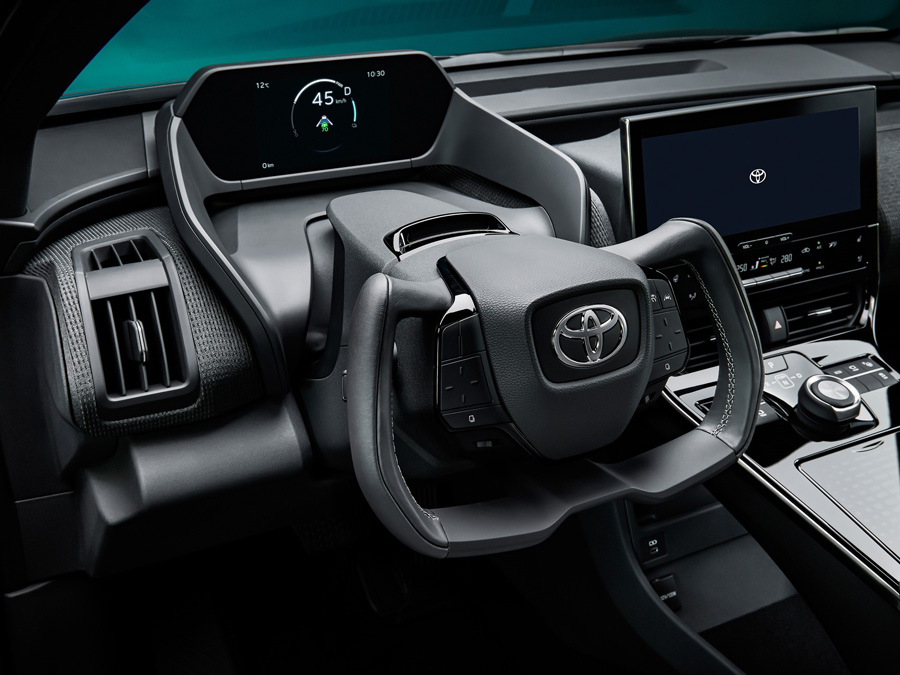











 Pass on that.