


Supercharger Guys Read


Thread Starter
The Boss
Joined: Apr 2006
Posts: 4,375
Likes: 0
From: New Jack City
Supercharger Guys Read
Question for you guys who also have the Comptech Superchargers.
When the weather is warm, and humidity is high. Do you experience hard shifting and a big of a lag when you go into boost? I noticed that alot.
Discuss
When the weather is warm, and humidity is high. Do you experience hard shifting and a big of a lag when you go into boost? I noticed that alot.
Discuss

Burning Brakes
Joined: Jul 2004
Posts: 883
Likes: 1
From: ?, NJ
Originally Posted by AcuraDriver2006
Question for you guys who also have the Comptech Superchargers.
When the weather is warm, and humidity is high. Do you experience hard shifting and a big of a lag when you go into boost? I noticed that alot.
Discuss
When the weather is warm, and humidity is high. Do you experience hard shifting and a big of a lag when you go into boost? I noticed that alot.
Discuss
321 whp SAE
Joined: Jul 2004
Posts: 1,090
Likes: 0
From: Matawan, NJ
yes, happens when it's hot.. the water/methanol injection helps a bit, bringing down the IAT.. wait until winter.. night and day.. especially Brett. 2nd gear up top, it's hard to keep the wheels from spinning when it's cold
Burning Brakes
Joined: Jul 2004
Posts: 883
Likes: 1
From: ?, NJ
Originally Posted by bklynpanman
yes, happens when it's hot.. the water/methanol injection helps a bit, bringing down the IAT.. wait until winter.. night and day.. especially Brett. 2nd gear up top, it's hard to keep the wheels from spinning when it's cold

Former Sponsor
iTrader: (1)
Joined: Mar 2004
Posts: 9,877
Likes: 624
From: www.ExceleratePerformance.com
You car will be a totally different beast in the fall/winter. When it is more humid and hot there is less oxygen molecules in the air. Colder/denser air has more oxygen molecules packed in side and therefore you make more power. It's the worst. My car used to be able spin the tires throughout all of 2nd gear (in the spring) but the heat is killing it so now it only breaks loose once in a while. Basically you have more hot air going in with your intake charge now, so less power. 
Burning Brakes
Joined: Jul 2004
Posts: 883
Likes: 1
From: ?, NJ
hey jack,
I just found this. It should expain your loss of power.
Fact: For every 3.3 °C (5° F) rise in intake temperature, air density drops 1%. The hotter the air, the less fuel the computer injects to compensate for reduced oxygen.
I just found this. It should expain your loss of power.
Fact: For every 3.3 °C (5° F) rise in intake temperature, air density drops 1%. The hotter the air, the less fuel the computer injects to compensate for reduced oxygen.
Thread Starter
The Boss
Joined: Apr 2006
Posts: 4,375
Likes: 0
From: New Jack City
whoa nice find Brett! Yeah I noticed that yesterday when it was 110 degrees.
thanks for all the response. Just want to make sure I'm not the only one. I guess that goes the same with Turbo cars. As Josh's accord is Turbo rather than S/C'd.
thanks for all the response. Just want to make sure I'm not the only one. I guess that goes the same with Turbo cars. As Josh's accord is Turbo rather than S/C'd.
Trending Topics
Racer
Joined: Jul 2005
Posts: 301
Likes: 5
 Not exactly...
First of all, the hotter the air, the less density, this is true. So the less oxygen present and the less spark available.
Any supercharged car with or without an intercooler will create tons of hot discharge air. Thermodynamics law...compress air is heated. So if the ambient temp is 100 degrees F. and you are running 5-psi of boost with your Eaton M62 blower (no intercooler also) then you can bet that the ACT's entering the cylinder heads are around 200-220 degrees F.
Spin the Eaton M62 faster for more boost and you'll lower it's efficiency and guess what...make more heat.
So will you make less power from less air flow? Not exactly. Air is a limiting factor in power production. What determines power output of any gasoline engine is how efficiently it burns fuel. If the air is denser (cooler) you can pack more oxygen in the same area as before (if were hot). Then you can add fuel to create the proper A/F ratio and poof...more power.
Also as the heat rises, so does the cylinder pressures and the higher the cylinder pressure, the less spark available to ignite the combustion mixture.
Generally, you'll see more boost pressure on your gage in the winter then in the summer just for the cool dense air. What you guys need to do is mount a sensor after the supercharger outlet so you can monitor the air charge temperatures. Then have a good tuner modify the factory program to pull timing as the ACT's climb.
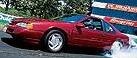
I did this with my Eaton supercharged 4.6L T-Bird. I used an ACT sensor after the supercharger and intercooler to monitor the ACT's. Then the tune was set to pull timing as the ACT's reached a critical temp.
A-Train
Any supercharged car with or without an intercooler will create tons of hot discharge air. Thermodynamics law...compress air is heated. So if the ambient temp is 100 degrees F. and you are running 5-psi of boost with your Eaton M62 blower (no intercooler also) then you can bet that the ACT's entering the cylinder heads are around 200-220 degrees F.
Spin the Eaton M62 faster for more boost and you'll lower it's efficiency and guess what...make more heat.
So will you make less power from less air flow? Not exactly. Air is a limiting factor in power production. What determines power output of any gasoline engine is how efficiently it burns fuel. If the air is denser (cooler) you can pack more oxygen in the same area as before (if were hot). Then you can add fuel to create the proper A/F ratio and poof...more power.
Also as the heat rises, so does the cylinder pressures and the higher the cylinder pressure, the less spark available to ignite the combustion mixture.
Generally, you'll see more boost pressure on your gage in the winter then in the summer just for the cool dense air. What you guys need to do is mount a sensor after the supercharger outlet so you can monitor the air charge temperatures. Then have a good tuner modify the factory program to pull timing as the ACT's climb.
I did this with my Eaton supercharged 4.6L T-Bird. I used an ACT sensor after the supercharger and intercooler to monitor the ACT's. Then the tune was set to pull timing as the ACT's reached a critical temp.
A-Train

Thread
Thread Starter
Forum
Replies
Last Post
OculiAquilae
3G TL (2004-2008)
62
Nov 19, 2018 02:24 PM
JarrettLauderdale
2G CL Dynograph Gallery
5
Sep 21, 2015 07:51 PM