


Exhaust Gurus get in here

Thread Starter
All motor
Joined: Sep 2008
Posts: 3,530
Likes: 533
From: Long Island
Exhaust Gurus get in here
So I took a look at my exhaust today in lieu of my disappointing trap speed and just because I'm gonna eventually do a custom Jpipe with a venturi collector...and please excuse my 'Paint' skills...but here's what I found. The blue highlight is 2.5", the green is 3", and the red is the transition.

As you can see, the Jpipe merge collector and test pipe are both 2.5". Then after the test pipe the piping begins to graduallly increase in a 'cone-like' fashion. I guess the length of this "cone" is about 10". It then enters the 3" muffler and out to the rest of the piping.
What I'm thinking is that this is a terrible setup right now. The transition to the 3in piping isn't doing anything but slowing down the exhaust velocity. I have the RV6 V1 Jpipe which is a great piece, but just not the best flowing design; so I think that's hindering me a good amount as well.
I've been reading a lot on scavenging and merge collectors and think I have a pretty good idea on how I'm gonna have the collector done. But I'm still looking because as I've read, it's one of the most important parts and it's called a system for a reason...the more I read the more this becomes stuck in the brain.
Anyone have any input on what they think of it and/or how/if it's effecting my powerband?
As you can see, the Jpipe merge collector and test pipe are both 2.5". Then after the test pipe the piping begins to graduallly increase in a 'cone-like' fashion. I guess the length of this "cone" is about 10". It then enters the 3" muffler and out to the rest of the piping.
What I'm thinking is that this is a terrible setup right now. The transition to the 3in piping isn't doing anything but slowing down the exhaust velocity. I have the RV6 V1 Jpipe which is a great piece, but just not the best flowing design; so I think that's hindering me a good amount as well.
I've been reading a lot on scavenging and merge collectors and think I have a pretty good idea on how I'm gonna have the collector done. But I'm still looking because as I've read, it's one of the most important parts and it's called a system for a reason...the more I read the more this becomes stuck in the brain.
Anyone have any input on what they think of it and/or how/if it's effecting my powerband?

Team Owner
Joined: Mar 2006
Posts: 20,172
Likes: 1,818
From: Bakersfield
You're probably overthinking it. Scavenging becomes less effective the farther from the engine you get. Once the exhaust is past the j-pipe I would just concentrate on having a minimum of a 2-3/4" single pipe to the rear of the car with smooth transitions.
Once you have the precat deletes, j-pipe, and the minimum required exhaust diameter, there's not a whole lot to gain.
Once you have the precat deletes, j-pipe, and the minimum required exhaust diameter, there's not a whole lot to gain.
Thread Starter
All motor
Joined: Sep 2008
Posts: 3,530
Likes: 533
From: Long Island
You're probably overthinking it. Scavenging becomes less effective the farther from the engine you get. Once the exhaust is past the j-pipe I would just concentrate on having a minimum of a 2-3/4" single pipe to the rear of the car with smooth transitions.
Once you have the precat deletes, j-pipe, and the minimum required exhaust diameter, there's not a whole lot to gain.
Once you have the precat deletes, j-pipe, and the minimum required exhaust diameter, there's not a whole lot to gain.
I was just wondering how much potential anyone sees in a change to my current setup. I am going to be using primaries similar to the ones in the V3 Jpipe, but with a true venturi collector that will mate to my 3in exhaust. As I've seen in other high performance cars, there is an 'hour-glass' shape to the collector to speed up the gases. Then when they slow and expand when they reach the larger piping, it creates a vacuum to suck out the remaining gases in the cylinder.
While this is happening, a reversion wave is sent back the other way into the cylinder, and you want this to happen when both the I/E valves are closed. This is how I understood it. It's even a lot more complicated than just trial and error of pipe diameters and lengths.
So I figure if I use this information to my advantage, I should gain a decent amount of power compared to my setup now, which makes almost no use of scavenging.

Burning Brakes
Joined: Apr 2006
Posts: 950
Likes: 45
From: Shawnee, KS
As we've discussed in the past, I think the 3" system is overkill. I would stick to a 2.5" system and go no larger than 2.75". Your 3.0 motor just doesn't move the volume of air needed for a 3" system. If it made power to 8000rpms, then I'd think differently, but I believe your 3.0 has peak power at around 6600rpms. That's just not enough volume. Just like IHC stated, most of the focus needs to be upstream. That's where the power is at.
Many of the best NA exhaust systems use a stepped exhaust design that has larger upstream volume that gets smaller towards the exit. This keeps the exhaust hot and the velocity high.
Many of the best NA exhaust systems use a stepped exhaust design that has larger upstream volume that gets smaller towards the exit. This keeps the exhaust hot and the velocity high.

Three Wheelin'
Joined: Jun 2009
Posts: 1,360
Likes: 47
From: NYC
Sonnick,
You're overworking yourself with that, bud!
Have a nice pre-catback set up, and just concentrate on a 2.5-2.75" catback all the way out...if you split them at the end for a dual, a Y with 2.25" outlets should be fine to your tails. As long as you don't choke anything with your catback.
This would be different if you were working with a rear engine car, where there's basically very short exhaust runs, and that would require some more attention.
Other than that, I don't see gains to justify your effort, and by no means do I say this to discourage you...just simply stating what I think.
I had to edit to say this... nice drawing! lol
lol
You're overworking yourself with that, bud!
Have a nice pre-catback set up, and just concentrate on a 2.5-2.75" catback all the way out...if you split them at the end for a dual, a Y with 2.25" outlets should be fine to your tails. As long as you don't choke anything with your catback.
This would be different if you were working with a rear engine car, where there's basically very short exhaust runs, and that would require some more attention.
Other than that, I don't see gains to justify your effort, and by no means do I say this to discourage you...just simply stating what I think.
I had to edit to say this... nice drawing!
lol
Team Owner
Joined: Mar 2006
Posts: 20,172
Likes: 1,818
From: Bakersfield
Agreed that scavenging has little to no effect after the header, or in the case of the J series, the Jpipe merge. However, the way I sit right now I don't really have a collector, and the transition to 3in is pretty bad. I'm talking strictly changing the most important part of the system (the collector/Jpipe primaries).
I was just wondering how much potential anyone sees in a change to my current setup. I am going to be using primaries similar to the ones in the V3 Jpipe, but with a true venturi collector that will mate to my 3in exhaust. As I've seen in other high performance cars, there is an 'hour-glass' shape to the collector to speed up the gases. Then when they slow and expand when they reach the larger piping, it creates a vacuum to suck out the remaining gases in the cylinder.
While this is happening, a reversion wave is sent back the other way into the cylinder, and you want this to happen when both the I/E valves are closed. This is how I understood it. It's even a lot more complicated than just trial and error of pipe diameters and lengths.
So I figure if I use this information to my advantage, I should gain a decent amount of power compared to my setup now, which makes almost no use of scavenging.
I was just wondering how much potential anyone sees in a change to my current setup. I am going to be using primaries similar to the ones in the V3 Jpipe, but with a true venturi collector that will mate to my 3in exhaust. As I've seen in other high performance cars, there is an 'hour-glass' shape to the collector to speed up the gases. Then when they slow and expand when they reach the larger piping, it creates a vacuum to suck out the remaining gases in the cylinder.
While this is happening, a reversion wave is sent back the other way into the cylinder, and you want this to happen when both the I/E valves are closed. This is how I understood it. It's even a lot more complicated than just trial and error of pipe diameters and lengths.
So I figure if I use this information to my advantage, I should gain a decent amount of power compared to my setup now, which makes almost no use of scavenging.
There's the question as to why you would want to scavenge more exhaust out of the engine. If your venturi idea worked as planned, are you trying to get to 0 backpressure? A 3" exhaust will probably have no measurable backpressure. PCDs and J-pipe should have very little. I'm not sure if there is any real scavenging going on since all 3 cylinders merge inside of each head. That would kill the scavenging much like a turbo does.
Trending Topics
Thread Starter
All motor
Joined: Sep 2008
Posts: 3,530
Likes: 533
From: Long Island
^^ I never thought of the fact that the cylinder all merge in the head....because we don't really have headers. Hmm.
Eth: I have 3in from about 10" after the test pipe all the way back. That's basically my plan though...
I am still going to get a different Jpipe and have a nice collector, but maybe I am overthinking it. Hopefully my after dyno will show nice gains.
Eth: I have 3in from about 10" after the test pipe all the way back. That's basically my plan though...
I am still going to get a different Jpipe and have a nice collector, but maybe I am overthinking it. Hopefully my after dyno will show nice gains.
Team Owner
Joined: Mar 2006
Posts: 20,172
Likes: 1,818
From: Bakersfield
^^ I never thought of the fact that the cylinder all merge in the head....because we don't really have headers. Hmm.
Eth: I have 3in from about 10" after the test pipe all the way back. That's basically my plan though...
I am still going to get a different Jpipe and have a nice collector, but maybe I am overthinking it. Hopefully my after dyno will show nice gains.
Eth: I have 3in from about 10" after the test pipe all the way back. That's basically my plan though...
I am still going to get a different Jpipe and have a nice collector, but maybe I am overthinking it. Hopefully my after dyno will show nice gains.

Three Wheelin'
Joined: Jun 2009
Posts: 1,360
Likes: 47
From: NYC
What you really need in an engine is low back pressure and high exhaust velocity. A fast moving but free flowing exhaust. To combine the 2 sometimes becomes a bit of a challenge having the right setup. When the exhaust is free moving at high velocity, it creates negative pressure waves behind which helps scavenge exhaust gases out of the cylinder quicker and makes it easier for the pistons to push it out through the exhaust valves.
This is archived by carefully selecting the right exhaust pipe diameters. A too large of an exhaust pipe, will have low to 0 back pressure but will also have lower velocity, which reduces the scavenging effect. See, this doesn't mean that you need back pressure and that in fact it is good. What you need is high velocity. Now that's the gray area you wanna be in..having the lowest back pressure possible without sacrificing exhaust velocity.
Team Owner
Joined: Mar 2006
Posts: 20,172
Likes: 1,818
From: Bakersfield
Back pressure isn't good. It's a big floating myth that's been around for a long time and it is still believed by some people.
What you really need in an engine is low back pressure and high exhaust velocity. A fast moving but free flowing exhaust. To combine the 2 sometimes becomes a bit of a challenge having the right setup. When the exhaust is free moving at high velocity, it creates negative pressure waves behind which helps scavenge exhaust gases out of the cylinder quicker and makes it easier for the pistons to push it out through the exhaust valves.
This is archived by carefully selecting the right exhaust pipe diameters. A too large of an exhaust pipe, will have low to 0 back pressure but will also have lower velocity, which reduces the scavenging effect. See, this doesn't mean that you need back pressure and that in fact it is good. What you need is high velocity. Now that's the gray area you wanna be in..having the lowest back pressure possible without sacrificing exhaust velocity.
What you really need in an engine is low back pressure and high exhaust velocity. A fast moving but free flowing exhaust. To combine the 2 sometimes becomes a bit of a challenge having the right setup. When the exhaust is free moving at high velocity, it creates negative pressure waves behind which helps scavenge exhaust gases out of the cylinder quicker and makes it easier for the pistons to push it out through the exhaust valves.
This is archived by carefully selecting the right exhaust pipe diameters. A too large of an exhaust pipe, will have low to 0 back pressure but will also have lower velocity, which reduces the scavenging effect. See, this doesn't mean that you need back pressure and that in fact it is good. What you need is high velocity. Now that's the gray area you wanna be in..having the lowest back pressure possible without sacrificing exhaust velocity.
I've thought about this for a while... On the TL specifically I wonder how it would react if you had the first few feet tuned for best scavenging and then ran a huge catback like a 3" or 3.5" that basically behaves the same as an exhaust dump. "Tune" it with the precats and J-pipe and then open it up as wide as possible downstream....
Three Wheelin'
Joined: Jun 2009
Posts: 1,360
Likes: 47
From: NYC
Well said.
I've thought about this for a while... On the TL specifically I wonder how it would react if you had the first few feet tuned for best scavenging and then ran a huge catback like a 3" or 3.5" that basically behaves the same as an exhaust dump. "Tune" it with the precats and J-pipe and then open it up as wide as possible downstream....
I've thought about this for a while... On the TL specifically I wonder how it would react if you had the first few feet tuned for best scavenging and then ran a huge catback like a 3" or 3.5" that basically behaves the same as an exhaust dump. "Tune" it with the precats and J-pipe and then open it up as wide as possible downstream....
I have to run, but i'll look for the graph later.

Mom why is there two?
Joined: Nov 2006
Posts: 773
Likes: 6
From: Holland, MI
With the combination that am running the Jpipe, I was losing a couple tenths at the track. I went back with the stock j put back in right away I knew it helped. It just didnt work with what I have going. Took it back and got my times back down where they were
Three Wheelin'
Joined: Jun 2009
Posts: 1,360
Likes: 47
From: NYC

Three Wheelin'
Joined: Jun 2009
Posts: 1,360
Likes: 47
From: NYC
IHC,
Found the graph.
This is with stock jpipe, Pcd's, and 3" electric exhaust cut out placed where 3rd cat used to sit.
As you notice, torque already starts higher at 1800 Rpm, at 2600 it starts going up and keeps a steady increase, rather than the little fluctuating as it appears with the valve closed (green) which would equal more back pressure. Until 3250 then it starts gaining as Rpm increases all the way to redline.
This should be somewhat of pretty good basic proof to shoot down some people's beliefs that loss of backpressure=loss of torque
Worth noting that a $200 mod resulted in about 27whp. I think this has been the best hp for the dollar I ever got lol

Found the graph.
This is with stock jpipe, Pcd's, and 3" electric exhaust cut out placed where 3rd cat used to sit.
As you notice, torque already starts higher at 1800 Rpm, at 2600 it starts going up and keeps a steady increase, rather than the little fluctuating as it appears with the valve closed (green) which would equal more back pressure. Until 3250 then it starts gaining as Rpm increases all the way to redline.
This should be somewhat of pretty good basic proof to shoot down some people's beliefs that loss of backpressure=loss of torque
Worth noting that a $200 mod resulted in about 27whp. I think this has been the best hp for the dollar I ever got lol
Burning Brakes
Joined: Apr 2006
Posts: 950
Likes: 45
From: Shawnee, KS
Using a turbo as an example really doesn't benefit the discussion here. Apples to oranges comparison and it's going to confuse a lot of people into thinking they're going to gain 27whp by simply adding a dump pipe. Turbos like big pipes because they move out so much volume of air plus many other turbo related factors. NA motors are far more finicky to exhaust tuning.
Three Wheelin'
Joined: Jun 2009
Posts: 1,360
Likes: 47
From: NYC
Using a turbo as an example really doesn't benefit the discussion here. Apples to oranges comparison and it's going to confuse a lot of people into thinking they're going to gain 27whp by simply adding a dump pipe. Turbos like big pipes because they move out so much volume of air plus many other turbo related factors. NA motors are far more finicky to exhaust tuning.
Mom why is there two?
Joined: Nov 2006
Posts: 773
Likes: 6
From: Holland, MI
I guess I missed that
I don't mean to turn this thread into another discussion, but if you don't mind sharing. I can't put 2&2 together as to why and how that may have happened to you. A couple of 10ths sounds like a big deal with just the Jpipe. Also just curious to know your setup, and why it was affected that way, unless it's a secret of course
I don't mean to turn this thread into another discussion, but if you don't mind sharing. I can't put 2&2 together as to why and how that may have happened to you. A couple of 10ths sounds like a big deal with just the Jpipe. Also just curious to know your setup, and why it was affected that way, unless it's a secret of course
Thread Starter
All motor
Joined: Sep 2008
Posts: 3,530
Likes: 533
From: Long Island
I'm pretty sure it is the cam setup. The exhaust I have 2.75 and after the Y I have 2.5 slip tubes then going into 3". I am going to be making my own j pipe this spring we will see how this turns out. I do all my own exhaust work. Lucky I have a lift and a welder to fool around with. The TL is a toy.. It sits more than it is driven. A sheet metal manifold is also in the works early next year. Still working on how to integrate velocity stacks inside the mani at the top of the tubes and runner length is still being played with.
I like this discussion
Opel thanks for the graph. Obviously on a FI engine, the gains are going to be more substantial. However, that's good to know that you really didn't lose any tq going open cutout.
Thread Starter
All motor
Joined: Sep 2008
Posts: 3,530
Likes: 533
From: Long Island
BUMPPPPPPPPPP
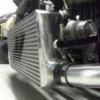
Got the new Jpipe installed. It's not exactly what I wanted, but pretty close. I wanted to use 2 header reducers (3in to 2.25in) back to back as the merge collector, but that wasn't what happened. Instead, the merge collector is the 3in flex pipe, THEN the 2 header reducers. You will see what I mean in the pics.
Car sounds like p00p under normal acceleration. Not really liking the rasp at all. But in VTEC under WOT, it sounds
Hack it off!!!

Where'd my pipe go?

Collector. I wish they would've put the flex AFTER the reducers...

That' not what it looked like last time I checked.... :rofl3:

Getting there...kind of looks like Birdo from Mario Tennis lmao

:bowdown: to the merge

Talk to me papo

Much longer primaries

Opposite angle

Reducers in the wrong spot :banghead: But whatever. Should've been where the flex pipe is...

Got the new Jpipe installed. It's not exactly what I wanted, but pretty close. I wanted to use 2 header reducers (3in to 2.25in) back to back as the merge collector, but that wasn't what happened. Instead, the merge collector is the 3in flex pipe, THEN the 2 header reducers. You will see what I mean in the pics.
Car sounds like p00p under normal acceleration. Not really liking the rasp at all. But in VTEC under WOT, it sounds
Hack it off!!!
Where'd my pipe go?
Collector. I wish they would've put the flex AFTER the reducers...
That' not what it looked like last time I checked.... :rofl3:
Getting there...kind of looks like Birdo from Mario Tennis lmao
:bowdown: to the merge
Talk to me papo
Much longer primaries
Opposite angle
Reducers in the wrong spot :banghead: But whatever. Should've been where the flex pipe is...




Envy Me
Joined: Jun 2012
Posts: 104
Likes: 18
From: ST.PETE FL , Pinellas County!
cut the cone shaped transition pRt off. and replace with a straight 2.5 or 3 inch pipe into the muffler. it woukd not only look better but it would probably flow better and sound better




ummm................
Please dont have kids.

Thread
Thread Starter
Forum
Replies
Last Post
joflewbyu2
5G TLX (2015-2020)
139
Oct 8, 2015 11:16 AM
