


Electric Supercharger Performance Kit


Thread Starter
Advanced
Joined: Sep 2008
Posts: 56
Likes: 0
Electric Supercharger Performance Kit
Since I don't want to spend a big fortune for the supercharger or Turbo kit, and the frequent maintenances later on, I had found this electric super charger for my RL. Did anyone ever heard of this or even try it on their cars? It costs less than $300 for the kit, and I assume it will cost me less than $600 including installation and the intake. Which will give me an added 15-25 horse power. I am very tempting to give it a shot.
here is the site:
http://www.autoaccessorystore.com/pr...1811&year=2005
here is the site:
http://www.autoaccessorystore.com/pr...1811&year=2005

Senior Moderator
Joined: Dec 2010
Posts: 31,897
Likes: 7,251
From: Austin, TX
It sounds like a potentially useful product, but I would be concerned about how it regulates the air. It says that it uses a switch inside the car. If the switch is off, does it restrict flow? When you hit 3500 rpm and the intake opens to full capacity, can the fan keep up? A real turbo, at least from what I have experienced, is tuned to supply air at certain RPMs. This will be constant flow unless you mapped the fan speed with a controller. I don't know if that is bad or irrelevant. I don't know enough about intake air flow, but it seems to me that Acura tuned the intake for a certain performance reason. 
Thread Starter
Advanced
Joined: Sep 2008
Posts: 56
Likes: 0
I had just read some more infomation about it on the net
This is a C/P from somebody name jaeconsult:
Well I have read a ton of stuff on electric superchargers with the main question being do they work. The short answer is Yes it is possible to construct a working electric supercharger and I am quite sure that there are a couple out there that will work, but the ones that do are not for sale for less than $100.00. To try and determine if what you are looking at could possibly work look at the following:
1) For every 1 psi of boost at 100cfm you need 45 amps of current or about 3/4 hp. This means for an engine that pulls 600cfm to get 1 psi of boost at that flow rate the unit will conservativly pull 270 amps on a 12 volt system. If you want 2 psi at the same flow rate you will need somewhere close to 600 amps. These are calculated values and I would say they are within 20% of actual plus or minus. You will note that I said "at 100 cfm", this is key. For example a 2 liter motor at 1000 rpm only requires 35cfm, so this means at 1000 rpm you could generate 6 psi of boost using only 94 amps. If you are starting at idle this looks pretty good, by the time you hit 3,000 rpm you are down to 2psi and at 6,000 rpm you are down to 1 psi. This all assumes you have a compressor that is capable of generating 6 psi at 35cfm. If you have an automatic trans you would potentially see a measurable increase in low end torque and horsepower starting from basically idle like at the drag strip. The same vehicle with a stick shift would not show the same performance increase utilizing the same supercharger as it would normaly operate in a much higher rpm range say 4,000 to 6,000 rpm and you would only see a 1.5 to 1 psi boost.
2) Every 1 psi of boost provides somewhere between 6 and 10 percent increase in horse power. This is a pretty large range however with
the number of variables it is not possible to provide a closer range. The variables are linked directly to what is the limiting intake and exhaust flow which can be a large number of items.
3) Can your electrical system handle the current? Most automotive batteries are capable of generating the current necessary for a short time period, however this will tax the electrical system and shorten battery life so it is advisable to install and utilize a second battery to reduce the strain on the starter battery. It is also advisable the second battery should be a high quality deep cycle battery that is designed for prolonged current drain.
4) Axial flow and centrifugal. Centrifugal units like turbo chargers are capable of generating the pressures necessary but are not really designed for high flow rates. Axial flow compressors have difficulty supplying pressure but are great at supplying CFM. The ideal unit would be a combination of both and most turbochargers have an impellor that is a combination of both so that they can get the high flow rates as well as the pressure. A centrifugal unit however will need to be larger in diameter than it turbocharger cousin to generate a 6 psi pressure rise or the rpm will need to be in the same range as a turbo charger would be.
Axial flow units are limited by design and number of stages. In general an axial flow unit properly designed without inlet and exhaust diffusers can attain pressure increases of about 10 percent per stage or about 1.5 psi per stage at design flow, flows less than design can cause the blades to stall and pressure can actually go down.
So when you are looking at an electric supercharger keep in mind the pressures that are being stated and the type of unit they are.
This is a C/P from somebody name jaeconsult:
Well I have read a ton of stuff on electric superchargers with the main question being do they work. The short answer is Yes it is possible to construct a working electric supercharger and I am quite sure that there are a couple out there that will work, but the ones that do are not for sale for less than $100.00. To try and determine if what you are looking at could possibly work look at the following:
1) For every 1 psi of boost at 100cfm you need 45 amps of current or about 3/4 hp. This means for an engine that pulls 600cfm to get 1 psi of boost at that flow rate the unit will conservativly pull 270 amps on a 12 volt system. If you want 2 psi at the same flow rate you will need somewhere close to 600 amps. These are calculated values and I would say they are within 20% of actual plus or minus. You will note that I said "at 100 cfm", this is key. For example a 2 liter motor at 1000 rpm only requires 35cfm, so this means at 1000 rpm you could generate 6 psi of boost using only 94 amps. If you are starting at idle this looks pretty good, by the time you hit 3,000 rpm you are down to 2psi and at 6,000 rpm you are down to 1 psi. This all assumes you have a compressor that is capable of generating 6 psi at 35cfm. If you have an automatic trans you would potentially see a measurable increase in low end torque and horsepower starting from basically idle like at the drag strip. The same vehicle with a stick shift would not show the same performance increase utilizing the same supercharger as it would normaly operate in a much higher rpm range say 4,000 to 6,000 rpm and you would only see a 1.5 to 1 psi boost.
2) Every 1 psi of boost provides somewhere between 6 and 10 percent increase in horse power. This is a pretty large range however with
the number of variables it is not possible to provide a closer range. The variables are linked directly to what is the limiting intake and exhaust flow which can be a large number of items.
3) Can your electrical system handle the current? Most automotive batteries are capable of generating the current necessary for a short time period, however this will tax the electrical system and shorten battery life so it is advisable to install and utilize a second battery to reduce the strain on the starter battery. It is also advisable the second battery should be a high quality deep cycle battery that is designed for prolonged current drain.
4) Axial flow and centrifugal. Centrifugal units like turbo chargers are capable of generating the pressures necessary but are not really designed for high flow rates. Axial flow compressors have difficulty supplying pressure but are great at supplying CFM. The ideal unit would be a combination of both and most turbochargers have an impellor that is a combination of both so that they can get the high flow rates as well as the pressure. A centrifugal unit however will need to be larger in diameter than it turbocharger cousin to generate a 6 psi pressure rise or the rpm will need to be in the same range as a turbo charger would be.
Axial flow units are limited by design and number of stages. In general an axial flow unit properly designed without inlet and exhaust diffusers can attain pressure increases of about 10 percent per stage or about 1.5 psi per stage at design flow, flows less than design can cause the blades to stall and pressure can actually go down.
So when you are looking at an electric supercharger keep in mind the pressures that are being stated and the type of unit they are.
Thread Starter
Advanced
Joined: Sep 2008
Posts: 56
Likes: 0
No, the supercharger has a straight flow design that allows air to pass without restriction when powered off.
Senior Moderator
Joined: Dec 2010
Posts: 31,897
Likes: 7,251
From: Austin, TX
Here's your answer.
 I don't think they wanted me to read that until AFTER I bought it.
Originally Posted by Installation Instructions for the Electric Supercharger
Using the Electric Supercharger:
1) Do not turn it on while idling, this will cause your car to stall because too much air is entering the engine and not enough fuel is being ignited.
2) Use the Electric Supercharger as a boost only, turn it on at 2400RPM only and turn it off if the RPM will go below 2400.
1) Do not turn it on while idling, this will cause your car to stall because too much air is entering the engine and not enough fuel is being ignited.
2) Use the Electric Supercharger as a boost only, turn it on at 2400RPM only and turn it off if the RPM will go below 2400.
I don't think they wanted me to read that until AFTER I bought it.
Trending Topics



These are good options too. LoL...
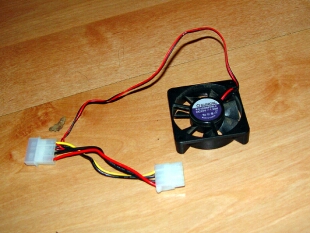 MEGA-HYPER ELECTRO-TURBO SYSTEM® electric turbo charger
 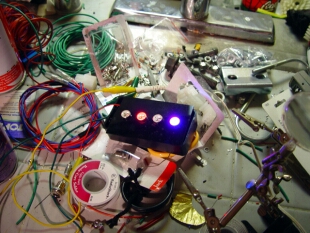 MEGA-HYPER ELECTRO-TURBO SYSTEM® re-programmed ECU
 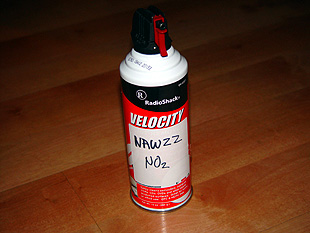 MEGA-HYPER ELECTRO-TURBO SYSTEM® Nawzz® NO2 system
 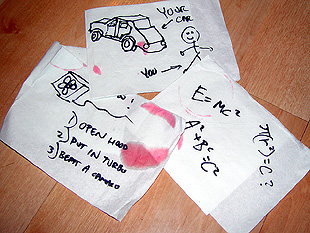 Detailed, step-by-step installation and tuning instructions with illustrations
MEGA-HYPER ELECTRO-TURBO SYSTEM® electric turbo charger MEGA-HYPER ELECTRO-TURBO SYSTEM® re-programmed ECU MEGA-HYPER ELECTRO-TURBO SYSTEM® Nawzz® NO2 system Detailed, step-by-step installation and tuning instructions with illustrations

Safety Car


Joined: Feb 2004
Posts: 4,389
Likes: 490
From: Houston, Texas
In order to have any effect, the supercharger/turbocharger needs to move more air than the engine can move on its own. An engine can consume upwards of 300-400 CFM at full throttle. The supercharger needs to be move significantly more than this in order to create any kind of compression effect. If the air is not being compressed, you will get no gains as the engine will already get as much air as it can use at standard pressure on WOT.
A supercharger is belt driven and can end up costing the engine 10% or more of power, although this power is made back by the increase the supercharger gives. Turbochargers are spun by exhaust gases and can go into the 50,000 - 100,000 RPMs.
There is NO WAY a 2 AMP electric fan can do anything on this magnitude, except block your airflow.
A supercharger is belt driven and can end up costing the engine 10% or more of power, although this power is made back by the increase the supercharger gives. Turbochargers are spun by exhaust gases and can go into the 50,000 - 100,000 RPMs.
There is NO WAY a 2 AMP electric fan can do anything on this magnitude, except block your airflow.
Senior Moderator
Joined: Dec 2010
Posts: 31,897
Likes: 7,251
From: Austin, TX


Thread
Thread Starter
Forum
Replies
Last Post
cycdaniel
1G TSX Performance Parts & Modifications
8
Dec 17, 2019 10:58 AM
1fatcrxnem1
3G TL Tires, Wheels & Suspension
22
Jun 1, 2018 01:23 AM
