


New TSX - Breaking It In.....


Thread Starter
BRH
Joined: Jan 2006
Posts: 133
Likes: 0
From: Richmond VA
New TSX - Breaking It In.....
Just picked up my new 06 TSX last night. While the dealer went over all of the car's features, we didn't discuss the "break-in" period for engine. (That was an oversight on my part.) However, we briefly discussed it during my initial test drive, when he said that there's nothing special to do -- "Just Drive It".
I'd like to take a longish drive thru the countryside on Sunday or Monday. So, I'm looking for advice on what speed/revs that shouldn't be exceeded, things to avoid doing, etc.
I'm really pretty light on the throttle and nobody would ever consider me a speed demon, so I'm actually more concerned that my "normal" driving style will not push the engine enough.
Is it true that the engine's computer "learns" the driver's style over time and adjusts accordingly? If that's the case, I sometimes feel that power/performance might not be there when I actually will need it, if I don't "push" the engine a bit during the "Break-in" period. (BTW -- How many miles is considered "Break-in" anyway?)
Any advice on this would be greatly appreciated.
I'd like to take a longish drive thru the countryside on Sunday or Monday. So, I'm looking for advice on what speed/revs that shouldn't be exceeded, things to avoid doing, etc.
I'm really pretty light on the throttle and nobody would ever consider me a speed demon, so I'm actually more concerned that my "normal" driving style will not push the engine enough.
Is it true that the engine's computer "learns" the driver's style over time and adjusts accordingly? If that's the case, I sometimes feel that power/performance might not be there when I actually will need it, if I don't "push" the engine a bit during the "Break-in" period. (BTW -- How many miles is considered "Break-in" anyway?)
Any advice on this would be greatly appreciated.

TSX4EVR
Joined: Aug 2005
Posts: 1,194
Likes: 0
From: Alberta and Arizona
Driving normally is good. if you are going to go on a long trip make sure that you vary your rpms throughout the trip. Perhaps one of the biggest sins of the break in period is extended time at the same rpm.
There are a number of threads on this subject if you search for them.
Congrats on your new purchase. What colour did you get?

Excited
There are a number of threads on this subject if you search for them.
Congrats on your new purchase. What colour did you get?
Excited

Master in Science
Joined: Aug 2003
Posts: 3,845
Likes: 0
Originally Posted by BRH
Is it true that the engine's computer "learns" the driver's style over time and adjusts accordingly? If that's the case, I sometimes feel that power/performance might not be there when I actually will need it

Thread Starter
BRH
Joined: Jan 2006
Posts: 133
Likes: 0
From: Richmond VA
You guys on this forum are amazing! 4 responses within 25 minutes of posting a question!
In response to your posts:
1. Yeah - I guess that I should read thru the manual. LOL. I think that I'll do that tonite, while watching the NFL Playoffs.
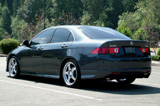
2. My TSX's color is Deep Green Pearl w/ Parchment Interior. Usually, I'm not overly picky on color, but I REALLY like this color!
Thanks again!
In response to your posts:
1. Yeah - I guess that I should read thru the manual. LOL. I think that I'll do that tonite, while watching the NFL Playoffs.
2. My TSX's color is Deep Green Pearl w/ Parchment Interior. Usually, I'm not overly picky on color, but I REALLY like this color!
Thanks again!

My Garage
Joined: Nov 2004
Posts: 13,386
Likes: 11
From: NY
Originally Posted by BRH
You guys on this forum are amazing! 4 responses within 25 minutes of posting a question!
In response to your posts:
1. Yeah - I guess that I should read thru the manual. LOL. I think that I'll do that tonite, while watching the NFL Playoffs.
2. My TSX's color is Deep Green Pearl w/ Parchment Interior. Usually, I'm not overly picky on color, but I REALLY like this color!
Thanks again!
In response to your posts:
1. Yeah - I guess that I should read thru the manual. LOL. I think that I'll do that tonite, while watching the NFL Playoffs.
2. My TSX's color is Deep Green Pearl w/ Parchment Interior. Usually, I'm not overly picky on color, but I REALLY like this color!
Thanks again!

Trending Topics

Senior Moderator


Joined: Sep 2005
Posts: 9,295
Likes: 169
From: Toronto
I agree with what everyone else said. Read the manual and try doing a search about break in,.....I am sure you will find a lot about it. Opinions and methods vary. Also, different dealers will say different things. My dealer told me not to go over 4000 rpm for the first 1000kms. I dont remember what the manual said, but someone else pointed it out I think. I didnt go over 4000 rmp until I was at 2000 kms,...decided to go with that based on recommendations from ppl I know. Then I let er rip.


5th Gear
Joined: Dec 2005
Posts: 5
Likes: 0
Originally Posted by slo007
The manual is fairly explicit on the brake-in procedure. Basically, keep things under 70 mph and 5,000 RPM's for the first 500-800 miles. After that, have fun.

Instructor
Joined: Dec 2005
Posts: 131
Likes: 0
Originally Posted by slo007
The manual is fairly explicit on the brake-in procedure. Basically, keep things under 70 mph and 5,000 RPM's for the first 500-800 miles. After that, have fun.
The bottom line is that there are many theories regarding break-in, some more rigorous than others (like planning specific peak revs). A search may be worth your while, there is a lot of good information regarding break in here.
For me, it was use common sense and drive easily for the 600 to obtain a good seal. And I plan to continue driving fairly easily for about 2000 miles. I understand that travelling at a consistent speed is bad during the break in. Accordingly, if you are driving any distance, I would suggest not using cruise control and don't keep it at any one speed for longer than 3-5 minutes. And, of course, don't launch it into the corners as you will be temped to do... and look forward to mile 601.
And one other thing... the manual explicitly states "Do not change the oil until the scheduled maintenance time," so I wouldn't go swapping out the engine oil early

Driver/Detailer
Joined: Oct 2003
Posts: 2,474
Likes: 2
From: Sydney
Full throttle starts and rapid acceleration = pressing the accelerator fully down and then releasing the clutch. I.E., don't do drag racing with your TSX in the first 600 miles.
Don't drive at constant RPM, because that situation is a very light load on the engine. When you vary your RPMs, you are putting load on your engine to ensure good piston ring sealing. So give it throttle and use as normal, but don't race your car.
And don't change oil until the scheduled maintenance time... That's dictated by Acura/Honda in the US. In Australia, the scheduled maintenance time is 600 miles, or 1 month for the Accord Euro (similar car to the TSX)
Don't drive at constant RPM, because that situation is a very light load on the engine. When you vary your RPMs, you are putting load on your engine to ensure good piston ring sealing. So give it throttle and use as normal, but don't race your car.
And don't change oil until the scheduled maintenance time... That's dictated by Acura/Honda in the US. In Australia, the scheduled maintenance time is 600 miles, or 1 month for the Accord Euro (similar car to the TSX)

Instructor
Joined: Oct 2005
Posts: 172
Likes: 4
Originally Posted by Zephrem
I understand that travelling at a consistent speed is bad during the break in. Accordingly, if you are driving any distance, I would suggest not using cruise control and don't keep it at any one speed for longer than 3-5 minutes. And, of course, don't launch it into the corners as you will be temped to do... and look forward to mile 601.

Driver/Detailer
Joined: Oct 2003
Posts: 2,474
Likes: 2
From: Sydney
I don't burn oil. Level on the dipstick never changes in the 6 month service interval for the period that I used mineral oil and the period when I changed to full synthetic. My running in method was drive normally. No babying of the car. If you need acceleration, give it 1/2-3/4 throttle. Running in, I did a half mototune method. In the first 60 miles, I did 2000-5000rpm 1/2 throttle, 2000-6000rpm 3/4 throttle and finally 2000-7000rpm full throttle. Yes, just 3 runs, one for each throttle opening. After that, it was driving as normal, with no cruise control.
But NO RACING. No clutch dumping!
But NO RACING. No clutch dumping!

Someone stole "My Garage"
Joined: May 2005
Posts: 3,537
Likes: 17
From: Ottawa, Ontario
Originally Posted by aaronng
I don't burn oil. Level on the dipstick never changes in the 6 month service interval for the period that I used mineral oil and the period when I changed to full synthetic. My running in method was drive normally. No babying of the car. If you need acceleration, give it 1/2-3/4 throttle. Running in, I did a half mototune method. In the first 60 miles, I did 2000-5000rpm 1/2 throttle, 2000-6000rpm 3/4 throttle and finally 2000-7000rpm full throttle. Yes, just 3 runs, one for each throttle opening. After that, it was driving as normal, with no cruise control.
But NO RACING. No clutch dumping!
But NO RACING. No clutch dumping!
This method works, and there's plenty of reasons why (I'm not gonna list 'em but google it to see for yourself).

Still Lovin my 06
Joined: Nov 2005
Posts: 2,772
Likes: 1
From: West Orange, NJ
Originally Posted by myoclonic
damn ... say i didn't do this. what have i done to my car?

Still Lovin my 06
Joined: Nov 2005
Posts: 2,772
Likes: 1
From: West Orange, NJ
Originally Posted by Zephrem
I disagree. The manual, page 288, is not clear. "Pay extra attention to how you drive during the first 600 miles." That's not much help. "Avoid full-throttle starts and rapid acceleration." That's not clear, either. "Avoid hard braking for the first 200 miles." Okay, that's more clear.
whats not clear? "avoid full throttle starts" means don't floor it from a standing start.
"rapid acceleration" also means don't push it into high RPMs.
which means everything else is just a "theory" on how to break it in. basically, you're not supposed to push the engine too hard in the beginning because you need to give everything a chance to settle into place, such as seals and whatnot. i think it's pretty easy to follow. if you want to buy into a "break-in theory" i'm sure they are well thought out, but if you follow the manual, your car will be fine. just don't push your car HARD in the beginning. what happens if you do a few times? probably nothing that's going to damage the car forever, it's just a best practice.
Still Lovin my 06
Joined: Nov 2005
Posts: 2,772
Likes: 1
From: West Orange, NJ
Originally Posted by aaronng
I don't burn oil. Level on the dipstick never changes in the 6 month service interval for the period that I used mineral oil and the period when I changed to full synthetic. My running in method was drive normally. No babying of the car. If you need acceleration, give it 1/2-3/4 throttle. Running in, I did a half mototune method. In the first 60 miles, I did 2000-5000rpm 1/2 throttle, 2000-6000rpm 3/4 throttle and finally 2000-7000rpm full throttle. Yes, just 3 runs, one for each throttle opening. After that, it was driving as normal, with no cruise control.
But NO RACING. No clutch dumping!
But NO RACING. No clutch dumping!

Advanced
Joined: Dec 2005
Posts: 63
Likes: 0
There are extensive posts on this topic, and I have read them all . . . Just racked up 1000 miles on by '05.
Boils down to this:
1. Go easy on the accelerator, avoid quick starts.
2. Avoid hard breaking or panic stops.
3. Keep RPMs at or below 35 for the first few hundred miles, stay below 60 mph, then gradually rev higher in the gears/mph.
4. At the 600 mile mark you should start driving "normally."
5. By the time you get to 1000 miles the car should be fully broken in.
The idea is to get the car used to revving higher slowly, rather than all at once, and to break in the metal parts of the engine without subjecting them to undue friction, heat stress, and wear.
BTW, it won't kill your car if you rev high once in while just for fun . . . like eating a donut when you're on a diet, no big deal, just don't eat 1/2 dozen.
Hope this helps.
Boils down to this:
1. Go easy on the accelerator, avoid quick starts.
2. Avoid hard breaking or panic stops.
3. Keep RPMs at or below 35 for the first few hundred miles, stay below 60 mph, then gradually rev higher in the gears/mph.
4. At the 600 mile mark you should start driving "normally."
5. By the time you get to 1000 miles the car should be fully broken in.
The idea is to get the car used to revving higher slowly, rather than all at once, and to break in the metal parts of the engine without subjecting them to undue friction, heat stress, and wear.
BTW, it won't kill your car if you rev high once in while just for fun . . . like eating a donut when you're on a diet, no big deal, just don't eat 1/2 dozen.
Hope this helps.
Someone stole "My Garage"
Joined: May 2005
Posts: 3,537
Likes: 17
From: Ottawa, Ontario
Originally Posted by ChasC
The idea is to get the car used to revving higher slowly, rather than all at once, and to break in the metal parts of the engine without subjecting them to undue friction, heat stress, and wear.
Most people would say babying a fresh engine is the best way to break it in, BUT, in reality:
http://www.enginesonly.com/break-in.html
1.) Drive normally but not a continuous high speeds for the first 500 miles. Occasional quick bursts of speed followed by quick deceleration during this period, is beneficial. AVOID LUGGING!!! TRIPS AND TOWING are not recommended until after 1000 miles.
NOTE:
Applying loads to the engine for short periods of time causes increased ring pressure against cylinder walls and helps to seat the rings. This is especially important because you are "BREAKING-IN" the engine with heavy duty oils. The rapid deceleration increases vacuum and gives extra lubrication to the piston and other assemblies.
http://www.mototuneusa.com/break_in_secrets.htm
Several factors make the older information on break-in obsolete.
The biggest factor is that engine manufacturers now use a much finer honing pattern in the cylinders than they once did. This in turn changes the break-in requirements, because as you're about to learn, the window of opportunity for achieving an exceptional ring seal is much smaller with
newer engines than it was with the older "rough honed" engines.
In addition, there is a lot less heat build up in the cylinders from ring friction
due to the finer honing pattern used in modern engines.
The other factors that have changed are the vastly improved metal casting and machining
technologies which are now used. This means that the "wearing in" of the new parts
involves significantly less friction and actual wear than it did in the distant past.
...
On the Street:
Warm the engine up completely:
Because of the wind resistance, you don't need to use higher gears like you would on a dyno machine. The main thing is to load the engine by opening the throttle hard in 2nd, 3rd and 4th gear.
Realistically, you won't be able to do full throttle runs even in 2nd gear on most bikes without exceeding 65 mph / 104 kph. The best method is to alternate between short bursts of hard acceleration and deceleration. You don't have to go over 65 mph / 104 kph to properly load the rings. Also, make sure that you're not being followed by another bike or car when you decelerate, most drivers won't expect that you'll suddenly slow down, and we don't want
anyone to get hit from behind !!
The biggest problem with breaking your engine in on the street (besides police) is if you ride the bike on the freeway (too little throttle = not enough pressure on the rings) or if you get stuck in slow city traffic. For the first 200 miles or so, get out into the country where you can vary the speed more
and run it through the gears !
Those are just a few examples. Search for "Break-In Engine" on Google and you'll see many examples of this. Also, check out the PICS in the 2nd link I posted - there's a great example of what the difference is between a properly broken in engine (piston) looks like vs. an improperly broken in engine.
Also, I've verified this exact method with TWO local performance shops (reputable ones -- ones who build race engines for some very good cars, not fly-by-night sell-you-crap shops). They both agree 100% that owners manuals say "run it lightly" because 98% of owners feel they'd be damaging the car by running NEAR redline, EVER. Us enthusiasts know, especially is the case w/ Honda's, that redline isn't a bad thing, and that running it to redline won't blow up your engine, even with high mileage on it. In its very early life (first 50-100 miles even), it is CRITICAL that you run it as described above, to seal the rings perfectly, for many many years of future enjoyment and performance.

Advanced
Joined: Jun 2005
Posts: 69
Likes: 0
From: Staten Island, NY
Don't Beat On It
For the first 500-600 miles, drive it normally. Try not to drive at a constant speed for any long periods (like someone else mentioned, don't use cruise control). Also don't beat on the accelerator or the breaks. I had about 480 miles on mine when I took a nice 250 mile trip to Virginia. My break in period was over once that trip started on I-95 
Master in Science
Joined: Aug 2003
Posts: 3,845
Likes: 0
Originally Posted by curls
TRIPS AND TOWING are not recommended until after 1000 miles.
I picked up the car in San Diego, and drove 480 miles to San Jose. Going 60-70 mph. I'm now at 40,500 miles. Major issues in sig below.
Advanced
Joined: Dec 2005
Posts: 63
Likes: 0
Okay . . .
________________
From "faq farm"
Breaking-In a New Car
Most manufacturers have recommendations in the handbooks.
Basically you start off treating the engine very gently i.e. gentle revs and never more than 1/4 throttle. Over time you gradually use more revs and more throttle until you eventually end up using the full range of the engine. It is important to eventually end up using all the power and rev range to wear harden various parts. It is also important that you do not keep to a single continuous speed or gear but vary your speed quite a bit during this time (a long highway journey is NOT a good break in if you just sit in top gear at a continuous speed). This is because things are still hardening up and you can wear a groove into them.
Modern engines break in relatively quickly, often 1000km, older designs took longer as the tolerances were not as precise. The first oil change is often a lot sooner than later ones as during break in rough edges from manufacturing will be worn off and end up in the oil.
Here is more advice from other FAQ Farmers:
Drive it gently. general rule is not to exceed 3000 - 3500 rpm. for the first 500 miles. It is also a good idea to be kind to it for the first 2000 miles.
"Breaking in" your cars engine is an old myth, it is also bull. Rule #1 if you want your engine to last a long time, treat it gentle all the time, not just for the first 1000km.
Break in is important. All engine bearings and cylinders, etc. must wear evenly and proper. Also, piston rings need to seat. Have you ever seen a new engine burn oil until it breaks in? Some piston ring take up to 5000 miles to fully seat or wear evenly to cylinder bore. Not following proper break in proceders could result in premature engine/parts failure.
This depends whether you purchase or lease a car. With a purchase you should break a car in for the reasons and using the methods described before, ignoring the one comment about it being bullshit. If the vehicle is a lease you may skip the break-in period if you so wish. Since not breaking-in a car may result in improper wear of parts, or even engine failure, during the warranty period it will be covered, and a leased car will be returned to the dealer before the warranty period expires.
You shouldn't just break-in your car if you are buying it. Even if you are leasing it you should. Do the next guy a favor. A very inconsiderate answer man. Besides some people lease it and then decide they like it and want to buy it, so I say, you should break it in anyway. No matter what.
_______________
From Bishop's Performance:
CAUTION: – Lugging engine at low rpms (below 2000 rpm) and/or running engine prematurely at high rpms may result in damage to pistons and/or other engine components. No freeway for the first 500 miles !
Protect your investment! Be sure that you have put in fresh petroleum-based oil before initial startup . . . .
Upon initial startup, don't sit and admire your handiwork, allow only a couple of minutes of warm-up. Do not let engine overheat - excessive engine temperature may cause permanent damage.
The first 100 miles are the most critical for new rings and piston break-in. Most engine damage will occur during this period. Keep heat down by not exceeding 3000 rpm. Vary speeds and do not lug engine.
__________
I do not see a helluva lot of consensus on this matter.
________________
From "faq farm"
Breaking-In a New Car
Most manufacturers have recommendations in the handbooks.
Basically you start off treating the engine very gently i.e. gentle revs and never more than 1/4 throttle. Over time you gradually use more revs and more throttle until you eventually end up using the full range of the engine. It is important to eventually end up using all the power and rev range to wear harden various parts. It is also important that you do not keep to a single continuous speed or gear but vary your speed quite a bit during this time (a long highway journey is NOT a good break in if you just sit in top gear at a continuous speed). This is because things are still hardening up and you can wear a groove into them.
Modern engines break in relatively quickly, often 1000km, older designs took longer as the tolerances were not as precise. The first oil change is often a lot sooner than later ones as during break in rough edges from manufacturing will be worn off and end up in the oil.
Here is more advice from other FAQ Farmers:
Drive it gently. general rule is not to exceed 3000 - 3500 rpm. for the first 500 miles. It is also a good idea to be kind to it for the first 2000 miles.
"Breaking in" your cars engine is an old myth, it is also bull. Rule #1 if you want your engine to last a long time, treat it gentle all the time, not just for the first 1000km.
Break in is important. All engine bearings and cylinders, etc. must wear evenly and proper. Also, piston rings need to seat. Have you ever seen a new engine burn oil until it breaks in? Some piston ring take up to 5000 miles to fully seat or wear evenly to cylinder bore. Not following proper break in proceders could result in premature engine/parts failure.
This depends whether you purchase or lease a car. With a purchase you should break a car in for the reasons and using the methods described before, ignoring the one comment about it being bullshit. If the vehicle is a lease you may skip the break-in period if you so wish. Since not breaking-in a car may result in improper wear of parts, or even engine failure, during the warranty period it will be covered, and a leased car will be returned to the dealer before the warranty period expires.
You shouldn't just break-in your car if you are buying it. Even if you are leasing it you should. Do the next guy a favor. A very inconsiderate answer man. Besides some people lease it and then decide they like it and want to buy it, so I say, you should break it in anyway. No matter what.
_______________
From Bishop's Performance:
CAUTION: – Lugging engine at low rpms (below 2000 rpm) and/or running engine prematurely at high rpms may result in damage to pistons and/or other engine components. No freeway for the first 500 miles !
Protect your investment! Be sure that you have put in fresh petroleum-based oil before initial startup . . . .
Upon initial startup, don't sit and admire your handiwork, allow only a couple of minutes of warm-up. Do not let engine overheat - excessive engine temperature may cause permanent damage.
The first 100 miles are the most critical for new rings and piston break-in. Most engine damage will occur during this period. Keep heat down by not exceeding 3000 rpm. Vary speeds and do not lug engine.
__________
I do not see a helluva lot of consensus on this matter.
Instructor
Joined: Dec 2005
Posts: 131
Likes: 0
Originally Posted by bradykp
whats not clear? "avoid full throttle starts" means don't floor it from a standing start. "rapid acceleration" also means don't push it into high RPMs.
Still Lovin my 06
Joined: Nov 2005
Posts: 2,772
Likes: 1
From: West Orange, NJ
Originally Posted by Zephrem
Bradykp, the "Pay extra attention to how you drive during the first 600 miles" doesn't give any guidance regarding how to drive the car. "Full throttle," is of course obvious, but what does "rapid acceleration" really mean? That term is subjective. You interpret it as high RPMs, but you can drift into high RPMs without a quick acceleration. It would have been better to say don't go above 4000 RPM if that's what Acura meant. I wish Acura would have been more precise in the language it decided to use regarding the break-in period. I will say, however, that IMHO the manual (by and large) is clearer than many manuals I've seen from other mfgrs.
"Moving, acting, or occurring with great speed."
that's the definition of rapid. i take it to mean that you shouldn't accelerate quickly, fast, aka as "rapid"
so instead of going from 0-60 in 8 seconds, like the car can do, you should progressively accelerate, stepping on the gas pedal progressively, instead of pressing hard. it's pretty obvious to me.
full throttle is slamming the acceleration pedal to the floor. they say nothing about going above a certain RPM, so I see no direction that we should not. i just think that driving carefully means you wouldn't go up anywhere close the redline.
i thought it was as good as it can be, since if they get too specific, they'd have to have one set break in theory as fact, which no one can commit to. ultimately, i don't think it's going to matter that much for the engine itself. it's more for the seals and making sure everything settles properly. which to me, i think they gave enough direction. enough for me at least.
Someone stole "My Garage"
Joined: May 2005
Posts: 3,537
Likes: 17
From: Ottawa, Ontario
I've had an engine rebuild on a previous car, and used the method I posted (above). It worked, as the car doesn't burn a drop of oil since then (it used to burn 1L/1000km like clockwork).
I'll stick with what the race bike builders do: A few near full throttle passes, in 2nd, 3rd, and even 4th gear. Get those pressures UP in the crankcase, to push the rings against the walls and take advantage of the honing (if you don't get the rings seated properly off the bat, you will get glazed cylinder walls, which is really bad for a proper ring seal). Once the 2000-6000 rpm pass it up, let it cool down for a bit (thus, not overheating the engine, which everyone agrees is bad). Then, another pass... slightly higher RPM, then cool down a bit. Then one more pass, nearing (but not touching) the redline. Then cool down. Next 500 or so km's, drive is at varying speeds, never using cruise, etc... If you have to travel a certain speed for more than a few minutes, at least change gears to vary the RPM (still keeping the speed the same, but your engine is getting different RPM, so that's fine!).
It's tried tested and true, and IMO, it works.
People can break 'em in soft, hard, or anything in between. I'll stick with what I know works really well, and with what is used in race engines (not just bikes, but in drag and Auto-X cars, too).
I'll stick with what the race bike builders do: A few near full throttle passes, in 2nd, 3rd, and even 4th gear. Get those pressures UP in the crankcase, to push the rings against the walls and take advantage of the honing (if you don't get the rings seated properly off the bat, you will get glazed cylinder walls, which is really bad for a proper ring seal). Once the 2000-6000 rpm pass it up, let it cool down for a bit (thus, not overheating the engine, which everyone agrees is bad). Then, another pass... slightly higher RPM, then cool down a bit. Then one more pass, nearing (but not touching) the redline. Then cool down. Next 500 or so km's, drive is at varying speeds, never using cruise, etc... If you have to travel a certain speed for more than a few minutes, at least change gears to vary the RPM (still keeping the speed the same, but your engine is getting different RPM, so that's fine!).
It's tried tested and true, and IMO, it works.
People can break 'em in soft, hard, or anything in between. I'll stick with what I know works really well, and with what is used in race engines (not just bikes, but in drag and Auto-X cars, too).
Thread Starter
BRH
Joined: Jan 2006
Posts: 133
Likes: 0
From: Richmond VA
Wow! There seems to be a real difference of opinion on this thread that I started. Some say to take it easy, while others seem to be saying to run the RPM's up intermittently.
Right now, I have about 77 miles on the odometer, and I thought that I'd take a 100-140 mile drive tomorrow (roundtrip) to Williamsburg VA. I'm planning to NOT take the Interstate, but drive on a 2-lane (each direction) state road with a posted speed limit of probably 55-60. This road goes thru several towns, so I'm sure that I'll be driving at varying speeds.
Now, my question with regard to RPMs ---- I find that at the speeds I normally drive around town, and with my light-footed driving style, that the engine does seem to lug at times when in automatic mode. For example, today, I was going probably 35-40 mph and it was in 4th gear with RPM's below 2K. When I switched to Shiftronic, I downshifted into 3rd, and the engine seemed to be much happier at the higher (mid-to-low 2K) RPM's at that speed.
Would it be best for me to use the manual Shiftronic in situations like that, to keep the RPM's up a bit?
How do you guys with AT run your TSX's around town on roads that allow for a speed of , say, 35-45 mph?
Right now, I have about 77 miles on the odometer, and I thought that I'd take a 100-140 mile drive tomorrow (roundtrip) to Williamsburg VA. I'm planning to NOT take the Interstate, but drive on a 2-lane (each direction) state road with a posted speed limit of probably 55-60. This road goes thru several towns, so I'm sure that I'll be driving at varying speeds.
Now, my question with regard to RPMs ---- I find that at the speeds I normally drive around town, and with my light-footed driving style, that the engine does seem to lug at times when in automatic mode. For example, today, I was going probably 35-40 mph and it was in 4th gear with RPM's below 2K. When I switched to Shiftronic, I downshifted into 3rd, and the engine seemed to be much happier at the higher (mid-to-low 2K) RPM's at that speed.
Would it be best for me to use the manual Shiftronic in situations like that, to keep the RPM's up a bit?
How do you guys with AT run your TSX's around town on roads that allow for a speed of , say, 35-45 mph?
Driver/Detailer
Joined: Oct 2003
Posts: 2,474
Likes: 2
From: Sydney
^^ Same method but I did it only in 2nd gear. It's so easy, you just have to do it once to seal the rings in and you can baby the car for the rest of the 600 miles.
My car doesn't burn oil, and it accelerates harder than my friend's car with the Comptech Icebox. My car is stock standard, even the air filter is the original!
My car doesn't burn oil, and it accelerates harder than my friend's car with the Comptech Icebox. My car is stock standard, even the air filter is the original!
Instructor
Joined: Dec 2005
Posts: 131
Likes: 0
Originally Posted by BRH
Right now, I have about 77 miles on the odometer, and I thought that I'd take a 100-140 mile drive tomorrow (roundtrip) to Williamsburg VA. I'm planning to NOT take the Interstate, but drive on a 2-lane (each direction) state road with a posted speed limit of probably 55-60. This road goes thru several towns, so I'm sure that I'll be driving at varying speeds.

2010 6MT non-tech
Joined: Jan 2006
Posts: 446
Likes: 2
you should all sell your TSXes and buy a Porsche Cayman S, since apparently all Porsches are built with such tight tolerances that you can drive it however the heck you please out of the box. i think they dyno the engine before installing in the chassis; don't know how that would impact all of your theories.
"Engine break-in:
Many engine builders share the philosophy that the proper break-in for a new motor is driving the car like an idiot (within reason of course), meaning hard on the throttle to various rpm (in this case 5000 rpm max for the first 1,000 miles) and then letting the motor decelerate on its own in gear, which creates vacuum and helps properly seal the piston rings."
who knows? i know that i took it up to about 6,000 RPM once a day for at least two weeks that i had the car, and just drove it normally after that. i didn't red line up to ~7,200 until i had over a thousand miles on it, though, for whatever reason (probably scared to, for fear of ruining my car).
"Engine break-in:
Many engine builders share the philosophy that the proper break-in for a new motor is driving the car like an idiot (within reason of course), meaning hard on the throttle to various rpm (in this case 5000 rpm max for the first 1,000 miles) and then letting the motor decelerate on its own in gear, which creates vacuum and helps properly seal the piston rings."
who knows?
i know that i took it up to about 6,000 RPM once a day for at least two weeks that i had the car, and just drove it normally after that. i didn't red line up to ~7,200 until i had over a thousand miles on it, though, for whatever reason (probably scared to, for fear of ruining my car).
Driver/Detailer
Joined: Oct 2003
Posts: 2,474
Likes: 2
From: Sydney
Originally Posted by frescagod
who knows? i know that i took it up to about 6,000 RPM once a day for at least two weeks that i had the car, and just drove it normally after that. i didn't red line up to ~7,200 until i had over a thousand miles on it, though, for whatever reason (probably scared to, for fear of ruining my car).
i know that i took it up to about 6,000 RPM once a day for at least two weeks that i had the car, and just drove it normally after that. i didn't red line up to ~7,200 until i had over a thousand miles on it, though, for whatever reason (probably scared to, for fear of ruining my car).BMW dynos their cars at the factory as well. I think Acura should do it as well but I am only guessing.
Thread Starter
BRH
Joined: Jan 2006
Posts: 133
Likes: 0
From: Richmond VA

Originally Posted by Zephrem
Driving from Richmond to Williamsburg on 5 (John Tyler Mem. Hwy.) would be an awesome break-in road... certain segments have great twists and turns.

Thread
Thread Starter
Forum
Replies
Last Post
mlody
5G TLX (2015-2020)
85
Dec 4, 2019 02:11 PM
GWEEDOspeedo
Car Parts for Sale
4
Jan 15, 2016 10:39 PM