When you click on links to various merchants on this site and make a purchase, this can result in this site earning a commission. Affiliate programs and affiliations include, but are not limited to, the eBay Partner Network.
The ILX owner's manual says to use premium fuel, which I have been doing. However, I loaned the car to my brother and he just put in regular gasoline.
Can someone please give me a crash layman's course in what octane means and why I should use premium fuel in the ILX. Also, will my brother having used normal fuel in it once cause significant damage or problems down the road? Can I use mid-grade fuel or do I need to buy the top grade?
I did notice that, after my brother gave the car back, the average mileage declined from about 30-32 to about 26, but this could just be a coincidence.
Most Acura's use High compression Engine ratios in order to achieve their power and fuel economy.
depending on what engine you bought, the compression ratios range from 10:6, 11:0, 10:8
these are pretty high, as the '13 Honda civic uses a lower compression ratio at 9:4
Originally Posted by wiki
The Higher the octane, the more compression the fuel can withstand before detonating.In broad terms, fuels with a higher octane rating are used in high-compression engines that generally have higher performance. In contrast, fuels with low octane numbers (but high cetane numbers) are ideal for diesel engines. Use of gasolines with low octane numbers may lead to the problem of engine knocking
Originally Posted by wiki
Severe knock causes severe engine damage, such as broken connecting rods, melted pistons, melted or broken valves and other components. The octane rating is a measure of how likely a gasoline or liquid petroleum fuel is to self ignite. The higher the number, the less likely an engine is to pre-ignite and suffer damage.
The ECU or brain can detect knock and will retard timing, thus lowering performance and fuel economy.
in short, you will not hurt the engine putting in a lower octane, but you might see a decrease in power and MPGs.
Over time, if you continue to fill with the lowest octane, you could hurt the engine, but once or twice wont do anything.
Last edited by justnspace; Oct 5, 2012 at 01:54 PM.
as you have noticed with the 87 octane in your tank your fuel efficiency has suffered. as justn has pointed out high compression engines are more efficient running on higher octane gas...ie 91+. with poorer fuel efficiency you will be filling up more often with 87 vs paying a little more for 91+ and optimum fuel efficiency/performance of the vehicle. long term effects...though difficult to say...potential for engine damage.
if the ILX OM says premium is REQUIRED....please feed the car appropriately. if recommended, then fill her up with what you please. the car's computer will adjust appropriately. there are a lot of other threads regarding the 87 vs premium debate and have more technical info not necessarily in the ILX section but in other models in the acura line up.
A look in the fuel door says "recommended" and this is what I recommend. If your driving includes hills or if you tow (unlikely) then I'd consider premium. In the end, it's your choice. However, as others have noted, if you get 30 miles less per tank with regular, you could be 'treading water' as far as cost savings goes.
I have the 2.4 l engine and my manual says recommended. But premium not only has a higher octane, it also has additional cleaning agents; and if that's what Honda recommends, that's what I'm using.
I've only ran 93 Octane Premium fuel in my ILX since I got it in Sept. Difference in Regular to Premium is only about $4-5 difference for filling the tank. My drive to work is only 4 miles, but it's all stop and go with stop signs every other block. I'm currently getting 26.7mpg in my 2.0L premium.
I think it's worth the money in the end. Granted I only fill my tank twice a month, so my driving habits may be why I don't mind it.
I spoke to an Acura Technician when I bought my ILX 2.4. He said that I do not have to use premium, it would not hurt the car. But he said using premium fuel would yield better gas mileage and the engine would burn hotter which would help keep it clean and it would last longer. I'm going to stick with premium all the time for these reasons.
I spoke to an Acura Technician when I bought my ILX 2.4. He said that I do not have to use premium, it would not hurt the car. But he said using premium fuel would yield better gas mileage and the engine would burn hotter which would help keep it clean and it would last longer. I'm going to stick with premium all the time for these reasons.
Same with 2.0L, I spoke with the Technician before I bought the car; he said regular octane is fine, although the manual recommends a premium fuel. I'm sticking with mid-level; as everyone else has said the gas mileage is better.
The sales representative who sold me the car stated that the car doesn't need premium fuel, as a selling point due to me trading in a BMW 3 Series. However, the recommendations in the manual and in the fuel door point to the use of premium fuel, therefore I've just used premium from day one.
comression each cylinder is high and requires high octane fuel to slow the burn 8-carbon chain provides slow even burn at that compression ratio: more power overall.
The sales representative who sold me the car stated that the car doesn't need premium fuel, as a selling point due to me trading in a BMW 3 Series. However, the recommendations in the manual and in the fuel door point to the use of premium fuel, therefore I've just used premium from day one.
i use mid grade. i only go to shell. different discussion. i had a 01 cl type s. regular it ran like shit, bad gas mileage. mid grade it was ok. premium great. i dont drive much. work and home is close. i will stick to mid grade gas all day. long trips i will put premium in. thats it. my cl had a bigger gas tank. i went from 50-60 a fill up to 30-35 mid grade.
I'm another that looked into and asked everyone about the required fuel. I live in California where gas is currently $3.50 a gallon for regular so fuel was an issue. I received all the same answers about using the regular 87 octane fuel and haven't had any problems. At times I've put in the 89 and 91 octane fuel and never noticed a difference.
I'm not worried in the least about damaging the engine, that's just one of those wise tails like people changing oil every 3,000 miles, complete waste these days.
I'm sure performance is better with 91 but for me I'll save the cash.
While changing oils every 3,000 is a thing of the past, your engine being damaged due to the wrong octane fuel is NOT. It is very real. Sure, no ILX in the amount of miles that any of seen, I am sure, have been on the road running 87 long enough for the damage to be noticed.
It wont be until the car has 100,000 miles or more and you are told by a tech your engine might not make it to 150,000 without serious work. This is where the issues arises. You will be told your engine has developed a slight knock which could become far worse in the future.
As of now, there is no way you would feel the difference using 87 most of the time then switching to 91 for one fill up or two. But if you run 87 for a year in your ILX then get in another that has used 91 you WILL see a MPG difference that will counter the extra cost for the higher octane fuel.
And aside from all that. You bought a damn Acura. Dont cheap out and "save that 5 bucks every fill up." That seems superficial to me when you own an entry level luxury car. If I needed to save each fill up I would have bought a Civic LX.
I don't even think its a $5 differences for a fill up.
given the difference in gas from regular and premium is usually only 20-25c, and the tank really only takes about 10 gal to fill up at a regular interval.
The difference in cost from regular and premium is all of like $2-3 TOPS per tank. Like really, its less then the cost of a red-bull
I don't even think its a $5 differences for a fill up.
given the difference in gas from regular and premium is usually only 20-25c, and the tank really only takes about 10 gal to fill up at a regular interval.
The difference in cost from regular and premium is all of like $2-3 TOPS per tank. Like really, its less then the cost of a red-bull
I do as little math as possible each day. But that sounds about right. lol
I think ita better to run 91 normally then dip into the lower octane if you need to save one day rather than running the lower octane and once and a while buying the more expensive stuff.
184k on my 02 TL, 95k on my 05 MDX, both get regular with the occasional premium. Absolutely no issues and getting claimed MPG. I have done the testing using premium for 4 to 5 tanks in a row and no change in MPG, so stick with regular.
184k on my 02 TL, 95k on my 05 MDX, both get regular with the occasional premium. Absolutely no issues and getting claimed MPG. I have done the testing using premium for 4 to 5 tanks in a row and no change in MPG, so stick with regular.
You wont see the difference over 4 to 5 tanks buddy. Congrats your 184k tl has made it so far. Doesnt change the fact that youre a cheap ass driving around a car that deserves better gas.
No matter how long your cars last and no matter what mpg they get they could get more and last longer using better gas daily... Not just 5 times out of a few hundred maybe thousand.
You wont see the difference over 4 to 5 tanks buddy. Congrats your 184k tl has made it so far. Doesnt change the fact that youre a cheap ass driving around a car that deserves better gas.
No matter how long your cars last and no matter what mpg they get they could get more and last longer using better gas daily... Not just 5 times out of a few hundred maybe thousand.
Very few people understand how gasoline works. Most think that "premium" is "better" when in fact it is only "better" if the engine is designed to take advantage of extra octane. A few years back Car & Driver did a review on gasoline and found that their Honda Accord actually got worse gas mileage using premium gas as the engine was designed for regular.
Equally, there is a misconception that using premium in a car where it is optional (i.e. "recommended") will give you significantly gas mileage. The OP raised that issue when he said that the mpgs dropped from 32 to 26. Octane cannot account for that - but lots of city driving and a different driving style could.
Using regular gas will have no perceptible effect on power or mpg unless you are really pushing the car - you won't see a difference in day-to-day driving.
Did yall not read the quote direct from the manufacture stating that 91 or higher is recommended and using less can cause nocking and damage the engine. As well as reduce power since the ignition timing will have to be retarded to compensate reducing combustion pressure...
Just sayin, my Acura manual says it; so I'm sticking by it. 91+ all the way. I'll gladly pay for a can of red-bull to keep my Acura happy.
Guys, this comes from my experience of driving 13 ILX 2.0 for last two years and a half. From day one, I've been keep tracking fuel mileage using the site called fuelly.com
All I can say is, putting premium 91 gets you slightly better gas mileage and your engine is little bit more responsive. I think the main reason for different MPG is, here in Canada, premium fuel does not contain 10% ethanol, where as 87 and 89 do contain 10% ethanol (Ethanol contains less energy than gasoline).
The difference I saw was between 1-1.5 MPG. If it's leased vehicle, I would put 87 any day, but if you bought the vehicle and you are thinking of keeping more than 5 years, I would put 91 on it (Well your engine is designed for premium anyways)
Did yall not read the quote direct from the manufacture stating that 91 or higher is recommended and using less can cause nocking and damage the engine. As well as reduce power since the ignition timing will have to be retarded to compensate reducing combustion pressure...
Just sayin, my Acura manual says it; so I'm sticking by it. 91+ all the way. I'll gladly pay for a can of red-bull to keep my Acura happy.
Of course I read it. I also read that octane below 87 may cause damage and that 91 is recommended.
Originally Posted by csj0219
Guys, this comes from my experience of driving 13 ILX 2.0 for last two years and a half. From day one, I've been keep tracking fuel mileage using the site called fuelly.com
All I can say is, putting premium 91 gets you slightly better gas mileage and your engine is little bit more responsive. I think the main reason for different MPG is, here in Canada, premium fuel does not contain 10% ethanol, where as 87 and 89 do contain 10% ethanol (Ethanol contains less energy than gasoline).
The difference I saw was between 1-1.5 MPG. If it's leased vehicle, I would put 87 any day, but if you bought the vehicle and you are thinking of keeping more than 5 years, I would put 91 on it (Well your engine is designed for premium anyways)
Just my two cents
Correct. The mpg difference fairly small and the difference in power is hard to measure.
The engine isn't designed for premium gas, it is designed to take advantage of premium gas, a subtle but important difference.
The bottom line is that 87 octane won't hurt your car but it will get slightly better gas mileage and a bit more power with 91. Using anything over 91 gets you nothing.
You are right ceb.
Pros of using 91 premium fuel:
-More cleaning detergent (Won't see benefit of this until you reach 100000+ miles)
-Slightly better responsiveness from the engine
-Slightly better gas mileage- 1-2 MPG
Cons
-Likely to spend $3-5 at the pump: For someone who drives 15,000 miles a year, that translates to $150-$250 a year
It comes down to whether you want to keep the car for a while, and really loves his car. If it's leased vehicle, it's commuter car, and don't really care about condition of the car, then there's no point of spending $150-$250 a year for something you will get rid of in 3-4 years.
You are right ceb.
Pros of using 91 premium fuel:
-More cleaning detergent (Won't see benefit of this until you reach 100000+ miles)
-Slightly better responsiveness from the engine
-Slightly better gas mileage- 1-2 MPG
Cons
-Likely to spend $3-5 at the pump: For someone who drives 15,000 miles a year, that translates to $150-$250 a year
It comes down to whether you want to keep the car for a while, and really loves his car. If it's leased vehicle, it's commuter car, and don't really care about condition of the car, then there's no point of spending $150-$250 a year for something you will get rid of in 3-4 years.
You are assuming that 87 octane has less detergents than 91. That is incorrect. 87 from the same gas pump as the 91 will have the identical detergents.
While many say "it is only 25 cents per gallon" in the DC are the difference is 40 to 50 cents.
I'm not advocating using 87 octane but I am saying that 87 won't hurt your car with the exception of slightly reduced power and gas mileage. The reduced power will most likely not be noticeable in day-to-day driving.
According to Acura use of lower than recommended octane gas can lead to engine damage and there's no advantage to using a higher than recommended octane.
According to Acura use of lower than recommended octane gas can lead to engine damage and there's no advantage to using a higher than recommended octane.
See the last F&Q below.
The 1st F&Q talks about top tier gas.
Correct - sort-of. The owner's manual states that 91 is recommended and that using octane lower than 87 may cause damage. That means that 87 is OK but - as we've discussed - won't give you optimal power or mpg. The question you have to answer is if the differences are worth it to you.
Octane rating is the measurement of how stable the fuel is under pressure.
So the higher the rating the higher the commpresion. Which translates to more power.
When a car knocks that means uncontrolled ingnition of the gas in the combustion chamber. Here are couple of examples.
1. The unwanted ignition of the gas before TDC due to using lower than recommended octane rated gas in a high compression engine. Dissipating the energy of the explosion. Part of the energy is used to slow down the piston befoe TDC. This is an extreme case.
2. The unwanted ignition of the gas. Multiple ignitions in the combustion chamber due to using lower than recommended octane rated gas. In this case the more than one explosions cancels each other out partly. Part of the energy is neutalized by the opposing explosions and the rest is used in pushing down the piston.
I'm sure there are other explanations, this is not all inclusive. Hope this helps.
Wow ..... That's news to me. Can you give an explanation please. Would like to know more about it. Thanks.
In layman's terms, octane numbers determine how resistant the gasoline is to pre-ignition (knocking). As compression ratios go up, you need a higher octane gasoline - but - the thinner air at higher altitude ( pressure, 14.7 psi at sea level, 12.2 at Denver (5,000 feet) 10.1 psi at 10,000 feet, 8.3 psi at 15,000 feet (Pike's Peak is what 14,500 - my 335 ran fine on 85) effectively lowers compression ratios. With "old school cars" that didn't adjust the air/fuel and timing as effectively as new computer controlled cars, the rule of thumb was 1 to 1.5 RON for each thousand feet above sea level, so a car that requires 91 octane will run fine on 80 octane at Colorado Springs' 8000 feet.
Since the ILX recommends 91 and requires 87 (at sea level), then 85 at higher elevations is quite appropriate.
That said, computer controlled cars adjust for about 5 RON variations so at higher elevations everything from regular to premium will work well.
Alright... basically using the better gas and better full synthetic oil and good/better oil filters WILL give you better MPG, generally have more/better detergents that protect your car, maximize MPG and performance...and some of you cheap asses are actually trying to suggest that its worth it to go cheap on that?
Its not even that much more expensive! Just be smart about it people. Treat your car right, or don't expect it to treat you right in the end. Yep $250 extra a year in gas for peace of mind isn't worth it to you guys? FOR SHAME, seriously.
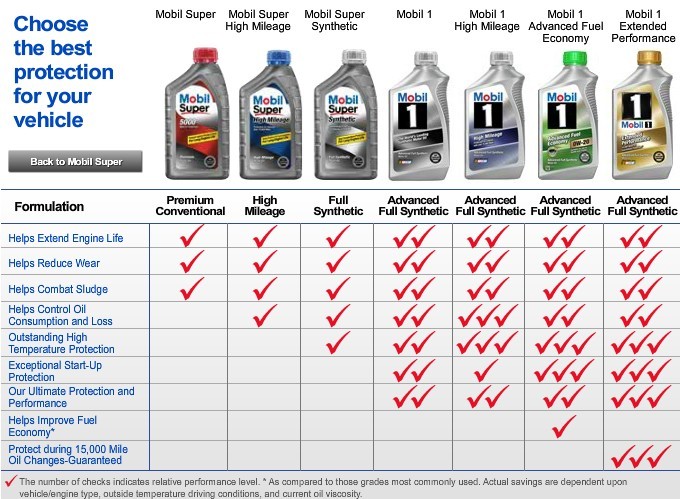
Another thing you guys aren't thinking about is your resale value. SORRY - but I've kept receipts for all my oil changes. I don't like dealing with dirty oil, but I have a mechanic that does the oil change for me, for only $10. And I always get a Mobil 1 premium filter, with whatever full synthetic is on sale. I'm gonna keep using the Mobil one extended performance now tho, they do deals at my local Autozone
$35.99. (oil and filter, plus $10 for the mechanic, $50 full synthetic top brand oil change). My MPG is really good now. I also changed my habits a lot. I've gotten as bad as 22.3 MPG in horrible driving conditions, or driving insanely fast. I've also gotten 40+ mpg on trips now, Lets see some ILX owners using cheap gas and oil get over 40mpg.... Pssssssh, get on my level brah
Seriously - you telling me that if YOU were gonna buy a little used ILX in 10 years from now - you'd pay the same for an ILX with all receipts/records of oil changes done - full synthetic and premium filter, and the guy says it never knew anything but premium fuel.... Versus the guy who did/didn't keep records of every change, and they used semi-synthetic? And then THAT guy claims he used premium only? When if the mofo didn't even cough up the extra $5-25 bucks every 7,500 miles, are you really gonna trust he coughed up an extra couple bucks every fill up? YEA RIGHT.
Same thing goes for you people who aren't washing or waxing your cars on a regular basis. Lets see how good my paint looks in ten years versus the cheap asses. LOL hurting your own wallet in the end.
Only valid point made was the guy saying "fuck it, if its just a lease".
Last edited by aomechmarine; Jul 9, 2015 at 04:12 AM.