


How sharp are your shots?


Thread Starter
Senior Moderator
Joined: Jul 2003
Posts: 21,672
Likes: 1
From: Toronto
How sharp are your shots?
I'd love to see some 100% crops if you care to share. Ideally, not macro stuff, but detailed items a little far off in the distance. For example, and leafy tree down the road, etc.
I'd like to get a better sense of what is reasonable sharpness in these situations.
Thanks.
I'd like to get a better sense of what is reasonable sharpness in these situations.
Thanks.

Involuntary Karatechopper
Joined: Nov 2006
Posts: 428
Likes: 0
From: IL
The sharpness of photos is dependent on a lot of elements... camera type, camera settings (aperture, shutter speed, etc). Also, it depends on how the shot is focused (e.g. focus range). Anything that is too close or too far away is going to be blurry. And then add the fact that leaves are at all different distances away from you, and they're moving in the wind... it's just about impossible to get an absolutely clear image of a tree and all the leaves in the distance.
Here's a full, unedited image where you can see the trees in the background, even though the focus was in the front. It was taken with a handheld Canon Rebel XTi:
http://www.psicow.com/media/power.jpg
I hope this helps!
Here's a full, unedited image where you can see the trees in the background, even though the focus was in the front. It was taken with a handheld Canon Rebel XTi:
http://www.psicow.com/media/power.jpg
I hope this helps!
Not Registered


Joined: Feb 2002
Posts: 5,831
Likes: 87
From: Virginia
Trying to find a good example, but limited pics to choose from at work. I feel my XT takes pretty sharp photos. Yea, the sign is fuzzy, but I wasn't focusing on it.
Original picture
http://www.brian-r.net/files/IMG_4144a.jpg
800X533 resized

100% crop of sign reading Caribbean Beach Festival

I remember focusing on the boy in the Chris Craft in front of me.
# Camera Model = Canon EOS DIGITAL REBEL XT
# Exposure Time (1 / Shutter Speed) = 1/200 second = 0.00500 second
# Lens F-Number/F-Stop = 11/1 = F11.00
# Exposure Program = aperture priority (3)
# ISO Speed Ratings = 200
# Original Date/Time = 2006:08:12 11:40:56
# Flash = Flash did not fire, compulsory flash mode
# Focal Length = 28/1 mm = 28.00 mm
Original picture
http://www.brian-r.net/files/IMG_4144a.jpg
800X533 resized
100% crop of sign reading Caribbean Beach Festival
I remember focusing on the boy in the Chris Craft in front of me.
# Camera Model = Canon EOS DIGITAL REBEL XT
# Exposure Time (1 / Shutter Speed) = 1/200 second = 0.00500 second
# Lens F-Number/F-Stop = 11/1 = F11.00
# Exposure Program = aperture priority (3)
# ISO Speed Ratings = 200
# Original Date/Time = 2006:08:12 11:40:56
# Flash = Flash did not fire, compulsory flash mode
# Focal Length = 28/1 mm = 28.00 mm

Moderator Alumnus


Joined: Mar 2002
Posts: 64,133
Likes: 14,281
here's an unedited crop:
http://img127.imageshack.us/img127/1452/treesgp3.jpg
here's the original, so you can see where the primary focus was:
http://img412.imageshack.us/img412/5...ding023zy9.jpg
this is the best example of the kind of picture you wanted I could find..
http://img127.imageshack.us/img127/1452/treesgp3.jpg
here's the original, so you can see where the primary focus was:
http://img412.imageshack.us/img412/5...ding023zy9.jpg
this is the best example of the kind of picture you wanted I could find..
Big Block go VROOOM!
Joined: Oct 2003
Posts: 8,578
Likes: 1
From: Chicago Burbs
Two other points to consider here (assuming a D-SLR):
1) Is the original a jpeg or a raw file? If it's a jpeg, then the camera itself will have varying degrees of sharpness that are applied when it processes the image. If the original is a raw file, then you need to post with no manual sharpening applied in PP or say specifically what you did for your sharpening. This info, along with lens, shutter speed, and aperture are all needed to do sharpness comparisons.
2) Mirror slap can cause the camera to shake slightly which will reduce the apparent sharpness of an image. This most commonly appears when using shutter speeds between 1/2 and 1/30 of a second. Sometimes a little more. Sometimes a little less. It depends on the setup.
1) Is the original a jpeg or a raw file? If it's a jpeg, then the camera itself will have varying degrees of sharpness that are applied when it processes the image. If the original is a raw file, then you need to post with no manual sharpening applied in PP or say specifically what you did for your sharpening. This info, along with lens, shutter speed, and aperture are all needed to do sharpness comparisons.
2) Mirror slap can cause the camera to shake slightly which will reduce the apparent sharpness of an image. This most commonly appears when using shutter speeds between 1/2 and 1/30 of a second. Sometimes a little more. Sometimes a little less. It depends on the setup.

is learning to moonwalk i
Joined: Feb 2004
Posts: 15,520
Likes: 3
From: SoCal
Here's one - hand-held using the 70-200 at 200:
<a href="http://www.flickr.com/photos/68088083@N00/297620543/" title="Photo Sharing"><img src="http://farm1.static.flickr.com/101/297620543_eb835b5875_o.jpg" width="778" height="519" alt="Squirrel Chillin in a Tree" /></a>
100% Crop:
<a href="http://www.flickr.com/photos/68088083@N00/297620566/" title="Photo Sharing"><img src="http://farm1.static.flickr.com/106/297620566_fd39a22bc1_o.jpg" width="595" height="488" alt="Squirrel Chillin 100% crop" /></a>
I'm sure some of the blurriness has to do with hand shake.
<a href="http://www.flickr.com/photos/68088083@N00/297620543/" title="Photo Sharing"><img src="http://farm1.static.flickr.com/101/297620543_eb835b5875_o.jpg" width="778" height="519" alt="Squirrel Chillin in a Tree" /></a>
100% Crop:
<a href="http://www.flickr.com/photos/68088083@N00/297620566/" title="Photo Sharing"><img src="http://farm1.static.flickr.com/106/297620566_fd39a22bc1_o.jpg" width="595" height="488" alt="Squirrel Chillin 100% crop" /></a>
I'm sure some of the blurriness has to do with hand shake.
Trending Topics
Moderator Alumnus
Joined: Mar 2002
Posts: 64,133
Likes: 14,281
Originally Posted by fdl
srika, what f-stop was used?
and oh yeah it was JPG (
 ), Medium size.. you know what, ideally I should give you a crop from RAW
  .. I'll do that when I get my camera back (its gone for sensor cleaning).
Camera Make: Canon
Camera Model: Canon EOS 5D
Image Date: 2007:05:20 13:39:50
Flash Used: No
Focal Length: 24.0mm
CCD Width: 35.94mm
Exposure Time: 0.010 s (1/100)
Aperture: f/7.1
ISO equiv: 400
White Balance: Auto
Metering Mode: Matrix
Creepy guy in the mirror.
Joined: Oct 2004
Posts: 2,631
Likes: 35
From: Ontario, Canada
Here is a quick sample jpeg. This is using the original kit lens which for me had very dissappointing performance. I have a new Tamron 17-50 that is much better.
100%
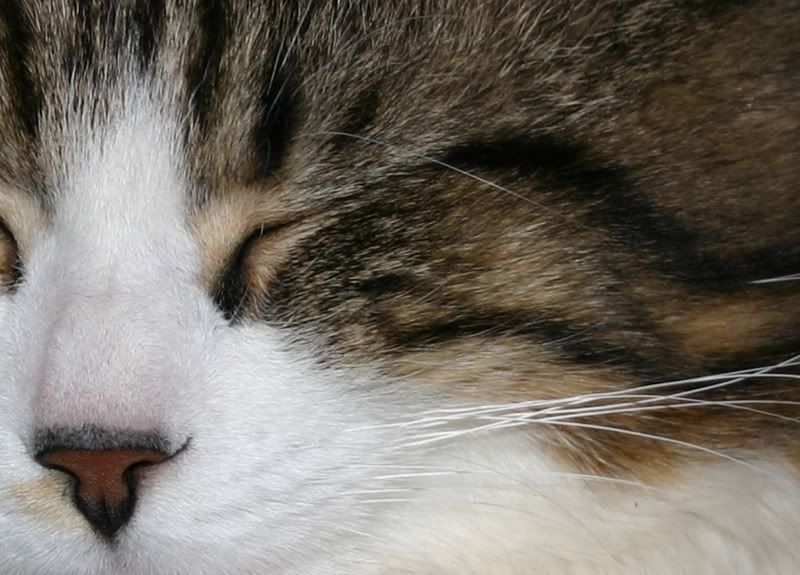
Full shot
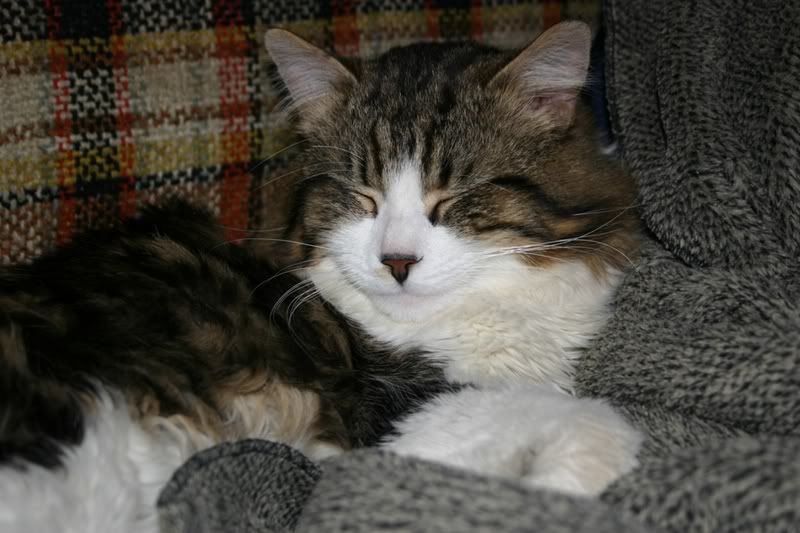
jpeg
EOS Digital Rebel
1/60 sec.
F/5.6
46mm (kit 18-55)
ISO 100
100%
Full shot
jpeg
EOS Digital Rebel
1/60 sec.
F/5.6
46mm (kit 18-55)
ISO 100


Drifting
Joined: Oct 2006
Posts: 2,683
Likes: 213
From: CA
Originally Posted by fdl
I'd love to see some 100% crops if you care to share. Ideally, not macro stuff, but detailed items a little far off in the distance. For example, and leafy tree down the road, etc.
I'd like to get a better sense of what is reasonable sharpness in these situations.
Thanks.
I'd like to get a better sense of what is reasonable sharpness in these situations.
Thanks.
small (numerically) F number = blurred background and foreground
big (numerically) F number = more depth of field, more detail for and aft
best way to demonstrate this to you is by looking at a couple shots i took below:
Large Aperture (small number numerically):
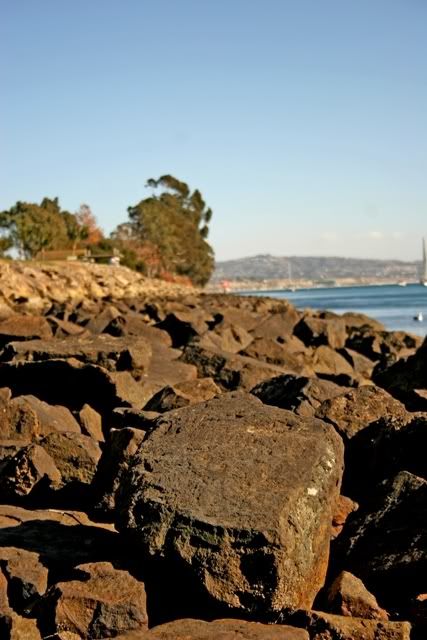
shot details:
1/640 sec
F/5.6
ISO 100
Small Aperture (large number numerically):
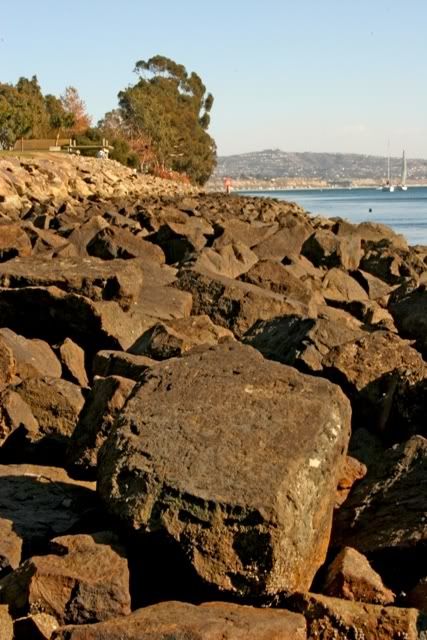
shot details:
1/40 sec
F/36
ISO 400
If you notice on the large aperture, the tree on the left background is blurred while on the small aperture you get a bit more detail. same is true for the far background - you see a hair more detail using the small aperture than you would with the larger aperture.
hope this comparison helps. let me know if you have more questions.
Last edited by sixsixfour; Jul 4, 2007 at 02:13 AM.
Thread Starter
Senior Moderator
Joined: Jul 2003
Posts: 21,672
Likes: 1
From: Toronto
I understand f-stops and depth of field, but I am not sure how it affects overall sharpness. For example, the first rock is not nearly as sharp at f36, is this normal?
Also, at what f-stop should I be shooting landscapes at?
Also, at what f-stop should I be shooting landscapes at?

Earth-bound misfit
Joined: Mar 2006
Posts: 31,704
Likes: 608
Most lenses have a "sweet spot" for sharpness around f/8-f/11, and will lose some sharpness wide open or stopped down fully. So to answer your question, yes, it's normal to lose some sharpness at that aperture.
As with everything, your aperture for landscapes will depend. Most of the time you can keep it around 16-22 with good results.
As with everything, your aperture for landscapes will depend. Most of the time you can keep it around 16-22 with good results.

Team Owner
Joined: Oct 2003
Posts: 37,701
Likes: 3,897
From: Chicago
I took these yesterday with my D200 and a 17-55DX.
Focal length 55mm, ISO 200, 1/400 sec @ f 5.6. I had a circular polarizer on the lens as well. I took this shot with the intention of cropping the sticker for this thread - so it's in the center of the lens.
Full pic:

Crop:

Focal length 55mm, ISO 200, 1/400 sec @ f 5.6. I had a circular polarizer on the lens as well. I took this shot with the intention of cropping the sticker for this thread - so it's in the center of the lens.
Full pic:
Crop:

Drifting
Joined: Oct 2006
Posts: 2,683
Likes: 213
From: CA
Originally Posted by fdl
I understand f-stops and depth of field, but I am not sure how it affects overall sharpness. For example, the first rock is not nearly as sharp at f36, is this normal?
Originally Posted by fdl
Also, at what f-stop should I be shooting landscapes at?

Moderator Alumnus
Joined: May 2001
Posts: 4,295
Likes: 121
From: Ronkonkoma, NY
When you say something like 'how sharp are far away trees, you are factoring in two things:
1) Quality of lens, i.e. 'how sharp is this lens when focused directly on an object'.
2) Depth of field, i.e.: 'how quickly does focus lessen for objects further/closer than the object the lens is directly focused on'
For stuff that is far away, you are combining both of those.
Take a look at a Depth of field calculator: http://www.dofmaster.com/dofjs.html
Note that depth of field is not only the F stop, but also a factor of focal length, and focus distance to target.
I loaned a coworker my 10-22mm, and he was blown away by the overall sharpness.
Well duh - at 10mm, Depth of field covers pretty much everything in sight.
Also keep in mind that your camera's multiplier does NOT affect depth of field.
i.e. My 10-22 has the same 'capture area' as a 16-35mm lens due to the 1.6 multiplier.
But the lens is optically a 10-22, and so the depth of field (and depth compression) is calculated as per a 10-22 lens.
This is why small cameras have ridiculous depth of field - my SD800IS's true focal length is
4.6-17.3mm with the same amount of depth of field.
But to answer your original question: Actually, my pictures aren't overall that sharp at all.
I don't worry about sharpness all that much anymore, because I mostly just view my pics online, and the largest size I show is 1024x768. I do be more careful with shots that I think I might blow up to huge size, and/or crop tightly.
1) Quality of lens, i.e. 'how sharp is this lens when focused directly on an object'.
2) Depth of field, i.e.: 'how quickly does focus lessen for objects further/closer than the object the lens is directly focused on'
For stuff that is far away, you are combining both of those.
Take a look at a Depth of field calculator: http://www.dofmaster.com/dofjs.html
Note that depth of field is not only the F stop, but also a factor of focal length, and focus distance to target.
I loaned a coworker my 10-22mm, and he was blown away by the overall sharpness.
Well duh - at 10mm, Depth of field covers pretty much everything in sight.
Also keep in mind that your camera's multiplier does NOT affect depth of field.
i.e. My 10-22 has the same 'capture area' as a 16-35mm lens due to the 1.6 multiplier.
But the lens is optically a 10-22, and so the depth of field (and depth compression) is calculated as per a 10-22 lens.
This is why small cameras have ridiculous depth of field - my SD800IS's true focal length is
4.6-17.3mm with the same amount of depth of field.
But to answer your original question: Actually, my pictures aren't overall that sharp at all.
I don't worry about sharpness all that much anymore, because I mostly just view my pics online, and the largest size I show is 1024x768. I do be more careful with shots that I think I might blow up to huge size, and/or crop tightly.

Photography Nerd
Joined: Sep 2003
Posts: 21,489
Likes: 11
From: Toronto
Originally Posted by sixsixfour
ideally the bigger the F-number (F/16 or greater) the better it is. because you want to get as much depth of field as possible for a given shot. you need to also shoot as wide a focal length as possible. if you have a canon DSLR or P&S, there usually is a setting for landscape and that sets automatically the smallest aperture possible for the given focal length you are at (its the one with the mountain icon).
You want to use hyperfocal technique to make sure everything from the foreground to the background is sharp. Depth of field is roughly 1/3rd in front of the focus point and 2/3rds behind it. Generally what I do is set the aperture to a moderate value between f/5.6 and f/11, then use the depth of field preview button and focus into the scene so the focus covers everything in the frame. If I can't cover everything, I'll bump up the aperture until it works.
If you're curious what the diffraction limits are for your lens, check out the very cool reviews at SLRgear.com. They have interactive 3-D charts that let you play with different apertures and focal lengths to see how the lens performs.
Here's another handy little site that will let you create a hyperfocal chart for your lenses: http://www.dofmaster.com/charts.html
Drifting
Joined: Oct 2006
Posts: 2,683
Likes: 213
From: CA
Originally Posted by Dan Martin
As wndrlst pointed out, there's a limit at which lenses start to lose resolution due to diffraction. If you automatically stop down to f/22+ for every landscape shot, you're going to be throwing away quite a bit of resolution. Most lenses on cropped bodies cap out around f/8 to f/11, beyond that is still usefull for depth of field, but it actually degrades sharpness.
You want to use hyperfocal technique to make sure everything from the foreground to the background is sharp. Depth of field is roughly 1/3rd in front of the focus point and 2/3rds behind it. Generally what I do is set the aperture to a moderate value between f/5.6 and f/11, then use the depth of field preview button and focus into the scene so the focus covers everything in the frame. If I can't cover everything, I'll bump up the aperture until it works.
If you're curious what the diffraction limits are for your lens, check out the very cool reviews at SLRgear.com. They have interactive 3-D charts that let you play with different apertures and focal lengths to see how the lens performs.
Here's another handy little site that will let you create a hyperfocal chart for your lenses: http://www.dofmaster.com/charts.html
You want to use hyperfocal technique to make sure everything from the foreground to the background is sharp. Depth of field is roughly 1/3rd in front of the focus point and 2/3rds behind it. Generally what I do is set the aperture to a moderate value between f/5.6 and f/11, then use the depth of field preview button and focus into the scene so the focus covers everything in the frame. If I can't cover everything, I'll bump up the aperture until it works.
If you're curious what the diffraction limits are for your lens, check out the very cool reviews at SLRgear.com. They have interactive 3-D charts that let you play with different apertures and focal lengths to see how the lens performs.
Here's another handy little site that will let you create a hyperfocal chart for your lenses: http://www.dofmaster.com/charts.html
 . it all comes with experience I guess. I cant really explain it properly, but I use my own judgement on a shot-to-shot basis. what works for me may not work for everyone. i generally know what I want to shoot and rarely factor in the background.
 lenses on crop bodies do start losing their effective sharpness past F/22, but if you use dedicated crop body lenses (EF-S), you get the actual focal length w/o the crop factor, and only lose minimal detail. On two of my bodies I constantly think about that issue, but on the 5D, I usually dont care as the L-lens I have (24-105mm) is quite sharp across the board and the 5D being a full-frame actually shows 24mm as 24mm. what I worry about from time to time is vignetting around the edges, which somehow is a problem with my 5D.
Photography Nerd
Joined: Sep 2003
Posts: 21,489
Likes: 11
From: Toronto
Originally Posted by sixsixfour
lenses on crop bodies do start losing their effective sharpness past F/22, but if you use dedicated crop body lenses (EF-S), you get the actual focal length w/o the crop factor, and only lose minimal detail.

Drifting
Joined: Oct 2006
Posts: 2,683
Likes: 213
From: CA
Originally Posted by Dan Martin
EF-S lenses still require you to use a crop factor if you're trying to compare field of view to a full frame body. An EF-S 10-22 on a 30D is the equivalent of a 16-35 on your 5D. Diffraction is related to sensor size, resolution, and aperture. You can use the calculator at the bottom of this article if you want to see how they are related: http://www.cambridgeincolour.com/tut...hotography.htm

with regard to the lens comparison, i would have to admit, I dont really think about comparing the crop factor when switching bodies. maybe its just the way Ive been shooting all these years. If I cant get the composition right, i switch lenses or reorient myself. i would use the 5D by itself but would switch between the 30D and the XT when I shoot using either one.
i do take into consideration the crop factor when I use my non-EF-S lenses on the crop bodies. my 28-135mm IS gets so narrow I switch to either the kit lens (18-55) or the 17-85mm IS EF-S on the fly. not very good on keeping dust off the inside though

Photography Nerd
Joined: Sep 2003
Posts: 21,489
Likes: 11
From: Toronto
Back to the original topic, since I finally had a chance to shoot with the EF-S 17-55 this weekend, I thought I'd share a unprocessed image. The file was shot in RAW and converted with Adobe Camera RAW to a sRGB JPEG using only the default settings (no adjustments).
Here's a preview:

Here's the link to the original file: http://farm2.static.flickr.com/1391/...605894c5_o.jpg
EXIF & shot info:
- 30D with EF-S 17-55 f/2.8 @ 55mm
- 1/100s @ f/6.3
- ISO 200
- matrix metering
- manual exposure
- one shot AF
- A 420EX was used as main light to camera left and a 430EX was positioned down at ground level on camera right as a fill light. No diffuser was used on the main light, but a stofen omnibounce was used on the fill light. I probably should have used an umbrella for the main light, but I didn't have one at the time.
I'm very impressed with the color, contrast and sharpness of this lens. Post processing is a breeze when you can get results like this straight out of the camera.
Here's a preview:
Here's the link to the original file: http://farm2.static.flickr.com/1391/...605894c5_o.jpg
EXIF & shot info:
- 30D with EF-S 17-55 f/2.8 @ 55mm
- 1/100s @ f/6.3
- ISO 200
- matrix metering
- manual exposure
- one shot AF
- A 420EX was used as main light to camera left and a 430EX was positioned down at ground level on camera right as a fill light. No diffuser was used on the main light, but a stofen omnibounce was used on the fill light. I probably should have used an umbrella for the main light, but I didn't have one at the time.
I'm very impressed with the color, contrast and sharpness of this lens. Post processing is a breeze when you can get results like this straight out of the camera.

Thread
Thread Starter
Forum
Replies
Last Post
MrHeeltoe
1G TSX Tires, Wheels, & Suspension
20
Feb 23, 2023 01:54 PM
detailersdomain
Wash & Wax
3
Oct 9, 2015 10:13 PM
MrHeeltoe
2G TSX Tires, Wheels & Suspension
3
Sep 29, 2015 10:43 PM
MrHeeltoe
3G TL Tires, Wheels & Suspension
0
Sep 28, 2015 05:43 PM
