When you click on links to various merchants on this site and make a purchase, this can result in this site earning a commission. Affiliate programs and affiliations include, but are not limited to, the eBay Partner Network.
For the new model year, the crossover undercuts 2018MY by about $1,500.
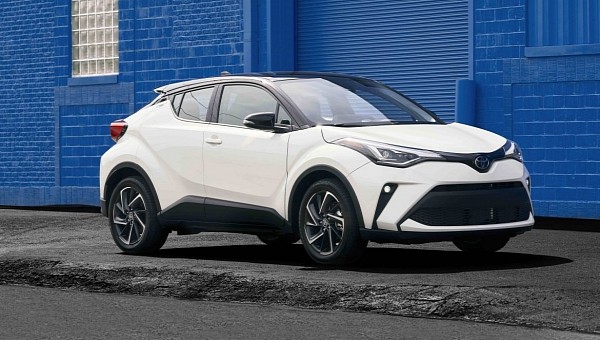
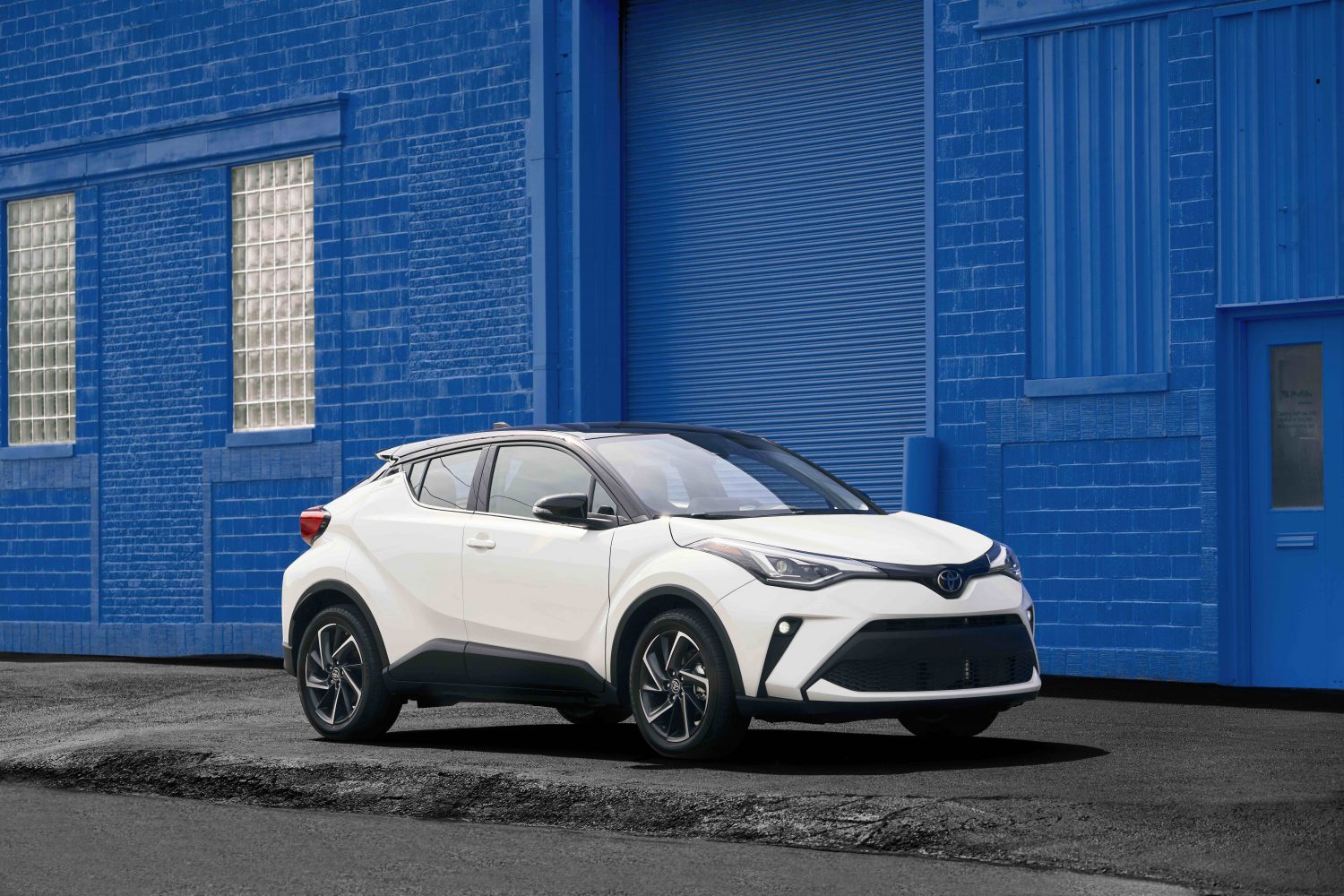
Toyota wants to bring its C-HR “coupe high-rider” closer to its segment rivals by introducing a new grade strategy for 2019. During the next approximately 12 months, the vehicle will be offered in just three trim levels – LE, XLE, and Limited, ditching the XLE Premium from 2018.
With the new LE base model, the price of the C-HR now starts at $20,995 MSRP without the delivery, processing, and handling (DPH) fee of $1,095 included. This makes the crossover about $1,500 cheaper than the 2018 C-HR XLE, which was the entry-level version for the previous model year.
The C-HR LE is equipped as standard with 17-inch steel wheels with hubcaps, LED DRLs with halogen headlamps, and a polyurethane steering wheel, as well as an eight-inch display with Apple CarPlay connectivity. If you pay $2,035 extra (without DPH) for the XLE trim, you’ll get systems such as Blind Spot Monitor and Rear Cross Traffic Alert, as well as features like auto-folding side mirrors with puddle lamps, piano black upper console and switch base, keyless engine start, and more.
Upgrading to the Limited range-topper brings goodies such as fog lamps, more panels covered in piano lack in the cabin, automatic headlights and wipers, heated front seats, chrome window trim, and leather-trimmed or leather-trimmed/fabric seats. The 2019 C-HR Limited will set you back at least $26,050 without destination charge included.
For the new model year, the C-HR carries over with its 2.0-liter naturally aspirated engine under the hood, good for 144 horsepower (107 kilowatts) and 139 pound-feet (188 Newton-meters) of torque. Mated to a CVT, it sends power exclusively to the front wheels and returns an average EPA-estimated fuel consumption of 29 miles per gallon in the combined cycle.
2019 C-HR models are covered by Toyota’s 36-month/36,000-mile new-vehicle warranty for all components with an additional 60-month warranty of the powertrain for up to 60,000 miles.
There’s no stopping to Gazoo Racing’s portfolio expansion as after unveiling a Copen GR Sport earlier this week, Toyota’s in-house performance division is now introducing a hotter C-HR. It’s based on the recently updated version of the funky crossover, but you’ll have to move to Japan to get the GR goodies since these will be offered only on the JDM-spec variant.
It’s not all about cosmetic tweaks as the C-HR GR Sport has actually received a few mechanical revisions courtesy of a new center brace developed to boost body rigidity. Not only that, but Gazoo Racing’s engineers have also fiddled with the suspension by making changes to the coil springs, shock absorbers and stabilizers, along with modifying the steering for a more direct response.
Those large 19-inch alloy wheels wrapped in 225/45 R19 are exclusive to the GR Sport version, and so is the sporty body kit with a new front bumper housing a giant lower grille with a thick horizontal bar. The fog light bezel has a different look and sits lower on the bumper compared to the layout of the regular C-HR. A quad exhaust system and a bunch of emblems at the front, side, and back complete the look.
Stepping inside the cabin, the Toyota C-HR GR Sport has been equipped with a slightly smaller steering wheel covered in leather with silver stitching and carrying the “GR” branding. Those body-hugging front seats can only be had on this version, which also stands out courtesy of aluminum pedals, a metallic dark silver trim, and a GR-branded start/stop button.
Available exclusively with a front-wheel-drive layout, the GR Sport kicks off at ¥2,732,000 (about $25,100) in the S-T trim with the six-speed manual transmission and a turbocharged 1.2-liter gasoline engine. Toyota will also sell the spicier C-HR with the hybridized 1.8-liter powertrain in S guise from ¥3,095,000 ($28,500).
In 2017, the first calendar year for the C-HR in the United States, the subcompact crossover sold 25,755 units in this part of the world. Its best year was 2018 with 49,642 units, and that’s a big problem for Toyota. 10 photos
So big, the Japanese automaker decided to discontinue this nameplate from the U.S. lineup after the 2022 model year. The largest of the big three Japanese automakers confirmed the inevitable to MotorTrend, adding that no replacement is due for 2023. Given that the Corolla Cross is more affordable and larger, this cessation does not come as a surprise.
Priced at $24,280 excluding the $1,335 destination freight charge, the subcompact Compact High Rider is produced in Turkey for the U.S. and Canadian markets. Prospective customers are presented with three grades: the XLE, the $25,045 Nightshade Edition, and the $27,300 Limited. All three are estimated to return 27 miles per gallon in the city and 31 miles per gallon on the highway (that’s 8.7 and 7.6 liters per 100 kilometers).
The XLE isn’t as spartan as one may think. 18-inch alloys mounted with 225/50 rubber boots open the list of standard equipment, followed by auto-folding power and heated mirrors with integrated turn signals, blind sport warning, puddle lights, Smart Key, Push Button Start, dual-zone automatic climate control, rear cross-traffic alert, plus Toyota Safety Sense 2.5.
Some peeps may be put off by the small rear windows of the C-HR, but the real issue here concerns the oily bits. The 2.0-liter N/A engine cranks out merely 144 ponies and 139 pound-feet (188 Nm) of torque, and the North America-spec Toyota C-HR is front-wheel drive only.
The better-styled Corolla Cross also comes in three grades (L, LE, and XLE), but its 2.0-liter engine pumps out 169 horsepower and 151 pound-feet (205 Nm) on full song. Better still, all-wheel drive is available across the board. Priced at $23,060 excluding destination, the Corolla Cross also happens to be more frugal at 31 and 33 mpg (7.6 and 7.1 l/100 km).
Toyota C-HR was the carmaker's first subcompact crossover launched in Europe after it pioneered the compact SUV segment with the RAV4. The second generation builds on the success of the C-HR with three hybrid and plug-in hybrid propulsion systems and new intelligent features.
The C-HR was the first Toyota model in a long time that aimed to make people's hearts beat faster. Often criticized for its bland design, the Japanese carmaker went in the opposite direction with the C-HR. For some Toyota customers, myself included, this was a little too much, but that didn't mean that the crossover wasn't successful. The styling was the main reason for purchase for more than half of customers, and the C-HR became Toyota's best-performing model for conquest sales.
The Japanese carmaker wants this fortunate chain of events to continue, and the second-generation model kept the con-conformist attitude while pushing the boundaries with a more mature design. The new Toyota C-HR looks almost exactly like the Prologue concept unveiled last December, retaining the coupe-like silhouette of its predecessor. Toyota claims that C-HR's striking design is also aerodynamically efficient, with airflow optimizations throughout.
The interior marks an improvement, with finer materials and a modern cockpit. All control elements are concentrated in the driver's zone, with a new 12.3-inch fully digital instrument panel. This can be programmed to display various information, with three pre-set layouts that can be personalized using the switches on the steering wheel.
You can order the new C-HR with the Toyota Smart Connect multimedia package, featuring an 8-inch or 12.3-inch touchscreen, depending on the trim. The system offers wireless smartphone connection using Apple CarPlay and Android Auto and can offer EV range information and local charging locations for the plug-in hybrid (PHEV) variants.
Toyota offers three electrified powertrains, with 1.8-liter and 2.0-liter hybrid versions and a 2.0-liter plug-in hybrid. The latter will also be available with the intelligent all-wheel drive (AWD-i) option. All powertrains are part of Toyota's fifth-generation hybrid technology, with a new transaxle and power control unit (PCU) and a more powerful high-voltage battery.
The plug-in hybrid variant features a one-pedal driving feature and automatic drive mode selection to optimize energy efficiency. The new geofencing feature allows the new Toyota C-HR to automatically switch to EV operation when entering a low-emission zone. The car can optimize battery usage across the entire trip when using the navigation system, and sufficient battery charge is available.
All versions of the 2024 Toyota C-HR come with the latest Toyota Safety Sense driver-assistance technology. Toyota promises to offer improvements and new features via future over-the-air software updates. The standard package features Acceleration Suppression to reduce the risk of collision with a vehicle ahead and Proactive Driving Assist (PDA), providing smooth deceleration when the driver comes off the throttle when approaching a slower vehicle ahead.
A more advanced package includes features such as Lane Change Assist with Front Cross Traffic Alert, a Driver Monitoring Camera, and an Automatic High-Beam System with camera control to adjust the light distribution. The new Toyota C-HR can also automatically follow the vehicle ahead in a stop-start traffic jam where local regulations permit. The reservations for the new model are open, with two special Premiere Editions available to order: GR Sport Premiere Edition and High Premiere Edition.
Toyota revealed the Toyota C-HR+, an all-new battery electric model that is set to be a bold, stylish and highly capable competitor at the heart of Europe's vital C-SUV BEV market.
Displaying sleek and eye-catching coupe lines and delivering an authentically rewarding, fun-to-drive character, it will connect with customers on an emotional level, while offering all the spaciousness, practicality and convenience that are priorities for cars in its class. It has been developed from the Compact SUV concept Toyota presented in 2022 while also carrying forward essential qualities that have made the Toyota C-HR a game-changing success, with more than a million European sales across two generations.
Scheduled for launch in selected European markets in late 2025, with a full rollout to all European markets starting in 2026, it will join the all-new Urban Cruiser and the new bZ4X to give Toyota a compelling line-up of products across the B, C and D-SUV BEV segments. True to Toyota's electric SUV strategy, the range will offer broad customer choice, with two different battery capacity options and both front and all-wheel drive, emphasising the Toyota C-HR+'s genuine SUV quality.
Its introduction will further reinforce Toyota's multi-pathway strategy, joining hybrid, plug-in hybrid and hydrogen fuel cell electric vehicles, to deliver sustained reductions in vehicle emissions towards achieving carbon neutrality in Europe in 2035.
An all-new model in its own right
Although inspired by the Toyota C-HR, a model that continues to be exceptionally successful in attracting new customers to the brand, the Toyota C-HR+ is unequivocally an individual model in its own right. It is built on Toyota's dedicated e-TNGA battery electric vehicle philosophy and has a unique body and interior. It presents a clean, vital appearance that is fundamentally simple, yet has a strong emotional quality to appeal to both the heart and mind.
In the front three-quarter view, the clean and modern styling clearly identifies it as a contemporary Toyota BEV, while the wide stance conveys the kind of dynamic drive associated with the Toyota C-HR. The front bumper, grille and headlight designs are all exclusive the model, while the sleek, coupe-crossover silhouette is both distinctive and aero-efficient. Notably the coupe roofline is achieved without compromising headroom for rear seat passengers.
The car's styling is emphasised by distinctive character lines: sharply defined at the rear, the blending smoothly into the frontal design.
The look is equally distinctive at the rear, again with a wide stance and sophisticated full-LED rear combination lights. The steep angle of the rear window and neatly integrated spoiler add further emphasis to the dynamic appearance.
"Class above" interior space
The interior is modern and streamlined, creating an open and welcoming feel, with ambient lighting adding a touch of sophistication. Within an overall length of 4,520 mm, the wheelbase extends to 2,750 mm. This helps secure spacious accommodation with generous headroom and a 900 mm front-rear couple distance. The result is greater cabin space than is typically expected of a C-segment SUV.
Likewise, the interior execution has a level of sensory quality usually found in larger models. The roominess and all-round visibility make the Toyota C-HR+ a winning proposition in terms of comfort and versatility, with practicality and convenience supported by 416 litres of load space.
The equipment features recognise how the vehicle will be a shared space and not just about the driver. Hence the provision, for example, of two wireless smartphone chargers and rear cabin USB ports to ensure everyone on board can be connected when on the move; rear cabin air conditioning controls; and a panoramic roof that brings natural light to all parts of the interior.
Power and performance
The Toyota C-HR+ will not be a one-size fits-all proposition. Recognising different customer needs and priorities, Toyota will offer two different battery options. A 57.7 kWh (gross capacity) unit will be exclusive to the front-wheel drive model and a higher capacity 77 kWh battery will be available for both front and all-wheel drive powertrains. This breadth of choice will help Toyota reach a wide customer base within the C-SUV market.
Maximum range according to WLTP drive cycle is up to 600km (tentative value pending homologation), depending on grade and powertrain.
The characteristically smooth, quiet and refined performance rewards of a Toyota electric vehicle will be enhanced by impressive power. In fact, outside the GR performance car range, this will be most powerful model in Toyota's European line-up.
The AWD version is expected to deliver a prodigious 343 DIN hp / 252 kW, enabling 0-100 km/h in just 5.2 seconds. The front-wheel drive model with the 57.7 kWh battery will offer 167 DIN hp / 123 kW; opting for the 77 kWh battery increases the output to 224 DIN hp / 165 kW.
The all-wheel drive option affirms the Toyota C-HR+'s status as an authentic SUV. The system enhances grip and traction and helps harness the extra torque and power that are characteristic of a BEV. This contributes to both safety and greater driving pleasure.
Energy-efficient performance is supported by optimised aerodynamics with the vehicle's silhouette, roof spoiler and ducktail rear end all calculated to achieve smooth airflow over and around the body.
Customers will appreciate a new battery pre-conditioning feature that will improve charging performance in most conditions. For convenience, this can be operated automatically or manually. Further benefits are gained from an energy-saving heat pump for the air conditioning system and heated seats, steering wheel and windscreen.
An 11 kW onboard charger is provided as standard, with a 22 kW unit provided from High grade. Fast DC charging can achieve speeds of up to 150 kW.
Superior driving experience
Rewarding dynamic performance and a fun-to-drive character are key appeal points for the Toyota C-HR+. In addition to the fundamental strength, rigidity and agility of the dedicated BEV platform, suspension parts have been precisely tuned for the new model, including spring and damper performance and the stiffness of the anti-roll bars. The electric power steering has also been remapped for responsiveness.
Gains have been made in stability through increased body rigidity and a lower centre of gravity compared to the Toyota C-HR. A reduced moment of inertia contributes to even more agile handling.
Technologies for safety and connectivity
The Toyota C-HR+'s advanced looks and powertrain are matched by the latest technologies for comprehensive safety and onboard connectivity.
All versions benefit from extensive Toyota T-Mate features, including Toyota Safety Sense active safety and driver assistance systems. Driving is made safer and easier, with early detection of a wide range of accident hazards and automatic activation when needed of braking, steering and power control to help the driver avoid an impact.
A number of advanced features are provided as standard, including a Blind Spot Monitor, Adaptive High-beam System headlights and Parking Support Brake. Park Assist and a Panoramic View Monitor are included in the High grade specification.
A 14-inch multimedia display will be a standard feature of all Toyota C-HR+ models, forming a focal point in the front cabin design. The navigation system includes a dedicated EV routing function that calculates routes with convenient charging station options, according to the car's state of battery charge and available driving range.
Using the MyToyota app allows owners to monitor and manage key aspects of their vehicle, including charging status, charging time, driving range and usage data.
Ownership peace of mind
Customers, particularly those purchasing a BEV for the first time, can be assured the Toyota C-HR+ has all the Quality, Durability and Reliability that are a hallmark of the brand. This is reflected in a Battery Care Program covering the battery each year for up to 10 years of vehicle age or up to one million kilometres driven, subject to an annual battery health check.
Toyota announced the all-new 2026 Toyota C-HR Battery Electric Vehicle (BEV), an all-new model set to be a bold entry in its electrified lineup. With an impressive 338 horsepower combined system output, and standard All-Wheel Drive, it has a performance-inspired spirit with a manufacturer estimated 0-60 mph time of around 5 seconds. The C-HR couples its dynamic performance with a coupe-like design, a well-appointed interior, and 25.4-cubic feet of rear cargo space behind the rear seats for compact crossover utility.
The 2026 C-HR BEV brings cutting-edge style and high-tech features. It will be powered by a 74.7 kW battery and have a manufacturer-estimated all-electric range rating of 290 miles. It will come equipped with a North American Charging System (NACS) port, giving it access to thousands of DC charging stations nationwide. It will also be capable of charging on Level One and Level Two AC power sources. Steering wheel-mounted paddle shifters that control regenerative braking power are also standard. When activated, four different levels of regenerative braking power can be selected to convert kinetic energy to electric energy, adding charge to the traction battery.
It will come in SE and XSE grades and have great standard interior features like a 14-inch touchscreen that runs the Toyota Audio Multimedia system, fully digital gauge cluster, dual wireless chargers in the center console, and the Toyota Safety Sense 3.0 system. The cabin also brings comfort, with seating choices from fabric and SofTex®-trim to synthetic suede and SofTex-trim.
On the outside, key standard equipment like a power liftgate, low-profile roof rails, and rain-sensing wipers bring functional value. There will be 18-inch and 20-inch wheel options and a variety of available exterior paint colors in single and two-tone paint options.
Developed from a compact BEV concept Toyota first presented in 2022, the new C-HR BEV is the 20th electrified model to be added to the Toyota lineup. The model carries forward Toyota's multi-pathway powertrain approach, which includes a variety of models available across its lineup to fit customers' lifestyles, including BEV, Hybrid, Plug-in Hybrid, and Fuel Cell (CA and Hawaii only) powertrains. The 2026 C-HR BEV is expected to arrive at Toyota dealerships in the US in 2026.
Spacious Style
The Toyota C-HR BEV is designed as an expression of the fun-to-drive, exhilarating character of electric vehicles. Built on Toyota's dedicated e-TNGA battery electric vehicle platform, its flowing body lines and wide stance convey a dynamic drive. The vehicle's compact coupe silhouette is formed by Toyota's signature hammerhead front end flowing seamlessly into a compact cabin and angular rear.
The C-HR has compact crossover proportions with an overall length of 177.9-inches, overall width of 73.6-inches, wheelbase of 108.3-inches, and overall height 63.8-inches. This helps give it spacious accommodation, with generous headroom and ample cabin space. The interior design is clean and open, with a slim driver's display and easy-to-access center console. For an added touch, it also has customizable ambient lighting for setting just the right mood. Altogether, it has a comfortable, high-tech cabin that is stylish and functional.
It also provides drivers and passengers alike with plenty of comfort and convenience, such as two wireless smartphone chargers and rear cabin USB ports to ensure everyone on board can be connected when on the move; rear cabin air conditioning controls; and an available panoramic roof that brings natural light to all parts of the interior.
Electrifying Performance
The 2026 Toyota C-HR BEV comes equipped with standard AWD with electric motors housed in the front and rear eAxles. Altogether, the model is expected to be capable of going from 0 to 60 miles per hour in around 5 seconds. Its coupe-like lines are complemented by a low center of gravity, thanks to the underfloor-mounted battery pack that is surrounded by a cross-framing structure for overall vehicle rigidity. In addition to the fundamental strength, rigidity and agility of the dedicated BEV platform, suspension parts have been precisely tuned for the new C-HR, including spring and damper performance and the stiffness of the anti-roll bars.
It will have a lithium-ion battery with a total capacity of 74.7-kWh and an 11-kW on-board AC charger. It will have a NACS charging port that is compatible with Level Three DC fast-charging, giving it access thousands of high-speed charging stations nationwide. When using fast charging the C-HR will be capable of recharging from 10% to 80% battery capacity in around 30 minutes under ideal conditions. The 2026 C-HR will also be capable of charging on Level One and Level Two AC power sources.
A battery pre-conditioning function is also included on C-HR. This system brings the battery to an optimal temperature for DC fast charging, enabling faster charging in colder climates. This function can be activated manually or automatically by setting the navigation system destination to a fast-charging station.
The 2026 C-HR also features steering wheel-mounted paddle shifters to activate and adjust regenerative braking. Regenerative braking is the process of converting energy created by the movement of the vehicle, also known as kinetic energy, into electrical energy. The driver can adjust the amount of regenerative braking power from four levels using the paddle shifters.
Two Style and Value-Packed Grades
The all-electric 2026 C-HR will be available in an SE and XSE grade. Exterior paint options on both grades will include the all-new Overcast and Tandoori colors, along with Cement, Midnight Black Metallic, and Wind Chill Pearl (premium paint option). The XSE will also have two-tone paint available, including the combination of Tandoori, Cement, or Wind Chill Pearl with a Midnight Black Metallic Roof. Key features by grade include:
SE
Performance specifications:
Manufacturer estimated 290-mile all-electric driving range rating
338 horsepower
11-kW onboard AC charger
Dual-voltage A/C charging cable
NACS charging port
18-in. wheels with black alloy inserts
Power liftgate
Rain-sensing wipers
Low profile roof rails
Fabric/SofTex trimmed seating with 8-way power driver seat and 6-way manual passenger seat
Heated front seats and steering wheel
14-in. touchscreen with Toyota Audio Multimedia system
Two front wireless Qi chargers
Three USB-Type C ports (one front, two rear)
Toyota Safety Sense 3.0
Front & Rear Parking Assist with Automatic Braking
Blind Spot Monitor
XSE (adds to or replaces SE features with):
20-in. gun metal finished wheels
SofTex and synthetic suede-trimmed seats
8-way power passenger seat
Driver memory seat
Digital Rearview Mirror with HomeLink®
Traffic Jam Assist
Lane Change Assist
Panoramic View Monitor
Intuitive Connected Tech
Modern convenience also comes standard on the 2026 Toyota C-HR BEV, as it will come with a 14-inch touchscreen that runs the Toyota Audio Multimedia system, designed and engineered by Toyota's Texas-based Connected Technologies team. It also comes with a host of Toyota Connected Services trials.
The Drive Connect 3-year trial gives access to Intelligent Assistant, Cloud Navigation and Destination Assist. With Intelligent Assistant, simple phrases like "Hey Toyota" awakens the system for voice activated commands to search for directions, find Points of Interest (POI), adjust audio controls, change the cabin temperatures and more. Cloud Navigation, the available onboard navigation solution, utilizes the cloud to download the latest available map, traffic and routing information. To ensure users have the most up-to-date search capabilities, POI search is provided by Google Points-of-Interest data. Destination Assist also gives access to 24/7 live agent assistance to locate the next destination.
All Toyota C-HR models are equipped with a six-speaker audio system for enjoying entertainment while on-the-go, a JBL® Premium Audio system with 9 speakers, including an 8-channel 800-watt amplifier and 9-inch subwoofer will also be available.
The Toyota Audio Multimedia system also allows for dual Bluetooth phone connectivity, with support for standard wireless Apple CarPlay® and Android Auto™ compatibility. With further connectivity, the C-HR has a Wi-Fi Connect trial (30 days or up to 3GB upon activation) that offers 4G connectivity for up to five devices - turning the C-HR into an AT&T Hotspot.
Adding to the already robust offering of audio playback ability with HD Radio, USB data and a SiriusXM® 3-month trial subscription, Wi-Fi Connect also enables the new Integrated Streaming feature, providing the ability to link separate Apple Music® and Amazon Music subscriptions to the vehicle for onboard control.
The C-HR also comes with a 5-year minimum trial subscription for both Safety Connect and Service Connect. Safety Connect includes an Emergency Assistance Button (SOS), 24/7 Enhanced Roadside Assistance, Automatic Collision Notification and Stolen Vehicle Locator. Service Connect gives drivers the capability to receive Vehicle Health Reports, Maintenance Alerts and reminders.
With the Toyota App, users can stay connected to their C-HR with Remote Connect, included as a 3-year trial. With Remote Connect, users can activate headlights, a horn alert, buzzer and unlock the rear hatch. The remote climate features include the ability for in-cabin temperature controls, including remote activation of the available seat heaters/ventilators, steering wheel heater, defroster, and the ability to schedule a timer to activate in a daily routine.
Remote charging capabilities are also included with Remote Connect trial or subscription on the C-HR, which includes the ability to check charging status, start/stop charging with a vehicle that is already plugged in and even edit charging schedules, allowing for enhanced controls of the C-HR's charging. The Toyota App also provides an easy-to-use map to find charging station locations near you or along your route.
Active Safety & Driver Assist Technology
The C-HR features Toyota Safety Sense 3.0™, Toyota's suite of active safety and driver assistance features designed to support driver awareness, decision-making, and vehicle operation. Please note that Toyota Safety Sense 3.0 systems and driver assist features are not a substitute for safe and attentive driving. The safety suite includes:
Pre-Collision System with Pedestrian Detection (PCS w/PD): Designed to help detect a vehicle, pedestrian, bicyclist, or motorcyclist and provide an audible/visual forward-collision warning under certain circumstances. If you don't react, the system is designed to provide automatic emergency braking.
Full-Speed Range Dynamic Radar Cruise Control (DCRR): An adaptive cruise control system that is designed to be set at speeds above 20 mph. DRCC uses vehicle-to-vehicle distance control to help maintain a preset distance from the vehicle ahead of you.
Lane Departure Alert with Steering Assist (LDA w/SA): Detects lane markings or the road's edge at speeds above 30 mph. LDA w/SA is designed to provide an audible/visual warning if an inadvertent lane departure is detected. If no corrective action is taken, Steering Assist is designed to provide gentle corrective steering for lane-keeping assistance.
Lane Tracing Assist (LTA): Designed to help keep the vehicle in the center of a lane. LTA assists the driver with steering control while DRCC is in use.
Road Sign Assist (RSA): Uses the forward-facing camera to recognize specific road signs, such as speed limit, stop, and yield signs. RSA provides sign information to the driver via the Multi-Information Display.
Automatic High Beams (AHB): Designed to detect headlights of oncoming vehicles and taillights of preceding vehicles. AHB automatically toggles between high and low beams as appropriate.
Proactive Driving Assist (PDA): Uses the vehicle's camera and radar, when system operating conditions are met, to provide gentle braking and/or steering to support driving tasks such as distance control between your vehicle and a preceding vehicle, pedestrian, or bicyclist. PDA can also provide gentle braking into curves.
Blind Spot Monitor with Rear Cross-Traffic Alert is also standard. The BSM system uses rear side radar sensors installed on the inner side of the rear bumper, on both the left and right sides, to assist the driver in confirming safety when changing lanes. The RCTA function uses the same sensors installed behind the rear bumper. This function is intended to assist the driver in checking areas that are not easily visible when backing up.
Safe Exit Alert is also standard on the C-HR. This system is designed to detect vehicles or cyclists approaching from the rear and judge if there is a possibility of a collision with an open door or passengers who are exiting. Safe Exit Alert will illuminate an indicator in the outer mirror and provide an audible alert to notify vehicle occupants.
The Toyota C-HR is also equipped with Toyota's Star Safety System, standard. This system includes Vehicle Stability Control (VSC), Traction Control (TRAC), Anti-lock Brake System (ABS), Electronic Brake-force Distribution (EBD), Brake Assist (BA) and Smart Stop Technology® (SST).
Driver assistance features include Traffic Jam Assist, Lane Change Assist, and Front Cross-Traffic Alert, standard.
In terms of battery safety, Toyota uses many measures to help protect cell integrity, thanks to the design and a multiple monitoring system intended to protect the vehicle's battery system. This includes:
Redundant monitoring of battery voltage, current and temperature designed to detect signs of abnormal heating to maintain optimal battery temperature and help prevent cell damage
Utilization of a high-resistance coolant circulation system is designed to help prevent a thermal event from short circuits even in high battery load conditions due to repeatedly switching between high-speed driving and rapid charging
Limited Warranty
Toyota's 36-month/36,000-mile basic new-vehicle warranty applies to all components other than normal wear and maintenance items. Additional 60-month warranties cover the powertrain for 60,000 miles and corrosion with no mileage limitation. The Electric Vehicle Driving Components, including the traction battery, are covered for 8 years or 100,000 miles, whichever comes first. Toyota dealers have complete details on the limited warranty.
The Toyota C-HR also comes with ToyotaCare, a plan covering normal factory-scheduled maintenance, for two years or 25,000 miles, whichever comes first, and three years of Roadside Assistance, regardless of mileage.







 10 photos
 10 photos


