When you click on links to various merchants on this site and make a purchase, this can result in this site earning a commission. Affiliate programs and affiliations include, but are not limited to, the eBay Partner Network.
There is no doubt this is an exception SUV but I think I like the Macan much better. It's more aggressive and though it's smaller, I like the curves on it much more.
If you thought the onslaught of coupe-ified SUVs was over, you were dead wrong. The Porsche Cayenne is the next model to get the treatment, according to Autocar, with the new model due to debut in 2019. That probably means we'll see it in the metal at a major auto show early next year.
Autocar reports that Porsche has now green-lit the Cayenne coupe, which will have the same front styling as today's SUV but a completely different rear end with a lower, sloping rear windowline. In fact, the back of the modified Cayenne is supposed to have a more liftback-like look that mimics the styling of today's Porsche Panamera. The Cayenne coupe will, however, still have four doors, Autocar reports.
Given that chopping its rump will inevitably reduce practicality, Porsche is reportedly instead intending to position the Cayenne coupe as a sportier model. Autocar says it'll offer both the 434-horsepower, twin-turbo 2.9-liter V6 from the Cayenne S and the 541-hp, twin-turbo 4.0-liter V8 from today's Cayenne Turbo.
The Cayenne's primary competitors will be the new Audi Q8, the BMW X6 and the Mercedes-Benz GLE-Class Coupe, all of which are more coupe-like versions of existing SUVs. While we may list these so-called "coupe-overs" as one of the design trends we want to see killed, there is apparently enough customer demand for automakers to keep rolling them out. Even Land Rover got in on the game with the ludicrously expensive Range Rover SV Coupe. Stay tuned for more on the Cayenne coupe over the coming months.
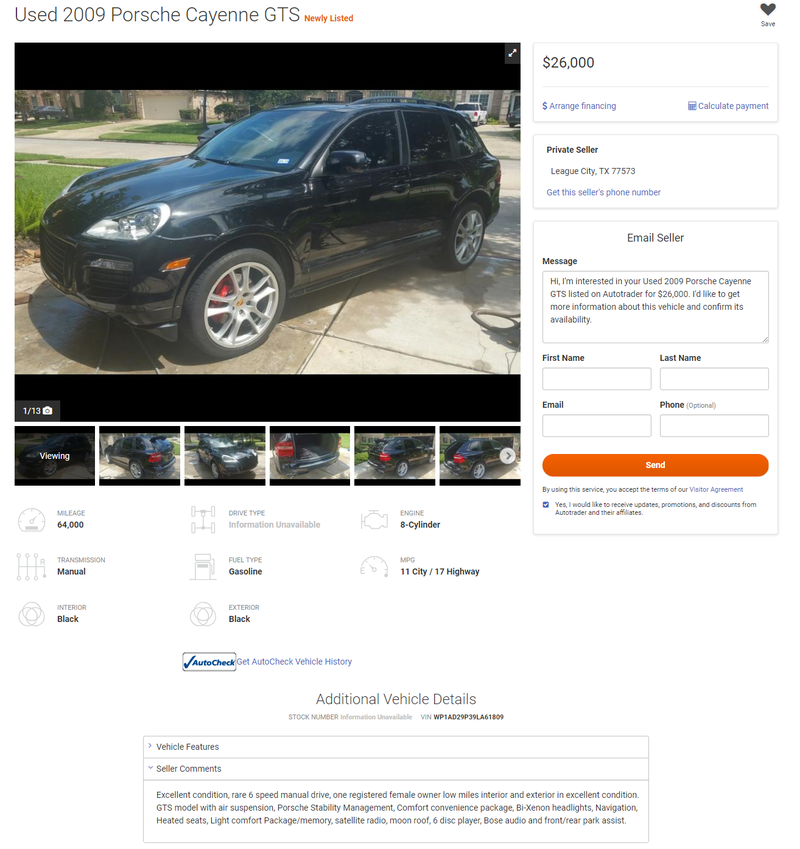
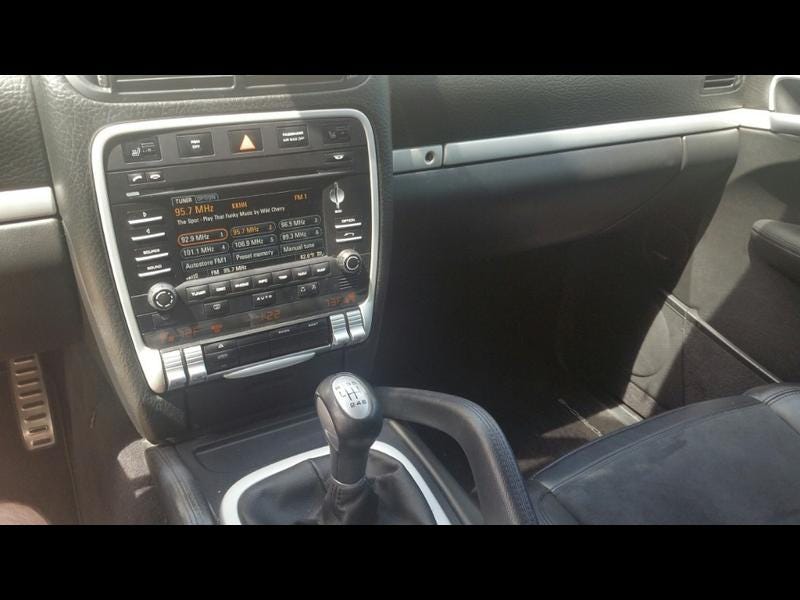
Remember what seems like ages ago, Porsche said it was going to make an SUV and everyone lost their damn mind? Now the Porsche Cayenne is a staple of luxury crossovers and it drives way better than you expect for such a large car. But at one time Porsche was so crazy it made a Cayenne with three pedals—and now you can have one.
The GTS trim gets suspension and other upgrades over the S trim cars making it a nice balance between power and handling versus the monster Cayenne Turbo.
This particular car has 64,000 miles which is fairly reasonable for a vehicle approaching 10 years old and an asking price of $26,000. The ad claims it’s a one owner car in excellent condition. Of course, any potential buyer will want to have a pre-purchase inspection done, but if the car checks out this could be the Cayenne for collectors.
Snatch it up now before this buyer realizes they could probably get stupid money for it onBring a Trailer.
Oh, good – another marriage between an SUV and a coupe is about to take place. After introducing the Audi Q8 and the Lamborghini Urus, the Volkswagen Group is getting ready to beat another SUV with the coupe stick by unveiling the Cayenne “Coupe” or whatever it will be called. All three models are related to one another and the one carrying the Porsche crest was seen the other day undergoing testing in rainy Stuttgart.
As the two adjacent videos are showing, the coupe-ified Cayenne was following an Alfa Romeo Stelvio of the all-wheel-drive variety judging by the Q4 badge at the back. Porsche only camouflaged the essentials by hiding the rear pillar and the taillights, but despite the camo, it’s easy to notice the prototype had a slightly more sloped roofline compared to the regular model.
There’s something rather weird going on with the exhaust as those two tips near the corners of the bumper don’t actually host the real exhausts. Look closer and you'll notice the functional pipes are near the center, close to one another. It probably means the prototype lacked the production-ready exhaust system, which should mirror the look of the standard Cayenne’s exhaust.
Why come out with a sleeker version of the Cayenne? Because along with the Macan, the two SUVs represent Porsche’s fat cash cows. Last year, the smaller of the two SUVs was by far the company’s best-selling model, generating 86,031 sales, with the Cayenne securing #2 with 71,458 deliveries. With more and more people into coupe-SUVs like the BMW X6 and the Mercedes GLE Coupe, the decision to develop this version was a no-brainer.
Porsche hasn’t said a word about when it will unveil the new addition to its SUV portfolio, but we might get to see it later this year. Engines, technology, and pretty much everything will be carried over from the standard model. With a Cayenne Turbo S E-Hybrid planned, it seems highly plausible the “coupe” will get the electrified 671-horsepower treatment as well.
Porsche is extending its Cayenne family. An even sportier vehicle has been added to the third generation of this highly successful SUV range - the Porsche Cayenne Coupé. "The Coupé includes all the technical highlights of the current Cayenne, but has an even more dynamic design and new technical details that position it as more progressive, athletic, and emotional," says Oliver Blume, Chairman of the Executive Board of Porsche AG. The highlights of the new Cayenne model include sharper lines with a totally unique rear section, an adaptive rear spoiler, a rear bench with the characteristics of two individual seats, and two different roof concepts - a panoramic fixed glass roof fitted as standard, and an optional carbon roof.
Porsche is launching another powerful Cayenne Coupé variant: the vehicle is now available to order and will arrive at German dealerships at the end of July 2019. The 2.9-litre V6 engine featuring twin turbocharging and developing 324 kW (440 PS) is at the heart of the new Cayenne S Coupé. The maximum torque of 550 Nm guarantees powerful acceleration. The SUV coupé accelerates from a standing start to 100 km/h in 5.0 seconds in combination with the standard Sport Chrono Package. This figure drops to 4.9 seconds with the three optional lightweight sports packages. The top speed is 263 km/h.
Prices for the Porsche Cayenne S Coupé start at EUR 99,657 including VAT and country-specific equipment. In addition to the Sport Chrono Package, the standard equipment includes speed-sensitive Power Steering Plus, 20-inch alloy wheels, Park Assist at the front and rear including reversing camera and Porsche Active Suspension Management (PASM).
Porsche is extending the model range with the new Cayenne S Coupé. The Cayenne Coupé with 250 kW (340 PS) and the Cayenne Turbo Coupé with 404 kW (550 PS) will already be available at dealerships from the end of May 2019. The highlights of the Coupé include sharper proportions with a unique rear section, an adaptive rear spoiler, two different roof concepts and a rear seat bench with the characteristics of individual seats, with a sitting position that is lowered by 30 millimetres compared with the Cayenne. The vehicle features a 2.16 m2 panoramic fixed glass roof as standard or optionally a contoured carbon roof with typical sports car look.
New sports SUV returns to eight cylinders, and of course, many horsepowers
This is the new Porsche Cayenne GTS, and it is a 2.2-tonne middle finger to downsizing. Yes folks, it’s 2020, and the goldilocks of Porsche’s sports SUV range now returns with a big V8.
Not as big a V8 as when the first-gen Cayenne GTS launched (that was a 4.8-litre naturally-aspirated thing), but a sizeable one nonetheless. For this third-generation GTS Porsche has ditched the old 3.6-litre turbo V6, and slotted in a detuned version of the V8 you get in the range-topping Turbo. Cap ‘T’, remember.
This one of course has a turbo, but with a small ‘t’. Two of them, in fact, bolted onto that V8 to produce 454bhp – up 20bhp over the old V6 – and 457lb ft of torque, which is also a smidge more than the old car.
As such, both the Cayenne GTS and Cayenne Coupe GTS (the first time the Coupe gets such a nomenclature) record 0-62mph times of 4.5s – over half a second quicker – and top speeds of 173mph. Both of those stats are possible via Porsche’s Sport Chrono pack. Which you want.
Porsche reckons changes to the V8’s engine cylinder control, direct injection and thermal management system – and a retuned eight-speed tiptronic auto – mean economy figures of 20-21.2mpg are possible. We shall see.
The V8 is matched to a new sports exhaust system – a pair of twin pipes on the SUV, just the two pipes on the Coupe – said to deliver “a highly emotive aural experience”. Because V8.
And because this V8 is the sweet spot between entry-level Cayenne and mad-dog Cayenne Turbo S E-Hybrid (which you can read our review of here), it features 20mm lower suspension on standard steel-springs, adaptive dampers (PASM), torque vectoring, and 21in RS Spyder wheels hiding 390mm discs up front and 358mm on the back. Beefy.
There are options of course. Better brakes. Three-chamber air suspension. Rear-axle steering. Dynamic chassis control. Not listed on this particular sheet is the option to not buy a big 2.2-tonne SUV and get a V8 estate instead…
In any case, the Cayenne has always been a good thing to drive, and while the exterior of this third-gen car hasn’t differed much from the second-generation, GTS models get tinted LED head- and tail-lights, and black air intakes/window trims/exhaust pipes. Inside there’s lots of Alcantara, aluminium, and eight-way adjustable sports seats with deeper side bolsters. Perhaps salad should become your new best friend.
How much for this V8 tank, you cry? In the UK prices start at £85,930 for the Cayenne GTS SUV, and £88,750 for the Cayenne GTS Coupe.
If you’ve been thinking of getting a new Porsche Cayenne might we suggest you hold off for a bit. There’s a new variant coming, so new we don’t know the exact specs and it doesn’t have a name yet. But we do know it recently broke the Nürburgring lap record, has more than 600 hp, and can hit 60 mph in a time rivaling the 992 GT3 with a PDK, also known as 3.2 seconds. For reference, the most-powerful Cayenne you can get at the moment is the 670 hp Turbo SE-Hybrid that hits 60 mph in 3.6 seconds according to Porsche.
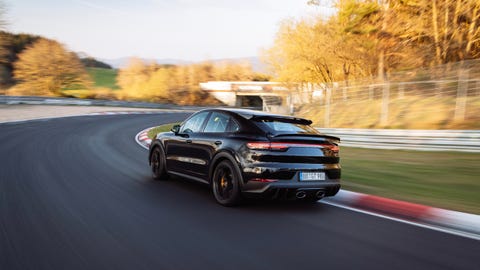
Indeed, as Porsche says, “the new performance model of the Cayenne series has convincingly proven its dynamic potential ahead of its launch.” Test driver Lars Kern drove a lightly camouflaged series production car to a 7:38.925 time over a lap of the legendary Nürburgring Nordschleife, all 12.94 miles. Porsche says in Nürburgring GmbH’s official rankings, a notary public certified the record time for the “SUV, off-road vehicle, van, pick-up” category.
“Over the first few meters of the Nordschleife in this Cayenne, you’re tempted to turn around to make sure that you’re really sitting in a spacious SUV,” Kern said, who was part of the development team. “Its high steering precision and stoically stable rear axle gave me a lot of confidence in the Hatzenbach section. It changed direction at lightning speed in the fast curves such as between Hohe Acht and Eiskurve, with no wobble and no tendency to understeer. Even in this technical stretch, the Cayenne is a real driver’s car that is easy to control.
“The wheels normally leave the ground at both the Pflanzgarten I and II crests but these sections felt smooth and quiet in this Cayenne. There is a lot of wheel travel, and the body stays solid and controlled. The drivetrain makes a really strong impression. It delivers power in every situation as well as perfect gear changes.”
Kern recorded his best lap at 11:31 on June 14, 2021. The temp was 73 degrees Fahrenheit and the track temp was 115 degrees.
Stefan Weckbach, recently named as the Cayenne product vp, said that during the new Cayenne’s development Porsche “focused on exceptional on-road performance.
“Our record-breaking Cayenne is based on the Cayenne Turbo Coupé,” he said, “though more systematically designed for maximum longitudinal and lateral dynamics. Its record time on the Nordschleife confirms the dynamic capabilities of our new performance SUV. Furthermore, it’s a typical Cayenne all-rounder, providing a high degree of driving comfort and everyday utility.”
The record setter was stock though it did have a racing seat and roll cage. The notary public also confirmed SUV’s series production status. The tires used for the record lap were 22-inch Pirelli P Zero Corsas specially developed for the new Cayenne model and will be standard equipment.
Porsche said the new Cayenne will make its world premier “shortly.”
Porsche rounds off the Cayenne model range with a sporting hero: consistently set up for maximum performance and handling, the new Porsche Cayenne Turbo GT combines outstanding driving dynamics with a high degree of everyday usability. Its 471 kW (640 PS) four-litre biturbo V8 provides the basis for superb driving characteristics. With 67 kW (90 PS) more than the Cayenne Turbo Coupé and maximum torque of 850 Nm (an increase of 80 Nm), the 0-100 km/h sprint is reduced to 3.3 seconds (0.6 s less) and top speed is now 300 km/h (an increase of 14 km/h). With even sportier lines and available exclusively as a four-seater Coupé, the Porsche Cayenne Turbo GT comes with all available chassis systems fitted as standard and performance tyres developed specially for this model. The powertrain and chassis also have a unique set-up specifically tuned for the Cayenne Turbo GT. The result is a harmonious overall concept with superb racetrack capability. This has been proven by Porsche test driver Lars Kern, who lapped the 20.832 km Nürburgring Nordschleife with the Cayenne Turbo GT in a time of 7:38.9 minutes, setting a new official SUV record.
Compared to the Cayenne Turbo Coupé, the Turbo GT rides up to 17 millimetres lower. Based on this, both the passive chassis components and active control systems have been re-engineered and optimised for handling and performance. They also feature specific calibration to guarantee perfect interaction between them. As an example, the rigidity of the three-chamber air suspension has been increased by up to 15 per cent, and the damper characteristics of the Porsche Active Suspension Management (PASM) as well as the application of the Power Steering Plus and rear-axle steering have also been adapted. The Porsche Dynamic Chassis Control (PDCC) active roll stabilisation system now operates with performance-oriented control software. The result is even better roll stability and roadholding, as well as more precise turn-in behaviour at higher cornering speeds. In line with this, the Porsche Torque Vectoring system allows higher torque bias ratios. The comprehensively optimised front axle also improves handling. Compared to the Turbo Coupé, its front wheels are an inch wider and negative camber has been increased by 0.45 degrees to give the new 22-inch Pirelli P Zero Corsa performance tyres, specially developed for the Turbo GT, a larger contact patch. Braking duties are performed by the standard-fit Porsche Ceramic Composite Brake (PCCB) system.
Quicker-shifting Tiptronic S and titanium sports exhaust system
The Porsche Cayenne Turbo GT's biturbo engine is currently Porsche's most powerful eight-cylinder unit. The most extensive upgrades were carried out in the areas of the crankshaft drive, turbocharger, direct fuel injection, induction system and intercooler. The V8 of the Turbo GT differs from that of the Turbo Coupé in fundamental elements such as its crankshaft, connecting rods, pistons, timing chain drive and torsional vibration dampers. Given the increase in power to 471 kW (640 PS), these components have been designed for higher peak loads and improved driving dynamics. The faster-shifting eight-speed Tiptronic S and the Porsche Traction Management (PTM) system have also been modified. There is also additional water cooling for the transfer case. The standard sports exhaust system, with its central tailpipes, is unique to the Cayenne Turbo GT. From the middle of the vehicle, the exhaust system, including the rear silencer, is made from lightweight and particularly heat-resistant titanium. An additional weight saving is achieved through the omission of the centre silencer.
Sporty equipment: lots of carbon on the exterior, lots of Alcantara in the interior
Optionally available with paintwork in the new Arctic Grey colour, the Cayenne Turbo GT underlines its exceptional athleticism through the outstanding features of its progressive design. These include a GT-specific front apron with striking spoiler lip and enlarged side cooling air intakes, which create a unique front view. A contoured carbon roof and black wheel arch extensions, together with 22-inch GT Design wheels in Neodyme, dominate its side view. The carbon side plates fitted lengthwise to the roof spoiler are GT-specific, as is the adaptively extendable rear spoiler's lip, which is 25 mm larger than that fitted to the Turbo. This increases downforce at the car's top speed by up to 40 kilograms. The rear view is rounded off by a striking diffuser panel made of carbon.
Debut in the Turbo GT: new infotainment system for the Cayenne
The sporty character of the Porsche Cayenne Turbo GT is highlighted by the high-quality standard equipment and extended Alcantara features of its interior. Eight-way sport seats in the front and a sport rear seat system with two seats are standard. They each come GT-specific with perforated seat centre panels in Alcantara, contrast accents in Neodyme or Arctic Grey and 'turbo GT' lettering on their headrests. As is expected on Porsche's sports cars, the multifunction sports steering wheel features a yellow 12 o'clock marking. Depending on the specified trim, select accent strips are finished in matt Black.
With the Turbo GT, the next-generation Porsche Communication Management (PCM) system is launched onto the market with improved performance, a new user interface and new operating logic in the Cayenne. As before, PCM 6.0 is fully compatible with Apple CarPlay but now also allows for in-depth integration of Apple Music and Apple Podcasts. In addition, the infotainment system now also includes Android Auto, which means that all popular smartphones can now be integrated.
The Porsche Cayenne Turbo GT is available to order and will roll into dealerships in mid-September 2021. Prices in Germany start at 196,078 euros including VAT and country-specific equipment.
You'd be wrong to characterize the upcoming mid-cycle refresh of the 2024 Porsche Cayenne as a mere facelift, as it's more of a heart-lung transplant in the form of significant changes to many of its powertrains. The engineering team has also given it hip and knee replacements in the form of meaningful tire and suspension tweaks. But these are not geriatric maintenance moves. They're better thought of as bionic upgrades meant to advance the Cayenne's state of being.
Chassis Changes
Besides, the cosmetic facelift elements are impossible to judge. The prototypes we drove were effectively camouflaged with rattle-can black paint, bug-eyed headlight mascara appliques, and strategically taped-over taillights. The revised LED headlights and taillights are therefore hard to get excited about, but one key element did stand out through all of that. The Cayenne's stance has been toughened up by larger-diameter tires. In off-roader terms they're 31-inchers, which makes them just over an inch larger than before.
The reasoning for this wasn't enhanced off-road prowess, but rather a higher level of rolling comfort and mechanical grip owing to a larger contact patch. Although the base wheels go from 19s to 20s, many wheels are the same diameter as before, which not only means there's more sidewall but that the tire assemblies also house more air, which in turn allows Porsche to earn compound interest by lowering tire pressures a smidge. Indeed, the prototypes stuck like Velcro yet largely filtered out the worst textures that the coarse and tortured asphalt of the tightest Malibu canyons had to offer.
Partial credit goes one rung higher, as now even the base model comes standard with PASM adaptive dampers. Air-sprung Cayennes take it up another notch, with rethought springs that feature two chambers instead of three. This seeming deficit actually amounts to a step forward because the PASM dampers now have distinct rebound and compression adjustment valves, as opposed to the current single valve that attempts to regulate both. The result is much finer control and the ability to better optimize damping characteristics in response to given circumstances and the driver's mode selection. Other tweaks include revisions to the rear-axle steering system for increased maneuverability and re-optimization of the rear torque-vectoring system for better dynamics.
Revamped Powertrains
Even though the above updates matter more in day-to-day driving, the revitalized and revamped powertrains are the marquee difference here. Major changes were deemed necessary to meet the steady forward march of emissions regulations, but as is often the case with modern powertrains, the engine management strategies developed to burn the fuel more completely also tend to open the door for more power. Such is the case here.
At the bottom of the range, the base Cayenne's 3.0-liter turbo V-6 gets a 14-hp bump, making 349 horsepower instead of the current 335 ponies. The increase in torque is even more noticeable, with the jump from 332 to 369 pound-feet representing an 11 percent increase. Meanwhile, the twin-turbo V-8 powering the utterly-bonkers Turbo GT at the top of the food chain will soon make 651 horsepower instead of a mere 631. Its torque remains unchanged at 626 pound-feet, indicating a likely capacity limit for the carryover eight-speed Tiptronic S transmission.
The biggest changes happen in the middle of the range. The Cayenne S, currently powered by an unloved 2.9-liter twin-turbo V-6 that makes 434 horsepower and 405 pound-feet, is returning to its V-8 roots. Its new short-stroke 4.0-liter twin-turbo V-8 puts out 469 horses and 443 pound-feet, which represents nearly 10 percent more of each. We could wax on about its impressive throttle response and easy passing power, but our more childish sensibilities are perfectly happy with its distinctive V-8 idle and the thunder it can send echoing off tunnel walls.
Enhanced E-Hybrid
Meanwhile, the Mr. Spock in us really likes what Porsche has done to the E-Hybrid, which is, in fact, a plug-in hybrid. Total combined power is up slightly, from 455 to 464 horsepower. The role of the detuned 3.0-liter turbo V-6 has been diminished, but there's been a big boost in the strength of the electric half of the powertrain. The electric motor now contributes 174 horsepower instead of 134, and it's supported by a significantly larger battery, now with 25.9 kWh of gross capacity instead of 17.9 kWh (roughly 20.6 kWh usable versus 14.3 kWh on the current E-Hybrid). A revised brake-blending system allows regenerative braking to persist all the way to a dead stop, and in our driving the E-Hybrid's regenerative braking strength and smoothness indeed showed a marked improvement.
The goals for the revamp are improved electric-only range, expanded EV mode persistence, and better gasoline-engine mpg. We can't speak to the efficiency, and new EPA ratings are not yet available. Porsche suggests it could earn double its WLTP range in Europe. Here in the U.S., the current electric range is just 17 miles. We're not expecting to see that double, but we see 30 miles as a distinct possibility—enough to make the 2024 Cayenne E-Hybrid a much more credible PHEV. On top of that, it'll have the capability to charge faster too, with a new standard on-board charger that's rated at 11.0 kW instead of this year's pitiful 3.6-kW standard unit and lackluster 7.2 kW upgrade that costs $1230.
In-Cabin Tweaks
Porsche hasn't left the interior out of all of this. The Cayenne will receive a new Taycan-inspired curved instrument panel and center display. The 12.7-inch instrument display is magnificent, and just beside it juts the Taycan's toggle-style gear selector. A familiar 12.3-inch central touchscreen sits just to the right, but that's where the Taycan inspiration thankfully runs its course. The vents just below are aimed manually, and below them is a fixed set of climate-control toggles set into a small glass panel, with a central volume knob set just aft.
One of the things we appreciate most appears on the nicely contoured steering wheel, where the mode control dial you can currently only get by ordering Sport Chrono comes standard. Meanwhile, the passenger gets a 10.9-inch display of their own, which is angled and polarized so the driver can't see it. The idea is to let the front passenger go as far as streaming video, but it's not yet clear to us if that'll pass muster with U.S. regulators. Another in-cabin highlight: The wireless cellphone charge pad is cooled.
Pricing and the full gamut of specs won't be released until the wraps come off and the 2024 Cayenne is formally introduced later this year. All Porsche will say at this point is the prices will be "on par with the predecessor model when adjusted for equipment." This may be code for a possibly significant increase for the base Cayenne, which now gets standard PASM, LED matrix headlights, 20-inch wheels, the mode switch on the steering wheel, and other goodies. As for the Cayenne S, it's a question of how much a V-8 transplant costs. And then there's the E-Hybrid, whose new price will reflect its bigger battery, at the very least. Still, the bionically enhanced 2024 Porsche Cayenne should well be worth it, and it's sure to cost far less than six million dollars, man.
We have known it for quite a while already, and as promised in the recent cockpit reveal, the Stuttgart-based German automaker was quick to unveil the mid-cycle refresh of the third generation Cayenne, a proper luxury beast and best-seller SUV.
Most likely, if our two cents are allowed on the matter, the current ultra-luxury stratosphere composed of stuff like the Bentley Bentayga, Aston Martin DBX, Lambo Urus, Rolls-Royce Cullinan, 715-hp Ferrari Purosangue, and 738-hp plug-in hybrid BMW XM Label Red would not be possible without the daringness of Porsche's SUV ambitions. Seen as a perfect example of an automaker going crazy at the time of its introduction more than two decades ago, the Cayenne luxury crossover SUV was mighty successful, a legend in its own right by now, and the harbinger of things to come.
Now, it has already reached its third generation, and we are in the middle of the life cycle – hence the official introduction and initial public reveal at Auto Shanghai 2023 of the refreshed 2024 model year. Over in the United States, all versions are up for ordering already, and nationwide dealership arrivals of the first retail units are expected for a little later this year – sometime during the summer. Luckily, prices are already in, so you know the damage to your bank account. It all starts at 'just' $79,200, but bear in mind that all quotations exclude the $1,650 delivery, processing, and handling fees.
Meanwhile, as always, the 2024 Cayenne Coupe is more expensive, kicking off at $84,300. The Cayenne E-Hybrid goes for $91,700 (Coupé from $95,700), and the Cayenne S starts at $95,700 (Coupé from $102,100). Last but not least, the flagship Cayenne Turbo GT goes out to play for no less than $196,300. Now, although dry figures might not be as interesting as the exterior redesign or the interior novelties, bear with us as there are exciting happenings under the hood, too.
As such, the 2024 Porsche Cayenne will be made available with three different powertrain options. The standard affair includes an "optimized" 3.0-liter turbo V6 packing an additional 13 ponies at 348 hp. This mill is also used for the Cayenne E-Hybrid when combined with a new, more powerful (174 hp) electric motor, and the bundled result is 463 hp. Even better, the battery has also surged from 17.9 kWh to 25.9 kWh, and there's also a new onboard charger sipping up to 11 kW from AC outlets.
More relaxed than ever, the mighty Cayenne Turbo GT with the 4.0-liter twin-turbo V8 also found an additional 19 ponies for its stable, which now counts on 650 hp to sprint from zero to 60 mph (96 kph) in 3.1 seconds on its way to a maximum speed of 189 mph (304 kph). However, the flagship is not the actual star of the facelifted 2024 Cayenne show. Instead, those would be the fresh Cayenne S variants, which have gone against the downsizing trend and dropped the V6 in favor of a V8 return! Well, that's refreshing, to say the least.
Anyway, the 4.0-liter twin-turbo makes do with a little more Porsche oomph than the plug-in hybrid version, at 468 hp – which is 34 hp more than its predecessor. The torque figure has also surged by 37 lb-ft to 442 lb-ft, which is an additional 50 Nm for a total of 599 Nm. As such, the new performance figures are 4.4 seconds to 60 mph (96 kph) and a top speed of 169 mph (272 kph) when equipped with the Sport Chrono Package.
At Porsche, the GTS abbreviation stands for Gran Turismo Sport - in practice, it means an extra dose of dynamism and long-distance capability. At its core, the Cayenne is both a high-performance sports car and an all-terrain SUV. However, for the GTS models, this balance has traditionally shifted towards improved on-road capability. With a powerful drive system, precise tuning and an exclusive design, the new Cayenne GTS remains true to this principle while remaining suited to everyday use.
Chassis technology from the Cayenne Turbo GT
The precisely honed, GTS-specific chassis and 10-millimetre-lower ride height mark an exciting development for the Porsche Cayenne GTS. Looking a little deeper, the car is now equipped with adaptive air suspension as standard, including Porsche Active Suspension Management (PASM) and Porsche Torque Vectoring Plus (PTV Plus). All chassis components and control systems, such as Porsche Traction Management (PTM) and the optional Porsche Dynamic Chassis Control (PDCC), are specifically designed for optimal on-road performance.
The GTS's two-valve damper technology offers impressive responsiveness, and its two-chamber air suspension gives the car a highly dynamic spring rate while simultaneously ensuring driver comfort. The front axle pivot bearings of the Cayenne GTS models originate from the Cayenne Turbo GT (not offered in Europe). They increase the negative camber of the wheels by 0.58 degrees in comparison to other Cayenne models. The result is strikingly agile cornering and exceptional handling dynamics.
More efficient and 30 kW (40 PS) more powerful than the previous model
In addition to the finely tuned chassis, the charismatic V8 is another important feature of the Porsche Cayenne GTS. The 4.0-litre twin-turbo V8, developed by Porsche and manufactured in Zuffenhausen, has undergone extensive technical revision. This has resulted in efficiency gains and a significant increase in performance: the engine now produces 368 kW (500 PS) of power - an increase of 30 kW (40 PS) compared to the previous model. The maximum torque is now 660 Nm, an increase of 40 Nm. The revised eight-speed Tiptronic S transmission noticeably improves driving performance through shorter response and shift times in Sport and Sport Plus modes.
In combination, these features give the four-door sports car truly remarkable performance. The new Cayenne GTS accelerates from 0 to 100 km/h in 4.4 seconds. The top speed is 275 km/h. A further technical innovation is that the transfer box for the all-wheel drive Porsche Traction Management (PTM) features an independent water cooling circuit. This technology is also adopted from the high-performance Turbo GT model. It stabilises the continuous load capacity - for example when tackling track driving or navigating mountain routes.
Exclusive GTS-style design and equipment
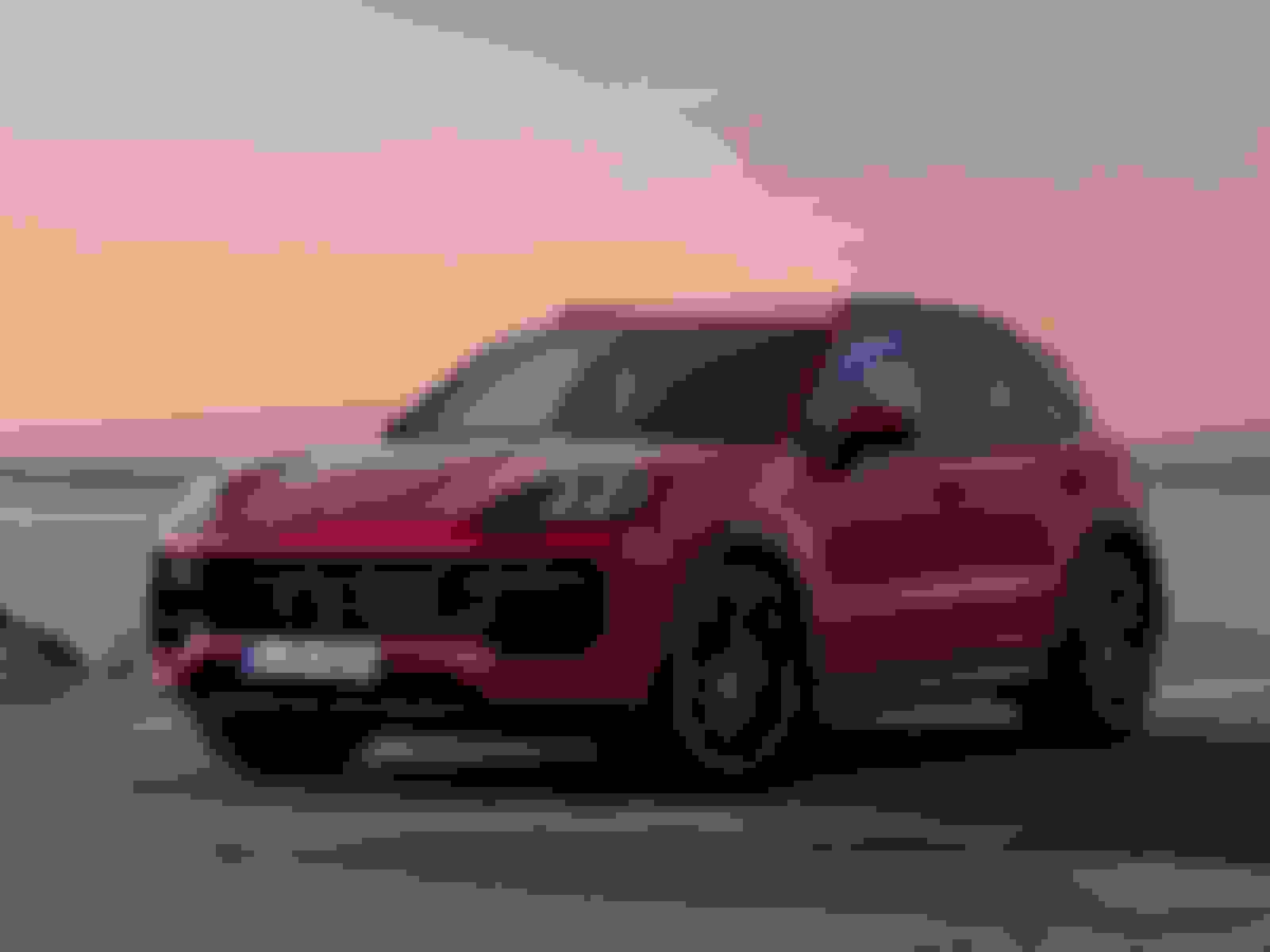
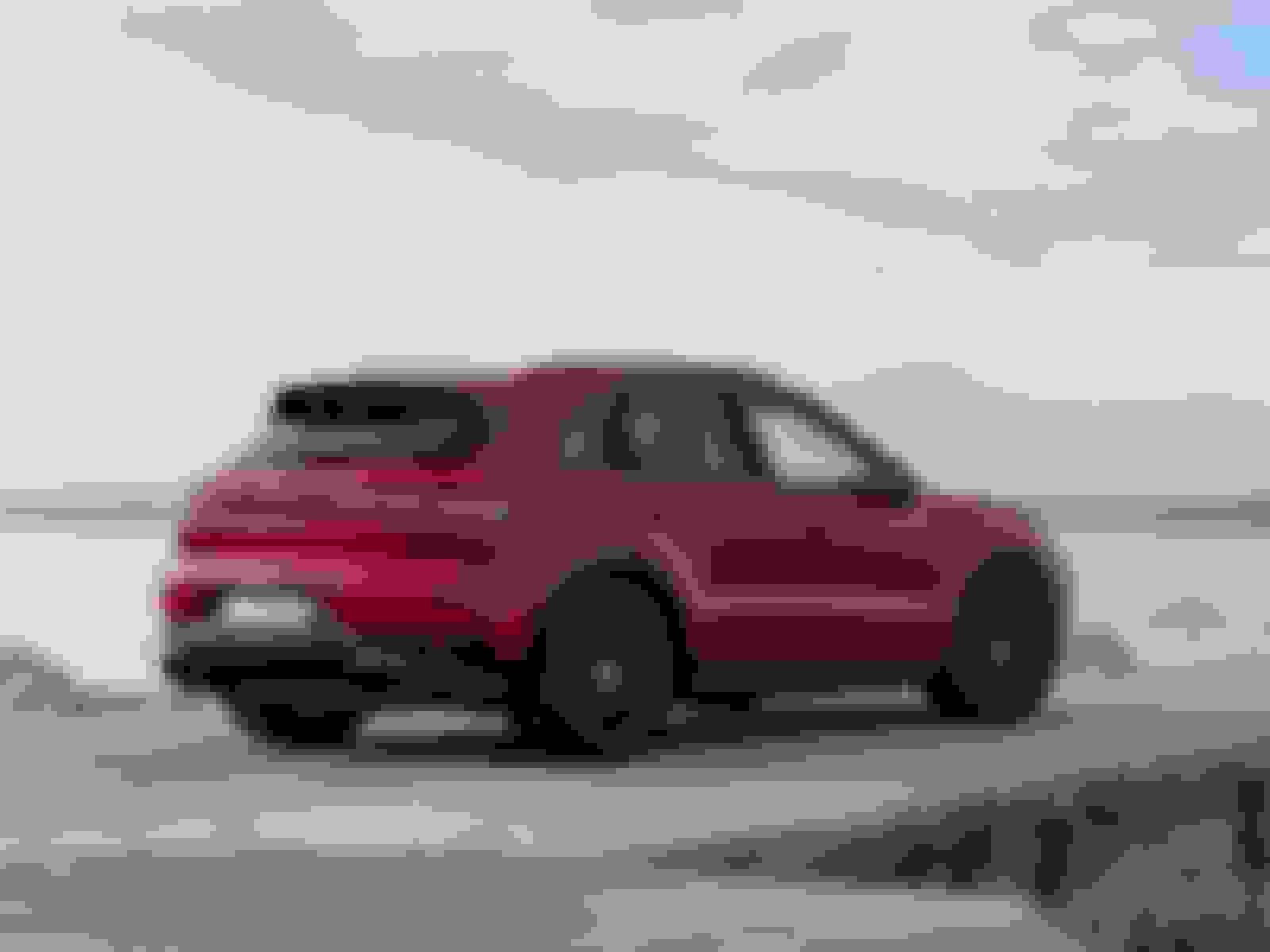
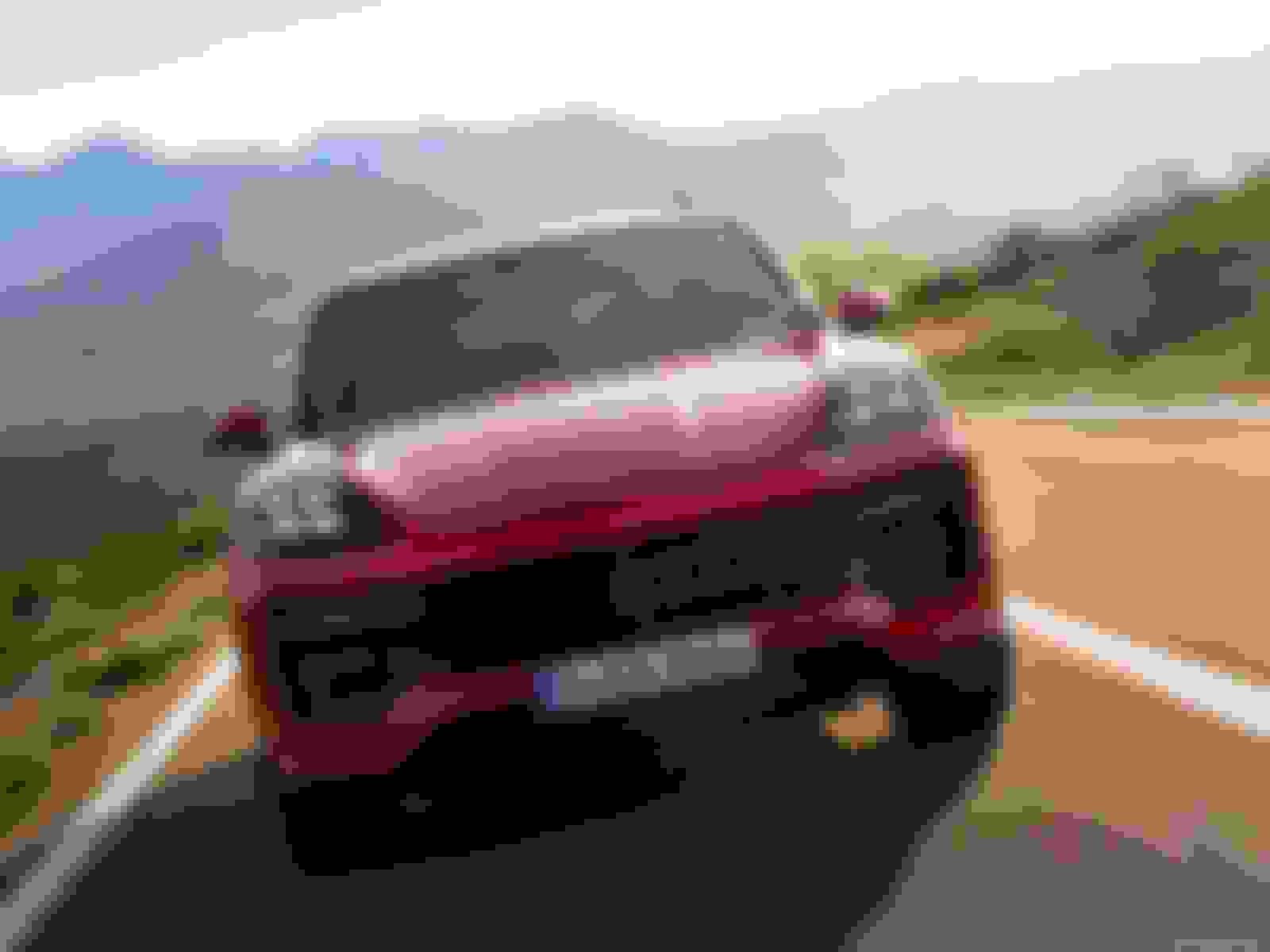
All of Porsche's GTS models are recognisable thanks to their unique, sporty design. On the Cayenne GTS this includes black 'GTS' lettering on the sides and rear of the car, a special front end with bigger cooling air intakes, dark-tinted headlights and tail lights, and red brake callipers. Keeping with this classic design DNA gives the car that instantly recognisable Porsche look, but with a few innovations. Body attachments such as the side skirts, front inlays, side window trims and wheel arch extensions, which all form part of the standard Sport Design package, are now manufactured in High-Gloss Black. On previous GTS models, some of these body parts were body coloured. In contrast, the sports exhaust system tailpipes, which previously came in Black, are now finished in a dark bronze tone. To further enhance the design portfolio of the Porsche GTS models, 21-inch RS Spyder-design wheels are fitted and finished in anthracite grey.
The interior of the Porsche Cayenne GTS features a heated GT sports steering wheel as standard. The high-quality material Race-Tex can also be found throughout the car. The suede-like fabric covers the roof lining, armrests and door panels, as well as the centre panels of the eight-way-adjustable sports seats. The side bolsters have been further raised to offer even more lateral support when cornering. Two alternative, GTS-specific interior packages in Carmine Red or Slate Grey Neo (not available from start of production) are also available from Porsche for a more customised look.
New Driver Experience with ambient lighting and surround sound
The new GTS models benefit from the recent comprehensive product upgrade for the Cayenne, which includes the new Porsche Driver Experience with a curved digital instrument cluster as standard and an optional passenger display. In addition to the Sport Design package, dark-tinted HD matrix LED headlights and air suspension, the model also features a Bose® surround sound system and ambient lighting. The Cayenne GTS Coupé also includes a fixed panoramic roof in glass, as standard, as well as an adaptive extending rear spoiler. If desired, the dynamic feel of the Coupé can be heightened even further with a Sports exhaust system with centrally positioned tailpipes in dark bronze. This is available as part of the three different lightweight sports packages. These also include a lightweight roof and a carbon rear diffuser, as well as reduced insulation. Depending on the equipment, the Lightweight packages can reduce the weight of the vehicle by up to 25 kilograms.
Porsche is offering the new Cayenne GTS in Germany as an SUV priced from 138,000 euros and as an SUV Coupé priced from 141,700 euros including VAT and country-specific basic equipment. Both models are now available to order. Deliveries in Europe will begin in Summer 2024.
Porsche Reveals 2026 Cayenne Electric with 1139-HP Turbo Model
Nov 19, 2025
.
The 2026 Porsche Cayenne Turbo Electric makes as much as 1139 horsepower to become the most powerful Porsche to date, and it can rip off a 60-mph run in just 2.4 seconds.
All models get 800-volt architecture with 108 kWh of net capacity, and the battery is integrated into the structure for less overall height and weight.
This is the fourth generation of the Cayenne, which will be sold alongside the third generation of the internal-combustion version.
Porsche showed off two of its 2026 Cayenne Electric models today, the eponymous Cayenne Electric and the high-performance Cayenne Turbo Electric. It was the Turbo that sucked the air out of the room, mostly because of its mind-boggling power output.
The automaker has been teasing "over 1000 horsepower," and it was not a joke: the Turbo was revealed as making 1139 horsepower and 1106 pound-feet of torque. This is easily the most powerful Porsche to date. What's more, they say it'll blast to 60 mph in 2.4 seconds and whiz through the quarter-mile in 9.9 seconds. Meanwhile, the last Cayenne Turbo GT we tested, the quickest Cayenne gasser, did 2.8 seconds to 60 and 11.2 seconds at 121 mph in the quarter-mile.
The base Cayenne Electric, on the other hand, seems tame by comparison. It makes 435 horsepower and takes almost twice as long to get up to 60 mph, in 4.5 seconds. It'll do 13.2 seconds in the quarter-mile, according to Porsche, which makes it about as quick as a Cayenne S fed by gasoline. Not shabby at all.
All Cayennes get two-chamber two-valve air suspension with PASM, but you can upgrade to Porsche's remarkable Active Ride suspension. The base car comes on 20-inch wheels and tires, but you can upgrade that to a 22-inch combo. The Turbo comes with 22-inch wheels, but you can add Pirelli P Zero R tires that are a wee bit wider. Also, the Turbo comes standard with a locking rear differential and direct oil cooling for its more powerful electric motors. Under braking, the Cayenne Turbo Electric also can recuperate up to 600 kW of power, which means the electric motors can handle 97 percent of braking needs.
No range has been revealed, but each version gets the same battery pack based on 800-volt architecture and will have 108 kWh of net capacity. They can charge at a rate of 400 kW, which is greater than the 350-kW chargers we have in this country. The car has a North American Charging Standard (NACS)—a.k.a. Tesla—charge port on the left side, but you may want to use the included SAE Combo adapter with a 350-kW charger to get the best speed, which Porsche says is less than 16 minutes to go from 10 to 80 percent full. If you use a Tesla charger directly, the car gets 200 kW of power, which is a bit slower. At home, the right side of the car has a J1772 socket that can deliver 11 kW of power, and Porsche offers an exclusive inductive charging pad that you simply drive over that's also good for 11 kW.
Interestingly, the battery is integrated into the floor in a different way from other cars, in that it is not enclosed in a one-piece battery box that contains the entire battery. Instead, the battery modules are bolted into the floor, six of them containing 32 pouch cells each, and then a reinforced cover is bolted over that. In this way, the battery can be serviced without taking the entire pack out of the car. Moreover, this reduces the overall height of the pack so the center of gravity can be lower still and the inside floor and roofline can be brought down as well. That's why the Cayenne Electric has a lower roof height than the gasoline car, an inch according to Porsche, but the dropped floor actually expands the headroom too. It's a neat trick, and one we noticed instantly when we sat in the car.
The classic Porsche "flyline" that describes the arc of the roof is in full effect, and it results in a roof that is somewhere between the squared-off Cayennes of old and the ill-named SUV coupes. The Cayenne Electric looks more drawn out, though, because it sits on a five-inch-longer wheelbase yet is only 2.1 inches longer overall. Up front, the lack of an engine means the classic Porsche fender tops are here, which we find cool.
But the bigger changes are in the details, specifically the overemphasized intake down low, which gives the feeling of a grille. It's functional too, opening when you are parked (for looks), yet closing when you run at most speeds (to improve airflow). They open their widest at higher speeds and when sitting still charging, to admit cooling air. Turbo models have a feature at the rear called aero blades, which extend straight aft above 40 mph. These are said to reduce the drag coefficient by 0.06, which is good for six or seven miles of range.
Inside, the star of the show is the unique shape of the 12.25-inch central touchscreen, which is not curved in the usual way. The bottom portion of it bends back toward you, to meet up with a row of buttons and a wrist rest that spans the entire center console. It is elegant and ergonomically wonderful, and it makes using the touchscreen a pleasure. If you get the optional passenger display, which measures 14.9 inches, both come under the same piece of curved glass. Up ahead, the instruments are displayed on a traditionally curved 14.25-inch screen. Its upper surface is trimmed with a dashtop, but there's a sizable slot between them that says it's just for looks, and maybe a bit of shade.
Apart from that, the generous Porsche options list is available to tweak the price ever upward, but these 2026 Porsche Cayenne Electrics already come nicely equipped. The Cayenne Electric starts at $111,350, and the Cayenne Turbo Electric starts at $165,350. Deliveries begin late next summer.
The Cayenne Electric marks the beginning of a new era for Porsche in the SUV segment. With electric super sports car performance, long range, exceptional charging power, innovative suspension, consistent digitalisation and high levels of everyday practicality, the Cayenne Electric defines the future of the model series. It combines sporty driving dynamics, comfort, versatility and technological excellence into a complete package that impresses in everyday life as well as over long distances and off-road - all while remaining a Porsche in every respect.
Two variants will be available at market launch: the Cayenne Electric and the Cayenne Turbo Electric - both with electronic all-wheel drive. The Cayenne Electric complements the existing range of combustion-engined and hybrid models and marks the technological pinnacle of the series. Porsche is thereby taking an open-minded approach in terms of drive technology but is setting new standards in performance, efficiency and digitalisation with the electric model.
Supercar performance packaged in an SUV
At the top of the range is the Porsche Cayenne Turbo Electric with a system output of up to 850 kW (1,156 PS) and maximum torque of up to 1,500 Nm. It accelerates from 0 to 100 km/h in 2.5 seconds and reaches a top speed of up to 260 km/h. In normal driving mode, up to 630 kW (857 PS) is available, and an additional 130 kW can be activated for 10 seconds via the Push-to-Pass function. The central element is a newly developed electric motor on the rear axle with direct oil cooling, which is used exclusively in the Turbo model. The technology originates from Formula E and ensures continuous high performance even under repeated full load. The motor was developed in-house by Porsche. Silicon carbide inverters reduce switching losses and increase efficiency and power density. Power is distributed to both axles via a two-stage single-speed transmission. The weight distribution is slightly rear-biased, as is typical for Porsche, with a ratio of 48:52.
Efficiency, recuperation and range
At the heart of the Porsche Cayenne Electric is a newly developed high-voltage battery with a gross energy content of 113 kWh. It consists of six modules with a total of 192 cells and is liquid-cooled on both sides. The combination of high energy density, predictive thermal management and efficient powertrain enables WLTP ranges of up to 642 km. When decelerating, the Cayenne Electric can recuperate energy at a rate of up to 600 kW - a value on a par with Formula E. Around 97 per cent of all braking operations in everyday use are covered purely electrically. The hydraulic braking system is only activated if an even greater rate of deceleration is required. The 'overrun' recuperation can be configured in three stages - from efficient coasting to more powerful deceleration.
Fast charging, bank charging and inductive charging
Thanks to its 800-volt architecture, the Cayenne Electric can charge at up to 390 kW on high-power chargers, and even up to 400 kW under specific conditions. The state of charge can be increased from 10 to 80 per cent in less than 16 minutes. A range of up to 325 km can be added in 10 minutes. To make optimal use of existing infrastructure, the Cayenne supports bank charging at 400-volt charging stations. In this case the battery is effectively divided internally to enable a high charging capacity even at conventional fast chargers.
Chassis: a balance between comfort and dynamics
Both models come with adaptive air suspension with Porsche Active Suspension Management as standard. Rear-axle steering with a steering angle of up to five degrees is available as an option. The Turbo is equipped with Porsche Torque Vectoring Plus (PTV Plus) as standard and can also be equipped with Porsche Active Ride. The premium active suspension almost completely compensates for body movements and combines exceptional comfort with high driving precision. The optional Porsche Ceramic Composite Brake (PCCB) ensures optimum deceleration even during highly dynamic driving. The wide range of suspension systems creates extraordinary breadth between sporty agility, long-distance comfort and off-road capability.
Aerodynamics and design in harmony
With a drag coefficient of 0.25, the Cayenne Electric is one of the most aerodynamic SUVs in its class. The almost completely enclosed underbody, air curtains, active cooling air flaps and an adaptive roof spoiler optimise airflow. In the Turbo model, active aeroblades are also used. Striking wings, frameless doors, a gently sloping flyline and an animated light signature underline the modern and unmistakable Porsche design language.
Interior: digital, intuitive, experience-oriented
The new Porsche Digital Interaction display and operation concept combines touch surfaces, physical controls and an ergonomic hand rest to create a driver-oriented user interface. The Flow Display, an elegantly curved and harmoniously integrated central screen, forms the focal point of the digital architecture. A new operating system enables streaming, gaming, app integration, and AI-powered voice control. Personalisable user profiles, widgets and themes create an individual user experience. Mood Modes combine ambient lighting, seats, displays, sound profiles and climate control to create holistic worlds of experience. This is all complemented by a new surface heating system, new massage functions and communication light.
Space, comfort and utility
The wheelbase, which is significantly longer than that of the combustion-engined Cayenne, creates noticeably more space in the rear. The standard electrically adjustable rear seat system allows flexible adjustments between additional space for rear passengers and maximum luggage compartment volume. With the rear seats folded, the load volume increases to up to 1,588 litres, and the total luggage space is supplemented by a 90-litre 'frunk'. The towing capacity of up to 3.5 tonnes, depending on the market and equipment, remains unchanged. A panoramic glass sunroof with Variable Light Control, parking pre-climatisation and fully integrated digital connectivity enhance travel comfort.
Customisation and special requests
The Porsche Cayenne Electric offers an unprecedented range of customisation options: numerous exterior colours, interior worlds, wheel designs and accent packages. Through Porsche Exclusive Manufaktur and Sonderwunsch, truly bespoke designs can be realised, right down to one-off cars.
Exterior
The Cayenne Electric combines the brand's signature proportions with a clearly evolved design language. Many unique features sharpen the identity of the individual Cayenne Electric models. Highlights include the low front bonnet with the slim Matrix LED headlights with optional (Cayenne) or standard (Cayenne Turbo) HD technology. These emphasise the width of the vehicle and combine all lighting functions in a single module. Typical Porsche features are the strongly contoured wings and the flyline, i.e. the iconic design of the gently sloping roofline.
The side view is characterised by frameless doors and a striking swage line in the door surface. The side skirts and wheel arch trims have an pronounced three-dimensional design and are finished in Volcanic Grey Metallic on the Cayenne and high-gloss black on the Cayenne Turbo. The two-tone concept emphasises the sporty proportions. The model-specific wheel arch trims emphasise the car's off-road character. Striking details at the rear, such as the light strip with a distinctive 3D look and animated graphics, as well as the illuminated Porsche lettering, underline the modern design language. The Cayenne Turbo features numerous contrasting elements in the exclusive Turbonite colour. These include the Porsche crests, the faces of the alloy wheels and the side window mouldings. Delicate Turbonite accents enhance the light strip and 'Porsche' lettering.
There are 13 standard colours to choose from for the Cayenne Electric, including three completely new colours that are celebrating their Porsche debut: Mystic Green Metallic, Monteverde Metallic and Napali Blue Metallic. Paint to Sample from Porsche Exclusive Manufaktur is also available for the Cayenne Electric. The already well-known Cayenne colour range will be continued for the electric variant. Together with the standard colours, this results in a choice of more than 100 shades.
Panoramic sliding roof with Variable Light Control: clear or matte at your fingertips
The large glass surface of the optional panoramic sliding roof with Variable Light Control ensures a particularly airy feeling of space and is bigger than any other panoramic roof offered by Porsche. The front part can be opened like a sliding roof.
Thanks to an electrically switchable film made up of liquid crystals, the panoramic sliding roof can change from clear to matte. This protects the occupants from glare but does not darken the interior. The roof is divided into nine segments, which can be switched individually. In addition to the 'Clear' and 'Matte' settings, two predefined patterns, 'Semi' (40 per cent matte) and 'Bold' (60 per cent matte), can also be selected.
Motorsport technology: direct oil cooling for the electric motor
A special feature of the electric drive unit on the rear axle of the Cayenne Turbo is the direct oil cooling. All the current-carrying components are cooled directly. Porsche brought this innovation to the racetrack in Formula E, and now this technology is coming to series production. Direct oil cooling enables very high efficiency, combined with high peak and continuous power output. In conventional electric motors, the coolant flows through a jacket outside the stator, while with direct cooling the coolant flows directly along the copper windings. In this way, the heat can be dissipated directly from where it is generated. To achieve the same efficiency and performance figures, a motor cooled using a water jacket would also have to be approximately 1.5 times larger. Thanks to direct cooling, the Cayenne uses a design that enables up to 98 per cent efficiency in real-world operation.
A synthetic, non-conductive oil is used for immersive cooling of the electric motor: Mobil 1 Therm Electric P, a special dielectric fluid developed by Exxon Mobil. It is non-corrosive and, crucially, has a very low viscosity. Its kinematic viscosity at 100 degrees Celsius is only 1.7 mm2/s which means that it is about five times freer-flowing than engine oil with a viscosity grade of 20 at the same temperature. About six litres of coolant are circulated, but an oil change is not necessary over the system's entire life cycle. Mobil 1 Therm Electric P and the gear oil for the single-speed transmission system flow in separate circuits but are circulated by a common oil pump, saving both space and weight.
Compact transmission and rear-biased weight distribution
Power is transmitted to the wheels on the front and rear axles via a two-stage single-speed transmission. This enables a compact and lightweight design. For the Cayenne, Porsche has further developed the 'performance rear end' that was introduced in the all-electric Macan. The drive unit is now mounted to the rear subframe, further increasing ride comfort. The position of the electric motor on the rear axle has been retained, which is set far to the rear, ensuring a slightly rear-biased weight distribution of 48 per cent front and 52 per cent rear.
Up to 600 kW recuperation power - equivalent to Formula E
The all-electric Cayenne reaches new standards in recuperation; energy can be recovered at a rate of up to 600 kW via the brake pedal, depending on the speed, temperature and the state of charge of the battery.
The level of recuperation in the Porsche Cayenne Electric therefore matches that of the Porsche 99X Electric, with which the sports car manufacturer competes in the Formula E racing series. Recuperation is also active during more dynamic driving, meaning that around 97 per cent of braking operations in everyday use are taken care of by the electric motors alone, without using the friction brakes. Depending on the particular braking manoeuvre, the recuperation can even be used to bring the car to a complete stop. As soon as the deceleration exceeds the recuperation limit, the friction brakes are applied - virtually imperceptibly to the driver.
The driver can also activate 'overrun' recuperation. The centre display can be used to select the three levels 'On', 'Off' or 'Auto':
In 'On' mode, releasing the accelerator pedal initiates recuperation at a moderate rate of 0.5 m/s². This is roughly equivalent to the deceleration experienced from engine braking in a combustion-engined car. In the Sport Plus drive programme, this rate is increased to 0.8 m/s2 for the benefit of driving dynamics. This setting suits keen drivers who appreciate maximum feedback.
In 'Off' mode, the vehicle coasts without applied deceleration - ideal for an economical driving style.
The 'Auto' mode allows the vehicle to coast freely in flowing traffic. As soon as a vehicle is detected in front, the 'overrun' recuperation automatically decelerates at a rate of up to 1.5 m/s².
ePTM enables impressive off-road capability
The Cayenne opens up a new dimension, not just in terms of longitudinal and lateral acceleration. Its off-road capabilities are also remarkable, giving even less experienced drivers a constant feeling of confidence and safety. Due to the nature of electric motors, the drive system offers high torque right from a standstill. When stopping or setting off on a hill, this torque can also be very precisely regulated. Roling backwards unintentionally is prevented by halting the electric motor in place, a function that has been specially integrated by Porsche.
The electronically controlled Porsche Traction Management (ePTM) reacts about five times faster than a conventional all-wheel drive system. Within five milliseconds, it responds to a variety of input variables such as acceleration, drive torque, vehicle speed and traction slip, and it can adjust the torque distribution to suit the particular driving situation as required.
Its all-wheel drive system delivers 400 kW (544 PS) - and up to 490 kW (666 PS) with Launch Control. With model-specific front and rear sections, the Cayenne S Electric stands out with a distinctive appearance. In addition, Porsche is also presenting curated 'Director's Cuts' from Style Porsche with the 'Style' product line. The first of these is the Interior Style Package, which will be available for all versions of the Cayenne Electric.
The new Cayenne S Electric complements the existing lineup, positioned between the Cayenne Electric and the top-of-the-range Cayenne Electric Turbo model. An additional 165 kW (224 PS) of power, sharpened exterior design, and even more extensive equipment options differentiate the S from the entry-level model. The Cayenne S Electric accelerates from 0 to 100 km/h in 3.8 seconds and reaches a top speed of up to 250 km/h. Its combined WLTP range is up to 653 kilometres. Like the other two current Cayenne Electric models, the S variant features a high-voltage battery with a gross energy capacity of 113 kWh, which, at up to 400 kW at a suitable fast-charging station, can be charged from 10 to 80 per cent State of Charge (SoC) in less than 16 minutes.
Direct oil cooling for high continuous load and efficiency
The drive system, which features one permanent magnet synchronous motor on both the front and rear axles, delivers a system output of 400 kW (544 PS), or up to 490 kW (666 PS) with Launch Control. Like the Cayenne Turbo, the Cayenne S uses direct oil cooling for the rear-axle electric motor. Unlike with conventional electric motors, the heat is dissipated directly from the current-carrying components. The pulse inverter on the rear axle uses silicon carbide as a semiconductor material and processes currents of up to 620 amps.
The Porsche Cayenne S Electric is characterised by model-specific front and rear aprons in Volcano Grey Metallic, while the inserts and diffuser are painted in the body colour. The exterior styling is rounded off by 20-inch Cayenne S Aero wheels. Optional equipment is available for the Cayenne S that was previously reserved only for the Turbo model. The optional Porsche Torque Vectoring Plus (PTV Plus) provides even more precise driving dynamics. The premium Porsche Active Ride suspension almost completely compensates for body movements and ensures exceptional driving stability. The high-performance Porsche Ceramic Composite Brake (PCCB) system with yellow-painted brake callipers is also available for the Cayenne S, as is the Sport Chrono Package. With the Push-to-Pass function, up to 90 kW (122 PS) of additional power can be called upon for 10 seconds. The built-in Track mode ensures maximum performance on track through targeted pre-conditioning of the battery.
Like all the fully electric Cayenne models, the Cayenne S can be configured to suit individual tastes. Thirteen exterior colours and various interior and accent packages offer customers a wide range of possibilities for personalisation.
New Offering from Exclusive Manufaktur: the Interior Style Package
Under the 'Style' product line, Porsche Exclusive Manufaktur is offering curated packages devised by the Style Porsche design studio and Exclusive Manufaktur. The first of these 'Director's Cuts' is the Interior Style Package, which is now available as an option for all derivatives of the Cayenne Electric.
With a colour and material scheme coordinated with the exterior colour Mystic Green Metallic, the package creates a modern and exclusive ambience. At its heart is the two-tone leather upholstery in Black and Delgada Green, which extends to the door trims and the 14-way adjustable Comfort Seats, with the seat belts also picking up on the colour theme. Delgada Green decorative stitching emphasises the attention to detail inside the car, as does the embroidered outline of the Porsche crest on the headrests.
Aluminium decorative trims, painted in Izabal Green, provide modern contrasts against the upholstered leather surfaces. The GT sports steering wheel trimmed in black leather features a 12 o'clock marking and cross stitching in Delgada Green. An Izabal Green ring on the airbag module, and a knurled Drive Mode selection wheel in the same colour, emphasise the distinctive styling. In the driver's direct field of vision, the dial of the compass, the Sports Chrono stopwatch and the power meter in the instrument cluster all incorporate the Izabal Green accents.
The features are complemented by an accent package in Silvershade, as well as an armrest in the centre console embossed with 'Porsche Exclusive Manufaktur' lettering. The vehicle key is also finished in Izabal Green and is presented in a case with decorative stitching in Delgada Green. The overall look is rounded off with black anodised aluminium door sill guards with the model designation illuminated in green, as well as black floor mats with decorative edging, emblems and stitching.







 looks from people already, but, I'm looking forward to this... I love vehicles like the X6



 The SUV-coupes are coming


 Not a fan, though I did see a new X4 the other day that looked decent.