


Lightyear: Development and Technology News


Thread Starter
Race Director


Joined: Oct 2003
Posts: 14,437
Likes: 639
From: Orlando, Fl
Lightyear: Development and Technology News
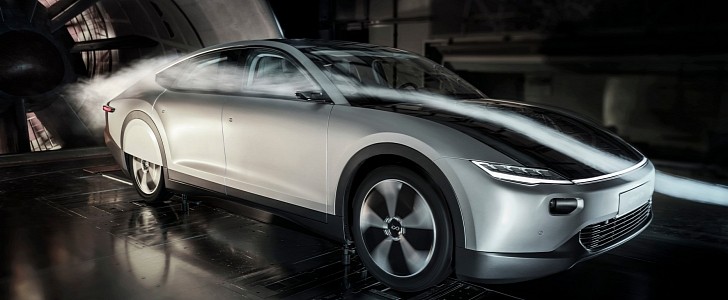
We told you that Lightyear commissioned the production of its first car to Valmet Automotive on July 19. When the company starts delivering the Lightyear One, it will be the most energy-efficient family vehicle in the world. However, we still had some doubts about the solar EV and the company, and we got in touch with Lightyear to clarify them. That’s how we learned that it plans to have a mass-production car from 2024 onwards. As you may imagine now, it is not the Lightyear One.
 39 photos
The company created its flagship to demonstrate the technology it champions, and it will have only 946 units. If you are wondering about why Lightyear chose that very specific number, there are two reasons for that.
The first is that one lightyear is equivalent to 9.46 trillion kilometers. The second is that the company has a goal: to drive 9.46 trillion km by 2035 only with solar energy captured by its cars. If you divide that by the 946 Lightyear One units the company plans to build with Valmet, each of them would have to drive 10 billion km. That shows the company plans a much more extensive lineup to insanely expand sales if it really means to meet its solar mileage target.
We tried to imagine how many cars Lightyear would have to sell to reach that impressive number by 2035. According to Odysee-Mure Project, the average distance a car travels every year in Europe is around 12,000 km. Lightyear products will be available from summer 2022, giving the company a little less than 14 years.
If we divide 9.46 trillion km for 168,000 (14 times 12,000), we end up with 56.3 million cars, which means the company would need all of them on the roads right from 2022 to get to 2035 with 9.46 trillion km. It also means these cars would have to be powered solely by solar energy, either extracted by the car’s solar panels or charged from outlets that deliver electricity generated thanks to the sun.
We know that is not so linear and that Lightyear One owners could drive much more than the average every year. Still, the target is pretty much impossible to meet, even if the plans for the electric flagship included producing more than 946 units.
Lightyear told us that the cars Valmet Automotive will start manufacturing in January 2022 would not be prototypes but rather vehicles ready to be shipped to their buyers. Before that, the company plans to have 10 to 20 prototypes for the homologation process. So far, the deal with Valmet Automotive covers only the Lightyear one production.
At this point, we are more curious to see what Lightyear has in mind to reach more customers than its €150,000-EV can. We wouldn’t be surprised with a concept car emerges while we wait for the real deal by 2024.
 39 photos
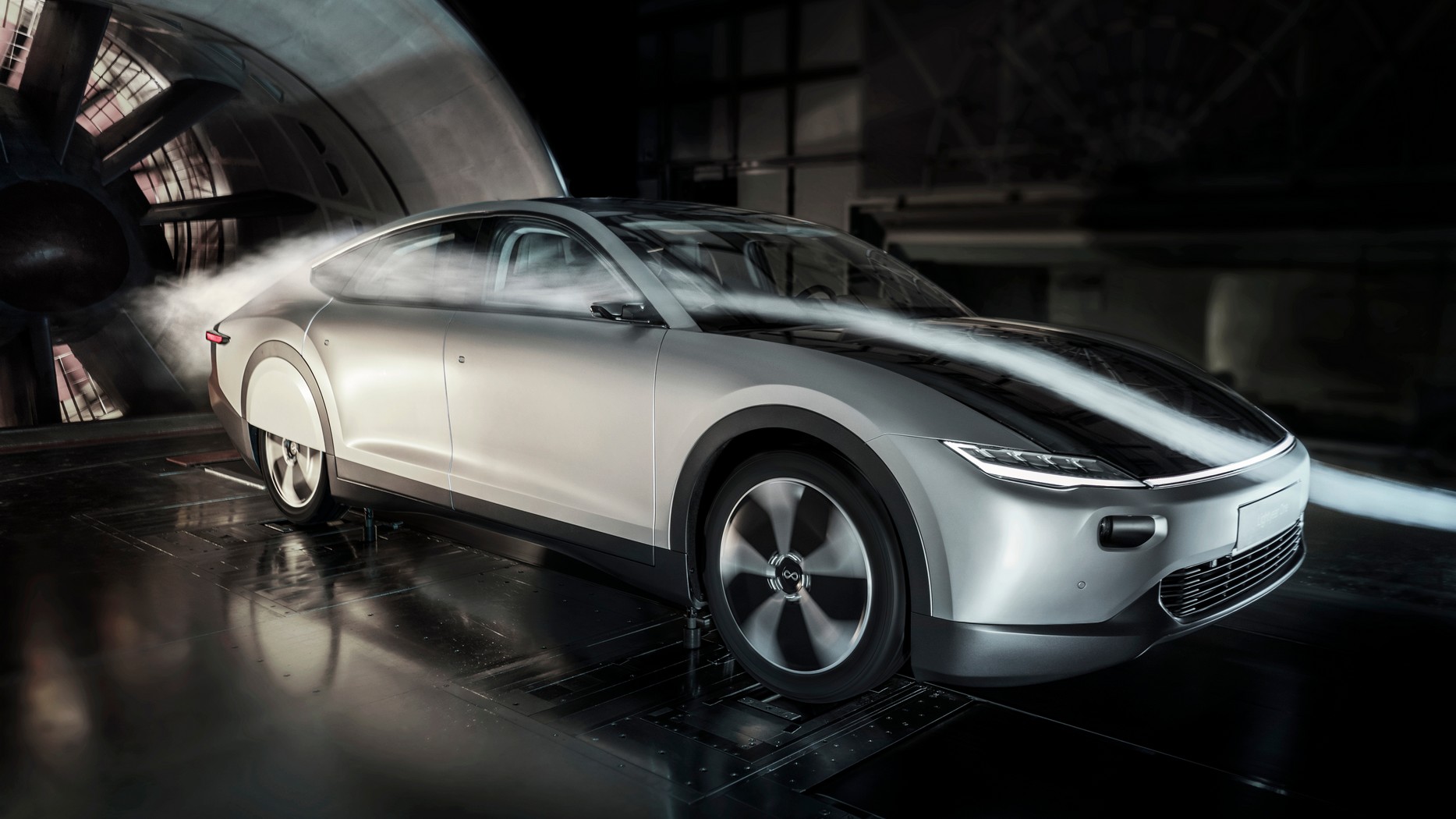
The company created its flagship to demonstrate the technology it champions, and it will have only 946 units. If you are wondering about why Lightyear chose that very specific number, there are two reasons for that.
The first is that one lightyear is equivalent to 9.46 trillion kilometers. The second is that the company has a goal: to drive 9.46 trillion km by 2035 only with solar energy captured by its cars. If you divide that by the 946 Lightyear One units the company plans to build with Valmet, each of them would have to drive 10 billion km. That shows the company plans a much more extensive lineup to insanely expand sales if it really means to meet its solar mileage target.
We tried to imagine how many cars Lightyear would have to sell to reach that impressive number by 2035. According to Odysee-Mure Project, the average distance a car travels every year in Europe is around 12,000 km. Lightyear products will be available from summer 2022, giving the company a little less than 14 years.
If we divide 9.46 trillion km for 168,000 (14 times 12,000), we end up with 56.3 million cars, which means the company would need all of them on the roads right from 2022 to get to 2035 with 9.46 trillion km. It also means these cars would have to be powered solely by solar energy, either extracted by the car’s solar panels or charged from outlets that deliver electricity generated thanks to the sun.
We know that is not so linear and that Lightyear One owners could drive much more than the average every year. Still, the target is pretty much impossible to meet, even if the plans for the electric flagship included producing more than 946 units.
Lightyear told us that the cars Valmet Automotive will start manufacturing in January 2022 would not be prototypes but rather vehicles ready to be shipped to their buyers. Before that, the company plans to have 10 to 20 prototypes for the homologation process. So far, the deal with Valmet Automotive covers only the Lightyear one production.
At this point, we are more curious to see what Lightyear has in mind to reach more customers than its €150,000-EV can. We wouldn’t be surprised with a concept car emerges while we wait for the real deal by 2024.


Thread Starter
Race Director
Joined: Oct 2003
Posts: 14,437
Likes: 639
From: Orlando, Fl
When it comes to EV batteries, 60 kWh doesn't sound like much these days unless we're talking about an electric hatchback from Europe. And even then, the range of such models will rarely top 160 miles.
But 60 kWh is exactly what Dutch EV startup Lightyear One had to play with in designing its upcoming solar-assisted battery-electric sedan, scheduled to enter production later this year. That's right: the Lightyear One sedan features something we hadn't really seen too often in mass-produced EVs, which is a solar roof that's actually meant to contribute some range, at least under skies that actually offer some sun.
While the solar roof and hood are certainly noticeable components, Lightyear's prototype actually relies more on aerodynamic efficiency, which the start-up demonstrated in a video this week following a series of tests at high-speed tracks.
During the latest series of tests at the Bridgestone Technology & Solutions Center in Aprilia, Rome, Lightyear's sedan has demonstrated energy consumption 141 Watt-hours per kilometer, with the test vehicle being driven at 130 km/h (80.7 mph). This works out to about 4.4 miles/kWh. On a full charge Lightyear's sedan can cover over 400 kilometers (248.5 miles) at this speed, which is 1.5 times further than the distance a directly comparable vehicle with the same battery size can cover, the company claims. (Of course, on paper 4.4 miles/kWh translates to about 246 miles, but these stats aren't meant to match up exactly).
"We gradually increase the speed capability of the vehicle," said Vehicle Test Coordinator Megan Parfitt. "Eventually, it will be capable of 160 km/h. But we increase it in stages to ensure safety and make sure that we're happy with the way the vehicle is performing."
"Both tests, in Aldenhoven and Aprilia, produced promising numbers. At 85 km/h and in warm weather the car drove for almost nine hours straight (710 kilometers) on one single charge. At this relatively low speed, the most efficient electric cars consume around 50% more energy," the company adds.In achieving this level of energy efficiency, the prototype sedan relies on a fairly well-honed set of aerodynamic design elements, including a long tail, tapered rear wheel arches, wheel design, minimal side mirrors, and other small tweaks to squeeze out every incremental benefit. The long, sloping roof, of course, has the added benefit of being able to house solar cells, which also cover the hood surface.
While Lightyear One is expected to be the pricey debut model with a sticker of around $170,000 when it goes on sale in Europe, the start-up's second planned car, dubbed Lightyear Two, is expected to be the affordable, volume model. Lightyear Two is expected to arrive in 2024 at the earliest, and meant to compete on price with other electric sedans its size, and could find its way to North America.
If the long-tail design reminds you of some other EV we've recently seen, it's probably the Mercedes-Benz Vision EQXX, which demonstrated a range of 620 miles with a lithium-iron-phosphate battery with a capacity under 100 kWh.
"We have sights firmly set on launching the most efficient car on the market. That means building a vehicle that can withstand the trials of a challenging and changing world, and that's no small feat. It requires meticulous and continued testing," the company says.
"These results tell us, in no uncertain terms, that we're well on the way to producing the most efficient car, ever. Not just in legislative cycles, but also in real-world conditions."
As promising as Lightyear's approach to aerodynamics may seem, it's not lost on industry observers that the pace of battery technology as it relates to range may be moving faster than Lightyear's efforts to bring a vehicle to market. By the time Lightyear Two arrives on sale, a battery size of 60 kWh from a competitor model could very well achieve the same 400-kilometer (248.5-mile) range as Lightyear One's just through different battery chemistry, transmission design, materials, or recuperation techniques. Transmissions are indeed on the way to more EVs to make them more efficient on the highway.
So while 1.5 times the range of other cars may seem to be a major selling point, Lightyear is constrained by other factors that have to do with production capacity and the speed with which it can bring vehicles to market.
Lightyear plans to put its first vehicle into production later this year. Likewise, Mercedes-Benz could build a very aerodynamic midsize electric sedan with a long tail and tapered wheel arches, while also focusing on lightweighting the cabin to an extensive degree. But it chooses not to do so, because it also has to cater to other consumer priorities.
Also, if you look around at EVs that have debuted in the past two years, a few want very little to do with aerodynamic efficiency, which would have been a major surprise to EV engineers a decade ago. In fact, a few of them are absolute tanks when it comes to curb weight and have the aerodynamic profiles of refrigerators, which would have also surprised EV engineers a decade ago.
But 60 kWh is exactly what Dutch EV startup Lightyear One had to play with in designing its upcoming solar-assisted battery-electric sedan, scheduled to enter production later this year. That's right: the Lightyear One sedan features something we hadn't really seen too often in mass-produced EVs, which is a solar roof that's actually meant to contribute some range, at least under skies that actually offer some sun.
While the solar roof and hood are certainly noticeable components, Lightyear's prototype actually relies more on aerodynamic efficiency, which the start-up demonstrated in a video this week following a series of tests at high-speed tracks.
During the latest series of tests at the Bridgestone Technology & Solutions Center in Aprilia, Rome, Lightyear's sedan has demonstrated energy consumption 141 Watt-hours per kilometer, with the test vehicle being driven at 130 km/h (80.7 mph). This works out to about 4.4 miles/kWh. On a full charge Lightyear's sedan can cover over 400 kilometers (248.5 miles) at this speed, which is 1.5 times further than the distance a directly comparable vehicle with the same battery size can cover, the company claims. (Of course, on paper 4.4 miles/kWh translates to about 246 miles, but these stats aren't meant to match up exactly).
"We gradually increase the speed capability of the vehicle," said Vehicle Test Coordinator Megan Parfitt. "Eventually, it will be capable of 160 km/h. But we increase it in stages to ensure safety and make sure that we're happy with the way the vehicle is performing."
"Both tests, in Aldenhoven and Aprilia, produced promising numbers. At 85 km/h and in warm weather the car drove for almost nine hours straight (710 kilometers) on one single charge. At this relatively low speed, the most efficient electric cars consume around 50% more energy," the company adds.In achieving this level of energy efficiency, the prototype sedan relies on a fairly well-honed set of aerodynamic design elements, including a long tail, tapered rear wheel arches, wheel design, minimal side mirrors, and other small tweaks to squeeze out every incremental benefit. The long, sloping roof, of course, has the added benefit of being able to house solar cells, which also cover the hood surface.
While Lightyear One is expected to be the pricey debut model with a sticker of around $170,000 when it goes on sale in Europe, the start-up's second planned car, dubbed Lightyear Two, is expected to be the affordable, volume model. Lightyear Two is expected to arrive in 2024 at the earliest, and meant to compete on price with other electric sedans its size, and could find its way to North America.
If the long-tail design reminds you of some other EV we've recently seen, it's probably the Mercedes-Benz Vision EQXX, which demonstrated a range of 620 miles with a lithium-iron-phosphate battery with a capacity under 100 kWh.
"We have sights firmly set on launching the most efficient car on the market. That means building a vehicle that can withstand the trials of a challenging and changing world, and that's no small feat. It requires meticulous and continued testing," the company says.
"These results tell us, in no uncertain terms, that we're well on the way to producing the most efficient car, ever. Not just in legislative cycles, but also in real-world conditions."
As promising as Lightyear's approach to aerodynamics may seem, it's not lost on industry observers that the pace of battery technology as it relates to range may be moving faster than Lightyear's efforts to bring a vehicle to market. By the time Lightyear Two arrives on sale, a battery size of 60 kWh from a competitor model could very well achieve the same 400-kilometer (248.5-mile) range as Lightyear One's just through different battery chemistry, transmission design, materials, or recuperation techniques. Transmissions are indeed on the way to more EVs to make them more efficient on the highway.
So while 1.5 times the range of other cars may seem to be a major selling point, Lightyear is constrained by other factors that have to do with production capacity and the speed with which it can bring vehicles to market.
Lightyear plans to put its first vehicle into production later this year. Likewise, Mercedes-Benz could build a very aerodynamic midsize electric sedan with a long tail and tapered wheel arches, while also focusing on lightweighting the cabin to an extensive degree. But it chooses not to do so, because it also has to cater to other consumer priorities.
Also, if you look around at EVs that have debuted in the past two years, a few want very little to do with aerodynamic efficiency, which would have been a major surprise to EV engineers a decade ago. In fact, a few of them are absolute tanks when it comes to curb weight and have the aerodynamic profiles of refrigerators, which would have also surprised EV engineers a decade ago.
Thread Starter
Race Director
Joined: Oct 2003
Posts: 14,437
Likes: 639
From: Orlando, Fl
Lightyear is proving to be a surprising startup. Production of the Lightyear 0 started in Finland in December, and it will release the Lightyear 2 waitlist on January 5. What we did not expect was to see the first images of the company’s affordable solar car so soon. The last time the company talked about it, it should arrive by 2025 and cost around €30,000 ($31,858.50 at the current exchange rate).
 6 photos
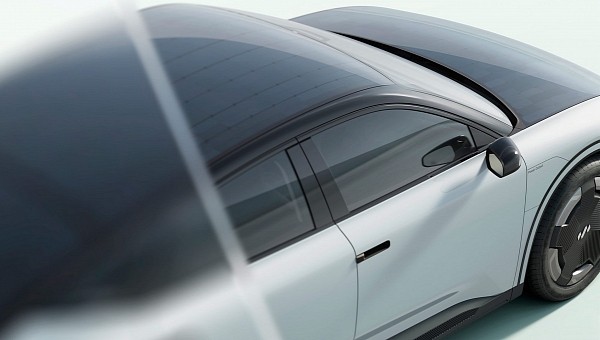
The waitlist page changed that a bit. There is no word about when the Lightyear 2 will arrive, but the Dutch startup first said it would be in 2024 and then postponed it to 2025. The target price has increased substantially: around €40,000 ($42,438), a 33.3% increase compared to the first price estimate Lightyear disclosed. On the other hand, the startup now talks about an 800-kilometer (497-mile) range for its second solar car. It did not talk about dimensions.
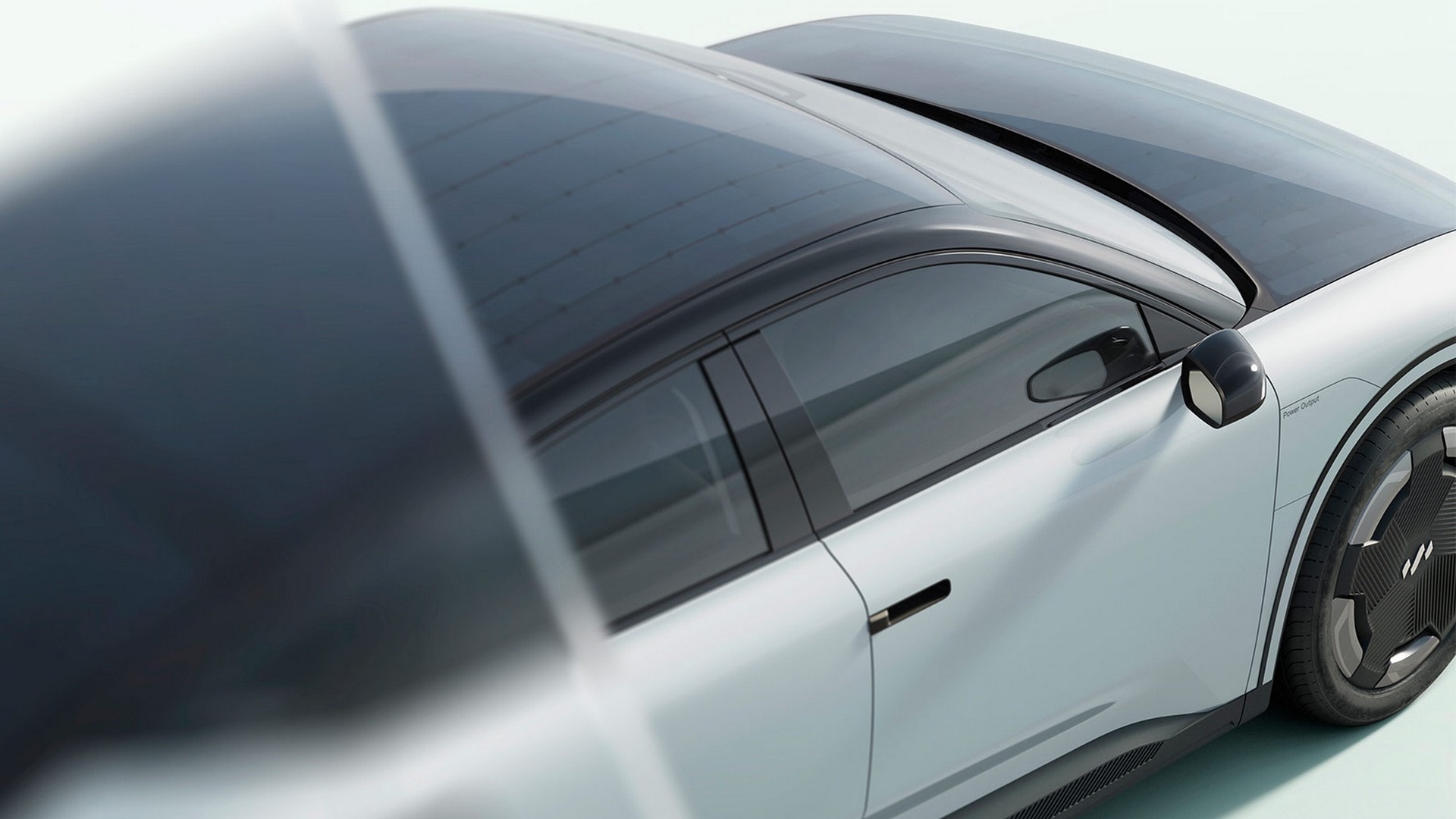
As you can see in the gallery above, the Lightyear 2 will look like a smaller Lightyear 0. It has compact external rear-view mirrors, which is probably more affordable than the cameras the Lightyear 0 adopted. The solar car for the masses also has a “power outlet” under the right rear-view mirror, making us wonder if it has a charging port on the left side. Is this power outlet Lightyear’s suggestion for a V2L (vehicle-to-load) solution?
The door handles also caught our attention: they are on the edge of the doors – not inside them – and look like holes. That does not seem exactly aerodynamic. Considering how much Lightyear worries about efficiency, there is probably a reasonable explanation for that format. The wheels look very different from those on the company’s flagship.
The Dutch startup will certainly warn us when all 946 units of its flagship have found buyers. With each of them starting at €250,000 ($265,237.50), that will represent a cash injection of €236.5 million ($250.9 million), but production costs have to be discounted for us to have any fair idea of how profitable these solar sedans were. Selling a car for €30,000 with profits will demand a massive manufacturing infrastructure, and it will take time for all investments to pay off.
 6 photos
The waitlist page changed that a bit. There is no word about when the Lightyear 2 will arrive, but the Dutch startup first said it would be in 2024 and then postponed it to 2025. The target price has increased substantially: around €40,000 ($42,438), a 33.3% increase compared to the first price estimate Lightyear disclosed. On the other hand, the startup now talks about an 800-kilometer (497-mile) range for its second solar car. It did not talk about dimensions.
As you can see in the gallery above, the Lightyear 2 will look like a smaller Lightyear 0. It has compact external rear-view mirrors, which is probably more affordable than the cameras the Lightyear 0 adopted. The solar car for the masses also has a “power outlet” under the right rear-view mirror, making us wonder if it has a charging port on the left side. Is this power outlet Lightyear’s suggestion for a V2L (vehicle-to-load) solution?
The door handles also caught our attention: they are on the edge of the doors – not inside them – and look like holes. That does not seem exactly aerodynamic. Considering how much Lightyear worries about efficiency, there is probably a reasonable explanation for that format. The wheels look very different from those on the company’s flagship.
The Dutch startup will certainly warn us when all 946 units of its flagship have found buyers. With each of them starting at €250,000 ($265,237.50), that will represent a cash injection of €236.5 million ($250.9 million), but production costs have to be discounted for us to have any fair idea of how profitable these solar sedans were. Selling a car for €30,000 with profits will demand a massive manufacturing infrastructure, and it will take time for all investments to pay off.
Thread Starter
Race Director
Joined: Oct 2003
Posts: 14,437
Likes: 639
From: Orlando, Fl
The Lightyear 2 has a no cost wait list: Lightyear 2 - Join the waitlist
Thread Starter
Race Director
Joined: Oct 2003
Posts: 14,437
Likes: 639
From: Orlando, Fl
Dutch-based auto company Lightyear debuted the world’s first production-ready battery-electric solar-powered car in 2022. Named Lightyear 0, this expensive and very aerodynamic sedan made headlines all over the world thanks to its charge-while-on-the-go technology. But the Lightyear 2 is the company’s most anticipated product. So anticipated that even Arval wants 10,000 units!
Lightyear 0 benefitted from around six years of development. It finally came out last year with a price tag of around €255,000 ($275,663). That’s a little steep for most people who want to make the switch to a guilt-free driving experience and maybe wish to lower their monthly fuel costs. Moreover, the car only has a 60-kWh battery. While that may sound disheartening at first, the sedan weighs only 3,472 lb (1,575 kg) and is the world’s most aerodynamic production vehicle with its drag coefficient of 0.175.
So, when piecing everything together, the made-in-Finland Lightyear 0 starts to make sense. It becomes especially attractive if you live in a sunny area. However, what cannot be ignored is the hefty price tag. But that’s why the young automaker thought out this launching process. Immediately after introducing the 0, the Lightyear 2 was announced as the mass-market version of the premium unit.
From what we’ve seen by now, the Lightyear 2 is a small coupe SUV with heavy wagon (maybe even Polestar?) vibes that sports a sleek silhouette. This shape gives the manufacturer enough real estate on the top of the car for solar panels. So, harnessing free energy from the sun remains a possibility. But things like cameras for side mirrors and other fancy things seen on the Lightyear 0 aren’t on the Lightyear 2.
Initially, it was supposed to cost around €30,000 ($32,446). However, now we know that the starting price will be around the €40,000 ($43,261) mark.
The manufacturer estimates that this better-priced unit will be capable of traveling around 497 mi (800 km) on a single charge, but not all the details are out yet. However, the base concept is found here as well – make a car with a small battery, give it good aerodynamics, slap on some solar panels on its roof, make sure the motors are efficient, watch its weight, and that’s it. The potential, however, is enormous. The world needs more efficient EVs because they may put less strain on the grid everywhere while also shortening charging times.
All this could be what convinced Arval – Europe’s largest vehicle leasing company – to place a pre-order of 10,000 Lightyear 2s. Arval deputy CEO Bart Beckers said this decision contributes to the company’s target of having over 700,000 electrified vehicles on the road by 2025. “I’m delighted to have pre-ordered these 10,000 units. We cannot wait at Arval to start introducing the model to our customers and drivers,” added Beckers.
In exchange, Lightyear CEO Lex Hoefsloot recognized Arval’s role in getting more people inside EVs and said he’s “grateful for their trust and to have their expertise and international footprint to roll out Lightyear 2.”
Sono Motors CFO Torsten Kiedel joined others in congratulating Arval and Lightyear for this deal, even though the companies are competitors in this niche EV segment.
Arval is part of the BNP Paribas Group and specializes in vehicle leasing and fleet management. The entity is present in 53 countries worldwide.
Lightyear 0 benefitted from around six years of development. It finally came out last year with a price tag of around €255,000 ($275,663). That’s a little steep for most people who want to make the switch to a guilt-free driving experience and maybe wish to lower their monthly fuel costs. Moreover, the car only has a 60-kWh battery. While that may sound disheartening at first, the sedan weighs only 3,472 lb (1,575 kg) and is the world’s most aerodynamic production vehicle with its drag coefficient of 0.175.
So, when piecing everything together, the made-in-Finland Lightyear 0 starts to make sense. It becomes especially attractive if you live in a sunny area. However, what cannot be ignored is the hefty price tag. But that’s why the young automaker thought out this launching process. Immediately after introducing the 0, the Lightyear 2 was announced as the mass-market version of the premium unit.
From what we’ve seen by now, the Lightyear 2 is a small coupe SUV with heavy wagon (maybe even Polestar?) vibes that sports a sleek silhouette. This shape gives the manufacturer enough real estate on the top of the car for solar panels. So, harnessing free energy from the sun remains a possibility. But things like cameras for side mirrors and other fancy things seen on the Lightyear 0 aren’t on the Lightyear 2.
Initially, it was supposed to cost around €30,000 ($32,446). However, now we know that the starting price will be around the €40,000 ($43,261) mark.
The manufacturer estimates that this better-priced unit will be capable of traveling around 497 mi (800 km) on a single charge, but not all the details are out yet. However, the base concept is found here as well – make a car with a small battery, give it good aerodynamics, slap on some solar panels on its roof, make sure the motors are efficient, watch its weight, and that’s it. The potential, however, is enormous. The world needs more efficient EVs because they may put less strain on the grid everywhere while also shortening charging times.
All this could be what convinced Arval – Europe’s largest vehicle leasing company – to place a pre-order of 10,000 Lightyear 2s. Arval deputy CEO Bart Beckers said this decision contributes to the company’s target of having over 700,000 electrified vehicles on the road by 2025. “I’m delighted to have pre-ordered these 10,000 units. We cannot wait at Arval to start introducing the model to our customers and drivers,” added Beckers.
In exchange, Lightyear CEO Lex Hoefsloot recognized Arval’s role in getting more people inside EVs and said he’s “grateful for their trust and to have their expertise and international footprint to roll out Lightyear 2.”
Sono Motors CFO Torsten Kiedel joined others in congratulating Arval and Lightyear for this deal, even though the companies are competitors in this niche EV segment.
Arval is part of the BNP Paribas Group and specializes in vehicle leasing and fleet management. The entity is present in 53 countries worldwide.
Thread Starter
Race Director
Joined: Oct 2003
Posts: 14,437
Likes: 639
From: Orlando, Fl
Lightyear was at the 2023 CES and presented a prototype of the Lightyear 2 there. The company also had the Lightyear 0 at the event, and everything seemed bright until it announced it would stop production of the world’s first solar car. The company’s request for a suspension of payments proceeding was approved, which means it is officially bankrupt.
To be precise, Atlas Technologies B.V. is the company that is currently under administration. It was responsible for the Lightyear 0 production. The Dutch startup comprises two more enterprises: Atlas Technologies Holding B.V., which holds the intellectual property (IP) rights, and Lightyear Layer B.V., whose role was not disclosed. As optimistic as anyone may want to be, it seems that Atlas Technologies B.V. was the most crucial of all three companies.
Lightyear disclosed that the Rechtbank Oost-Brabant (Court of East Brabant) from ´s-Hertogenbosch (yes, that’s the name of the city) granted the suspension of payments. The Dutch court also appointed Reinoud van Oeijen, from Holla legal & tax, as the trustee. Lightyear stated he “will focus on the position of the employees and creditors as well as assessing how the Lightyear concept can be continued.” At this point, perhaps the right question is not “how” but rather “if.”
It is not clear yet how many financial issues the production division of Lightyear had. Above all, we need to learn how many orders for the Lightyear 0 the company had, how many people paid for their cars entirely (if anyone), and how the company established that the right price to ask was €250,000 ($271,725 at the current exchange rate).
Was that enough to cover the production expenses? Couldn’t the car have a lower price and more units? After all, Lightyear would make 946 units of the vehicle as a tribute to a light-year – equivalent to .9.46 trillion kilometers. What if it had committed to produce 9,460 cars at a lower price? Or 946,000, even if it never reached that number?
Anyone willing to pay €250,000 for a vehicle is not concerned with electricity costs. Someone disbursing €100,000 or €50,000 for a car may be. The appeal the Lightyear 0 had was energy efficiency and the incredible range it could offer with a relatively small battery pack: 710 kilometers (440 miles) with a 60-kWh battery pack and a full charge.
How many units of the Lightyear 0 were made before production ended? Will we ever see one of those units on the streets? Without those answers, it is quite premature to talk about the Lightyear 2, a vehicle that will only achieve the price target the company established for it with mass production. If the Dutch startup does not have more news to share soon, the chances that all its plans may die with Atlas Technologies B.V. are, unfortunately, pretty high.
To be precise, Atlas Technologies B.V. is the company that is currently under administration. It was responsible for the Lightyear 0 production. The Dutch startup comprises two more enterprises: Atlas Technologies Holding B.V., which holds the intellectual property (IP) rights, and Lightyear Layer B.V., whose role was not disclosed. As optimistic as anyone may want to be, it seems that Atlas Technologies B.V. was the most crucial of all three companies.
Lightyear disclosed that the Rechtbank Oost-Brabant (Court of East Brabant) from ´s-Hertogenbosch (yes, that’s the name of the city) granted the suspension of payments. The Dutch court also appointed Reinoud van Oeijen, from Holla legal & tax, as the trustee. Lightyear stated he “will focus on the position of the employees and creditors as well as assessing how the Lightyear concept can be continued.” At this point, perhaps the right question is not “how” but rather “if.”
It is not clear yet how many financial issues the production division of Lightyear had. Above all, we need to learn how many orders for the Lightyear 0 the company had, how many people paid for their cars entirely (if anyone), and how the company established that the right price to ask was €250,000 ($271,725 at the current exchange rate).
Was that enough to cover the production expenses? Couldn’t the car have a lower price and more units? After all, Lightyear would make 946 units of the vehicle as a tribute to a light-year – equivalent to .9.46 trillion kilometers. What if it had committed to produce 9,460 cars at a lower price? Or 946,000, even if it never reached that number?
Anyone willing to pay €250,000 for a vehicle is not concerned with electricity costs. Someone disbursing €100,000 or €50,000 for a car may be. The appeal the Lightyear 0 had was energy efficiency and the incredible range it could offer with a relatively small battery pack: 710 kilometers (440 miles) with a 60-kWh battery pack and a full charge.
How many units of the Lightyear 0 were made before production ended? Will we ever see one of those units on the streets? Without those answers, it is quite premature to talk about the Lightyear 2, a vehicle that will only achieve the price target the company established for it with mass production. If the Dutch startup does not have more news to share soon, the chances that all its plans may die with Atlas Technologies B.V. are, unfortunately, pretty high.
Trending Topics


Thread
Thread Starter
Forum
Replies
Last Post