


Ford: Bronco News




Thread Starter
Moderator Alumnus
Joined: Oct 2000
Posts: 16,399
Likes: 8
From: Washington DC (NOVA)
INFORMATION PROVIDED BY FORD
Ford Bronco Concept Captures Spirit of Original While Showcasing New Powertrain Technologies
The legendary Bronco is back as Ford re-explores the origins of the sport utility vehicle in a concept making its debut at the 2004 North American International Auto Show. The Ford Bronco concept demonstrates the original’s authentic spirit while advancing powertrain technologies.
At a time when sport utilities are becoming more and more civilized – some to the point of forgetting their roots – the Bronco’s clean, raw shape, uncluttered interior and capable chassis make it the ideal tool for work, play or just making a statement.
Key design features reminiscent of the original Ford Bronco include the boxy, upright roofline, short wheelbase, round headlamps and the Bronco nameplate milled into the modern three-bar grille. A winch and guide rollers are integrated into the lower fascia. Exterior details include exposed door hinges, cowl vents and flared wheel wells. Unique loop-shaped door handles are integrated into the door panels and open with a tug.
“True to its heritage, the Bronco concept is a tough, genuine SUV that’s all about function,” said J Mays, Ford Motor Company group vice president of Design. “It’s like a claw hammer in a box full of department store, battery-operated, plastic, power tools.”
Yet within Ford Bronco concept’s rugged design is an advanced turbo-diesel powertrain with concept technologies that stretch the envelope of today’s conventional propulsion modes.
“The Bronco concept showcases significant advanced powertrain technologies, mating a 2.0-liter intercooled turbo diesel with an efficient six-speed PowerShift™ transmission and Intelligent™ four-wheel-drive system for a powerful, sure-footed off-roader,” said Graham Hoare, director, Powertrain Advanced and Research Engineering. “Then comes the fun part. We’ve added nitrous-oxide injection for a burst of power at your fingertips.”
Although only a concept, the Bronco demonstrates how Ford could further complement its extensive SUV lineup that includes Escape, Explorer, Expedition and Excursion.
“The original Bronco carved new trails as a rugged off-roader, but Ford really created the SUV phenomenon with the introduction of the Explorer in 1990,” said Steve Lyons, president, Ford Division. “Since that time, Ford has always been the clear leader in SUVs. But we will keep looking at new ways to extend our SUV leadership. For example, we’re introducing the Freestyle crossover for customers who are looking for a very civilized SUV alternative. At the other extreme, the Bronco concept shows how a small, rugged and extremely capable off-road machine could complement our SUV lineup.”
Design
The Bronco concept strikes a familiar profile of the authentic SUVs of the late 1960s and at the same time is contemporary, appealing and relevant for today’s market. The Bronco concept adds modern technologies to an original theme for a fresh new approach. The headlamps use LED and halogen light sources to cast a wider beam for better peripheral vision in off-road situations.
The Ford name is integrated into the tailgate that swings open to the side, allowing easy access to the rear cargo area. The taillamps are rectangular and feature LED lights in a cascaded array. Bronco sits on LT 265/70R18 Goodyear all-terrain tires mounted on specially cut 18-inch, six-spoke aluminum wheels that convey the confidence to carry it over any surface in any condition. A full-size spare tire is mounted in the rear cargo area.
The roof is made up of two separate sections. The rear portion can be removed for an open-air driving experience. In another link with the original Bronco, roll bar accents can be attached once the rear portion of the roof is removed, giving the look and feel of a Baja racer. Ford offered customized “Baja Broncos” in the early 1970s.
A monotone color scheme featuring a warm silver finish, coupled with bright anodized brushed aluminum accents, flows seamlessly from the exterior body panels to the exposed interior surfaces. The two seats are trimmed in ginger-hued suede that looks and feels like a leather work glove, accented with same color leather inserts and a four-line stitching pattern often found on a rugged tool belt.
The instrument cluster is made up of two round bezels, housing a speedometer and a combination odometer/compass. A lockable glove box features an integrated grab handle that is perfectly positioned to reassure the passenger when traversing rough terrain. Corrugated interior floor panels further communicate strength and durability.
“The Bronco concept is like your favorite pair of worn, faded jeans – classic, familiar, comfortable and always in style,” said Mays.
The Original
Ford introduced the original Bronco in August 1965 as a response to the needs of active Americans who sought adventure as well as practical transportation. Bronco, with a 92-inch wheelbase, was available in three body styles: A four-passenger wagon with a removable full-length roof, a pickup with a half roof and open rear and a two-door roadster with a choice of two- or four-passenger seating.
Like the other no-frills off-roaders of the day – such as the Land Rover Defender and International Scout – the Bronco was both adept and adaptable. Owners loved its ruggedness and the ease with which they could customize it for their needs. Ford offered an array of work-and-play options including winches, snowplow blades, locking front hubs, tow hooks, air-lift springs, an auxiliary gas tank and more.
The original Bronco was powered by a 105 horsepower inline six-cylinder engine from the Ford Falcon and was mated with a fully synchronized three-speed manual transmission with a col-mounted shifter – its location affectionately dubbed “three on the tree.”
The Ford small-block 289-cubic-inch V-8 became available as an option in 1966, upgraded to 302 cubic inches in 1969. Full-time four-wheel-drive uniquely mounted for maximum ground clearance and a solid front axle made it an ideal choice for off-road enthusiasts.
Bronco’s sturdy shape is instantly recognizable. The simple, upright stance, signature round headlamps and basic, functional interior are hallmarks of the original design and have made it an icon among hard-core off-roaders.
Bronco was an immediate success, leading the emerging recreational four-wheel drive market with sales of 18,200 units in its first full year of production. Ford continued to update the original Bronco until 1977 – its best sales year, but its last. More than 230,000 were produced from 1966-1977. A much larger Bronco took over in 1978.
Powerful Diesel Punch – With a Little Extra Kick
The Ford Bronco concept is powered by a proven 2.0-liter common-rail Duratorq TDCi engine from Ford’s European product range. This 16-valve turbo diesel combines outstanding power, torque, smoothness and exceptional fuel economy in a compact package, helping to change public expectations about diesel engines.
Using the latest common-rail fuel-injection technology, the 128 horsepower (130 PS) engine delivers peak torque of 244 lb-ft (330 Nm) at a relatively low 1,800 rpm – an ideal quality for off-roading or urban driving. Plus, Ford has engineered the engine technology to deliver overboost that provides an extra surge of power on driver demand for situations such as hill climbing. Overboost generates an even higher torque of 258 lb-ft (350 Nm) for a limited time under full throttle.
Sophisticated, electronically controlled injectors are central to the Bronco concept’s common-rail system. The system delivers fuel at extremely high pressure – up to 20,300 psi (1,400 bar) – to the injectors. The fuel is delivered to the cylinders with high precision and control that results in greater performance and torque and excellent fuel economy.
For the Bronco concept, Ford engineers took this punchy engine and went further.
A Nitrous “Kick”
The use of nitrous oxide (N2O) as a performance enhancement dates back to World War II, when it was employed to give Allied aircraft “emergency” boosts in both airspeed and altitude capabilities.
In the 1970s, nitrous systems saw growing popularity in the automotive performance community among racers looking for that added “kick.” The word began to spread when enthusiast publications such as Hot Rod, Car Craft and Popular Hot Rodding informed their readers by publishing in-depth, technical feature stories on nitrous-oxide systems.
The 2001 movie, “The Fast and the Furious,” and its sequel highlighted nitrous oxide use as a performance enhancer among high-revving, California street racers and spread the word to a new generation of enthusiasts.
How does nitrous injection work? Each nitrous oxide molecule is made up of two parts nitrogen and one part oxygen (36 percent oxygen by weight). During an engine’s combustion process, nitrous oxide breaks down and releases its oxygen atoms. This extra oxygen creates additional power by allowing more fuel to be burned. The remaining nitrogen acts to keep cylinder pressures from getting out of hand.
On the new Ford Bronco concept, a stream of nitrous oxide is injected into the engine’s cylinders as long as the N2O button is held down, providing up to a temporary 50-hp boost and a three-second improvement in quarter-mile times, with 10-15 mph more top speed.
“This has practical benefits for an off-road vehicle when you might need a sudden burst of extra power to clear an obstacle and keep moving,” Hoare said. “But it also is a blast to drive – literally.”
Revolutionary PowerShift™ Transmission
Power is transmitted to the Bronco’s wheels through a revolutionary new six-speed PowerShift™ transmission that significantly improves performance and fuel economy.
PowerShift is the result of a Ford-Getrag joint venture, a transmission that will be seen in Ford Motor Company products later in the decade. In gasoline applications, PowerShift promises a 12-percent fuel economy advantage over today’s four-speed automatic transmissions and provides capability to handle a whopping 332 lb-ft (450 nm) of torque in a compact package.
“A twin wet-clutch module replaces the traditional torque converter and operates using hydraulic actuation. This feature is similar to the clutch found on a typical manual transmission,” said Ernie DeVincent, department manager for transmissions and drivelines in Ford Advanced Research and Engineering.
“However, manual transmissions or automated manual transmissions change gears by disengaging the clutch, which interrupts the flow of torque and can cause rough shifts,” DeVincent said. “The PowerShift approach changes gears by power-shifting from one clutch to the other, giving smooth shift quality equal to a typical automatic transmission.”
The PowerShift transmission uses a layshaft architecture, which also has more in common with manual transmissions than typical automatics, with gears arranged on two parallel shafts. Within the PowerShift transmission, one clutch connects to the odd gears (1, 3, 5), the other clutch to the even gears (2, 4, 6). The dual-clutch layshaft has better mechanical efficiency than conventional automatic transmissions by eliminating the torque converter and the drag losses of an open clutch. A typical four-speed FWD automatic transmission has approximately 68 percent mechanical efficiency (on the EPA fuel economy test), vs. 80 percent for a PowerShift transmission.
Combined with the Duratorq TDCi diesel, the PowerShift promises 5 percent better fuel economy than a conventional six-speed automatic transmission, and 6 percent better acceleration times.
Outstanding Diesel Powertrain
The PowerShift transmission makes an ideal partner for the Duratorq TDCi engine. Even efficient, lightweight turbochargers can induce a noticeable delay in torque rise on tip-in because of inertia – the so-called “turbo lag.” A twin clutch transmission like the PowerShift offers an advantage because of its lower inertia compared with a typical torque converter, minimizing the effect of turbo lag. In addition, the diesel’s low-end torque will allow lower launch rpm, which results in a shorter duration of clutch slip at launch for quicker acceleration.
Diesel engines tend to have differently shaped horsepower and torque curves than gasoline engines, making it desirable to adjust the step size between transmission gears accordingly. Here again, the PowerShift transmission, like all layshaft-based transmissions, offers an advantage. Internal gear sets can be changed easily during development, allowing the efficiencies of common transmission architecture, while optimizing gear ratios for both engine types.
While the shifting is automatic, the PowerShift transmission on the Bronco concept also can be placed in manual mode, with sporty Formula 1-style shifting, using a pair of control paddles on the steering wheel.
Intelligent™ 4WD System
The new fully automatic Intelligent™ 4WD System on the Bronco concept will be seen in production first on the 2005 Ford Escape. It replaces the current Control Trac II™ System and offers better traction and vehicle stability, improved fuel economy and smoother operation.
The automatic system requires no driver intervention and is so seamless in operation that most drivers will never notice that it has engaged – other than being impressed by the system’s capability in slippery conditions.
The Intelligent 4WD System uses a fully computer-controlled clutch that engages the rear wheels only as needed. In normal conditions, the Bronco concept is driven by its front wheels. Using sensors at each wheel and at the accelerator pedal, the system’s computer calculates – dozens of times per second – exactly how much torque to send to the rear wheels to minimize slip. It can even predict slip and preclude it from happening at all.
The Intelligent 4WD System eliminates one of the drawbacks of other four-wheel-drive systems tuned aggressively for maximum traction, which is a binding effect during tight turns and a feeling of driveline harshness when the system engages. The Intelligent 4WD System can sense tight turns and continuously vary torque to the rear wheels at all speeds, offering the benefits of a “locked” four-wheel-drive system without any of the drawbacks.
Ford Bronco Concept Specifications
Vehicle Type Full-time 4WD Sport Utility
Dimensions
Length 4,078mm
Width 1,861mm
Height 1,790mm
Wheelbase 2,410mm
Track Front 1,586mm
Rear 1,586mm
Minimum Ground Clearance 268mm
Curb Weight 3,100 lbs.
Tire Size 265/70R18
Powertrain
Engine 2.0-liter Ford Duratorq TDCi 16-valve turbodiesel
Displacement 1,998cc
Bore x stroke 86.0mm x 86.0mm
Fuel type, grade Ultra-low sulfur premium diesel
Max horsepower 128 (178 with nitrous oxide boost) at 4,000 rpm
Max torque 244 lb-ft at 1,800 rpm
Compression ratio 19.5:1
Fuel injection Direct, Delphi high-pressure fuel pump with pilot injection
Turbocharger Allied Signal GT 20/17v with variable-geometry nozzle and intercooler
Emission controls Water-cooled EGR and oxidation catalyst
Emission level European Stage III
PowerShift™ Transmission
Type Layshaft based automatic
Number of gears 6
Launch/shift device Twin wet clutches
Torque capacity 332 lb-ft (450NM)
Ratio span 6.186:1
Type of clutch actuation Hydraulic
Type of shift activation Electro-mechanical
http://www.autonews.com/files/2004NA...ronco/info.doc
Ford Bronco Concept Captures Spirit of Original While Showcasing New Powertrain Technologies
The legendary Bronco is back as Ford re-explores the origins of the sport utility vehicle in a concept making its debut at the 2004 North American International Auto Show. The Ford Bronco concept demonstrates the original’s authentic spirit while advancing powertrain technologies.
At a time when sport utilities are becoming more and more civilized – some to the point of forgetting their roots – the Bronco’s clean, raw shape, uncluttered interior and capable chassis make it the ideal tool for work, play or just making a statement.
Key design features reminiscent of the original Ford Bronco include the boxy, upright roofline, short wheelbase, round headlamps and the Bronco nameplate milled into the modern three-bar grille. A winch and guide rollers are integrated into the lower fascia. Exterior details include exposed door hinges, cowl vents and flared wheel wells. Unique loop-shaped door handles are integrated into the door panels and open with a tug.
“True to its heritage, the Bronco concept is a tough, genuine SUV that’s all about function,” said J Mays, Ford Motor Company group vice president of Design. “It’s like a claw hammer in a box full of department store, battery-operated, plastic, power tools.”
Yet within Ford Bronco concept’s rugged design is an advanced turbo-diesel powertrain with concept technologies that stretch the envelope of today’s conventional propulsion modes.
“The Bronco concept showcases significant advanced powertrain technologies, mating a 2.0-liter intercooled turbo diesel with an efficient six-speed PowerShift™ transmission and Intelligent™ four-wheel-drive system for a powerful, sure-footed off-roader,” said Graham Hoare, director, Powertrain Advanced and Research Engineering. “Then comes the fun part. We’ve added nitrous-oxide injection for a burst of power at your fingertips.”
Although only a concept, the Bronco demonstrates how Ford could further complement its extensive SUV lineup that includes Escape, Explorer, Expedition and Excursion.
“The original Bronco carved new trails as a rugged off-roader, but Ford really created the SUV phenomenon with the introduction of the Explorer in 1990,” said Steve Lyons, president, Ford Division. “Since that time, Ford has always been the clear leader in SUVs. But we will keep looking at new ways to extend our SUV leadership. For example, we’re introducing the Freestyle crossover for customers who are looking for a very civilized SUV alternative. At the other extreme, the Bronco concept shows how a small, rugged and extremely capable off-road machine could complement our SUV lineup.”
Design
The Bronco concept strikes a familiar profile of the authentic SUVs of the late 1960s and at the same time is contemporary, appealing and relevant for today’s market. The Bronco concept adds modern technologies to an original theme for a fresh new approach. The headlamps use LED and halogen light sources to cast a wider beam for better peripheral vision in off-road situations.
The Ford name is integrated into the tailgate that swings open to the side, allowing easy access to the rear cargo area. The taillamps are rectangular and feature LED lights in a cascaded array. Bronco sits on LT 265/70R18 Goodyear all-terrain tires mounted on specially cut 18-inch, six-spoke aluminum wheels that convey the confidence to carry it over any surface in any condition. A full-size spare tire is mounted in the rear cargo area.
The roof is made up of two separate sections. The rear portion can be removed for an open-air driving experience. In another link with the original Bronco, roll bar accents can be attached once the rear portion of the roof is removed, giving the look and feel of a Baja racer. Ford offered customized “Baja Broncos” in the early 1970s.
A monotone color scheme featuring a warm silver finish, coupled with bright anodized brushed aluminum accents, flows seamlessly from the exterior body panels to the exposed interior surfaces. The two seats are trimmed in ginger-hued suede that looks and feels like a leather work glove, accented with same color leather inserts and a four-line stitching pattern often found on a rugged tool belt.
The instrument cluster is made up of two round bezels, housing a speedometer and a combination odometer/compass. A lockable glove box features an integrated grab handle that is perfectly positioned to reassure the passenger when traversing rough terrain. Corrugated interior floor panels further communicate strength and durability.
“The Bronco concept is like your favorite pair of worn, faded jeans – classic, familiar, comfortable and always in style,” said Mays.
The Original
Ford introduced the original Bronco in August 1965 as a response to the needs of active Americans who sought adventure as well as practical transportation. Bronco, with a 92-inch wheelbase, was available in three body styles: A four-passenger wagon with a removable full-length roof, a pickup with a half roof and open rear and a two-door roadster with a choice of two- or four-passenger seating.
Like the other no-frills off-roaders of the day – such as the Land Rover Defender and International Scout – the Bronco was both adept and adaptable. Owners loved its ruggedness and the ease with which they could customize it for their needs. Ford offered an array of work-and-play options including winches, snowplow blades, locking front hubs, tow hooks, air-lift springs, an auxiliary gas tank and more.
The original Bronco was powered by a 105 horsepower inline six-cylinder engine from the Ford Falcon and was mated with a fully synchronized three-speed manual transmission with a col-mounted shifter – its location affectionately dubbed “three on the tree.”
The Ford small-block 289-cubic-inch V-8 became available as an option in 1966, upgraded to 302 cubic inches in 1969. Full-time four-wheel-drive uniquely mounted for maximum ground clearance and a solid front axle made it an ideal choice for off-road enthusiasts.
Bronco’s sturdy shape is instantly recognizable. The simple, upright stance, signature round headlamps and basic, functional interior are hallmarks of the original design and have made it an icon among hard-core off-roaders.
Bronco was an immediate success, leading the emerging recreational four-wheel drive market with sales of 18,200 units in its first full year of production. Ford continued to update the original Bronco until 1977 – its best sales year, but its last. More than 230,000 were produced from 1966-1977. A much larger Bronco took over in 1978.
Powerful Diesel Punch – With a Little Extra Kick
The Ford Bronco concept is powered by a proven 2.0-liter common-rail Duratorq TDCi engine from Ford’s European product range. This 16-valve turbo diesel combines outstanding power, torque, smoothness and exceptional fuel economy in a compact package, helping to change public expectations about diesel engines.
Using the latest common-rail fuel-injection technology, the 128 horsepower (130 PS) engine delivers peak torque of 244 lb-ft (330 Nm) at a relatively low 1,800 rpm – an ideal quality for off-roading or urban driving. Plus, Ford has engineered the engine technology to deliver overboost that provides an extra surge of power on driver demand for situations such as hill climbing. Overboost generates an even higher torque of 258 lb-ft (350 Nm) for a limited time under full throttle.
Sophisticated, electronically controlled injectors are central to the Bronco concept’s common-rail system. The system delivers fuel at extremely high pressure – up to 20,300 psi (1,400 bar) – to the injectors. The fuel is delivered to the cylinders with high precision and control that results in greater performance and torque and excellent fuel economy.
For the Bronco concept, Ford engineers took this punchy engine and went further.
A Nitrous “Kick”
The use of nitrous oxide (N2O) as a performance enhancement dates back to World War II, when it was employed to give Allied aircraft “emergency” boosts in both airspeed and altitude capabilities.
In the 1970s, nitrous systems saw growing popularity in the automotive performance community among racers looking for that added “kick.” The word began to spread when enthusiast publications such as Hot Rod, Car Craft and Popular Hot Rodding informed their readers by publishing in-depth, technical feature stories on nitrous-oxide systems.
The 2001 movie, “The Fast and the Furious,” and its sequel highlighted nitrous oxide use as a performance enhancer among high-revving, California street racers and spread the word to a new generation of enthusiasts.
How does nitrous injection work? Each nitrous oxide molecule is made up of two parts nitrogen and one part oxygen (36 percent oxygen by weight). During an engine’s combustion process, nitrous oxide breaks down and releases its oxygen atoms. This extra oxygen creates additional power by allowing more fuel to be burned. The remaining nitrogen acts to keep cylinder pressures from getting out of hand.
On the new Ford Bronco concept, a stream of nitrous oxide is injected into the engine’s cylinders as long as the N2O button is held down, providing up to a temporary 50-hp boost and a three-second improvement in quarter-mile times, with 10-15 mph more top speed.
“This has practical benefits for an off-road vehicle when you might need a sudden burst of extra power to clear an obstacle and keep moving,” Hoare said. “But it also is a blast to drive – literally.”
Revolutionary PowerShift™ Transmission
Power is transmitted to the Bronco’s wheels through a revolutionary new six-speed PowerShift™ transmission that significantly improves performance and fuel economy.
PowerShift is the result of a Ford-Getrag joint venture, a transmission that will be seen in Ford Motor Company products later in the decade. In gasoline applications, PowerShift promises a 12-percent fuel economy advantage over today’s four-speed automatic transmissions and provides capability to handle a whopping 332 lb-ft (450 nm) of torque in a compact package.
“A twin wet-clutch module replaces the traditional torque converter and operates using hydraulic actuation. This feature is similar to the clutch found on a typical manual transmission,” said Ernie DeVincent, department manager for transmissions and drivelines in Ford Advanced Research and Engineering.
“However, manual transmissions or automated manual transmissions change gears by disengaging the clutch, which interrupts the flow of torque and can cause rough shifts,” DeVincent said. “The PowerShift approach changes gears by power-shifting from one clutch to the other, giving smooth shift quality equal to a typical automatic transmission.”
The PowerShift transmission uses a layshaft architecture, which also has more in common with manual transmissions than typical automatics, with gears arranged on two parallel shafts. Within the PowerShift transmission, one clutch connects to the odd gears (1, 3, 5), the other clutch to the even gears (2, 4, 6). The dual-clutch layshaft has better mechanical efficiency than conventional automatic transmissions by eliminating the torque converter and the drag losses of an open clutch. A typical four-speed FWD automatic transmission has approximately 68 percent mechanical efficiency (on the EPA fuel economy test), vs. 80 percent for a PowerShift transmission.
Combined with the Duratorq TDCi diesel, the PowerShift promises 5 percent better fuel economy than a conventional six-speed automatic transmission, and 6 percent better acceleration times.
Outstanding Diesel Powertrain
The PowerShift transmission makes an ideal partner for the Duratorq TDCi engine. Even efficient, lightweight turbochargers can induce a noticeable delay in torque rise on tip-in because of inertia – the so-called “turbo lag.” A twin clutch transmission like the PowerShift offers an advantage because of its lower inertia compared with a typical torque converter, minimizing the effect of turbo lag. In addition, the diesel’s low-end torque will allow lower launch rpm, which results in a shorter duration of clutch slip at launch for quicker acceleration.
Diesel engines tend to have differently shaped horsepower and torque curves than gasoline engines, making it desirable to adjust the step size between transmission gears accordingly. Here again, the PowerShift transmission, like all layshaft-based transmissions, offers an advantage. Internal gear sets can be changed easily during development, allowing the efficiencies of common transmission architecture, while optimizing gear ratios for both engine types.
While the shifting is automatic, the PowerShift transmission on the Bronco concept also can be placed in manual mode, with sporty Formula 1-style shifting, using a pair of control paddles on the steering wheel.
Intelligent™ 4WD System
The new fully automatic Intelligent™ 4WD System on the Bronco concept will be seen in production first on the 2005 Ford Escape. It replaces the current Control Trac II™ System and offers better traction and vehicle stability, improved fuel economy and smoother operation.
The automatic system requires no driver intervention and is so seamless in operation that most drivers will never notice that it has engaged – other than being impressed by the system’s capability in slippery conditions.
The Intelligent 4WD System uses a fully computer-controlled clutch that engages the rear wheels only as needed. In normal conditions, the Bronco concept is driven by its front wheels. Using sensors at each wheel and at the accelerator pedal, the system’s computer calculates – dozens of times per second – exactly how much torque to send to the rear wheels to minimize slip. It can even predict slip and preclude it from happening at all.
The Intelligent 4WD System eliminates one of the drawbacks of other four-wheel-drive systems tuned aggressively for maximum traction, which is a binding effect during tight turns and a feeling of driveline harshness when the system engages. The Intelligent 4WD System can sense tight turns and continuously vary torque to the rear wheels at all speeds, offering the benefits of a “locked” four-wheel-drive system without any of the drawbacks.
Ford Bronco Concept Specifications
Vehicle Type Full-time 4WD Sport Utility
Dimensions
Length 4,078mm
Width 1,861mm
Height 1,790mm
Wheelbase 2,410mm
Track Front 1,586mm
Rear 1,586mm
Minimum Ground Clearance 268mm
Curb Weight 3,100 lbs.
Tire Size 265/70R18
Powertrain
Engine 2.0-liter Ford Duratorq TDCi 16-valve turbodiesel
Displacement 1,998cc
Bore x stroke 86.0mm x 86.0mm
Fuel type, grade Ultra-low sulfur premium diesel
Max horsepower 128 (178 with nitrous oxide boost) at 4,000 rpm
Max torque 244 lb-ft at 1,800 rpm
Compression ratio 19.5:1
Fuel injection Direct, Delphi high-pressure fuel pump with pilot injection
Turbocharger Allied Signal GT 20/17v with variable-geometry nozzle and intercooler
Emission controls Water-cooled EGR and oxidation catalyst
Emission level European Stage III
PowerShift™ Transmission
Type Layshaft based automatic
Number of gears 6
Launch/shift device Twin wet clutches
Torque capacity 332 lb-ft (450NM)
Ratio span 6.186:1
Type of clutch actuation Hydraulic
Type of shift activation Electro-mechanical
http://www.autonews.com/files/2004NA...ronco/info.doc




Trending Topics


Thread Starter
Moderator Alumnus
Joined: Oct 2000
Posts: 16,399
Likes: 8
From: Washington DC (NOVA)

Moderator


Joined: Aug 2010
Posts: 29,353
Likes: 6,436
From: Spring, TX
https://www.automobilemag.com/news/f...ocus-off-road/

We’re certainly looking forward to driving the reborn Ford Bronco, but we have to admit there’s another Ford SUV that has our attention as well. It’s the Escape-sized SUV announced back in March that may or may not be built for actual off-roading. Details on this “baby Bronco” (teased in the above image) have been scarce for the last several months, but we now have an important one: It will be built on the recently redesigned Focusplatform.
Reuters reports that, according to Hau Thai-Tang, Ford’s head of product planning and development, the Michigan-based automaker plans to introduce a Focus-based crossover with “rugged off-road styling.” The new model will reportedly share some parts with the Escape and will be priced at a premium. Thai-Tang also claimed the baby Bronco will have “off-road positioning and imagery,” but it’s still unclear how capable an off-roader it will actually be.
Thai-Tang gave a few other clues about styling, as well. Without revealing too much, he promised the design will be heavily influenced by the look of the original Bronco from the 1960s. Considering the only potential test mule we’ve seen so far looked less than rugged with its stretched and lifted Fiesta body, that’s great news. Based on the teaser, we suspect it will draw a lot of inspiration from Ford’s 2004 Bronco concept shown above.
It may seem odd for Ford to use the Focus platform as the basis for an off-road-focused vehicle, but it’s important to remember that modern platforms are much more flexible than in the past. The Porsche Cayenne, for example, is built around the same modular architecture as the Audi A4, but few people would accuse the Cayenne of driving like an A4. In addition to the baby Bronco, we’ve also heard the new Focus platform will underpin the upcoming all-electric crossover that might be called Mach 1.
But while we’ll probably have to wait at least a year to drive the baby Bronco, we could see it soon. It’s set to be revealed sometime in 2019 and go on sale as a 2020 model. So while there are no guarantees, keep an eye out for an official announcement this coming January as the 2019 Detroit auto show gets closer.
Reuters reports that, according to Hau Thai-Tang, Ford’s head of product planning and development, the Michigan-based automaker plans to introduce a Focus-based crossover with “rugged off-road styling.” The new model will reportedly share some parts with the Escape and will be priced at a premium. Thai-Tang also claimed the baby Bronco will have “off-road positioning and imagery,” but it’s still unclear how capable an off-roader it will actually be.
Thai-Tang gave a few other clues about styling, as well. Without revealing too much, he promised the design will be heavily influenced by the look of the original Bronco from the 1960s. Considering the only potential test mule we’ve seen so far looked less than rugged with its stretched and lifted Fiesta body, that’s great news. Based on the teaser, we suspect it will draw a lot of inspiration from Ford’s 2004 Bronco concept shown above.
It may seem odd for Ford to use the Focus platform as the basis for an off-road-focused vehicle, but it’s important to remember that modern platforms are much more flexible than in the past. The Porsche Cayenne, for example, is built around the same modular architecture as the Audi A4, but few people would accuse the Cayenne of driving like an A4. In addition to the baby Bronco, we’ve also heard the new Focus platform will underpin the upcoming all-electric crossover that might be called Mach 1.
But while we’ll probably have to wait at least a year to drive the baby Bronco, we could see it soon. It’s set to be revealed sometime in 2019 and go on sale as a 2020 model. So while there are no guarantees, keep an eye out for an official announcement this coming January as the 2019 Detroit auto show gets closer.




Fahrvergnügen'd
Joined: Mar 2001
Posts: 13,494
Likes: 1,569
From: Maryland
Moderator
Joined: Aug 2010
Posts: 29,353
Likes: 6,436
From: Spring, TX
https://jalopnik.com/the-2020-ford-b...smi-1829563048
The number of new cars available with a manual transmission gets smaller every year, and even sports sedans like the new BMW 3 Series are getting rid of them for the U.S. market. And while trucks and SUVs have overwhelmingly been equipped with automatics in recent years, we might have a new savior in the form of the upcoming 2020 Ford Bronco.
According to sources who spoke with Jalopnik, Ford has tapped Getrag to build a manual transmission for the upcoming 2020 Ford Bronco. The new transmission which is to be dubbed, the MT-88 will be a seven-speed gearbox and will likely be paired with their 2.7-liter EcoBoost V6 engine.
Ford currently partners with Getrag to produce the MT-82 six-speed manual for the Mustang, so it is possible that this new transmission will feature some similar components or possibly even end up in the next generation of that car.
This new transmission is being planned for the Bronco at this time, but since the vehicle is still under development, plans for it may change as we get closer to its reveal.
Only a few cars currently on the market use seven-speed manual gearboxes, among them the Porsche 911 and Chevrolet Corvette.
Although the take rate may not be high, the move to add a manual transmission makes a lot of sense if Ford is planning to pit the Bronco against the new Jeep Wrangler, which offers a manual transmission in certain configurations that have been praised in early reviews.
LinkedIn profiles for Getrag employees show that their engineering division in Germany has been working on a new manual transmission since 2015 that is internally called the 6/7MTI550. The base version of this project is the six-speed manual 6MTI550 which can be upgraded to a seven-speed version called the 7MTI550. This numbering scheme would fall in line with their previous projects as the Ford MT-82 was internally called the 6MTI500 prior to being installed on the Mustang.
According to a spec page on the Getrag website, the 6/7MTI550 is a six or seven-speed manual transmission that is rated for 405 lb-ft of torque which would match well to the current rating of 400 lb-ft of the 2.7-liter EcoBoost engine. The spec page also shows a date of 2021 as well as the capability for use in all-wheel drive applications.
Profiles for employees at the Getrag Jiangxi facility in Nanchang, China show that they are working on a project that is coded MT-88, which is not surprising as they contributed to the development of the MT-82 that is currently in the Mustang. The MT-82 is built at that Nanchang facility in China so it is likely that this new MT-88 could be built there as well.
Further searches show that the Dunton Technical Centre in the UK is doing some of the development on the Ford side. According to some profiles for the team members there, they are doing work to improve the torsional level from the MT-82 to the MT-88 as well as working on the clutch and an assumed dual-mass flywheel design. The same team is also working on another mystery manual transmission that is dubbed MT-380 but it is not known at this time what products it might end up in.
We reached out to Magna, which is the parent company of Getrag and they stated that: “Unfortunately, because the new Ford Bronco is a future vehicle program, we are not able to confirm or discuss any potential content we might have.”
We also reached out to Ford and, predictably, were told it does not speculate on future products.
All of the pieces are there, and a plan appears to be in place. Now we just have to wait and see if the manual transmission makes it past the focus groups and bean counters.
According to sources who spoke with Jalopnik, Ford has tapped Getrag to build a manual transmission for the upcoming 2020 Ford Bronco. The new transmission which is to be dubbed, the MT-88 will be a seven-speed gearbox and will likely be paired with their 2.7-liter EcoBoost V6 engine.
Ford currently partners with Getrag to produce the MT-82 six-speed manual for the Mustang, so it is possible that this new transmission will feature some similar components or possibly even end up in the next generation of that car.
This new transmission is being planned for the Bronco at this time, but since the vehicle is still under development, plans for it may change as we get closer to its reveal.
Only a few cars currently on the market use seven-speed manual gearboxes, among them the Porsche 911 and Chevrolet Corvette.
Although the take rate may not be high, the move to add a manual transmission makes a lot of sense if Ford is planning to pit the Bronco against the new Jeep Wrangler, which offers a manual transmission in certain configurations that have been praised in early reviews.
LinkedIn profiles for Getrag employees show that their engineering division in Germany has been working on a new manual transmission since 2015 that is internally called the 6/7MTI550. The base version of this project is the six-speed manual 6MTI550 which can be upgraded to a seven-speed version called the 7MTI550. This numbering scheme would fall in line with their previous projects as the Ford MT-82 was internally called the 6MTI500 prior to being installed on the Mustang.
According to a spec page on the Getrag website, the 6/7MTI550 is a six or seven-speed manual transmission that is rated for 405 lb-ft of torque which would match well to the current rating of 400 lb-ft of the 2.7-liter EcoBoost engine. The spec page also shows a date of 2021 as well as the capability for use in all-wheel drive applications.
Profiles for employees at the Getrag Jiangxi facility in Nanchang, China show that they are working on a project that is coded MT-88, which is not surprising as they contributed to the development of the MT-82 that is currently in the Mustang. The MT-82 is built at that Nanchang facility in China so it is likely that this new MT-88 could be built there as well.
Further searches show that the Dunton Technical Centre in the UK is doing some of the development on the Ford side. According to some profiles for the team members there, they are doing work to improve the torsional level from the MT-82 to the MT-88 as well as working on the clutch and an assumed dual-mass flywheel design. The same team is also working on another mystery manual transmission that is dubbed MT-380 but it is not known at this time what products it might end up in.
We reached out to Magna, which is the parent company of Getrag and they stated that: “Unfortunately, because the new Ford Bronco is a future vehicle program, we are not able to confirm or discuss any potential content we might have.”
We also reached out to Ford and, predictably, were told it does not speculate on future products.
All of the pieces are there, and a plan appears to be in place. Now we just have to wait and see if the manual transmission makes it past the focus groups and bean counters.
Moderator
Joined: Aug 2010
Posts: 29,353
Likes: 6,436
From: Spring, TX
https://jalopnik.com/an-illinois-com...sed-1830970324
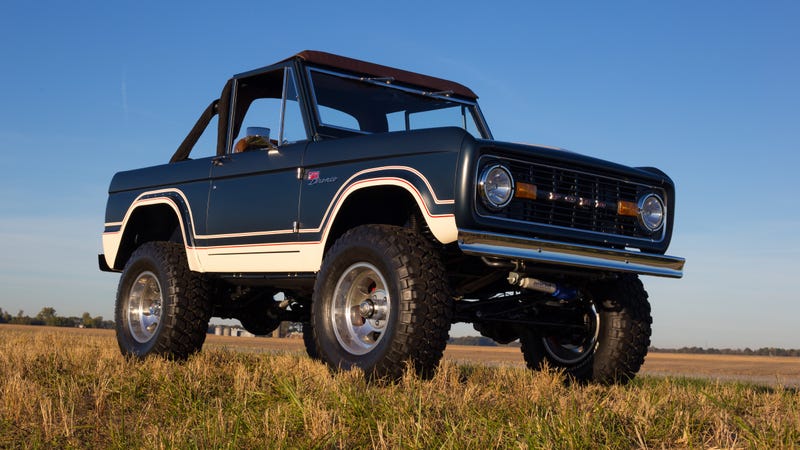
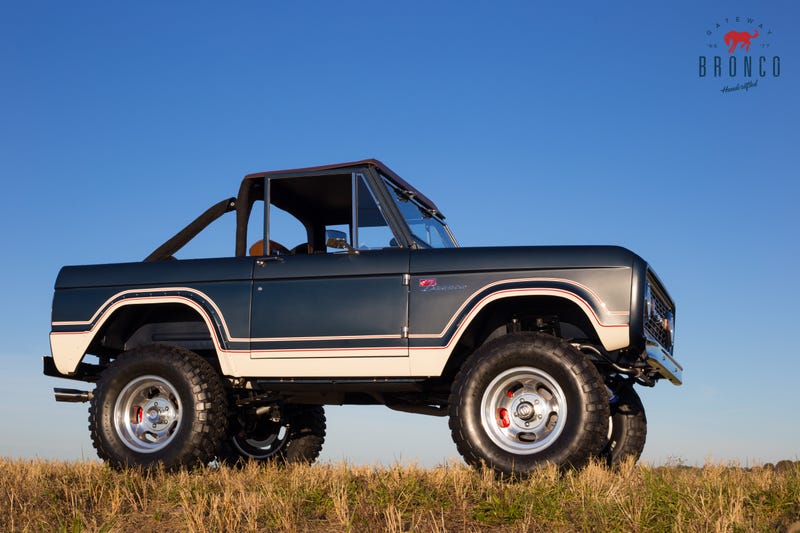
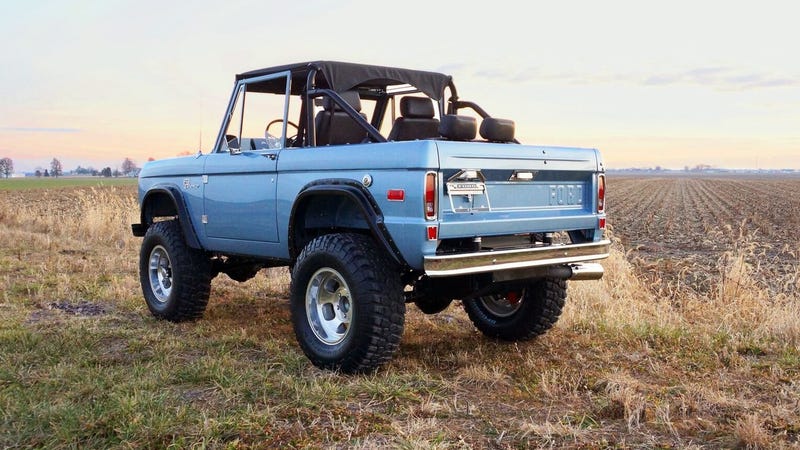
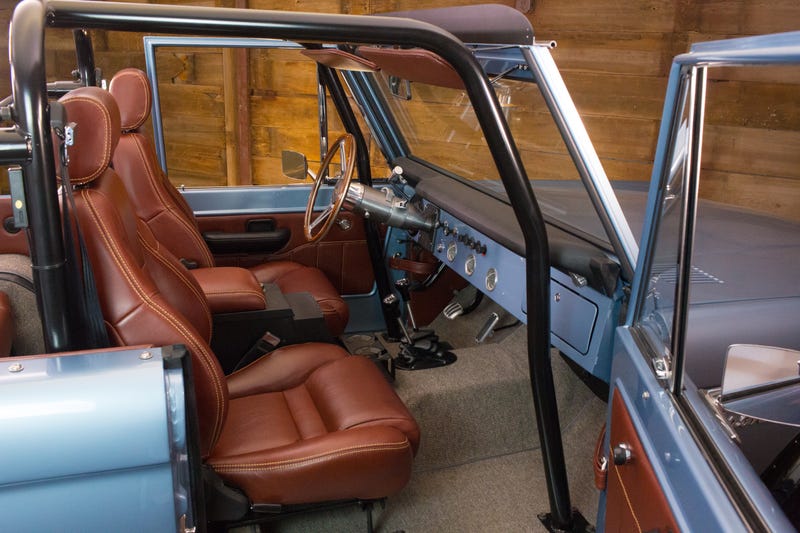
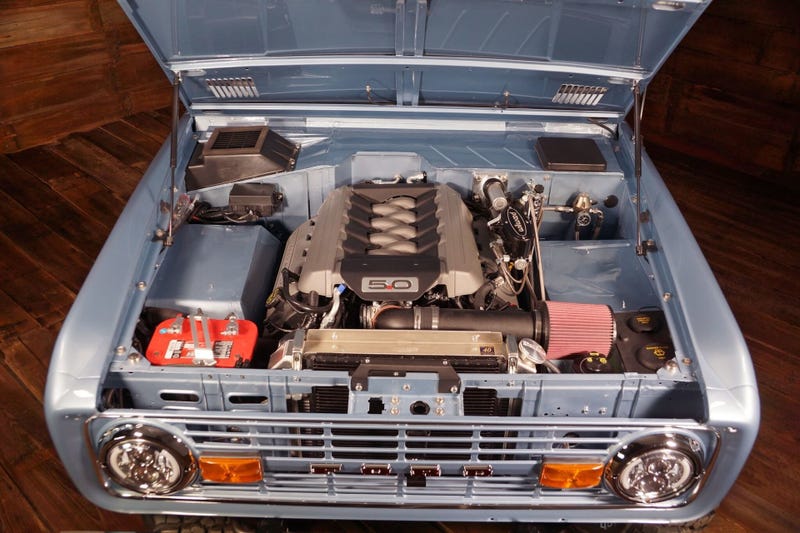
Everyone’s excited about the upcoming 2020 Ford Bronco, in part, because of what the nameplate means to American culture: adventure, ruggedness, and fun. It was the first-gen model that created this meaning, so it’s cool that one Illinois company is now building those old Broncos from the ground up as a Ford-licensed product. But they’re not cheap.
A company out of Illinois, Gateway Bronco has been finding pristine early Broncos and restomodding them for a couple of years now, getting its start in 2016. Recently, the outfit that “reimagines” Broncos announced that it’s the first builder officially licensed from Ford to create first-gen Ford Broncos from scratch, and also the first certified to recondition used Broncos according to Ford standards.
CEO and President Seth Burgett told me over the phone that his company offers three main types of Bronco builds: originals that have been restored, new bodies on original frames with VINs and titles, and new Broncos from the ground up including both a new frame and body.
The company describes the new Ford agreement in a press release, saying Gateway will build 1966 to 1977 Broncos thanks to the “Low Volume Motor Vehicle Manufacturers Act of 2015,” a program that makes it easier for low-volume manufacturers to get past safety and emissions barriers-to-entry. One way that the Act does this is that it allows low-volume automakers to “install engines from vehicles that have been issued certificates of conformity.”
And on that front, Gateway Bronco says it’s using 5.0-liter Coyotes as its primary power plants, with plenty of bolt-on options, like twin turbos, a Borla fuel injection system, or even a Shelby supercharger.
Burgett told me Gateway gets its body panels from supplier Wild horse 4x4, who sources the sheetmetal from a distributor somewhere, going on to say Gateway adds structural enhancements throughout. Here’s what he told me about the new bodies’ fitment:
The frame, Burgett told me, comes from a subcontractor, and either comes to Gateway’s Illinois facility complete, or as just the rails. That frame can be modified, Burgett told me, to facilitate either a solid front axle or an independent suspension setup.
Gateway’s website shows three main models ranging in price from $120,000 to $180,000, and offering both automatic or manual options, and warranties as long as five years.
I don’t know much about Gateway as a company, but I do know that the Broncos in these pictures look lovely, and if they’ve got Ford’s stamp of approval and a warranty, that also sounds lovely, even if the price tag doesn’t.
A company out of Illinois, Gateway Bronco has been finding pristine early Broncos and restomodding them for a couple of years now, getting its start in 2016. Recently, the outfit that “reimagines” Broncos announced that it’s the first builder officially licensed from Ford to create first-gen Ford Broncos from scratch, and also the first certified to recondition used Broncos according to Ford standards.
CEO and President Seth Burgett told me over the phone that his company offers three main types of Bronco builds: originals that have been restored, new bodies on original frames with VINs and titles, and new Broncos from the ground up including both a new frame and body.
The company describes the new Ford agreement in a press release, saying Gateway will build 1966 to 1977 Broncos thanks to the “Low Volume Motor Vehicle Manufacturers Act of 2015,” a program that makes it easier for low-volume manufacturers to get past safety and emissions barriers-to-entry. One way that the Act does this is that it allows low-volume automakers to “install engines from vehicles that have been issued certificates of conformity.”
And on that front, Gateway Bronco says it’s using 5.0-liter Coyotes as its primary power plants, with plenty of bolt-on options, like twin turbos, a Borla fuel injection system, or even a Shelby supercharger.
Burgett told me Gateway gets its body panels from supplier Wild horse 4x4, who sources the sheetmetal from a distributor somewhere, going on to say Gateway adds structural enhancements throughout. Here’s what he told me about the new bodies’ fitment:
We have pulled data from so many untouched, original paint Broncos with original production markings still intact that we have developed our own database of dimensions and a process to ensure the integrity of our gaps and fitment every time. We have applied modern manufacturing techniques in the USA to assemble our bodies which has gained the attention of Ford and in part, enabled our bodies to be Officially Licensed Ford Product.
Gateway’s website shows three main models ranging in price from $120,000 to $180,000, and offering both automatic or manual options, and warranties as long as five years.
I don’t know much about Gateway as a company, but I do know that the Broncos in these pictures look lovely, and if they’ve got Ford’s stamp of approval and a warranty, that also sounds lovely, even if the price tag doesn’t.
Moderator
Joined: Aug 2010
Posts: 29,353
Likes: 6,436
From: Spring, TX
https://www.automobilemag.com/news/e...eep-gladiator/

Ford is planning to launch a pickup truck based on the 2021 Bronco SUV to compete with the just-minted Jeep Gladiator. The Ford Bronco pickup truck is scheduled for production in July 2024, according to AutoForecast Solutions, which indicates design and engineering began no more than a few months before the Jeep pickup launched. That launch date would be well within the lifecycle of the upcoming 2021 Bronco, a Ranger-based Jeep Wrangler competitor. Another source notes that with both a Ranger Raptor (based on the next-generation of that midsize pickup) and the Focus-based unibody 2021 Ford Courier on the way, he doesn’t expect the Bronco pickup earlier than calendar 2022.
Unlike the 1960s Bronco, which for a time was available as a small, two-door single-cab pickup alongside with the better-known SUV version, the new Bronco-based pickup will certainly come exclusively as a four-door double cab, and among our sources has evoked memories of the Explorer SportTrac models. That means we might expect a shorter bed behind the cab than the one fitted to the Gladiator. We can also probably expect to see some of the other Bronco SUV features that have been uncovered/confirmed appear on the pickup, including this available engine, an available hybrid powertrain, this reconfigurable top, and these removable doors. Like the Wrangler, the new Bronco SUV will also be available as a two-door version.
Naturally, Ford will base the pickup truck on the upcoming body-on-frame ’21 Bronco expected after mid-2020, not the Escape-based unibody “baby Bronco” (possibly called Bronco Scout)scheduled to make its premiere a bit earlier. The ’21 Ford Bronco likely will be built on some version of the next-generation Ranger’s bones, one source says, and will join that pickup in Michigan’s Wayne Assembly Plant. The new-for-2019 North American Ford Ranger was adapted from a global version of the midsize pickup after a seven-model-year hiatus, although it was heavily reworked to meet our market’s demanding truck standards. Ford has been adamant that it will not design a Raptor version of the current North American Ranger (there is a current Ranger Raptor in other markets), though Raptor versions of the new Bronco and its pickup derivative are highly likely, probably within a year after each standard model’s launch.
Unlike the 1960s Bronco, which for a time was available as a small, two-door single-cab pickup alongside with the better-known SUV version, the new Bronco-based pickup will certainly come exclusively as a four-door double cab, and among our sources has evoked memories of the Explorer SportTrac models. That means we might expect a shorter bed behind the cab than the one fitted to the Gladiator. We can also probably expect to see some of the other Bronco SUV features that have been uncovered/confirmed appear on the pickup, including this available engine, an available hybrid powertrain, this reconfigurable top, and these removable doors. Like the Wrangler, the new Bronco SUV will also be available as a two-door version.
Naturally, Ford will base the pickup truck on the upcoming body-on-frame ’21 Bronco expected after mid-2020, not the Escape-based unibody “baby Bronco” (possibly called Bronco Scout)scheduled to make its premiere a bit earlier. The ’21 Ford Bronco likely will be built on some version of the next-generation Ranger’s bones, one source says, and will join that pickup in Michigan’s Wayne Assembly Plant. The new-for-2019 North American Ford Ranger was adapted from a global version of the midsize pickup after a seven-model-year hiatus, although it was heavily reworked to meet our market’s demanding truck standards. Ford has been adamant that it will not design a Raptor version of the current North American Ranger (there is a current Ranger Raptor in other markets), though Raptor versions of the new Bronco and its pickup derivative are highly likely, probably within a year after each standard model’s launch.
Moderator
Joined: Aug 2010
Posts: 29,353
Likes: 6,436
From: Spring, TX
https://www.netcarshow.com/ford/2019-bronco_r_concept/


Hinting at upcoming Bronco production model, Ford's Bronco R race prototype debuted in the desert to celebrate 50th anniversary of Rod Hall's historic Baja 1000 win, an overall victory in a 4x4 that's never been duplicated in 50 years
It was built for this, its engine roaring through the heat of the Mojave and its racing tires spraying desert sand. As the last grain settled, the vehicle that is all at once a tribute and a test and a tease, came in to focus. It was no mirage. Bronco - in the form of a race-inspired Ford Bronco R prototype - is back.
As a tribute, it was appropriately parked alongside the Bronco that Rod Hall and Larry Minor famously drove to an overall win 50 years ago at the 1969 Baja 1000 - a victory that no other 4x4 has replicated. Featuring a race livery inspired by Hall's winning vehicle, Bronco R passes the torch to off-road racer Shelby Hall, Rod's granddaughter, who will drive it for portions of this year's prestigious race in honor of her late grandfather.
As a test, the Ford Bronco R will head back to the Baja Peninsula later this month to take on the near 1,000-mile grueling off-road course and challenge the production Bronco's powertrain and architecture.
And as a tease, the Bronco R - developed by Ford Performance in collaboration with builder Geiser Bros Design and Development and Baja 1000 Trophy Truck champion Cameron Steele - drops heritage-inspired design and proportion hints of what enthusiasts can expect to see when the future Bronco makes its world premiere next spring
"Bronco's win at Baja in 1969 was epic, something that even after 50 years has not been repeated," said Hau Thai-Tang, Ford chief product development and purchasing officer. "Rugged endurance racing is such a big part of Bronco heritage. The Baja 1000 gives us not only the perfect setting to honor Rod Hall's win, it also provides an authentic test bed to demonstrate our upcoming Bronco's desert racing capability and durability
It was built for this, its engine roaring through the heat of the Mojave and its racing tires spraying desert sand. As the last grain settled, the vehicle that is all at once a tribute and a test and a tease, came in to focus. It was no mirage. Bronco - in the form of a race-inspired Ford Bronco R prototype - is back.
As a tribute, it was appropriately parked alongside the Bronco that Rod Hall and Larry Minor famously drove to an overall win 50 years ago at the 1969 Baja 1000 - a victory that no other 4x4 has replicated. Featuring a race livery inspired by Hall's winning vehicle, Bronco R passes the torch to off-road racer Shelby Hall, Rod's granddaughter, who will drive it for portions of this year's prestigious race in honor of her late grandfather.
As a test, the Ford Bronco R will head back to the Baja Peninsula later this month to take on the near 1,000-mile grueling off-road course and challenge the production Bronco's powertrain and architecture.
And as a tease, the Bronco R - developed by Ford Performance in collaboration with builder Geiser Bros Design and Development and Baja 1000 Trophy Truck champion Cameron Steele - drops heritage-inspired design and proportion hints of what enthusiasts can expect to see when the future Bronco makes its world premiere next spring
"Bronco's win at Baja in 1969 was epic, something that even after 50 years has not been repeated," said Hau Thai-Tang, Ford chief product development and purchasing officer. "Rugged endurance racing is such a big part of Bronco heritage. The Baja 1000 gives us not only the perfect setting to honor Rod Hall's win, it also provides an authentic test bed to demonstrate our upcoming Bronco's desert racing capability and durability
Moderator
Joined: Aug 2010
Posts: 29,353
Likes: 6,436
From: Spring, TX
https://jalopnik.com/the-new-ford-br...000-1840033244
Over the weekend, the new Ford Bronco (as the Ford Bronco R prototype race truck) took its first stab at the pinnacle of North American desert racing, the Baja 1000. It was a triumphant launch ahead of the return of the production Bronco, but the race didn’t end as triumphantly as it started. The Bronco R DNF’d after issue upon issue.
The No. 2069 Bronco R prototype is listed with driver Cameron Steele as having finished almost at the bottom of its results classification, as one of the many vehicles with a “DNF” marking for “did not finish” next to its placement. The cause for the DNF isn’t listed, but Ford communications manager Mike Levine sent a statement to Jalopnik about what happened, saying the race is “one of the most grueling” in the world and that’s why Ford took the truck there.
Levine summarized the issues the Bronco R prototype had as such:
We had several challenges during the race, including:
· Getting hit and becoming stuck after a trophy truck hit the Raptor in San Quetin Wash near race mile 190. That’s desert racing!
· This damaged a skid plate that also led to damaging the transmission cooling lines. We fixed the skid plate at Pit 2 but didn’t catch the transmission leak until after it started slipping. It made it to Pit 3. This took several hours to repair.
· Around race mile 480 we broke a fabricated lower control arm. This was replaced but took another 90 minutes or so.
· Ran into aftermarket cooling fan issues around race mile 580. By the time it was repaired at Pit 5 it was about 8:30 at night. The next portion was challenging and risky to get help on the course if something happened, and we’d likely wouldn’t finish until after the official time limit expired.
But the pre-production parts tested on the Bronco R prototype, Levine said, “performed flawlessly. No engine or chassis issues.”
Levine also tweeted about the result, saying it was disappointing not to finish the race but that Ford will continue to “test and further improve the Bronco R prototype” before coming back next year
Ford unveiled the Bronco R race prototype that would continue its Baja history earlier in November, without sharing many details of the truck or what would carry over into the production car. But, as we wrote at the time, Ford said Baja would be a test of several components of the road-going Bronco, including an unspecified drivetrain.
A release from Ford said the truck aimed “to prove out the upcoming production Bronco’s powertrain and architecture.” At least we know it got tested!
The No. 2069 Bronco R prototype is listed with driver Cameron Steele as having finished almost at the bottom of its results classification, as one of the many vehicles with a “DNF” marking for “did not finish” next to its placement. The cause for the DNF isn’t listed, but Ford communications manager Mike Levine sent a statement to Jalopnik about what happened, saying the race is “one of the most grueling” in the world and that’s why Ford took the truck there.
Levine summarized the issues the Bronco R prototype had as such:
We had several challenges during the race, including:
· Getting hit and becoming stuck after a trophy truck hit the Raptor in San Quetin Wash near race mile 190. That’s desert racing!
· This damaged a skid plate that also led to damaging the transmission cooling lines. We fixed the skid plate at Pit 2 but didn’t catch the transmission leak until after it started slipping. It made it to Pit 3. This took several hours to repair.
· Around race mile 480 we broke a fabricated lower control arm. This was replaced but took another 90 minutes or so.
· Ran into aftermarket cooling fan issues around race mile 580. By the time it was repaired at Pit 5 it was about 8:30 at night. The next portion was challenging and risky to get help on the course if something happened, and we’d likely wouldn’t finish until after the official time limit expired.
But the pre-production parts tested on the Bronco R prototype, Levine said, “performed flawlessly. No engine or chassis issues.”
Levine also tweeted about the result, saying it was disappointing not to finish the race but that Ford will continue to “test and further improve the Bronco R prototype” before coming back next year
Ford unveiled the Bronco R race prototype that would continue its Baja history earlier in November, without sharing many details of the truck or what would carry over into the production car. But, as we wrote at the time, Ford said Baja would be a test of several components of the road-going Bronco, including an unspecified drivetrain.
A release from Ford said the truck aimed “to prove out the upcoming production Bronco’s powertrain and architecture.” At least we know it got tested!


Ex-OEM King


Joined: Dec 2013
Posts: 17,753
Likes: 6,973
From: Minnesnowta
Moderator
Joined: Aug 2010
Posts: 29,353
Likes: 6,436
From: Spring, TX
https://www.motor1.com/news/394106/f...otos-interior/
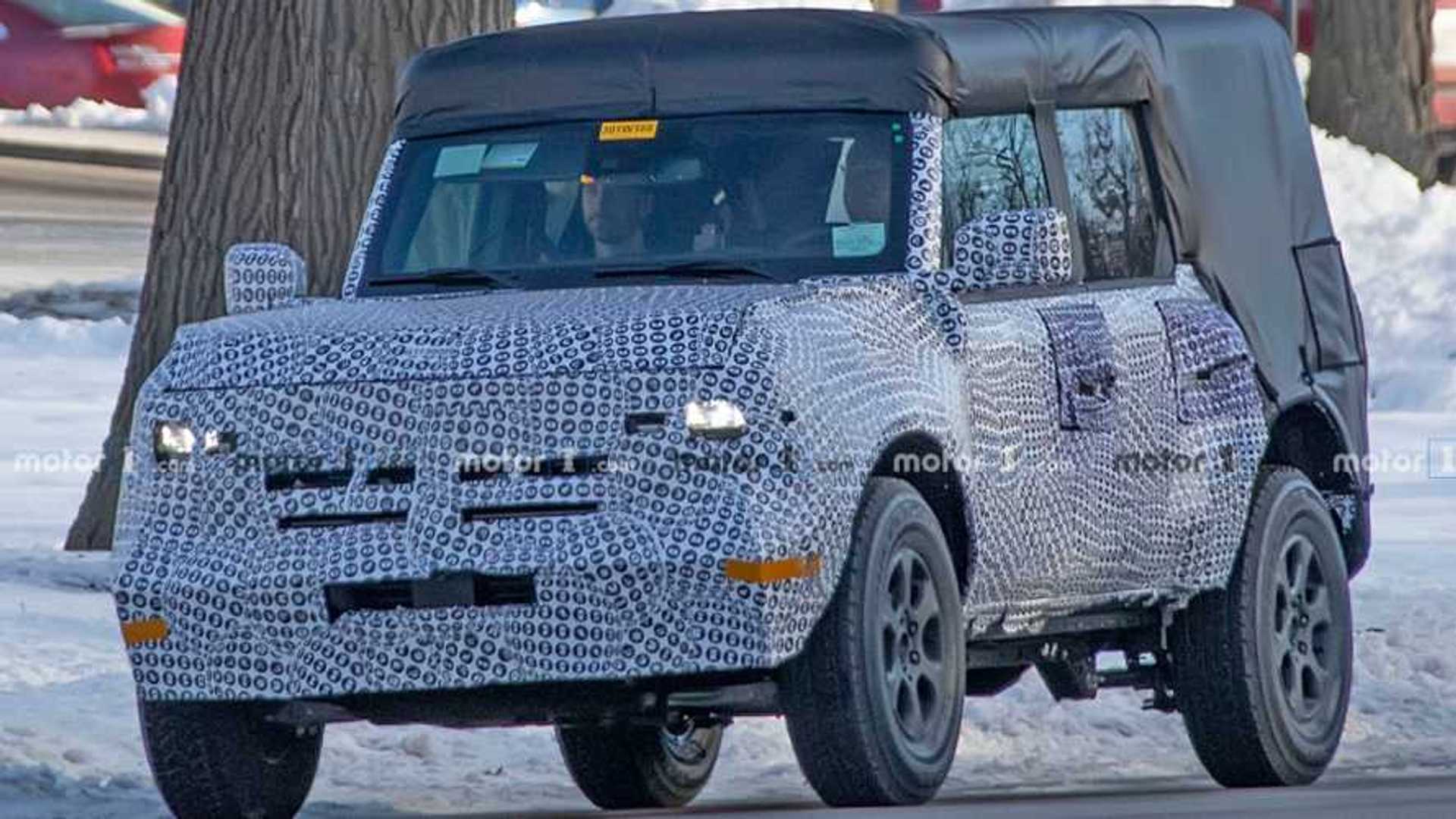


New spy photos of the boxy Ford Bronco test mule give us our best look yet at the new SUV. Set to debut sometime this spring, the Bronco is Ford's step back into the off-road segment, making big promises that the new Bronco won't disappoint fans. The latest spy photos give us a peek underneath, which shows the off-road-ready suspension bits. We also get a look inside and can see evidence of a removable roof, which appears to be missing.The photos are grainy – thanks window tint – but they appear to show this Bronco cruising around without its production roof installed. The Bronco's roll bars are visible in the photo, but there's a support structure crisscrossing above that, which appears to be supporting the artificially high roof. Other interior photos show an integrated, in-dash infotainment screen, and a flat, upright dashboard design.
Ford's been adamant about the Bronco's off-road capability, and its ability to keep up with the Jeep Wrangler and Toyota 4Runner. The robust suspension underneath the Bronco isn't a surprise, especially if it has the Wrangler as a competitor. The short overhangs should please off-road enthusiasts along with the Bridgestone Dueller A/T tires spotted on the mule. We can also see the side mirrors don't connect to the doors – instead, they attach to the A-pillar, which hints that the doors are removable, too.
Ford's been adamant about the Bronco's off-road capability, and its ability to keep up with the Jeep Wrangler and Toyota 4Runner. The robust suspension underneath the Bronco isn't a surprise, especially if it has the Wrangler as a competitor. The short overhangs should please off-road enthusiasts along with the Bridgestone Dueller A/T tires spotted on the mule. We can also see the side mirrors don't connect to the doors – instead, they attach to the A-pillar, which hints that the doors are removable, too.

Moderator
Joined: Aug 2010
Posts: 29,353
Likes: 6,436
From: Spring, TX
More Bronco shots, on some beefy tires (Rubicon competitor trim?):
https://www.thedrive.com/news/31982/...ut-those-tires


https://www.thedrive.com/news/31982/...ut-those-tires
If we're to believe everything we've seen of the 2021 Ford Bronco, the Blue Oval is aiming for Jeep Wrangler and Gladiator extinction, as further evidenced by this latest round of spy shots.
Esteemed nameplate? Check. Steep angles of approach and departure? Check. Removable roof and doors? Check check check, and the Bronco's might be simpler to operate than Jeep's to boot. All the Bronco's missing to truly trounce its Jeep competition is a high-performance model, and if our latest Bronco mule spotting is any indication, Ford might be working on just that.
Some details shots supplied by our spy photographer show a Bronco prototype rolling around on a set of Goodyear Wrangler Territory MTs, sized 315/70R17. This Canadian Tire-exclusive compound doesn't offer enormous insight—it's a cheap off-road tire on a prototype truck—but its size and what wheel it's been fitted to just might.
Ford fanatics may recognize the tire size as the same worn by the current generation F-150 Raptor, which uses fancier, BFGoodrich-sourced rubber. Further supporting our theory are the beadlock wheels to which the tires are affixed, as well as the supersized fender flares and what appear to be side rock-rails. It doesn't feel presumptuous to guess that if the Bronco is in need of many of the Raptor's off-roading parts and accessories, then it (or a variant) could be designed to go gallivanting over rough terrain without a care in the world.
One smaller, less-important detail also visible in these photos is the test truck's headlight. Save for a piece of black plastic trim extending over the center, these bear an almost perfect likeness to the alleged Bronco headlight units that leaked online in late 2019. Their bezels and the bar coming off one side are presumably daytime running lights, whereas the trim-covered piece across the center is likely where the lights—possibly LEDs—are mounted.
Nobody knows when Ford will formally unveil the 2021 Bronco, but given that a Spring 2020 reveal was promised, don't expect a surprise as this year's Super Bowl. With how much we've already seen of this truck, though, Ford might as well get it over with.
Esteemed nameplate? Check. Steep angles of approach and departure? Check. Removable roof and doors? Check check check, and the Bronco's might be simpler to operate than Jeep's to boot. All the Bronco's missing to truly trounce its Jeep competition is a high-performance model, and if our latest Bronco mule spotting is any indication, Ford might be working on just that.
Some details shots supplied by our spy photographer show a Bronco prototype rolling around on a set of Goodyear Wrangler Territory MTs, sized 315/70R17. This Canadian Tire-exclusive compound doesn't offer enormous insight—it's a cheap off-road tire on a prototype truck—but its size and what wheel it's been fitted to just might.
Ford fanatics may recognize the tire size as the same worn by the current generation F-150 Raptor, which uses fancier, BFGoodrich-sourced rubber. Further supporting our theory are the beadlock wheels to which the tires are affixed, as well as the supersized fender flares and what appear to be side rock-rails. It doesn't feel presumptuous to guess that if the Bronco is in need of many of the Raptor's off-roading parts and accessories, then it (or a variant) could be designed to go gallivanting over rough terrain without a care in the world.
One smaller, less-important detail also visible in these photos is the test truck's headlight. Save for a piece of black plastic trim extending over the center, these bear an almost perfect likeness to the alleged Bronco headlight units that leaked online in late 2019. Their bezels and the bar coming off one side are presumably daytime running lights, whereas the trim-covered piece across the center is likely where the lights—possibly LEDs—are mounted.
Nobody knows when Ford will formally unveil the 2021 Bronco, but given that a Spring 2020 reveal was promised, don't expect a surprise as this year's Super Bowl. With how much we've already seen of this truck, though, Ford might as well get it over with.
Moderator
Joined: Aug 2010
Posts: 29,353
Likes: 6,436
From: Spring, TX
https://www.motor1.com/news/401864/f...lors-revealed/

The new Ford Bronco is nearly here. It’s been the subject of rumors and alleged reboots for over 20 years, but we have camouflaged prototypes caught on camera. We have patent applications for a variety of Bronco-related components. We have rumors left and right about everything from removable tops to transmission types and exterior colors. That last item is the subject of today’s breaking Bronco news, as apparently those colors have leaked to the public in a curious way.
The website Automotivetouchup.com has a listing of colors for the 2021 Ford Bronco. In fact, the 2021 Ford Bronco is part of the URL for the website, and the page literally says choose your automotive paint color for your 2021 Ford Bronco at the top. If this sounds familiar, we found a similar listing for color names on the same website a few weeks back, mixed with F-150 colors. Now, we have a crystal clear list with names and digital color chips to give us a taste of what the shades should look like.
There are 10 colors total, running the gamut between Iconic Silver Metallic to Cyber Orange Pearl, Race Red, and a curious blue/gray shade called Area 51. Ford fans will recognize Oxford White on the list as a color that’s been part of Ford’s stable for decades, though we’re a bit disappointed to see no bright shades of blue. Perhaps that will come with future editions.
Ford won’t confirm any Bronco-related details, so we can’t say for certain if this is the SUV’s color palette for its 2021 model-year return. For that, we’ll have to wait just a few more weeks until the camouflage is finally lifted. Ford has confirmed a Bronco debut is coming late in March or early April, and with all the hype surrounding the return of this off-road moniker, the reveal can’t come soon enough.
The website Automotivetouchup.com has a listing of colors for the 2021 Ford Bronco. In fact, the 2021 Ford Bronco is part of the URL for the website, and the page literally says choose your automotive paint color for your 2021 Ford Bronco at the top. If this sounds familiar, we found a similar listing for color names on the same website a few weeks back, mixed with F-150 colors. Now, we have a crystal clear list with names and digital color chips to give us a taste of what the shades should look like.
There are 10 colors total, running the gamut between Iconic Silver Metallic to Cyber Orange Pearl, Race Red, and a curious blue/gray shade called Area 51. Ford fans will recognize Oxford White on the list as a color that’s been part of Ford’s stable for decades, though we’re a bit disappointed to see no bright shades of blue. Perhaps that will come with future editions.
Ford won’t confirm any Bronco-related details, so we can’t say for certain if this is the SUV’s color palette for its 2021 model-year return. For that, we’ll have to wait just a few more weeks until the camouflage is finally lifted. Ford has confirmed a Bronco debut is coming late in March or early April, and with all the hype surrounding the return of this off-road moniker, the reveal can’t come soon enough.



Moderator
Joined: Aug 2010
Posts: 29,353
Likes: 6,436
From: Spring, TX
https://www.autoweek.com/news/future...-speed-manual/
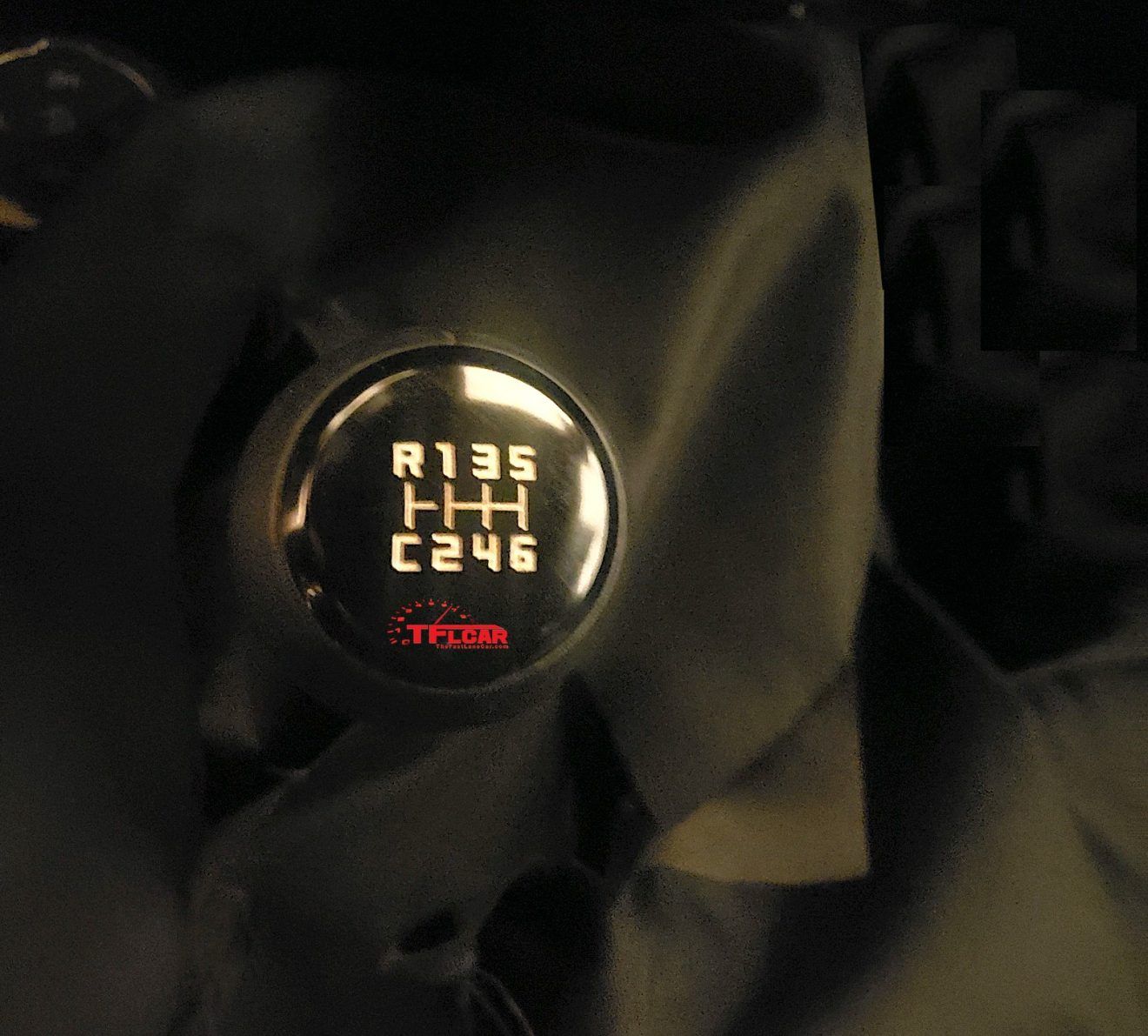
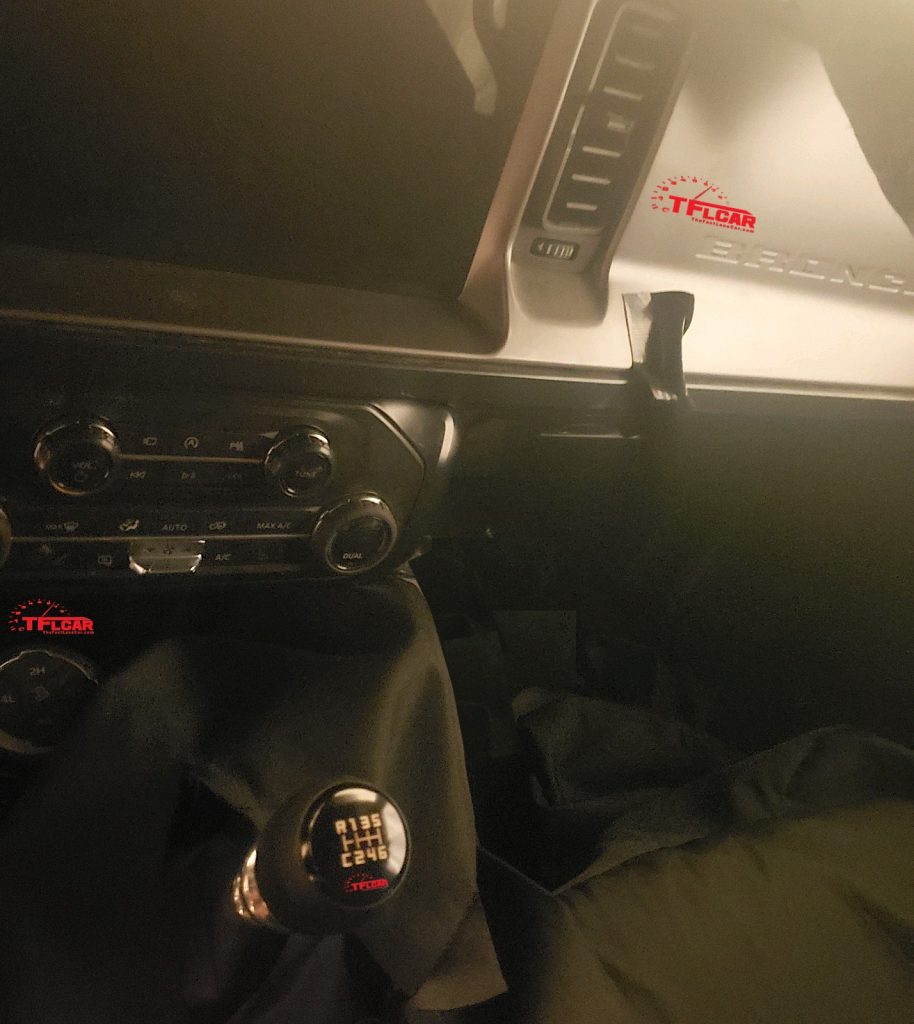
We’re now looking at about a month until the new Ford Bronco ditches its camouflage and shows itself to the public. Despite the leaks and spy shooters out there, we still don’t know everything about the new Wrangler fighter. But TFLCar just scored a bunch of pictures of the Bronco up close, confirming new details, most importantly the inclusion of a manual transmission with a crawl gear (a super-low gear made for “crawling” over rocks and tough terrain). That technically makes it a seven-speed manual.
We heard rumors of the seven-speed for a while now, but with TFL’spictures it’s all but confirmed. We can see the “C” gear directly under reverse, which is to the left of first in this application. Back in the day some cars had “L” for low gear.
Also confirmed is the use of Ford’s 2.3-liter turbocharged motor in the Bronco. We expected this as the new crawler is based on the Ranger pickup. And as we’ve noted before, the engine makes 270 hp and 310 lb-ft in the truck, but that could change here.
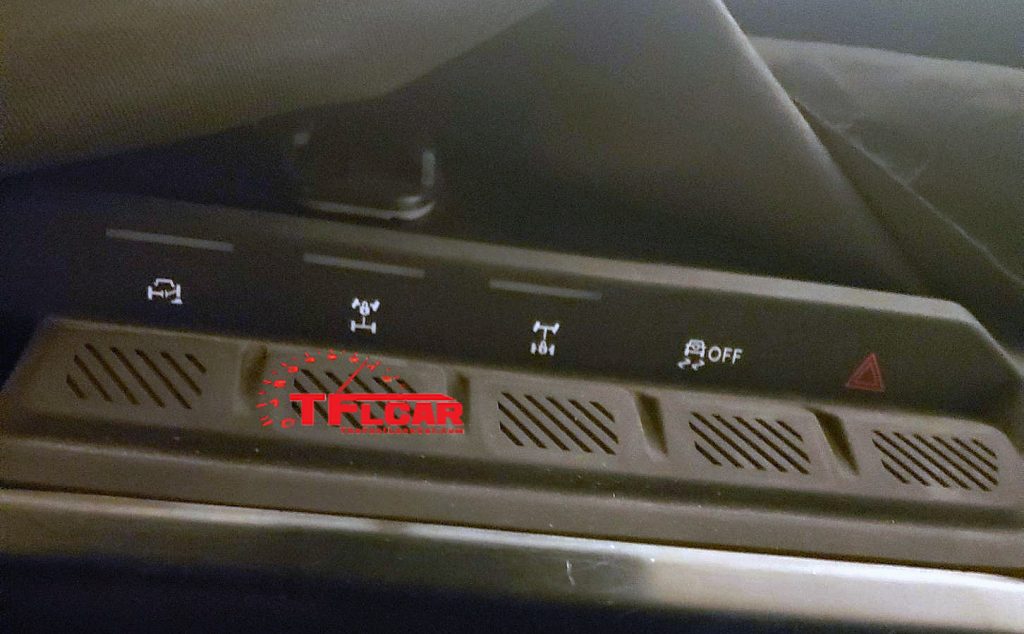
Another thing we expected was front and rear locking differentials, and again we get confirmation from TFL with pictures of the switches in the Bronco. Not only that, but it will also get a disconnecting antiroll bar like the Wrangler, for massive wheel articulation, probably when using that crawl gear. Here TFL says they’re mounted on the center stack above the infotainment screen. There are also a handful of auxiliary switches for buyers who want to install lights, winches, etc.
TFL has a couple pictures of the suspension, too, and notes the Bronco’s independent front suspension. It also has a shot of the roof-holding mechanism, the 4WD dial and a large central infotainment screen. Check out the full piece to see a few more photos of the interior and undercarriage.
We heard rumors of the seven-speed for a while now, but with TFL’spictures it’s all but confirmed. We can see the “C” gear directly under reverse, which is to the left of first in this application. Back in the day some cars had “L” for low gear.
Also confirmed is the use of Ford’s 2.3-liter turbocharged motor in the Bronco. We expected this as the new crawler is based on the Ranger pickup. And as we’ve noted before, the engine makes 270 hp and 310 lb-ft in the truck, but that could change here.
Another thing we expected was front and rear locking differentials, and again we get confirmation from TFL with pictures of the switches in the Bronco. Not only that, but it will also get a disconnecting antiroll bar like the Wrangler, for massive wheel articulation, probably when using that crawl gear. Here TFL says they’re mounted on the center stack above the infotainment screen. There are also a handful of auxiliary switches for buyers who want to install lights, winches, etc.
TFL has a couple pictures of the suspension, too, and notes the Bronco’s independent front suspension. It also has a shot of the roof-holding mechanism, the 4WD dial and a large central infotainment screen. Check out the full piece to see a few more photos of the interior and undercarriage.



Moderator
Joined: Jun 2006
Posts: 29,869
Likes: 3,489
