


H&R Sports w/Koni Yellows or Full Coilovers?

H&R Sports w/Koni Yellows or Full Coilovers?
I just installed a set of H&R Sports on my TL using the stock shocks and it rode great up until yesterday when I noticed a small rattle at low speeds under 10 mph on small bumps.
I have had h&r products on all of my other vehicles and never had a problem so I decided to double check my work (installation) and see if I may have overlooked anything. No play in any bolts or sway bar links, everything was tight. I decided to loosen the 14mm pinch bolt for the damper because I did not preload the suspension. Anyways, I did that on both sides and as I went to put some load on the front suspension, there was a hissing noise from the shock and small amount of fluid oozing from the shock. (Blown shock)
Anyways, just dumped $250 into the springs. Should I go with koni yellows for replacement shocks or full coilovers?
Would h&r springs and koni yellows be comparable to a quality coilover setup minus the height adjustability? I do not care to adjust my ride height, it sits pretty nice as-is.
What kind of coilovers would the h&r koni combo be comparable to? I don't like to cheap out on parts like this, any feedback an opinions would be appreciated.
I have had h&r products on all of my other vehicles and never had a problem so I decided to double check my work (installation) and see if I may have overlooked anything. No play in any bolts or sway bar links, everything was tight. I decided to loosen the 14mm pinch bolt for the damper because I did not preload the suspension. Anyways, I did that on both sides and as I went to put some load on the front suspension, there was a hissing noise from the shock and small amount of fluid oozing from the shock. (Blown shock)
Anyways, just dumped $250 into the springs. Should I go with koni yellows for replacement shocks or full coilovers?
Would h&r springs and koni yellows be comparable to a quality coilover setup minus the height adjustability? I do not care to adjust my ride height, it sits pretty nice as-is.
What kind of coilovers would the h&r koni combo be comparable to? I don't like to cheap out on parts like this, any feedback an opinions would be appreciated.

Three Wheelin'
Joined: Sep 2006
Posts: 1,562
Likes: 120
From: Chicagoland
Those springs feel great with the koni yellows. They made as much difference in handling as the springs did. As for the konis or coil overs- At this point you'll be a couple hundred more to get to the same quality level- but with height adjustment. I'm sure the coilover crew will be here to convince you they are the only way in a moment, but the koni yellow/hr sport setup is really nice.



Trending Topics

Former Sponsor
iTrader: (1)
Joined: Mar 2004
Posts: 9,877
Likes: 624
From: www.ExceleratePerformance.com
KONI shocks would be a great complement to those springs. They are on sale too for another month or so. We have them in stock if you want a set. I've linked you below.
FL and FR:
http://store.excelerateperformance.c.../i-100677.aspx
http://store.excelerateperformance.c.../i-105385.aspx
Rears (qty of 2 needed):
http://store.excelerateperformance.c.../i-105386.aspx
FL and FR:
http://store.excelerateperformance.c.../i-100677.aspx
http://store.excelerateperformance.c.../i-105385.aspx
Rears (qty of 2 needed):
http://store.excelerateperformance.c.../i-105386.aspx



Resident Dingo
Joined: Mar 2011
Posts: 1,060
Likes: 143
From: Virginia / Florida

Resident Dingo
Joined: Mar 2011
Posts: 1,060
Likes: 143
From: Virginia / Florida
Do you have a pic you can post?
The Eibach springs sit higher in the rear so I remember going down a setting on the rear shocks. I wish I could remember offhand which one I used in the front. I believe it was the top one.
The Eibach springs sit higher in the rear so I remember going down a setting on the rear shocks. I wish I could remember offhand which one I used in the front. I believe it was the top one.
Three Wheelin'
Joined: Sep 2006
Posts: 1,562
Likes: 120
From: Chicagoland

KONI shocks would be a great complement to those springs. They are on sale too for another month or so. We have them in stock if you want a set. I've linked you below.
FL and FR:
http://store.excelerateperformance.c.../i-100677.aspx
http://store.excelerateperformance.c.../i-105385.aspx
Rears (qty of 2 needed):
http://store.excelerateperformance.c.../i-105386.aspx
FL and FR:
http://store.excelerateperformance.c.../i-100677.aspx
http://store.excelerateperformance.c.../i-105385.aspx
Rears (qty of 2 needed):
http://store.excelerateperformance.c.../i-105386.aspx

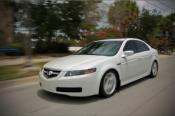
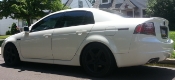
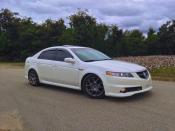
This is set to the middle perch on front and rear

Perfect fit.

Three Wheelin'
Joined: Sep 2006
Posts: 1,562
Likes: 120
From: Chicagoland
2) Which end of the spring is up?
H&R springs fit the same way that stock springs do. The shape of the spring is most important.
If the spring is the same on both sides and fits the same either direction, then it is correct to install the spring with the closer coils “up”.
If the spring is smaller at one end and larger at the other, the orientation should match OEM factory installed springs.
Resident Dingo
Joined: Mar 2011
Posts: 1,060
Likes: 143
From: Virginia / Florida
Not all progressive springs have the closer coils at the top. Eibach, for example, is one of these. Upon second glance, those are probably wrong. I doubt H&R is supposed to be upside down.
Three Wheelin'
Joined: Sep 2006
Posts: 1,562
Likes: 120
From: Chicagoland
That would be the conventional definition of up. 
I'm not sure it matters a ton, but those close coils are probably more likely to compress completely and lose a bit of paint- having them up top keeps them away from water and salt, but anything binding in the coils. Huge PITA to redo everything just to flip the spring.
I'm not sure it matters a ton, but those close coils are probably more likely to compress completely and lose a bit of paint- having them up top keeps them away from water and salt, but anything binding in the coils. Huge PITA to redo everything just to flip the spring.

Drifting
Joined: Nov 2012
Posts: 2,400
Likes: 404
From: Avon, Indiana
That would be the conventional definition of up.
I'm not sure it matters a ton, but those close coils are probably more likely to compress completely and lose a bit of paint- having them up top keeps them away from water and salt, but anything binding in the coils. Huge PITA to redo everything just to flip the spring.
I'm not sure it matters a ton, but those close coils are probably more likely to compress completely and lose a bit of paint- having them up top keeps them away from water and salt, but anything binding in the coils. Huge PITA to redo everything just to flip the spring.

I thought the point of the larger gaps being at the bottom was for ride comfort, then stiffer for when you push it, hence progressive. I would imagine it would ride smoother right side up.
Three Wheelin'
Joined: Sep 2006
Posts: 1,562
Likes: 120
From: Chicagoland
Its not like the spring compresses from the bottom up. It compresses across its whole length. The softer part will compress further. In any case I suspect those tight coils are dead coils on this spring- IE all they serve to do is keep the spring from rattling when unloaded. They are probably fully compressed under load.
Haha sorry Ive forgotten about this posting after I bought the konis and h&r combo. Yes I had one spring upside down. Damn such a newb mistake! Anyways, thanks guys for the good eye! It does fit better now and rides great. Strange thing and probably the reason I didn't look at this sooner was because it rode great before too. (With spring backwards).
I think I was so excited about getting these on or thinking about installing the shock and all of its hardware correctly I completely goofed on the spring orientation. It's all fixed now!

I think I was so excited about getting these on or thinking about installing the shock and all of its hardware correctly I completely goofed on the spring orientation. It's all fixed now!


Team Owner
Joined: Mar 2006
Posts: 20,172
Likes: 1,818
From: Bakersfield
Small bump but I'm bored. It doesn't matter which way the springs are installed as long as they seat correctly in the perches. Usually the top and bottom perch are slightly different so it can effect ride height if the spring is not completely seated. Otherwise no difference in performance.
If we're splitting hairs, having the heavier tightly coiled end toward the top would reduce unsprung weight for what little its worth.
If we're splitting hairs, having the heavier tightly coiled end toward the top would reduce unsprung weight for what little its worth.

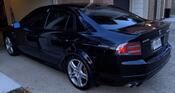
Hows does the h&r springs / koni yellows combo compare to Tein SS coilovers ? I have the Teins but set (.75") higher than recommended and it can get a bit bouncy or harsh at times. I don't want to go lower but I think lowering to the recommended settings on the tein will actually improve the ride quality because or the preload it has now.
Problem is I really dont want to go lower, I'm beginning to wonder if the H&R/Koni would be a better fit for me as the height adjustability is really not something I utilize. Anyone had both setups?
Problem is I really dont want to go lower, I'm beginning to wonder if the H&R/Koni would be a better fit for me as the height adjustability is really not something I utilize. Anyone had both setups?
Drifting


Joined: Jul 2008
Posts: 3,471
Likes: 188
From: Dallas
This thread raises a good question. From what I understand, the theory is that the body of the car rides on the "lower spring rate end", and then when compressed, it becomes more stiff to keep from bottoming out. The body of the car rides on the soft side of the spring. So in this case it seems most reasonable to mount the spring with the lower rate on top.
But it does seem reasonable that you could mount it either way to some degree because the whole spring experiences compression even under a light load. So in that case, does it really matter which way it is mounted?
The only difference I can see is that if you put the lower spring rate side of the spring toward the bottom, and the top side (being the high rate side) has to move with the body of the car because the low rate side is down on the bottom. So, while this may be splitting hairs, the actual weight of the spring of the high rate side will "weigh down" on the bottom side because the bottom side has the lower rate. And the lower rate side is the end that will compress first. So, the higher rate side on the top will move up and down with the body of the car.
But if you mount the high rate side on the bottom, then with some handwaiving, the top part of the spring (being the low rate side) is the only side that moves. And 1/2 of the spring is unsprung while the other side is sprung, if that makes sense.
Again the difference is minimal. But if you mount the high rate side on top, then most the compressible side is on bottom, so the top of the spring rides on the lower rate side which is at the bottom. So, you basically add a few pounds of spring weight by mounting the high rate side on top.
For me, it makes more sense to mount the low rate side on the top.
But it does seem reasonable that you could mount it either way to some degree because the whole spring experiences compression even under a light load. So in that case, does it really matter which way it is mounted?
The only difference I can see is that if you put the lower spring rate side of the spring toward the bottom, and the top side (being the high rate side) has to move with the body of the car because the low rate side is down on the bottom. So, while this may be splitting hairs, the actual weight of the spring of the high rate side will "weigh down" on the bottom side because the bottom side has the lower rate. And the lower rate side is the end that will compress first. So, the higher rate side on the top will move up and down with the body of the car.
But if you mount the high rate side on the bottom, then with some handwaiving, the top part of the spring (being the low rate side) is the only side that moves. And 1/2 of the spring is unsprung while the other side is sprung, if that makes sense.
Again the difference is minimal. But if you mount the high rate side on top, then most the compressible side is on bottom, so the top of the spring rides on the lower rate side which is at the bottom. So, you basically add a few pounds of spring weight by mounting the high rate side on top.
For me, it makes more sense to mount the low rate side on the top.
Last edited by Chad05TL; Sep 8, 2013 at 07:18 PM.
Team Owner
Joined: Mar 2006
Posts: 20,172
Likes: 1,818
From: Bakersfield
This thread raises a good question. From what I understand, the theory is that the body of the car rides on the "lower spring rate end", and then when compressed, it becomes more stiff to keep from bottoming out. The body of the car rides on the soft side of the spring. So in this case it seems most reasonable to mount the spring with the lower rate on top.
But it does seem reasonable that you could mount it either way to some degree because the whole spring experiences compression even under a light load. So in that case, does it really matter which way it is mounted?
The only difference I can see is that if you put the lower spring rate side of the spring toward the bottom, and the top side (being the high rate side) has to move with the body of the car because the low rate side is down on the bottom. So, while this may be splitting hairs, the actual weight of the spring of the high rate side will "weigh down" on the bottom side because the bottom side has the lower rate. And the lower rate side is the end that will compress first. So, the higher rate side on the top will move up and down with the body of the car.
But if you mount the high rate side on the bottom, then with some handwaiving, the top part of the spring (being the low rate side) is the only side that moves. And 1/2 of the spring is unsprung while the other side is sprung, if that makes sense.
Again the difference is minimal. But if you mount the high rate side on top, then most the compressible side is on bottom, so the top of the spring rides on the lower rate side which is at the bottom. So, you basically add a few pounds of spring weight by mounting the high rate side on top.
For me, it makes more sense to mount the low rate side on the top.
But it does seem reasonable that you could mount it either way to some degree because the whole spring experiences compression even under a light load. So in that case, does it really matter which way it is mounted?
The only difference I can see is that if you put the lower spring rate side of the spring toward the bottom, and the top side (being the high rate side) has to move with the body of the car because the low rate side is down on the bottom. So, while this may be splitting hairs, the actual weight of the spring of the high rate side will "weigh down" on the bottom side because the bottom side has the lower rate. And the lower rate side is the end that will compress first. So, the higher rate side on the top will move up and down with the body of the car.
But if you mount the high rate side on the bottom, then with some handwaiving, the top part of the spring (being the low rate side) is the only side that moves. And 1/2 of the spring is unsprung while the other side is sprung, if that makes sense.
Again the difference is minimal. But if you mount the high rate side on top, then most the compressible side is on bottom, so the top of the spring rides on the lower rate side which is at the bottom. So, you basically add a few pounds of spring weight by mounting the high rate side on top.
For me, it makes more sense to mount the low rate side on the top.
Springs count as half unsprung, half sprung weight and mounting the lighter side on the suspension end will make a difference in unsprung weight, an unmeasurable difference but still a difference as I said 2 posts above.
Drifting
Joined: Jul 2008
Posts: 3,471
Likes: 188
From: Dallas
here is another interesting observation. I said the "car rides on the softer side".. at least that is the original theory when eibach introduced it.. At least it was eibach for me way back in 1999.
But think of this for a sec. Which side of spring moves the most? The bottom side of the shock assembly is far more active than the top. The body tends to move forward without any outside forces. It is the wheel and the lower frame that vibrates over every little bump. So, maybe the lower rate should be mounted on bottom?
I agree with IHC, it really doesn't matter. Even though it is a perplexing concept. Sometimes testing is the only way to reveal real word effects and theory is merely theory.
But think of this for a sec. Which side of spring moves the most? The bottom side of the shock assembly is far more active than the top. The body tends to move forward without any outside forces. It is the wheel and the lower frame that vibrates over every little bump. So, maybe the lower rate should be mounted on bottom?
I agree with IHC, it really doesn't matter. Even though it is a perplexing concept. Sometimes testing is the only way to reveal real word effects and theory is merely theory.
Drifting
Joined: Jul 2008
Posts: 3,471
Likes: 188
From: Dallas
From HR website-
2) Which end of the spring is up?
H&R springs fit the same way that stock springs do. The shape of the spring is most important.
If the spring is the same on both sides and fits the same either direction, then it is correct to install the spring with the closer coils “up”.
If the spring is smaller at one end and larger at the other, the orientation should match OEM factory installed springs.
2) Which end of the spring is up?
H&R springs fit the same way that stock springs do. The shape of the spring is most important.
If the spring is the same on both sides and fits the same either direction, then it is correct to install the spring with the closer coils “up”.
If the spring is smaller at one end and larger at the other, the orientation should match OEM factory installed springs.
If you "read between the lines", HR is saying, it doesn't matter also!
