


Fuel System - Return Style Setup Opinions


Fuel System - Return Style Setup Opinions
I'm going to convert to a return style fuel system and gathering a parts list.
I plan to run either an aluminum hardline or stainless braided hose for the feed from the tank to the engine bay and use the existing fuel line for the return.
The feed to the rails......what are the opinions of feeding?
Feed into one rail, crossing over to the other rail and on the same side as the feed, return to the FPR?
Or, putting a Y fitting on both the feed and return?
I plan to run either an aluminum hardline or stainless braided hose for the feed from the tank to the engine bay and use the existing fuel line for the return.
The feed to the rails......what are the opinions of feeding?
Feed into one rail, crossing over to the other rail and on the same side as the feed, return to the FPR?
Or, putting a Y fitting on both the feed and return?

Burning Brakes
Joined: Aug 2012
Posts: 892
Likes: 357
From: SE Wisconsin
KN, to run a return system in the TL I would get another hardline and then run flex between the tank to the hardline using a hardline to AN fitting. From the firewall to the fuel rail again would be flex. That's how I am doing it my old man's vette, I wouldn't want to run braided line the full length.
At the Supply -> Flex -> Fuel rail 1 -> Flex/Hard -> Fuel rail 2 -> Flex-> Regulator -> Flex -> Return
Haha does that make sense? Make sure to keep the supply and return the same sizes.
This works for V8's converted to a return style fuel system with TBI's and MPFI's set-ups so I don't see why it wouldn't work on the TL.
At the Supply -> Flex -> Fuel rail 1 -> Flex/Hard -> Fuel rail 2 -> Flex-> Regulator -> Flex -> Return
Haha does that make sense? Make sure to keep the supply and return the same sizes.
This works for V8's converted to a return style fuel system with TBI's and MPFI's set-ups so I don't see why it wouldn't work on the TL.

This how I plan to run mine with the FPR prior to the y fitting, feeding the rails. It looks like Libert had the FPR between the rails and feed the rails straight from the Y fitting. The fitting at the base of the Y (the feed ) looks like something used to connect the Y to the stock fuel line.


KN, to run a return system in the TL I would get another hardline and then run flex between the tank to the hardline using a hardline to AN fitting. From the firewall to the fuel rail again would be flex. That's how I am doing it my old man's vette, I wouldn't want to run braided line the full length.
At the Supply -> Flex -> Fuel rail 1 -> Flex/Hard -> Fuel rail 2 -> Flex-> Regulator -> Flex -> Return
Haha does that make sense? Make sure to keep the supply and return the same sizes.
This works for V8's converted to a return style fuel system with TBI's and MPFI's set-ups so I don't see why it wouldn't work on the TL.
At the Supply -> Flex -> Fuel rail 1 -> Flex/Hard -> Fuel rail 2 -> Flex-> Regulator -> Flex -> Return
Haha does that make sense? Make sure to keep the supply and return the same sizes.
This works for V8's converted to a return style fuel system with TBI's and MPFI's set-ups so I don't see why it wouldn't work on the TL.
This how I plan to run mine with the FPR prior to the y fitting, feeding the rails. It looks like Libert had the FPR between the rails and feed the rails straight from the Y fitting. The fitting at the base of the Y (the feed ) looks like something used to connect the Y to the stock fuel line.
I was surprised Libert ran with push lock fuel line. I'm using just the Y fitting, FPR, and rails from this setup and replacing all the fittings with normal 6 AN fittings and braided hose. I don't see why using the braided hose as the feed and old fuel line as the return would make any difference, that's my plan.


Trending Topics
I missed that statement. Every writeup I've read says use the existing feed line as well for the return. I just checked and it's not 3/8" tubing.
I'm not sure how much you really save going from a hardline to braided.....
I'm not sure how much you really save going from a hardline to braided.....
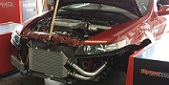
 Its a small high end shop. Mainly his hobby shop, that he does a decent amount of work out of but only has one lift. Coordinating a time to snag the lift for a few days is the key.
When I had my kit installed, I went thru the same thing. I think my car was in the shop for 4-5 weeks due to all the issues that always come up. The end result will be amazing but, mods at this level always include unexpected delays.
And a lift. I did mine on my back with jack stands, so much easier but now that I have a lift, I see things in a whole different light.
The only air tool I use is my impact for taking things off. Other than that it's all hand tools.
The only air tool I use is my impact for taking things off. Other than that it's all hand tools.

Burning Brakes
Joined: Aug 2012
Posts: 892
Likes: 357
From: SE Wisconsin
Kurt,
As an experienced word of advice, always run the fpr AFTER the rail(s) to prevent starvation in high horsepower builds on any engine. This will bleed off fuel to regulate fuel pressure with no risk of starvation to the rail/injectors furthest from the supply. Most FPR manufacturers (for sure Aeromotive) recommend this. It's just the correct way to do it. Period.
6an supply and 6an return is perfect, as it matches the ID of the OEM supply line as well as the ID of the PowerRevRacing "j37" rails. A 90 degree bulkhead fitting with a drilled hole in the top of the pump carriage is how I accomplished my return. My entire setup used 19 feet of Russell braided black nylon line, but its just preference and ease of install when it comes to stainless vs nylon, though. Heat shouldn't be a factor here as long as you maintain good margins from extreme heat sources
As an experienced word of advice, always run the fpr AFTER the rail(s) to prevent starvation in high horsepower builds on any engine. This will bleed off fuel to regulate fuel pressure with no risk of starvation to the rail/injectors furthest from the supply. Most FPR manufacturers (for sure Aeromotive) recommend this. It's just the correct way to do it. Period.
6an supply and 6an return is perfect, as it matches the ID of the OEM supply line as well as the ID of the PowerRevRacing "j37" rails. A 90 degree bulkhead fitting with a drilled hole in the top of the pump carriage is how I accomplished my return. My entire setup used 19 feet of Russell braided black nylon line, but its just preference and ease of install when it comes to stainless vs nylon, though. Heat shouldn't be a factor here as long as you maintain good margins from extreme heat sources
Last edited by gerzand; May 21, 2014 at 12:07 PM.

Kurt,
As an experienced word of advice, always run the fpr AFTER the rail(s) to prevent starvation in high horsepower builds on any engine. This will bleed off fuel to regulate fuel pressure with no risk of starvation to the rail/injectors furthest from the supply. Most FPR manufacturers (for sure Aeromotive) recommend this. It's just the correct way to do it. Period.
6an supply and 6an return is perfect, as it matches the ID of the OEM supply line as well as the ID of the PowerRevRacing "j37" rails. A 90 degree bulkhead fitting with a drilled hole in the top of the pump carriage is how I accomplished my return. My entire setup used 19 feet of Russell braided black nylon line, but its just preference and ease of install when it comes to stainless vs nylon, though. Heat shouldn't be a factor here as long as you maintain good margins from extreme heat sources
As an experienced word of advice, always run the fpr AFTER the rail(s) to prevent starvation in high horsepower builds on any engine. This will bleed off fuel to regulate fuel pressure with no risk of starvation to the rail/injectors furthest from the supply. Most FPR manufacturers (for sure Aeromotive) recommend this. It's just the correct way to do it. Period.
6an supply and 6an return is perfect, as it matches the ID of the OEM supply line as well as the ID of the PowerRevRacing "j37" rails. A 90 degree bulkhead fitting with a drilled hole in the top of the pump carriage is how I accomplished my return. My entire setup used 19 feet of Russell braided black nylon line, but its just preference and ease of install when it comes to stainless vs nylon, though. Heat shouldn't be a factor here as long as you maintain good margins from extreme heat sources
I'm planning on using an Aeromotive FPR as well.
In parallel, yes. Check http://www.instagram.com/gerzand for some pics
Did you use a specific brand or line of connectors and hoses? I'm a bit confused by the hose types, rubber, ptfe, etc.
Thanks!

Which is my other wonder. How does the fuel cage work? The pickup is inside the bottom half and the fuel looks like it needs to enter via the top of the bottom section.
And if you do use the stock feed arrangement, how do you take the stock fpr out of the picture?
I'm thinking I am going to just hack the top of the bottom section to expose the outlet on the pump and just connect it to the new fitting via a submersible rubber hose.
Money is flying out of my hands like crazy!!!
Last edited by KN_TL; May 22, 2014 at 08:50 PM.
While I am waiting for pistons to be machined, I started working on the fuel pump.
No one ever mentions what they do with the factory FPR. I took a closer look and pump picks up fuel from the bottom of the bucket through a strainer, feeds it through a chamber and then up and out. The factory FPR is located at the bottom of the chamber and the bypass empties into the bucket.
I modified the cage by removing portion where the pump feeds into the chamber. This picture shows the hacked up job that someone did when I bought the pump. It was held together with tie wraps.

I had a first pass fuel pump, also installed by someone else where they left more of the cage intact but still didn't appear to know what a dremel tool is and split stuff instead of cutting or grinding. I was able to clean it up enough to make it usable.


I'm going to cut some slots, add more foam and use a worm gear clamp to hold everything in.
Does anyone know how the bucket is actually fed? Does the fact that I am no longer running the FPR bypass into the bucket going to cause the pump to cavitate and/or starve?
No one ever mentions what they do with the factory FPR. I took a closer look and pump picks up fuel from the bottom of the bucket through a strainer, feeds it through a chamber and then up and out. The factory FPR is located at the bottom of the chamber and the bypass empties into the bucket.
I modified the cage by removing portion where the pump feeds into the chamber. This picture shows the hacked up job that someone did when I bought the pump. It was held together with tie wraps.

I had a first pass fuel pump, also installed by someone else where they left more of the cage intact but still didn't appear to know what a dremel tool is and split stuff instead of cutting or grinding. I was able to clean it up enough to make it usable.


I'm going to cut some slots, add more foam and use a worm gear clamp to hold everything in.
Does anyone know how the bucket is actually fed? Does the fact that I am no longer running the FPR bypass into the bucket going to cause the pump to cavitate and/or starve?


There is a hole left in the top and the top and the two in the bottom where the exit and FPR is connected I wanted to either plug or remove the foam.
I decided to try and remove the foam, but it's not coming out easily. So I bought a used on on ebay which should be here this week.
This will be the first time I'll be able to see a factory setup so for anyone who wants to see the differences, I'll take the time to photograph and start a new thread on it.
I decided to try and remove the foam, but it's not coming out easily. So I bought a used on on ebay which should be here this week.
This will be the first time I'll be able to see a factory setup so for anyone who wants to see the differences, I'll take the time to photograph and start a new thread on it.

Thread
Thread Starter
Forum
Replies
Last Post
ExcelerateRep
4G TL Performance Parts & Modifications
8
Dec 11, 2015 12:58 PM