

Got a Question, can anyone tell me when does V-TEC kick in??


Team Nighthawk Director
Sorry if I was wrong, Shouldn't have answered if I wasnt sure.

Safety Car
Quote:
hehe we all make mistakes if vtec kicked in at 5800 it sure wouldn't last too long before we shift and have it turned off again.Originally Posted by J RIDE 81
Sorry if I was wrong, Shouldn't have answered if I wasnt sure.
If v-tec controller is in place, wouldn't it be better if it kick in at 4000 rpm?? or at what rpm??

Instructor
I think they already kick it in at the lowest RPM where it helps. This implies that below that RPM you get more power with it turned off.
I saw an article that said they switch VTEC at an RPM that produces the same amount of torque with both cam profiles. If you go lower, the high-speed profile drops off more steeply than the low speed one, and if you go higher the high-speed profile develops more power.
That said, if you want it to switch at a lower RPM then it could be that what you're really asking for are different cam profiles -- assuming that the switchover would still be determined the same way.
I saw an article that said they switch VTEC at an RPM that produces the same amount of torque with both cam profiles. If you go lower, the high-speed profile drops off more steeply than the low speed one, and if you go higher the high-speed profile develops more power.
That said, if you want it to switch at a lower RPM then it could be that what you're really asking for are different cam profiles -- assuming that the switchover would still be determined the same way.

Banned
from the descriptions on Acura website, i thought vtec continuously adjusted valve timing to create broadest torque/power curve across the whole rpm range??
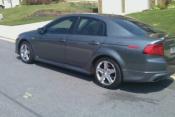
Ak Ting Up
Quote:
Hope the following answers your question. Below is from www.howstuffworks.comOriginally Posted by achonda2_4
Got a Question, can anyone tell me when does V-TEC kick in??
VTEC (which stands for Variable Valve Timing and Lift Electronic Control) is an electronic and mechanical system in some Honda engines that allows the engine to effectively have multiple camshafts. As the engine moves into different rpm ranges, the engine's computer can activate alternate lobes on the camshaft and change the cam's timing. In this way, the engine gets the best features of low-speed and high-speed camshafts in the same engine. Several of the links below go into the actual mechanics of the VTEC system if you are interested.
The SOHC VTEC is a system that achieves mild power gains. Usually, SOHC VTEC engines gives about as much power as DOHC non-VTEC engines of similar displacement. Whether or not the added complexity of the VTEC mechanism off-sets the simplicity of SOHC (versus DOHC) is up for debate. SOHC VTEC is currently found on the Civic EX, Accord LX/EX/V6, Odyssey LX/EX, Acura TL, CL, and CL Type-S.

Shift_faster
Quote:
That is Honda's new system i-VTEC. It continuously adjusts. The VTEC has two specific profiles, and the TL currently has the VTEC system.Originally Posted by cvajs
from the descriptions on Acura website, i thought vtec continuously adjusted valve timing to create broadest torque/power curve across the whole rpm range??
I believe the RSX Type S has the i-VTEC.
Ak Ting Up
So the answer is VTEC is always kicked in. It controls valve timing at low and high RPMs.
Instructor
No, VTEC implies that there are two cam profiles, one for high RPM and one for low. There's no continuous adjustment between the two -- you're either using one profile or you're using the other, depending on your RPM.

Instructor
Quote:
Just to add one comment to this statement ... VTEC with no "i" works this way. The VTEC-i adds the variable on the fly adjustment for the intake cam, hence the "i".Originally Posted by cpurick
No, VTEC implies that there are two cam profiles, one for high RPM and one for low. There's no continuous adjustment between the two -- you're either using one profile or you're using the other, depending on your RPM.
When you want to consider chaning the VTEC engagement point is when you have done mods to open up air flow through the motor or you are boosted.

Moderator Alumnus
spyfish, good note, I guess you're talking Honda's i-Vtec, as PoochaKannInc has mentioned above...
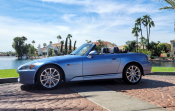
Ken1997TL
Senior Moderator
close


Apr 26, 2026
- Join DateMay 2003
- LocationBetter Neighborhood, Arizona
- Posts:45,641
-
iTrader Positive Feedback0
-
iTrader Feedback Score(0)
-
Likes:2,053
-
Liked:2,335 Times in 1,315 Posts
Quote:
I believe, you are asking when does the VTEC crossover occur between mild/wild cam lobes. In which case it is 4700 rpms according to Honda.Originally Posted by achonda2_4
Got a Question, can anyone tell me when does V-TEC kick in??

Banned
Good discussion, but the fact about the TL is that its Vtec not i-Vtec. Plain and simply two different cam profiles both in the same cam. At a specific RPM (around 4-5k in the TL) a larger cam opens the valves more and for a longer time thus improving engine breathing at high RPM. That is why hondas dont run out of breath at high rpms. The ivtec system operates at all rpms thus metering airflow more precisely despite RPMS, thats why those vehicles you dont feel the vtech "kick in". The ivtech system is more sophisticated but less fun. Whether 2 cams ar one cam are used is unimportant, despite what you may have read elsewhere. What is important is how much more air you can coax into the cylinder.