

View Poll Results: what gas u use
87


5
4.00%
89


3
2.40%
91


117
93.60%
Voters: 125. You may not vote on this poll
Gas choice


Racer
Joined: Dec 2011
Posts: 469
Likes: 154
From: Jacksonville, FL
The problem with ethanol is it's stoich AF ratio is much richer than gasoline. The ECU has a target AF ratio for any given condition and this is checked via the 02 sensors. That target is based on gasoline's 14.7. With ethanol in the mix, the ECU is still shooting for a target based on gasoline when it should be shooting a just a little richer. The net result is a leaner mixture. The ECU is doing noting wrong, just what it was programmed to do. The additional octane of ethanol is taken advantage of by using lower octane gasoline to bring the mix back up to the common 87/89/91/93. Unfortunately ethanol mixed with gasoline gets you the same octane as the gasoline by itself. It would be great if they added ethanol to 87 and got 89 or ethanol to 93 and got 95 but they don't, they're too damn cheap. It's this wonderful system screwing people in every way imaginable.
I *think* stoich of E10 is 14.13 instead of 14.7 with gasoline, it should be easy to find with a google search. It gets worse with E15. If the stoich target is off, the PE is off which is a greater effect and everything else is off. Most cars base PE tables off of the stoich or target AF. Lack of fuel in PE mode shows up as surging, pinging, and a lack of power. This is not insignificant, especially with E15. Add the fact that ethanol does not have the same btu content on top of no additional octane for E10/15 and you're screwed in every department whether it's power or mpg. It's a lose-lose for the consumer. A few small groups benefit from our loss.
I *think* stoich of E10 is 14.13 instead of 14.7 with gasoline, it should be easy to find with a google search. It gets worse with E15. If the stoich target is off, the PE is off which is a greater effect and everything else is off. Most cars base PE tables off of the stoich or target AF. Lack of fuel in PE mode shows up as surging, pinging, and a lack of power. This is not insignificant, especially with E15. Add the fact that ethanol does not have the same btu content on top of no additional octane for E10/15 and you're screwed in every department whether it's power or mpg. It's a lose-lose for the consumer. A few small groups benefit from our loss.
After all, isn't fuel trim primarily calculated using 02 sensor readings compared to MAF and MAP readings? So you would think that even though E10's stoichiometric ratio was different than pure gasoline, the ECM should say "hey, my MAP and MAF readings look normal, but my O2 1 readings say slightly lean, so I better increase short term fuel trim".

Team Owner
Joined: Mar 2006
Posts: 20,172
Likes: 1,818
From: Bakersfield
Interesting info. I thought most modern cars were able to detect and compensate for ethanol levels up to 15% though.
After all, isn't fuel trim primarily calculated using 02 sensor readings compared to MAF and MAP readings? So you would think that even though E10's stoichiometric ratio was different than pure gasoline, the ECM should say "hey, my MAP and MAF readings look normal, but my O2 1 readings say slightly lean, so I better increase short term fuel trim".
After all, isn't fuel trim primarily calculated using 02 sensor readings compared to MAF and MAP readings? So you would think that even though E10's stoichiometric ratio was different than pure gasoline, the ECM should say "hey, my MAP and MAF readings look normal, but my O2 1 readings say slightly lean, so I better increase short term fuel trim".
The 02 sensors are still accurate with ethanol but the target needs to change. Unless the ECU has a fuel sensor, it does not know if you're running on E15, E85, or gasoline so it shoots for a target AF based on gasoline's stoich. Shooting for gasoline's stoich on E15 will mean a lean mixture. For example, if the target is 14.7, it will still hit 14.7 on gasoline, E10 or E15. The problem is 14.7 on E10 and E15 is lean while on gasoline it's stoich or in the middle of lean and rich.
As an extreme example to illustrate the point, some of our old methanol cars ran an AF ratio of 6. Assuming the fuel system was mechanically able to deliver methanol in the required quantities reliably, the TL would not run on methanol with the stock ECU because it would be shooting for an AF ratio based on gasoline, likely between 12.8 to 15.0. The engine would be so lean it would not run. Those pushing ethanol blends figure it's "close enough" but it does result in a leaner mixture and it affects some cars more than others.
Last edited by I hate cars; May 6, 2012 at 01:18 PM.
Racer
Joined: Dec 2011
Posts: 469
Likes: 154
From: Jacksonville, FL
MAP, RPM, temperature, etc are used to calculate AF ratio, the 02s check this calculation after the fact and adjust if needed.
The 02 sensors are still accurate with ethanol but the target needs to change. Unless the ECU has a fuel sensor, it does not know if you're running on E15, E85, or gasoline so it shoots for a target AF based on gasoline's stoich. Shooting for gasoline's stoich on E15 will mean a lean mixture. For example, if the target is 14.7, it will still hit 14.7 on gasoline, E10 or E15. The problem is 14.7 on E10 and E15 is lean while on gasoline it's stoich or in the middle of lean and rich.
As an extreme example to illustrate the point, some of our old methanol cars ran an AF ratio of 6. Assuming the fuel system was mechanically able to deliver methanol in the required quantities reliably, the TL would not run on methanol with the stock ECU because it would be shooting for an AF ratio based on gasoline, likely between 12.8 to 15.0. The engine would be so lean it would not run. Those pushing ethanol blends figure it's "close enough" but it does result in a leaner mixture and it affects some cars more than others.
The 02 sensors are still accurate with ethanol but the target needs to change. Unless the ECU has a fuel sensor, it does not know if you're running on E15, E85, or gasoline so it shoots for a target AF based on gasoline's stoich. Shooting for gasoline's stoich on E15 will mean a lean mixture. For example, if the target is 14.7, it will still hit 14.7 on gasoline, E10 or E15. The problem is 14.7 on E10 and E15 is lean while on gasoline it's stoich or in the middle of lean and rich.
As an extreme example to illustrate the point, some of our old methanol cars ran an AF ratio of 6. Assuming the fuel system was mechanically able to deliver methanol in the required quantities reliably, the TL would not run on methanol with the stock ECU because it would be shooting for an AF ratio based on gasoline, likely between 12.8 to 15.0. The engine would be so lean it would not run. Those pushing ethanol blends figure it's "close enough" but it does result in a leaner mixture and it affects some cars more than others.


I use 91 when I am lucky enough to find it here. Usually stuck to 90 as the highest.
I use whatever is the highest rated at the pump. I haven't found any pumps that have 91. The ones that used to don't any more.
I use whatever is the highest rated at the pump. I haven't found any pumps that have 91. The ones that used to don't any more.

#1 Super Guy!
Joined: May 2007
Posts: 2,337
Likes: 512
I thought AF sensors read "lambda" and not AFR. With Lambda, a stoichiometric reading is 1.0 with any fuel. This means no matter what fuel you use, the ECU will try to make it run stoich. The Honda ECU can compensate between Gasoline and E10 because there is not that big of a difference in the amount of fuel required to run stoich (E10 requires a little more fuel flow). But this adjustment window is only so big. When switching to E85, there is such a great increase in the demand for fuel (40% more) that the injectors and even fuel pump cannot possibly compensate. It's so far off the ECU's base map that the computer cannot even tell what's going on.
#1 Super Guy!
Joined: May 2007
Posts: 2,337
Likes: 512
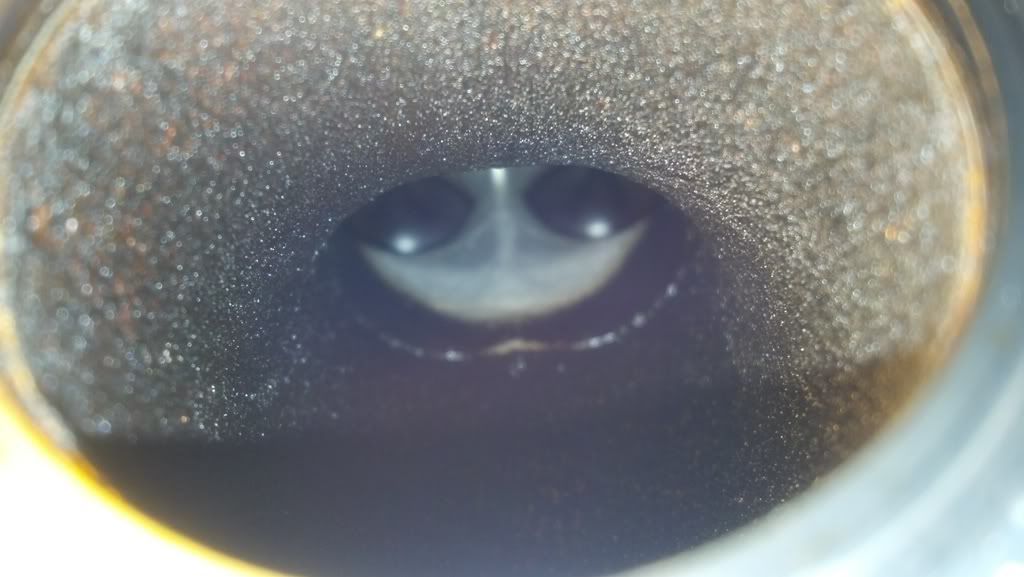
Kinda off topic here but...... Here is a picture I snapped yesterday from my wife's 108k mile 2004 Honda Pilot while doing a valve adjustment. Notice the greasy intake runners. This is from oil entering the manifold through the PCV system. Next notice the clean & spotless intake valves. I believe this is from running Chevron gasoline with the Techron detergent. The fuel spray pattern has clearly kept the surfaces pristine. We never once have we used injector cleaner on this car.
Last edited by 94eg!; May 6, 2012 at 02:10 PM.
Team Owner
Joined: Mar 2006
Posts: 20,172
Likes: 1,818
From: Bakersfield
That's exactly what that is. The head port is where deposits would be the worst too, if you didn't have the fuel right there cleaning everything. It goes to show how well fuel and it's detergents clean and how DI engines can potentially have problems in this area. Even the intake manifold portion looks great. It's black but there's no actual buildup that would reduce performance. If you could use an oil separator on the PCV or an oil with a very high NOACK value along with no EGR, the intake manifold would look shiny as well.
Team Owner
Joined: Mar 2006
Posts: 20,172
Likes: 1,818
From: Bakersfield
I thought AF sensors read "lambda" and not AFR. With Lambda, a stoichiometric reading is 1.0 with any fuel. This means no matter what fuel you use, the ECU will try to make it run stoich. The Honda ECU can compensate between Gasoline and E10 because there is not that big of a difference in the amount of fuel required to run stoich (E10 requires a little more fuel flow). But this adjustment window is only so big. When switching to E85, there is such a great increase in the demand for fuel (40% more) that the injectors and even fuel pump cannot possibly compensate. It's so far off the ECU's base map that the computer cannot even tell what's going on.



#1 Super Guy!
Joined: May 2007
Posts: 2,337
Likes: 512
...Even the intake manifold portion looks great. It's black but there's no actual buildup that would reduce performance. If you could use an oil separator on the PCV or an oil with a very high NOACK value along with no EGR, the intake manifold would look shiny as well.
 Not bad for $45.
http://www.piloteers.org/forums/18-m...cv-system.html
Another really odd thing I noticed. It seems that on the pilot, the front cylinder head stays nice & clean, while the rear one gets lots of baked on crud. I've seen this on two different Pilots now (the only two I've looked at). I was wondering if maybe the PCV system has to do with this? The fresh air intake is on the front valve-cover, while the PCV valve is on the rear valve-cover. I'm wondering if this flow direction is causing all the crud to build in the rear cylinder head?
I know the TL flows the opposite direction. Fresh air to the rear valve-cover and PCV valve on the front valve-cover. Here are some pics. They aren't mine, but mine looked EXACTLY the same.
Pilot rear head (PCV side):
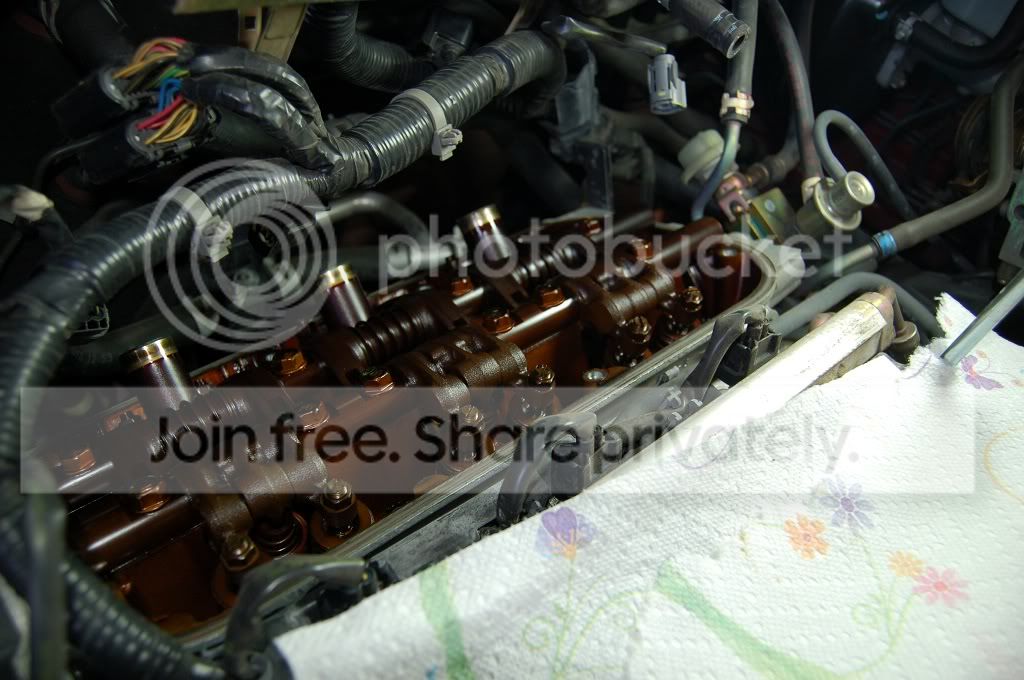
Pilot front head (fresh air side):
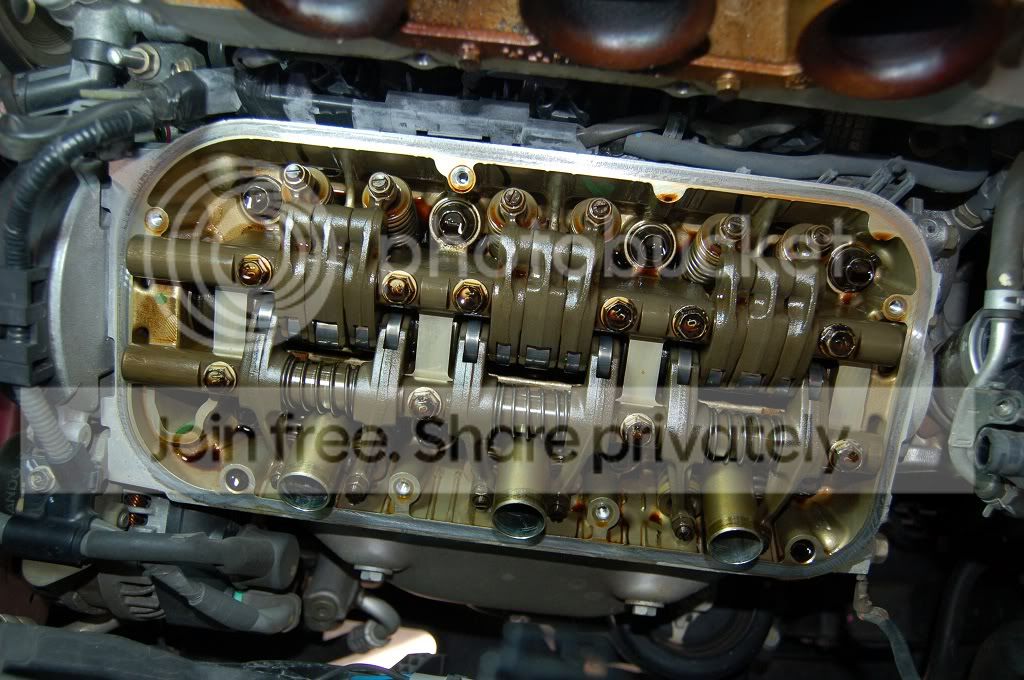

Team Owner
Joined: Mar 2006
Posts: 20,172
Likes: 1,818
From: Bakersfield
Yeah, when I pulled the manifold apart on that car, I was pretty shocked how much oil was pooled inside the manifold. Inside that manifold, there are actual velocity stacks at the end of each runner that prevent the pools from running down into the port which I find a nice touch. Here is a pic: http://i75.photobucket.com/albums/i3...t/DSC_8524.jpg Because of this I decided to build a nice catch can setup like you said. I actually completed it last weekend and did a way over-complicated writup on Piloteers.org. Not bad for $45.
http://www.piloteers.org/forums/18-m...cv-system.html
Another really odd thing I noticed. It seems that on the pilot, the front cylinder head stays nice & clean, while the rear one gets lots of baked on crud. I've seen this on two different Pilots now (the only two I've looked at). I was wondering if maybe the PCV system has to do with this? The fresh air intake is on the front valve-cover, while the PCV valve is on the rear valve-cover. I'm wondering if this flow direction is causing all the crud to build in the rear cylinder head?
I know the TL flows the opposite direction. Fresh air to the rear valve-cover and PCV valve on the front valve-cover. Here are some pics. They aren't mine, but mine looked EXACTLY the same.
Pilot rear head (PCV side):
Pilot front head (fresh air side):
Not bad for $45.http://www.piloteers.org/forums/18-m...cv-system.html
Another really odd thing I noticed. It seems that on the pilot, the front cylinder head stays nice & clean, while the rear one gets lots of baked on crud. I've seen this on two different Pilots now (the only two I've looked at). I was wondering if maybe the PCV system has to do with this? The fresh air intake is on the front valve-cover, while the PCV valve is on the rear valve-cover. I'm wondering if this flow direction is causing all the crud to build in the rear cylinder head?
I know the TL flows the opposite direction. Fresh air to the rear valve-cover and PCV valve on the front valve-cover. Here are some pics. They aren't mine, but mine looked EXACTLY the same.
Pilot rear head (PCV side):
Pilot front head (fresh air side):
I was doing some more thinking about the stoich on E15 and you're right on most of the cars out there. It serves me right for trying to give advice with so little sleep.
#1 Super Guy!
Joined: May 2007
Posts: 2,337
Likes: 512
Yes that is correct. It will be interesting to get in there and compare when it comes valve adjustment time. Though I can say this was a total PITA on the Pilot. Cleaning the EGR & Intake manifold took an entire afternoon. And pretty much everything to do with the valvecovers is a PITA as well.
Last edited by 94eg!; May 7, 2012 at 10:05 AM.

#1 Super Guy!
Joined: May 2007
Posts: 2,337
Likes: 512
http://www.piloteers.org/forums/18-m...djustment.html
#1 Super Guy!
Joined: May 2007
Posts: 2,337
Likes: 512
Oh, if your talking about the pic of the backs of the valves, that was mine. That is the only one I have and it was a PITA to get cause the came want's to focus on the walls of the runner and not the ports or valves. Sorry.
Saysdamnalot
Joined: May 2010
Posts: 140
Likes: 3
I should have added: It's well known that TL-S's, in particular but not exclusively, knock. I Hate Cars did a lot of testing and measuring knock on his TL.
I (and many, many others) have gotten case numbers at the dealer for the problem. There's even a whole massive thread on it - Valve Chatter/Pinging/Knocking in 2007 TypeS
I (and many, many others) have gotten case numbers at the dealer for the problem. There's even a whole massive thread on it - Valve Chatter/Pinging/Knocking in 2007 TypeS
I did not know the specifics you mentioned regarding ethanol. Thanks for the info!

3rd Gear
Joined: May 2012
Posts: 3
Likes: 0
Yes, there is a difference. The 04-06 Acura TL engine has a compression ration of 11:1 meaning that it will need premium gas in order to run the way the engine was meant to run. If you were to put in let's say 87 instead of 93 the gas could combust at a lower compression rate causing pre-detonation. Most cars ECU will change the fuel to air ratio making it "OKAY" to drive on but will increase knocking and is bad for your engine in the long run. As far as effeciency goes, you actually get better MPG with the HIGHER octane gas. Poll bunked! ALWAYS PUT IN PREMIUM
Team Owner
Joined: Mar 2006
Posts: 20,172
Likes: 1,818
From: Bakersfield
Yes, there is a difference. The 04-06 Acura TL engine has a compression ration of 11:1 meaning that it will need premium gas in order to run the way the engine was meant to run. If you were to put in let's say 87 instead of 93 the gas could combust at a lower compression rate causing pre-detonation. Most cars ECU will change the fuel to air ratio making it "OKAY" to drive on but will increase knocking and is bad for your engine in the long run. As far as effeciency goes, you actually get better MPG with the HIGHER octane gas. Poll bunked! ALWAYS PUT IN PREMIUM
There's no such thing as pre-detonation. There's detonation which is when the mixture explodes uncontrollably rather than burn quickly. Pre-ignition is when the mixture ignites before the spark plug fires.
Detonation can be controlled by pulling timing most of the time. Pre-ignition can't.
The ECU retards the timing when it detects knock from too low octane. The problem is the system is reactive so it has to sense knock before timing is pulled. It can easily run into a condition where it can't pull enough timing to stop detonation. Also, once the knock starts, you have to pull more timing to stop it that if it didn't knock in the first place. Knock is hard on engine internals, kills mpg and power all by itself and when coupled with the timing being pulled, it's a measurable decrease in mpg and power along with higher EGTs. AF ratio is usually not changed to control knock.

Thread
Thread Starter
Forum
Replies
Last Post
