Car slows down itself


Team WDP Surgeon General
Joined: Feb 2004
Posts: 153
Likes: 0
From: Fort Worth, Texas
Good info. guys. I believed for a while this was a problem till I figured out it wasn't the brakes but the engine downshifting. I appreciate the fact that others posted this info. here.
My only complaint with it is, it's a little abrupt at times.
But I agree with the above posts which stated it was easy to adjust the driving to the car in this instance.
My only complaint with it is, it's a little abrupt at times.
But I agree with the above posts which stated it was easy to adjust the driving to the car in this instance.

Moderator Alumnus
Joined: Dec 2003
Posts: 12,177
Likes: 86
From: NYC/SF/Tokyo/HK

Originally Posted by alextclam
we also have a brake assist feature. it senses when you let go of the gas pedal abrubtly...
Originally Posted by SnappyPappy
I do not think that is the correct interrpretation of 'brake assist'. I believe it is applied when the brakes are activated giving an incremental boost to the drivers braking efforts. IMHO . . .

This has been posted dozens of times since Day 1...
Acura says:
Brake Assist
Brake Assist comes standard on the 2004 TL. Its purpose is to help the driver apply full braking pressure in an accident avoidance situation. To do so, a microprocessor continually analyzes and "learns" the driver's normal braking habits-monitoring both the rate of pressure applied and the total pressure that the driver normally applies to the brake system.
If the driver suddenly applies the brakes, Brake Assist brings the system to full ABS activation to help stop the vehicle in the shortest distance possible. It is only activated when the microprocessor detects that certain brake pedal speed and pressure thresholds are reached.
Importantly, Brake Assist does not "take over" braking on the TL-it only assists the driver in obtaining full braking performance in an emergency. Brake Assist deactivates when the driver releases pressure on the brake pedal.

professional TL driver
Joined: Aug 2004
Posts: 548
Likes: 0
From: Tampa, FL
Engine braking is the best term. and that why i put it FIRST in my original post. although i did use the term compression braking that is only part of it...
compression braking is a generic term used to describe ENGINE BRAKING.
in either situation you are restricting the amt of air that the engine can process. in gasoline engines you restrict the air on the intake, by closing the throttle body. on diesels you use an exaust brake to restrict the amt of exaust that can escape.... so both ways are stopping the flow of air, actually slowing would even be more accurate...
as why all know the simplest way to describe an engine is an air pump. air is drawn in, air is compressed, air is ignited, air is pushed out.... oh and fuel has to be present as well....duh...
an engines compression is still a large factor of this puzzle. the more air an engine can injest, compress and expel the more power it will make... the higher the compression the more air it will move in a given displacement. as you are compressing a large volume of air into a smaller space... so by definition it will move more air.
even when you let off the throttle the engine is still running, air is still moving through it (otherwise it wouldnt be running right?) so even though it is at a lesser rate that air still has to be compressed and expelled. the car wants to idle with the throttle closed, it only adds enough fuel for idle as that all the air that can get through....
also engine suction plays a factor as some have pointed out, the wheels are driving the engine. with every turn the engine moves air at a fairly set rate, it has to get the air from somewhere... and in this situation it sucks against the intake (which is closed, other then idle speed air). it can actually start to suck through the exaust system... it is open to the outside right? only the valves opening and closing prevent it... under normal driving the exaust is pushed out by the exaust stroke, so this is never a factor, engine pulses drive the exaust away. but in this situation the suction can pull it back. and there is suction that takes place within the engine.... and once it has the air in the cylinder the process stats all over, by compressing that air, back to compression are we?
if the engine sucks its own exaust it wont hurt it... if anything it will cool combustion as exaust doesnt burn well if at all. ever hear of an egr valve? it feeds the engine exaust gas to cool combustion. you can also cool an engine by adding more fuel then air to burn it (richening the mixture) funny how that works isnt it... fuel and hot exaust helping cool the combustion process....
in diesels you simply restrict the exaust and the engine slows... an engine cant turn or will turn slower if the exaust has no where to go.
and of course there is friction to be taken into acct, but friction is set coming or going. braking or accelerating an engine will have a specific drag at a specific speed. either way its just turning right? the only real difference is that when you are accelerating the engine is providing power and overcoming that friction, when braking that friction is slowing you down as the engines power isnt really over coming the deficiet...
so to make my point simple, ENGINE BRAKING is also part of what you are feeling, its what hondas hill/grade control uses to slow the vehicle, a vehicles compression effects how much of this braking effect you will feel
onager-
compression braking is a generic term used to describe ENGINE BRAKING.
in either situation you are restricting the amt of air that the engine can process. in gasoline engines you restrict the air on the intake, by closing the throttle body. on diesels you use an exaust brake to restrict the amt of exaust that can escape.... so both ways are stopping the flow of air, actually slowing would even be more accurate...
as why all know the simplest way to describe an engine is an air pump. air is drawn in, air is compressed, air is ignited, air is pushed out.... oh and fuel has to be present as well....duh...
an engines compression is still a large factor of this puzzle. the more air an engine can injest, compress and expel the more power it will make... the higher the compression the more air it will move in a given displacement. as you are compressing a large volume of air into a smaller space... so by definition it will move more air.
even when you let off the throttle the engine is still running, air is still moving through it (otherwise it wouldnt be running right?) so even though it is at a lesser rate that air still has to be compressed and expelled. the car wants to idle with the throttle closed, it only adds enough fuel for idle as that all the air that can get through....
also engine suction plays a factor as some have pointed out, the wheels are driving the engine. with every turn the engine moves air at a fairly set rate, it has to get the air from somewhere... and in this situation it sucks against the intake (which is closed, other then idle speed air). it can actually start to suck through the exaust system... it is open to the outside right? only the valves opening and closing prevent it... under normal driving the exaust is pushed out by the exaust stroke, so this is never a factor, engine pulses drive the exaust away. but in this situation the suction can pull it back. and there is suction that takes place within the engine.... and once it has the air in the cylinder the process stats all over, by compressing that air, back to compression are we?
if the engine sucks its own exaust it wont hurt it... if anything it will cool combustion as exaust doesnt burn well if at all. ever hear of an egr valve? it feeds the engine exaust gas to cool combustion. you can also cool an engine by adding more fuel then air to burn it (richening the mixture) funny how that works isnt it... fuel and hot exaust helping cool the combustion process....
in diesels you simply restrict the exaust and the engine slows... an engine cant turn or will turn slower if the exaust has no where to go.
and of course there is friction to be taken into acct, but friction is set coming or going. braking or accelerating an engine will have a specific drag at a specific speed. either way its just turning right? the only real difference is that when you are accelerating the engine is providing power and overcoming that friction, when braking that friction is slowing you down as the engines power isnt really over coming the deficiet...
so to make my point simple, ENGINE BRAKING is also part of what you are feeling, its what hondas hill/grade control uses to slow the vehicle, a vehicles compression effects how much of this braking effect you will feel
onager-

Instructor
Joined: Dec 2004
Posts: 246
Likes: 0
From: Connecticut
Originally Posted by dsc888
I understand your reasoning but there is virtually no damage to the drivetrain. If I remember correctly, the 5AT's torque converter can lockup in 2nd, 3rd, 4th, and 5th to help with fuel ecomomy. Someone correct me if I am wrong. But that would mean no slipping of the tranny and practically no wear. Plus you won't overheat your brakes which can occur if you are going down a very, long hill.
dsc888
dsc888


Yanks in '08!
Joined: Aug 2004
Posts: 190
Likes: 1
From: Brooklyn, NY
Originally Posted by rets
This has been posted dozens of times since Day 1...
Acura says:
Brake Assist
Brake Assist comes standard on the 2004 TL. Its purpose is to help the driver apply full braking pressure in an accident avoidance situation. To do so, a microprocessor continually analyzes and "learns" the driver's normal braking habits-monitoring both the rate of pressure applied and the total pressure that the driver normally applies to the brake system.
If the driver suddenly applies the brakes, Brake Assist brings the system to full ABS activation to help stop the vehicle in the shortest distance possible. It is only activated when the microprocessor detects that certain brake pedal speed and pressure thresholds are reached.
Importantly, Brake Assist does not "take over" braking on the TL-it only assists the driver in obtaining full braking performance in an emergency. Brake Assist deactivates when the driver releases pressure on the brake pedal.

thanks for the clarification.

Burning Brakes
Joined: May 2004
Posts: 1,176
Likes: 0
From: Pennsylvania
The 5AT is like driving stick functions like a stick basically. Like when I drive stick I don't use the brake much while slowing down. I just pop the clutch shift down one gear and let the gear brakes slow me down.

Instructor
Joined: Oct 2004
Posts: 201
Likes: 0
Don't ask the dealer, thats all they are, dealers. But i think that its a usefull safety feature and you don't have to let it kick in, just get used to it, predict when its going to kick in and relese the brake then re-apply immediately, its as though there is a timer on when it should kick in, try it, i know for a fact.
I know many aren't keen on tapping the brake to slow down, so you can choose either go with the whole compression engine tranny deal, or just use your brakes a little more!
I know many aren't keen on tapping the brake to slow down, so you can choose either go with the whole compression engine tranny deal, or just use your brakes a little more!

Registered Member
Joined: Jul 2004
Posts: 8,342
Likes: 163
From: Suburb of Manassas, VA
Tp Repecat;
No sir, there most definitely IS a thing called compression braking. Want proof? Make sure your car is in neutral, then attach a wrench to the crankshaft pulley nut and try to turn the engine. You will be able to do this if you use a breaker bar and apply enough muscle. But it ain't gonna be easy.
Now remove all of the spark plugs and try this again. You will easily be able to turn the engine. Incidently, this is how you adjust the valves by getting them to the smooth "flat" part of the cam lobes.
When you take your foot off of the throttle, the engine "tries" to return to idle so it imparts a drag effect upon the rest of the drive train and therefore, the drive wheels. Three things about the engine can have an affect on this: 1) the actual (not mechanical) compression ratio; 2) the number of cylinders; 3) the displacement size of the engine. Now introduce the final drive ratio and the gear ratio of the transmission when this takes place and you have the final engine braking effect. Also this is significantly more pronounced in cars equipped with manual transmissions due to the direct hookup of the drive train.. unless you have the clutch disengaged or the gearbox in neutral.
(this does not take into account hills, number of passengers/cargo, etc.).
Really, people.. please don't think me arrogant because I mean no ill will by this, but it's hard to believe this question was even asked.
No sir, there most definitely IS a thing called compression braking. Want proof? Make sure your car is in neutral, then attach a wrench to the crankshaft pulley nut and try to turn the engine. You will be able to do this if you use a breaker bar and apply enough muscle. But it ain't gonna be easy.
Now remove all of the spark plugs and try this again. You will easily be able to turn the engine. Incidently, this is how you adjust the valves by getting them to the smooth "flat" part of the cam lobes.
When you take your foot off of the throttle, the engine "tries" to return to idle so it imparts a drag effect upon the rest of the drive train and therefore, the drive wheels. Three things about the engine can have an affect on this: 1) the actual (not mechanical) compression ratio; 2) the number of cylinders; 3) the displacement size of the engine. Now introduce the final drive ratio and the gear ratio of the transmission when this takes place and you have the final engine braking effect. Also this is significantly more pronounced in cars equipped with manual transmissions due to the direct hookup of the drive train.. unless you have the clutch disengaged or the gearbox in neutral.
(this does not take into account hills, number of passengers/cargo, etc.).
Really, people.. please don't think me arrogant because I mean no ill will by this, but it's hard to believe this question was even asked.


WDP Director of R & D
Joined: Dec 2003
Posts: 1,940
Likes: 4
From: Texas
Originally Posted by EnigmaofTL
Hmmm...I thought all automatics kinda do the same thing--slowing down when gas is not applied. Am I wrong?
Automatic or manual you get the same effect. Actually an automatic can exhibit even more "braking" due to the additional internal resistance or rotational "drag/friction" whatever you want to call it. The only time one would notice it less with an automatic is when the speed is slow enough that either the torque converter is not "locked-up" or is below its engagement rpm
Big picture for this entire thread as others have done a fine job of describing,,,
--When you take your foot off the gas and the car slows down without the aid of your brakes. This is due to the "resistance" present from the entire vehicle, tires etc. (mechanical & parasitic drag), but mainly due to the engine via mechanical friction(obvious) and the effects of cylinder "compression". No matter how you slice it your dealing with "compression"

Intermediate
Joined: Jan 2005
Posts: 25
Likes: 0
From: Baltimore, MD
Well, this has turned into a pretty interesting discussion. I'll add just a little more regarding "compression braking."
With a gas engine, coasting downhill, the engine must pull air past a nearly closed throttle body, which creates a large vacuum inside the cylinders and provides a slowing force to the car. Let's call that "intake braking." Then, the engine must compress that air, which also provides resistance and slows the car. So "engine braking" includes both "intake braking" and "compression braking." (I wouldn't characterize either of these aspects as "friction.")
For diesel engines, however, it works a little differently. I think the principle is as follows: First, diesels generally do not have any throttle--IOW, the cylinders pull in absolutely as much air as possible regardless of where the throttle pedal is. The pedal only regulates how much fuel is injected into the cylinders. So, "letting off the gas" on a diesel won't generate any vacuum or "intake braking" at all. A diesel must still compress its full compliment of air, and to the tune of 22 to 1, roughly, providing a major "compression braking" effect.
Then the jake brake, for good measure, says "rather than just shoving all that air out the exhaust, let's close the exhaust valve and compress the air all over again." It amounts to a second compression stroke per 4-stroke cycle. Pretty slick.
So, on a diesel, I'd argue that "engine braking" is all accomplished by "compression braking" (with or without the extra assist from the jake brake) and general friction, and none by "intake braking."
Does that sound right to you other gearheads out there?
Rick
PS--My sole experience in driving an 18-wheeler was from one side of a gas station parking lot to the other. I had no idea what I was doing!
With a gas engine, coasting downhill, the engine must pull air past a nearly closed throttle body, which creates a large vacuum inside the cylinders and provides a slowing force to the car. Let's call that "intake braking." Then, the engine must compress that air, which also provides resistance and slows the car. So "engine braking" includes both "intake braking" and "compression braking." (I wouldn't characterize either of these aspects as "friction.")
For diesel engines, however, it works a little differently. I think the principle is as follows: First, diesels generally do not have any throttle--IOW, the cylinders pull in absolutely as much air as possible regardless of where the throttle pedal is. The pedal only regulates how much fuel is injected into the cylinders. So, "letting off the gas" on a diesel won't generate any vacuum or "intake braking" at all. A diesel must still compress its full compliment of air, and to the tune of 22 to 1, roughly, providing a major "compression braking" effect.
Then the jake brake, for good measure, says "rather than just shoving all that air out the exhaust, let's close the exhaust valve and compress the air all over again." It amounts to a second compression stroke per 4-stroke cycle. Pretty slick.
So, on a diesel, I'd argue that "engine braking" is all accomplished by "compression braking" (with or without the extra assist from the jake brake) and general friction, and none by "intake braking."
Does that sound right to you other gearheads out there?
Rick
PS--My sole experience in driving an 18-wheeler was from one side of a gas station parking lot to the other. I had no idea what I was doing!
WDP Director of R & D
Joined: Dec 2003
Posts: 1,940
Likes: 4
From: Texas
So called "intake braking" from the intake stroke isn't a large factor. Present yes, but at a much smaller degree than the compression stroke. Like someone else mentioned, with your foot off the gas the engine is still running thus flowing air. If it wasn't, the "vacuum" required to cause significant "braking" would suck the throttle body plate into the engine.. One way to demonstrate this is to crank your engine with your foot off the gas and then with it wide open. If there was a great deal of "intake braking" you would notice a significant increase in cranking rpm at wide open vs closed throttle. On the other hand, if you do the same yet start pulling out spark plugs, the cranking rpm will increase. Overall, the compression side is the dominant "braking" stroke. One interesting test (that I have never accomplished..) would be to shut the engine off at say 50mph. While coasting/decelerating with the car in gear, open and close the throttle. I think the difference in "deceleration" would be minimal. (OK, don't try this at home kids... If you do for God sakes don't turn the key all the way off and lock the steering column..  )
)
Your statements towards a diesel engine are valid. Though diesel engines are not my specialty, during studies I have read that they are less efficient at "braking" even though they have much higher compression ratios than gas engines. Like you mentioned, the lack of a throttle body type intake has much to do with this, not to mention cam timing etc.. The addition of a "Jake-brake" process - also mentioned, basically stops air/exhaust from escaping the cylinder thus maximizing the compression stroke beyond even that of a gas engine. Given the extremely robust nature of a diesel engine this superb "side benefit" works extremely well with no adverse effects on the engine.
OK, now I want to go build something.......
)Your statements towards a diesel engine are valid. Though diesel engines are not my specialty, during studies I have read that they are less efficient at "braking" even though they have much higher compression ratios than gas engines. Like you mentioned, the lack of a throttle body type intake has much to do with this, not to mention cam timing etc.. The addition of a "Jake-brake" process - also mentioned, basically stops air/exhaust from escaping the cylinder thus maximizing the compression stroke beyond even that of a gas engine. Given the extremely robust nature of a diesel engine this superb "side benefit" works extremely well with no adverse effects on the engine.
OK, now I want to go build something.......
Instructor
Joined: Dec 2004
Posts: 246
Likes: 0
From: Connecticut
Just curious what is a 'professional TL driver' (your sig)? "Professional" usually imparts the exchange of services for monetary gain. Not being flip here, just curious . . .

Originally Posted by ONAGER
Engine braking is the best term. and that why i put it FIRST in my original post. although i did use the term compression braking that is only part of it...
compression braking is a generic term used to describe ENGINE BRAKING.
in either situation you are restricting the amt of air that the engine can process. in gasoline engines you restrict the air on the intake, by closing the throttle body. on diesels you use an exaust brake to restrict the amt of exaust that can escape.... so both ways are stopping the flow of air, actually slowing would even be more accurate...
as why all know the simplest way to describe an engine is an air pump. air is drawn in, air is compressed, air is ignited, air is pushed out.... oh and fuel has to be present as well....duh...
an engines compression is still a large factor of this puzzle. the more air an engine can injest, compress and expel the more power it will make... the higher the compression the more air it will move in a given displacement. as you are compressing a large volume of air into a smaller space... so by definition it will move more air.
even when you let off the throttle the engine is still running, air is still moving through it (otherwise it wouldnt be running right?) so even though it is at a lesser rate that air still has to be compressed and expelled. the car wants to idle with the throttle closed, it only adds enough fuel for idle as that all the air that can get through....
also engine suction plays a factor as some have pointed out, the wheels are driving the engine. with every turn the engine moves air at a fairly set rate, it has to get the air from somewhere... and in this situation it sucks against the intake (which is closed, other then idle speed air). it can actually start to suck through the exaust system... it is open to the outside right? only the valves opening and closing prevent it... under normal driving the exaust is pushed out by the exaust stroke, so this is never a factor, engine pulses drive the exaust away. but in this situation the suction can pull it back. and there is suction that takes place within the engine.... and once it has the air in the cylinder the process stats all over, by compressing that air, back to compression are we?
if the engine sucks its own exaust it wont hurt it... if anything it will cool combustion as exaust doesnt burn well if at all. ever hear of an egr valve? it feeds the engine exaust gas to cool combustion. you can also cool an engine by adding more fuel then air to burn it (richening the mixture) funny how that works isnt it... fuel and hot exaust helping cool the combustion process....
in diesels you simply restrict the exaust and the engine slows... an engine cant turn or will turn slower if the exaust has no where to go.
and of course there is friction to be taken into acct, but friction is set coming or going. braking or accelerating an engine will have a specific drag at a specific speed. either way its just turning right? the only real difference is that when you are accelerating the engine is providing power and overcoming that friction, when braking that friction is slowing you down as the engines power isnt really over coming the deficiet...
so to make my point simple, ENGINE BRAKING is also part of what you are feeling, its what hondas hill/grade control uses to slow the vehicle, a vehicles compression effects how much of this braking effect you will feel
onager-
compression braking is a generic term used to describe ENGINE BRAKING.
in either situation you are restricting the amt of air that the engine can process. in gasoline engines you restrict the air on the intake, by closing the throttle body. on diesels you use an exaust brake to restrict the amt of exaust that can escape.... so both ways are stopping the flow of air, actually slowing would even be more accurate...
as why all know the simplest way to describe an engine is an air pump. air is drawn in, air is compressed, air is ignited, air is pushed out.... oh and fuel has to be present as well....duh...
an engines compression is still a large factor of this puzzle. the more air an engine can injest, compress and expel the more power it will make... the higher the compression the more air it will move in a given displacement. as you are compressing a large volume of air into a smaller space... so by definition it will move more air.
even when you let off the throttle the engine is still running, air is still moving through it (otherwise it wouldnt be running right?) so even though it is at a lesser rate that air still has to be compressed and expelled. the car wants to idle with the throttle closed, it only adds enough fuel for idle as that all the air that can get through....
also engine suction plays a factor as some have pointed out, the wheels are driving the engine. with every turn the engine moves air at a fairly set rate, it has to get the air from somewhere... and in this situation it sucks against the intake (which is closed, other then idle speed air). it can actually start to suck through the exaust system... it is open to the outside right? only the valves opening and closing prevent it... under normal driving the exaust is pushed out by the exaust stroke, so this is never a factor, engine pulses drive the exaust away. but in this situation the suction can pull it back. and there is suction that takes place within the engine.... and once it has the air in the cylinder the process stats all over, by compressing that air, back to compression are we?
if the engine sucks its own exaust it wont hurt it... if anything it will cool combustion as exaust doesnt burn well if at all. ever hear of an egr valve? it feeds the engine exaust gas to cool combustion. you can also cool an engine by adding more fuel then air to burn it (richening the mixture) funny how that works isnt it... fuel and hot exaust helping cool the combustion process....
in diesels you simply restrict the exaust and the engine slows... an engine cant turn or will turn slower if the exaust has no where to go.
and of course there is friction to be taken into acct, but friction is set coming or going. braking or accelerating an engine will have a specific drag at a specific speed. either way its just turning right? the only real difference is that when you are accelerating the engine is providing power and overcoming that friction, when braking that friction is slowing you down as the engines power isnt really over coming the deficiet...
so to make my point simple, ENGINE BRAKING is also part of what you are feeling, its what hondas hill/grade control uses to slow the vehicle, a vehicles compression effects how much of this braking effect you will feel
onager-
professional TL driver
Joined: Aug 2004
Posts: 548
Likes: 0
From: Tampa, FL
Originally Posted by SnappyPappy
Just curious what is a 'professional TL driver' (your sig)? "Professional" usually imparts the exchange of services for monetary gain. Not being flip here, just curious . . .
my old car a ford contour svt also doubled up as a weekend warrior rig.. it was by far faster then the z and i could actually run with the slower big boys. but this was a costly venture. track days chewed up tires. the z's smaller tires made for cheaper replacement. not to mention brakes, my first set was replaced at 20k with no pads left.
i also took both cars to other non sanctioned racing evets. macdill AFB used to (before 9-11) once every three months set up a road course on the end of one runwayit was a challenging course as it was flat and tight. it was more fun then an 18-19 year old should have.... only base personal and their family could participate so there wasnt alot of people. and you had to wear a helmet.
i have contemplated taking the tl out and giving it a run, but i lost my job shortly after buying it. i got a new job but the disposable income isnt as high as it was. and the savings took a big hit while i was out... plus the cost of replacement parts and service is rather steep... tires alone are over 150 for cheap ones 225 or more for decent tires. (i have 18"). that and the fact that the tl is a rather large heavy luxury car.
and last but not least my pit manager (my father) died just over a year ago. he use to help me work on all my vehicles, he taught me alot and i am forever greatful to him. but since he passed away i havent gone back. i actually sold the z, as it has sat for the last year and a half. and the body was in bad shape.... hopefully someone else will put the old warrior to good use.
so although im not a professional, i think im better then your average joe shmo
Registered Member
Joined: Jul 2004
Posts: 8,342
Likes: 163
From: Suburb of Manassas, VA
Tio ONAGER;
I'm sure you and I have cross this path before, but the Ford Contour SVT was one heck of a handler, wasn't it? Far and away the best handling car I've ever had and ever driven. Thing would run rings around a 328i BMW. I have no idea how Ford managed to get that kind of handling out of a FWD car, but my hat's off to them for doing it. I only wish my 2000 hadn't suffered from the horrible throttle hang "feature" to keep the EPA assholes happy.
Incidently, mine was #379 in in the 2000 model year of 2150 built.
I'm sure you and I have cross this path before, but the Ford Contour SVT was one heck of a handler, wasn't it? Far and away the best handling car I've ever had and ever driven. Thing would run rings around a 328i BMW. I have no idea how Ford managed to get that kind of handling out of a FWD car, but my hat's off to them for doing it. I only wish my 2000 hadn't suffered from the horrible throttle hang "feature" to keep the EPA assholes happy.
Incidently, mine was #379 in in the 2000 model year of 2150 built.

2004 SSM/EB/5AT/Navi/RSB
Joined: Jan 2005
Posts: 1,306
Likes: 1
From: Bay Area, CA
Originally Posted by SouthernBoy
Tp Repecat;
No sir, there most definitely IS a thing called compression braking. Want proof? Make sure your car is in neutral, then attach a wrench to the crankshaft pulley nut and try to turn the engine. You will be able to do this if you use a breaker bar and apply enough muscle. But it ain't gonna be easy.
Now remove all of the spark plugs and try this again. You will easily be able to turn the engine. Incidently, this is how you adjust the valves by getting them to the smooth "flat" part of the cam lobes.
No sir, there most definitely IS a thing called compression braking. Want proof? Make sure your car is in neutral, then attach a wrench to the crankshaft pulley nut and try to turn the engine. You will be able to do this if you use a breaker bar and apply enough muscle. But it ain't gonna be easy.
Now remove all of the spark plugs and try this again. You will easily be able to turn the engine. Incidently, this is how you adjust the valves by getting them to the smooth "flat" part of the cam lobes.
I still believe it is the suction against the throttle vane that provides the most engine braking in a gasoline engine and do not believe enough vacuum force is generated to rip the vane into the engine.
Instructor
Joined: Dec 2004
Posts: 246
Likes: 0
From: Connecticut
Originally Posted by ONAGER
not professional per say... i used to have a 280zx (got rid of it 3 months ago) that i took scca autocrossing. not really competative but fun. a true weekend warrior car
my old car a ford contour svt also doubled up as a weekend warrior rig.. it was by far faster then the z and i could actually run with the slower big boys. but this was a costly venture. track days chewed up tires. the z's smaller tires made for cheaper replacement. not to mention brakes, my first set was replaced at 20k with no pads left.
i also took both cars to other non sanctioned racing evets. macdill AFB used to (before 9-11) once every three months set up a road course on the end of one runwayit was a challenging course as it was flat and tight. it was more fun then an 18-19 year old should have.... only base personal and their family could participate so there wasnt alot of people. and you had to wear a helmet.
i have contemplated taking the tl out and giving it a run, but i lost my job shortly after buying it. i got a new job but the disposable income isnt as high as it was. and the savings took a big hit while i was out... plus the cost of replacement parts and service is rather steep... tires alone are over 150 for cheap ones 225 or more for decent tires. (i have 18"). that and the fact that the tl is a rather large heavy luxury car.
and last but not least my pit manager (my father) died just over a year ago. he use to help me work on all my vehicles, he taught me alot and i am forever greatful to him. but since he passed away i havent gone back. i actually sold the z, as it has sat for the last year and a half. and the body was in bad shape.... hopefully someone else will put the old warrior to good use.
so although im not a professional, i think im better then your average joe shmo
my old car a ford contour svt also doubled up as a weekend warrior rig.. it was by far faster then the z and i could actually run with the slower big boys. but this was a costly venture. track days chewed up tires. the z's smaller tires made for cheaper replacement. not to mention brakes, my first set was replaced at 20k with no pads left.
i also took both cars to other non sanctioned racing evets. macdill AFB used to (before 9-11) once every three months set up a road course on the end of one runwayit was a challenging course as it was flat and tight. it was more fun then an 18-19 year old should have.... only base personal and their family could participate so there wasnt alot of people. and you had to wear a helmet.
i have contemplated taking the tl out and giving it a run, but i lost my job shortly after buying it. i got a new job but the disposable income isnt as high as it was. and the savings took a big hit while i was out... plus the cost of replacement parts and service is rather steep... tires alone are over 150 for cheap ones 225 or more for decent tires. (i have 18"). that and the fact that the tl is a rather large heavy luxury car.
and last but not least my pit manager (my father) died just over a year ago. he use to help me work on all my vehicles, he taught me alot and i am forever greatful to him. but since he passed away i havent gone back. i actually sold the z, as it has sat for the last year and a half. and the body was in bad shape.... hopefully someone else will put the old warrior to good use.
so although im not a professional, i think im better then your average joe shmo
WDP Director of R & D
Joined: Dec 2003
Posts: 1,940
Likes: 4
From: Texas
Originally Posted by bluenoise
I don't mean to pick nits, but the flaw with this analysis is that it removes a key factor in the way the engine works. It's one thing to try to overcome the compression forces in the engine when it's not running and an entirely different thing when it is. While the compression stroke certainly requires a bit of torque to overcome the compression of the fuel-air mixture, the following combustion stroke more than makes up for it. Therefore, losses due to compression while slowing are made up by the fact there is still combustion happening. So showing the difference in required torque to turn the engine with and without spark plugs only demonstrates the engine's ability to develop and hold cylinder pressure. It does not prove compression braking.
I still believe it is the suction against the throttle vane that provides the most engine braking in a gasoline engine and do not believe enough vacuum force is generated to rip the vane into the engine.
I still believe it is the suction against the throttle vane that provides the most engine braking in a gasoline engine and do not believe enough vacuum force is generated to rip the vane into the engine.
Sounds like a job for "Myth Busters"
Intermediate

Joined: Mar 2005
Posts: 26
Likes: 0
Brake Assist
Originally Posted by alextclam
we also have a brake assist feature. it senses when you let go of the gas pedal abrubtly and starts braking before you step on the brakes.
Moderator Alumnus
Joined: Dec 2003
Posts: 12,177
Likes: 86
From: NYC/SF/Tokyo/HK

Originally Posted by TangLed2005
I wasn't aware of this feature. Was it in the User Manual? I actually feel that the Legend sedan had the same feature. Kind of annoys me sometimes because it's not always what I want the car to do. Did you notice any brake squeal? I do. Took my car back to the dealer and they did not duplicate the problem. My Legend brakes squealed too. So this was a bit disconcerting that my new TL does somewhat the same thing.
Also, I have to clarify again that part of that wording above ain't right.
Originally Posted by alextclam
we also have a brake assist feature. it senses when you let go of the gas pedal abrubtly and starts braking before you step on the brakes.
Originally Posted by rets
Acura says:
Brake Assist
Brake Assist comes standard on the 2004 TL. Its purpose is to help the driver apply full braking pressure in an accident avoidance situation. To do so, a microprocessor continually analyzes and "learns" the driver's normal braking habits-monitoring both the rate of pressure applied and the total pressure that the driver normally applies to the brake system.
If the driver suddenly applies the brakes, Brake Assist brings the system to full ABS activation to help stop the vehicle in the shortest distance possible. It is only activated when the microprocessor detects that certain brake pedal speed and pressure thresholds are reached.
Importantly, Brake Assist does not "take over" braking on the TL-it only assists the driver in obtaining full braking performance in an emergency. Brake Assist deactivates when the driver releases pressure on the brake pedal.
Brake Assist
Brake Assist comes standard on the 2004 TL. Its purpose is to help the driver apply full braking pressure in an accident avoidance situation. To do so, a microprocessor continually analyzes and "learns" the driver's normal braking habits-monitoring both the rate of pressure applied and the total pressure that the driver normally applies to the brake system.
If the driver suddenly applies the brakes, Brake Assist brings the system to full ABS activation to help stop the vehicle in the shortest distance possible. It is only activated when the microprocessor detects that certain brake pedal speed and pressure thresholds are reached.
Importantly, Brake Assist does not "take over" braking on the TL-it only assists the driver in obtaining full braking performance in an emergency. Brake Assist deactivates when the driver releases pressure on the brake pedal.
Intermediate
Joined: Mar 2005
Posts: 26
Likes: 0
Brake Assist
Originally Posted by rets
My 94 Legend does never bring up such feeling as I remember, and it wouldn't generate the loud shrill cry or sound. Do you mind detailing it to us? Thanx.
Also, I have to clarify again that part of that wording above ain't right.
This feature, the Brake Assist, won't start before you step on the brakes...
Also, I have to clarify again that part of that wording above ain't right.
This feature, the Brake Assist, won't start before you step on the brakes...
Instructor
Joined: Dec 2004
Posts: 246
Likes: 0
From: Connecticut
Originally Posted by rets
My 94 Legend does never bring up such feeling as I remember, and it wouldn't generate the loud shrill cry or sound. Do you mind detailing it to us? Thanx.
Also, I have to clarify again that part of that wording above ain't right.
This feature, the Brake Assist, won't start before you step on the brakes...
Also, I have to clarify again that part of that wording above ain't right.
This feature, the Brake Assist, won't start before you step on the brakes...


Three Wheelin'
Joined: Sep 2006
Posts: 1,562
Likes: 120
From: Chicagoland
Originally Posted by bluenoise
I don't mean to pick nits, but the flaw with this analysis is that it removes a key factor in the way the engine works. It's one thing to try to overcome the compression forces in the engine when it's not running and an entirely different thing when it is. While the compression stroke certainly requires a bit of torque to overcome the compression of the fuel-air mixture, the following combustion stroke more than makes up for it. Therefore, losses due to compression while slowing are made up by the fact there is still combustion happening.
1) Intake. Throttle closed, poor seal
2) Compression. valves closed, good seal
3) Power. valves closed, good seal, helped by maintenance throttle. Even not running this wont provide much braking it at all.
4) Exhaust. Valves open no real braking value.
So while you say the power stroke compensates partially for the compression stroke (and that is the way we traditionally think of it) in the case of a closed throttle its more appropriate to think of the power stoke compensating for the overall losses from the engine, not just the compression stroke. In that situation, I would imagine we can agree that compression uses more energy than sucking air past a closed throttle.
Three Wheelin'
Joined: Sep 2006
Posts: 1,562
Likes: 120
From: Chicagoland
Originally Posted by EnigmaofTL
Hmmm...I thought all automatics kinda do the same thing--slowing down when gas is not applied. Am I wrong?

Instructor
Joined: May 2007
Posts: 121
Likes: 0
Wow, the search function does actually work. Just Kidding
Thanks for clearing this up for me guys, I was just about to ask the same question as my first week w/ an 04 TL is over and this was concerning me.
The thing just doesn't seem to coast at all and it was making me fear that something was wrong w/ the air intake or something else I wouldn't understand.
On my way home from work everyday I seem to get stuck at the same really long red light and there is usually very little traffic. I take my foot off the gas at the same spot at the same speed and usually coast right up to the light, hardly using my brakes or having to reaccelerate. Well that was w/ my old i30, not so much w/ the TL.
I learned from this thread that how quickly I take my foot off the gas will have an effect on this feature.
Thanks
Thanks for clearing this up for me guys, I was just about to ask the same question as my first week w/ an 04 TL is over and this was concerning me.
The thing just doesn't seem to coast at all and it was making me fear that something was wrong w/ the air intake or something else I wouldn't understand.
On my way home from work everyday I seem to get stuck at the same really long red light and there is usually very little traffic. I take my foot off the gas at the same spot at the same speed and usually coast right up to the light, hardly using my brakes or having to reaccelerate. Well that was w/ my old i30, not so much w/ the TL.
I learned from this thread that how quickly I take my foot off the gas will have an effect on this feature.
Thanks

Acuras Only in
Joined: Apr 2000
Posts: 1,788
Likes: 0
From: San Jose, CA
Originally Posted by EnigmaofTL
Hmmm...I thought all automatics kinda do the same thing--slowing down when gas is not applied. Am I wrong?
Like some of the owners already pointed, I guess I have to just get used to it over time and not let go the gas as fast as before.
Advanced
Joined: Mar 2007
Posts: 61
Likes: 1
Kinda off topic, but I guess it relates to this discussion.
I have a 07 TLS, and I like the "engine break" in AT. I sometimes drive in auto-manual, and down shift to slow down. I usually let the RPM drop between 2k-3k, then shift down. Then repeat.
The other day, I accelerated hard to pass a car, then had to stop because ot the traffic light, and down shifted. I'm not sure if I down shifted too early (I doubt it because RPMs didn't go past 4500, but after I came to a stop, I noticed vibrations. Almost like my transmission was slipping. It scared to crap out of me, so I pulled over, and parked. After a few minutes, I started the car, and drove off. Noticed slight vibrations, but the vibrations were gone the next day.
I wonder if this was just a fluke, or am I F'ing up my car somehow by doing this. I always believed that engine breaking was a good thing because of less wear on your breaks... The more I read this thread, things became more complicated to me... loll.
I have a 07 TLS, and I like the "engine break" in AT. I sometimes drive in auto-manual, and down shift to slow down. I usually let the RPM drop between 2k-3k, then shift down. Then repeat.
The other day, I accelerated hard to pass a car, then had to stop because ot the traffic light, and down shifted. I'm not sure if I down shifted too early (I doubt it because RPMs didn't go past 4500, but after I came to a stop, I noticed vibrations. Almost like my transmission was slipping. It scared to crap out of me, so I pulled over, and parked. After a few minutes, I started the car, and drove off. Noticed slight vibrations, but the vibrations were gone the next day.
I wonder if this was just a fluke, or am I F'ing up my car somehow by doing this. I always believed that engine breaking was a good thing because of less wear on your breaks... The more I read this thread, things became more complicated to me... loll.

Team Owner
Joined: Sep 2006
Posts: 33,535
Likes: 1,142
Brakes are cheap and a DIY project when compared to $4000+ transmissions
Use the brakes for their intended purpose- to slow and stop the car
Use the SS mode shifter for downshifting into correct gear to
accelerate out of the corner at the apex-spirited driving style-,
or to be in a lower gear for passing in a hurry- you wont go anywhere fast in D4 or D5 auto.Those are overdrive gears, but you can slip into SS and drop into 3rd up to about 90 mph- so that solves most passing problems
The rev limiter will still keep you safe- if you feel a sudden lurching- you hit rev limiter
The computer will not allow downshift that will over-rev the engine- My gen2 car flashes the gear you wanted- then shows the gear you are still in- slow down with brakes and try again
All speed limits for up or down shift are in the owner manual and may
vary from model and year
To answer your question YES you are effin up the car!! Stop That!
Use the brakes for their intended purpose- to slow and stop the car
Use the SS mode shifter for downshifting into correct gear to
accelerate out of the corner at the apex-spirited driving style-,
or to be in a lower gear for passing in a hurry- you wont go anywhere fast in D4 or D5 auto.Those are overdrive gears, but you can slip into SS and drop into 3rd up to about 90 mph- so that solves most passing problems
The rev limiter will still keep you safe- if you feel a sudden lurching- you hit rev limiter
The computer will not allow downshift that will over-rev the engine- My gen2 car flashes the gear you wanted- then shows the gear you are still in- slow down with brakes and try again
All speed limits for up or down shift are in the owner manual and may
vary from model and year
To answer your question YES you are effin up the car!! Stop That!
Sweet, a 2-year-old thread.
If the car actually comes to a stop without any brake input, then you need to get the brake booster adjusted. Otherwise, it's the laws of physics that make the car naturally slow down.
If the car actually comes to a stop without any brake input, then you need to get the brake booster adjusted. Otherwise, it's the laws of physics that make the car naturally slow down.


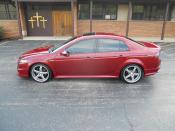
I like the 07 TL-S and how it downshifts! I use the gas pedal when I want to move. Its nice coming up to a red light and having the auto downshift not having to hit the brake right away.

Racer
Joined: Dec 2007
Posts: 380
Likes: 2
Here's a link to another discussion I started yesterday about the same topic without seeing this thread 

Racer
Joined: Jan 2009
Posts: 443
Likes: 4
guys I had an 05 TL 5AT that didn't do this at all. I now drive an 07 TLS that does this. I figured it was normal to allow the car to more quickly downshift incase you want to rapidly accelerate again. It kinda threw me for a loop at first but now it almost feels like I am driving a manual again. I like it.

6th Gear
Joined: Oct 2008
Posts: 6
Likes: 0
From: Frisco Tx; Nashville TN
If you dont like the braking assist disable VSA and it will be less noticable if I believe this is correct it should disable 80%-100% of the assist in all aspects of the stability assist.