


ATF additives

Thread Starter
Advanced
Joined: Nov 2010
Posts: 86
Likes: 4
From: NJ
ATF additives
I'm about to get a transmission fluid change! Do you guys have any suggestions on what I can add to avoid transmission problems? btw, I decided to stick with Z1 fluid, I'm too scared to run type F 



Team Owner
Joined: Mar 2006
Posts: 20,172
Likes: 1,818
From: Bakersfield
So instead of going with what works and what hundreds are using you would pick the fluid with thousands of failures and add some magical additive that no one has tried... how would an additive be less scary than type f which is a regular fluid with the FM deleted.


RAR
Joined: Apr 2005
Posts: 10,783
Likes: 1,286
From: DC Metro
if you must stick with oem stuff, at LEAST use their new DW-1 fluid. Even Honda knows the Z1 was crap and have changed it.
In terms of sheer risks, adding crap to your atf fluid sounds far riskier than using the type F.
In terms of sheer risks, adding crap to your atf fluid sounds far riskier than using the type F.
Trending Topics
Pro
Joined: Sep 2004
Posts: 640
Likes: 0
From: NJ
Went with Redline D4. Did the change this past weekend and will do another in couple of weeks, then again. Quicker you get that Z1 junk out, the better your tranny will be. Might was well do the 3rd and 4th switches as well. Just ordered them through Delray.

Dogmatic Dinosaur
Joined: Jul 2010
Posts: 1,532
Likes: 74
From: Boulder, CO
If you absolutely must stick with the Z1, then I would suggest that you avoid driving your car.
If you are scared of the F, then at least get a better base in there. Redline D4, AMSOil or Mobil 1 Dex III would be a whole lot better - they even say Honda Z1 substitute on the bottle.
If you are scared of the F, then at least get a better base in there. Redline D4, AMSOil or Mobil 1 Dex III would be a whole lot better - they even say Honda Z1 substitute on the bottle.

AZ Community Team


Joined: Nov 2004
Posts: 19,097
Likes: 4,758
From: Maryland
I would avoid any ATF additives. I do not have a 5AT TL, but my wife has a 2003 Honda Pilot which is very similar to the 5AT in the 3G TL. It's only used Z1 and more recently DW-1, changed at 15-20K intervals for a single drain/fill. The Pilot just turned 180K miles this week and the transmission has never had a problem and shifts fine.
The Type-F fluids or other aftermarket fluids may work better than the Honda ATF but I do not know. I do know I tried other Dex-3 fluids (Mobile-1 and Castrol) in our Legend back in the 90's and the shifting was awful so I went back to the Z1 and that cured the problems. i only changed from the Z1 in thinking that the aftermarket fluids have to be better, but that was not the case since the shifting was fine before and after when it had Z1.
That ended my willingness to try other ATF fluids in Honda/Acura's. I recommend to friends/neighbor to stick with the Honda ATF. The Honda/Acura AT failures are due to design and manufacturing problems, I've seen no factual evidence that the fluid was the cause. However some folks on these forums have had good results with other ATF fluids and replacing the pressure sensors.
Honda/Acura AT's is design are different from other AT's, always has been from the 1st 2AT used in a Civic back in the 70's to the newer 6AT. In terms of gears, clutches, valves, Honda does it their way.
Doesn't also mean Honda fluids are the best either, I use the GM MTF FM in my 6MT and it works far better than either of the two Honda MTF's. Also use aftermarket engine oil and brake fluid, but stick with Honda antifreeze (that's another hot topic) and VTM-4 fluid for the rear differential.
The Type-F fluids or other aftermarket fluids may work better than the Honda ATF but I do not know. I do know I tried other Dex-3 fluids (Mobile-1 and Castrol) in our Legend back in the 90's and the shifting was awful so I went back to the Z1 and that cured the problems. i only changed from the Z1 in thinking that the aftermarket fluids have to be better, but that was not the case since the shifting was fine before and after when it had Z1.
That ended my willingness to try other ATF fluids in Honda/Acura's. I recommend to friends/neighbor to stick with the Honda ATF. The Honda/Acura AT failures are due to design and manufacturing problems, I've seen no factual evidence that the fluid was the cause. However some folks on these forums have had good results with other ATF fluids and replacing the pressure sensors.
Honda/Acura AT's is design are different from other AT's, always has been from the 1st 2AT used in a Civic back in the 70's to the newer 6AT. In terms of gears, clutches, valves, Honda does it their way.
Doesn't also mean Honda fluids are the best either, I use the GM MTF FM in my 6MT and it works far better than either of the two Honda MTF's. Also use aftermarket engine oil and brake fluid, but stick with Honda antifreeze (that's another hot topic) and VTM-4 fluid for the rear differential.
Last edited by Legend2TL; Mar 16, 2011 at 06:55 AM.
Team Owner
Joined: Mar 2006
Posts: 20,172
Likes: 1,818
From: Bakersfield
I would avoid any ATF additives. I do not have a 5AT TL, but my wife has a 2003 Honda Pilot which is very similar to the 5AT in the 3G TL. It's only used Z1 and more recently DW-1, changed at 15-20K intervals for a single drain/fill. The Pilot just turned 180K miles this week and the transmission has never had a problem and shifts fine.
The Type-F fluids or other aftermarket fluids may work better than the Honda ATF but I do not know. I do know I tried other Dex-3 fluids (Mobile-1 and Castrol) in our Legend back in the 90's and the shifting was awful so I went back to the Z1 and that cured the problems. i only changed from the Z1 in thinking that the aftermarket fluids have to be better, but that was not the case since the shifting was fine before and after when it had Z1.
That ended my willingness to try other ATF fluids in Honda/Acura's. I recommend to friends/neighbor to stick with the Honda ATF. The Honda/Acura AT failures are due to design and manufacturing problems, I've seen no factual evidence that the fluid was the cause. However some folks on these forums have had good results with other ATF fluids and replacing the pressure sensors.
Honda/Acura AT's is design are different from other AT's, always has been from the 1st 2AT used in a Civic back in the 70's to the newer 6AT. In terms of gears, clutches, valves, Honda does it their way.
Doesn't also mean Honda fluids are the best either, I use the GM MTF FM in my 6MT and it works far better than either of the two Honda MTF's. Also use aftermarket engine oil and brake fluid, but stick with Honda antifreeze (that's another hot topic) and VTM-4 fluid for the rear differential.
The Type-F fluids or other aftermarket fluids may work better than the Honda ATF but I do not know. I do know I tried other Dex-3 fluids (Mobile-1 and Castrol) in our Legend back in the 90's and the shifting was awful so I went back to the Z1 and that cured the problems. i only changed from the Z1 in thinking that the aftermarket fluids have to be better, but that was not the case since the shifting was fine before and after when it had Z1.
That ended my willingness to try other ATF fluids in Honda/Acura's. I recommend to friends/neighbor to stick with the Honda ATF. The Honda/Acura AT failures are due to design and manufacturing problems, I've seen no factual evidence that the fluid was the cause. However some folks on these forums have had good results with other ATF fluids and replacing the pressure sensors.
Honda/Acura AT's is design are different from other AT's, always has been from the 1st 2AT used in a Civic back in the 70's to the newer 6AT. In terms of gears, clutches, valves, Honda does it their way.
Doesn't also mean Honda fluids are the best either, I use the GM MTF FM in my 6MT and it works far better than either of the two Honda MTF's. Also use aftermarket engine oil and brake fluid, but stick with Honda antifreeze (that's another hot topic) and VTM-4 fluid for the rear differential.
The Legend was not a DBW car so its apples to oranges.
The hydraulics and solenoids are pretty standard.
The design issues were limited to the second gear lube issues. The rest is fluid and switch related. Take a look at how many low mileage failures are happening nearly daily on here on Z1. There is a problem, you can't deny it. Now look at how many transmissions the fluid and switches have saved from their death bed and try and find a failure on type f. Sometimes the proof is right in front of you, you just have to see it.
Dogmatic Dinosaur
Joined: Jul 2010
Posts: 1,532
Likes: 74
From: Boulder, CO
My 92 accord lasted 60K on the Honda fluid. The same tranny, after I rebuilt it, lasted 340K on Dex III and was still going strong last year when I got rid of it - the guy at the trans shop who helped me emplored me to use Dex III in it. It would shift very firm on Dex III, but it softened out on synthetic Dex III. Never once did I have metal shavings on the magnetic plug in about 15 years. I will never use any honda fluid again until they at least find a better base, which does not appear to be happening any time soon. Even the medium amount of FM in the synthetic Mobil 1 Dex III (better base) left no metal shavings on my plug after 20K... so why would you use honda fluid at all when even a Dex III compatible fluid reduces wear to next to nothing?
I'm going with Redline Type F in a few weeks. I've literally read almost every page in that thread and I'm definitely comfortable now doing the 3x3 now.
2 quarts Racing and 1 quart Lightweight Racing on each fill-up.
2 quarts Racing and 1 quart Lightweight Racing on each fill-up.
AZ Community Team
Joined: Nov 2004
Posts: 19,097
Likes: 4,758
From: Maryland
Correct, today most AT manufacturers have gone toward the Honda approach of using multiple parallel shafts with clutch packs. the older planetary gears approach was never used by Honda and is still used today but spmetimes as a hybrid approach with parallel shafts. However I differ in that it has alot to do with the requirements. However calling it a manual with clutch packs is a oversimplification.
DBW has very little to do with it, case in point the Honda Pilot went from cable to DBW and the gearbox didn't change. The Legend 4AT had a ECU that had some but very little integration with the engine ECU (throttle position and RPM).
The basic problem with my Legend was the multi-stage locking torque converter didn't like the DEX3 fluids. I wrote on a Acura Legend bulletin board and a former Acura/Honda tech told me to switch back to the Z1 fluid. I don't remember all he said but vaguely that torque converter had a servo valve that allowed 4 settings (no lock, little, some, full) of locking and the aftermarket fluids just didn't work well with the torque converter, specifically the locking mechanism and the servo valve. When it would transition from one to the other, esspecially when unlocking from full there would be a awful shutter. I though the gearbox was damaged but after switching back it went back to normal and went on to 240K miles with no problems.
AT are fairly complicated and more recently they've become much more so. My thought is the manufacturers know far more than any of the end users. They have the technical info, do the validation testing, and have labs with load dyno's to test the AT. I just see it as extremely difficult for the average user to gain alot of non-emperical knowledge of the Honda/Acura AT's. I've only seen them taken apart at the dealer usually in the return pile for rebuilding.
I don't see any proof yet, I do see observations. A few people I know have 1G MDX's and 2G Ody's with over 200K miles but that doesn't say the Z1 or DW-1 are great or better than aftermarket fluids. Some folks have changed out their fluid and they prefer the improved shifts they feel. If someone would measure the pressure/electrical table and compare the old/new switches that would be proof.
On the older Honda/Acura AT's there was definitely problems (design and fabrication), I know LOTs of folks who had problems with 2G TL's and AV6's. The newer ones I do not know anyone with a AT failure. That's not to say this folks are not having problems. On the older AT's it was a systematic/probability failure where there were some definite cause/effect fishbone diagrams that could be drawn. On the newer gearboxes I've not seen any data yet.
DBW has very little to do with it, case in point the Honda Pilot went from cable to DBW and the gearbox didn't change. The Legend 4AT had a ECU that had some but very little integration with the engine ECU (throttle position and RPM).
The basic problem with my Legend was the multi-stage locking torque converter didn't like the DEX3 fluids. I wrote on a Acura Legend bulletin board and a former Acura/Honda tech told me to switch back to the Z1 fluid. I don't remember all he said but vaguely that torque converter had a servo valve that allowed 4 settings (no lock, little, some, full) of locking and the aftermarket fluids just didn't work well with the torque converter, specifically the locking mechanism and the servo valve. When it would transition from one to the other, esspecially when unlocking from full there would be a awful shutter. I though the gearbox was damaged but after switching back it went back to normal and went on to 240K miles with no problems.
AT are fairly complicated and more recently they've become much more so. My thought is the manufacturers know far more than any of the end users. They have the technical info, do the validation testing, and have labs with load dyno's to test the AT. I just see it as extremely difficult for the average user to gain alot of non-emperical knowledge of the Honda/Acura AT's. I've only seen them taken apart at the dealer usually in the return pile for rebuilding.
I don't see any proof yet, I do see observations. A few people I know have 1G MDX's and 2G Ody's with over 200K miles but that doesn't say the Z1 or DW-1 are great or better than aftermarket fluids. Some folks have changed out their fluid and they prefer the improved shifts they feel. If someone would measure the pressure/electrical table and compare the old/new switches that would be proof.
On the older Honda/Acura AT's there was definitely problems (design and fabrication), I know LOTs of folks who had problems with 2G TL's and AV6's. The newer ones I do not know anyone with a AT failure. That's not to say this folks are not having problems. On the older AT's it was a systematic/probability failure where there were some definite cause/effect fishbone diagrams that could be drawn. On the newer gearboxes I've not seen any data yet.
Honda auto transmissions are different in that instead of using planetary gears like most autos, they basically threw some clutch packs on a manual. However this has nothing to do with fluid requirements. It still uses clutch packs so it still responds the same to different fluids.
The Legend was not a DBW car so its apples to oranges.
The hydraulics and solenoids are pretty standard.
The design issues were limited to the second gear lube issues. The rest is fluid and switch related. Take a look at how many low mileage failures are happening nearly daily on here on Z1. There is a problem, you can't deny it. Now look at how many transmissions the fluid and switches have saved from their death bed and try and find a failure on type f. Sometimes the proof is right in front of you, you just have to see it.
The Legend was not a DBW car so its apples to oranges.
The hydraulics and solenoids are pretty standard.
The design issues were limited to the second gear lube issues. The rest is fluid and switch related. Take a look at how many low mileage failures are happening nearly daily on here on Z1. There is a problem, you can't deny it. Now look at how many transmissions the fluid and switches have saved from their death bed and try and find a failure on type f. Sometimes the proof is right in front of you, you just have to see it.
Last edited by Legend2TL; Mar 16, 2011 at 11:32 AM.
Team Owner
Joined: Mar 2006
Posts: 20,172
Likes: 1,818
From: Bakersfield
Correct, today most AT manufacturers have gone toward the Honda approach of using multiple parallel shafts with clutch packs. the older planetary gears approach was never used by Honda and is still used today but spmetimes as a hybrid approach with parallel shafts. However I differ in that it has alot to do with the requirements. However calling it a manual with clutch packs is a oversimplification.
The basic problem with my Legend was the multi-stage locking torque converter didn't like the DEX3 fluids. I wrote on a Acura Legend bulletin board and a former Acura/Honda tech told me to switch back to the Z1 fluid. I don't remember all he said but vaguely that torque converter had a servo valve that allowed 4 settings (no lock, little, some, full) of locking and the aftermarket fluids just didn't work well with the torque converter, specifically the locking mechanism and the servo valve. When it would transition from one to the other, esspecially when unlocking from full there would be a awful shutter. I though the gearbox was damaged but after switching back it went back to normal and went on to 240K miles with no problems.
It's irrelevent because not a single person has had torque converter shudder on this fluid in a TL.
AT are fairly complicated and more recently they've become much more so. My thought is the manufacturers know far more than any of the end users. They have the technical info, do the validation testing, and have labs with load dyno's to test the AT. I just see it as extremely difficult for the average user to gain alot of non-emperical knowledge of the Honda/Acura AT's. I've only seen them taken apart at the dealer usually in the return pile for rebuilding.
I don't see any proof yet, I do see observations. A few people I know have 1G MDX's and 2G Ody's with over 200K miles but that doesn't say the Z1 or DW-1 are great or better than aftermarket fluids. Some folks have changed out their fluid and they prefer the improved shifts they feel. If someone would measure the pressure/electrical table and compare the old/new switches that would be proof.
Call this an observation or call it proof but most of the Honda AT problems started the exact year they put the electronics, namely the switches on their transmissions. Before that Honda autos were known for their crisp almost harsh shifts and great reliability. After the electronics they shifted much nicer but suffered the major reliability problems we know today.
Again, call it an observation but look around at how many autos were about to die with shudder and flare that were saved with the type f fluid and switches. I call it proof.
On the older Honda/Acura AT's there was definitely problems (design and fabrication), I know LOTs of folks who had problems with 2G TL's and AV6's. The newer ones I do not know anyone with a AT failure. That's not to say this folks are not having problems. On the older AT's it was a systematic/probability failure where there were some definite cause/effect fishbone diagrams that could be drawn. On the newer gearboxes I've not seen any data yet.


also i only found type F on amazon 12 bottles for $131 where are you guys finding the lighweight racing one?
Suzuka Master
Joined: Sep 2006
Posts: 5,071
Likes: 596
From: San Diego, CA
http://www.outdoorpros.com/Search.as...on+Fluid%7c140

Drifting
Joined: May 2006
Posts: 2,499
Likes: 222
From: Carlsbad, CA
I have had the type-F in less than a week but love the shifts. This was a simple 1x3 with previous fluid as Z1. The car performs very nice and I think I'm getting 1mpg better in the city too? I'll know more next week when I fill up. I tell you the Type-F makes the car like new- I have not noticed the 'clunk' going into reverse and shifts are very crisp.
This is the best bang-for-the-buck upgrade in my book.
This is the best bang-for-the-buck upgrade in my book.

Advanced
Joined: May 2010
Posts: 82
Likes: 0
From: Los Angeles
I have had the type-F in less than a week but love the shifts. This was a simple 1x3 with previous fluid as Z1. The car performs very nice and I think I'm getting 1mpg better in the city too? I'll know more next week when I fill up. I tell you the Type-F makes the car like new- I have not noticed the 'clunk' going into reverse and shifts are very crisp.
This is the best bang-for-the-buck upgrade in my book.
This is the best bang-for-the-buck upgrade in my book.
 )
)
AZ Community Team
Joined: Nov 2004
Posts: 19,097
Likes: 4,758
From: Maryland
I never inferred that it was a manual and the only change was a set of clutch packs. I think my meaning was clear enough. It uses manual transmission-like helical gears on shafts vs planetaries. You're preaching to the choir, I used to rebuild transmissions and I've recently seen a Honda 5at on the bench. Regardless, this does not change the fluid requirements. The frictions are still the same as any other automatic. I was pointing out where you said the Honda auto is so much different when in reality the hydraulics and frictions are pretty standard.
The TL uses a PWM torque converter lockup and we know it does not shudder because there are a ton of us running this fluid. I finally passed 20,000 miles on the fluid and 100,000 on the car.
It's irrelevent because not a single person has had torque converter shudder on this fluid in a TL.
It's irrelevent because not a single person has had torque converter shudder on this fluid in a TL.
The engineers have several goals. Reliability is not the only one. It's a compromise and it's completely obvious Honda put soft shifts in front of the least amount of wear. How can you put so much faith in them when you admit that there were several known design problems with this trans along with the class action lawsuits and nearly one new failure a day just on this board with the 3g?
 ).
). Reliability is a major concern from everything from seat belt material to engine oil seals. And on occasion we engineers (I'm a EE) make mistakes, and that results in recalls and problems. Stuff happens, it's the nature of technology and sometimes manufacturing but reliability is always a concern. I've never worked in the auto industry but have know ~10 engineers who have and know of the pressure they've gotten to make sure everything can be delivered with as few defects as possible. Warranty repairs cost money and often more than correcting the cause of the original problem.
The switches have already been measured. Read the big switch thread, the results are in there and they most definitely go bad so there's the proof. Again, the intent of the type F fluid is not to give softer shifts, it's to drastically increase the life of the trans. Most people are not educated enough to know when the trans is not shifting right until they get the shudder or flare.
Call this an observation or call it proof but most of the Honda AT problems started the exact year they put the electronics, namely the switches on their transmissions. Before that Honda autos were known for their crisp almost harsh shifts and great reliability. After the electronics they shifted much nicer but suffered the major reliability problems we know today.
Again, call it an observation but look around at how many autos were about to die with shudder and flare that were saved with the type f fluid and switches. I call it proof.
Again, call it an observation but look around at how many autos were about to die with shudder and flare that were saved with the type f fluid and switches. I call it proof.
What do you consider newer and older gearboxes? The 3gs are dropping all over the place. I remember when these cars were new and everyone was talking about how Honda fixed the problem. Fast forward a few years and look at all the failed transmissions. I hope the 4g is different but with more power and more weight I only see it getting worse.
Last edited by Legend2TL; Mar 17, 2011 at 06:53 AM.
Team Owner
Joined: Mar 2006
Posts: 20,172
Likes: 1,818
From: Bakersfield
You wrote "they basically threw some clutch packs on a manual". I was essentially referring to that. I'm no expert on AT by any means but to me over the last couple decades, the complexity of the AT's has increased alot. And with it many auto manufacturers have also chnaged the requirements on fluids. The devil is in the details, and that's where it matters. I don't know but I doubt everyone uses the same friction material for their clutches, or same bearings, valves, pumps, actuators, servos,... That is what is driving many manufacturers to get much more specific with ATF. It used to be a manufacturer would design a AT to a fluid, now-a-days I wonder if it's the opposite.
Mostly the fluid functions as a simple hydraulic fluid in the torque converter and hydraulic circuits. Any fluid would do fine for this use. Same with lube. As only a lubricant, just about any ATF would do fine in any transmission.
It's when you get to the frictions that the fluid choice makes a big difference. Ironically, the type F was originally designed for the Ford transmissions and if you use it in any semi-modern Ford transmission, the shudder will be unbearable.
As far as reliability is concerned, you want the quickest snappiest shift you can get without being too harsh. I've posted it in the other thread but at one end of the spectrum you have Z1 with a ton of friction modifiers, then you have the DexIII fluids like D4 and most of the "universal" ATFs in the middle and then the non FM fluid like Type F on the opposite end.
Most DBW do not close the throttle on shifts. They cut the fuel supply on shifts. That is how my wife's Pilot works, it's explaining in the first section in the Honda shop manual. My guess is most manufacturers were doing this since the mid-90's as a simple effective way to cut shift wear when they fully integrated the engine and AT electronics.
Reliability is a major concern from everything from seat belt material to engine oil seals. And on occasion we engineers (I'm a EE) make mistakes, and that results in recalls and problems. Stuff happens, it's the nature of technology and sometimes manufacturing but reliability is always a concern. I've never worked in the auto industry but have know ~10 engineers who have and know of the pressure they've gotten to make sure everything can be delivered with as few defects as possible. Warranty repairs cost money and often more than correcting the cause of the original problem.
I don't think the electronics were degrading but the diaphragm hardens and changes the switches trigger point. The third gear switch was overlapping well into 4th gear territory.
IMO, it's a observation. Honda has had electronics in AT's since the 80's. To me AT's have never been Honda's strong expertise. I driven Honda AT's from 70's Accords to current ones, I can only say they've gotten better with time and are far less power lost. Over time the amount of electronics has increased to the point where now the electronics control everthing (? not sure if that's true I have to look at the Pilot and TL shop manual). From what I've read the design and manufacturing of the late 90's early 00's AT's were the problem AT's.
Again after the redesign of the Honda/Acura gearbox of the early 2000's, I've not heard of systematic problems with failures like those with more current models. That was a extreme black eye to Honda for a poor product. There will still be failures none the less, but I've seen nothing like those 1999-2003 problems.
Pro
Joined: Sep 2004
Posts: 640
Likes: 0
From: NJ
Delray
Total was $81.69. This includes shipping and 2 gaskets. I got the D4 here www.racerpartswholesale.com
Other sites/stores might be cheaper but they have 12 bottles of the racing one for $116.95. Add it to your cart and the price will come up.
Last edited by aw1; Mar 17, 2011 at 03:33 PM.
AZ Community Team
Joined: Nov 2004
Posts: 19,097
Likes: 4,758
From: Maryland
I agree that the demands on fluids have risen. You now have 7 and 8 gears packed in a physically smaller unit. Heat production and rejection has changed a lot.
Mostly the fluid functions as a simple hydraulic fluid in the torque converter and hydraulic circuits. Any fluid would do fine for this use. Same with lube. As only a lubricant, just about any ATF would do fine in any transmission.
It's when you get to the frictions that the fluid choice makes a big difference. Ironically, the type F was originally designed for the Ford transmissions and if you use it in any semi-modern Ford transmission, the shudder will be unbearable.
As far as reliability is concerned, you want the quickest snappiest shift you can get without being too harsh. I've posted it in the other thread but at one end of the spectrum you have Z1 with a ton of friction modifiers, then you have the DexIII fluids like D4 and most of the "universal" ATFs in the middle and then the non FM fluid like Type F on the opposite end.
Mostly the fluid functions as a simple hydraulic fluid in the torque converter and hydraulic circuits. Any fluid would do fine for this use. Same with lube. As only a lubricant, just about any ATF would do fine in any transmission.
It's when you get to the frictions that the fluid choice makes a big difference. Ironically, the type F was originally designed for the Ford transmissions and if you use it in any semi-modern Ford transmission, the shudder will be unbearable.
As far as reliability is concerned, you want the quickest snappiest shift you can get without being too harsh. I've posted it in the other thread but at one end of the spectrum you have Z1 with a ton of friction modifiers, then you have the DexIII fluids like D4 and most of the "universal" ATFs in the middle and then the non FM fluid like Type F on the opposite end.
While I've never looked it up, most cars that I've driven only pull back timing but do not cut fuel on shifts. It's kind of hard to believe this because there are a few negative effects of cutting fuel each time it shifts. I've driven a '99 TL and it most definitely does not cut fuel on shifts. The 3g TL is the only car I've driven to where you can actually hear power cut on shifts.
As I mentioned, type F can cause harsh shifts and TCC shudder in other cars, that was the reason I was afraid to try it in the TL until Inaccurate came along and did it. Luckily we don't have to worry about that.
As I mentioned, type F can cause harsh shifts and TCC shudder in other cars, that was the reason I was afraid to try it in the TL until Inaccurate came along and did it. Luckily we don't have to worry about that.
I should have described it better but you are correct some manufacturers use ignition retarding, others use individual fuel cutoff. The fuel cutoff is selective so the V6 turns into a V2 or V3 to maintain angular momentum. The ECU uses a lookup table for the engine speed and throttle opening and uses the appropiate fuel or ignition reductions to reduct the torque output of the motor.
A former neighbor had a Trabant in Germany after the wall came down. She said it was truely a desposible car from the lack of valve guides and seats the motor was only good for maybe 50KM.
IMO, sometimes reliability takes second place to comfort. Ford got in trouble for this in the '90s. It's a concern, yes, but it's a balancing act. They have to sell cars too and the average consumer does not want to feel the car shift so a compromise is made. I worked in the transmission industry for years when I was younger and these compromises are well known.
Honda did not have electronics controlling the actual shifts until '99 or around that time. They had electronics as in a few sensors, probably TCC lockup, but nothing that could influence the shift quality. And as you said, the late '90s is when the problems started and it's when they added electronics so soften up the shifts.
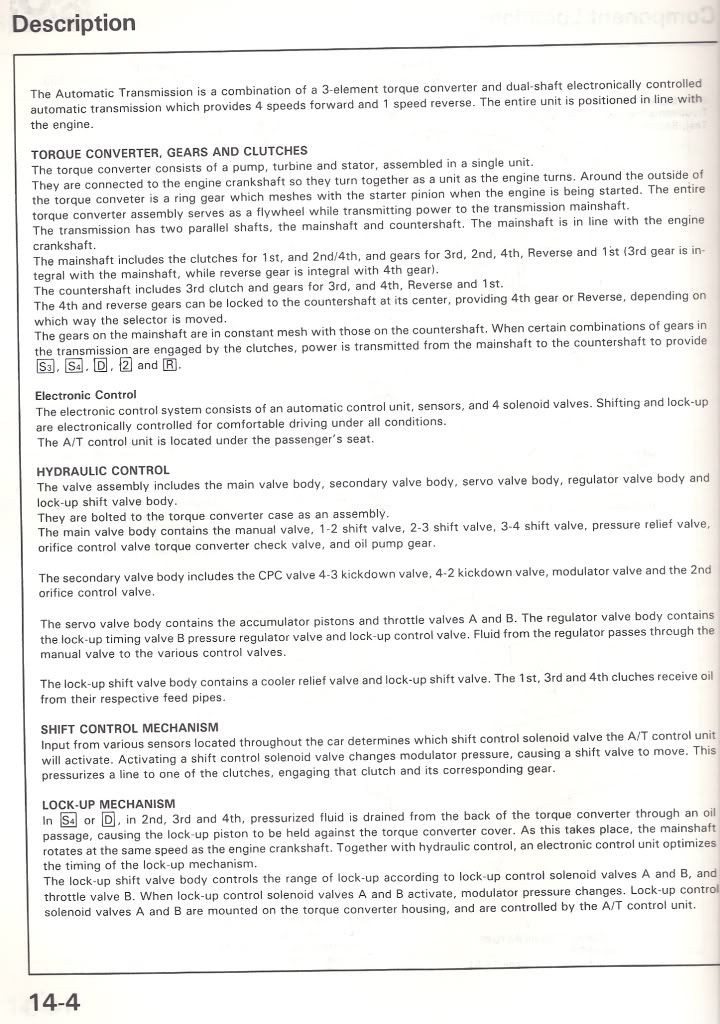
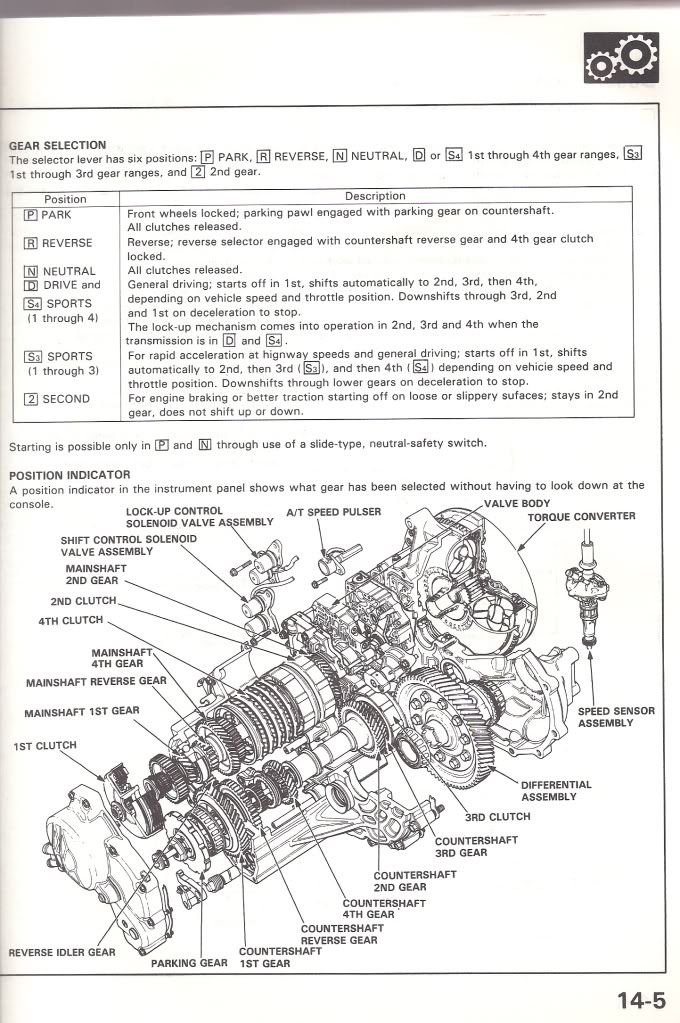
Most AT's from the late 80's onward used some electronic controls for the AT. As you pointed out TC was a easy one, but many were also controlling shifting as well. I thought later 80's Turbohydramatic used shift control solenoids. The electronics were slowly introduced, being controls for other hydraulic servos. AFAIK, variable electronic servos were not introduced until the late 90's. Another note is the lack of pressure sensors on the early systems, they were not open loop but used shaft speed sensors which provided not as good as the pressure sensors for providing smoother shifts.
Fortunately the wide-spread failures are not happening. Again I need to read some of the forums more, been too busy.
Last edited by Legend2TL; Mar 18, 2011 at 07:14 PM.
Thread Starter
Advanced
Joined: Nov 2010
Posts: 86
Likes: 4
From: NJ
Do you think I can do a 1x3 with Redline Racing Fluid if I'm currently at 94k miles while never have changed the transmission fluid (z1)? Do you think it would be safe to do a simple drain and fill with Type-F at such a high mileage?

Banned
Joined: May 2010
Posts: 3,138
Likes: 113
From: Charlotte, NC
Yup you'll be fine. Better now than later. after that change then do the full 3x3 with redline. you're better changing with a good fluid than keeping old fluid for 100k miles,

Thread
Thread Starter
Forum
Replies
Last Post
rcs86
Car Parts for Sale
3
Aug 2, 2016 06:52 PM
