When you click on links to various merchants on this site and make a purchase, this can result in this site earning a commission. Affiliate programs and affiliations include, but are not limited to, the eBay Partner Network.
What is the capacity of the battery? With all the electronics in this vehicle i fear the battery dying on me. In my 05 TL it happened a few times, so this is something that worries me.
I figured out how to turn the screen off and i shut off the lights as soon as I turn the car.
Thanks Madd Dog, and I think I read somewhere that it is a pretty Heavy Duty Battery due to the Auto Stop feature as it is constantly starting the car. I do not think you can replace it with just any old battery.
What is the capacity of the battery? With all the electronics in this vehicle i fear the battery dying on me. In my 05 TL it happened a few times, so this is something that worries me.
I figured out how to turn the screen off and i shut off the lights as soon as I turn the car.
Don't worry about the battery, it will be fine. Understand that all those electronics in that car go into a "sleep" mode when you shut down. They will not be draining the battery. I have let my RDX sit for several weeks at a time while I am away or am driving our "around town car' (Honda Fit) and the battery never misses a beat when I go to start the car. Its a non-issue.
I never had an AGM battery before. Anybody know the warning signs, or are they pretty much the same as any other battery? I learned a long time ago it's better to replace a battery a few months too early than a day too late.
Modern batteries tend to fail with little or no warning. For years, Honda's FLA batteries have been known to die as early as 2-3 years. Honda began using AGM batteries in the Pilot in 2015. There have been a few reports on a Pilot forum of them suddenly dying after 1-2 years.
Modern batteries tend to fail with little or no warning. For years, Honda's FLA batteries have been known to die as early as 2-3 years. Honda began using AGM batteries in the Pilot in 2015. There have been a few reports on a Pilot forum of them suddenly dying after 1-2 years.
AFAIK Honda started using AGM batteries in the 2016 Pilot ( production started May/June 2015 ), and only in the upper trims that were equipped with the 9-speed ZF transmission and auto idle stop. ( I had one ). It's the frequent start/stop cycles of the idle stop system that require the AGM battery. Same deal with our RDXs. There is also an actively ventilated ( ducted and fan-cooled ) enclosure for the battery to mitigate battery overheating from frequent engine starts and subsequent rapid recharging.
But unless the battery is "deep cycled" by running the audio for hours with the engine off, the greatest risk to the battery may be frequent activation of the idle-stop system in stop-and-go traffic. Starting the engine draws much more current than running the electronics.
If anyone intends to put it on a battery tender, make absolutely sure the tender says, right on it, that it is for an AGM.
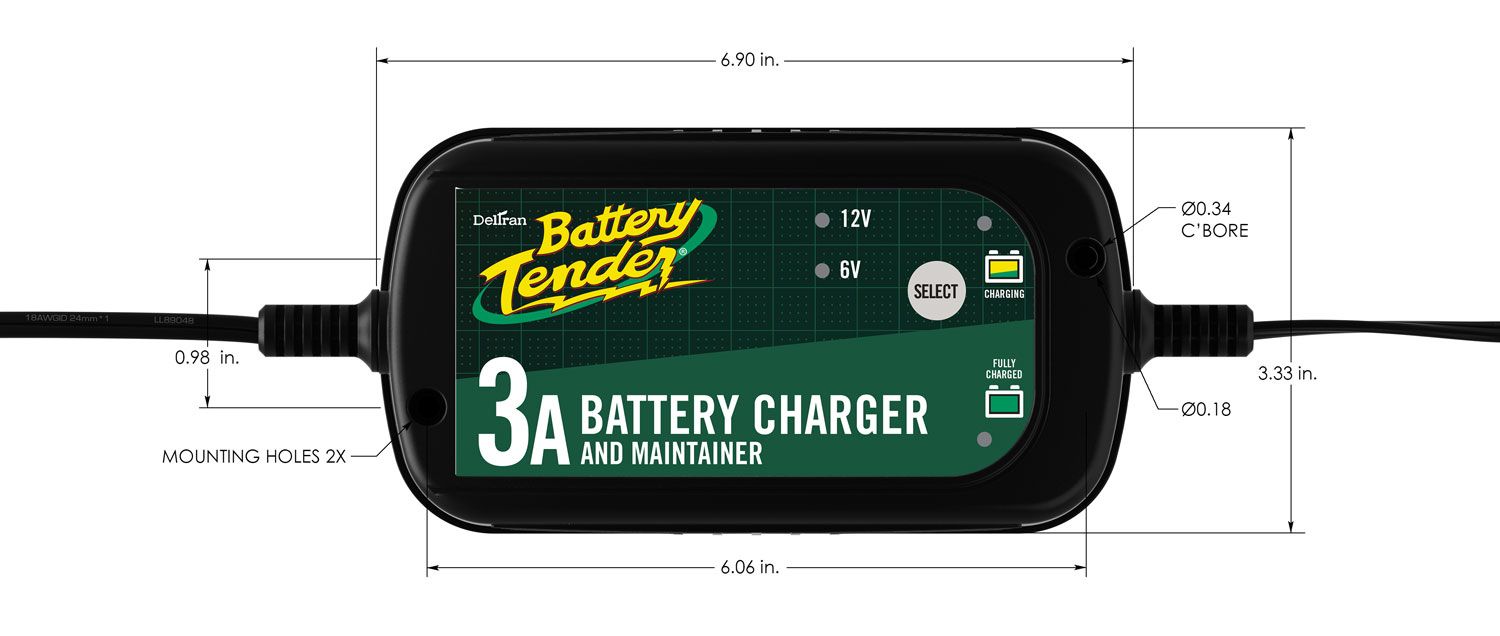
Get your Deltran Battery Tender Power Plus 3 Amp Charger at Costco for $39.99.
Product details have been supplied by the Manufacturer, and are hosted by a third party.
Always Ready To Go
with Battery Tender 3 Amp SuperSmart Battery Charger® & Maintainer.
The Battery Tender® Power Plus is a 3 Amp battery charger that will fully recharge and then maintain a battery at its proper storage voltage without the damaging effects caused by trickle chargers. A higher output (3 amps) than the original Battery Tender Plus for a quicker recharge on Automotive, Marine, and Power Sport batteries combined with the automatic switch to maintenance mode makes this unit very versatile. It is an ideal charger for everyday charging use or long-term storage and maintenance. Ideal for AGM, Flooded, and Gel batteries.
AFAIK Honda started using AGM batteries in the 2016 Pilot ( production started May/June 2015 ), and only in the upper trims that were equipped with the 9-speed ZF transmission and auto idle stop. ( I had one ). It's the frequent start/stop cycles of the idle stop system that require the AGM battery. Same deal with our RDXs. There is also an actively ventilated ( ducted and fan-cooled ) enclosure for the battery...
Correct on the model and production years and specific Pilot trim application.
Also, all current-generation Pilots, Ridgelines, Odysseys, and Passports have a ducted battery box with a cooling fan like the RDX - even those without auto stop and AGM batteries. The Accord with the similar 2.0T/10AT as the RDX does not.
Curiously, the battery cooling fan in these applications is not monitored, so a fan failure will not result in any lights, messages, or DTC's - decreased battery life would likely be the only symptom if the fan stopped working.
Wanted to buy battery charger/starter. Looks like owner manual says to contact the dealer about instructions how to charge the battery. Do you need to disconnect the battery before charging it, or just clamp cables on top of it to charge?
Would not want to mess up electronics
Wanted to buy battery charger/starter. Looks like owner manual says to contact the dealer about instructions how to charge the battery. Do you need to disconnect the battery before charging it, or just clamp cables on top of it to charge?
Would not want to mess up electronics
I have the same question/concern. I have an AGM compatible maintainer that I'd like to use. I assume it's not harmful to stay connected, but not 100% certain. There would probably be a warning if charging in place was damaging to electronics, but again, not worth the chance without certainly.
I have the same question/concern. I have an AGM compatible maintainer that I'd like to use. I assume it's not harmful to stay connected, but not 100% certain. There would probably be a warning if charging in place was damaging to electronics, but again, not worth the chance without certainly.
without any information, Its probably safer bet to remove negative terminal from the battery before charging it. This way if anything gets messed up, it would be just a bad battery and not car electronics.
you also would hope that cheap chinese car charger will not start fire, lol
without any information, Its probably safer bet to remove negative terminal from the battery before charging it. This way if anything gets messed up, it would be just a bad battery and not car electronics.
you also would hope that cheap chinese car charger will not start fire, lol
You would definitely be safe to isolate the battery. I have used this maintainer on a car and lawn tractor that are stored over Northeast US winters. The battery in the car lasted 10 years, so I'm confident it's not a bad product. But I do understand the concern for Chinese quality control.
What impact does battery disconnect have on settings, infotainment, etc.?
I was looking at this one. Maybe battery does not need to be disconnected, after all they let you jump start your car from booster battery, so it should not harm anything (assuming its not a low quality device)
What impact does battery disconnect have on settings, infotainment, etc.?
AFAIK some settings/data get lost. I wouldn't bother to disconnect, just get a decent charger rated for AGMs. The battery is a buffer for voltage, so the electronics should be fine.
But if for some reason you WANT to kill your vehicle electronics, just hook up an unbuffered power supply to the vehicle's battery terminals without the battery connected. That should do it.
I was looking at this one. Maybe battery does not need to be disconnected, after all they let you jump start your car from booster battery, so it should not harm anything (assuming its not a low quality device) https://www.amazon.com/Schumacher-SC...7945555&sr=8-8
Schumacher is an old name in battery chargers. If you find an old survivor, metal-cased, battery charger at a garage sale, it's probably a Schumacher. Of course, their current products are lightweight plastic and Chinese made. This has good reviews are will likely work well.
I don't really think the battery has to be disconnected; I tend to be overly cautious with new things until I'm more familiar with how they work.
Never had to disconnect anything to charge or maint a battery, that's what fuses are for.
There is really no need for a tender unless you intend to store the car for months without driving. I only put a tender on my motorcycle during winter months.
If you are fearing battery drainage or dying, get a portable battery charger. I always have one in my car now after an incident left me waiting hours for roadside maintenance to show up (then he swipes out a battery jumper) My time is more valuable than waiting for "free" service to show up so I invested in one.
Since then I've used it more than once and helped out others. Returned in investment already.
Never had to disconnect anything to charge or maint a battery, that's what fuses are for.
This is true as long as we're talking about current surge. As you know, electronics can be damaged by other factors, such as quality and type of power being supplied (A fuse won't protect from a wonky wave pattern from a cheap inverter). But, this is straying off the point.
I too have an older power pack that we take when we go to the Outer Banks. It's great as a power supply and backup for dead battery in the middle of nowhere.
Never had to disconnect anything to charge or maint a battery, that's what fuses are for.
There is really no need for a tender unless you intend to store the car for months without driving. I only put a tender on my motorcycle during winter months.
If you are fearing battery drainage or dying, get a portable battery charger. I always have one in my car now after an incident left me waiting hours for roadside maintenance to show up (then he swipes out a battery jumper) My time is more valuable than waiting for "free" service to show up so I invested in one.
Since then I've used it more than once and helped out others. Returned in investment already.
Mostly agree, but fuses don't protect against voltage spikes. They only protect against excessive current. Modern electronics don't like voltage spikes.
Also, AGM lead-acid batteries don't like old-school analog chargers designed for conventional flooded lead-acid batteries. Even if they are a respected brand like Schumacher. Get one of their modern microprocessor controlled chargers if you want one. But yeah, I mostly use mine on boats or lawn equipment. Or my old cars that are trying to become lawn decorations. But they are helpful if you manage to drain your car battery somehow, like trying to install a software update for hours without the engine running. ( Make sure the headlights aren't on! ).
The problem is not just about starting your car. Battery that is under charged wears out a lot faster even though it can start your car. Its a good idea to have portable jump start, but you dont want your battery get to that point, it really shortens its life and these AGM batteries are not cheap.
I am going to charge my cars, with being at home and not driving or very little the battery definitely getting low on my cars
Since the pandemic, we have been driving as well. We mostly go on short trips with our RDX, while my other just sat in the garage. I'm worried about the battery like this other people on this thread. I measured the voltage across the battery terminal while the car is off but still connected. Its 11.78 volt.
According to this, https://images.app.goo.gl/PEHE7N4SdfAFcHeFA , that's 30% charge. However, it can still start the car no problem.
Can anyone check their resting voltage and reply here?
Since the pandemic, we have been driving as well. We mostly go on short trips with our RDX, while my other just sat in the garage. I'm worried about the battery like this other people on this thread. I measured the voltage across the battery terminal while the car is off but still connected. Its 11.78 volt.
According to this, https://images.app.goo.gl/PEHE7N4SdfAFcHeFA , that's 30% charge. However, it can still start the car no problem.
Can anyone check their resting voltage and reply here?
I put mine on battery tender since I drive it only once a week for 10min. Works well if you have a garage
My 2019 Advance shows 12.2 VDC on the battery terminals, and the Auto Idle Stop function works as the manual describes. Keep in mind however, that the typical handyman grade voltmeter is not a lab grade device, and measurements may vary widely just because of the meters being used. My meter for instance, uses a 0-200 VDC scale, and meters of this grade typically will quote accuracy as +/- 1% of full scale, thus +/- 2 volts. That makes any comparison pretty useless without some common calibration standard for the meters. The acid test is that the AIS works or not; mine is working for now. I have driven about 200 miles in the last 45 days, all just around town, and in many intervals the car sat in the garage for several days at a time. I rarely enable the AIS, so I can't say that it worked all the time, but now that this discussion has brought up the issue, I have been leaving it enabled and it works as expected. If you use a battery tender, be certain the manufacturer specifies that it is suitable for AGM batteries.
My meter for instance, uses a 0-200 VDC scale, and meters of this grade typically will quote accuracy as +/- 1% of full scale, thus +/- 2 volts.
I'm using a home depot multimeter too, but I put mine in 0-20v mode, so its a little bit better.
My auto start/stop hasn't work since the pandemic started. Last week, I drove about an hour, about 45 miles, mix city/highway. The auto start stop never kicked in.
I'm thinking of getting a battery tender ( my other car needs it anyways. I had to jump it last night.). Which one is better, Noco Genius 2 ( 2 amp ) or Deltran battery tender 4amp. Both of them at $50 on Amazon now. Which is better?
I read somewhere that low ampere is better for batteries. But I also read that you should use (battery capacity amp Hour )/ 10 to charge. For example, RDX battery is 70aH, so you should use 7amp to charge. Not sure which one is correct.
I'm using a home depot multimeter too, but I put mine in 0-20v mode, so its a little bit better.
My auto start/stop hasn't work since the pandemic started. Last week, I drove about an hour, about 45 miles, mix city/highway. The auto start stop never kicked in.
I'm thinking of getting a battery tender ( my other car needs it anyways. I had to jump it last night.). Which one is better, Noco Genius 2 ( 2 amp ) or Deltran battery tender 4amp. Both of them at $50 on Amazon now. Which is better?
I read somewhere that low ampere is better for batteries. But I also read that you should use (battery capacity amp Hour )/ 10 to charge. For example, RDX battery is 70aH, so you should use 7amp to charge. Not sure which one is correct.
if you not in a rush to charge battery, low amps is better. Anything 2-4amp is OK. Mine is 4amp, and its fine. Modern ones have micro controllers and will not overcharge. Its plugin and forget.
Thanks for info! I ordered the Deltran battery tender 4amp from amazon. If you don't mind, can you tell me your charging routine? I know you said you only drive 10 min per week. Do you plug it in after you drive and leave it all week until your next drive?
While we’re on the topic, can someone point out the booster terminal to me in this pic? I haven’t had to jump my car yet, but I’m a little worried that my booster pack won’t reach between battery and the booster terminal. How do people with tenders manage? I haven’t used a tender since I had a motorcycle many years ago but I remember them having pretty short cords too.
I personally would prefer a charger with a separate charge mode specific to AGM batteries only. AGM batteries are more sensitive to overcharging than flooded or gel batteries and a one size fits all setting is not ideal, for me. (Not an electronics engineer) I remember seeing something from one of the major battery makers warning against this type of "generic" charge mode. I'll post if I find it.
I was using my RDX as a donor vehicle, not the receiving vehicle, so I didn't have to connect to ground. But looking at the picture my jumper cables won't reach the ground terminal in the picture. So far away.
Ok now I think I see it. In the diagram, it's on the other side of that hose. This pic is one I just grabbed from the internet so I don't know if it's accurate to my car or other RDXs.
Since it's so far away, is there another ground point that people use instead? Or is there any reason that shouldn't be done?
I personally would prefer a charger with a separate charge mode specific to AGM batteries only. AGM batteries are more sensitive to overcharging than flooded or gel batteries and a one size fits all setting is not ideal, for me. (Not an electronics engineer) I remember seeing something from one of the major battery makers warning against this type of "generic" charge mode. I'll post if I find it.
It was Optima that talked about the multi-type mode setting. It's near the end of the video. Of course, it's fair to argue they are selling their own $200 battery charger and self-interest may be a factor. But I'd still prefer a dedicated AGM mode
Ok now I think I see it. In the diagram, it's on the other side of that hose. This pic is one I just grabbed from the internet so I don't know if it's accurate to my car or other RDXs.
Since it's so far away, is there another ground point that people use instead? Or is there any reason that shouldn't be done?
Many jumper cables have thin rubber webbing between the cables that allows them to be pulled apart to span a wider separation. If possible, that would be ideal.
You want a good grounding point capable of safely accepting starting current and not so close to the battery that a spark when connecting could potentially ignite battery gases. Maybe someone else has found a good alternative location..


















 ).
).