


How many bottles does it take to break a J32A2 (answer inside)

Thread Starter
J-series addict
iTrader: (4)
Joined: Aug 2011
Posts: 2,363
Likes: 617
From: Plano, Tx
How many bottles does it take to break a J32A2 (answer inside)
It takes approximately 54 (well, more like 54 1/4) to blow the bottom end out of a J32A2 motor...







Thread Starter
J-series addict
iTrader: (4)
Joined: Aug 2011
Posts: 2,363
Likes: 617
From: Plano, Tx





Thread Starter
J-series addict
iTrader: (4)
Joined: Aug 2011
Posts: 2,363
Likes: 617
From: Plano, Tx
Thanks man, I consider 54 bottles on a STOCK J32A2 motor a grand accomplishment!
And now, back to the story...

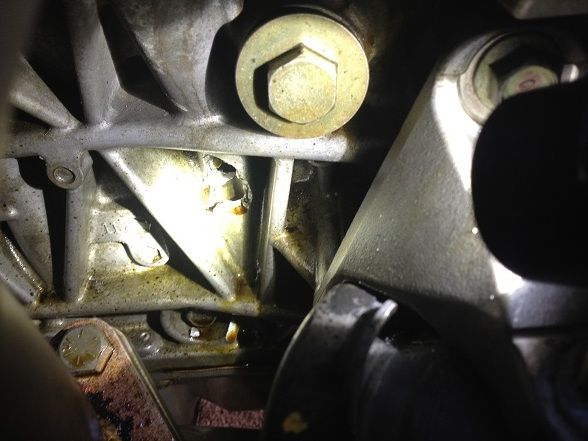
Hole in the bottom of oilpan...
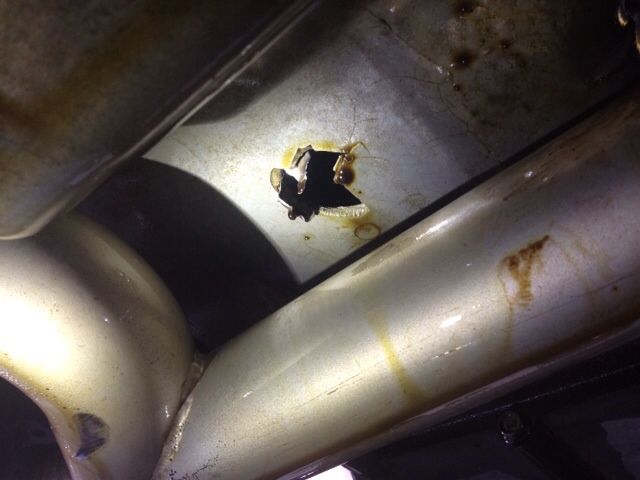
Would like to see inside?
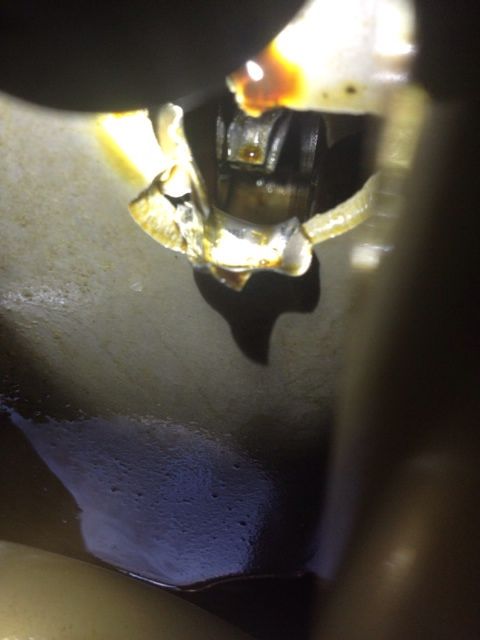
It appears that cylinder 3 connecting rod broke in half. The bottom half is still attached to the crankshaft and the upper half was stuck inside the front of the block and also broke away from piston itself. Before breaking in half, it slung around inside the crankcase knocking holes all the way around. This would be the second time I've seen this happen to a motor.
As they always say, the connecting rod is the most important part of the rotating assembly and is generally what breaks/bends first. The two I've seen break failed at the upper rod bearing which is the weakest part of the rod.
And now, back to the story...
Hole in the bottom of oilpan...
Would like to see inside?
It appears that cylinder 3 connecting rod broke in half. The bottom half is still attached to the crankshaft and the upper half was stuck inside the front of the block and also broke away from piston itself. Before breaking in half, it slung around inside the crankcase knocking holes all the way around. This would be the second time I've seen this happen to a motor.
As they always say, the connecting rod is the most important part of the rotating assembly and is generally what breaks/bends first. The two I've seen break failed at the upper rod bearing which is the weakest part of the rod.
Trending Topics

Thread Starter
J-series addict
iTrader: (4)
Joined: Aug 2011
Posts: 2,363
Likes: 617
From: Plano, Tx
There were faults yes...and doubts. Why wouldn't you question anybody's lack of competence? As for the motor, the result of the engine failing was expected but the power never lowered below a detectable level. Which leads me to believe that this fault was caused by a pre-existing mechanical malfunction (stressed/weak rods) that was not affecting power like say low compression and only say that because no signs were ever seen or felt nor did I see anything unusual on my monitoring gauges. I have recently acquired another 03 TL-S and it's performance was in close relation (but below) the power of this motor that failed. For someone to say that mileage caused weak dyno numbers, then no one here would be pulling above 200hp on dyno pulls. If anyone wants to say extensive and heavy nitrous use affected the numbers, then why was the car above in performance than the 03 TL-S I have?
And remember people that this was inevitably supposed to happen hence the title of the thread itself is named "how MANY bottles does it take to BREAK". It was solely to have fun with and show myself as well as the members of this forum engine capabilities and strength with using nitrous on a factory motor along with properly caring/maintaining it.
And remember people that this was inevitably supposed to happen hence the title of the thread itself is named "how MANY bottles does it take to BREAK". It was solely to have fun with and show myself as well as the members of this forum engine capabilities and strength with using nitrous on a factory motor along with properly caring/maintaining it.


Three Wheelin'
Joined: Oct 2007
Posts: 1,501
Likes: 5
From: Merritt Island FL
Are you sure there was not a malfunction of the nitrous system? Just saying. Last time I saw a rod like that it was in a Datsun that got spun upto about 8500 rpm.
You should just remove that piston and rod and jb weld the holes in the block and rock the 5 cylinder like me! lol
Oh, how much were you spraying on it anyways?
You should just remove that piston and rod and jb weld the holes in the block and rock the 5 cylinder like me! lol
Oh, how much were you spraying on it anyways?
Last edited by CH46ESeaKnight; Sep 30, 2012 at 10:36 PM.
Thread Starter
J-series addict
iTrader: (4)
Joined: Aug 2011
Posts: 2,363
Likes: 617
From: Plano, Tx
Are you sure there was not a malfunction of the nitrous system? Just saying. Last time I saw a rod like that it was in a Datsun that got spun upto about 8500 rpm.
You should just remove that piston and rod and jb weld the holes in the block and rock the 5 cylinder like me! lol
Oh, how much were you spraying on it anyways?
You should just remove that piston and rod and jb weld the holes in the block and rock the 5 cylinder like me! lol
Oh, how much were you spraying on it anyways?
Thread Starter
J-series addict
iTrader: (4)
Joined: Aug 2011
Posts: 2,363
Likes: 617
From: Plano, Tx
Three Wheelin'
Joined: Oct 2007
Posts: 1,501
Likes: 5
From: Merritt Island FL
Robert,
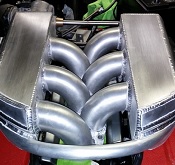
Your thoughts on going through the pain in the ass of a direct port vs a dual throttle body 125 zex wet setup for use on my custom velocity stacked dual tb manifold? I'm wondering if it would be worth the extra effort, as I have already gone to great lengths ensuring airflow to the last 2 cylinder banks is improved over the oem mani's.
Your thoughts on going through the pain in the ass of a direct port vs a dual throttle body 125 zex wet setup for use on my custom velocity stacked dual tb manifold? I'm wondering if it would be worth the extra effort, as I have already gone to great lengths ensuring airflow to the last 2 cylinder banks is improved over the oem mani's.

Racer
Joined: Dec 2011
Posts: 392
Likes: 76
From: York, PA
Robert,
Your thoughts on going through the pain in the ass of a direct port vs a dual throttle body 125 zex wet setup for use on my custom velocity stacked dual tb manifold? I'm wondering if it would be worth the extra effort, as I have already gone to great lengths ensuring airflow to the last 2 cylinder banks is improved over the oem mani's.
Your thoughts on going through the pain in the ass of a direct port vs a dual throttle body 125 zex wet setup for use on my custom velocity stacked dual tb manifold? I'm wondering if it would be worth the extra effort, as I have already gone to great lengths ensuring airflow to the last 2 cylinder banks is improved over the oem mani's.
so what exactly failed on the motor?
did the rod snap and blow out.. did a bolt or bolts fly loose and ram through the bottom end??
just curious... as i am not familliar enough to derive wtf i am looking at/ how it happened via the pictures?
thanks chief... oh and good job bud, now i cannot say j32A2 motors are indestructable. I'm gonna have to say they are impervious except there was this one guy .... LOL
hats off to you bud.. i think u made ur mark around here on this forum :-)
did the rod snap and blow out.. did a bolt or bolts fly loose and ram through the bottom end??
just curious... as i am not familliar enough to derive wtf i am looking at/ how it happened via the pictures?
thanks chief... oh and good job bud, now i cannot say j32A2 motors are indestructable. I'm gonna have to say they are impervious except there was this one guy .... LOL
hats off to you bud.. i think u made ur mark around here on this forum :-)
Thread Starter
J-series addict
iTrader: (4)
Joined: Aug 2011
Posts: 2,363
Likes: 617
From: Plano, Tx
Robert,
Your thoughts on going through the pain in the ass of a direct port vs a dual throttle body 125 zex wet setup for use on my custom velocity stacked dual tb manifold? I'm wondering if it would be worth the extra effort, as I have already gone to great lengths ensuring airflow to the last 2 cylinder banks is improved over the oem mani's.
Your thoughts on going through the pain in the ass of a direct port vs a dual throttle body 125 zex wet setup for use on my custom velocity stacked dual tb manifold? I'm wondering if it would be worth the extra effort, as I have already gone to great lengths ensuring airflow to the last 2 cylinder banks is improved over the oem mani's.
As for the the manifold, assuming that it's effective in supplying starved cylinders additional airflow, you have already started to combat the biggest obstacle any nitrous user faces. Unless you're running ITB's, you either rely on the intake manifolds effectiveness in air distribution or make your own enhancements to ensure this happens. Because there's no way to determine exactly how much airflow each cylinder is being fed, this is impossible. There's so many factors involved outside of the IM and I'd have to say that the biggest is internal engine dynamics such as: cylinder pressure variance, valve leakage, cylinder head flow characteristics, etc...
IMO, aviation engines have supplied a nitrous users best weapon in fighting this problem. I'll explain: there's one thing that changes when uneven amounts of air or fuel are added to individual cylinders. That would be the amount of heat it creates. Aviation mechanics had to deal with altitude issues and the problems that can affect proper AF ratios. That's when the ideal of an EGT monitoring system was developed and helped to alleviate the issue by allowing the AF ratio to be either monitored and/or controlled by watching each cylinders heat output and then making fuel adjustments in accordance. I would highly recommend looking into a EGT monitor for your motor and feel free to push that motor to its limits! A quick google search I found a 6 cylinder EGT monitoring system for almost $550. Using this along side a duel wideband AF meter setup and other common safety switches/devices it would be hard have ANY issues at all with heavy nitrous use.
Btw, I'd love to see what nitrous does on a J with a cam big enough to move some air. Your nitrous would hit very hard due to low airflow resistance. Take my advice and don't run a purge kit. The nitrous vapor in the lines will actually give you a needed "transistion lapse" that you'll need to protect the drivetrain from any hard blows. And check out my dual bottle setup. Sure you carry an extra 10lbs of gear but you have minimal pressure loss between sprays.
Thread Starter
J-series addict
iTrader: (4)
Joined: Aug 2011
Posts: 2,363
Likes: 617
From: Plano, Tx
so what exactly failed on the motor?
did the rod snap and blow out.. did a bolt or bolts fly loose and ram through the bottom end??
just curious... as i am not familliar enough to derive wtf i am looking at/ how it happened via the pictures?
thanks chief... oh and good job bud, now i cannot say j32A2 motors are indestructable. I'm gonna have to say they are impervious except there was this one guy .... LOL
hats off to you bud.. i think u made ur mark around here on this forum :-)
did the rod snap and blow out.. did a bolt or bolts fly loose and ram through the bottom end??
just curious... as i am not familliar enough to derive wtf i am looking at/ how it happened via the pictures?
thanks chief... oh and good job bud, now i cannot say j32A2 motors are indestructable. I'm gonna have to say they are impervious except there was this one guy .... LOL
hats off to you bud.. i think u made ur mark around here on this forum :-)
And it's an honor to have beat the shit out of something referred to as "indestructible". ;-)
Definitely worth the effort involved in using a direct port setup. Any motor that has had both large amounts of time and money (not to mention pride) should not be fed nitrous through any other passage except those that lead to each individual cylinder. This is for obvious reasons of ensuring that each cylinder is supplied equal amounts of both fuel and nitrous. This is not only good for safety concerns but better for performance as well.
As for the the manifold, assuming that it's effective in supplying starved cylinders additional airflow, you have already started to combat the biggest obstacle any nitrous user faces. Unless you're running ITB's, you either rely on the intake manifolds effectiveness in air distribution or make your own enhancements to ensure this happens. Because there's no way to determine exactly how much airflow each cylinder is being fed, this is impossible. There's so many factors involved outside of the IM and I'd have to say that the biggest is internal engine dynamics such as: cylinder pressure variance, valve leakage, cylinder head flow characteristics, etc...
IMO, aviation engines have supplied a nitrous users best weapon in fighting this problem. I'll explain: there's one thing that changes when uneven amounts of air or fuel are added to individual cylinders. That would be the amount of heat it creates. Aviation mechanics had to deal with altitude issues and the problems that can affect proper AF ratios. That's when the ideal of an EGT monitoring system was developed and helped to alleviate the issue by allowing the AF ratio to be either monitored and/or controlled by watching each cylinders heat output and then making fuel adjustments in accordance. I would highly recommend looking into a EGT monitor for your motor and feel free to push that motor to its limits! A quick google search I found a 6 cylinder EGT monitoring system for almost $550. Using this along side a duel wideband AF meter setup and other common safety switches/devices it would be hard have ANY issues at all with heavy nitrous use.
Btw, I'd love to see what nitrous does on a J with a cam big enough to move some air. Your nitrous would hit very hard due to low airflow resistance. Take my advice and don't run a purge kit. The nitrous vapor in the lines will actually give you a needed "transistion lapse" that you'll need to protect the drivetrain from any hard blows. And check out my dual bottle setup. Sure you carry an extra 10lbs of gear but you have minimal pressure loss between sprays.
As for the the manifold, assuming that it's effective in supplying starved cylinders additional airflow, you have already started to combat the biggest obstacle any nitrous user faces. Unless you're running ITB's, you either rely on the intake manifolds effectiveness in air distribution or make your own enhancements to ensure this happens. Because there's no way to determine exactly how much airflow each cylinder is being fed, this is impossible. There's so many factors involved outside of the IM and I'd have to say that the biggest is internal engine dynamics such as: cylinder pressure variance, valve leakage, cylinder head flow characteristics, etc...
IMO, aviation engines have supplied a nitrous users best weapon in fighting this problem. I'll explain: there's one thing that changes when uneven amounts of air or fuel are added to individual cylinders. That would be the amount of heat it creates. Aviation mechanics had to deal with altitude issues and the problems that can affect proper AF ratios. That's when the ideal of an EGT monitoring system was developed and helped to alleviate the issue by allowing the AF ratio to be either monitored and/or controlled by watching each cylinders heat output and then making fuel adjustments in accordance. I would highly recommend looking into a EGT monitor for your motor and feel free to push that motor to its limits! A quick google search I found a 6 cylinder EGT monitoring system for almost $550. Using this along side a duel wideband AF meter setup and other common safety switches/devices it would be hard have ANY issues at all with heavy nitrous use.
Btw, I'd love to see what nitrous does on a J with a cam big enough to move some air. Your nitrous would hit very hard due to low airflow resistance. Take my advice and don't run a purge kit. The nitrous vapor in the lines will actually give you a needed "transistion lapse" that you'll need to protect the drivetrain from any hard blows. And check out my dual bottle setup. Sure you carry an extra 10lbs of gear but you have minimal pressure loss between sprays.
Thanks for the response man...it has reassured me. I really only have one other concern with the direct port setup. If i choose to put the nozzles in the oem lower runners (versus a little further upstread in my tubular manifold runners) then I am concerned that there will be a lack of room between the front and rear runner banks to fit even the tightest radius hard line after you factor in overall nozzle/fitting length. Have you mocked this up yet? I caught your pics showing how the nozzles look when places in their threaded holes, but it still looks "iffy" on clearance from memory...
Highest complements man. We may need to chill sometime when our builds are done. lol
Last edited by gerzand; Nov 8, 2012 at 10:51 AM.

03 CLS-6
Joined: Aug 2008
Posts: 1,441
Likes: 123
I'm in the process of plumbing my direct port kit. I'm using annular style nozzles and placing them on my p2r plenums so they spray right into the velocity stacks. I'm also switching out the OEM stacks for mdx ones so they are closer to each nozzle. This way it will make it easier to do jet changes. I don't have the hood clearance for a spacer between the upper and lower runners.
Thread Starter
J-series addict
iTrader: (4)
Joined: Aug 2011
Posts: 2,363
Likes: 617
From: Plano, Tx
Thanks for the response man...it has reassured me. I really only have one other concern with the direct port setup. If i choose to put the nozzles in the oem lower runners (versus a little further upstread in my tubular manifold runners) then I am concerned that there will be a lack of room between the front and rear runner banks to fit even the tightest radius hard line after you factor in overall nozzle/fitting length. Have you mocked this up yet? I caught your pics showing how the nozzles look when places in their threaded holes, but it still looks "iffy" on clearance from memory...
Highest complements man. We may need to chill sometime when our builds are done. lol
Highest complements man. We may need to chill sometime when our builds are done. lol
Btw, what's the planned amount of spray that you will be using on the motor? I'm sure you're aware but that 13.5 CR will require the use of a water/meth setup if you don't want your heads becoming a mess of molten aluminum, LOL.
I only mocked my direct port system on a J35A6 (same as your A8) with the modified intake spacer I showed in that thread. My next idea was to the same as you're considering and as far as I could see, it would've been a feasible task. I have utter confidence that by using the smaller 1/16" nozzles along with proper runner placement and angle, it would happen. Because of the dual TB custom intake Paul is making for me, that idea was thrown out. I bought a V6 direct port plumbing kit off EBay for $300 and the best wet nozzles I could find: DynoTune. If you're worried about using them in the lower manifold runners, do what I did: mill down the spacer and then tap it. And FYI, I still have the one shown in the thread and have it listed for sale in the BM if interested. All work was high quality and professionally done by a CNC machinist. Let me know...
Btw, what's the planned amount of spray that you will be using on the motor? I'm sure you're aware but that 13.5 CR will require the use of a water/meth setup if you don't want your heads becoming a mess of molten aluminum, LOL.
Btw, what's the planned amount of spray that you will be using on the motor? I'm sure you're aware but that 13.5 CR will require the use of a water/meth setup if you don't want your heads becoming a mess of molten aluminum, LOL.
Im wanting to spray a 125-150 shot. Any reason this should be a problem? Yes, the compression will be lowered to 12.3:1 to combat some of this using different heads. I may also resort to meth but will try on my 104 leaded mix. Cylinder pressure in PSI at that CR isn't that crazy in NA form prior to Nitrous. Is your concern around component strength, or just heat?
Last edited by gerzand; Nov 9, 2012 at 02:17 PM.
Thread Starter
J-series addict
iTrader: (4)
Joined: Aug 2011
Posts: 2,363
Likes: 617
From: Plano, Tx
I was steering away from placing the direct port nozzles in a spacer for two reasons initially. The first reason which I discovered was hood clearance issues with my new dual TB manifold. I got around that problem by planning on tapping/threading nozzle holes into a custom 10mm thich aluminum flange which would function primarily as a base for the manifold. Then, however, I found there was also an issue with clearance of the fuel rails/injectors. Therefore, I thought that the better (and only?) method for implementing direct port nitrous would be to place them in the lower runners using 90 degree firing nozzles. Is this not what you're still planning on doing? I see no other way around it. *poop*
Im wanting to spray a 125-150 shot. Any reason this should be a problem? Yes, the compression will be lowered to 12.3:1 to combat some of this using different heads. I may also resort to meth but will try on my 104 leaded mix. Cylinder pressure in PSI at that CR isn't that crazy in NA form prior to Nitrous. Is your concern around component strength, or just heat?
Im wanting to spray a 125-150 shot. Any reason this should be a problem? Yes, the compression will be lowered to 12.3:1 to combat some of this using different heads. I may also resort to meth but will try on my 104 leaded mix. Cylinder pressure in PSI at that CR isn't that crazy in NA form prior to Nitrous. Is your concern around component strength, or just heat?
As for the solution of lowering your CR for the addition of nitrous...SMART! And yes, I believe a CR that high (regardless of fuel/ignition management and safety systems) wouldn't be very smart on an expensive motor as yours. Not saying that it wouldn't work and give you more power. Your cylinders would be operating in an extremely volatile environment and would drastically decrease engine life to race engine life expectancy.

Bonki' Ehrite!
iTrader: (2)
Joined: Jun 2009
Posts: 2,307
Likes: 17
From: Boca Raton Fl, Mooresville NC

Thread Starter
J-series addict
iTrader: (4)
Joined: Aug 2011
Posts: 2,363
Likes: 617
From: Plano, Tx

Thread Starter
J-series addict
iTrader: (4)
Joined: Aug 2011
Posts: 2,363
Likes: 617
From: Plano, Tx
I firmly believe that any engine that's in good/excellent mechanical condition can safely run a 25-50hp shot with no repercussions at all. Be sure and use ONLY premium pump gas...even if its not recommended by the manufacturer.
03 CLS-6
Joined: Aug 2008
Posts: 1,441
Likes: 123
My opinion I think these engines can easily hold a 100 shot on 93 pump gas with one step colder plugs for a longgggg time lol. My new oil pan is going to be made out of steel instead of aluminum, hopefully it will hold the lower end together in a nice big pile better when it blows lmao!!
Thread Starter
J-series addict
iTrader: (4)
Joined: Aug 2011
Posts: 2,363
Likes: 617
From: Plano, Tx
My opinion I think these engines can easily hold a 100 shot on 93 pump gas with one step colder plugs for a longgggg time lol. My new oil pan is going to be made out of steel instead of aluminum, hopefully it will hold the lower end together in a nice big pile better when it blows lmao!!
And btw, if your motor (say like maybe a j35a8) is fast enough naturally, it helps with the urge to want to use or add nitrous.
03 CLS-6
Joined: Aug 2008
Posts: 1,441
Likes: 123
A n/a j series is definitely not fast enough for me even if it was a J35A8 lol. I will always want more!!! Make sure you bring the accord to the j series track meet in the spring. I have a few tricks up my sleeve and we can run n/a vs n/a to make it fare
 .
.

Advanced
Joined: Feb 2013
Posts: 50
Likes: 4

Thread
Thread Starter
Forum
Replies
Last Post
