


Don't understand purpose of CAI


Thread Starter
Instructor
Joined: May 2010
Posts: 106
Likes: 1
Don't understand purpose of CAI
So i've been reading up a lot about air intakes lately and even thought about removing my resonator until i started reading about how it actually helps with air flow to the engine. Now i'm starting to think that CAIs don't make a difference at all. The whole point of a CAI is that it draws in cold air because its farther from the engine. But here's the thing... if you're drawing in air inside the hot zone... eventually you'll create a vacuum and use up that hot air and will begin to draw cold air from the outside. The air is being sucked in so fast that it doesn't even have time to heat up much inside the hot zone. Its the same deal with a CAI, part of the intake is still in the hot zone so that cold air has to pass through the hot zone no matter what anyway. So now raises the question... does a CAI even make any difference at all with that logic in mind?



Some people claim that its the holy grail. some don't see much gain from it.
I'm in the same camp as you.
I have an '06 TL and I believe the Honda/Acura engineers made the stock cold air system pretty efficient. The resonators and the tubing do help with air flow and muffling sound. That is what they are designed to do.
At most you'll gain from an Aftermarket Cold Air Intake is 1-2hp and a whole lot of sound.
Now, where you will see gains from an after market CAI is from an engine that isn't efficient.
I'm in the same camp as you.
I have an '06 TL and I believe the Honda/Acura engineers made the stock cold air system pretty efficient. The resonators and the tubing do help with air flow and muffling sound. That is what they are designed to do.
At most you'll gain from an Aftermarket Cold Air Intake is 1-2hp and a whole lot of sound.
Now, where you will see gains from an after market CAI is from an engine that isn't efficient.

...
Joined: Dec 2009
Posts: 1,494
Likes: 10
From: Tampa
Ahh the purpose of a CAI....the sound!!! I've drive the back roads alot where the speed limits are 55 and have several people pulling out in front of me doing 40 mph...It sounds soooo good when I pass them...other than that, that's it for me.
Thread Starter
Instructor
Joined: May 2010
Posts: 106
Likes: 1
Yea i just don't get it. If you had a short ram intake which was sucking in air in the engine bay or a hot zone, you use up all that hot air eventually. Then something has to replace that hot air that was in the engine bay (which is now a vacuum)... in comes the cold air from outside.

CGP Ebony
Joined: Jul 2005
Posts: 2,042
Likes: 8
From: Seattle

OP: You are just opening up a can of worms with this thread.  There are plenty of existing threads about Intakes plus info online.
Another difference resulting from intakes is also a huge improvement in throttle response. OEM Airbox + resonator is restrictive and Intake (whether CAI or SR) helps get rid of the throttle lag as well.
There are plenty of existing threads about Intakes plus info online.Another difference resulting from intakes is also a huge improvement in throttle response. OEM Airbox + resonator is restrictive and Intake (whether CAI or SR) helps get rid of the throttle lag as well.

Advanced
Joined: Feb 2010
Posts: 70
Likes: 3
From: Calgary, Alberta, Canada
Drawing cold air into an EFI engine is always important since the intake manifold is dry. Check out how hot your intake manifold is after a drive.
The stock TSX air box/resonator is not a cold air intake system. It actually draws in hot underhood air from the covered intake pipe in front of the battery.
Crawl underneath your car & check it out.
While adding a CAI or modifying the stock intake assembly one into a CAI as I did (similar to the CT air box) is not going to adds a ton of power,
it's one of the 1st steps to get the engine performing better.
What you may wish to ponder is the purpose of a short ram intake... It's still drawing in hot underhood air.
What sense does that make??
The stock TSX air box/resonator is not a cold air intake system. It actually draws in hot underhood air from the covered intake pipe in front of the battery.
Crawl underneath your car & check it out.
While adding a CAI or modifying the stock intake assembly one into a CAI as I did (similar to the CT air box) is not going to adds a ton of power,
it's one of the 1st steps to get the engine performing better.
What you may wish to ponder is the purpose of a short ram intake... It's still drawing in hot underhood air.
What sense does that make??

Someone stole "My Garage"
Joined: May 2005
Posts: 3,537
Likes: 17
From: Ottawa, Ontario
CAI definitely makes a difference in power and throttle response. Some CAI's lose power in the lower RPM range, but they will surely gain a lot in the middle and upper RPM range.
I highly doubt the air coming through the CAI piping can absorb heat so quickly as it is coming through the piping fairly fast when in mid-high RPM. There's a throttle-body mod that can divert the hot engine coolant away from the throttle body to help keep it from getting heat-soaked as well, and the logic is the same -- the cooler the air, the denser it is, and the denser air is, the more power that can be made from it.
I highly doubt the air coming through the CAI piping can absorb heat so quickly as it is coming through the piping fairly fast when in mid-high RPM. There's a throttle-body mod that can divert the hot engine coolant away from the throttle body to help keep it from getting heat-soaked as well, and the logic is the same -- the cooler the air, the denser it is, and the denser air is, the more power that can be made from it.
Trending Topics

El Cunado
Joined: Apr 2010
Posts: 283
Likes: 4
From: Baltimore, MD, USA
I followed this website ( http://www.sca40.com/intake/ ) and took even one more shortcut by getting a slightly smaller filter and not using a piece of pvc and my custom short-ram sounds great and cost me $32. I have tracked my mileage every time I've stopped for gas and I'll report on any gains/losses.
I think a lot of people are stuck in their opinions because they read something about cold-air intakes, believed it, and will just refute all other opinions.
In my opinion, the most practical intake method, is to just create the least resistance as possible. As a matter of physics and engineering, it just makes the most sense. Trying to draw 'cold' air in through the bottom of the engine bay doesn't provide air that is significantly cooler.
When you drive, you're driving forward. Air is going into the engine bay. You will be getting mostly outside air from either it going into the engine bay and into your intake, or below your engine bay and into your intake. With a CAI, your intake has more resistance. With a short-ram your intake has less resistance.
Honestly, spending $100+ on an intake that gives you more high-rpm power is sensible for racing, but not for daily-drivers. You have to burn more fuel at a worse mpg ratio to feel the power... I just wanted some sound, maybe a little more power, and some more fuel efficiency if it's able to add any.
I think a lot of people are stuck in their opinions because they read something about cold-air intakes, believed it, and will just refute all other opinions.
In my opinion, the most practical intake method, is to just create the least resistance as possible. As a matter of physics and engineering, it just makes the most sense. Trying to draw 'cold' air in through the bottom of the engine bay doesn't provide air that is significantly cooler.
When you drive, you're driving forward. Air is going into the engine bay. You will be getting mostly outside air from either it going into the engine bay and into your intake, or below your engine bay and into your intake. With a CAI, your intake has more resistance. With a short-ram your intake has less resistance.
Honestly, spending $100+ on an intake that gives you more high-rpm power is sensible for racing, but not for daily-drivers. You have to burn more fuel at a worse mpg ratio to feel the power... I just wanted some sound, maybe a little more power, and some more fuel efficiency if it's able to add any.
Thread Starter
Instructor
Joined: May 2010
Posts: 106
Likes: 1
I followed this website ( http://www.sca40.com/intake/ ) and took even one more shortcut by getting a slightly smaller filter and not using a piece of pvc and my custom short-ram sounds great and cost me $32. I have tracked my mileage every time I've stopped for gas and I'll report on any gains/losses.
I think a lot of people are stuck in their opinions because they read something about cold-air intakes, believed it, and will just refute all other opinions.
In my opinion, the most practical intake method, is to just create the least resistance as possible. As a matter of physics and engineering, it just makes the most sense. Trying to draw 'cold' air in through the bottom of the engine bay doesn't provide air that is significantly cooler.
When you drive, you're driving forward. Air is going into the engine bay. You will be getting mostly outside air from either it going into the engine bay and into your intake, or below your engine bay and into your intake. With a CAI, your intake has more resistance. With a short-ram your intake has less resistance.
Honestly, spending $100+ on an intake that gives you more high-rpm power is sensible for racing, but not for daily-drivers. You have to burn more fuel at a worse mpg ratio to feel the power... I just wanted some sound, maybe a little more power, and some more fuel efficiency if it's able to add any.
I think a lot of people are stuck in their opinions because they read something about cold-air intakes, believed it, and will just refute all other opinions.
In my opinion, the most practical intake method, is to just create the least resistance as possible. As a matter of physics and engineering, it just makes the most sense. Trying to draw 'cold' air in through the bottom of the engine bay doesn't provide air that is significantly cooler.
When you drive, you're driving forward. Air is going into the engine bay. You will be getting mostly outside air from either it going into the engine bay and into your intake, or below your engine bay and into your intake. With a CAI, your intake has more resistance. With a short-ram your intake has less resistance.
Honestly, spending $100+ on an intake that gives you more high-rpm power is sensible for racing, but not for daily-drivers. You have to burn more fuel at a worse mpg ratio to feel the power... I just wanted some sound, maybe a little more power, and some more fuel efficiency if it's able to add any.

Old Guy
Joined: Apr 2007
Posts: 2,873
Likes: 161
I'm in this camp. I've been running a short ram intake for a quite awhile for the sound only. All this talk about CAI giving increased power, throttle response, fuel mileage, blah, blah, blah. I don't buy any of it. Urban myth if you ask me (oh, just my opinion of course). The short ram really does sound cool though from like 5000 to 7000.
Advanced
Joined: Feb 2010
Posts: 70
Likes: 3
From: Calgary, Alberta, Canada
Let's have a look at this pic from the above link:
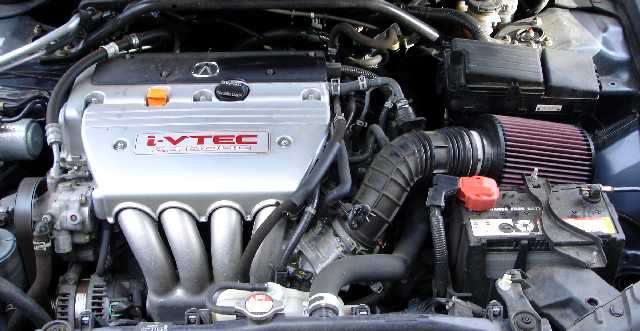
How is any cool air getting to that short ram air filter in behind the battery?
If you have a close look at the TSX engine bay, it's sealed & the only air entry is thru the radiator.
Go for a drive & touch anything in the engine bay, it's all hot.
BTW, in that pic is the stock covered intake air pipe in front of the battery. While I guess it's a better location
than behind the battery, it's still drawing in hot engine bay air.
A CAI or CT type air box will draw air in from outside the engine bay. It will draw air in from in front of the plastic wheel well.
This air is not hot & has not gone thru the radiator.
How is any cool air getting to that short ram air filter in behind the battery?
If you have a close look at the TSX engine bay, it's sealed & the only air entry is thru the radiator.
Go for a drive & touch anything in the engine bay, it's all hot.
BTW, in that pic is the stock covered intake air pipe in front of the battery. While I guess it's a better location
than behind the battery, it's still drawing in hot engine bay air.
A CAI or CT type air box will draw air in from outside the engine bay. It will draw air in from in front of the plastic wheel well.
This air is not hot & has not gone thru the radiator.
El Cunado
Joined: Apr 2010
Posts: 283
Likes: 4
From: Baltimore, MD, USA
Let's have a look at this pic from the above link:
How is any cool air getting to that short ram air filter in behind the battery?
If you have a close look at the TSX engine bay, it's sealed & the only air entry is thru the radiator.
Go for a drive & touch anything in the engine bay, it's all hot.
BTW, in that pic is the stock covered intake air pipe in front of the battery. While I guess it's a better location
than behind the battery, it's still drawing in hot engine bay air.
A CAI or CT type air box will draw air in from outside the engine bay. It will draw air in from in front of the plastic wheel well.
This air is not hot & has not gone thru the radiator.
How is any cool air getting to that short ram air filter in behind the battery?
If you have a close look at the TSX engine bay, it's sealed & the only air entry is thru the radiator.
Go for a drive & touch anything in the engine bay, it's all hot.
BTW, in that pic is the stock covered intake air pipe in front of the battery. While I guess it's a better location
than behind the battery, it's still drawing in hot engine bay air.
A CAI or CT type air box will draw air in from outside the engine bay. It will draw air in from in front of the plastic wheel well.
This air is not hot & has not gone thru the radiator.
Logically, a short-ram-intake won't operate the same as a cold-air-intake but we're arguing the significance of the difference. I don't mean to offend those who are willing to put the money out because they feel that it's worth it, but I don't drink the kool-aid just because someone else said it's good. I'm asking for some discussion on the practicality of what's offered for sale and what's available to be done by oneself.
I spent $32 on some better throttle response, a nice sound, and possibly better power/mpg. To spend $100+ on something that does the same but says "Injen", "K & N", "Comptech", "AEM", etc. doesn't sound practical to me if it's not going to do anything more. I don't race now and I don't plan on it later.
Advanced
Joined: Feb 2010
Posts: 70
Likes: 3
From: Calgary, Alberta, Canada
You clearly have very little experience on performance engines or cars. Have you ever run any vehicle on a chassis dyno or road raced or drag raced any vehicle?
Here's a before & after dyno on a CAI on a chassis dyno:
3rd dyno graph down in the link:
http://www.hondata.com/reflash_tsx_06.html
I should note that a short ram intake will dyno very well with the hood up. Then it's getting cool air as opposed to hot air when the hood is closed.
I restate that getting cold air into the engine will not add a ton of power, but it's the 1st step into getting the engine performing better.
If you add the Hondata reflash (which advances ignition timing curve) plus headers, plus exhaust, you are leaving power on the table by drawing in hot, under hood air.
I also recommend that you check out some performance cars like the Corvette, Mustang or Camaro.
You will see that all these performance cars have some type of cold air intake unlike the TSX.
Here's a before & after dyno on a CAI on a chassis dyno:
3rd dyno graph down in the link:
http://www.hondata.com/reflash_tsx_06.html
I should note that a short ram intake will dyno very well with the hood up. Then it's getting cool air as opposed to hot air when the hood is closed.
I restate that getting cold air into the engine will not add a ton of power, but it's the 1st step into getting the engine performing better.
If you add the Hondata reflash (which advances ignition timing curve) plus headers, plus exhaust, you are leaving power on the table by drawing in hot, under hood air.
I also recommend that you check out some performance cars like the Corvette, Mustang or Camaro.
You will see that all these performance cars have some type of cold air intake unlike the TSX.

El Cunado
Joined: Apr 2010
Posts: 283
Likes: 4
From: Baltimore, MD, USA
You clearly have very little experience on performance engines or cars. Have you ever run any vehicle on a chassis dyno or road raced or drag raced any vehicle?
Here's a before & after dyno on a CAI on a chassis dyno:
3rd dyno graph down in the link:
http://www.hondata.com/reflash_tsx_06.html
I should note that a short ram intake will dyno very well with the hood up. Then it's getting cool air as opposed to hot air when the hood is closed.
I restate that getting cold air into the engine will not add a ton of power, but it's the 1st step into getting the engine performing better.
If you add the Hondata reflash (which advances ignition timing curve) plus headers, plus exhaust, you are leaving power on the table by drawing in hot, under hood air.
I also recommend that you check out some performance cars like the Corvette, Mustang or Camaro.
You will see that all these performance cars have some type of cold air intake unlike the TSX.
Here's a before & after dyno on a CAI on a chassis dyno:
3rd dyno graph down in the link:
http://www.hondata.com/reflash_tsx_06.html
I should note that a short ram intake will dyno very well with the hood up. Then it's getting cool air as opposed to hot air when the hood is closed.
I restate that getting cold air into the engine will not add a ton of power, but it's the 1st step into getting the engine performing better.
If you add the Hondata reflash (which advances ignition timing curve) plus headers, plus exhaust, you are leaving power on the table by drawing in hot, under hood air.
I also recommend that you check out some performance cars like the Corvette, Mustang or Camaro.
You will see that all these performance cars have some type of cold air intake unlike the TSX.
If the temperature of the air from an SRI is not cooler than stock (which is designed to be plenty efficient), as you're pointing out from the picture, then the $32 upgrade is throttle response, sound, and possibly fuel efficiency. Since that is what many people are going for, $100+ for a CAI doesn't appear to be worth it.
It's obvious we have very different goals when it comes to modifications. Some simply want to add sound and believe doing "something" will always yield good results without taking into consideration all the other factors or how the result is being measure. After all, when the sound is there, mission accomplished. Right?
Is cold air important? How does the engine and ECU react to cold and hot temperature by using the ECT (engine coolant temp), IAT (intake air temp), and Knock sensors?
Once you understand how these sensors work and how they will affect the engine timing advance and retard base on the temperature, you would want the coldest air possible. That is if you care about performance, not just sound. If sound is all you care about, no need to seek more info or results below.
Air temp under the hood:
When the car is moving forward, air is flowing through the radiator fins to cool the radiator. The temp after passing through the radiator is not the outside ambient temp. When the coolant temp has increased to a point, the coolant fan will turn on and pull hot air toward the engine bay and heat soak everything under the hood.
The IAT sensor right before the throttle body will pick up the temperature change and signal the ECU to retard ignition timing accordingly.
The hot air and fuel mixture (depending on the fuel quality) can trigger the knock sensor and further retards the ignition timing to save the engine but at the cost of reduced performance.
CAI location:
CAI installation moves the filter downward past the engine away from the underhood temp. However, there's still a slight opening below where potential hot air can pass through but can easily be sealed off to total isolate it from the underhood temp. You can further increase the ambient air temp input by slotting the front vent cover.
CAI disadvantage:
You simply can't get something for nothing. CAI usually costs more $ and it can be a potential problem if driving through deep water puddles, as it can hydrolock the engine. Some CAIs allow the user to switch to SRI configuration for this very reason, not because it performs better.
CAI test result vs stock intake: (taken from a previous post) Note how the air temp increases when engine speed increases to a higher rpm for the stock intake. This is before the coolant fan turning on.
--------
Here is a review and some pics of the K&N Typhoon intake and some preliminary test results. The results were taken with an OBD2 scanner to note the difference of outside temperature, air intake temperature during idle, cruise and WOT. I started the test when coolant temp has reached to operation temp of 185F to 187F. Both before and after tests were done from a cold engine start to eliminate heat soak from a long running or idling engine. However, please keep in mind that the two tests were done on a different day with different outside temp. This test result is only meant to be a comparison of outside and intake temp.
Before K&N installation:
Engine coolant temp = 185F to 187F
Outside temp = 48F
Intake temp @ idle = 68F
Intake temp @ cruise speed of 65 MPH, 3500 RPM = 64F
Intake temp @ WOT from 2500 RPM to 6500 RPM in 3rd gear = 66F
After K&N installation:
Engine coolant temp = 185F to 187F
Outside temp = 39F
Intake temp @ idle = 46F
Intake temp @ cruise speed of 65 MPH, 3500 RPM = 43F
Intake temp @ WOT from 2500 RPM to 6500 RPM in 3rd gear = 43F
----------
The power of cold air vs underdrive pulleys:
Test results on how the TSX engine react to temperature change.
https://acurazine.com/forums/1g-tsx-performance-parts-modifications-126/power-cold-air-666809/
Is cold air important? How does the engine and ECU react to cold and hot temperature by using the ECT (engine coolant temp), IAT (intake air temp), and Knock sensors?
Once you understand how these sensors work and how they will affect the engine timing advance and retard base on the temperature, you would want the coldest air possible. That is if you care about performance, not just sound. If sound is all you care about, no need to seek more info or results below.
Air temp under the hood:
When the car is moving forward, air is flowing through the radiator fins to cool the radiator. The temp after passing through the radiator is not the outside ambient temp. When the coolant temp has increased to a point, the coolant fan will turn on and pull hot air toward the engine bay and heat soak everything under the hood.
The IAT sensor right before the throttle body will pick up the temperature change and signal the ECU to retard ignition timing accordingly.
The hot air and fuel mixture (depending on the fuel quality) can trigger the knock sensor and further retards the ignition timing to save the engine but at the cost of reduced performance.
CAI location:
CAI installation moves the filter downward past the engine away from the underhood temp. However, there's still a slight opening below where potential hot air can pass through but can easily be sealed off to total isolate it from the underhood temp. You can further increase the ambient air temp input by slotting the front vent cover.
CAI disadvantage:
You simply can't get something for nothing. CAI usually costs more $ and it can be a potential problem if driving through deep water puddles, as it can hydrolock the engine. Some CAIs allow the user to switch to SRI configuration for this very reason, not because it performs better.
CAI test result vs stock intake: (taken from a previous post) Note how the air temp increases when engine speed increases to a higher rpm for the stock intake. This is before the coolant fan turning on.
--------
Here is a review and some pics of the K&N Typhoon intake and some preliminary test results. The results were taken with an OBD2 scanner to note the difference of outside temperature, air intake temperature during idle, cruise and WOT. I started the test when coolant temp has reached to operation temp of 185F to 187F. Both before and after tests were done from a cold engine start to eliminate heat soak from a long running or idling engine. However, please keep in mind that the two tests were done on a different day with different outside temp. This test result is only meant to be a comparison of outside and intake temp.
Before K&N installation:
Engine coolant temp = 185F to 187F
Outside temp = 48F
Intake temp @ idle = 68F
Intake temp @ cruise speed of 65 MPH, 3500 RPM = 64F
Intake temp @ WOT from 2500 RPM to 6500 RPM in 3rd gear = 66F
After K&N installation:
Engine coolant temp = 185F to 187F
Outside temp = 39F
Intake temp @ idle = 46F
Intake temp @ cruise speed of 65 MPH, 3500 RPM = 43F
Intake temp @ WOT from 2500 RPM to 6500 RPM in 3rd gear = 43F
----------
The power of cold air vs underdrive pulleys:
Test results on how the TSX engine react to temperature change.
https://acurazine.com/forums/1g-tsx-performance-parts-modifications-126/power-cold-air-666809/
El Cunado
Joined: Apr 2010
Posts: 283
Likes: 4
From: Baltimore, MD, USA
Thank you for the post JTso; that's the type of empirical evidence I was hoping someone would use as an argument for CAI's. To go further, I'd like to see how an example of the 21*F difference actually effects the mileage and horsepower. It makes sense that there will be one, but the point of this thread is to challenge the CAI's actual worth. There will be value in the power/efficiency it adds, as well as personal intrinsic value of just having it in their vehicle.
I put a cone filter on the end of my intake tube, as the guy in my above-link did. It makes sense that, if it's sucking in the same air as the stock air-box, I will get a little better performance because the path of air-flow is significantly shorter and less resistant. The intake noise is nice, but it wasn't the main reason to do the upgrade.
I put a cone filter on the end of my intake tube, as the guy in my above-link did. It makes sense that, if it's sucking in the same air as the stock air-box, I will get a little better performance because the path of air-flow is significantly shorter and less resistant. The intake noise is nice, but it wasn't the main reason to do the upgrade.
When an engine is made more efficient via cooler air temp, it requires less throttle input to produce the same amount of power for a particular load, which saves fuel as result. However, most people with such upgrade rarely just drive normally to yield any fuel saving.
It's hard to compare one's value vs requirement. For example, if you're a single guy, it doesn't make sense to buy those bulk products from Costco as you won't be able to use them all before they expired, and they ended up costing more $ for your requirement. However, Costco is great for many people.
Increasing the air flow will yield better performance result and that's what OEM has done for the 2006 and up TSX. However, keep in mind the OEM inlet is not in direct path of the radiator air flow and it's also under a cover and blocked off by the battery.
It's hard to compare one's value vs requirement. For example, if you're a single guy, it doesn't make sense to buy those bulk products from Costco as you won't be able to use them all before they expired, and they ended up costing more $ for your requirement. However, Costco is great for many people.
Increasing the air flow will yield better performance result and that's what OEM has done for the 2006 and up TSX. However, keep in mind the OEM inlet is not in direct path of the radiator air flow and it's also under a cover and blocked off by the battery.
El Cunado
Joined: Apr 2010
Posts: 283
Likes: 4
From: Baltimore, MD, USA
If I could find a CAI for sub $100, I may jump on it. Until then though, I really just don't see the value. If stock performed adequately, and the SRI adds some value for a small price, then it makes sense to stick with SRI over CAI because the utility per dollar is high.
Before Stogie's thread in the 'problems' section, I had no idea of the intake resonator. Logically, that's where the CAI goes down and stays.
In an intakes' perfect world, I guess there would be just an open hole where the fog light sits in the bumper to allow air in the front. I don't have fog lights, so I could find someone who has made black mesh inserts for the bumper and put them in. Then, if I found a reasonably-low price on a CAI, it would seem even more appealing. But, because the cost of mesh is added to the CAI, the utility/value ratio just seems to drop more.
Perhaps I just cut a hole in my hood so the SRI gets air from above...
Before Stogie's thread in the 'problems' section, I had no idea of the intake resonator. Logically, that's where the CAI goes down and stays.
In an intakes' perfect world, I guess there would be just an open hole where the fog light sits in the bumper to allow air in the front. I don't have fog lights, so I could find someone who has made black mesh inserts for the bumper and put them in. Then, if I found a reasonably-low price on a CAI, it would seem even more appealing. But, because the cost of mesh is added to the CAI, the utility/value ratio just seems to drop more.
Perhaps I just cut a hole in my hood so the SRI gets air from above...
Advanced
Joined: Feb 2010
Posts: 70
Likes: 3
From: Calgary, Alberta, Canada
Man your stubborn Gweedo! Just kidding but I hope you are learning here...
Excellent post as usual by JTso.
If you read my signature, I modified the stock TSX air box & removed the entire resonator to make my own CAI for the cost of a US$30 K & N drop in filter.
I have a Scangauge connected to my OBD-II port monitoring IAT temp & can verify JTso's findings.
Very similar to the CT CAI. You should research this on T S X Club.com..
Keep reading, spend some time in the garage under your hood & under your car & keep learning...
Excellent post as usual by JTso.
If you read my signature, I modified the stock TSX air box & removed the entire resonator to make my own CAI for the cost of a US$30 K & N drop in filter.
I have a Scangauge connected to my OBD-II port monitoring IAT temp & can verify JTso's findings.
Very similar to the CT CAI. You should research this on T S X Club.com..
Keep reading, spend some time in the garage under your hood & under your car & keep learning...
Last edited by StealthTSX; Oct 15, 2010 at 12:48 PM.
El Cunado
Joined: Apr 2010
Posts: 283
Likes: 4
From: Baltimore, MD, USA
Thanks, I can take the arguments and criticisms. I'm obviously an empirical kind of guy. I like getting the most for my money since it's pretty easy to spend more than necessary.
I'll investigate the resonator-removal idea. It sounds more practical over stock, and possibly my SRI, but the air-flow through the box (by the battery) seems choppy. I suppose it wouldn't be any more choppy than when it's used in the OEM setup, but it seems better to just remove the restrictions. A smooth intake pipe like what is provided in CAI's make the most sense, but they're the more expensive option.
Removing my left headlight seems like another idea so that air can flow into the engine bay.
I'll investigate the resonator-removal idea. It sounds more practical over stock, and possibly my SRI, but the air-flow through the box (by the battery) seems choppy. I suppose it wouldn't be any more choppy than when it's used in the OEM setup, but it seems better to just remove the restrictions. A smooth intake pipe like what is provided in CAI's make the most sense, but they're the more expensive option.
Removing my left headlight seems like another idea so that air can flow into the engine bay.
Thread Starter
Instructor
Joined: May 2010
Posts: 106
Likes: 1
Yes thank you JTso, i've read your past posts on various subjects and always enjoyed the read. It makes sense that a CAI does offer an advantage now since air only goes through the radiators. I was under the impression that air comes in and out of the engine bay from many openings. I'm definitely going to do that resonator delete mod now...
Well, air is everywhere but the underhood air temp is greatly affected by the air passing through the radiator, especially when the cooling fan turns on (~200F). This blows hot air directly toward the intake manifold. Also, the engine itself and the exhaust manifold produce great amount of heat during normal operation. If you manage to lower the underhood temp, the SRI will work fine to keep many people happy. Now, how do you keep the underhood temp down? Well, that's the fun part of modification.
Last edited by JTso; Oct 16, 2010 at 04:11 PM.
Intermediate
Joined: Jun 2009
Posts: 38
Likes: 0
From: south Jersey
All I know is on my last two vehicles I gained about 5 tenths 0-60.Per my Gtech.My 3.5 Altima went from 6.3 stock to 5.8 with just intake.My Titan gained about 4 tenths.I have you tube vids of the runs under lptitan,and I do think Gtechs are very accurate.I have been running a custom stock box but just orderd a aem yesterday.

You make power due to the the longer tube. Think about it why does honda have dual intake manifold on there v6 TL and accord. Thats the main difference SR vs CAI. The length of the tubing and then the colder air
El Cunado
Joined: Apr 2010
Posts: 283
Likes: 4
From: Baltimore, MD, USA
Make power due to having a longer tube? That sounds ridiculous.
Someone stole "My Garage"
Joined: May 2005
Posts: 3,537
Likes: 17
From: Ottawa, Ontario
And btw, the effect of the extra length tube in a CAI (vs. SR) isn't the length itself, but the length that allows it to draw cooler outside air rather than warmer under-hood air (as JTso said).

6th Gear
Joined: Oct 2010
Posts: 6
Likes: 0
just adding my 2 cens here but i was involved in a wreck and it smashed my resonator... i was driving it without the resonator for about a week and the sound was nice and the only noticeable performance gain was maybe throttle response.... If anything i just enjoyed the new low grol it made

5th Gear
Joined: Apr 2008
Posts: 5
Likes: 0
IMO, after installing a CAI on my car, I couldn't believe how much crap I pulled out from the stock intake. I love the sound of the intake and the improved throttle response. For these reasons alone and a price tag that's not very steep, this is a no-brainer for me. Plus, if you are planning on future mods, you will likely be pushing more fuel/air through the engine, which can always be aided by a CAI.
El Cunado
Joined: Apr 2010
Posts: 283
Likes: 4
From: Baltimore, MD, USA
Reviving the thread to post my ~5K miles of short-ram experience.
The sound is nice, and I can feel the engine rev more easily. As far as my mpg goes, there's been no increase, but also no decrease. I've been maintaining a steady 29-30mpg while driving about 70% on highways.
I've been pretty happy with my $30 short-ram intake.
The sound is nice, and I can feel the engine rev more easily. As far as my mpg goes, there's been no increase, but also no decrease. I've been maintaining a steady 29-30mpg while driving about 70% on highways.
I've been pretty happy with my $30 short-ram intake.


3rd Gear
Joined: Jan 2011
Posts: 3
Likes: 0
does the cold air intake wrap down around the battery then after the original is taken out.
ive been pondering buying a short ram or cold air intake. money isnt a problem or concern soo is it better to go ahead and buy a cold air or short ram intake.
ive been pondering buying a short ram or cold air intake. money isnt a problem or concern soo is it better to go ahead and buy a cold air or short ram intake.
El Cunado
Joined: Apr 2010
Posts: 283
Likes: 4
From: Baltimore, MD, USA
I've been driving with my $30 SRI option for over a few months now and I finally took an opportunity to remove the resonator and additional intake tubing over the weekend. Good lord there's a lot of stock intake tubing (including original air box). I also removed the under-engine plastic shield as I broke a piece of it while getting to the resonator. I think these changes are helping the SRI breathe a little better. The higher-RPM sound is a bit less harsh. There's also room now if I choose to upgrade to a real CAI in the future.

East Coast Crew
Joined: Sep 2006
Posts: 1,433
Likes: 0
Well if you really think about it, the maximum amount of air you can get per chamber is the liter of that chamber subtract the space that the piston takes up. I don't think it's rocket science to figure out that you'll pull the same amount of air in no matter what you have. The difference is just the density. So if you figure out how to always get super dense air into the chamber, then you'll always have good hp.
Someone stole "My Garage"
Joined: May 2005
Posts: 3,537
Likes: 17
From: Ottawa, Ontario
Well if you really think about it, the maximum amount of air you can get per chamber is the liter of that chamber subtract the space that the piston takes up. I don't think it's rocket science to figure out that you'll pull the same amount of air in no matter what you have. The difference is just the density. So if you figure out how to always get super dense air into the chamber, then you'll always have good hp.
Now, a proper CAI will have the fewest bends possible and still draw colder air than the SRI, meaning it's even better than the SRI because there's less lag/void/low-density air than the stock airbox, AND the air is colder than a SRI (colder = more dense).
El Cunado
Joined: Apr 2010
Posts: 283
Likes: 4
From: Baltimore, MD, USA
So, I finally got a bonus from work that I had been promised for a while now and I decided that some could go to a CAI. I now have the Injen CAI installed and it was a little pain in the ass to set up. The difficult part was getting the filter end to angle forward enough so it wouldn't sit against the wheel-well flap.
I know, I know... big turnaround from the guy who was denouncing the value months ago. My SRI was nice and provided quicker throttle response, but I can see the physics behind CAI and think it will be beneficial in the long run. Plus, getting the bonus money made the cost not a big issue anymore. I logged my gas mileage with the stock intake, during my SRI, and I'll continue doing so with the CAI and report back here after several fill-ups (right now I drive about 300mi in 6-7 days).
I know, I know... big turnaround from the guy who was denouncing the value months ago. My SRI was nice and provided quicker throttle response, but I can see the physics behind CAI and think it will be beneficial in the long run. Plus, getting the bonus money made the cost not a big issue anymore. I logged my gas mileage with the stock intake, during my SRI, and I'll continue doing so with the CAI and report back here after several fill-ups (right now I drive about 300mi in 6-7 days).

El Cunado
Joined: Apr 2010
Posts: 283
Likes: 4
From: Baltimore, MD, USA
I really haven't noticed more miles-per-gallon with any modifications I've done, but I also don't have the same drive day-in/day-out. We've had wet/bad weather for much of the winter in Maryland. I do about 55%/45% highway/back-road driving. I also missed writing a couple things down along the way. Oh, and I installed a UR lightweight crank pulley around the same time as the CAI.
This is date - odometer - fuel added - cost/gallon - mpg
OEM Intake:
7/6/10 -61498 -11.539 -2.899 -30.33
7/8/10 -61844 -10.931 -2.879 -31.65
7/11/10 -62039 -6.665 -2.919 -29.26
7/19/10 -62447 -12.242 -2.859 -33.33
7/23/10 -62763 -10.995 -2.859 -28.74
7/30/10 -63113 -11.638 -2.899 -30.07
8/6/10 -63441 -11.237 -2.899 -29.19
8/13/10 -63794 -11.329 -2.999 -31.16
8/15/10 -? -2.899 -?
8/19/10 -64372 -9.602 -2.859 -?
8/27/10 -64772 -12.923 -2.799 -30.95
9/3/10 -65110 -10.945 -2.749 -30.88
9/13/10 -65486 -12.592 -2.839 -29.86
9/19/10 -65848 -11.851 -2.939 -30.55
9/24/10 -66129 -9.407 -2.839 -29.87
10/1/10 -66478 -11.633 -2.859 -30.00
10/8/10 -66807 -11.033 -3.059 -29.82
Removed OEM intake housing/resonator and added cone-filter:
10/15/10 -67159 -11.816 -2.999 -29.79
Unk -Unk -Unk -Unk -Unk
10/30/10 -67878 -10.404 -2.999 -?
11/6/10 -68253 -12.922 -3.139 -29.02
11/12/10 -68546 -9.844 -3.139 -29.76
11/19/10 -68861 -11.001 -3.059 -28.63
11/24/10 -69092 -8.240 -2.999 -28.03
12/3/10 -69461 -13.036 -3.299 -28.31
12/10/10 -69783 -12.162 -3.199 -26.48
12/16/10 -70072 -10.802 -3.199 -26.75
12/22/10 -70416 -12.515 -3.199 -27.49
12/31/10 -70778 -13.708 -3.299 -26.41
1/7/11 -71096 -11.656 -3.299 -27.28
1/14/11 -71394 -11.238 -3.399 -26.52
1/21/11 -71650 -9.373 -3.299 -27.31
1/28/11 -71965 -11.848 -3.299 -26.59
2/4/11 -72303 -12.352 -3.359 -27.36
2/9/11 -72590 -10.502 -3.259 -27.33
2/16/11 -72895 -10.314 -3.259 -29.57
2/25/11 -73232 -12.364 -3.499 -27.26
Installed Injen CAI (and UR Pulley):
3/4/11 -73548 -11.595 -3.659 -27.25
3/11/11 -73879 -11.345 -3.699 -29.18
3/1811 -74219 -11.962 -3.759 -28.42
3/25/11 -74568 -11.810 -3.759 -29.55
4/1/11 -74890 -11.549 -3.759 -27.88
If anything, there's less mpg, but my driving situations are all over the place so I can't make that at-all definitive.
This is date - odometer - fuel added - cost/gallon - mpg
OEM Intake:
7/6/10 -61498 -11.539 -2.899 -30.33
7/8/10 -61844 -10.931 -2.879 -31.65
7/11/10 -62039 -6.665 -2.919 -29.26
7/19/10 -62447 -12.242 -2.859 -33.33
7/23/10 -62763 -10.995 -2.859 -28.74
7/30/10 -63113 -11.638 -2.899 -30.07
8/6/10 -63441 -11.237 -2.899 -29.19
8/13/10 -63794 -11.329 -2.999 -31.16
8/15/10 -? -2.899 -?
8/19/10 -64372 -9.602 -2.859 -?
8/27/10 -64772 -12.923 -2.799 -30.95
9/3/10 -65110 -10.945 -2.749 -30.88
9/13/10 -65486 -12.592 -2.839 -29.86
9/19/10 -65848 -11.851 -2.939 -30.55
9/24/10 -66129 -9.407 -2.839 -29.87
10/1/10 -66478 -11.633 -2.859 -30.00
10/8/10 -66807 -11.033 -3.059 -29.82
Removed OEM intake housing/resonator and added cone-filter:
10/15/10 -67159 -11.816 -2.999 -29.79
Unk -Unk -Unk -Unk -Unk
10/30/10 -67878 -10.404 -2.999 -?
11/6/10 -68253 -12.922 -3.139 -29.02
11/12/10 -68546 -9.844 -3.139 -29.76
11/19/10 -68861 -11.001 -3.059 -28.63
11/24/10 -69092 -8.240 -2.999 -28.03
12/3/10 -69461 -13.036 -3.299 -28.31
12/10/10 -69783 -12.162 -3.199 -26.48
12/16/10 -70072 -10.802 -3.199 -26.75
12/22/10 -70416 -12.515 -3.199 -27.49
12/31/10 -70778 -13.708 -3.299 -26.41
1/7/11 -71096 -11.656 -3.299 -27.28
1/14/11 -71394 -11.238 -3.399 -26.52
1/21/11 -71650 -9.373 -3.299 -27.31
1/28/11 -71965 -11.848 -3.299 -26.59
2/4/11 -72303 -12.352 -3.359 -27.36
2/9/11 -72590 -10.502 -3.259 -27.33
2/16/11 -72895 -10.314 -3.259 -29.57
2/25/11 -73232 -12.364 -3.499 -27.26
Installed Injen CAI (and UR Pulley):
3/4/11 -73548 -11.595 -3.659 -27.25
3/11/11 -73879 -11.345 -3.699 -29.18
3/1811 -74219 -11.962 -3.759 -28.42
3/25/11 -74568 -11.810 -3.759 -29.55
4/1/11 -74890 -11.549 -3.759 -27.88
If anything, there's less mpg, but my driving situations are all over the place so I can't make that at-all definitive.
Old Guy
Joined: Apr 2007
Posts: 2,873
Likes: 161
I really haven't noticed more miles-per-gallon with any modifications I've done, but I also don't have the same drive day-in/day-out. We've had wet/bad weather for much of the winter in Maryland. I do about 55%/45% highway/back-road driving. I also missed writing a couple things down along the way. Oh, and I installed a UR lightweight crank pulley around the same time as the CAI.
This is date - odometer - fuel added - cost/gallon - mpg
OEM Intake:
7/6/10 -61498 -11.539 -2.899 -30.33
7/8/10 -61844 -10.931 -2.879 -31.65
7/11/10 -62039 -6.665 -2.919 -29.26
7/19/10 -62447 -12.242 -2.859 -33.33
7/23/10 -62763 -10.995 -2.859 -28.74
7/30/10 -63113 -11.638 -2.899 -30.07
8/6/10 -63441 -11.237 -2.899 -29.19
8/13/10 -63794 -11.329 -2.999 -31.16
8/15/10 -? -2.899 -?
8/19/10 -64372 -9.602 -2.859 -?
8/27/10 -64772 -12.923 -2.799 -30.95
9/3/10 -65110 -10.945 -2.749 -30.88
9/13/10 -65486 -12.592 -2.839 -29.86
9/19/10 -65848 -11.851 -2.939 -30.55
9/24/10 -66129 -9.407 -2.839 -29.87
10/1/10 -66478 -11.633 -2.859 -30.00
10/8/10 -66807 -11.033 -3.059 -29.82
Removed OEM intake housing/resonator and added cone-filter:
10/15/10 -67159 -11.816 -2.999 -29.79
Unk -Unk -Unk -Unk -Unk
10/30/10 -67878 -10.404 -2.999 -?
11/6/10 -68253 -12.922 -3.139 -29.02
11/12/10 -68546 -9.844 -3.139 -29.76
11/19/10 -68861 -11.001 -3.059 -28.63
11/24/10 -69092 -8.240 -2.999 -28.03
12/3/10 -69461 -13.036 -3.299 -28.31
12/10/10 -69783 -12.162 -3.199 -26.48
12/16/10 -70072 -10.802 -3.199 -26.75
12/22/10 -70416 -12.515 -3.199 -27.49
12/31/10 -70778 -13.708 -3.299 -26.41
1/7/11 -71096 -11.656 -3.299 -27.28
1/14/11 -71394 -11.238 -3.399 -26.52
1/21/11 -71650 -9.373 -3.299 -27.31
1/28/11 -71965 -11.848 -3.299 -26.59
2/4/11 -72303 -12.352 -3.359 -27.36
2/9/11 -72590 -10.502 -3.259 -27.33
2/16/11 -72895 -10.314 -3.259 -29.57
2/25/11 -73232 -12.364 -3.499 -27.26
Installed Injen CAI (and UR Pulley):
3/4/11 -73548 -11.595 -3.659 -27.25
3/11/11 -73879 -11.345 -3.699 -29.18
3/1811 -74219 -11.962 -3.759 -28.42
3/25/11 -74568 -11.810 -3.759 -29.55
4/1/11 -74890 -11.549 -3.759 -27.88
If anything, there's less mpg, but my driving situations are all over the place so I can't make that at-all definitive.
This is date - odometer - fuel added - cost/gallon - mpg
OEM Intake:
7/6/10 -61498 -11.539 -2.899 -30.33
7/8/10 -61844 -10.931 -2.879 -31.65
7/11/10 -62039 -6.665 -2.919 -29.26
7/19/10 -62447 -12.242 -2.859 -33.33
7/23/10 -62763 -10.995 -2.859 -28.74
7/30/10 -63113 -11.638 -2.899 -30.07
8/6/10 -63441 -11.237 -2.899 -29.19
8/13/10 -63794 -11.329 -2.999 -31.16
8/15/10 -? -2.899 -?
8/19/10 -64372 -9.602 -2.859 -?
8/27/10 -64772 -12.923 -2.799 -30.95
9/3/10 -65110 -10.945 -2.749 -30.88
9/13/10 -65486 -12.592 -2.839 -29.86
9/19/10 -65848 -11.851 -2.939 -30.55
9/24/10 -66129 -9.407 -2.839 -29.87
10/1/10 -66478 -11.633 -2.859 -30.00
10/8/10 -66807 -11.033 -3.059 -29.82
Removed OEM intake housing/resonator and added cone-filter:
10/15/10 -67159 -11.816 -2.999 -29.79
Unk -Unk -Unk -Unk -Unk
10/30/10 -67878 -10.404 -2.999 -?
11/6/10 -68253 -12.922 -3.139 -29.02
11/12/10 -68546 -9.844 -3.139 -29.76
11/19/10 -68861 -11.001 -3.059 -28.63
11/24/10 -69092 -8.240 -2.999 -28.03
12/3/10 -69461 -13.036 -3.299 -28.31
12/10/10 -69783 -12.162 -3.199 -26.48
12/16/10 -70072 -10.802 -3.199 -26.75
12/22/10 -70416 -12.515 -3.199 -27.49
12/31/10 -70778 -13.708 -3.299 -26.41
1/7/11 -71096 -11.656 -3.299 -27.28
1/14/11 -71394 -11.238 -3.399 -26.52
1/21/11 -71650 -9.373 -3.299 -27.31
1/28/11 -71965 -11.848 -3.299 -26.59
2/4/11 -72303 -12.352 -3.359 -27.36
2/9/11 -72590 -10.502 -3.259 -27.33
2/16/11 -72895 -10.314 -3.259 -29.57
2/25/11 -73232 -12.364 -3.499 -27.26
Installed Injen CAI (and UR Pulley):
3/4/11 -73548 -11.595 -3.659 -27.25
3/11/11 -73879 -11.345 -3.699 -29.18
3/1811 -74219 -11.962 -3.759 -28.42
3/25/11 -74568 -11.810 -3.759 -29.55
4/1/11 -74890 -11.549 -3.759 -27.88
If anything, there's less mpg, but my driving situations are all over the place so I can't make that at-all definitive.
El Cunado
Joined: Apr 2010
Posts: 283
Likes: 4
From: Baltimore, MD, USA

These numbers are interesting to look at but my driving is inconsistent.
Last edited by GWEEDOspeedo; Apr 4, 2011 at 07:30 PM.