


TSX fuel consumption


6th Gear
Joined: Nov 2002
Posts: 6
Likes: 0
From: Wauwatosa, WI
Originally Posted by afici0nad0
there's 98 octane available? where do you live?
http://en.wikipedia.org/wiki/Octane_rating

3rd Gear
Joined: Apr 2013
Posts: 3
Likes: 0
Any of you use K&N air filters? if so, could you tell me your range in city vs highway driving. The reason I am asking is that in all the cars that I have owned, adding a K&N airfilter gave me around 100 km more per full tank.
I am trying to decide between the 2004/2005 TL VS TSX.
any advise?
I am trying to decide between the 2004/2005 TL VS TSX.
any advise?
Instructor
Joined: Jan 2008
Posts: 244
Likes: 12
From: Oregon
Any of you use K&N air filters? if so, could you tell me your range in city vs highway driving. The reason I am asking is that in all the cars that I have owned, adding a K&N airfilter gave me around 100 km more per full tank.
I am trying to decide between the 2004/2005 TL VS TSX.
any advise?
I am trying to decide between the 2004/2005 TL VS TSX.
any advise?
There is zero chance adding a K&N air filter will give even the slightest increase in fuel economy, let alone 100km more per tank.
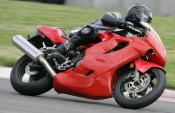
Back before I knew much science, I bought a K&N for my CBR600 and saw absolutely no increase in power or fuel economy.
I have nothing against K&N filters, but to market them as a way to increase fuel economy is disingenuous.
Instructor
Joined: Jan 2008
Posts: 244
Likes: 12
From: Oregon
Impressive numbers!
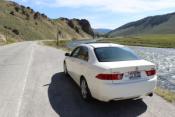
I have a lifetime average of 30 mpg in my 6-speed, and achieve that regardless of highway or stop and go traffic. The auto gets better highway mpg due to the higher gearing, but worse in city driving.
In the Oregon winters, I average around 28 mpg, and in the summer about 32. Tires are inflated to 40psi.
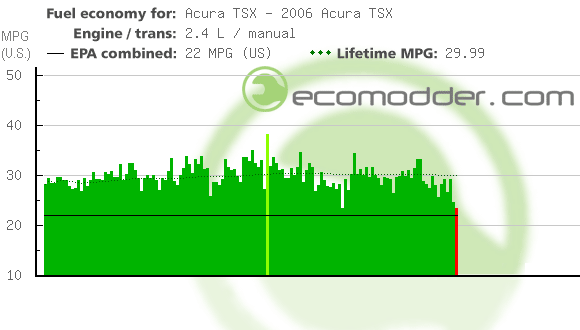
Efficiency log for: Acura TSX - 2006 Acura TSX
Lifetime Fuel Economy: 30.3 mpg (US), 7.8 L/100 km, 36.4 mpg (Imp)
90-day Fuel Economy: 28.3 mpg (US), 8.3 L/100 km, 34 mpg (Imp)
3-tank Fuel Economy: 28 mpg (US), 8.4 L/100 km, 33.6 mpg (Imp)
EPA Combined Rating / % over rating: 22 mpg (US) / 28.8% (based on 90-day fuel economy)
Total fills: 97
Average cost per gal: $3.47 per gal (US);
Average cost per fill: $46.65
Average distance cost: $0.11 per mi. / $0.07 per km
Total fuel used: 1301.91 gal (US), 4928.3 L
Total distance traveled: 39465.2 mi. / 63513.1 km
Total cost: $4,478.48
Total fuel saved vs. EPA: 492 gal. (US) / 1862.4 L
Total saved: $1707.24 (based on avg. cost per gal)
Average tank distance: 406.9 mi. / 654.8 km
I've had several 500 mile tanks, but my wife has been driving the TSX for the past 3 months.
http://ecomodder.com/forum/em-fuel-l...vehicleid=4128
I have a lifetime average of 30 mpg in my 6-speed, and achieve that regardless of highway or stop and go traffic. The auto gets better highway mpg due to the higher gearing, but worse in city driving.
In the Oregon winters, I average around 28 mpg, and in the summer about 32. Tires are inflated to 40psi.
Efficiency log for: Acura TSX - 2006 Acura TSX
Lifetime Fuel Economy: 30.3 mpg (US), 7.8 L/100 km, 36.4 mpg (Imp)
90-day Fuel Economy: 28.3 mpg (US), 8.3 L/100 km, 34 mpg (Imp)
3-tank Fuel Economy: 28 mpg (US), 8.4 L/100 km, 33.6 mpg (Imp)
EPA Combined Rating / % over rating: 22 mpg (US) / 28.8% (based on 90-day fuel economy)
Total fills: 97
Average cost per gal: $3.47 per gal (US);
Average cost per fill: $46.65
Average distance cost: $0.11 per mi. / $0.07 per km
Total fuel used: 1301.91 gal (US), 4928.3 L
Total distance traveled: 39465.2 mi. / 63513.1 km
Total cost: $4,478.48
Total fuel saved vs. EPA: 492 gal. (US) / 1862.4 L
Total saved: $1707.24 (based on avg. cost per gal)
Average tank distance: 406.9 mi. / 654.8 km
I've had several 500 mile tanks, but my wife has been driving the TSX for the past 3 months.
http://ecomodder.com/forum/em-fuel-l...vehicleid=4128

Instructor
Joined: Jan 2008
Posts: 244
Likes: 12
From: Oregon

SFO is the only place I'd prefer an automatic though. I was happy to trade for my parent's auto Camry when I visited last month.

5th Gear
Joined: Sep 2014
Posts: 5
Likes: 0
I drive around 15 miles daily to work with a/c always on 100% city driving, I see aroudn 20 mpg with normal driving.
A little upgrade from 14-15 mpg I was getting with my SUV.
Looking to improve this a little with a CAI or better tires.
A little upgrade from 14-15 mpg I was getting with my SUV.
Looking to improve this a little with a CAI or better tires.
mrgold35


Joined: Jun 2006
Posts: 7,018
Likes: 1,661
From: ABQ, NM
It is hard to get better mpgs with TSX; but, it very easy to get worst. The money you spend to improve mpgs will always be more than the slight improvement in range. Things I did; but, wasn't expecting, that resulted in an increase in mpgs are:
- 100,000 mile tune-up, didn't realize how much power/mpg I was losing because of the old spark plugs, I won't wait the full 100,000 miles next time.
- switching to syn oil, notice a 1/2-3/4 mpg increase with syn oil
- all season tires, the lower rolling resistance tires seem to give you a few more miles of range compared to summer tires. Might sacrifice grip/stopping distance for treadlife/mpgs.
- Aspec suspension+Progress RSB, I can carry more speed into corners and it requires less power to reach the desired speed out of the corners. Less downshifting, sport mode, and i-vtecing.
- hit the slow lane and enjoy the ride. I sometimes have to remind myself what is the big rush to get to work. Going home is a different story.
Getting 25-27 mpgs combined in the TSX is a lot better than 17-20 combined in my RDX and MDX.
- 100,000 mile tune-up, didn't realize how much power/mpg I was losing because of the old spark plugs, I won't wait the full 100,000 miles next time.
- switching to syn oil, notice a 1/2-3/4 mpg increase with syn oil
- all season tires, the lower rolling resistance tires seem to give you a few more miles of range compared to summer tires. Might sacrifice grip/stopping distance for treadlife/mpgs.
- Aspec suspension+Progress RSB, I can carry more speed into corners and it requires less power to reach the desired speed out of the corners. Less downshifting, sport mode, and i-vtecing.
- hit the slow lane and enjoy the ride. I sometimes have to remind myself what is the big rush to get to work. Going home is a different story.
Getting 25-27 mpgs combined in the TSX is a lot better than 17-20 combined in my RDX and MDX.
Instructor
Joined: Jan 2008
Posts: 244
Likes: 12
From: Oregon
I get better MPG (33mpg) in stop and go rush hour traffic than I can cruising at 70mph on the freeway. This is because I have the 6-speed and drive at the average speed of traffic and don't go bumper to bumper. In Portland, people don't tend to cut into the gap I leave, and if they do, they quickly leave. Those that change lanes often are likely to be discontented with any lane they are in, so they will soon leave.
Driving the average speed of traffic not only improves fuel economy, but it puts less wear on the cars engine and brakes, smooths out traffic flow behind me (improving everyone else's mpg), and is a less stressful way to drive.
As for your CAI, that will reduce MPG, but not by much. CAI is for increasing wide open throttle horsepower, and nothing else. Selecting low rolling resistance tires can improve mpg, however.
Spending money to save on gas rarely pays off. For some reason people want to buy something that improves fuel economy, when they could improve it by 10% or more for free by adjusting their driving habits.
The improvements in fuel economy don't require you to accelerate slowly. In fact, brisk acceleration is more efficient. It's your use of the brakes that's wasting all the fuel. More on this at www.ecomodder.com
How much energy is wasted just by slowing down by 25 mph? Well here is a visual showing how much energy is expended when a car traveling 25 mph is stopped.
Last edited by redpoint; Sep 26, 2014 at 05:50 PM.

Thread
Thread Starter
Forum
Replies
Last Post
GWEEDOspeedo
Car Parts for Sale
4
Jan 15, 2016 10:39 PM
joflewbyu2
5G TLX (2015-2020)
139
Oct 8, 2015 11:16 AM
