

This was posted in the OT section.
Consumer reports has come up with new criteria for car ratings. Congrats to the TL for being on the top.
But what I don't get is what is it about the TSX headlights that CR hates so much, I know they don't have a long throw, but they are bright and shine really well, much better than many other cars i've been in. Whats the deal?
https://acurazine.com/forums/showthread.php?t=116542
Consumer reports has come up with new criteria for car ratings. Congrats to the TL for being on the top.
But what I don't get is what is it about the TSX headlights that CR hates so much, I know they don't have a long throw, but they are bright and shine really well, much better than many other cars i've been in. Whats the deal?
https://acurazine.com/forums/showthread.php?t=116542
Drifting
I agree. I think the TSX's headlights are some of the best in the industry. The headlights in my Dad's TL seem to be too bright but the TSX's seem to be perfect.

Top notch 6MT
Quote:
Originally Posted by Sclass88
I agree. I think the TSX's headlights are some of the best in the industry. ...the TSX's seem to be perfect.


Baka Unco
As a general rule Consumer Reports doesn't really like HIDs. They have a whole article about them on their website and recommendations to the NHSTA on what they should do to regulate HIDS, a lot of which has to do with glare for other drivers. . .
Stolen from article, all in reference to HIDs:
We think NHTSA should take the following steps:
Require better lighting straight ahead for all headlight low beams.
Adopt the European standard requiring HID headlights to be self-leveling.
Require a smoother, more gradual low-beam cutoff for HID and other headlights to address a key source of glare.
Consider having carmakers chemically alter HID bulbs. Or use color-correcting lenses, which move an HID light’s white spectrum more toward yellow, like that of conventional halogen headlights.
Better control foreground light levels for HID headlights.
Stolen from article, all in reference to HIDs:
We think NHTSA should take the following steps:
Require better lighting straight ahead for all headlight low beams.
Adopt the European standard requiring HID headlights to be self-leveling.
Require a smoother, more gradual low-beam cutoff for HID and other headlights to address a key source of glare.
Consider having carmakers chemically alter HID bulbs. Or use color-correcting lenses, which move an HID light’s white spectrum more toward yellow, like that of conventional halogen headlights.
Better control foreground light levels for HID headlights.
Quote:
Stolen from article, all in reference to HIDs:
We think NHTSA should take the following steps:
Require better lighting straight ahead for all headlight low beams.
Adopt the European standard requiring HID headlights to be self-leveling.
Require a smoother, more gradual low-beam cutoff for HID and other headlights to address a key source of glare.
Consider having carmakers chemically alter HID bulbs. Or use color-correcting lenses, which move an HID light’s white spectrum more toward yellow, like that of conventional halogen headlights.
Better control foreground light levels for HID headlights.
Originally Posted by corbs
As a general rule Consumer Reports doesn't really like HIDs. They have a whole article about them on their website and recommendations to the NHSTA on what they should do to regulate HIDS, a lot of which has to do with glare for other drivers. . .Stolen from article, all in reference to HIDs:
We think NHTSA should take the following steps:
Require better lighting straight ahead for all headlight low beams.
Adopt the European standard requiring HID headlights to be self-leveling.
Require a smoother, more gradual low-beam cutoff for HID and other headlights to address a key source of glare.
Consider having carmakers chemically alter HID bulbs. Or use color-correcting lenses, which move an HID light’s white spectrum more toward yellow, like that of conventional halogen headlights.
Better control foreground light levels for HID headlights.
I'm sure your right, but that doesn't explain why they don't like the TSX headlights.
These cars were also on the "worst headlight list"
2005 Volvo V50, 2003 Lincoln LS, 2004 BMW X5, 2004 Acura TSX and the 2003 Subaru Baja
So the type of headlight bulb really wasn't the issue
Top notch 6MT
Quote:
These cars were also on the "worst headlight list"
2005 Volvo V50, 2003 Lincoln LS, 2004 BMW X5, 2004 Acura TSX and the 2003 Subaru Baja
So the type of headlight bulb really wasn't the issue
I think they just had to pick something to complain about any car, and they couldn't find really anything on the TSX Originally Posted by GIBSON6594
I'm sure your right, but that doesn't explain why they don't like the TSX headlights.These cars were also on the "worst headlight list"
2005 Volvo V50, 2003 Lincoln LS, 2004 BMW X5, 2004 Acura TSX and the 2003 Subaru Baja
So the type of headlight bulb really wasn't the issue


Quote:
Originally Posted by 05_TSX_GP
I think they just had to pick something to complain about any car, and they couldn't find really anything on the TSX


Moderator Alumnus
"We think NHTSA should take the following steps:
Require better lighting straight ahead for all headlight low beams.
Adopt the European standard requiring HID headlights to be self-leveling.
Require a smoother, more gradual low-beam cutoff for HID and other headlights to address a key source of glare. (Sure, why not...)
Consider having carmakers chemically alter HID bulbs. Or use color-correcting lenses, which move an HID light’s white spectrum more toward yellow, like that of conventional halogen headlights. ( They seem to completely miss the point of HIDs on this one. They don't seem to realise the value of HIDs under tough driving conditions. They need to be on the road rather than just base their judgement on complaints.)
Better control foreground light levels for HID headlights. (didn't know there was a problem there)
Require better lighting straight ahead for all headlight low beams.
Adopt the European standard requiring HID headlights to be self-leveling.
Require a smoother, more gradual low-beam cutoff for HID and other headlights to address a key source of glare. (Sure, why not...)
Consider having carmakers chemically alter HID bulbs. Or use color-correcting lenses, which move an HID light’s white spectrum more toward yellow, like that of conventional halogen headlights. (
They seem to completely miss the point of HIDs on this one. They don't seem to realise the value of HIDs under tough driving conditions. They need to be on the road rather than just base their judgement on complaints.)Better control foreground light levels for HID headlights. (didn't know there was a problem there)

Driver/Detailer
Quote:
These cars were also on the "worst headlight list"
2005 Volvo V50, 2003 Lincoln LS, 2004 BMW X5, 2004 Acura TSX and the 2003 Subaru Baja
So the type of headlight bulb really wasn't the issue
Off topic: Originally Posted by GIBSON6594
I'm sure your right, but that doesn't explain why they don't like the TSX headlights.These cars were also on the "worst headlight list"
2005 Volvo V50, 2003 Lincoln LS, 2004 BMW X5, 2004 Acura TSX and the 2003 Subaru Baja
So the type of headlight bulb really wasn't the issue
I'm not in the States, so please forgive my ignorance. But why do they call a car "Baja"? In Indonesia and Malaysia, that word means fertilizer.
In Australia, there is one car called the "Jumbuck" Sounds similar to Jumbun, which in the malay language means toiletbowl....
Quote:
I'm not in the States, so please forgive my ignorance. But why do they call a car "Baja"? In Indonesia and Malaysia, that word means fertilizer.
In Australia, there is one car called the "Jumbuck" Sounds similar to Jumbun, which in the malay language means toiletbowl....
Because its a piece of shit Originally Posted by aaronng
Off topic: I'm not in the States, so please forgive my ignorance. But why do they call a car "Baja"? In Indonesia and Malaysia, that word means fertilizer.
In Australia, there is one car called the "Jumbuck" Sounds similar to Jumbun, which in the malay language means toiletbowl....

i'm j/k, i really dont know anything about it or its name

Advanced
Quote:
I'm not in the States, so please forgive my ignorance. But why do they call a car "Baja"? In Indonesia and Malaysia, that word means fertilizer.
In Australia, there is one car called the "Jumbuck" Sounds similar to Jumbun, which in the malay language means toiletbowl....
A Californian can answer this one better than me, but basically Baja is a region of Mexico that starts at the southwest part of the California border. Off-road vehicles, dune buggies come to mind when I hear the word "baja", hence Subaru would name an SUV/Truck after it.Originally Posted by aaronng
Off topic: I'm not in the States, so please forgive my ignorance. But why do they call a car "Baja"? In Indonesia and Malaysia, that word means fertilizer.
In Australia, there is one car called the "Jumbuck" Sounds similar to Jumbun, which in the malay language means toiletbowl....
TZ
I kAnt Spel guD
I actually recall reading a paper once that said the glare from HID's was actually less glaring then conv. halogen bulbs. But most people were stairing at the blue cast from the HID's, simply because it stood out, this was when HID were relatively a rare site.
The color is actually more close to natural daylight, the reason it's blue looking vs. halogens at night...if it were yellow it would be less like daylight in color spectrum and thus pointless as an HID.
Now that more and more cars have HID the stair factor has worn off for me...I would assume for most by this time.
I didn't much car for the HID's one way or the other at first, but after drivning our TSX for some time the halogens in my Accord and my Five-hundred company car leave me wanting for the HID's on the back roads; HID + halogen Highs is the only way to go IMO fantastic results! I say this becuase I feel the HID stop a bit short on the back roads but the Halogen highs solves the issue for me.
CR, needs to get a grip and drive some of the back roads in Ohio and Wisconsin suddenly they will like HID's too, big time!
The color is actually more close to natural daylight, the reason it's blue looking vs. halogens at night...if it were yellow it would be less like daylight in color spectrum and thus pointless as an HID.
Now that more and more cars have HID the stair factor has worn off for me...I would assume for most by this time.
I didn't much car for the HID's one way or the other at first, but after drivning our TSX for some time the halogens in my Accord and my Five-hundred company car leave me wanting for the HID's on the back roads; HID + halogen Highs is the only way to go IMO fantastic results! I say this becuase I feel the HID stop a bit short on the back roads but the Halogen highs solves the issue for me.
CR, needs to get a grip and drive some of the back roads in Ohio and Wisconsin suddenly they will like HID's too, big time!

Goldmember
I got a high beam from someone coming toward me b/c he thought I had my high beams on. But I only had the regular light on. Damn poor ppl w/ their no HID having cars.
Advanced
Quote:
I get this a lot when I am in rural roads. I think the bumps cause the HIDs on the TSX to "flash" the driver coming towards you, so they may think your brights are on. This may be what CR was complaining about, it is hard to say. I think the more expensive cars have HIDs that have an auto-leveling feature to prevent this "flash" issue, but this would of course add to the cost. Anyone know if the TL has that?Originally Posted by scl23
I got a high beam from someone coming toward me b/c he thought I had my high beams on. But I only had the regular light on. Damn poor ppl w/ their no HID having cars.
TZ

Drifting
Quote:
Originally Posted by 05_TSX_GP
I think they just had to pick something to complain about any car, and they couldn't find really anything on the TSX
that and maybe they drive pieces of crap and wish they had better headlights.
Intermediate
i'll personally never buy another car without hid. for two reasons. after riding my tsx and driving my mother's halogen headlight camry, i find myself checking to see that i actually turned to headlights on "when they are." and it looks waaaaaay better when people look at it 
Moderator Alumnus
Quote:
I'm not in the States, so please forgive my ignorance. But why do they call a car "Baja"? In Indonesia and Malaysia, that word means fertilizer.
In Australia, there is one car called the "Jumbuck" Sounds similar to Jumbun, which in the malay language means toiletbowl....
I think it's also an allusion to the Baja 500 miles, probably the toughest off-road race you'll find. The trucks that race that series are also specially specced. This is why when you see a big RWD GMC truck in the Dakar races, they call them Baja trucks, it's because they are specced for the Baja race, and adapted for the Dakar. They usually don't do too well either in the dunes.Originally Posted by aaronng
Off topic: I'm not in the States, so please forgive my ignorance. But why do they call a car "Baja"? In Indonesia and Malaysia, that word means fertilizer.
In Australia, there is one car called the "Jumbuck" Sounds similar to Jumbun, which in the malay language means toiletbowl....
CL9 ABP
lcrazyaznl
CL9 ABP
close
Sep 25, 2019
- Join DateFeb 2005
- LocationCommack, Long Island -> Queens NY
- Age39
- Posts:4,528
-
iTrader Positive Feedback100
-
iTrader Feedback Score(1)
-
Likes:111
-
Liked:245 Times in 112 Posts
Hids are awesome for the night as a driver, although if your on the otherside of the road you might have a pain in the butt.
I wonder if the incorporate the turning lights, I find my self flashing ny hibeams to warn drivers im on this narrow road.
I wonder if the incorporate the turning lights, I find my self flashing ny hibeams to warn drivers im on this narrow road.
Top notch 6MT
Quote:
Originally Posted by blazed54
i'll personally never buy another car without hid. for two reasons. after riding my tsx and driving my mother's halogen headlight camry, i find myself checking to see that i actually turned to headlights on "when they are." and it looks waaaaaay better when people look at it
I personally never like to say never
so I'd say that I will definitely consider cars with HID standard or even as option much more seriously than those without 
And speaking of oncoming traffic mistaking our HID as highbeams, I think I got that just this morning. Some lady in oncoming direction flashed her highbeams (no, not these
 ) as we passed each other. We were on a hill, me pointing down, her pointing up... so we were practically level to each other
Engineer
savage
Engineer
close
Oct 2, 2016
- Join DateDec 2003
- LocationBoston
- Age43
- Posts:4,525
-
iTrader Positive Feedback0
-
iTrader Feedback Score(0)
-
Likes:173
-
Liked:76 Times in 53 Posts
Quote:
yeah same here...Originally Posted by blazed54
i'll personally never buy another car without hid. for two reasons. after riding my tsx and driving my mother's halogen headlight camry, i find myself checking to see that i actually turned to headlights on "when they are." and it looks waaaaaay better when people look at it

No longer in denial
I get flashed all the time on this 2 lane back road I take 2 and from school coming home at night. Next time somebody does that I'm ready to them back. The high beams of course... :wink:
them back. The high beams of course... :wink:
Team Owner
Anyone notice that most of the "best headlight" cars were also tall vehicles?
Also, the TSX headlight really gives off more light that we notice. The problem is that we are all so focused on the area of "illumination" that we fail to realize that there is still light scattering off into the distance that is lighting up the sign farther down the road because it is faint compared to the brightness of the TSX.
And honestly, most project headlight systems, regardless of being HID or not have poorer illumination characteristics than a non-projector setup.
Also, the TSX headlight really gives off more light that we notice. The problem is that we are all so focused on the area of "illumination" that we fail to realize that there is still light scattering off into the distance that is lighting up the sign farther down the road because it is faint compared to the brightness of the TSX.
And honestly, most project headlight systems, regardless of being HID or not have poorer illumination characteristics than a non-projector setup.

17781708
Quote:
them back. The high beams of course... :wink:
Originally Posted by PsychoInDenial
I get flashed all the time on this 2 lane back road I take 2 and from school coming home at night. Next time somebody does that I'm ready to them back. The high beams of course... :wink:
And just where might this particular back road be? Maybe we can drive on the opposite sides and see who flashes whom first....haha
But anyways, I dont know if Im the only one that does this but I just love watching that crisp cutoff line that my HID's create....its so cool!!
Team Owner
Quote:
Darn, I was working on a plan. Originally Posted by PsychoInDenial
The high beams of course... :wink:
Baka Unco
Here's the rest of the article:
Quote:
Consumer Reports: April 2003
Blinded by the light
Glare from those chic blue HID headlights has many drivers seeing red. Here’s why some lights can be a problem and what you can do.
Odds are, you love high-intensity discharge (HID) headlights if they’re on your vehicle. Lighting tests we’ve begun as part of our vehicle evaluations show that low-beam HID lights flood the roadway with a wider, brighter, more uniform light than regular halogens. But drivers on the receiving end of that light describe it in less-than-glowing terms.
When the National Highway Traffic Safety Administration (NHTSA) announced that it was looking into complaints about glare from HID lights, high-mounted sport-utility-vehicle lights, and fog lights, most of the roughly 4,000 responses that poured in complained about HIDs.
The numbers are especially significant considering that HID-equipped vehicles account for only about 1 percent of U.S. cars and trucks sold.
Automakers note that HID headlights meet current federal standards and attribute the complaints about them to a tendency for drivers to stare at the lights’ distinctive blue-white hue.
But our research and headlight tests of 41 vehicles--some with halogens, some with HIDs--show that HIDs do produce more glare, which is the temporary annoyance or blindness caused by bright light in your field of view. Dirty glasses or contact lenses can increase glare. Experts also say its effects become more noticeable after age 50. While HIDs’ blue hue is part of the glare problem, much of it lies in how their brighter light is distributed.
NHTSA is expected to begin proposing new standards for headlights later this year. Areas under study include the effect of blue light on the eye and the degree to which SUVs’ high-mounted lights cause glare. High-mounted HID lights can be especially glaring; we estimate that they zap vehicles ahead with up to 30 times more light than car-height halogens. Our HID-equipped 2003 BMW X5 and 2003 Range Rover SUVs prompted many oncoming drivers to "flash" us with high beams, even though we were using low beams that were properly aimed.
Glare isn’t the only headlight concern. Accident data and our test results suggest that even bright lights may not be bright enough where it counts. While we’re still gathering the data needed to include headlight Ratings in our vehicle scores, we found some strong performers so far. We also found the HID lights on the Audi TT and halogen lights on the Chrysler Sebring and Pontiac Grand Prix unimpressive.
Varying headlight performance and glare are reasons to perform a nighttime test drive before buying a new vehicle. Here’s what HID headlights do well, and why some are so annoying. We also detail what you can do to protect yourself from glare, and how you can encourage NHTSA to set standards for safer lights.
More light, but mostly to the side
Unlike standard halogen bulbs, which produce light by heating a tungsten filament, HID bulbs send a high-voltage arc across two electrodes. This excites a gas, usually xenon, inside the bulb and vaporizes metallic salts, which sustain the arc.
The result is two to three times the light of halogens while using one-third less energy. Carmakers add that HID bulbs should last much longer than halogen bulbs. But at about $600 per vehicle, those benefits come at a cost.
What the law allows. Federal standards allow high beams to throw lots of light far ahead, but limit low-beam levels for oncoming drivers to minimize glare. Carmakers typically channel an HID’s extra light toward the sides to stay within those standards.
Side light has its benefits. "You’re more likely to see objects on the right side of the road," says Mark Rea, director of the Lighting Research Center at Rensselaer Polytechnic Institute in Troy, N.Y.
But neither HID nor halogen lights may provide enough light down the road on their low beams, says Michael Flannagan, senior associate research scientist at the University of Michigan’s Transportation Research Institute. "Each year, some 2,300 pedestrians are killed at night in the road, not on the shoulder," says Flannagan, who analyzed 11 years of nationwide crash data to calculate the effect of darkness on pedestrian fatalities. His 2001 study found that pedestrians are killed at four times the rate in darkness as in daylight.
"The farther drivers can see straight ahead on low beams, the better," says Flannagan. We agree. Unfortunately, while many HID lights we tested were among the better performers, even the best didn’t outdistance the best halogens.
What we found. We compared 31 cars and trucks with halogen lights and 10 with HIDs, measuring their ability to light the road ahead and along the sides as well as checking them for glare (see Headlight testing).
Six out of 10 vehicles with HIDs and 9 out of 31 with halogens reached the 400-foot marker on our test course with low beams, compared with an average of 335 feet for all models tested.
The farthest so far: the inexpensive, halogen-equipped Mazda Protegé5. Its low beams illuminated our 600-foot marker without creating a glare problem.
Both types of lights produced our worst performers. The HID-equipped Audi TT’s low beams lit only to our 200-foot marker, while the halogen-equipped Chrysler Sebring and Pontiac Grand Prix provided weak, nonuniform light.
Little room for error. While even 200 feet of lighting may sound like enough, it may not be. Based on typical reaction times and braking distances, drivers traveling at 50 mph need 237 feet to see a pedestrian, hit the brake pedal, and stop in time. Wet or icy roads and higher speeds increase braking distance, while fog, glare, and fatigue reduce visibility.
GLARE: WHY HIDs CAN CAUSE MORE
Ironically, the same attributes that tend to endear HID headlights to many drivers who have them can account for the lights’ added glare. The major ones:
That blue hue. Experts say that the blue-white tint of high-density discharge headlights can be uncomfortable for oncoming drivers. "The short wavelengths that make the light blue seem to be more glaring," says Rea. He adds that glare increases with age as eyes grow more sensitive to scattered light.
When side light shifts. An HID’s added side light can be a problem on winding roads as right curves aim that light at oncoming drivers.
More wet-weather glare. Added light directly in front of an HID-equipped vehicle can be reassuring from the driver’s seat. But lots of foreground light can also reflect off wet roads and up toward oncoming traffic, creating more glare for drivers coming toward you.
A sharper cutoff. HID headlights tend to define the top of their beams with a sharp horizontal line, compared with most halogens’ smoother fade to darkness. Bumpy roads can cause that sharp beam to flash at oncoming drivers and in the mirrors of cars ahead as it bounces in and out of view.
Glare can be a problem even on smooth, multilaned highways when HID-equipped SUVs are in the left lane. Our test staff found that the higher-mounted lights on those vehicles tended to accentuate HID lights’ sharp cutoff and wide right-side lighting, causing the light to shine directly into the mirrors of vehicles in the right lane.
A BRIGHTER COURSE
In a new nationwide NHTSA survey of 4,321 drivers, 30 percent of respondents found glare from headlights disturbing. "That’s a pretty good chunk," says Michael Perel, the NHTSA research engineer who ran the survey.
In January 2003, Perel told a conference of researchers that new rules may reduce the maximum height for all headlights. NHTSA may also require self-leveling, which adjusts HID beams based on load so they don’t point upward when the vehicle is full. Self-leveling is required in Europe, where HID headlights are currently on 25 percent of all vehicles.
What NHTSA can do. According to Flannagan of the University of Michigan, HID headlights have the potential to provide better forward visibility without more glare if their reflectors and lenses redirected some of the extra light. While the industry lighting engineers we spoke with acknowledged some challenges, they tended to agree.
Consumer Reports: April 2003
Blinded by the light
Glare from those chic blue HID headlights has many drivers seeing red. Here’s why some lights can be a problem and what you can do.
Odds are, you love high-intensity discharge (HID) headlights if they’re on your vehicle. Lighting tests we’ve begun as part of our vehicle evaluations show that low-beam HID lights flood the roadway with a wider, brighter, more uniform light than regular halogens. But drivers on the receiving end of that light describe it in less-than-glowing terms.
When the National Highway Traffic Safety Administration (NHTSA) announced that it was looking into complaints about glare from HID lights, high-mounted sport-utility-vehicle lights, and fog lights, most of the roughly 4,000 responses that poured in complained about HIDs.
The numbers are especially significant considering that HID-equipped vehicles account for only about 1 percent of U.S. cars and trucks sold.
Automakers note that HID headlights meet current federal standards and attribute the complaints about them to a tendency for drivers to stare at the lights’ distinctive blue-white hue.
But our research and headlight tests of 41 vehicles--some with halogens, some with HIDs--show that HIDs do produce more glare, which is the temporary annoyance or blindness caused by bright light in your field of view. Dirty glasses or contact lenses can increase glare. Experts also say its effects become more noticeable after age 50. While HIDs’ blue hue is part of the glare problem, much of it lies in how their brighter light is distributed.
NHTSA is expected to begin proposing new standards for headlights later this year. Areas under study include the effect of blue light on the eye and the degree to which SUVs’ high-mounted lights cause glare. High-mounted HID lights can be especially glaring; we estimate that they zap vehicles ahead with up to 30 times more light than car-height halogens. Our HID-equipped 2003 BMW X5 and 2003 Range Rover SUVs prompted many oncoming drivers to "flash" us with high beams, even though we were using low beams that were properly aimed.
Glare isn’t the only headlight concern. Accident data and our test results suggest that even bright lights may not be bright enough where it counts. While we’re still gathering the data needed to include headlight Ratings in our vehicle scores, we found some strong performers so far. We also found the HID lights on the Audi TT and halogen lights on the Chrysler Sebring and Pontiac Grand Prix unimpressive.
Varying headlight performance and glare are reasons to perform a nighttime test drive before buying a new vehicle. Here’s what HID headlights do well, and why some are so annoying. We also detail what you can do to protect yourself from glare, and how you can encourage NHTSA to set standards for safer lights.
More light, but mostly to the side
Unlike standard halogen bulbs, which produce light by heating a tungsten filament, HID bulbs send a high-voltage arc across two electrodes. This excites a gas, usually xenon, inside the bulb and vaporizes metallic salts, which sustain the arc.
The result is two to three times the light of halogens while using one-third less energy. Carmakers add that HID bulbs should last much longer than halogen bulbs. But at about $600 per vehicle, those benefits come at a cost.
What the law allows. Federal standards allow high beams to throw lots of light far ahead, but limit low-beam levels for oncoming drivers to minimize glare. Carmakers typically channel an HID’s extra light toward the sides to stay within those standards.
Side light has its benefits. "You’re more likely to see objects on the right side of the road," says Mark Rea, director of the Lighting Research Center at Rensselaer Polytechnic Institute in Troy, N.Y.
But neither HID nor halogen lights may provide enough light down the road on their low beams, says Michael Flannagan, senior associate research scientist at the University of Michigan’s Transportation Research Institute. "Each year, some 2,300 pedestrians are killed at night in the road, not on the shoulder," says Flannagan, who analyzed 11 years of nationwide crash data to calculate the effect of darkness on pedestrian fatalities. His 2001 study found that pedestrians are killed at four times the rate in darkness as in daylight.
"The farther drivers can see straight ahead on low beams, the better," says Flannagan. We agree. Unfortunately, while many HID lights we tested were among the better performers, even the best didn’t outdistance the best halogens.
What we found. We compared 31 cars and trucks with halogen lights and 10 with HIDs, measuring their ability to light the road ahead and along the sides as well as checking them for glare (see Headlight testing).
Six out of 10 vehicles with HIDs and 9 out of 31 with halogens reached the 400-foot marker on our test course with low beams, compared with an average of 335 feet for all models tested.
The farthest so far: the inexpensive, halogen-equipped Mazda Protegé5. Its low beams illuminated our 600-foot marker without creating a glare problem.
Both types of lights produced our worst performers. The HID-equipped Audi TT’s low beams lit only to our 200-foot marker, while the halogen-equipped Chrysler Sebring and Pontiac Grand Prix provided weak, nonuniform light.
Little room for error. While even 200 feet of lighting may sound like enough, it may not be. Based on typical reaction times and braking distances, drivers traveling at 50 mph need 237 feet to see a pedestrian, hit the brake pedal, and stop in time. Wet or icy roads and higher speeds increase braking distance, while fog, glare, and fatigue reduce visibility.
GLARE: WHY HIDs CAN CAUSE MORE
Ironically, the same attributes that tend to endear HID headlights to many drivers who have them can account for the lights’ added glare. The major ones:
That blue hue. Experts say that the blue-white tint of high-density discharge headlights can be uncomfortable for oncoming drivers. "The short wavelengths that make the light blue seem to be more glaring," says Rea. He adds that glare increases with age as eyes grow more sensitive to scattered light.
When side light shifts. An HID’s added side light can be a problem on winding roads as right curves aim that light at oncoming drivers.
More wet-weather glare. Added light directly in front of an HID-equipped vehicle can be reassuring from the driver’s seat. But lots of foreground light can also reflect off wet roads and up toward oncoming traffic, creating more glare for drivers coming toward you.
A sharper cutoff. HID headlights tend to define the top of their beams with a sharp horizontal line, compared with most halogens’ smoother fade to darkness. Bumpy roads can cause that sharp beam to flash at oncoming drivers and in the mirrors of cars ahead as it bounces in and out of view.
Glare can be a problem even on smooth, multilaned highways when HID-equipped SUVs are in the left lane. Our test staff found that the higher-mounted lights on those vehicles tended to accentuate HID lights’ sharp cutoff and wide right-side lighting, causing the light to shine directly into the mirrors of vehicles in the right lane.
A BRIGHTER COURSE
In a new nationwide NHTSA survey of 4,321 drivers, 30 percent of respondents found glare from headlights disturbing. "That’s a pretty good chunk," says Michael Perel, the NHTSA research engineer who ran the survey.
In January 2003, Perel told a conference of researchers that new rules may reduce the maximum height for all headlights. NHTSA may also require self-leveling, which adjusts HID beams based on load so they don’t point upward when the vehicle is full. Self-leveling is required in Europe, where HID headlights are currently on 25 percent of all vehicles.
What NHTSA can do. According to Flannagan of the University of Michigan, HID headlights have the potential to provide better forward visibility without more glare if their reflectors and lenses redirected some of the extra light. While the industry lighting engineers we spoke with acknowledged some challenges, they tended to agree.
Baka Unco
And here's an excerpt from the Nov 2004 Consumer Reports review of the TSX
Quote:
The 200 hp, 2.4-liter four-cylinder engine revs smoothly and provides adequate performance, while delivering 23 mpg overall on premium fuel. The five-speed automatic transmission shifts very smoothly and has a manual-shift feature. Braking performance was very good overall. The HID low beams reach a limited distance and have a sharp visual cutoff that can further reduce their range on undulations. The halogen high beams reach a long distance and have very good intensity.
From the article and the above quote, it seems they believe that the cut off is too sharp thus reducing visibility and that they may not be aimed well. I do wish the TSX's beams leaked a little more light above the cut off as I often feel like I might be 'missing something' that's just out of range of the lows. With the TSX's light I think what you CAN see you see VERY WELL, but what you can't see is completely unseen until it gets relatively close.The 200 hp, 2.4-liter four-cylinder engine revs smoothly and provides adequate performance, while delivering 23 mpg overall on premium fuel. The five-speed automatic transmission shifts very smoothly and has a manual-shift feature. Braking performance was very good overall. The HID low beams reach a limited distance and have a sharp visual cutoff that can further reduce their range on undulations. The halogen high beams reach a long distance and have very good intensity.
Advanced
Quote:
Yeah, I would have to agree with their point. When I am driving on steep hills the cutoff becomes apparent and it can be annoying, if not unnerving. Something I have gotten used to when I got my car, but during my test drive it caught me by surprise.Originally Posted by corbs
From the article and the above quote, it seems they believe that the cut off is too sharp thus reducing visibility and that they may not be aimed well. I do wish the TSX's beams leaked a little more light above the cut off as I often feel like I might be 'missing something' that's just out of range of the lows. With the TSX's light I think what you CAN see you see VERY WELL, but what you can't see is completely unseen until it gets relatively close.
TZ
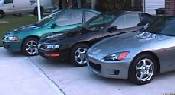


How different/similar are the TSX's HID lights to the ones on the S2000? I already have a S2000 and was looking to replace my Civic with a TSX and expected its HIDs to be the same as what I already have. This info makes me wonder if that assumption is off base.
Quote:
I would guess they are pretty similiar, they are both non-leveling xenons made by honda, they are probably pretty much exact.Originally Posted by STL
How different/similar are the TSX's HID lights to the ones on the S2000? I already have a S2000 and was looking to replace my Civic with a TSX and expected its HIDs to be the same as what I already have. This info makes me wonder if that assumption is off base.

Burning Brakes
Quote:
that and maybe they drive pieces of crap and wish they had better headlights.
I know that I did before I got my TSXOriginally Posted by sleeper
that and maybe they drive pieces of crap and wish they had better headlights.
Quote:
Then I would have expected the S2000 to make the "worst" list, but it didn't. That's what got me thinking...Originally Posted by GIBSON6594
I would guess they are pretty similiar, they are both non-leveling xenons made by honda, they are probably pretty much exact.

Quote:
I'm not in the States, so please forgive my ignorance. But why do they call a car "Baja"? In Indonesia and Malaysia, that word means fertilizer.
In Australia, there is one car called the "Jumbuck" Sounds similar to Jumbun, which in the malay language means toiletbowl....
Too funny...The Baja is a crappy Subaru so the name fits perfect then...Originally Posted by aaronng
Off topic: I'm not in the States, so please forgive my ignorance. But why do they call a car "Baja"? In Indonesia and Malaysia, that word means fertilizer.
In Australia, there is one car called the "Jumbuck" Sounds similar to Jumbun, which in the malay language means toiletbowl....
Team Owner
Quote:
Originally Posted by joerockt
Too funny...The Baja is a crappy Subaru so the name fits perfect then...
I think "Baja" is a reference to Baja (Spanish for "Lower") California. Baja California is a part of Mexico, just south of the California/Mexico border. Its pretty desolate desert and is the home of the "Baja 1000" off-road race. Subary probably wants you to associate its little SUV with conquering Baja. Maybe the Subie can conquer a mound of fertilizer?
Top notch 6MT
Quote:
Continuing with the Originally Posted by joerockt
Too funny...The Baja is a crappy Subaru so the name fits perfect then...
 theme
theme Couple other funny car names (depends on where you are and what language you associate with):
- Nova means "no go" but Chevy went ahead with that name anyway...
- Lacrosse apparently is slang in Quebec for "girl masturbating" (so I heard on the radio ) but Buick went with it anyway...

Quote:
I think "Baja" is a reference to Baja (Spanish for "Lower") California. Baja California is a part of Mexico, just south of the California/Mexico border. Its pretty desolate desert and is the home of the "Baja 1000" off-road race. Subary probably wants you to associate its little SUV with conquering Baja. Maybe the Subie can conquer a mound of fertilizer?
Good point...I doubt Subaru thought Sri Lanka would be their target market for this car Originally Posted by jlukja
I think "Baja" is a reference to Baja (Spanish for "Lower") California. Baja California is a part of Mexico, just south of the California/Mexico border. Its pretty desolate desert and is the home of the "Baja 1000" off-road race. Subary probably wants you to associate its little SUV with conquering Baja. Maybe the Subie can conquer a mound of fertilizer?
Though, I wonder, what was their target market? People that buy ugly ass cars like the Aztek? Good planning

Registered Abuser of VTEC
youngTL
Registered Abuser of VTEC
close
Oct 12, 2016
- Join DateMay 2004
- LocationEdmonton, Alberta
- Age42
- Posts:6,542
-
iTrader Positive Feedback0
-
iTrader Feedback Score(0)
-
Likes:179
-
Liked:115 Times in 84 Posts
Halogen headlights are the sucks for side vision. In order to get good side vision on my 1st gen TL I have to turn on the yellow fogs which is a HUGE difference.