


Interesting article about warming up your car.


Thread Starter
Banned
Joined: Jun 2010
Posts: 1,675
Likes: 28
From: Las Vegas/Bay Area
Interesting article about warming up your car.
Found this article about warming up your car during the winter. Very interesting facts that I found very helpful.
http://autos.yahoo.com/articles/auto...car-in-winter/
http://autos.yahoo.com/articles/auto...car-in-winter/




Three Wheelin'
Joined: Oct 2005
Posts: 1,935
Likes: 198
From: New Orleans LA area
My truck I usually just get in and go. GT-R I let warm up at least a 2 full minutes. I want to make sure that $$$$ transmission gets fluid fully pumping through it b4 I move the car.
Suzuka Master
Joined: Jan 2009
Posts: 9,012
Likes: 439
From: SoCal
I remember we had a thread about this that had everyone debating over this topic and the same thing was established. But never read an article on it.
I do it when its cold to get the heater going, so when I sit in the car the heater is starting to blow out warm air, or I'm defrosting my windows.
Now here's a question:
What if you go somewhere and you have a choice of idling your car for say 3-5 minutes or turning your car off. Which is better. Sure idling waste gas, but frequently turning your car off and on also ruins your stater motor. So which is better? According to the article you should turn your car off, but I dont know if I agree with that.
what are your thoughts?
I do it when its cold to get the heater going, so when I sit in the car the heater is starting to blow out warm air, or I'm defrosting my windows.
Now here's a question:
What if you go somewhere and you have a choice of idling your car for say 3-5 minutes or turning your car off. Which is better. Sure idling waste gas, but frequently turning your car off and on also ruins your stater motor. So which is better? According to the article you should turn your car off, but I dont know if I agree with that.
7. Quick errands aren't quick enough
Natural Resources Canada points out that leaving your car idling while you're running into a store on an errand or going back into the house to pick up a forgotten item is another way to waste gas and pollute both your town and the planet.
"Leaving your engine running is hard on your pocketbook, produces greenhouse gas emissions, and is an invitation to car thieves," the agency (PDF) says.
Natural Resources Canada points out that leaving your car idling while you're running into a store on an errand or going back into the house to pick up a forgotten item is another way to waste gas and pollute both your town and the planet.
"Leaving your engine running is hard on your pocketbook, produces greenhouse gas emissions, and is an invitation to car thieves," the agency (PDF) says.

Trending Topics

Race Director


Joined: Jan 2007
Posts: 11,213
Likes: 174
From: Portland, Oregon
My Santa Fe idles very high when starting cold (2,000 to 2,200 rpm) and I'll usually wait until it drops below 2K before shifting into reverse. As the cars in our family are garaged, there is no reason to worry about defrosting. 
Thread Starter
Banned
Joined: Jun 2010
Posts: 1,675
Likes: 28
From: Las Vegas/Bay Area
My car is also in a garage and I will usually just get in the car and drive. The coldest I've seen it here in the morning is in the low 40's anyway. Plus I have to drive a few minutes at 15mph to observe the speed limit in my development.

Senior Moderator
Joined: Jan 2001
Posts: 34,937
Likes: 638
From: Chicago Burbs
Your Friendly Canadian
Joined: Dec 2007
Posts: 17,447
Likes: 1,506
From: Toronto, Ontario
2. Ten seconds is all you need.
Methinks this is highly exaggerated. I think in reality it's something like 30 seconds to a minute, at which point you've used more gas than you would've turning the car off and then starting it again. Ten seconds is a really short amount of time.
Same thing with number 3. I'm no engine guru, but I doubt idling wears the car out any more than actually driving it. I remember hearing that the only real downside to idling your car for too long, aside from fuel consumption, is that your catalytic converter doesn't work as it should as well. I think it was Costco or someone who said that you can tell this by looking at the car's exhaust tip, and if it's covered in soot or not.
IMO pretty much all the facts except for 1, 6, and 7 are exaggerated, and make idling/warming up your car more dramatic than it really is.
FWIW, my Accord doesn't like moving if it hasn't warmed up for at least 45 seconds. Cold idle is 1500 rpm, and you get the feeling that it's constantly trying to get up to that idle speed. Engine feels like it's under load when in gear/stopped, and when you let go of the brake in gear, it automatically goes up to 1500 rpm. It's so bad, the AT will sometimes even shift into 2nd, no throttle needed.
My
Methinks this is highly exaggerated. I think in reality it's something like 30 seconds to a minute, at which point you've used more gas than you would've turning the car off and then starting it again. Ten seconds is a really short amount of time.
Same thing with number 3. I'm no engine guru, but I doubt idling wears the car out any more than actually driving it. I remember hearing that the only real downside to idling your car for too long, aside from fuel consumption, is that your catalytic converter doesn't work as it should as well. I think it was Costco or someone who said that you can tell this by looking at the car's exhaust tip, and if it's covered in soot or not.
IMO pretty much all the facts except for 1, 6, and 7 are exaggerated, and make idling/warming up your car more dramatic than it really is.
FWIW, my Accord doesn't like moving if it hasn't warmed up for at least 45 seconds. Cold idle is 1500 rpm, and you get the feeling that it's constantly trying to get up to that idle speed. Engine feels like it's under load when in gear/stopped, and when you let go of the brake in gear, it automatically goes up to 1500 rpm. It's so bad, the AT will sometimes even shift into 2nd, no throttle needed.
My

My only car is a Bus
Joined: Sep 2005
Posts: 3,254
Likes: 1
From: Republik of Kalifornia
Almost all of the links in that article cite some environmental fund. Last I checked, Granola Crunchy & Driver wasn't an authority on cars.
Car & Driver says:
Proper Warm-Up
Yes, we know, plenty of people claim that letting the engine warm up any longer than it takes for the oil-pressure gauge to register is wasting gas. But a fully warmed engine is a more efficient engine. Besides, taking off in a car that hasn’t warmed properly, hasn’t had the windows cleared of ice or snow, and is still freezing cold inside is dangerous at worst, no fun at best. You think Al Gore hops into his Toyota Prius without warming it up?
http://www.caranddriver.com/features..._guide-feature
Car & Driver says:
Proper Warm-Up
Yes, we know, plenty of people claim that letting the engine warm up any longer than it takes for the oil-pressure gauge to register is wasting gas. But a fully warmed engine is a more efficient engine. Besides, taking off in a car that hasn’t warmed properly, hasn’t had the windows cleared of ice or snow, and is still freezing cold inside is dangerous at worst, no fun at best. You think Al Gore hops into his Toyota Prius without warming it up?
http://www.caranddriver.com/features..._guide-feature

Senior Moderator

Joined: Jun 2005
Posts: 14,667
Likes: 13
From: NY
I usually let mine warm up for a minute or two, not usually more than that. Especially since the RDX has a turbo - I don't live far from the highway and I don't want to punch it too hard before it has a chance to warm up.

Trolling Canuckistan
Joined: Oct 2005
Posts: 10,453
Likes: 811
From: 100 Legends Way, Boston, MA 02114
The only idle warm up I do is during snow or ice removal and that's just to get the defrosters working. I just shift at about 2900 RPM until the temp gauge starts to register. The goal is to warm all moving parts up under a light load.

Three Wheelin'
Joined: May 2009
Posts: 1,299
Likes: 51
From: WISCONSIN
turn engine off if idle more than 10 seconds? that means, in stop and go traffic, i'll be starting my car at least 100 times in an hour! no thanks....starting your car does more damage than letting it idle. and drive off after 10 seconds? in -20 degree weather? i don't think so! this article is too bias towards anti-pollution
Last edited by silver3.5; Jan 10, 2011 at 02:44 AM.

AZ Community Team
Joined: Nov 2004
Posts: 19,103
Likes: 4,763
From: Maryland
Unless the windows are fogged over, there's no reason to warm up your engine at idle but there's something else. Take it easy on the throttle until the engine warms up completely, once the engine is warmed up then you an use more aggressive acceleration. I start and drive my TL within a few seconds but am really easy on the acceleration until it's warmed up.
AZ Community Team
Joined: Nov 2004
Posts: 19,103
Likes: 4,763
From: Maryland
turn engine off if idle more than 10 seconds? that means, in stop and go traffic, i'll be starting my car at least 100 times in an hour! no thanks....starting your car does more damage than letting it idle. and drive off after 10 seconds? in -20 degree weather? i don't think so! this article is too bias towards anti-pollution

Registered Member
Joined: Jul 2004
Posts: 8,342
Likes: 163
From: Suburb of Manassas, VA
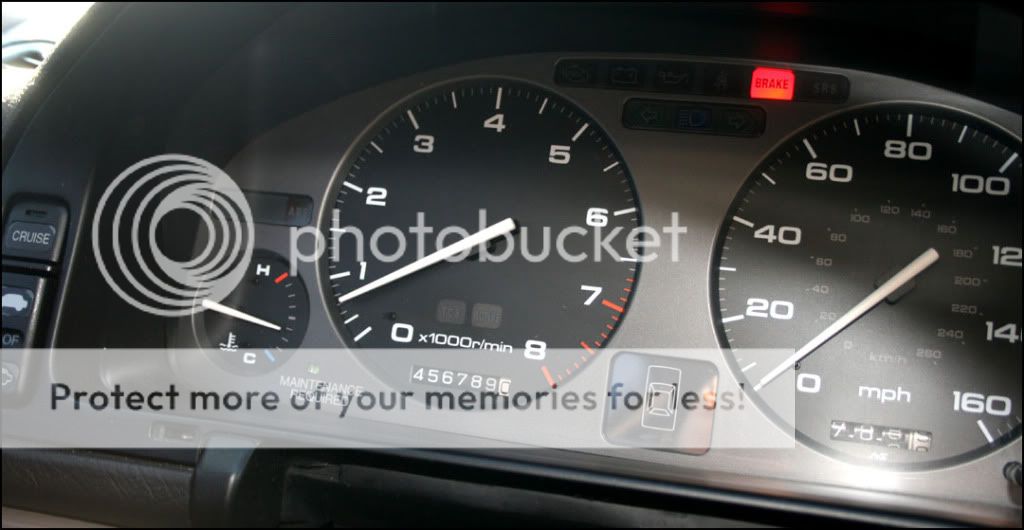
There is a pretty good gauge you can use for this. When you start your engine, it will run up to around 1500 RPM and then start to fall back to its normal idle speed. When it gets to around 800-1000 RPM, you should be fine to put it in gear and get going. At first, drive carefully and not fast, with light throttle.... say, through your neighborhood until you reach a main road. By that time you should be fine.
Extended idling when an engine is first started promotes condensation in the cylinders, the oil pan, and the exhaust. You're going to get some of this anyway, but getting moving like I said above minimizes this and starts burning ir off and drying it up sooner. Short trips with engine on for short periods of time then turned off will shorten the life of your exhaust system significantly.
Extended idling when an engine is first started promotes condensation in the cylinders, the oil pan, and the exhaust. You're going to get some of this anyway, but getting moving like I said above minimizes this and starts burning ir off and drying it up sooner. Short trips with engine on for short periods of time then turned off will shorten the life of your exhaust system significantly.


Same here. The RPMs typically drop into normal range after 15-20 seconds. After that I'm off and just keep the RPMs low till warm...

Senior Moderator
Joined: Jun 2003
Posts: 807
Likes: 412
From: Phoenix, AZ
I let the car warm up for up to a minute before I take off every morning, and I park in a garage in warm Arizona. In cooler climates, I'll let it run for longer. And I definitely don't turn off the car when I'm sitting longer than 10 seconds. That's ridiculous.
Start-up is the hardest thing you can do to your car. I disagree with the article here. And I must not be doing anything too hard on my motor to have to have gotten this level of longevity out of it.
Totally.
Totally.

Extended idling when an engine is first started promotes condensation in the cylinders, the oil pan, and the exhaust. You're going to get some of this anyway, but getting moving like I said above minimizes this and starts burning ir off and drying it up sooner. Short trips with engine on for short periods of time then turned off will shorten the life of your exhaust system significantly.
north east (as you know) is pretty cold right this time of year. i recently moved, and now my work is about 3-5 mins from my house.
i usually start my car, have a smoke (outside of the car), then hop in and keep the rpms relatively low all the way to work. keep in mind, my work is only a few mins away from my house...so i know nothing is fully warmed up in my car by the time i arrive at work.
should i be worried my xlr8 exhaust will flake out prematurely?
should i take the scenic route and hop on the highway for a few minutes each morning, instead of taking the 5 min route?
Your Friendly Canadian
Joined: Dec 2007
Posts: 17,447
Likes: 1,506
From: Toronto, Ontario
There is a pretty good gauge you can use for this. When you start your engine, it will run up to around 1500 RPM and then start to fall back to its normal idle speed. When it gets to around 800-1000 RPM, you should be fine to put it in gear and get going. At first, drive carefully and not fast, with light throttle.... say, through your neighborhood until you reach a main road. By that time you should be fine.
Extended idling when an engine is first started promotes condensation in the cylinders, the oil pan, and the exhaust. You're going to get some of this anyway, but getting moving like I said above minimizes this and starts burning ir off and drying it up sooner. Short trips with engine on for short periods of time then turned off will shorten the life of your exhaust system significantly.
Extended idling when an engine is first started promotes condensation in the cylinders, the oil pan, and the exhaust. You're going to get some of this anyway, but getting moving like I said above minimizes this and starts burning ir off and drying it up sooner. Short trips with engine on for short periods of time then turned off will shorten the life of your exhaust system significantly.

Disinformation Terminator
Joined: Jun 2005
Posts: 1,930
Likes: 0
From: NorCal
3. Idling hurts the car
"According to the Hinkle Charitable Foundation's Anti-Idling Primer, idling forces an engine "to operate in a very inefficient and gasoline-rich mode that, over time, can degrade the engine's performance and reduce mileage."
The Campaign for an Idle-Free New York City points out that idling causes carbon residues to build up inside the engine, which reduces its efficiency."
OK, maybe in an engine built before 1960 or if you idle your car for 2000 hours non-stop. Otherwise,
"According to the Hinkle Charitable Foundation's Anti-Idling Primer, idling forces an engine "to operate in a very inefficient and gasoline-rich mode that, over time, can degrade the engine's performance and reduce mileage."
The Campaign for an Idle-Free New York City points out that idling causes carbon residues to build up inside the engine, which reduces its efficiency."
OK, maybe in an engine built before 1960 or if you idle your car for 2000 hours non-stop. Otherwise,

6. Block heaters beat remote starters
Lori Strothard of the Waterloo Citizens Vehicle Idling Reduction Task Force in Canada says, "Remote starters can too easily cause people to warm up their cars for 5 to 15 minutes, which is generally unnecessary."
A block heater, which is designed to heat the engine and can cost under $30, on a timer set to start one to two hours before driving, does the trick in very cold climates.
Lori Strothard of the Waterloo Citizens Vehicle Idling Reduction Task Force in Canada says, "Remote starters can too easily cause people to warm up their cars for 5 to 15 minutes, which is generally unnecessary."
A block heater, which is designed to heat the engine and can cost under $30, on a timer set to start one to two hours before driving, does the trick in very cold climates.
Trolling Canuckistan
Joined: Oct 2005
Posts: 10,453
Likes: 811
From: 100 Legends Way, Boston, MA 02114
AZ Community Team
Joined: Nov 2004
Posts: 19,103
Likes: 4,763
From: Maryland
One definitely do not do is start your cold engine and let it run for less than a minute. The amount of extra fuel that gets deposited on the plugs takes time to properly burn off. Sometimes I do mistakenly do it when I move the cars out of the garage to wash them then my wife yells at me because her Pilot is hard to start the next time.

Trolling Canuckistan
Joined: Oct 2005
Posts: 10,453
Likes: 811
From: 100 Legends Way, Boston, MA 02114
turn engine off if idle more than 10 seconds? that means, in stop and go traffic, i'll be starting my car at least 100 times in an hour! no thanks....starting your car does more damage than letting it idle. and drive off after 10 seconds? in -20 degree weather? i don't think so! this article is too bias towards anti-pollution
For starting a warm engine, the amount of fuel to start the engine is also negligible. I do agree the 10 second rule is perhaps too short. Definitely 30 seconds for a warm engine, although in traffic I agree it makes almost no sense to shut down a engine in traffic.
One definitely do not do is start your cold engine and let it run for less than a minute. The amount of extra fuel that gets deposited on the plugs takes time to properly burn off. Sometimes I do mistakenly do it when I move the cars out of the garage to wash them then my wife yells at me because her Pilot is hard to start the next time.
One definitely do not do is start your cold engine and let it run for less than a minute. The amount of extra fuel that gets deposited on the plugs takes time to properly burn off. Sometimes I do mistakenly do it when I move the cars out of the garage to wash them then my wife yells at me because her Pilot is hard to start the next time.
i would be interested in somekinda heater like to mount it in my CL because it really gets freezing in a winter and my seat heaters aren't working anyone can recommend something that will work on my car ?

Unless the windows are fogged over, there's no reason to warm up your engine at idle but there's something else. Take it easy on the throttle until the engine warms up completely, once the engine is warmed up then you an use more aggressive acceleration. I start and drive my TL within a few seconds but am really easy on the acceleration until it's warmed up.
once i start the engine, i am usually off within 15-30 secs at most unless im waiting for the defroster... it doesn't make sense to sit there and warm up the engine but your tranny has been sitting there cold... if the car is not warmed up yet, try to stay light on the accelerator and let the car coast if possible... at least when you are moving, you can get things warmed up uniformly and faster...
Registered Member
Joined: Jul 2004
Posts: 8,342
Likes: 163
From: Suburb of Manassas, VA
SouthernBoy, couple of questions for you.
north east (as you know) is pretty cold right this time of year. i recently moved, and now my work is about 3-5 mins from my house.
i usually start my car, have a smoke (outside of the car), then hop in and keep the rpms relatively low all the way to work. keep in mind, my work is only a few mins away from my house...so i know nothing is fully warmed up in my car by the time i arrive at work.
should i be worried my xlr8 exhaust will flake out prematurely?
should i take the scenic route and hop on the highway for a few minutes each morning, instead of taking the 5 min route?
north east (as you know) is pretty cold right this time of year. i recently moved, and now my work is about 3-5 mins from my house.
i usually start my car, have a smoke (outside of the car), then hop in and keep the rpms relatively low all the way to work. keep in mind, my work is only a few mins away from my house...so i know nothing is fully warmed up in my car by the time i arrive at work.
should i be worried my xlr8 exhaust will flake out prematurely?
should i take the scenic route and hop on the highway for a few minutes each morning, instead of taking the 5 min route?
Having a smoke while your engine is running after a cold start up is not the best thing to do. I imagine smoking a cigarette probably takes 3 to 5 minutes. You'd do better in doing your "should i" route or maybe another scenic route. If you're just running the J-pipe, that thing will heat up really fast. The part of the exhaust you want to worry about is down stream of the main cat... as in the resonator and more importantly, the mufflers. These components tend to be the last ones to heat up so condensation in them is going to take a little bit to dry out.
Registered Member
Joined: Jul 2004
Posts: 8,342
Likes: 163
From: Suburb of Manassas, VA
It's not even about engine wear, which I'm sure you're correct about. But what about the amount of fuel it takes to start an engine. Not only is this article biased, but it's misinformed.
My 4cyl Accord takes a heck of a long time to lower its idle speed from 1500 rpm. As in 2+ minutes in 20 degree weather. I know the majority of board members have V6 engines and they're probably different, but I don't think engine speed is a good measuring stick.
My 4cyl Accord takes a heck of a long time to lower its idle speed from 1500 rpm. As in 2+ minutes in 20 degree weather. I know the majority of board members have V6 engines and they're probably different, but I don't think engine speed is a good measuring stick.
Well first off, you're not in the northeast if you live in Baltimore. (had to clear that one up).

^looks north east to me. what would you consider baltimore, mid atlantic?
Having a smoke while your engine is running after a cold start up is not the best thing to do. I imagine smoking a cigarette probably takes 3 to 5 minutes. You'd do better in doing your "should i" route or maybe another scenic route. If you're just running the J-pipe, that thing will heat up really fast. The part of the exhaust you want to worry about is down stream of the main cat... as in the resonator and more importantly, the mufflers. These components tend to be the last ones to heat up so condensation in them is going to take a little bit to dry out.
^looks north east to me. what would you consider baltimore, mid atlantic?
Having a smoke while your engine is running after a cold start up is not the best thing to do. I imagine smoking a cigarette probably takes 3 to 5 minutes. You'd do better in doing your "should i" route or maybe another scenic route. If you're just running the J-pipe, that thing will heat up really fast. The part of the exhaust you want to worry about is down stream of the main cat... as in the resonator and more importantly, the mufflers. These components tend to be the last ones to heat up so condensation in them is going to take a little bit to dry out.
...so basically what i'm trying to avoid is any wear/tear on my exhaust components. i feel like if i just do the short 3-5 min drive, nothing will be warmed up whatsoever towards the back end of the system. you know what i mean?
i guess i should lengthen my commute some, so that everything gets up to operating temps. i know these short stop n go trips are not the most ideal thing...
AZ Community Team
Joined: Nov 2004
Posts: 19,103
Likes: 4,763
From: Maryland
Back in the 80's and early 90's, VW added a pretty cool feature on some of their Euro cars. A switch on one of the stalks would shut down the engine if the vehicle was not moving and the brake pressed and clutch pushed in all the way. As soon as the brake was released, the engine would automatically restart. This was to save fuel in stop and go traffic. Don't remember much about it but it was never offered in the states for legal reasons. It improved city fuel mileage.
Last edited by Legend2TL; Jan 10, 2011 at 11:17 AM.

Coal
Joined: Dec 2009
Posts: 7,363
Likes: 137
From: Freaking everywhere
I understood that, I was just adding in the traffic aspect in general.
Back in the 80's and early 90's, VW added a pretty cool feature on some of their Euro cars. A switch on one of the stalks would shut down the engine if the vehicle was not moving and the brake pressed and clutch pushed in all the way. As soon as the brake was released, the engine would automatically restart. This was to save fuel in stop and go traffic. Don't remember much about it but it was never offered in the states for legal reasons. It improved city fuel mileage.
Back in the 80's and early 90's, VW added a pretty cool feature on some of their Euro cars. A switch on one of the stalks would shut down the engine if the vehicle was not moving and the brake pressed and clutch pushed in all the way. As soon as the brake was released, the engine would automatically restart. This was to save fuel in stop and go traffic. Don't remember much about it but it was never offered in the states for legal reasons. It improved city fuel mileage.

Trolling Canuckistan
Joined: Oct 2005
Posts: 10,453
Likes: 811
From: 100 Legends Way, Boston, MA 02114
Extended idling when an engine is first started promotes condensation in the cylinders, the oil pan, and the exhaust. You're going to get some of this anyway, but getting moving like I said above minimizes this and starts burning ir off and drying it up sooner. Short trips with engine on for short periods of time then turned off will shorten the life of your exhaust system significantly.

AZ Community Team
Joined: Nov 2004
Posts: 19,103
Likes: 4,763
From: Maryland
R&T did a writeup on it, there were no wear issues from what I remember, warm start-up has negligible wear. There were some decent city fuel savings but the major disadvantage was you had to be a alert driver to always remember to use it.

Moderator Alumnus
Joined: Oct 2004
Posts: 6,547
Likes: 196
I would argue the article makes a few generalizations that do not apply to all start up conditions. First off, everyone's interpretation of "cold" and "winter" is different depending where you live and the time of year. For the next few days it will be -35 here, and there is no way I would start one of my vehicles and drive away after a few seconds. I wonder if the author has seen an oil pressure gauge taking a second or two to move and heard a power steering pump squeal away upon a very cold start up. At the other extreme, some of my trucks spike oil pressure at cold start up in winter conditions because the oil is way too thick from being cold. Secondly, as mirror mentioned, idling does not hurt a car equipped with modern fuel injection and electronics. I'm sure many here who commute spend much of their time idling away in traffic. Ten seconds is all you need? There isn't enough time for me to go into the different expansion rate of aluminum pistons and steel cylinder liners. I also think diesel and turbocharged engines, becoming much more common, would need much more than ten seconds.
Personally, I think the article makes some good points, but far too generalized to be taken seriously for all winter conditions.
Terry
Personally, I think the article makes some good points, but far too generalized to be taken seriously for all winter conditions.
Terry