


Bugatti Veyron showing in the U.S.





Thread Starter
Moderator Alumnus
Joined: Jan 2001
Posts: 9,574
Likes: 0
From: Communist, NY
Originally Posted by njzprettyboy
look at the cars in the background...prospective owners i guess
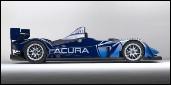
Nope, just part of the VAG showing........you'll also notice the Azure concept in the 3rd photo down.

Trending Topics




We dont love these hoes
Joined: Dec 2002
Posts: 3,737
Likes: 0
From: Minneapolis, MN
man that car is just unreal... i read it gets 5mpg  so you'll pretty much have to drive gas station to gas station and put up with all the people that will be gawking at you at said gas stations
so you'll pretty much have to drive gas station to gas station and put up with all the people that will be gawking at you at said gas stations
Originally Posted by Sdog2012
man that car is just unreal... i read it gets 5mpg so you'll pretty much have to drive gas station to gas station and put up with all the people that will be gawking at you at said gas stations
so you'll pretty much have to drive gas station to gas station and put up with all the people that will be gawking at you at said gas stations
Drifting
Joined: Mar 2002
Posts: 2,518
Likes: 30
From: NJ
Originally Posted by Beltfed
Nope, just part of the VAG showing........you'll also notice the Azure concept in the 3rd photo down.

Suzuka Master
Joined: Feb 2004
Posts: 8,620
Likes: 7
From: Charlotte
Originally Posted by njzprettyboy
does the concpet look like the last one? cuz it seems like the last gen azure
FIGHTING ILLINI

Joined: Jan 2005
Posts: 1,106
Likes: 2
From: Bay Area, CA
Originally Posted by jiggaman
i dont think the colors on that car do it any justice, baby blue and pearl white on a 1000hp car just doesn't seem to work well
 it looks better in black and red

Yes it is!
Joined: Jun 2005
Posts: 929
Likes: 0
From: Houston
I thought the concept looked kind of dumb, but for some reason, in these pics, I admit I kind of like it. I'm a fan of that color combination. Really elegant.
Some more nice metal parked around it, too.
Some more nice metal parked around it, too.

Senior Moderator


Joined: Dec 2001
Posts: 169,092
Likes: 23,857
Press release...
==========
(from Bugatti Press Release) The trials of the fastest road sports car in the world have been successfully completed. One of the most ambitious projects in automobile history is entering its production phase. The first Bugatti Veyron 16.4 cars, built mainly by hand, are already being completed and will be delivered to customers this year.
The sports car, capable of more than 400 km/h, is driven by a 16-cylinder mid-engine, that at 710 mm long is no larger than a conventional V12 unit, and due to its lightweight construction weighs only about 400 kilos. Its compact dimensions are due to the unique arrangement of its cylinder banks in a W configuration. Two VR8 blocks, each with a fifteen degree bank angle, are joined in the crankcase
to form one engine. Both eight cylinders are set at an angle of ninety degrees to each other and are aspirated by a total of four exhaust gas turbochargers. The engine delivers 1001 HP at 6,000 r.p.m. and provides a maximum torque of 1250 Newtonmetres at between 2,200 and 5,500 r.p.m.
To apply the power of the 64-valve unit to achieve satisfactory driving dynamics both in everyday traffic and on the racetrack, the Bugatti development team of Dr. Franz-Joseph Paefgen and Dr. Wolfgang Schreiber has realized a propulsion unit that is without parallel in its complexity. If the extreme engine power is a master stroke of genius, its conversion for road use is an equally tough challenge.
As Dr. Schreiber says “For 1000 HP propulsion power, the system demands approximately 2000 HP to be additionally generated as heat energy during combustion. Half in each case is dissipated in the exhaust gas and cooling water”.
To do this, the Bugatti engine has two water circuits. The larger of the two with 40 liters of cooling water has three coolers in the front section of the car, to keep the engine at operating temperature. The second circuit, called the low-temperature system, has a separate water pump and contains 15 liters of cooling water. These are used to cool, by up to 130 degrees, the charged air, heated during compression in the turbochargers, in two heat exchangers mounted on the engine. The cooled, charged air then passes through two “air manifolds” into the combustion chamber, which it then leaves as exhaust gas at approximately 1,000 degrees. It then passes through the turbines of the exhaust gas turbochargers. This causes the exhaust gas to expand, so that it is cooled by up to about 150 degrees, is then cleaned in the catalyzer and exhausted.
In addition to its unique compactness, the high performance of the power unit is the centrepoint of the development. Lightweight materials are used that not only result in a low power-to-weight ratio but also particularly provide the spontaneous response of the moving engine-internal masses. In addition
to piston rods of titanium, the so called “easy runners”, the eight-stage oil pump integrated into the crankcase for dry sump lubrication has light aluminum gears. Because the arrangement of the 16 cylinders ensures extremely quiet running, only a small flywheel is needed. The use of motor sport technology is evident not only from the plasma-coated running faces of the cylinders but also by the use of high-strength steel for the shafts and gears in the aluminum crankcase.
Unique in engine design is the integration of knock and misfiring detection in an ion current system. Because the multiplicity of cylinders means very quiet running and ensures that the velocity difference will be extremely small in the event of a cylinder misfire, cylinder-selective detection by measuring rough running is not reliable enough. Therefore, Bugatti Ion Current Sensing (BIS) is used. The ion
current flowing at each spark plug at the timepoint of ignition is monitored by a separate evaluation sensor system. The data obtained is passed to both engine control units. If knocking combustion or a misfire is detected, the associated control unit immediately initiates countermeasures, such as retardation of the ignition timepoint, shutdown of the cylinder or reduction of the charge pressure. According to the head of Bugatti Unit Development Gregor Gries, “The aim of our technology is to generate the maximum performance from the engine in a stable, clean manner”.
The power generated in the engine is transferred to the flange-mounted direct manual gearbox (DSG). The torque and speed is then transmitted, through the gearing of seven forward and one reverse gear, via a universal drive to the front axle gearbox and via a second universal drive, along the right side of the engine to the rear axle gearbox. Both the DSG and both axle gearbox housings are of lightweight aluminum construction. The drive power is distributed to the front and rear axles by means of a Haldex coupling, an actively-controlled multi-disk, inter-axle lock directly connected to the front axle gearbox. The following front axle differential distributes the power to both front wheels. In the rear axle differential the power is distributed to the rear wheels via a bevel gear and a further differential. In addition, an actively-controlled, hydraulically-actuated, multi-disk differential lock is installed here. When necessary, it prevents speed differences between the rear wheels and ensures optimum directional stability when accelerating and when cornering under load. All load distribution functions are completely automatic and are undetected by the driver.
The Bugatti marque has since earliest times been regarded as a central force in the advancement of automobile development by innovative solutions. A position deservedly maintained by the first high-performance sports car of the modern Bugatti.


==========
(from Bugatti Press Release) The trials of the fastest road sports car in the world have been successfully completed. One of the most ambitious projects in automobile history is entering its production phase. The first Bugatti Veyron 16.4 cars, built mainly by hand, are already being completed and will be delivered to customers this year.
The sports car, capable of more than 400 km/h, is driven by a 16-cylinder mid-engine, that at 710 mm long is no larger than a conventional V12 unit, and due to its lightweight construction weighs only about 400 kilos. Its compact dimensions are due to the unique arrangement of its cylinder banks in a W configuration. Two VR8 blocks, each with a fifteen degree bank angle, are joined in the crankcase
to form one engine. Both eight cylinders are set at an angle of ninety degrees to each other and are aspirated by a total of four exhaust gas turbochargers. The engine delivers 1001 HP at 6,000 r.p.m. and provides a maximum torque of 1250 Newtonmetres at between 2,200 and 5,500 r.p.m.
To apply the power of the 64-valve unit to achieve satisfactory driving dynamics both in everyday traffic and on the racetrack, the Bugatti development team of Dr. Franz-Joseph Paefgen and Dr. Wolfgang Schreiber has realized a propulsion unit that is without parallel in its complexity. If the extreme engine power is a master stroke of genius, its conversion for road use is an equally tough challenge.
As Dr. Schreiber says “For 1000 HP propulsion power, the system demands approximately 2000 HP to be additionally generated as heat energy during combustion. Half in each case is dissipated in the exhaust gas and cooling water”.
To do this, the Bugatti engine has two water circuits. The larger of the two with 40 liters of cooling water has three coolers in the front section of the car, to keep the engine at operating temperature. The second circuit, called the low-temperature system, has a separate water pump and contains 15 liters of cooling water. These are used to cool, by up to 130 degrees, the charged air, heated during compression in the turbochargers, in two heat exchangers mounted on the engine. The cooled, charged air then passes through two “air manifolds” into the combustion chamber, which it then leaves as exhaust gas at approximately 1,000 degrees. It then passes through the turbines of the exhaust gas turbochargers. This causes the exhaust gas to expand, so that it is cooled by up to about 150 degrees, is then cleaned in the catalyzer and exhausted.
In addition to its unique compactness, the high performance of the power unit is the centrepoint of the development. Lightweight materials are used that not only result in a low power-to-weight ratio but also particularly provide the spontaneous response of the moving engine-internal masses. In addition
to piston rods of titanium, the so called “easy runners”, the eight-stage oil pump integrated into the crankcase for dry sump lubrication has light aluminum gears. Because the arrangement of the 16 cylinders ensures extremely quiet running, only a small flywheel is needed. The use of motor sport technology is evident not only from the plasma-coated running faces of the cylinders but also by the use of high-strength steel for the shafts and gears in the aluminum crankcase.
Unique in engine design is the integration of knock and misfiring detection in an ion current system. Because the multiplicity of cylinders means very quiet running and ensures that the velocity difference will be extremely small in the event of a cylinder misfire, cylinder-selective detection by measuring rough running is not reliable enough. Therefore, Bugatti Ion Current Sensing (BIS) is used. The ion
current flowing at each spark plug at the timepoint of ignition is monitored by a separate evaluation sensor system. The data obtained is passed to both engine control units. If knocking combustion or a misfire is detected, the associated control unit immediately initiates countermeasures, such as retardation of the ignition timepoint, shutdown of the cylinder or reduction of the charge pressure. According to the head of Bugatti Unit Development Gregor Gries, “The aim of our technology is to generate the maximum performance from the engine in a stable, clean manner”.
The power generated in the engine is transferred to the flange-mounted direct manual gearbox (DSG). The torque and speed is then transmitted, through the gearing of seven forward and one reverse gear, via a universal drive to the front axle gearbox and via a second universal drive, along the right side of the engine to the rear axle gearbox. Both the DSG and both axle gearbox housings are of lightweight aluminum construction. The drive power is distributed to the front and rear axles by means of a Haldex coupling, an actively-controlled multi-disk, inter-axle lock directly connected to the front axle gearbox. The following front axle differential distributes the power to both front wheels. In the rear axle differential the power is distributed to the rear wheels via a bevel gear and a further differential. In addition, an actively-controlled, hydraulically-actuated, multi-disk differential lock is installed here. When necessary, it prevents speed differences between the rear wheels and ensures optimum directional stability when accelerating and when cornering under load. All load distribution functions are completely automatic and are undetected by the driver.
The Bugatti marque has since earliest times been regarded as a central force in the advancement of automobile development by innovative solutions. A position deservedly maintained by the first high-performance sports car of the modern Bugatti.
Senior Moderator
Joined: Dec 2001
Posts: 169,092
Likes: 23,857
And here's a nice driving impressions article (thanks, Stapler!):
http://www.channel4.com/4car/road-te.../veyron-2.html
http://www.channel4.com/4car/road-te.../veyron-2.html

Aaaarrrggghhhh!
Joined: Aug 2005
Posts: 2,087
Likes: 1
From: Way up here ^
For anyone who's interested, I think there's an article in the November 2005 issue of "Automobile" magazine. Read it while at the dentist office yesterday. Very interesting technology. I'm very impressed with the car overall... Very unimpressed with the $$.







Senior Moderator


Joined: Sep 2005
Posts: 9,295
Likes: 169
From: Toronto
I think it looks good in black/red and black/yellow. Here is a pic of it in black and red that I got somewhere a while ago.
http://img190.imageshack.us/img190/9...eyron098fb.jpg
I have a few vids of the car driving on my comp,.....not too fast or anything its just testing etc,....inside view,.....no idea how to host them anywhere though,......sort of not worth it anyway.
http://img190.imageshack.us/img190/9...eyron098fb.jpg
I have a few vids of the car driving on my comp,.....not too fast or anything its just testing etc,....inside view,.....no idea how to host them anywhere though,......sort of not worth it anyway.

Senior Moderator
Joined: Sep 2005
Posts: 9,295
Likes: 169
From: Toronto
I did read a few weeks ago that the Veyron did beat the Koenigsegg CCR's speed record that was set earlier this year. Link to the video http://www.koenigsegg.com/movies/index.asp
I forget where I was reading about the Veyron, but here is an article from Autoweek that does say the car will go 250mph. http://www.autoweek.com/article.cms?articleId=103261
If you go to the Bugattie website and go to the news section, you can read about how it broke the 400kph barrier,..which is 248MPH. Cant give you link because of how the website was set up.
I forget where I was reading about the Veyron, but here is an article from Autoweek that does say the car will go 250mph. http://www.autoweek.com/article.cms?articleId=103261
If you go to the Bugattie website and go to the news section, you can read about how it broke the 400kph barrier,..which is 248MPH. Cant give you link because of how the website was set up.
Last edited by West6MT; Oct 19, 2005 at 06:37 PM.
Senior Moderator
Joined: Sep 2005
Posts: 9,295
Likes: 169
From: Toronto
I agree the McLaren is an incredible car to achieve what it did so long ago. What makes the bugatti special is in how quickly it reaches its top speed. If you read the Autoweek article it describes how much faster the Veyron gets to 186mph compared to a Carerra GT,.no slouch of a car by any means (16sec vs 34 sec).
Suzuka Master
Joined: Feb 2004
Posts: 8,620
Likes: 7
From: Charlotte
Originally Posted by West6MT
I forget where I was reading about the Veyron, but here is an article from Autoweek that does say the car will go 250mph. http://www.autoweek.com/article.cms?articleId=103261
If you go to the Bugattie website and go to the news section, you can read about how it broke the 400kph barrier,..which is 248MPH. Cant give you link because of how the website was set up.
If you go to the Bugattie website and go to the news section, you can read about how it broke the 400kph barrier,..which is 248MPH. Cant give you link because of how the website was set up.
Although the times are yet to be independently verified, Bugatti claims its new two-seater will hit 62 mph from a standstill in 2.5 seconds, 125 mph in 7.3 seconds, and amazingly, given it tips the scales at a rather portly 4300 pounds, 186 mph in just 16.8 seconds. The words “battering ram” come to mind.
I'll admit, the numbers ain't bad, but slap 4 turbos onto 16 cylinders and what do you expect? Plus the car is a pig at 4300lbs.
Senior Moderator
Joined: Sep 2005
Posts: 9,295
Likes: 169
From: Toronto
Agreed,...I wasnt trying to dismiss what you were saying or anything,.dont think that. I am looking forward to actually seeing some video of this thing on the road in a road test situation. I do have a video of one of the test cars going around a track,..but its nothing too special,....sounds pretty cool.
I will see if I can dig up where I was reading about it actually being confirmed going over the McLaren/and Koenigseggs speed records.
What is TOV?
I will see if I can dig up where I was reading about it actually being confirmed going over the McLaren/and Koenigseggs speed records.
What is TOV?
Suzuka Master
Joined: Feb 2004
Posts: 8,620
Likes: 7
From: Charlotte
Originally Posted by West6MT
Agreed,...I wasnt trying to dismiss what you were saying or anything,.dont think that. I am looking forward to actually seeing some video of this thing on the road in a road test situation. I do have a video of one of the test cars going around a track,..but its nothing too special,....sounds pretty cool.
I will see if I can dig up where I was reading about it actually being confirmed going over the McLaren/and Koenigseggs speed records.
What is TOV?
I will see if I can dig up where I was reading about it actually being confirmed going over the McLaren/and Koenigseggs speed records.
What is TOV?

I have no doubt this car will eclipse all previous records, but not everything is about going fast in a straight line.
I like the video of the only Veyron (a single prototype at the time) nearly plowing into the wall on the back straight at Laguna Seca
 Bet the guy driving shit his pants
And I messed up, its the TUV. Its an independent testing company. They actually do have a site in english, but it doesn't seem like there is any info on their site about this.
Senior Moderator
Joined: Sep 2005
Posts: 9,295
Likes: 169
From: Toronto
Originally Posted by mclarenf3387
I understand
I have no doubt this car will eclipse all previous records, but not everything is about going fast in a straight line.
I like the video of the only Veyron (a single prototype at the time) nearly plowing into the wall on the back straight at Laguna Seca Bet the guy driving shit his pants
And I messed up, its the TUV. Its an independent testing company. They actually do have a site in english, but it doesn't seem like there is any info on their site about this.
I have no doubt this car will eclipse all previous records, but not everything is about going fast in a straight line.
I like the video of the only Veyron (a single prototype at the time) nearly plowing into the wall on the back straight at Laguna Seca
Bet the guy driving shit his pants And I messed up, its the TUV. Its an independent testing company. They actually do have a site in english, but it doesn't seem like there is any info on their site about this.
I think the McLaren F1 is so crazy because of what it accomplished so long ago. For me, I will always like the Bugatti EB110,......a car I liked as a kid growing up (have the R&T mag with it declared as the fastest car ,..at the time), and I still have the model up on my shelf along with my Mercedes CLK GTR racers. I do like this new Bugatti as well though,....haha,..how could you not.
Last edited by West6MT; Oct 19, 2005 at 09:00 PM.

Thread
Thread Starter
Forum
Replies
Last Post
MetalGearTypeS
3G TL Audio, Bluetooth, Electronics & Navigation
6
Aug 29, 2016 08:28 PM
ExcelerateRep
4G TL Performance Parts & Modifications
8
Oct 14, 2015 08:20 AM
adreano17
3G TL Tires, Wheels & Suspension
2
Sep 29, 2015 08:48 AM