


What's causing this?


Thread Starter
Racer
Joined: Jul 2013
Posts: 356
Likes: 29
From: Milwaukee, WI
What's causing this?
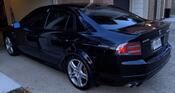
I want to say about 1500 miles ago I rotated my tires now both front tires have these markings on the sidewall. The rear tires that were previously in front never had markings such as these on them.
I want to say these tires have about 33-34psi in them and they still look like they are flat? I know my compliance bushings are torn if they plays a role at all?

I want to say these tires have about 33-34psi in them and they still look like they are flat? I know my compliance bushings are torn if they plays a role at all?

Registered but harmless

Joined: Aug 2005
Posts: 14,889
Likes: 1,164
From: Los Angeles, CA

While you "want to say" the tires have that PSI, did you check the PSI with an accurate gauge (not one attached to an air hose at a service station!) when the tires are cold?
I'd check with a good tire gauge, but it looks like your tires are under-inflated and rolling over onto the sidewalls too much.
Try running the fronts @ 36-37 PSI cold and see if the ride and steering response improve.



Drive slower around corners.
People have complained about the "soft" sidewalls, and if the size is 235/45-17, the tread width is narrow at 8.1", so the two combined is not a great combination for keeping the tire flat. Without looking at the tire, don't know if the larger size 245/45-17 (8.5") with a 99 load rating would have a stiffer sidewall and therefore affort better stability.
People have complained about the "soft" sidewalls, and if the size is 235/45-17, the tread width is narrow at 8.1", so the two combined is not a great combination for keeping the tire flat. Without looking at the tire, don't know if the larger size 245/45-17 (8.5") with a 99 load rating would have a stiffer sidewall and therefore affort better stability.
Thread Starter
Racer
Joined: Jul 2013
Posts: 356
Likes: 29
From: Milwaukee, WI
While you "want to say" the tires have that PSI, did you check the PSI with an accurate gauge (not one attached to an air hose at a service station!) when the tires are cold?
I'd check with a good tire gauge, but it looks like your tires are under-inflated and rolling over onto the sidewalls too much.
Try running the fronts @ 36-37 PSI cold and see if the ride and steering response improve.
I will try out running a higher psi in the tires and see what happens. Usually when I run higher psi I get all kinds of rattles throughout the suspension which could be due to torn compliance bushings.

Registered but harmless
Joined: Aug 2005
Posts: 14,889
Likes: 1,164
From: Los Angeles, CA

I never experienced that type of sidewall scrubbing on the OEM MXM4s, Yoko Advan S.4 or Potenza RE970AS Pole Positions, even after autocrossing with 10+ runs per day.
It looks like OP has the Pilot Sport AS3s, which are stiffer sidewall tires and the rough equivalent of the Advan S.4 and RE970, too.

That's for Camrys and Accords, not TLs.

FYI, the manual 6M TL has a higher recommended PSI for the front tires than the rears (35/32, IIRC); I think the recommended 32/32 and 33/32 for the 5ATs is too conservative, so I run 37/34 or so.
If your tire gauge is accurate with "cold" tires, the tires shouldn't be rolling over that far on a regular basis.
Check the front sway bar bushings as well as the LCA.
Trending Topics
Have you guys ever seen the hankook v12 sidewall? Now that is one soft sidewall tire. They always look like they are flat, a lot more so in the front since the front is heavier.
IMO the OP's picture looks pretty normal.
If he wants to be sure, look at similar cars with the same tire. (Weight is important)
Besides, there's not much he can do anyways this is just how the tire is designed
IMO the OP's picture looks pretty normal.
If he wants to be sure, look at similar cars with the same tire. (Weight is important)
Besides, there's not much he can do anyways this is just how the tire is designed

Sorry, but that certainly doesn't make any sense. How would compliance bushings ever stop a tire from rolling under as it's the tire that is flexing onto the sidewall, not the entire LCA bending under as it's not made of rubber.
Thread Starter
Racer
Joined: Jul 2013
Posts: 356
Likes: 29
From: Milwaukee, WI
I know my compliance bushings were torn pretty bad...
Also my tires do not seem to sit like they are in the photo anymore, maybe I'm seeing things but I'll try an upload a pic tomorrow
Last edited by Due_Diligence; Jul 26, 2014 at 01:11 AM.
Drifting


Joined: Jul 2008
Posts: 3,473
Likes: 190
From: Dallas
bump up the PSI. The V12 (w rated) and the PS AS3 (V rated) have over 40 psi max pressure. Like 50psi even. So, II would set it at 40. No less.
http://www.tirerack.com/tires/tires....+V-Speed+Rated)
Usually the firmer the side walls, the higher speed rating it is.. But they higher the speed rating, it will ride rougher. But you have a lower speed rating and it is all season. Which means soft. So bump up the PSI.
http://www.tirerack.com/tires/tires....+V-Speed+Rated)
Usually the firmer the side walls, the higher speed rating it is.. But they higher the speed rating, it will ride rougher. But you have a lower speed rating and it is all season. Which means soft. So bump up the PSI.
Last edited by Chad05TL; Jul 26, 2014 at 09:28 PM.
Drifting
Joined: Jul 2008
Posts: 3,473
Likes: 190
From: Dallas
here is the weird thing about tires. Soft side walls and soft rubber are 2 different things. Soft side walls reduce the speed rating and do not handle as well.. but they ride better. Higher speed rating tires have stronger side walls like a Y, but many times they put a harder compound of rubber on it so they don't last as long. A harder compound of rubber does add to the handling though also.
It seems like it would be just the opposite. But the softer compound actually lasts longer because it is not "sanded off" by payment and a hard rubber that does not bend.
for example, tall buildings are built to sway so that when a jolt happens(earthquake), it does not break or crack the structure. A building that gives and sways seems "softer", but it is actually more durable in the sense that it can take more abuse and last longer with less damage. That's why softer compounds in a tire actually last longer. But still..if you want a better handling side wall, then you have to go firmer in the internal construction of the tire. That has nothing to do with treadwear.
It seems like it would be just the opposite. But the softer compound actually lasts longer because it is not "sanded off" by payment and a hard rubber that does not bend.
for example, tall buildings are built to sway so that when a jolt happens(earthquake), it does not break or crack the structure. A building that gives and sways seems "softer", but it is actually more durable in the sense that it can take more abuse and last longer with less damage. That's why softer compounds in a tire actually last longer. But still..if you want a better handling side wall, then you have to go firmer in the internal construction of the tire. That has nothing to do with treadwear.
Last edited by Chad05TL; Jul 26, 2014 at 09:42 PM.

Team Owner
Joined: Jun 2014
Posts: 30,487
Likes: 4,417
From: In an igloo
bump up the PSI. The V12 (w rated) and the PS AS3 (V rated) have over 40 psi max pressure. Like 50psi even. So, II would set it at 40. No less.
http://www.tirerack.com/tires/tires....+V-Speed+Rated)
Usually the firmer the side walls, the higher speed rating it is.. But they higher the speed rating, it will ride rougher. But you have a lower speed rating and it is all season. Which means soft. So bump up the PSI.
http://www.tirerack.com/tires/tires....+V-Speed+Rated)
Usually the firmer the side walls, the higher speed rating it is.. But they higher the speed rating, it will ride rougher. But you have a lower speed rating and it is all season. Which means soft. So bump up the PSI.
If the v12 tires have too much flex in the sidewall, another tire should be considered. Every tire has a load rating- I'm guessing the load rating on the v12s is lower then the oem tires.
Drifting
Joined: Jul 2008
Posts: 3,473
Likes: 190
From: Dallas
today's tires have much stronger side walls and can handle more pressure. I have a NAIL in 1 of mine. It's still in my V12. I'll prolly just leave it in there until I replace the tire which will be fairly soon. (almost down to wear indicators). I took another nail out of another tire and repaired it, but when I pulled it out, the hole practically sealed itself. haha Dude I had to break my hand to drill out the hole because the cords inside are so strong. Then finally I worked it open enough to put in a plug.
Much. stronger. tires. than.. they.. used.. to .. make..
The Bridgestone sport S-04 has a max pressure of 50. That's pretty awesome. That's Y rating for ya...
But you know.. this is why we have the internet.. people get to say their opinions. Ain't it great. You do what you want to do, and I do what I want to do.
Much. stronger. tires. than.. they.. used.. to .. make..
The Bridgestone sport S-04 has a max pressure of 50. That's pretty awesome. That's Y rating for ya...
But you know.. this is why we have the internet.. people get to say their opinions. Ain't it great. You do what you want to do, and I do what I want to do.
Last edited by Chad05TL; Jul 27, 2014 at 12:46 PM.

Drifting
Joined: Jul 2008
Posts: 3,473
Likes: 190
From: Dallas
ya.. it stopped blowing when I pulled the nail out.. It didn't "seal" it like a glue or a bond, because if I drove on it, I assume it would leak air out.. But that just shows you how ridged these W+ rated tires are.
It stopped blowing air that I could hear anyway, when I pulled the nail out.
And I said the same thing!! WOW! Thats all I could say.. wow!!
And presently, I run at 40psi. No problems. Been doing it for miles and miles. And it wears even too.
by the way. that dumb and dumber clip fits you well. haha
It stopped blowing air that I could hear anyway, when I pulled the nail out.
And I said the same thing!! WOW! Thats all I could say.. wow!!
And presently, I run at 40psi. No problems. Been doing it for miles and miles. And it wears even too.
by the way. that dumb and dumber clip fits you well. haha
Last edited by Chad05TL; Jul 27, 2014 at 01:01 PM.
Team Owner
Joined: Jun 2014
Posts: 30,487
Likes: 4,417
From: In an igloo
today's tires have much stronger side walls and can handle more pressure. I have a NAIL in 1 of mine. It's still in my V12. I'll prolly just leave it in there until I replace the tire which will be fairly soon. (almost down to wear indicators). I took another nail out of another tire and repaired it, but when I pulled it out, the hole practically sealed itself. haha Dude I had to break my hand to drill out the hole because the cords inside are so strong. Then finally I worked it open enough to put in a plug.
Much. stronger. tires. than.. they.. used.. to .. make..
The Bridgestone sport S-04 has a max pressure of 50. That's pretty awesome. That's Y rating for ya...
But you know.. this is why we have the internet.. people get to say their opinions. Ain't it great. You do what you want to do, and I do what I want to do.
Much. stronger. tires. than.. they.. used.. to .. make..
The Bridgestone sport S-04 has a max pressure of 50. That's pretty awesome. That's Y rating for ya...
But you know.. this is why we have the internet.. people get to say their opinions. Ain't it great. You do what you want to do, and I do what I want to do.
It's the car manufacturer who decides the pressure. And clearly you have no clue what "load ratings" mean when it comes to tires. And with more air in a tire and a puncture, your tire would lose pressure faster, unless you have those puncture resistant tires, they will NEVER seal themselves!!
Putting more air into a tire makes it stiffer. Making it stiffer means less flex in the tire meaning less grip over a hard driving surface. On a soft driving surface (snow, mud, heavy rain) you'll just sink in deeper. With more pressure, your fuel economy will improve but your handling characteristics will decrease.
Don't believe me? When I had my 2000 Civic SiR (Si in the US), I would purposely put 2 extra psi in the rear tires to improve my daily fuel economy. I pushed it to 5 psi once just to see what would happen- fuel economy was fantastic, but doing even moderately sporty left hand turns and the back end would become noticeably unstable!! And guess what, this was only about 2 years ago on brand new extreme performance summer only tires.
Can the tires handle the pressure? You bet. Can the car? Not really!!

Thread
Thread Starter
Forum
Replies
Last Post