


CompTech SuperCharger from Excelerate


Thread Starter
Intermediate
Joined: Aug 2005
Posts: 39
Likes: 0
From: CT
CompTech SuperCharger from Excelerate

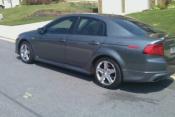
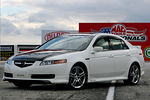
Charger was purchased and installed at Excelerate. Josh spent his Friday night working on my car so I could enjoy it over the weekend, much appreciated. His attention to detail is unmatched in my experiences. His prices are the best around for parts and labor from my research. Initial review, Like I said to my girl today, I finally have a car with all the luxury items I could want and the rush of power when I want to goose it. Guys, this charger is so well matched for this car. The power delivery is so smooth and consistent, no lag , no negative driveability changes. I love the sound, to me its like I have a jet engine under the hood, but if your just driving normally its mostly unnoticeable, and thats important to me(am I getting old?). I've read that some expected lower 1/4 mile times, but honestly I'd prefer this 13 sec. car that I can drive all year long with my kid, my girl or whoever, get 25-20 mpg on the highway, and not have any concerns over the drawbacks of anything faster. Driving home from the install on the highwat was nuts, drop it into 3rd at 60 or so and punched it, in what seemed like an instant I'm at 90 or so shifting in to 4th. I couldn't be more pleased. Anyone in the area considering this kit but hesitant, I will allow you to sit in my passenger seat at the standard meter rate (The First 1/11 mile = $2.50 , Each add'l 2/11 mile =$0.30 )


Shift_faster
Joined: Mar 2004
Posts: 1,965
Likes: 0
From: Queens, NY
Originally Posted by AcuraVic
Yes, Congratulations...
PoochaKannInc, do you have pics of your ride with those new wheels posted somewhere ?
PoochaKannInc, do you have pics of your ride with those new wheels posted somewhere ?
https://acurazine.com/forums/technology-16/can-i-get-new-phone-during-my-contract-134741/
Bonesmuggler:
What is next for the mods?
Trending Topics

Racer
Joined: Jul 2005
Posts: 301
Likes: 5
 Congats, but...
Bonesmuggler,
I too know how you feel, except it's not with a TL. I supercharged my (then) new 1995 4.6L V-8 T-Bird what seems like 10 years ago. It was done with an Eaton M90(S) blower and a water-to-air intercooler. Initially the car ran 16's @ 85 mph in the 1/4 mile. Yes...it was that slow. Well hey it was 3,950 lbs. and an automatic transmission that was useless.
After the blower install and nothing else (no changes to the computer program), the car ran 14.5 @ 95 mph. After some initial testing I concluded that the spark was being blown out under boost (which is whenever the Eaton is summonsed). I regapped the stock spark plugs from 0.054" to 0.035" and the car then ran 14.18 @ 98 mph. Same heat, same track, same humidity (Englishtown NJ).
So you might want to find out from others if it's possible to use a colder spark plug with your set-up and close the gap up a little. Unless the TL's coils are strong enough to overcome the extreme cylinder pressures. I doubt it is.
Using a colder spark plug will pull heat from the combustion chambers faster and keep you less knock constrained. I dropped two heat ranges on the T-Bird and it works perfect. The draw back is you could foul the plugs up if you don't go WOT often (wide open throttle). They normally need a specific temperature to "clean" themselves of any unburnt deposits, a colder plug makes this worse.
It really wasn't until the car was dyno tuned (via an ex-Ford engineer) and I eliminated the FMU (fuel management unit) that it came to life. The next time out at the 1/4 mile it ran 13.84 @ 101.5 mph. With only 6-psi it made 275 RWHP/335 RWTQ (SAE). The stock engine was rated 205 HP/265 TQ at the crank and most of the T-Bird guys would see a PATHETIC 165-170 RWHP on a stock version. That's not good for a 2-Ton vehicle.
So I figured I saw an even 100 Rear Wheel Horsepower with only 6-psi of boost and the proper SYSTEM.
I got greedy (just like you) and swapped the blower pulley from 3" OD to 2.52" OD. Boost went up to 9-psi and the power was also up. I had the computer program adjusted to compensate for the extra heat and fuel requirements. Meaning some spark was removed at WOT and the A/F ratio got richer (12.0:1 to 11.7:1).
The car ran 13.3 @ 103 mph and proceeded to crack a piston ring land in the process. So I found the limits of my hypereutectic pistons.
I learned a ton from my experiences so I'm sharing them with you. Perhaps the TL is different, I'm not saying your engine will fail. However, play it safe.
Read this post I made before you go any further.
And this...
I hope this helps,
A-Train
I too know how you feel, except it's not with a TL. I supercharged my (then) new 1995 4.6L V-8 T-Bird what seems like 10 years ago. It was done with an Eaton M90(S) blower and a water-to-air intercooler. Initially the car ran 16's @ 85 mph in the 1/4 mile. Yes...it was that slow. Well hey it was 3,950 lbs. and an automatic transmission that was useless.
After the blower install and nothing else (no changes to the computer program), the car ran 14.5 @ 95 mph. After some initial testing I concluded that the spark was being blown out under boost (which is whenever the Eaton is summonsed). I regapped the stock spark plugs from 0.054" to 0.035" and the car then ran 14.18 @ 98 mph. Same heat, same track, same humidity (Englishtown NJ).
So you might want to find out from others if it's possible to use a colder spark plug with your set-up and close the gap up a little. Unless the TL's coils are strong enough to overcome the extreme cylinder pressures. I doubt it is.
Using a colder spark plug will pull heat from the combustion chambers faster and keep you less knock constrained. I dropped two heat ranges on the T-Bird and it works perfect. The draw back is you could foul the plugs up if you don't go WOT often (wide open throttle). They normally need a specific temperature to "clean" themselves of any unburnt deposits, a colder plug makes this worse.
It really wasn't until the car was dyno tuned (via an ex-Ford engineer) and I eliminated the FMU (fuel management unit) that it came to life. The next time out at the 1/4 mile it ran 13.84 @ 101.5 mph. With only 6-psi it made 275 RWHP/335 RWTQ (SAE). The stock engine was rated 205 HP/265 TQ at the crank and most of the T-Bird guys would see a PATHETIC 165-170 RWHP on a stock version. That's not good for a 2-Ton vehicle.
So I figured I saw an even 100 Rear Wheel Horsepower with only 6-psi of boost and the proper SYSTEM.
I got greedy (just like you) and swapped the blower pulley from 3" OD to 2.52" OD. Boost went up to 9-psi and the power was also up. I had the computer program adjusted to compensate for the extra heat and fuel requirements. Meaning some spark was removed at WOT and the A/F ratio got richer (12.0:1 to 11.7:1).
The car ran 13.3 @ 103 mph and proceeded to crack a piston ring land in the process. So I found the limits of my hypereutectic pistons.
I learned a ton from my experiences so I'm sharing them with you. Perhaps the TL is different, I'm not saying your engine will fail. However, play it safe.
Read this post I made before you go any further.
Boost is made when you flow air through a restriction. The more boost you have on the gauge, the more air is stacking up and not being used.
Whenever you compress air, you heat it, this is thermodynamics law and you cannot get around it. Since your supercharger system does not have an intercooler you are limited to the adiabatic efficiency of the Eaton supercharger.
Hot air is less dense which means it has less oxygen content. The more boost that is present, the more heat as well. In the case of the Eaton superchargers, the M90 GEN-III and GEN-IV are 65% adiabatic efficient at 4-5 psi of boost. More boost means LESS efficiency since the Eaton doesn't compress air very well in it's housing but rather paddles it from inlet to outlet.
So adding boost does not always mean more power. In your Eaton supercharged TL case, it would most likely make the same power while taking away longevity or durability.
See 1 degree of spark timing on a supercharged engine is worth approx 4-5 HP and 8-10 lb.-ft. of torque. So let's say you can dial in 22 degrees of spark timing with 4-5 psi of boost. Then you add 3-psi with a pulley change, boost has gone up since the airflow is backing up and not being used by the engine. You can only compress so much air and fuel in the combustion chambers.
The compression ratio of the air charge (not the static compression ratio, that does not change) has increased which means cylinder pressure has gone up. Therefore you must remove spark timing or the engine will knock. So you remove 4 degrees of spark advance and you have given up 16 horsepower and 36 lb.-ft. of torque. What have you gained?
Now if you could drop the air charge temperatures (the intercooler part comes in here) you could reduce the amount of spark timing that would have to be dialed back.
With my Eaton supercharged and INTERCOOLED 4.6L V-8 T-Bird, I can see as much as 180 degrees F. ACT's (air charge temps) at WOT on an 80-90 degree F. day. That is with 9-psi of boost. At 6-psi of boost the ACT's are 140-150 degrees F.
Remember that this is intercooled (air to water). Add another 60-80 degrees F. without the intercooler depending on the boost, blower and ambient temps.
What determines power output of any gasoline engine is how efficiently is burns fuel. Air is a limiting factor in power production. However you cannot just burn straight heptane (gasoline) nor can you burn straight oxygen. There must be the proper mix or Air Fuel ratio. The STOICH A/F ratio is 14.64:1 (some like to say 14.7:1). With a blower you need to richen up the mixture to help cool the combustion chambers down.
More fuel means more fuel consumption at WOT (not that you care at WOT) but it also means less air that can be allowed into the cylinder and with a hotter air charge, less spark. This all translates into less power production.
So unless you have a way to lower the ACT's at WOT, you will not be taking advantage of the increase in boost.
All things being equal of course, twin screw blowers and centrifugals act differently since their adiabatic efficiency is at a much higher boost level than an hybrid-roots Eaton blower.
Whenever you compress air, you heat it, this is thermodynamics law and you cannot get around it. Since your supercharger system does not have an intercooler you are limited to the adiabatic efficiency of the Eaton supercharger.
Hot air is less dense which means it has less oxygen content. The more boost that is present, the more heat as well. In the case of the Eaton superchargers, the M90 GEN-III and GEN-IV are 65% adiabatic efficient at 4-5 psi of boost. More boost means LESS efficiency since the Eaton doesn't compress air very well in it's housing but rather paddles it from inlet to outlet.
So adding boost does not always mean more power. In your Eaton supercharged TL case, it would most likely make the same power while taking away longevity or durability.
See 1 degree of spark timing on a supercharged engine is worth approx 4-5 HP and 8-10 lb.-ft. of torque. So let's say you can dial in 22 degrees of spark timing with 4-5 psi of boost. Then you add 3-psi with a pulley change, boost has gone up since the airflow is backing up and not being used by the engine. You can only compress so much air and fuel in the combustion chambers.
The compression ratio of the air charge (not the static compression ratio, that does not change) has increased which means cylinder pressure has gone up. Therefore you must remove spark timing or the engine will knock. So you remove 4 degrees of spark advance and you have given up 16 horsepower and 36 lb.-ft. of torque. What have you gained?
Now if you could drop the air charge temperatures (the intercooler part comes in here) you could reduce the amount of spark timing that would have to be dialed back.
With my Eaton supercharged and INTERCOOLED 4.6L V-8 T-Bird, I can see as much as 180 degrees F. ACT's (air charge temps) at WOT on an 80-90 degree F. day. That is with 9-psi of boost. At 6-psi of boost the ACT's are 140-150 degrees F.
Remember that this is intercooled (air to water). Add another 60-80 degrees F. without the intercooler depending on the boost, blower and ambient temps.
What determines power output of any gasoline engine is how efficiently is burns fuel. Air is a limiting factor in power production. However you cannot just burn straight heptane (gasoline) nor can you burn straight oxygen. There must be the proper mix or Air Fuel ratio. The STOICH A/F ratio is 14.64:1 (some like to say 14.7:1). With a blower you need to richen up the mixture to help cool the combustion chambers down.
More fuel means more fuel consumption at WOT (not that you care at WOT) but it also means less air that can be allowed into the cylinder and with a hotter air charge, less spark. This all translates into less power production.
So unless you have a way to lower the ACT's at WOT, you will not be taking advantage of the increase in boost.
All things being equal of course, twin screw blowers and centrifugals act differently since their adiabatic efficiency is at a much higher boost level than an hybrid-roots Eaton blower.
Most people can't fathom this concept that boost is simply airflow that has stacked up and isn't being used. The more boost you have, the more of a cork in the system.
If you open the intake to the blower, boost goes up. Why? The blower becomes a better air pump and more air stacks up heading to the combustion chambers.
If you open the exhaust and port the heads then boost drops off. Why? The engine can breath better so it can use the extra air that is being forced into the engine. All things being equal of course.
I agree with your statement about porting the heads, however I have no data from stock or ported TL heads to compare numbers. I know what you don't want, some weekend mechanic with a Dremel. You want a good CNC port job from a shop that has been proven. Remember that flow numbers aren't everything. Velocity is important and whatever port job is done it has to work on the dyno and 1/4 mile.
Another thing nobody has looked at is the combustion chambers on the TL head. If they are fast burn, then adding a blower can work. If the heads are slow burn
then they require lots of spark timing to make power. With any supercharged engine, you are knock constrained. So you must remove spark timing and with a slow burn c/c it's like pissing in the wind.
Best thing to do is, uncork the inlet to the blower and uncork the exhaust. Then keep the boost low and don't over spin the Eaton supercharger.
If you open the intake to the blower, boost goes up. Why? The blower becomes a better air pump and more air stacks up heading to the combustion chambers.
If you open the exhaust and port the heads then boost drops off. Why? The engine can breath better so it can use the extra air that is being forced into the engine. All things being equal of course.
I agree with your statement about porting the heads, however I have no data from stock or ported TL heads to compare numbers. I know what you don't want, some weekend mechanic with a Dremel. You want a good CNC port job from a shop that has been proven. Remember that flow numbers aren't everything. Velocity is important and whatever port job is done it has to work on the dyno and 1/4 mile.
Another thing nobody has looked at is the combustion chambers on the TL head. If they are fast burn, then adding a blower can work. If the heads are slow burn
then they require lots of spark timing to make power. With any supercharged engine, you are knock constrained. So you must remove spark timing and with a slow burn c/c it's like pissing in the wind.
Best thing to do is, uncork the inlet to the blower and uncork the exhaust. Then keep the boost low and don't over spin the Eaton supercharger.
A-Train
tehLEGOman


Joined: Dec 2004
Posts: 10,067
Likes: 2,058
From: Charlotte, NC
Sweet! Another charged TL.
I hear nothing but good things about your organization Excelerate.
Nice review...glad to see you're happy with the results.
Do the intake modification and you'll enjoy it that much more.
I hear nothing but good things about your organization Excelerate.
Nice review...glad to see you're happy with the results.
Do the intake modification and you'll enjoy it that much more.




Thread
Thread Starter
Forum
Replies
Last Post
GWEEDOspeedo
Car Parts for Sale
4
Jan 15, 2016 10:39 PM
ExcelerateRep
4G TL Performance Parts & Modifications
8
Oct 14, 2015 08:20 AM
Joe Avesyan
3G TL Performance Parts & Modifications
9
Sep 29, 2015 03:57 PM
ExcelerateRep
Sponsored Sales & Group Buys
0
Sep 22, 2015 10:39 AM
acura, breakdown, cl, comptech, eaton, excelerate, generation, heat, iii, m90, parts, plug, reating, spark, supercharger
