


Bye Bye EGR......


Thread Starter
BANNED
Joined: Jul 2007
Posts: 695
Likes: 35
Bye Bye EGR......
Well, not exactly, but damn close enough. As we all know the EGR system robs some power by injesting hot/dirty exhaust gases directly back into the intake. We can't remove the valve without throwing a code and we can't block it without throwing a code. If we block it the ECU throws a "Isufficent Flow" code as well as the ODB emissions monitor will show error since the ECU actually detects the lean out caused by the EGR opening and flowing exhaust back, and this is the key, the ECU does not care weather it is hot exhaust or cold/clean intake air. So I decedied to machine out a EGR Bypass Adaptor that allows us to connect eaither a breather filter or a hose connected back to the breather fitting on the intake. I just came back from a 50+ mile test drive with no codes thrown and for good mesure before I left on the drive I reset my ECU and emmissions monitors after the drive I checked and the EGR emissions monitor was happy with the bypass, so this will not effect passing emissions, and probably will pass visual if you hook a hose back into the intake.
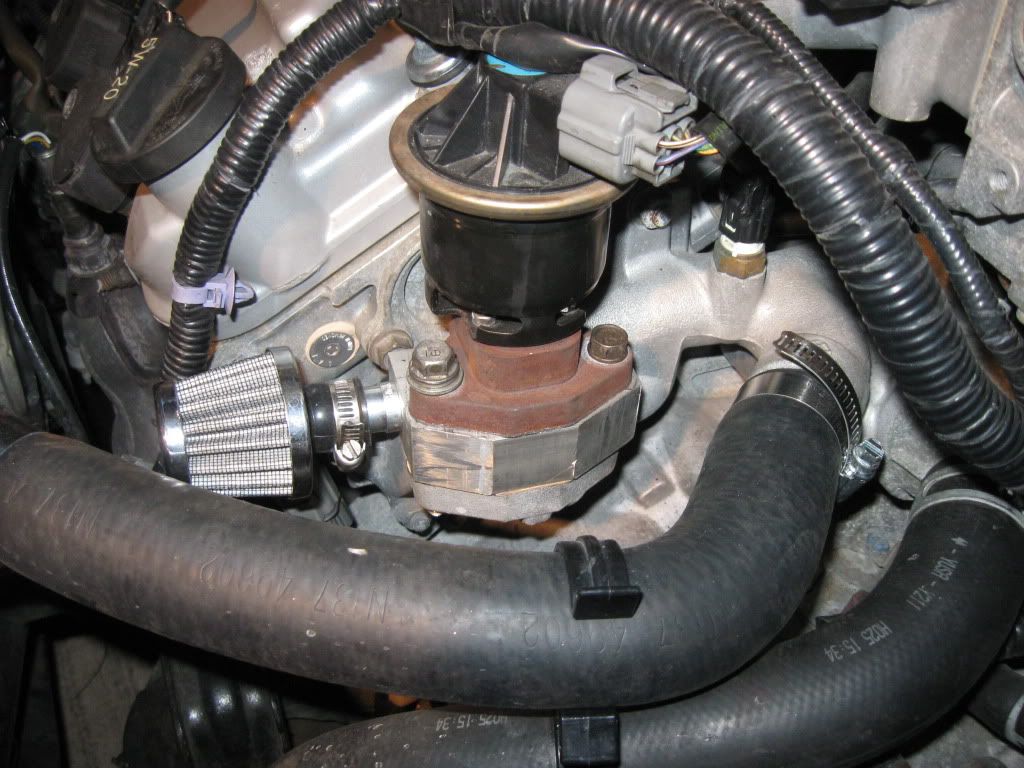
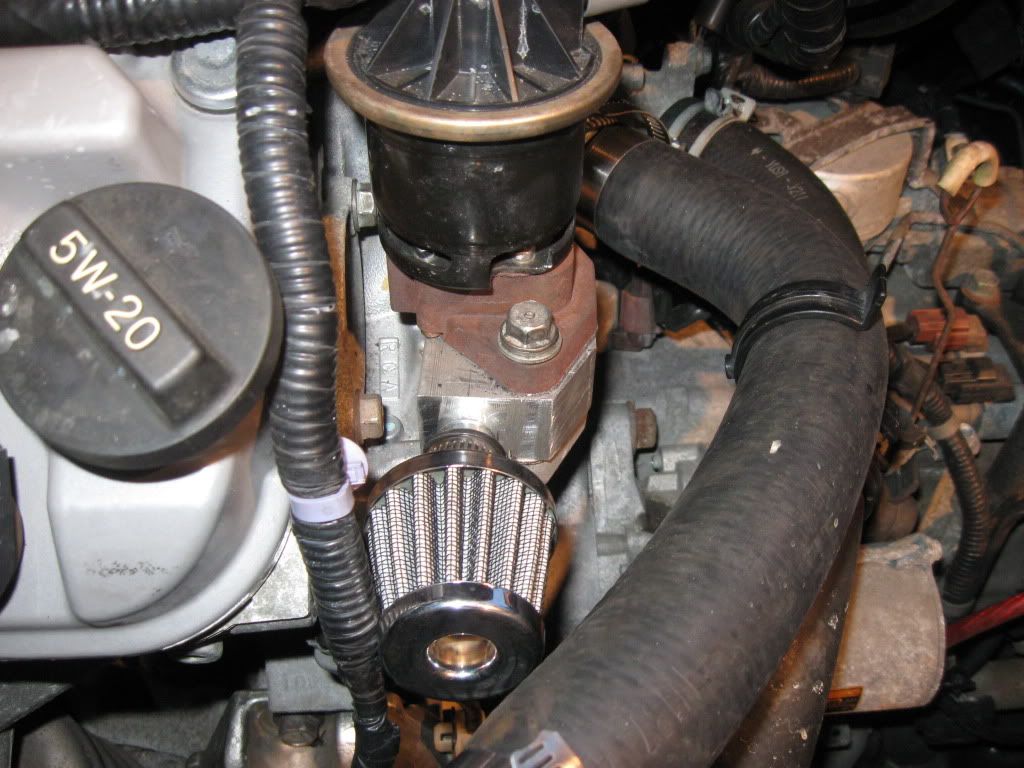
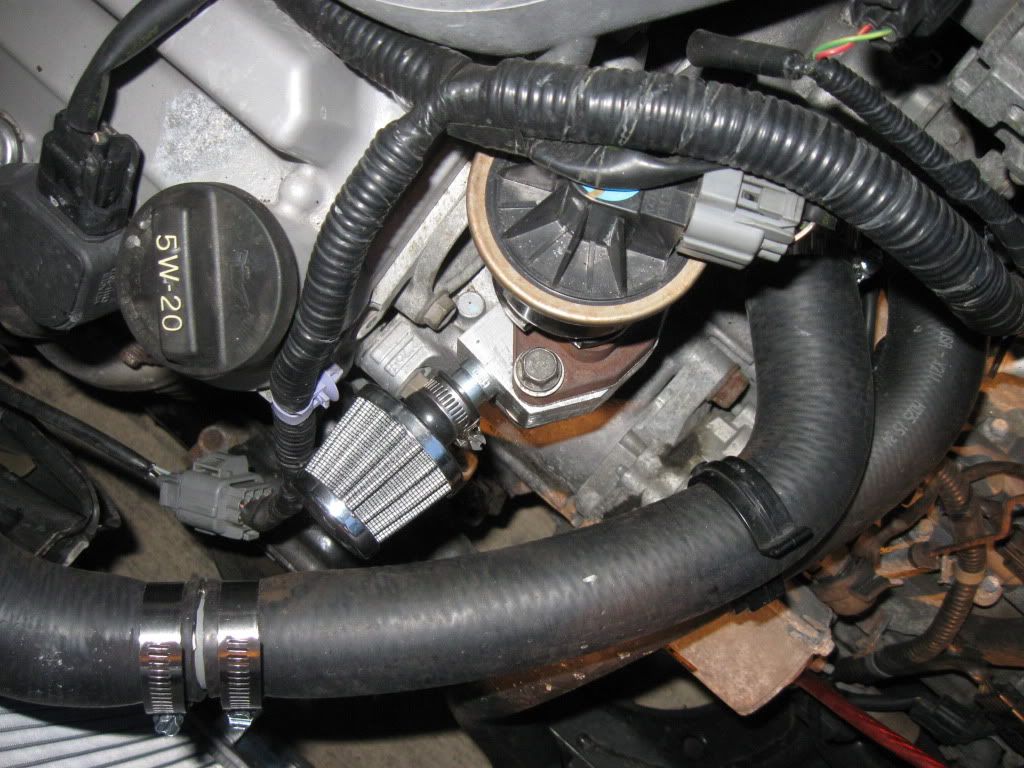
Thanks to Shonda for jogging my brain and getting me to think of this.........
This will also work for all J series engines......
Thanks to Shonda for jogging my brain and getting me to think of this.........
This will also work for all J series engines......




Trending Topics

AZ Community Team
Joined: May 2007
Posts: 32,488
Likes: 7,771
From: N35°03'16.75", W 080°51'0.9"

Burning Brakes
Joined: Apr 2006
Posts: 950
Likes: 45
From: Shawnee, KS
FYI, EGR valves are closed under WOT situations which means they're not robbing power. Late model EGRs, like the one found on the TL, are vacuum actuated and controlled by a solenoid via the ECU During full throttle, there is no engine vacuum therefore no EGR.
One thing that could possibly happen by disconnecting the EGR is you may experience moderate to severe detonation under heavy loads (ie going up steady grades in low/midrange rpms). The exhaust circulated into the combustion chamber actually helps control combustion chamber temps which reduces the need for higher octane fuels. Hopefully the knock sensor(s) on the J series are quick reacting and will stop the detonation before it becomes dangerous.
One thing that could possibly happen by disconnecting the EGR is you may experience moderate to severe detonation under heavy loads (ie going up steady grades in low/midrange rpms). The exhaust circulated into the combustion chamber actually helps control combustion chamber temps which reduces the need for higher octane fuels. Hopefully the knock sensor(s) on the J series are quick reacting and will stop the detonation before it becomes dangerous.




FYI, EGR valves are closed under WOT situations which means they're not robbing power. Late model EGRs, like the one found on the TL, are vacuum actuated and controlled by a solenoid via the ECU During full throttle, there is no engine vacuum therefore no EGR.
One thing that could possibly happen by disconnecting the EGR is you may experience moderate to severe detonation under heavy loads (ie going up steady grades in low/midrange rpms). The exhaust circulated into the combustion chamber actually helps control combustion chamber temps which reduces the need for higher octane fuels. Hopefully the knock sensor(s) on the J series are quick reacting and will stop the detonation before it becomes dangerous.
One thing that could possibly happen by disconnecting the EGR is you may experience moderate to severe detonation under heavy loads (ie going up steady grades in low/midrange rpms). The exhaust circulated into the combustion chamber actually helps control combustion chamber temps which reduces the need for higher octane fuels. Hopefully the knock sensor(s) on the J series are quick reacting and will stop the detonation before it becomes dangerous.
EGR works by recirculating a portion of an engine's exhaust gas back to the engine cylinders. Intermixing the incoming air with recirculated exhaust gas dilutes the mix with inert gas, lowering the adiabatic flame temperature and (in diesel engines) reducing the amount of excess oxygen. The exhaust gas also increases the specific heat capacity of the mix lowering the peak combustion temperature. Because NOx formation progresses much faster at high temperatures, EGR serves to limit the generation of NOx. NOx is primarily formed when a mix of nitrogen and oxygen is subjected to high temperatures.
At WOT, the EGR is not in use. The only way this would benefit your car is in partial throttle, but also only if the car is tuned properly. If you delete the EGR and the ECU believe it is functioning, it is functioning under the belief that the cylinder temperatures are lower. Once you remove the EGR, the temperatures actually will rise in the cylinders and the ECU will not adjust to add more fuel and detonation can occur.
If I was doing a custom tune of my car, I would gladly remove the EGR as I would be able to compensate with fuel during partial throttle. But on the stock ECU... not sure yet.


Team Owner
Joined: Mar 2006
Posts: 20,172
Likes: 1,818
From: Bakersfield
FYI, EGR valves are closed under WOT situations which means they're not robbing power. Late model EGRs, like the one found on the TL, are vacuum actuated and controlled by a solenoid via the ECU During full throttle, there is no engine vacuum therefore no EGR.
One thing that could possibly happen by disconnecting the EGR is you may experience moderate to severe detonation under heavy loads (ie going up steady grades in low/midrange rpms). The exhaust circulated into the combustion chamber actually helps control combustion chamber temps which reduces the need for higher octane fuels. Hopefully the knock sensor(s) on the J series are quick reacting and will stop the detonation before it becomes dangerous.
One thing that could possibly happen by disconnecting the EGR is you may experience moderate to severe detonation under heavy loads (ie going up steady grades in low/midrange rpms). The exhaust circulated into the combustion chamber actually helps control combustion chamber temps which reduces the need for higher octane fuels. Hopefully the knock sensor(s) on the J series are quick reacting and will stop the detonation before it becomes dangerous.
I don't have it on my GN but when I had the stock ECM I had a chip burned especially for this with lower timing. It did try and ping at part throttle before the "no EGR chip" which is especially weird on an 8:1 engine. I only did it because when I ported my intake manifold I removed the EGR riser to get more volume out of the plenum.
I have to say this is not a good mod unless you can back off the timing to compensate but then you're back at square one power wise. The extra heat generated by the EGR in the intake manifold is likely not measurable.
If I did this mod it would be for the cleanliness of the intake tract over the course of a few hundred thousand miles.


it's me, Alan Rickman.
Joined: Mar 2007
Posts: 3,312
Likes: 5
From: noitacol

Thread
Thread Starter
Forum
Replies
Last Post
