


Pause with shifting from Park to Drive, etc..


Thread Starter
Intermediate
Joined: Aug 2008
Posts: 45
Likes: 1
From: Monument, CO
Pause with shifting from Park to Drive, etc..
So my wifes TL has had a very noticeable pause (at least 2 sec.) when shifting from park to drive and/or reverse for at least a year now. I thought the tranny was having issues, maybe needed replacing the pressure switches?? Well I changed the spark plugs the other day after finding them very cheap from Advance Auto came out to about $6 plug, NGK Laser Iridium. Her car no longer has the pronounced pause it did before....not sure why as it would seem to be a transmission issue, any thoughts???

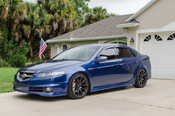
Mine does the same thing. If I am on a hill it actually will roll forward and I almost hit things sometimes because it doesn't kick in when I think it should. Now I just take the pause and leave my foot on the brake till I feel it kick. Haha maybe I'll change my plugs. Not sure how that would do it but hey if it worked maybe it will work for others. Did you by chance disconnect the battery while you changed the plugs?




Pro
Joined: Feb 2012
Posts: 743
Likes: 47
From: AUSTIN, TX
lmfao.. spark plugs.
Okay but in all seriousness, mine never has a delay when I'm listening to a 5.1 surround DVD-A, but playing my iPhone or normal CDs there is a huge lag... So I recommend you order Katatonia's Great Cold Distance DVD-A
Okay but in all seriousness, mine never has a delay when I'm listening to a 5.1 surround DVD-A, but playing my iPhone or normal CDs there is a huge lag... So I recommend you order Katatonia's Great Cold Distance DVD-A
Trending Topics
Thread Starter
Intermediate
Joined: Aug 2008
Posts: 45
Likes: 1
From: Monument, CO
I swear the pause is now gone, it was at least 2 sec. before. I am no mechanic, I did replace the battery about 2 weeks ago, but still had the pause. Hell my wife even noticed the pause being absent after the plug change. I am not saying that everyone should go out and change em, but if it's due it can't hurt. I just thought someone might have insight at to why it helped that's all.
What the fuck? He's talking about the delay it takes to shift from gears...R to D or P to D. gtfo ----->

Team Owner
Joined: Mar 2006
Posts: 20,172
Likes: 1,818
From: Bakersfield
Mine does the exact same thing. Where do I order that DVD-A?
Pro
Joined: Feb 2012
Posts: 743
Likes: 47
From: AUSTIN, TX

Intermediate
Joined: Sep 2012
Posts: 29
Likes: 0
From: New York City
Mine does the same thing, and i just had my tranny rebuilt from a P0741 error.
Befor the rebuild it would sometimes take ~4-5 seconds
but now its like ~2, I'm starting to think our cars are just like this...
someone mentioned resetting the ecu, would that work?
Befor the rebuild it would sometimes take ~4-5 seconds
but now its like ~2, I'm starting to think our cars are just like this...
someone mentioned resetting the ecu, would that work?
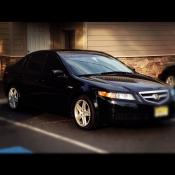




Pro
Joined: Feb 2012
Posts: 743
Likes: 47
From: AUSTIN, TX
I *prefer* the delay. Instead of having to worry about coming to a complete stop first when I'm in reverse and want to throw it in drive, I have 2 extra seconds -- hence I can hit the break AND throw it in drive at the exact time and decelerate to 0 by time the actual shift operation completes
Team Owner
Joined: Mar 2006
Posts: 20,172
Likes: 1,818
From: Bakersfield
I *prefer* the delay. Instead of having to worry about coming to a complete stop first when I'm in reverse and want to throw it in drive, I have 2 extra seconds -- hence I can hit the break AND throw it in drive at the exact time and decelerate to 0 by time the actual shift operation completes
Impossible? I would like to know your background on car electronics and engine/transmissions before accepting that response.
Spark plug change could have had the car idle better making the engine more steady hence creating more vacuum running at a steady 850rpm rather than bouncing around with the ecu trying to correct it for bad spark which would cause the rough idle. Therefore when you are slowing down and come to a stop the engine doesn't bog down lower than it should before reaching idle which would let the trans shift smoother and faster once it knows it is at the correct idle point and vacuum pressures are right.
Not saying this is definitely what fixed his issue or if it is possible but I am just thinking about it for real as I know the workings of cars rather well. I think it is totally possible.
Spark plug change could have had the car idle better making the engine more steady hence creating more vacuum running at a steady 850rpm rather than bouncing around with the ecu trying to correct it for bad spark which would cause the rough idle. Therefore when you are slowing down and come to a stop the engine doesn't bog down lower than it should before reaching idle which would let the trans shift smoother and faster once it knows it is at the correct idle point and vacuum pressures are right.
Not saying this is definitely what fixed his issue or if it is possible but I am just thinking about it for real as I know the workings of cars rather well. I think it is totally possible.

Intermediate
Joined: Jul 2012
Posts: 44
Likes: 7
From: Baltimore, MD
I read a post by I Hate Cars that the delay is the transmission shifting into third then to first to avoid a jerk. If you're vigilant like I am, you can actually feel two little jerks, albeit very subtle, when you shift into D. I have no idea how that could be attributed to spark plugs though. Mine is usually around ~2 secs. Transmission is one dead horse that IHC has beaten time and time again.

Pro
Joined: Feb 2012
Posts: 743
Likes: 47
From: AUSTIN, TX

Team Owner
Joined: Mar 2006
Posts: 20,172
Likes: 1,818
From: Bakersfield
Impossible? I would like to know your background on car electronics and engine/transmissions before accepting that response.
Spark plug change could have had the car idle better making the engine more steady hence creating more vacuum running at a steady 850rpm rather than bouncing around with the ecu trying to correct it for bad spark which would cause the rough idle. Therefore when you are slowing down and come to a stop the engine doesn't bog down lower than it should before reaching idle which would let the trans shift smoother and faster once it knows it is at the correct idle point and vacuum pressures are right.
Not saying this is definitely what fixed his issue or if it is possible but I am just thinking about it for real as I know the workings of cars rather well. I think it is totally possible.
Spark plug change could have had the car idle better making the engine more steady hence creating more vacuum running at a steady 850rpm rather than bouncing around with the ecu trying to correct it for bad spark which would cause the rough idle. Therefore when you are slowing down and come to a stop the engine doesn't bog down lower than it should before reaching idle which would let the trans shift smoother and faster once it knows it is at the correct idle point and vacuum pressures are right.
Not saying this is definitely what fixed his issue or if it is possible but I am just thinking about it for real as I know the workings of cars rather well. I think it is totally possible.
Define "Idle better".
Define "making the engine more steady".
Define "bad spark".
Once you look closer at those three things you might begin to realize you're wrong.
You assume the engine was idling bad to begin with. Short of a misfire the plugs are going to have no effect on the idle.
The ECU has very tight control of the idle. The DBW makes the large adjustments. Ignition timing is used for the fine adjustments. Ignition reactions to idle change are measured in miliseconds. What this means to the driver is a rock steady idle under almost every condition.
Assuming the engine "bogs down" (which the OP made absolutely no mention of) it would only be when the car comes to a stop, not while it's moving. This has absolutely no effect on how the transmission shifts. Once you hit the throttle, idle speed and idle vacuum are totally irrelevant.
Now that that's out of the way, let's go back to the original post which made no mention of the way it shifts through the gears, only that it seems to go into gear quicker. On an old car, maybe, and this is a big maybe, the idle speed was raised, resulting in a quicker engagement. The thinner the fluid or the quicker the engine idle, the quicker the transmission is going to engage first gear. However, the idle speed is set by the ECU. You can create a vacuum leak or you can block off most of the air filter. The ECU is going to compensate by opening or closing the throttle and fine tuning with ignition timing and the net result is the same idle speed.
Just an FYI, when you go from Park to Drive, the TL engages 3rd gear and then 1st gear to lessen the shock of engagement. As the 3rd and 4th gear pressure switches age and get out of calibration, the time it takes to go from 3rd to 1st is increased. Resetting the ECU *might* have a temporary effect. The most likely reason for the change is either temperature or resetting the ECU or the placebo effect. When my car is first started and the idle is slightly high, if I put it into drive or reverse it engages immediately. Once the idle comes down it takes slightly longer. Mine has always been pretty quick because I change out my switches as needed.
Something else happened when the plugs were changed that the OP is overlooking or it's the placebo effect. You could almost make a case if the shifting were improved under power but not the engagement from park to drive. It's completely idle speed and temperature dependent.
Where do you people come from? You might want to question your last paragraph for your own good.
Define "Idle better".
Define "making the engine more steady".
Define "bad spark".
Once you look closer at those three things you might begin to realize you're wrong.
You assume the engine was idling bad to begin with. Short of a misfire the plugs are going to have no effect on the idle.
The ECU has very tight control of the idle. The DBW makes the large adjustments. Ignition timing is used for the fine adjustments. Ignition reactions to idle change are measured in miliseconds. What this means to the driver is a rock steady idle under almost every condition.
Assuming the engine "bogs down" (which the OP made absolutely no mention of) it would only be when the car comes to a stop, not while it's moving. This has absolutely no effect on how the transmission shifts. Once you hit the throttle, idle speed and idle vacuum are totally irrelevant.
Now that that's out of the way, let's go back to the original post which made no mention of the way it shifts through the gears, only that it seems to go into gear quicker. On an old car, maybe, and this is a big maybe, the idle speed was raised, resulting in a quicker engagement. The thinner the fluid or the quicker the engine idle, the quicker the transmission is going to engage first gear. However, the idle speed is set by the ECU. You can create a vacuum leak or you can block off most of the air filter. The ECU is going to compensate by opening or closing the throttle and fine tuning with ignition timing and the net result is the same idle speed.
Just an FYI, when you go from Park to Drive, the TL engages 3rd gear and then 1st gear to lessen the shock of engagement. As the 3rd and 4th gear pressure switches age and get out of calibration, the time it takes to go from 3rd to 1st is increased. Resetting the ECU *might* have a temporary effect. The most likely reason for the change is either temperature or resetting the ECU or the placebo effect. When my car is first started and the idle is slightly high, if I put it into drive or reverse it engages immediately. Once the idle comes down it takes slightly longer. Mine has always been pretty quick because I change out my switches as needed.
Something else happened when the plugs were changed that the OP is overlooking or it's the placebo effect. You could almost make a case if the shifting were improved under power but not the engagement from park to drive. It's completely idle speed and temperature dependent.
Define "Idle better".
Define "making the engine more steady".
Define "bad spark".
Once you look closer at those three things you might begin to realize you're wrong.
You assume the engine was idling bad to begin with. Short of a misfire the plugs are going to have no effect on the idle.
The ECU has very tight control of the idle. The DBW makes the large adjustments. Ignition timing is used for the fine adjustments. Ignition reactions to idle change are measured in miliseconds. What this means to the driver is a rock steady idle under almost every condition.
Assuming the engine "bogs down" (which the OP made absolutely no mention of) it would only be when the car comes to a stop, not while it's moving. This has absolutely no effect on how the transmission shifts. Once you hit the throttle, idle speed and idle vacuum are totally irrelevant.
Now that that's out of the way, let's go back to the original post which made no mention of the way it shifts through the gears, only that it seems to go into gear quicker. On an old car, maybe, and this is a big maybe, the idle speed was raised, resulting in a quicker engagement. The thinner the fluid or the quicker the engine idle, the quicker the transmission is going to engage first gear. However, the idle speed is set by the ECU. You can create a vacuum leak or you can block off most of the air filter. The ECU is going to compensate by opening or closing the throttle and fine tuning with ignition timing and the net result is the same idle speed.
Just an FYI, when you go from Park to Drive, the TL engages 3rd gear and then 1st gear to lessen the shock of engagement. As the 3rd and 4th gear pressure switches age and get out of calibration, the time it takes to go from 3rd to 1st is increased. Resetting the ECU *might* have a temporary effect. The most likely reason for the change is either temperature or resetting the ECU or the placebo effect. When my car is first started and the idle is slightly high, if I put it into drive or reverse it engages immediately. Once the idle comes down it takes slightly longer. Mine has always been pretty quick because I change out my switches as needed.
Something else happened when the plugs were changed that the OP is overlooking or it's the placebo effect. You could almost make a case if the shifting were improved under power but not the engagement from park to drive. It's completely idle speed and temperature dependent.


Impossible? I would like to know your background on car electronics and engine/transmissions before accepting that response.
Spark plug change could have had the car idle better making the engine more steady hence creating more vacuum running at a steady 850rpm rather than bouncing around with the ecu trying to correct it for bad spark which would cause the rough idle. Therefore when you are slowing down and come to a stop the engine doesn't bog down lower than it should before reaching idle which would let the trans shift smoother and faster once it knows it is at the correct idle point and vacuum pressures are right.
Not saying this is definitely what fixed his issue or if it is possible but I am just thinking about it for real as I know the workings of cars rather well. I think it is totally possible.
Spark plug change could have had the car idle better making the engine more steady hence creating more vacuum running at a steady 850rpm rather than bouncing around with the ecu trying to correct it for bad spark which would cause the rough idle. Therefore when you are slowing down and come to a stop the engine doesn't bog down lower than it should before reaching idle which would let the trans shift smoother and faster once it knows it is at the correct idle point and vacuum pressures are right.
Not saying this is definitely what fixed his issue or if it is possible but I am just thinking about it for real as I know the workings of cars rather well. I think it is totally possible.

I have been building cars since I was 16. Didn't mean to offend anyone but all I was trying to say is that it is not impossible. Just because I am a noob to this particular forum does not mean I am a noob to cars. I don't even truly believe this was what fixed or made him think it fixed his car. All I am trying to say is that it is NOT impossible. I am one to never say I know more about cars than anyone because you can NEVER know everything and even though I know more than most I still learn something new almost every day. I do not need to defend what I do and don't know about cars to you as I don't care what you think about me and know that you can't do anything to me "around here" for speaking my point of view and trying to make people think outside the box.
Also everything described about why it is "impossible" is based off of a car in perfect running order. You can't fix a fouled plug with ignition control and throttle movement. That is all I was trying to show. Do what you want with that... I don't understand why everyone gets so defensive in these forums. Take a chill pill. One of the great things about debates is that someone usually learns something and with more than one view you can learn to see that electronics and mechanical parts do some crazy things at times that SOMETIMES are very hard to explain/figure out.
Also everything described about why it is "impossible" is based off of a car in perfect running order. You can't fix a fouled plug with ignition control and throttle movement. That is all I was trying to show. Do what you want with that... I don't understand why everyone gets so defensive in these forums. Take a chill pill. One of the great things about debates is that someone usually learns something and with more than one view you can learn to see that electronics and mechanical parts do some crazy things at times that SOMETIMES are very hard to explain/figure out.


Mine does the same thing. If I am on a hill it actually will roll forward and I almost hit things sometimes because it doesn't kick in when I think it should. Now I just take the pause and leave my foot on the brake till I feel it kick. Haha maybe I'll change my plugs. Not sure how that would do it but hey if it worked but maybe it will work for others. Did you by chance disconnect the battery while you changed the plugs?
Last edited by The MuffinMan; Oct 22, 2012 at 07:32 PM.
 yay
yay
 lets just all let it go!!

Thread
Thread Starter
Forum
Replies
Last Post
nanos
Car Parts for Sale
26
Nov 12, 2015 08:41 PM
