


Gas Type


Advanced
Joined: Jun 2007
Posts: 59
Likes: 0
From: Seattle, WA
I should also point out that the 87/93 gasoline mix only saves $0.39 per fill up, so factoring in the opportunity cost of the additional 3 minutes spent doing the second pump fill, if you make more than $7.80/hour, it's not really worth your time to do this.
Of course, if you can afford a TL on $7.80 an hour, then I'd love to know your secret.
Of course, if you can afford a TL on $7.80 an hour, then I'd love to know your secret.

Racer
Joined: Jul 2005
Posts: 301
Likes: 5
 What?
What?
Nooblike,
Misinformation...
Octane boosters raise the octane by 0.1. So if you have 89 octane and you add a super duper 110 octane booster you raise the octane from 89 to 89.1. Don't waste your money or time.
To everyone else still confused about OCTANE:
I just don't get why this is so difficult. The HIGHER the OCTANE, the LESS volatile the gasoline. Octane does not equal power...more octane does not mean more power.
The chemically correct formula for gasoline is 14.64:1 which is Heptane. Octane is added to gasoline (heptane) to control the sensitivity to ignition and therefore KNOCK.
All supercharged, turbocharged and high compression ratio engines are knock constrained by nature. Therefore they require more octane to prevent knock and pre-ignition.
Octane does NOT change the burn rate of the air/fuel mixture. If you think it does, trust me you are incorrect.
If your engine is calibrated for 91 octane fuel then you should use 91 octane. This will allow maximum spark timing under ideal conditions and under load. This means maximum power and best efficiency.
Why? What determines power output of ANY gasoline engine is how efficiently it burns fuel. Air is and always will be, a limiting factor in power production.
I hear lots of people talk about how higher octane fuel made more power in their engine. This is just not true. Spark timing is what added the power, the octane just allowed it to be less knock constrained.
Look at it this way. 1 degree of spark timing on a supercharged engine is worth approx 4-5 HP and 8-10 lb.-ft. of torque. Say your running 18 degrees of spark at WOT with 6-psi of boost and 93 octane gas.
At 19.5 degrees, the car knocks. So you add 100 octane unleaded fuel and now you can increase the spark to 25 degrees without knock. At 26 it loses power so you back off. What have we gained?
27.5 HP & 50 lb.-ft. of torque...just like that.
If you do not make a change the additional octane does nothing at all but make a hole in your wallet.
If you need 91 octane and you use 89 octane, I'll bet under load or WOT you are in the KS (knock sensor). Tripping the KS results in the PCM retarding spark timing and possibly richening the A/F mixture. I do not know what the map tables are for the 3.2L TL engine but I bet they are aggressive.
So let's say the PCM retards 3 degrees at first but still gets feedback from the KS. So it moves to taking away 5 degrees of spark timing. You lose power and efficiency, so you save a few bucks on gasoline?
The rule of thumb is you go as low as you can with octane until the car pings or knocks, then you move up. If your engine requires 91 octane...use it! Don't run 93 or higher...without PCM changes you're wasting your money.
A-Train
"
hight octan is for engines with high comprestion about 9:1 +. the tl has 11:1 so you should use premium (high octane). If you are worried about it, go to your local auto parts store and ask for an octane booster. They usualy boost it by 10 octane depending on the gas tank size. Im sure they can help you out as well."
hight octan is for engines with high comprestion about 9:1 +. the tl has 11:1 so you should use premium (high octane). If you are worried about it, go to your local auto parts store and ask for an octane booster. They usualy boost it by 10 octane depending on the gas tank size. Im sure they can help you out as well."
Octane boosters raise the octane by 0.1. So if you have 89 octane and you add a super duper 110 octane booster you raise the octane from 89 to 89.1. Don't waste your money or time.
To everyone else still confused about OCTANE:
I just don't get why this is so difficult. The HIGHER the OCTANE, the LESS volatile the gasoline. Octane does not equal power...more octane does not mean more power.
The chemically correct formula for gasoline is 14.64:1 which is Heptane. Octane is added to gasoline (heptane) to control the sensitivity to ignition and therefore KNOCK.
All supercharged, turbocharged and high compression ratio engines are knock constrained by nature. Therefore they require more octane to prevent knock and pre-ignition.
Octane does NOT change the burn rate of the air/fuel mixture. If you think it does, trust me you are incorrect.
If your engine is calibrated for 91 octane fuel then you should use 91 octane. This will allow maximum spark timing under ideal conditions and under load. This means maximum power and best efficiency.
Why? What determines power output of ANY gasoline engine is how efficiently it burns fuel. Air is and always will be, a limiting factor in power production.
I hear lots of people talk about how higher octane fuel made more power in their engine. This is just not true. Spark timing is what added the power, the octane just allowed it to be less knock constrained.
Look at it this way. 1 degree of spark timing on a supercharged engine is worth approx 4-5 HP and 8-10 lb.-ft. of torque. Say your running 18 degrees of spark at WOT with 6-psi of boost and 93 octane gas.
At 19.5 degrees, the car knocks. So you add 100 octane unleaded fuel and now you can increase the spark to 25 degrees without knock. At 26 it loses power so you back off. What have we gained?
27.5 HP & 50 lb.-ft. of torque...just like that.
If you do not make a change the additional octane does nothing at all but make a hole in your wallet.
If you need 91 octane and you use 89 octane, I'll bet under load or WOT you are in the KS (knock sensor). Tripping the KS results in the PCM retarding spark timing and possibly richening the A/F mixture. I do not know what the map tables are for the 3.2L TL engine but I bet they are aggressive.
So let's say the PCM retards 3 degrees at first but still gets feedback from the KS. So it moves to taking away 5 degrees of spark timing. You lose power and efficiency, so you save a few bucks on gasoline?
The rule of thumb is you go as low as you can with octane until the car pings or knocks, then you move up. If your engine requires 91 octane...use it! Don't run 93 or higher...without PCM changes you're wasting your money.
A-Train

AZ Community Team
Joined: May 2007
Posts: 32,488
Likes: 7,771
From: N35°03'16.75", W 080°51'0.9"
Originally Posted by Atrain
....
If your engine requires 91 octane...use it! Don't run 93 or higher...without PCM changes you're wasting your money.
A-Train
If your engine requires 91 octane...use it! Don't run 93 or higher...without PCM changes you're wasting your money.
A-Train
The only note I'd like to offer to your (as usual) excellent information is this:
Some of don't have a choice but to use gas with an octane rating higher than 91. In this area it's either 87, 89 or 93. 91, while suitable and preferable, is simply not readily available.
In this case the "best" thing to do is use the 93, not the 89.
Racer
Joined: Jul 2005
Posts: 301
Likes: 5
 I concur...
Bearcat94,
My usual gas station is Exxon and it doesn't have 91 octane. 87, 89, 93 like you stated. I have to use 93 in both the TSX and TL.
I agree 100% with what you have said. Still it's wasting money.
A-Train
My usual gas station is Exxon and it doesn't have 91 octane. 87, 89, 93 like you stated. I have to use 93 in both the TSX and TL.
In this case the "best" thing to do is use the 93, not the 89.
A-Train
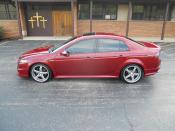
Just BUY 93 OCTANE
Originally Posted by JD TL-S
This question drives ME NUTS. NOT AGAIN. BUY 93 and be done. SHIT. Pack your
lunch 1 DAY A WEEK, and save enough to get 93 octane. THIS IS SO OLD. If you
can't AFFORD a few extra dollars, you should of bought a NEON........................
lunch 1 DAY A WEEK, and save enough to get 93 octane. THIS IS SO OLD. If you
can't AFFORD a few extra dollars, you should of bought a NEON........................
SO SILLY.



I performed a 300 mile test using 87 and 92 octane trying to get the most mpg I could, For 150 miles and several days commute I used the 87 octane and was able to squeeze 30 mpg. I then filled up with 92 followed the same roads, same conditions and same traffic flow and was expecting to see slightly higher mpg with the 92. Unfortuately I could only manage to get the same 30 mpg with the higher octane. So if you are driving the TL to maximize mpg, 87 will do the trick, but driving like I did for the last week is not much fun. Looking forard to getting back to 25 mpg and driving the car like it was meant to be driven.


Thread
Thread Starter
Forum
Replies
Last Post
OculiAquilae
3G TL (2004-2008)
62
Nov 19, 2018 02:24 PM
sockr1
Car Parts for Sale
22
Oct 1, 2015 01:31 AM
Ny1718
Car Parts for Sale
14
Sep 11, 2015 09:21 AM