


wow what a save...and a wake up call


Thread Starter
Senior Moderator
Joined: Oct 2000
Posts: 7,588
Likes: 48
From: Port Richey, FL
wow what a save...and a wake up call
my rear tires,formerly my fronts are slicks....i mean 0 tread...but ive been thinking of 18's and having these for the track,so i didnt wanna buy tires yet,so it's raining and i coming home,slow sweeper 30 mph and the rear end just swings out...i steer into the skid immediately,it comes back around and kick out the other direction but not as much,steer back into that skid and straighten her out...im still shaking...but i learned two things...i reacted well and i need to do something asap about the tires


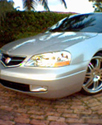
FWD tuna boat
Joined: Nov 2003
Posts: 493
Likes: 0
From: Miami, FL
Originally Posted by 03 CL TypeS
Anyone remember the thread where one guy argued he should put the new tires on the front of his CLS, and the old ones on the back?
in this case, sounds like all the tires were shot.
i need tires


Burning Brakes
Joined: Apr 2005
Posts: 1,003
Likes: 0
I think you missed my point bro.
On a FWD vehicle, the tires with the most traction should be in the back, not the front. But don't take my word for it - check out what all the major tire manufacturers say about that!
On a FWD vehicle, the tires with the most traction should be in the back, not the front. But don't take my word for it - check out what all the major tire manufacturers say about that!
FWD tuna boat
Joined: Nov 2003
Posts: 493
Likes: 0
From: Miami, FL
Originally Posted by 03 CL TypeS
I think you missed my point bro.
On a FWD vehicle, the tires with the most traction should be in the back, not the front. But don't take my word for it - check out what all the major tire manufacturers say about that!
On a FWD vehicle, the tires with the most traction should be in the back, not the front. But don't take my word for it - check out what all the major tire manufacturers say about that!
i've always heard that the better tires should go in the front regardless if it's a FWD or RWD. if you have bald tires in the front, how u gonna stop/turn?


Trending Topics

buy my car
Joined: Jan 2005
Posts: 831
Likes: 0
From: hillsborough, nj
Originally Posted by 03 CL TypeS
Anyone remember the thread where one guy argued he should put the new tires on the front of his CLS, and the old ones on the back?
yup and this is a good case in point-if typer couldnt steer out of it he would have been in big trouble.
do you think an "average" driver could have saved that car??
thats why your best tires go in the back cause you cant correct it as naturally or as easily as you could the fronts losing traction
glad your ok thats some scary shit when it happens unexpectedly

Suzuka Master
Joined: Feb 2004
Posts: 8,620
Likes: 7
From: Charlotte
Originally Posted by m&b6speed
yup and this is a good case in point-if typer couldnt steer out of it he would have been in big trouble.
do you think an "average" driver could have saved that car??
thats why your best tires go in the back cause you cant correct it as naturally or as easily as you could the fronts losing traction
glad your ok thats some scary shit when it happens unexpectedly
do you think an "average" driver could have saved that car??
thats why your best tires go in the back cause you cant correct it as naturally or as easily as you could the fronts losing traction
glad your ok thats some scary shit when it happens unexpectedly

If your fronts lose traction your FUCKED!!!! You won't be able to steer the vehicle if you have no traction in the front, hence grippy tires go upfront.
It just so happens that our cars extreme front weight bias and shitty tires in the rear will cause the rear stepping out in otherwise normal conditions.

Instructor
Joined: Apr 2003
Posts: 198
Likes: 0
From: Annapolis, MD
Hey! I got a great idea, get new tires all around! That means replace all 4 when they reach 2/32... How friggin stupid do you have to be? Get a clue, bald tires and driving in the rain is just a recipe for either trashing your car, injuring or killing yourself or someone else. 
Thread Starter
Senior Moderator
Joined: Oct 2000
Posts: 7,588
Likes: 48
From: Port Richey, FL
there's no doubt i need tires but...in a FWD vehical good tires go up front period...as far as the tires save the lectures,everyone knows how much i drag race,and i explained i was wanting to go 18,anyone that knows florida...one minute sunny one minute...



Parting out 02 Type S :(
Joined: Mar 2001
Posts: 1,299
Likes: 0
From: LA,CA
Originally Posted by mrsteve
He no longer has VSA and VSA has no control over the rear wheels.
vsa is more effective on rwd or awd cars because it can cut power to the rear (engine braking begins) and that helps quite a bit.
Vsa
VEHICAL STABILITY ASSIST (VSA) SYSTEM
First equipped in the 2000 model year Acura 3.5 RL flagship sedan, the Acura Vehicle Stability Assist (VSA) system is standard equipment on the 3.2 CL Type S model. Similar to the 3.5 RL system, the CL's VSA system orchestrates the throttle and brakes to seamlessly integrate traction control, anti-lock braking and stability enhancement processes. This innovation is designed to assist the driver in maintaining control during acceleration, cornering and sudden collision-avoidance maneuvers by applying braking force to the right or left front wheel as necessary and managing the throttle system.
By monitoring input from eight vehicle sensors, the VSA system can calculate a predicted range of vehicle response while constantly monitoring the vehicle's actual response and the driver's control inputs. If the actual response is outside the predicted response range -- as when cornering forces exceed the tires performance, for example -- VSA automatically intervenes with corrective action. In the case of oversteer (which may lead to spin), VSA applies braking to the outside front wheel to counter the unintended yawing tendency. On the other hand, if understeer becomes pronounced, VSA applies braking to the inside front wheel and reduces engine power to turn the car back into the intended course.
Unlike some vehicle stability systems, which can seem intrusive to enthusiast drivers, the Acura VSA is calibrated to add to stability and predictability, without stifling the driving enjoyment of the CL's carefully engineered chassis and double wishbone suspension. An indicator light flashes on the instrument panel while the system is actively enhancing the stability of the vehicle. A cockpit switch is provided to disable the VSA and TCS while leaving the antilock braking system fully functional.
First equipped in the 2000 model year Acura 3.5 RL flagship sedan, the Acura Vehicle Stability Assist (VSA) system is standard equipment on the 3.2 CL Type S model. Similar to the 3.5 RL system, the CL's VSA system orchestrates the throttle and brakes to seamlessly integrate traction control, anti-lock braking and stability enhancement processes. This innovation is designed to assist the driver in maintaining control during acceleration, cornering and sudden collision-avoidance maneuvers by applying braking force to the right or left front wheel as necessary and managing the throttle system.
By monitoring input from eight vehicle sensors, the VSA system can calculate a predicted range of vehicle response while constantly monitoring the vehicle's actual response and the driver's control inputs. If the actual response is outside the predicted response range -- as when cornering forces exceed the tires performance, for example -- VSA automatically intervenes with corrective action. In the case of oversteer (which may lead to spin), VSA applies braking to the outside front wheel to counter the unintended yawing tendency. On the other hand, if understeer becomes pronounced, VSA applies braking to the inside front wheel and reduces engine power to turn the car back into the intended course.
Unlike some vehicle stability systems, which can seem intrusive to enthusiast drivers, the Acura VSA is calibrated to add to stability and predictability, without stifling the driving enjoyment of the CL's carefully engineered chassis and double wishbone suspension. An indicator light flashes on the instrument panel while the system is actively enhancing the stability of the vehicle. A cockpit switch is provided to disable the VSA and TCS while leaving the antilock braking system fully functional.
Burning Brakes
Joined: Apr 2005
Posts: 1,003
Likes: 0
On a FWD vehicle, if replacing only 2 tires, the new tires must go on the back.
If you disagree with this statement, you also disagree with the recommendation of any reputable tire manufacturer out there.
I rest my case.
If you disagree with this statement, you also disagree with the recommendation of any reputable tire manufacturer out there.
I rest my case.

on to the next one...
Joined: May 2004
Posts: 4,872
Likes: 0
From: Mpls. MN
Originally Posted by paulff3
New tires always go on the back. There have been some good articles in Car and Driver recently on this. Lots of people get this one wrong.

Went to Discount Tire recently and they were saying that to me as well.
Thread Starter
Senior Moderator
Joined: Oct 2000
Posts: 7,588
Likes: 48
From: Port Richey, FL
Originally Posted by 03 CL TypeS
On a FWD vehicle, if replacing only 2 tires, the new tires must go on the back.
If you disagree with this statement, you also disagree with the recommendation of any reputable tire manufacturer out there.
I rest my case.
If you disagree with this statement, you also disagree with the recommendation of any reputable tire manufacturer out there.
I rest my case.

Advanced
Joined: Oct 2004
Posts: 86
Likes: 0
From: Atlanta
I wish i had gotten this info about the good tires being in the back before i spun on the highway 7am in the morning just about to exit. I went from the HOV lane to the grass on the other side hitting a speed limit sign saying 55mph and i was doing 70mph
Funny thing is i should have leant my lesson when a similar thing happened to me while driving from CT to GA, i hydroplaned in NC which wasnt as scary as this one cos there was no traffic on the road.
But am glad u have learnt from this lesson and i hope alot more ppl read this and take more care driving in the rain .
Funny thing is i should have leant my lesson when a similar thing happened to me while driving from CT to GA, i hydroplaned in NC which wasnt as scary as this one cos there was no traffic on the road.
But am glad u have learnt from this lesson and i hope alot more ppl read this and take more care driving in the rain .
Thread Starter
Senior Moderator
Joined: Oct 2000
Posts: 7,588
Likes: 48
From: Port Richey, FL
Originally Posted by 03 CL TypeS
You're supposed to drive with passenger tires on public roads, not racing slicks!
http://www.atomicdesigns.com/shawn/mov00003.mpg
http://www.atomicdesigns.com/shawn/typeR_086.mpg
Burning Brakes
Joined: Apr 2005
Posts: 1,003
Likes: 0
I'm at work now so I can't check the vids. I'm guessing a massive burn out turned them into slicks.
When your front tires have a lot more traction around a curve than your rear tires, your back end will spin out spontaneously and it's extremely difficult to control it, if not impossible. That's why they recommend to put the better tires in the back. You can avoid understeering by having a slower entry speed in the corner, and by laying off the throttle once you're already understeering... but once your back end kicks out on a FWD... you know first hand what happens. Had your slicks been in front, and your passenger tires in the back, you would have understeered but definitely wouldn't have spun out like that!
When your front tires have a lot more traction around a curve than your rear tires, your back end will spin out spontaneously and it's extremely difficult to control it, if not impossible. That's why they recommend to put the better tires in the back. You can avoid understeering by having a slower entry speed in the corner, and by laying off the throttle once you're already understeering... but once your back end kicks out on a FWD... you know first hand what happens. Had your slicks been in front, and your passenger tires in the back, you would have understeered but definitely wouldn't have spun out like that!
Thread Starter
Senior Moderator
Joined: Oct 2000
Posts: 7,588
Likes: 48
From: Port Richey, FL
Originally Posted by 03 CL TypeS
I'm at work now so I can't check the vids. I'm guessing a massive burn out turned them into slicks.
When your front tires have a lot more traction around a curve than your rear tires, your back end will spin out spontaneously and it's extremely difficult to control it, if not impossible. That's why they recommend to put the better tires in the back. You can avoid understeering by having a slower entry speed in the corner, and by laying off the throttle once you're already understeering... but once your back end kicks out on a FWD... you know first hand what happens. Had your slicks been in front, and your passenger tires in the back, you would have understeered but definitely wouldn't have spun out like that!
When your front tires have a lot more traction around a curve than your rear tires, your back end will spin out spontaneously and it's extremely difficult to control it, if not impossible. That's why they recommend to put the better tires in the back. You can avoid understeering by having a slower entry speed in the corner, and by laying off the throttle once you're already understeering... but once your back end kicks out on a FWD... you know first hand what happens. Had your slicks been in front, and your passenger tires in the back, you would have understeered but definitely wouldn't have spun out like that!
Originally Posted by typeR
they started out as passenger tires.
http://www.atomicdesigns.com/shawn/mov00003.mpg
http://www.atomicdesigns.com/shawn/typeR_086.mpg
http://www.atomicdesigns.com/shawn/mov00003.mpg
http://www.atomicdesigns.com/shawn/typeR_086.mpg
I wanna do burnouts like that


Burning Brakes
Joined: May 2002
Posts: 791
Likes: 4
From: Mass
From Michelin
"Where do I install new tires if I only buy two?
If you're replacing only two tires, be sure to have them installed on your vehicle's rear axle. New tires will provide better grip than your half-worn tires and when they are installed on the rear that helps reduce the potential for your vehicle to fishtail or hydroplane in wet conditions."
http://www.michelinman.com/care/tip6.html#5
Should pretty much wrap this up.
Paul
"Where do I install new tires if I only buy two?
If you're replacing only two tires, be sure to have them installed on your vehicle's rear axle. New tires will provide better grip than your half-worn tires and when they are installed on the rear that helps reduce the potential for your vehicle to fishtail or hydroplane in wet conditions."
http://www.michelinman.com/care/tip6.html#5
Should pretty much wrap this up.
Paul
Thread Starter
Senior Moderator
Joined: Oct 2000
Posts: 7,588
Likes: 48
From: Port Richey, FL
Originally Posted by paulff3
From Michelin
"Where do I install new tires if I only buy two?
If you're replacing only two tires, be sure to have them installed on your vehicle's rear axle. New tires will provide better grip than your half-worn tires and when they are installed on the rear that helps reduce the potential for your vehicle to fishtail or hydroplane in wet conditions."
http://www.michelinman.com/care/tip6.html#5
Should pretty much wrap this up.
Paul
"Where do I install new tires if I only buy two?
If you're replacing only two tires, be sure to have them installed on your vehicle's rear axle. New tires will provide better grip than your half-worn tires and when they are installed on the rear that helps reduce the potential for your vehicle to fishtail or hydroplane in wet conditions."
http://www.michelinman.com/care/tip6.html#5
Should pretty much wrap this up.
Paul
Burning Brakes
Joined: Apr 2005
Posts: 1,003
Likes: 0
Originally Posted by typeR
that would be true if it were rear wheel drive ...re ask the question
What happened to you, is a perfect example of what happens when rear tires have significantly less traction than front tires in a FWD car.

Thread Starter
Senior Moderator
Joined: Oct 2000
Posts: 7,588
Likes: 48
From: Port Richey, FL
Originally Posted by 03 CL TypeS
Just as true for FWD as for RWD.
What happened to you, is a perfect example of what happens when rear tires have significantly less traction than front tires in a FWD car.
What happened to you, is a perfect example of what happens when rear tires have significantly less traction than front tires in a FWD car.
Burning Brakes
Joined: Apr 2005
Posts: 1,003
Likes: 0
Originally Posted by typeR
if the tires were reversed i would have gone straight off the road ...end of story
As far as the end of the story is concerned, you're not supposed to drive around with bald tires on the street because you're putting your life, and the lives of others in danger.
If you had proper tires, you wouldn't spun out, nor gone off the road.
Thread Starter
Senior Moderator
Joined: Oct 2000
Posts: 7,588
Likes: 48
From: Port Richey, FL
Originally Posted by 03 CL TypeS
You're correct about that.
As far as the end of the story is concerned, you're not supposed to drive around with bald tires on the street because you're putting your life, and the lives of others in danger.
If you had proper tires, you wouldn't spun out, nor gone off the road.
As far as the end of the story is concerned, you're not supposed to drive around with bald tires on the street because you're putting your life, and the lives of others in danger.
If you had proper tires, you wouldn't spun out, nor gone off the road.
...and a wake up call
buy my car
Joined: Jan 2005
Posts: 831
Likes: 0
From: hillsborough, nj
Originally Posted by 03 CL TypeS
On a FWD vehicle, if replacing only 2 tires, the new tires must go on the back.
If you disagree with this statement, you also disagree with the recommendation of any reputable tire manufacturer out there.
I rest my case.
If you disagree with this statement, you also disagree with the recommendation of any reputable tire manufacturer out there.
I rest my case.
thank you