


Noise in rear end


Thread Starter
10th Gear

Joined: Aug 2016
Posts: 11
Likes: 1
Noise in rear end
2009 RDX-So, I recently changed the rear brake pads. One of the clips got misaligned and was rubbing the rotor and created a scraping sound. Easy enough fix, just identified which one it was and fixed it. But to find which one it was i did this. I jacked up the rear of the vehicle only using the center of the rear beam. Then I spun both rear wheels by hand both backwards and forwards and met no resistance. The car trans. was in Park during this and not neutral. The scrapping of the brake clip was easily identified on the driver side and was fixed.
Here is the thing. Ever since I jacked it up and spun those wheels I have a loud roar in the rear end. The loudness is speed dependent and gets louder and faster with increased speed. However the noise is always there. I can cut the vehicle off and just let the car coast and it is still there. It is not a grinding or thumping sound. It is a roar, gear whine sound. The rear diff has had routine fluid changes and I just did that again once this noise started.
Just wondering what this could be. I suspect something happened with the rear diff, but not sure what. Also, I don't have any CELs or SH--AWD warning lights on currently.
Thanks!
Here is the thing. Ever since I jacked it up and spun those wheels I have a loud roar in the rear end. The loudness is speed dependent and gets louder and faster with increased speed. However the noise is always there. I can cut the vehicle off and just let the car coast and it is still there. It is not a grinding or thumping sound. It is a roar, gear whine sound. The rear diff has had routine fluid changes and I just did that again once this noise started.
Just wondering what this could be. I suspect something happened with the rear diff, but not sure what. Also, I don't have any CELs or SH--AWD warning lights on currently.
Thanks!



Thread Starter
10th Gear
Joined: Aug 2016
Posts: 11
Likes: 1
Thanks for the reply. Ruled out everything in brake system back there. I'm almost certain it is coming from the rear diff. I've got some chassis ears coming tomorrow to try and confirm. Not sure what I could have done to hurt that rear diff, but I think I did.
Pro


Joined: Dec 2020
Posts: 685
Likes: 172
From: Lowell MA
The service manual states that the RDX must never be towed via a tow dolly and can only be towed on a flatbed because damage to the rear diff could occur by spinning only the rear wheels.
Unfortunately my first guess is that's what happened here.
Unfortunately my first guess is that's what happened here.
Thread Starter
10th Gear
Joined: Aug 2016
Posts: 11
Likes: 1
I fear you may be correct. And if that is the case then they are not joking about damaging the SH-AWD that way. It was only 10-20 hand spins per side! Although I suspect the vehicle being 16 years old with 180,000 miles on it probably had something to do with it as well. I'm going to first confirm it is the rear diff with the chassis ears and then go from there. Will update the post when I have more info.


^
This may not offer much in explanation; however, I did manage to find the information below.
For obvious safety reasons, as mentioned below, the FSM requires spinning the front or rear wheels off the ground, with the engine, for service work.
Then one would presume ANY service work requiring front or rear wheel spinning, without using the engine, would also require ALL the wheels be off the ground as well??
This vehicle is equipped with the Super Handling All-Wheel Drive(R) (SH-AWD(R)) system. The SH-AWD system distributes driving torque between the front and rear wheels when accelerating and when wheel spin occurs.
The SH-AWD system does not have a manual switch to disable the AWD system. Whenever service work requires spinning the front or rear wheels with the engine, always lift and support the vehicle so all four wheels are off the ground.
In addition, reading through the below, it appears the SH-AWD system is a pretty complicated beast (with nannies), to say the least.
SH-AWD System
Outline
This vehicle is equipped with a Super Handling All-wheel Drive(R) (SH-AWD(R)) rear differential system. This system uses electromagnetic clutches and the SH-AWD control unit to control front to rear torque distribution and independent left to right rear torque distribution. This allows the system to function as a limited slip differential and as a torque distribution system to improve standing start performance, straight-line stability, climbing, and cornering ability.
SH-AWD features include
-Independent torque distribution to the front and rear wheels, and to the left and right wheels for neutral handling when cornering.
-Controls differential (inside/outside) wheel speed in a turn to increase cornering stability.
-Limited slip differential function for better acceleration.
Operation
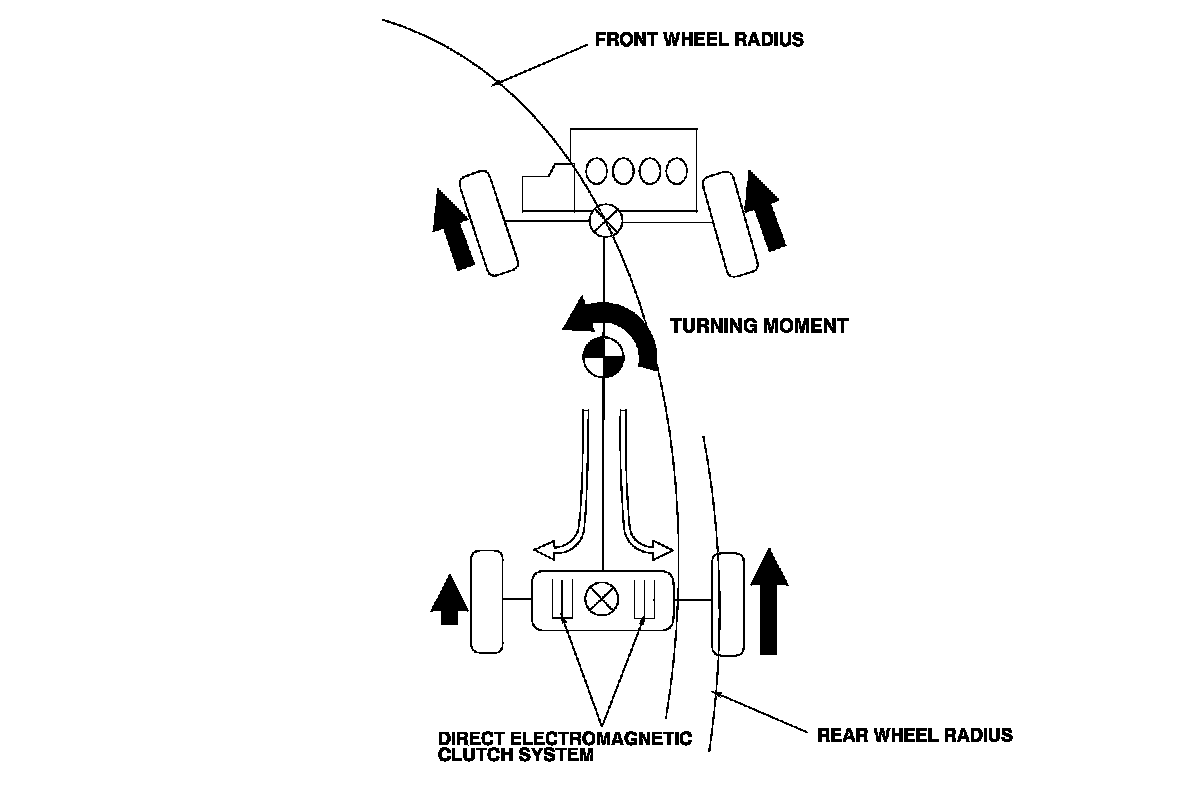
In a normal turn the radius of the front wheels is shorter than the radius that the rear wheels travel. If the front and rear wheels are driven at the same speed, full power is not transmitted. The SH-AWD system monitors the speed of the front wheels and increases the speed of the outside rear wheel proportionally around the larger radius. This improves stability and steering response. On slippery surfaces this provides the improved traction of a 4-wheel drive system.
Construction
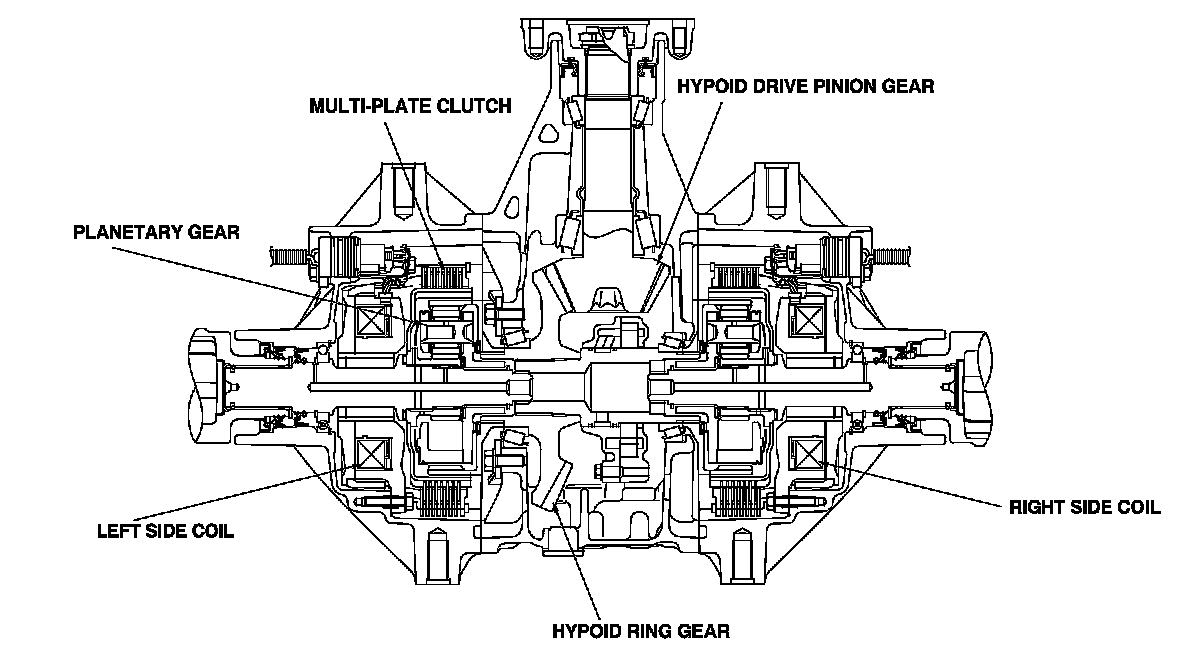
1.The differential assembly has a conventional hypoid ring and pinion gear set.
2.The direct electromagnetic clutch system consists of the coils, the planetary gear sets, and the multi-plate clutches that are installed in the side cases on either side of the differential carrier. When driving straight ahead, both rear wheels rotate at the same speed. When turning, current is applied to the appropriate outside wheel main coil to engage the clutch. The amount of current passed through the electromagnetic clutch controls the amount of driving force to the outside wheel.
SH-AWD 4WD Control System
Control System
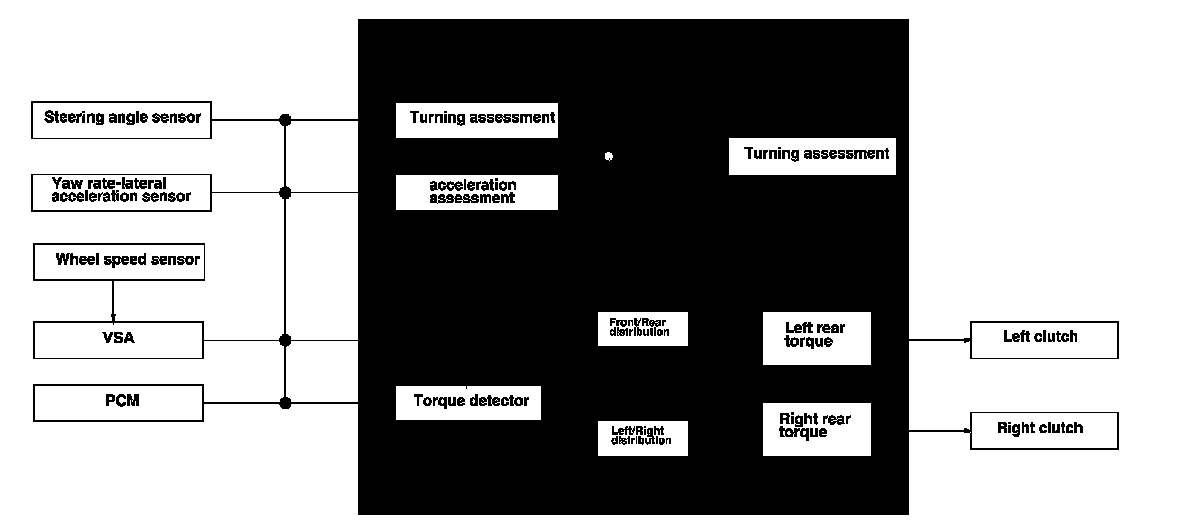
The SH-AWD control system consists of a SH-AWD control unit, the PCM, the VSA modulator-control unit, along with various sensors and switches that detect the steering angle, the lateral G force, the yaw, and the vehicle speed. A fluid temperature sensor is located on in the rear differential. The control units exchange information via the CAN communication lines. The SH-AWD control unit has a self-diagnostic function. If a malfunction is detected, the SH-AWD control unit turns on the SH-AWD indicator in the gauge assembly and the system goes into fail-safe mode. When in fail-safe mode, the vehicle disables the SH-AWD differential. The vehicle defaults to front wheel drive, reduces engine torque to suit the driving conditions.
Driving Force Control
The driving force control distributes the power based on the driver's inputs. It distributes torque to the front and rear wheels based on the throttle opening and the available engine torque output. When turning, torque is applied to the rear wheels independently based on the lateral G input and the direction of the turn. This generates an inward yaw movement to help steer the vehicle around the turn.
Electromagnetic Clutch System
Construction
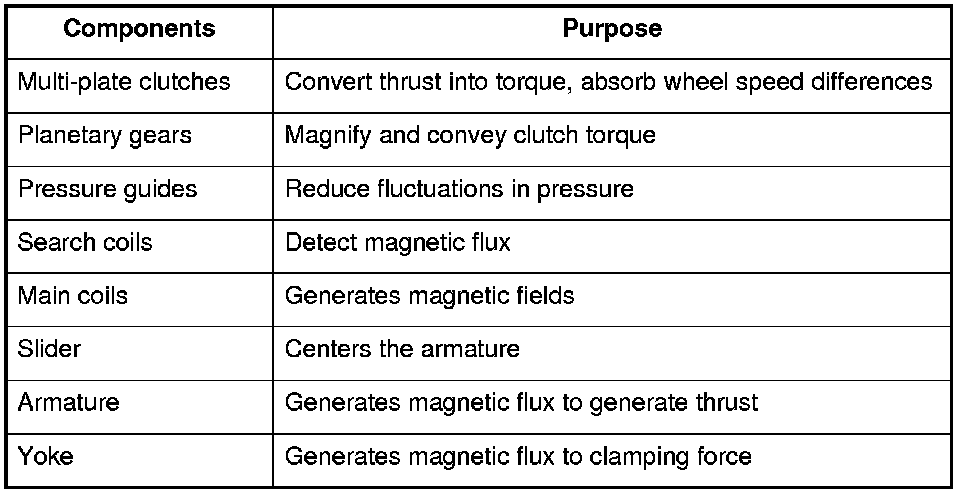
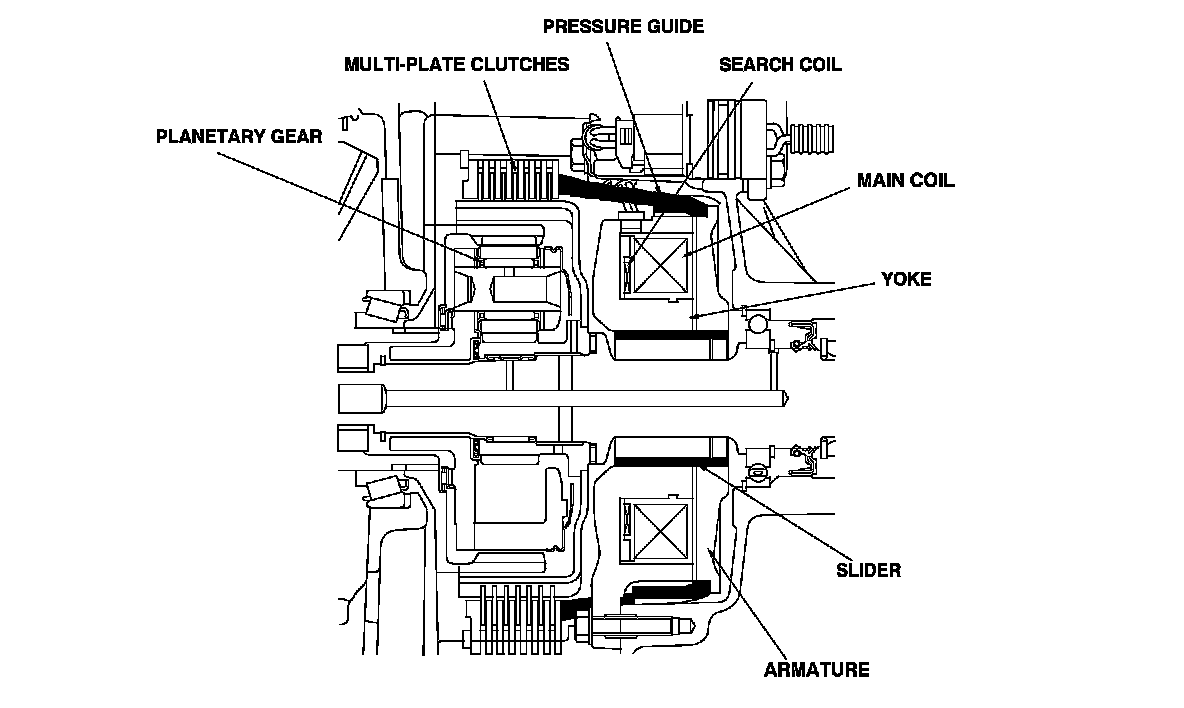
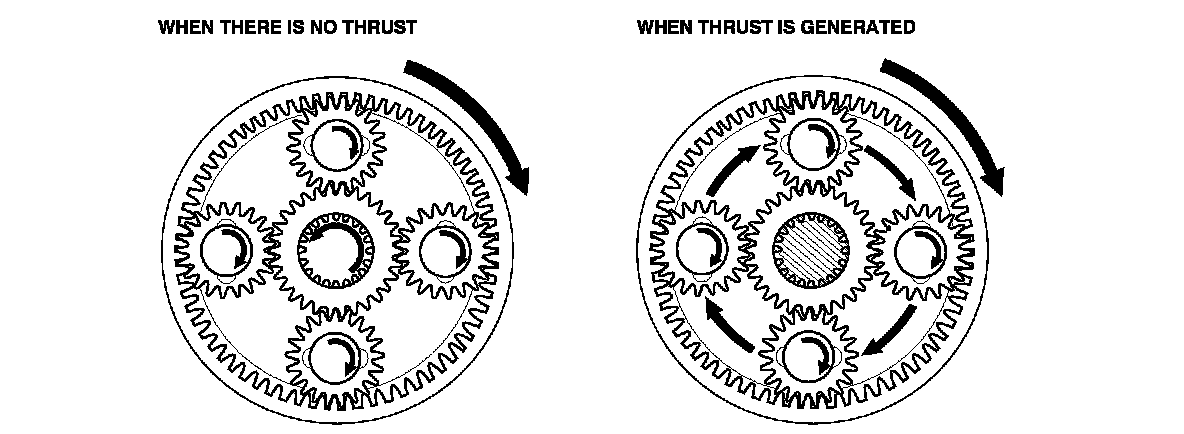
The electromagnetic clutch system is incorporated into the side case assemblies on both sides of the differential case. The system consists of the multi-plate clutches, the planetary gears, the pressure guides, the solenoid coil assembly (the search coil and the main coil), the armature assembly (the slider and the armature), and the yoke.
Electromagnetic Clutch System (cont'd)
Operation
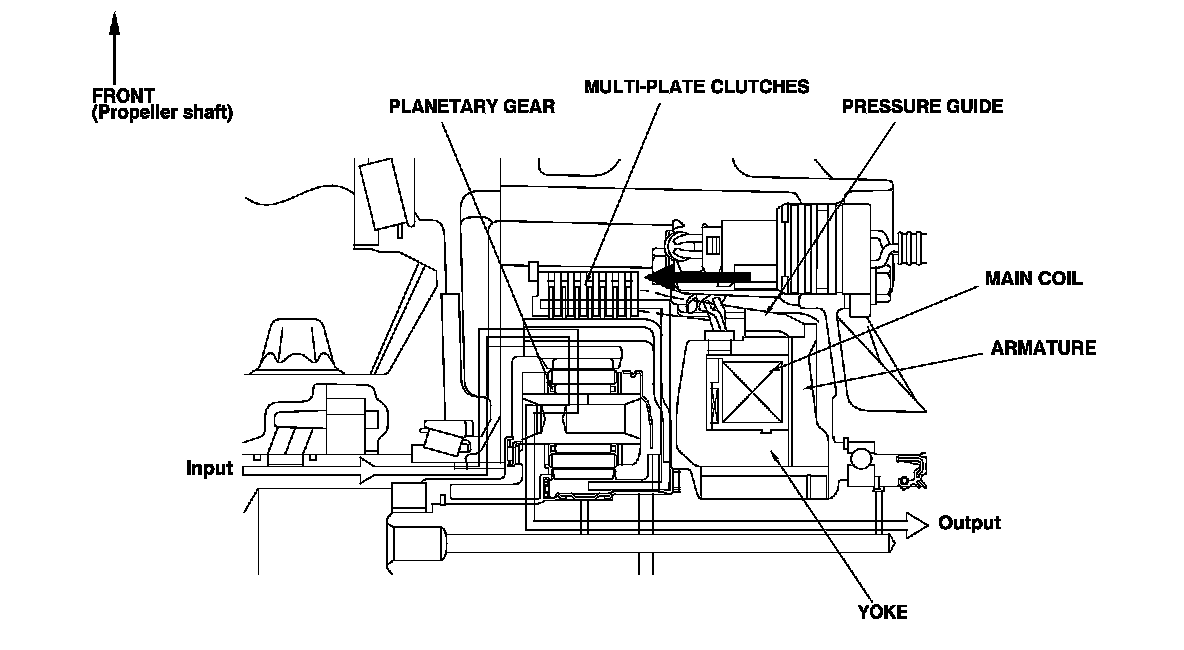
The SH-AWD control unit receives inputs from the PCM and the VSA modulator-control unit on the driving conditions via the CAN. The SH-AWD control unit sends signals to the main coils, which engage the electromagnetic clutches that connect the planetary gear set. This increases the torque applied to the rear wheels. The amount of current sent to the clutch is continuously varied as driving conditions change.
Search Coil Detection System
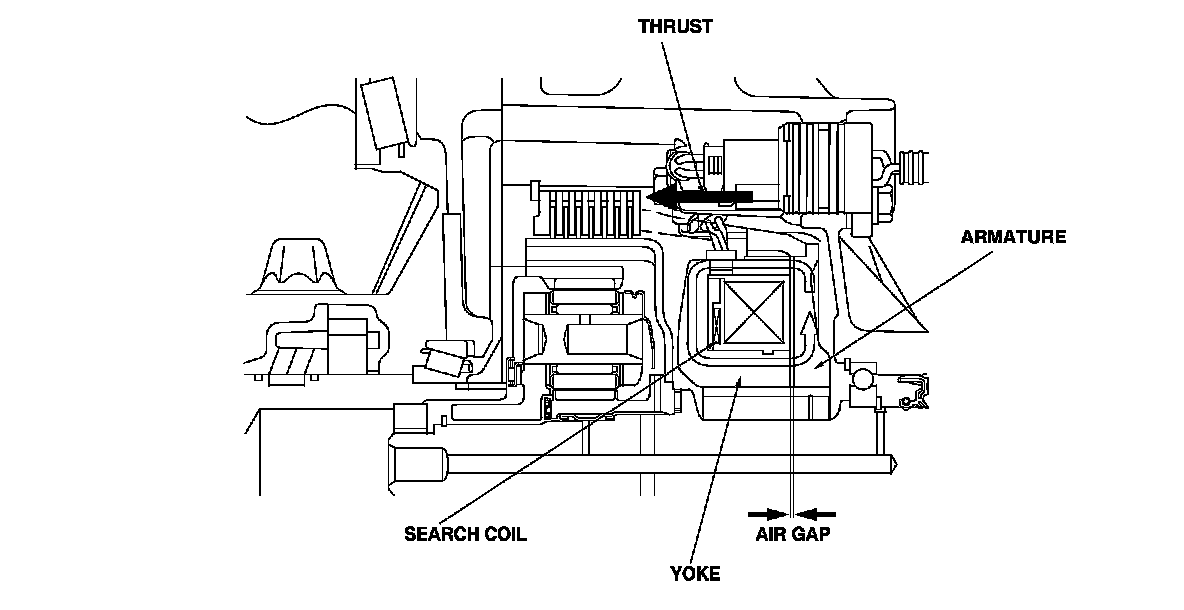
As the clutch discs wear, the air gap between the pressure guides and the multi-plate clutches decrease. The decrease in air gap changes the magnetic field generated by the main coil and the yoke. The search coil detects these changes in the magnetic field. The SH-AWD control unit uses predetermined maps to compensate for the changes to maintain precise control and smooth clutch engagement.
Electric Control System
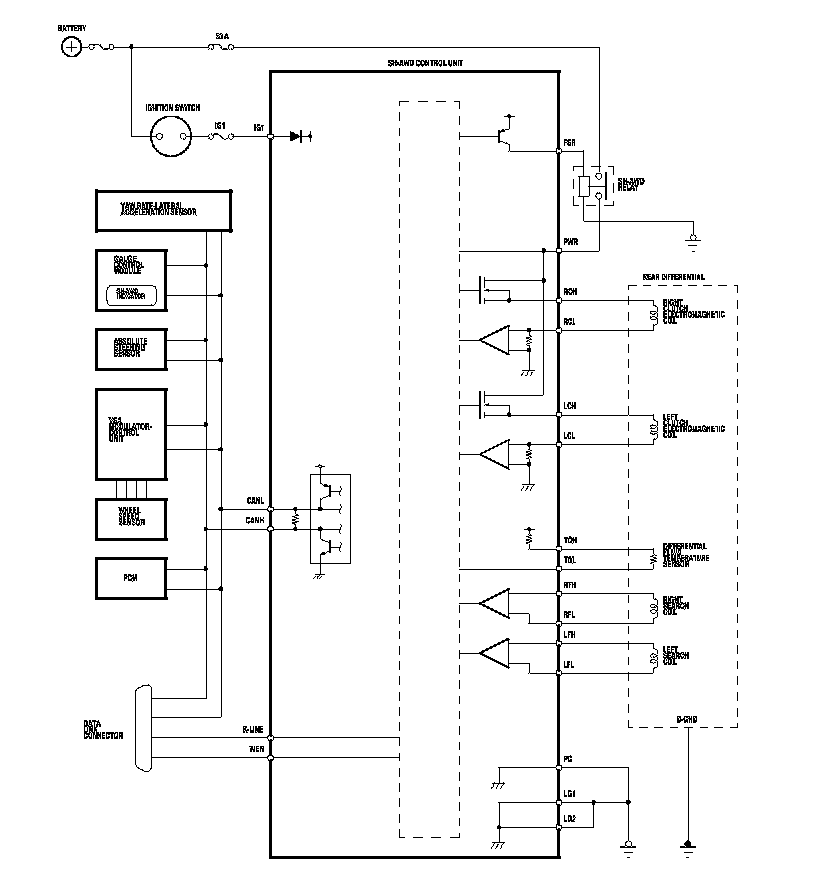
SH-AWD Control Unit Electrical Connections
SH-AWD Control Unit Inputs and Outputs
The SH-AWD control unit terminal voltages and the measuring conditions for the SH-AWD control system.
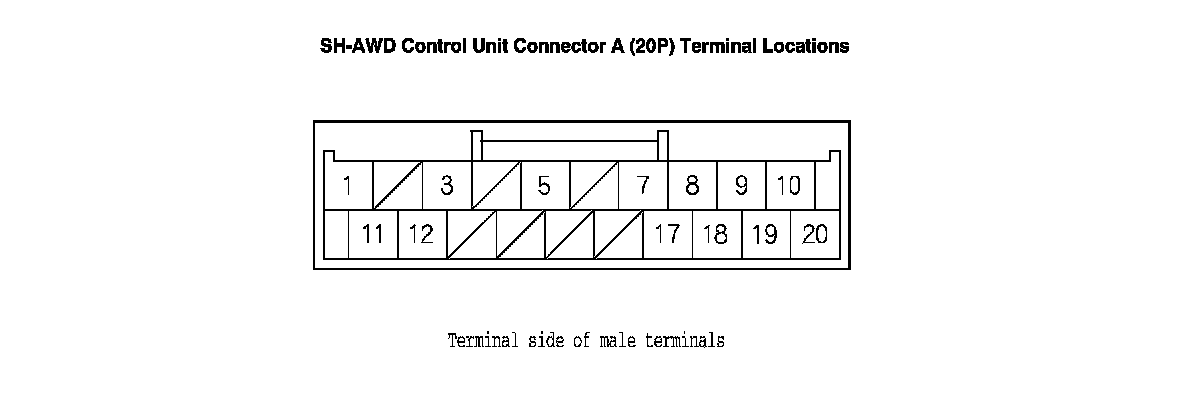
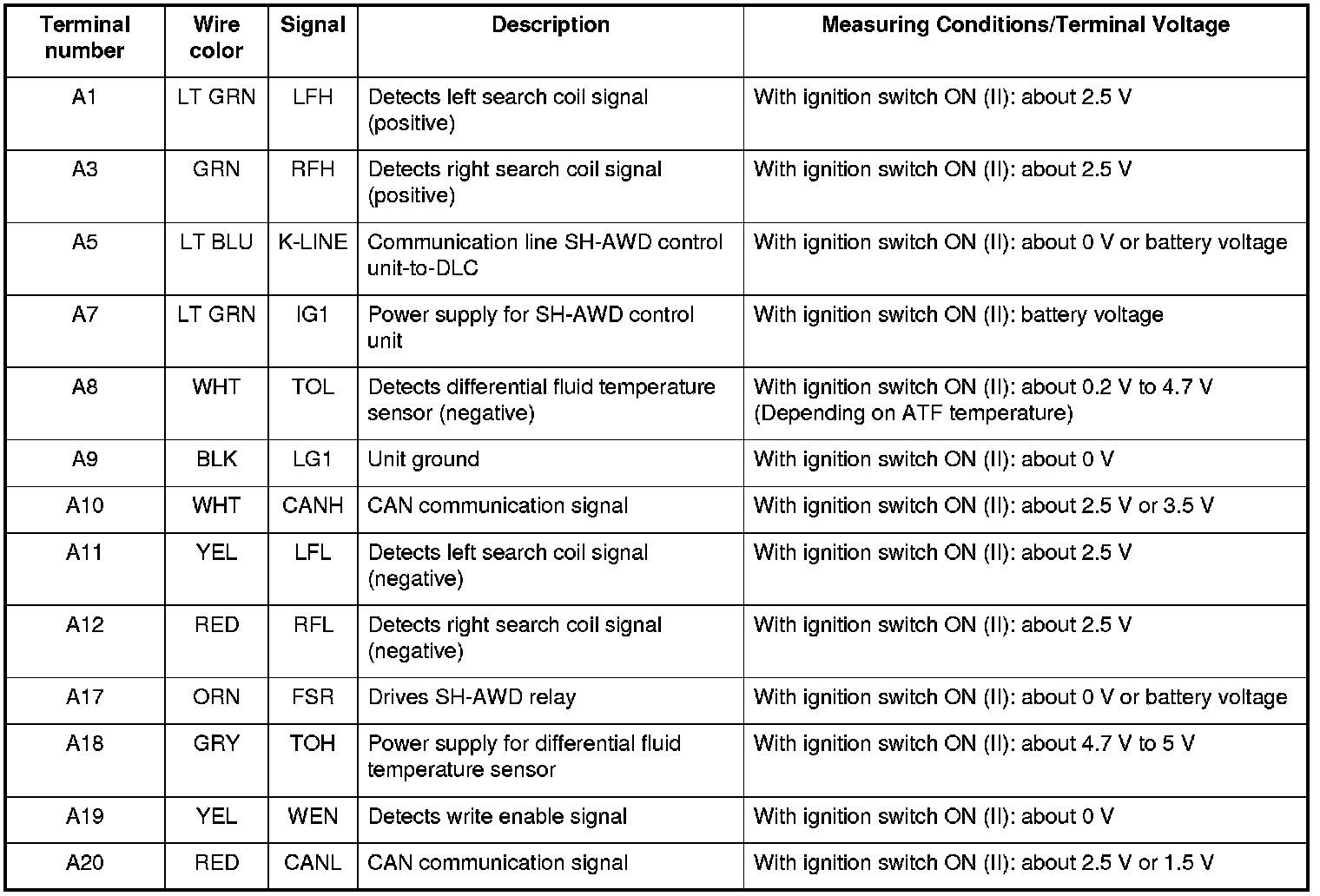
SH-AWD Control Unit Inputs and Outputs (cont'd)
The SH-AWD control unit terminal voltages and the measuring conditions for the SH-AWD control system.
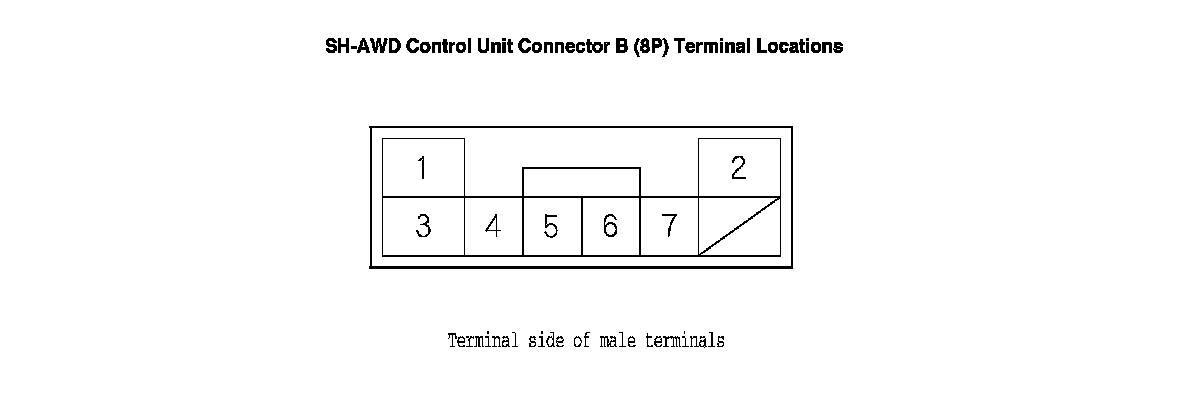
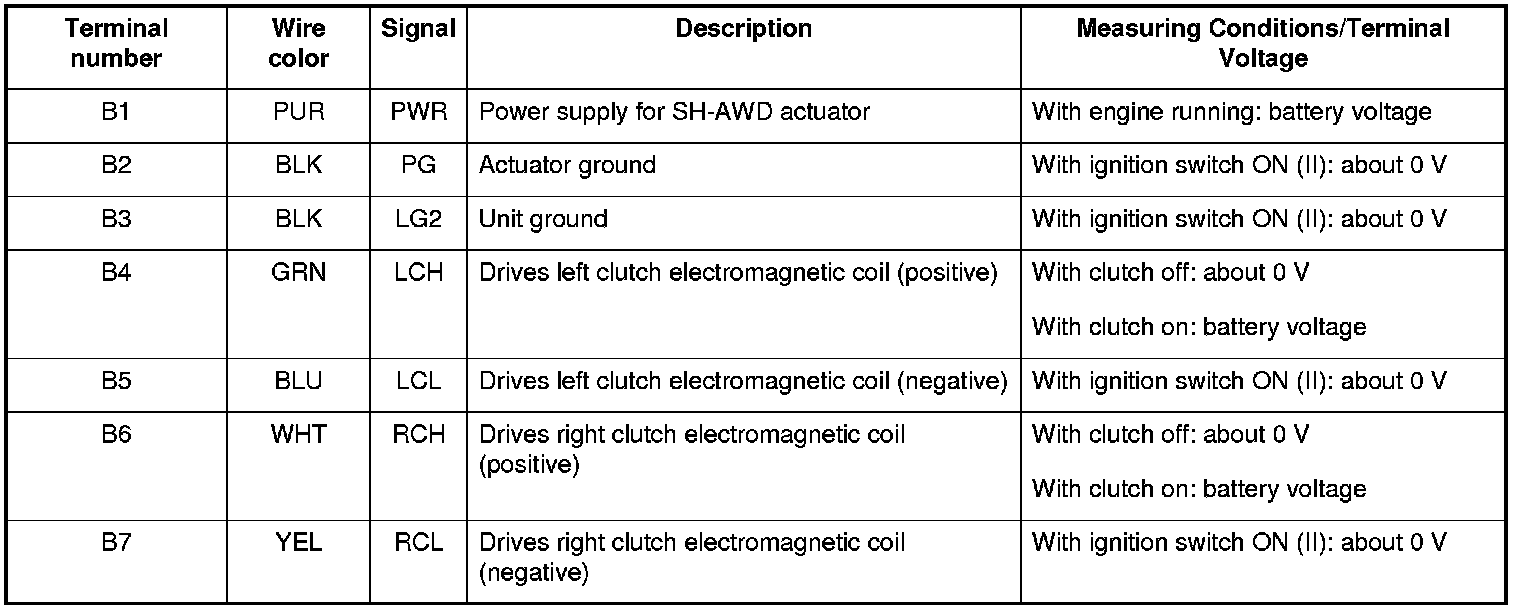
This may not offer much in explanation; however, I did manage to find the information below.
For obvious safety reasons, as mentioned below, the FSM requires spinning the front or rear wheels off the ground, with the engine, for service work.
Then one would presume ANY service work requiring front or rear wheel spinning, without using the engine, would also require ALL the wheels be off the ground as well??
Vehicle Damage Warnings
Precautions for Super Handling All-Wheel Drive (SH-AWD) SystemThis vehicle is equipped with the Super Handling All-Wheel Drive(R) (SH-AWD(R)) system. The SH-AWD system distributes driving torque between the front and rear wheels when accelerating and when wheel spin occurs.
The SH-AWD system does not have a manual switch to disable the AWD system. Whenever service work requires spinning the front or rear wheels with the engine, always lift and support the vehicle so all four wheels are off the ground.
In addition, reading through the below, it appears the SH-AWD system is a pretty complicated beast (with nannies), to say the least.
Differential Assembly: Description and Operation
SH-AWD System DescriptionSH-AWD System
Outline
This vehicle is equipped with a Super Handling All-wheel Drive(R) (SH-AWD(R)) rear differential system. This system uses electromagnetic clutches and the SH-AWD control unit to control front to rear torque distribution and independent left to right rear torque distribution. This allows the system to function as a limited slip differential and as a torque distribution system to improve standing start performance, straight-line stability, climbing, and cornering ability.
SH-AWD features include
-Independent torque distribution to the front and rear wheels, and to the left and right wheels for neutral handling when cornering.
-Controls differential (inside/outside) wheel speed in a turn to increase cornering stability.
-Limited slip differential function for better acceleration.
Operation
In a normal turn the radius of the front wheels is shorter than the radius that the rear wheels travel. If the front and rear wheels are driven at the same speed, full power is not transmitted. The SH-AWD system monitors the speed of the front wheels and increases the speed of the outside rear wheel proportionally around the larger radius. This improves stability and steering response. On slippery surfaces this provides the improved traction of a 4-wheel drive system.
Construction
1.The differential assembly has a conventional hypoid ring and pinion gear set.
2.The direct electromagnetic clutch system consists of the coils, the planetary gear sets, and the multi-plate clutches that are installed in the side cases on either side of the differential carrier. When driving straight ahead, both rear wheels rotate at the same speed. When turning, current is applied to the appropriate outside wheel main coil to engage the clutch. The amount of current passed through the electromagnetic clutch controls the amount of driving force to the outside wheel.
SH-AWD 4WD Control System
Control System
The SH-AWD control system consists of a SH-AWD control unit, the PCM, the VSA modulator-control unit, along with various sensors and switches that detect the steering angle, the lateral G force, the yaw, and the vehicle speed. A fluid temperature sensor is located on in the rear differential. The control units exchange information via the CAN communication lines. The SH-AWD control unit has a self-diagnostic function. If a malfunction is detected, the SH-AWD control unit turns on the SH-AWD indicator in the gauge assembly and the system goes into fail-safe mode. When in fail-safe mode, the vehicle disables the SH-AWD differential. The vehicle defaults to front wheel drive, reduces engine torque to suit the driving conditions.
Driving Force Control
The driving force control distributes the power based on the driver's inputs. It distributes torque to the front and rear wheels based on the throttle opening and the available engine torque output. When turning, torque is applied to the rear wheels independently based on the lateral G input and the direction of the turn. This generates an inward yaw movement to help steer the vehicle around the turn.
Electromagnetic Clutch System
Construction
The electromagnetic clutch system is incorporated into the side case assemblies on both sides of the differential case. The system consists of the multi-plate clutches, the planetary gears, the pressure guides, the solenoid coil assembly (the search coil and the main coil), the armature assembly (the slider and the armature), and the yoke.
Electromagnetic Clutch System (cont'd)
Operation
The SH-AWD control unit receives inputs from the PCM and the VSA modulator-control unit on the driving conditions via the CAN. The SH-AWD control unit sends signals to the main coils, which engage the electromagnetic clutches that connect the planetary gear set. This increases the torque applied to the rear wheels. The amount of current sent to the clutch is continuously varied as driving conditions change.
Search Coil Detection System
As the clutch discs wear, the air gap between the pressure guides and the multi-plate clutches decrease. The decrease in air gap changes the magnetic field generated by the main coil and the yoke. The search coil detects these changes in the magnetic field. The SH-AWD control unit uses predetermined maps to compensate for the changes to maintain precise control and smooth clutch engagement.
Electric Control System
SH-AWD Control Unit Electrical Connections
SH-AWD Control Unit Inputs and Outputs
The SH-AWD control unit terminal voltages and the measuring conditions for the SH-AWD control system.
SH-AWD Control Unit Inputs and Outputs (cont'd)
The SH-AWD control unit terminal voltages and the measuring conditions for the SH-AWD control system.
Last edited by zeta; Sep 16, 2025 at 04:36 PM.

Thread Starter
10th Gear
Joined: Aug 2016
Posts: 11
Likes: 1
Thanks Zeta! That is a lot of info and I really appreciate it! Still trying to wrap my head around this and you are right, this diff is a very complex beast. I was beating myself up for not putting it in neutral before I spun the wheels, but it looks like it does not really matter. I should have had all 4 wheels in the air regardless. Something reassuring in that info is if the diff fails it will go into safe mode and disconnect from the drive shaft. I was worried it might lock up upon failing.
Its still early and I wont have time to get into it until the weekend but I am already thinking of the possibilities going forward.
1. Drive it till it drops and just deal with a loud rear diff until it fails, if ever.
2. Get a diff from a yard or ebay, looks like about $400 or $500 bucks.
3. Just pull the drive shaft and rear half shafts and make it a FWD.
At any rate, it is a bummer. Still really like this car.
Thanks again for the all the information!
Its still early and I wont have time to get into it until the weekend but I am already thinking of the possibilities going forward.
1. Drive it till it drops and just deal with a loud rear diff until it fails, if ever.
2. Get a diff from a yard or ebay, looks like about $400 or $500 bucks.
3. Just pull the drive shaft and rear half shafts and make it a FWD.
At any rate, it is a bummer. Still really like this car.
Thanks again for the all the information!
Trending Topics


Thread Starter
10th Gear
Joined: Aug 2016
Posts: 11
Likes: 1
So it turns out it was the passenger rear hub causing the noise. I used those chassis ears to narrow it down to that. Those are handy little things and beats having a middle aged dude (me) contort himself in the cargo bay with his ear to the floorboard while the wife drives down the street! I do have some minor gear whine from the carrier, but the roar was the hub. Replaced the axle too while I was in there for the hub. All is well. I guess it could have been just dropping the car off the jack too quickly and that pushed the hub over the edge. Anyway thanks for all the help guys!
Last edited by Oldrusty; Oct 7, 2025 at 06:49 PM.

Thread
Thread Starter
Forum
Replies
Last Post
