


Warming up your car...

Thread Starter
Racer
Joined: Sep 2008
Posts: 450
Likes: 2
Warming up your car...
Hey guys, i'm just wondering how long should we warm up our cars before starting to drive. (during summer time, rainy days, winter/snow) I get different inputs, and i'm wondering what you guys think? Thanks.







Joined: Feb 2008
Posts: 4,096
Likes: 414
From: Scarborough, Ontario
I personally wait half a minute... then drive [taking it slowly] until my temp-gauge is where it should be.
In winter time, in Montreal, that's a different story. When I crank, I sit there and wait till the car warms up. That is... if the roads permit me to drive.
In winter time, in Montreal, that's a different story. When I crank, I sit there and wait till the car warms up. That is... if the roads permit me to drive.
hates the winter
Joined: Oct 2006
Posts: 2,620
Likes: 0
Turn the key to on for 10 seconds to let the fuel pump prime, start, let idle for 1 minute regardless of temp and then start to drive slowly and moderatly until the car warms up. This creates the least amount of wear, and uses the least amount of fuel.
Cars take longer to warm up when sitting wasting more gas, running colder longer means running rich. Just make sure oil pressure is up and circulating after one minute. The owners manual states to do this as well.
Cars take longer to warm up when sitting wasting more gas, running colder longer means running rich. Just make sure oil pressure is up and circulating after one minute. The owners manual states to do this as well.
Trending Topics

zero time....if i was a pussy, which i was when i lived in really cold winter times, i would start my car up and jack up the head and fix my coffee and then drive to work...this wasnt for the car, it was for me so i could drive to work in a warm car and not freeze my ass off on the way.....

here in texas for 3/4 of the year is always hot/warm outside so i see no point in warming up the car. i just turn it on, wait 5-10 sec for the ac to kick in good and drive off.
however, in winter when it is damn cold, i will wait a minute or so til the engine and inside gets warm
however, in winter when it is damn cold, i will wait a minute or so til the engine and inside gets warm


Drifting
Joined: Oct 2006
Posts: 2,683
Likes: 213
From: CA
+1
when i get in, i buckle up, twist to the on, wait for the fuel pump "whine and click", start, and drive normally.
sitting and idling gives you zero MPG, as it takes longer for the engine to get up to temperature and you are going nowhere while doing so.
if you just get in, start and go (albeit normally), you do two things at the same time - warm up the engine (and all the other components like brakes, axles, transmission, etc) and actually get some miles per gallon burned. you also save time because instead of wasting a minute or two idling in place, you are actually moving towards your destination.
when i get in, i buckle up, twist to the on, wait for the fuel pump "whine and click", start, and drive normally.
sitting and idling gives you zero MPG, as it takes longer for the engine to get up to temperature and you are going nowhere while doing so.
if you just get in, start and go (albeit normally), you do two things at the same time - warm up the engine (and all the other components like brakes, axles, transmission, etc) and actually get some miles per gallon burned. you also save time because instead of wasting a minute or two idling in place, you are actually moving towards your destination.


Team Owner
Joined: Mar 2006
Posts: 20,172
Likes: 1,818
From: Bakersfield
I say it depends on what your morning drive is like. The old "most wear occurs at startup" is quickly becoming "most wear happens during oil warmup".
I wait a minute and then drive but I have 1.5 miles of residential streets so I can drive very easy at 25mph to get it up to temp. If I had to immediately make a freeway entry I would wait at least until the coolant is fully warm. Remember, engine oil takes about 15-20 minutes to get to full temp. Below 160 degrees the additives aren't doing much. I've seen charts on test engines where wear is 15 times greater with cold oil and it gets much worse when you put a load on it. In other words, 1 mile on a cold engine= 15 miles on a hot engine.
So let it warm for a minute or two and then drive as easy as you can until it's fully warm.
I wait a minute and then drive but I have 1.5 miles of residential streets so I can drive very easy at 25mph to get it up to temp. If I had to immediately make a freeway entry I would wait at least until the coolant is fully warm. Remember, engine oil takes about 15-20 minutes to get to full temp. Below 160 degrees the additives aren't doing much. I've seen charts on test engines where wear is 15 times greater with cold oil and it gets much worse when you put a load on it. In other words, 1 mile on a cold engine= 15 miles on a hot engine.
So let it warm for a minute or two and then drive as easy as you can until it's fully warm.



Keep Right Except to Pass

Joined: Aug 2004
Posts: 2,411
Likes: 45
From: Kingstowne, VA
If it's winter and I'm parked outside such that I have to scrape the windows, I'll usually turn on the car while I scrape. Thankfully that doesn't happen very often unless I go on a ski trip. While I know this wastes gas, the hot air and the rear defroster help with clearing the windows.
I read somewhere that one should never rev above 3,000 rpm until the temperature gauge reaches the normal level. That sounds about right to me. When I was in school in the mid-1990s I bombed down a highway onramp when the engine in my 1986 Legend was cold and when I reached my destination I noticed some steam coming from under the hood....popped the hood and found a blown coolant hose. Ever since then I take it easy until the engine warms up.


Yea in canada, we have an electrical plug ins if the parking lots are outside. I got an engine block heater and just plug it in and it keeps the engine nice and warm the whole day. Then I start the car and wait about 3-4 minutes for the heat and the seat warmer to start getting hot and I drive. But this is in -30ish celsius or lower weather. In the summer, like a 10 sec wait and drive
Team Owner
Joined: Mar 2006
Posts: 20,172
Likes: 1,818
From: Bakersfield
I do this with one modification—I back out of my garage first (so as not to fill the garage with exhaust) and then I wait in the driveway until my garage door has gone down (I like to be sure that it doesn't unintentionally go back up, say if the electric eye sensor is out of position) and I've hit OK on the Navi.
If it's winter and I'm parked outside such that I have to scrape the windows, I'll usually turn on the car while I scrape. Thankfully that doesn't happen very often unless I go on a ski trip. While I know this wastes gas, the hot air and the rear defroster help with clearing the windows.
I read somewhere that one should never rev above 3,000 rpm until the temperature gauge reaches the normal level. That sounds about right to me. When I was in school in the mid-1990s I bombed down a highway onramp when the engine in my 1986 Legend was cold and when I reached my destination I noticed some steam coming from under the hood....popped the hood and found a blown coolant hose. Ever since then I take it easy until the engine warms up.
If it's winter and I'm parked outside such that I have to scrape the windows, I'll usually turn on the car while I scrape. Thankfully that doesn't happen very often unless I go on a ski trip. While I know this wastes gas, the hot air and the rear defroster help with clearing the windows.
I read somewhere that one should never rev above 3,000 rpm until the temperature gauge reaches the normal level. That sounds about right to me. When I was in school in the mid-1990s I bombed down a highway onramp when the engine in my 1986 Legend was cold and when I reached my destination I noticed some steam coming from under the hood....popped the hood and found a blown coolant hose. Ever since then I take it easy until the engine warms up.

Race Director
Joined: Jun 2003
Posts: 10,497
Likes: 279
I give it one min, them slowly roll out, and then I'm off to the highway. Waiting longer just wastes gas, warm up the engine and go... To those who don't wait, just jump and go, you are wasting gas, a cold engine will use more gas. This is a fact.
Team Owner
Joined: Mar 2006
Posts: 20,172
Likes: 1,818
From: Bakersfield
Besides, assume you are running rich, option A is to drive immediately to get the engine warm and out of enrichment as quickly as possible. Only problem is you're running rich not only at idle but when giving it gas to drive so consumption is magnified but for a shorter time.
Option B is to let it sit there and warm up. You're getting 0mpg but since it's at idle, consumption is less than .5 gal/hr.
I have no idea which uses less fuel but it's so minor, I choose engine life over potential fuel savings.



Burning Brakes
Joined: Jul 2008
Posts: 1,140
Likes: 2
I let the car warm up for 20 mins,when the car is warmed up, I dont feel like going out anymore so I just turn the car off and go back home.( LOL JOKE)
Usually I jus let teh car warm up for about a min and smash off. Take it easy
Usually I jus let teh car warm up for about a min and smash off. Take it easy
Where should the temp gauge be resting at normally? I've always felt that mine shows a little low. It's about 3/4 between "cold" and the middle. Sometimes even only 1/2 way.
Last edited by ifirahse; Oct 10, 2008 at 12:43 AM.

Thread Starter
Racer
Joined: Sep 2008
Posts: 450
Likes: 2

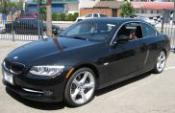


My baby's ride...
Joined: Sep 2008
Posts: 485
Likes: 0
From: NJ
I don't worry about premature wear as I never own any cars until they die. I'm on a new one way before then.
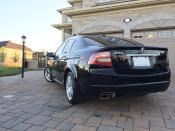
 And when are you coming back already?!
Team Owner
Joined: Mar 2006
Posts: 20,172
Likes: 1,818
From: Bakersfield
It's made to be a little under halfway to make the driver feel better lol. It takes a pretty good temp swing to get the needle to move from the middle. The guage is buffered so if it only runs a little hotter than normal the guage won't move and scare the driver. My guage stays the same from 165 to 199 degrees when I have a scanner on it.
Drifting
Joined: Oct 2006
Posts: 2,683
Likes: 213
From: CA
It's made to be a little under halfway to make the driver feel better lol. It takes a pretty good temp swing to get the needle to move from the middle. The guage is buffered so if it only runs a little hotter than normal the guage won't move and scare the driver. My guage stays the same from 165 to 199 degrees when I have a scanner on it.
if that needle worked like an aftermarket temp gauge, the dealership service would be packed with customers freaking out why their car's temp gauge is hitting red.