


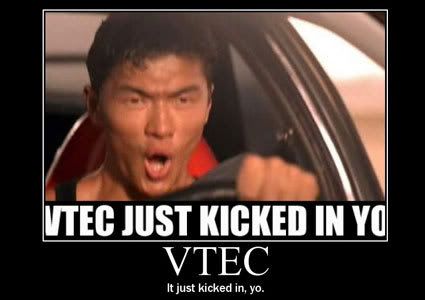
why does our vtec suck?


Thread Starter
Intermediate
Joined: Dec 2008
Posts: 38
Likes: 0
From: Marion, VA
why does our vtec suck?
ok here is a dumb ? im sure but i would like to know i have friends with civic's and teg's and ludes when there vtec kicks in you can hear it you can feel it but it may just be mine i dont know but when my vtec kicks in you can barely hear but you cant feel it????? i dont know i may be nuts and if it is just us cl guys then what can be done to make it better???? a new cam??? if so what cam and where can you find it????
call me a noob!! i am but i have ?'s
call me a noob!! i am but i have ?'s
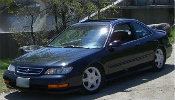
CL in lawnmower status

Joined: Mar 2008
Posts: 2,600
Likes: 5
From: Canada
from what i've heard it's cuz our engines are single overhead cams while some of those other imports are dual overhead cams and that is why you would hear/feel it more, atleast that's what i've heard about the f22s, someone please correct me if i am wrong

Thread Starter
Intermediate
Joined: Dec 2008
Posts: 38
Likes: 0
From: Marion, VA
yeah i know about the wight i had an 03 sunfire that had 140hp and 150tq and it only wighted about 2300lbs and that lil piece of crap was fast as hell up to 108mph and plus i had about $23,000 in it

worki o w projct..
Joined: Apr 2006
Posts: 199
Likes: 1
From: Bay Area, Cali
23k  .... but yeah i feel you on that vtec thing.. when i ride in my friends prelude i definitely feel VTACCCC kick in.. i don't feel much of a punch even in the 3.0 then again our cars are heavy compared to tegs and civics
.... but yeah i feel you on that vtec thing.. when i ride in my friends prelude i definitely feel VTACCCC kick in.. i don't feel much of a punch even in the 3.0 then again our cars are heavy compared to tegs and civics
Trending Topics


where is....
Joined: Feb 2006
Posts: 8,376
Likes: 1
From: palmyra,pa
like everyone said its because of it being SOHC and it has economic vtec, even the new DOHC i-vtecs are different from economic and race inspired.
the k24a2, k20z1,k20a2 all have 3 lobes for i-vtec which makes it pop while my k24z3 only has 2 vtec lobes, so it doesn't have an aggressive vtec crossover.
the k24a2, k20z1,k20a2 all have 3 lobes for i-vtec which makes it pop while my k24z3 only has 2 vtec lobes, so it doesn't have an aggressive vtec crossover.


hmm...
Joined: Mar 2007
Posts: 389
Likes: 0
From: St. Louis
like everyone said its because of it being SOHC and it has economic vtec, even the new DOHC i-vtecs are different from economic and race inspired.
the k24a2, k20z1,k20a2 all have 3 lobes for i-vtec which makes it pop while my k24z3 only has 2 vtec lobes, so it doesn't have an aggressive vtec crossover.
the k24a2, k20z1,k20a2 all have 3 lobes for i-vtec which makes it pop while my k24z3 only has 2 vtec lobes, so it doesn't have an aggressive vtec crossover.

(I do not take credit for the explanation provided below. Should be from Wiki)
SOHC VTEC
As popularity and marketing value of the VTEC system grew, Honda applied the system to SOHC (Single Over Head Cam) engines, which shares a common camshaft for both intake and exhaust valves. The trade-off was that Honda's SOHC engines only benefitted from the VTEC mechanism on the intake valves. This is because VTEC requires a third center rocker arm and cam lobe (for each intake and exhaust side), and in the SOHC engine, the spark plugs are situated between the two exhaust rocker arms, leaving no room for the VTEC rocker arm. Additionally, the center lobe on the camshaft can only be utilized by either the intake or the exhaust, limiting the VTEC feature to one side.
However, beginning with the J37A4 3.7L SOHC V6 engine introduced on all 2009 Acura TL SH-AWD models, SOHC VTEC was incorporated for use with intake and exhaust valves. The intake and exhaust rocker shafts contain primary and secondary intake and exhaust rocker arms, respectively. The primary rocker arm contains the VTEC switching piston, while the secondary rocker arm contains the return spring. The term "primary" does not refer to which rocker arm forces the valve down during low-RPM engine operation. Rather, it refers to the rocker arm which contains the VTEC switching piston and receives oil from the rocker shaft.
The primary exhaust rocker arm contacts a low-profile camshaft lobe during low-RPM engine operation. Once VTEC engagement occurs, the oil pressure flowing from the exhaust rocker shaft into the primary exhaust rocker arm forces the VTEC switching piston into the secondary exhaust rocker arm, thus locking both exhaust rocker arms together. The high-profile camshaft lobe which normally contacts the secondary exhaust rocker arm alone during low-RPM engine operation is able to move both exhaust rocker arms together which are locked as a unit.
The secondary intake rocker arm contacts a low-profile camshaft lobe during low-RPM engine operation. Once VTEC engagement occurs, the oil pressure flowing from the intake rocker shaft into the primary intake rocker arm forces the VTEC switching piston into the secondary exhaust rocker arm, thus locking both intake rocker arms together. The high-profile camshaft lobe which normally contacts the primary intake rocker alone during low-RPM engine operation is able to move both intake rocker arms together which are locked as a unit.
The problem which plagued previous SOHC VTEC systems from incorporating VTEC for both the intake and exhaust valves has been resolved on the J37A4 by a novel design of the intake rocker arm. Each exhaust valve on the J37A4 corresponds to one primary and one secondary exhaust rocker arm. Therefore, there are a total of twelve primary exhaust rocker arms and twelve secondary exhaust rocker arms.
However, each secondary intake rocker arm is shaped similar to a "Y" which allows it to contact two intake valves at once. One primary intake rocker arm corresponds to each secondary intake rocker arm. As a result of this design, there are only six primary intake rocker arms and six secondary intake rocker arms.
[edit] SOHC VTEC-E
Honda's next version of VTEC, VTEC-E, was used in a slightly different way; instead of optimising performance at high RPM, it was used to increase efficiency at low RPM. At low RPM, one of the two intake valves is only allowed to open a very small amount, increasing the fuel/air atomization in the cylinder and thus allowing a leaner mixture to be used. As the engine's speed increases, both valves are needed to supply sufficient mixture. A sliding pin, which is pressured by oil, as in the regular VTEC, is used to connect both valves together and allows the full opening of the second valve.
SOHC VTEC
As popularity and marketing value of the VTEC system grew, Honda applied the system to SOHC (Single Over Head Cam) engines, which shares a common camshaft for both intake and exhaust valves. The trade-off was that Honda's SOHC engines only benefitted from the VTEC mechanism on the intake valves. This is because VTEC requires a third center rocker arm and cam lobe (for each intake and exhaust side), and in the SOHC engine, the spark plugs are situated between the two exhaust rocker arms, leaving no room for the VTEC rocker arm. Additionally, the center lobe on the camshaft can only be utilized by either the intake or the exhaust, limiting the VTEC feature to one side.
However, beginning with the J37A4 3.7L SOHC V6 engine introduced on all 2009 Acura TL SH-AWD models, SOHC VTEC was incorporated for use with intake and exhaust valves. The intake and exhaust rocker shafts contain primary and secondary intake and exhaust rocker arms, respectively. The primary rocker arm contains the VTEC switching piston, while the secondary rocker arm contains the return spring. The term "primary" does not refer to which rocker arm forces the valve down during low-RPM engine operation. Rather, it refers to the rocker arm which contains the VTEC switching piston and receives oil from the rocker shaft.
The primary exhaust rocker arm contacts a low-profile camshaft lobe during low-RPM engine operation. Once VTEC engagement occurs, the oil pressure flowing from the exhaust rocker shaft into the primary exhaust rocker arm forces the VTEC switching piston into the secondary exhaust rocker arm, thus locking both exhaust rocker arms together. The high-profile camshaft lobe which normally contacts the secondary exhaust rocker arm alone during low-RPM engine operation is able to move both exhaust rocker arms together which are locked as a unit.
The secondary intake rocker arm contacts a low-profile camshaft lobe during low-RPM engine operation. Once VTEC engagement occurs, the oil pressure flowing from the intake rocker shaft into the primary intake rocker arm forces the VTEC switching piston into the secondary exhaust rocker arm, thus locking both intake rocker arms together. The high-profile camshaft lobe which normally contacts the primary intake rocker alone during low-RPM engine operation is able to move both intake rocker arms together which are locked as a unit.
The problem which plagued previous SOHC VTEC systems from incorporating VTEC for both the intake and exhaust valves has been resolved on the J37A4 by a novel design of the intake rocker arm. Each exhaust valve on the J37A4 corresponds to one primary and one secondary exhaust rocker arm. Therefore, there are a total of twelve primary exhaust rocker arms and twelve secondary exhaust rocker arms.
However, each secondary intake rocker arm is shaped similar to a "Y" which allows it to contact two intake valves at once. One primary intake rocker arm corresponds to each secondary intake rocker arm. As a result of this design, there are only six primary intake rocker arms and six secondary intake rocker arms.
[edit] SOHC VTEC-E
Honda's next version of VTEC, VTEC-E, was used in a slightly different way; instead of optimising performance at high RPM, it was used to increase efficiency at low RPM. At low RPM, one of the two intake valves is only allowed to open a very small amount, increasing the fuel/air atomization in the cylinder and thus allowing a leaner mixture to be used. As the engine's speed increases, both valves are needed to supply sufficient mixture. A sliding pin, which is pressured by oil, as in the regular VTEC, is used to connect both valves together and allows the full opening of the second valve.
Thread Starter
Intermediate
Joined: Dec 2008
Posts: 38
Likes: 0
From: Marion, VA
can you really put a h22 head on the f23 block cool what all is needed new ecu? is it as easy as just buying any h22 head and putting it on or is there more to it? and what would the hp and tq be ? does anyone have this done on theres???

Three Wheelin'
Joined: Feb 2008
Posts: 1,414
Likes: 2
From: east windsor new jersey
some people say its hard some people say its easy. theres like 2 or 3 people on here that now about it i think. you can go on b20vtec.com too theyre good with all that jazz. i heard its mad torquey ( i know thats not a word lol) plus our blocks are boost friendly too.

Drifting
Joined: Jul 2008
Posts: 2,386
Likes: 42
From: PK NY
huh, I hear mine just fine with just the intake. Love the growl, but at the same time hate having it kick in during "normal driving". It is nice when to hear when you want someone to know you were pissed they were driving so slow or like an ass. immature I know, but it does sound angry.






6spder
Joined: Jul 2006
Posts: 1,398
Likes: 1
From: North Port, FL/Chicago, IL
huh, I hear mine just fine with just the intake. Love the growl, but at the same time hate having it kick in during "normal driving". It is nice when to hear when you want someone to know you were pissed they were driving so slow or like an ass. immature I know, but it does sound angry.


Joined: Jan 2005
Posts: 92,789
Likes: 4,698
From: ShitsBurgh

Mom why is there two?
Joined: Nov 2006
Posts: 773
Likes: 6
From: Holland, MI
vtech is good. You want to feel it in a soch motor just send your cam out and have a custom regrind and have the lobes made bigger you will feel it then. Did it on a f23 accord it runs real good now.
Drifting
Joined: Jul 2008
Posts: 2,386
Likes: 42
From: PK NY
actually......yes. not in traffic, but I dont exactly drive on busy roads.I'm kind of in the middle of no where. you have the 4cyl, I have the 6, could be the difference.
Last edited by Myxomatosis; Jan 5, 2009 at 09:09 AM.

Mom why is there two?
Joined: Nov 2006
Posts: 773
Likes: 6
From: Holland, MI

 is amazing.
Dang man, you know your shit.
About technology!

BTW, your avatar is hillarious!

Burning Brakes
Joined: May 2003
Posts: 804
Likes: 1
From: Missing In Acton, ON Canada
Joined: Jan 2005
Posts: 92,789
Likes: 4,698
From: ShitsBurgh
http://www.webcamshafts.com/
But like mentioned, you won't even notice a difference with just a machined cam, it compliments other engine mods
But like mentioned, you won't even notice a difference with just a machined cam, it compliments other engine mods