


OMG!!! Piston to Valve contact issues w/ pics


DTC P0300: Random Misfire and Any Combination of the Following:
DTC P0301: No.1 Cylinder Misfire Detected
DTC P0302: No.2 Cylinder Misfire Detected
DTC P0303: No.3 Cylinder Misfire Detected
DTC P0304: No.4 Cylinder Misfire Detected
DTC P0305: No.5 Cylinder Misfire Detected
DTC P0306: No.6 Cylinder Misfire Detected
Special Tools Required
Pressure gauge adapter 07NAJ-P07010A
A/T low pressure gauge w/panel 07406-0070300
A/T pressure hose 07406-0020201
A/T pressure hose, 2,210 mm 07MAJ-PY4011A
A/T pressure adapter 07MAJ-PY40120
Oil pressure hose 07ZAJ-55A0200
NOTE:
If the misfire is frequent enough to trigger detection of increased emissions during two consecutive driving cycles, the MIL will come on, and DTC P0300 (and some combination of P0301 through P0306) will be stored.
If the misfire is frequent enough to damage the catalyst, the MIL will blink whenever the misfire occurs, and DTC P0300 (and some combination of P0301 through P0306) will be stored. When the misfire stops, the MIL will remain on.
Troubleshoot the following DTCs first, if any of them were stored along with the random misfire DTC(s):
P0107, P0108, P1128, P1129: Manifold absolute pressure (MAP) sensor
P0171, P0172: Fuel system
P0335, P0339, P0385, P0389: Crankshaft position (CKP) sensor A/B
P0506, P0507: Idle control system P0340, P0344: Camshaft position (CMP) sensor
P0401, P0404, P0406, P2413: Exhaust Gas Recirculation (EGR) system
Note this freeze data:
Engine speed
Vehicle speed
Throttle position
CLV
Clear the DTC with the HDS.
Start the engine with no load (in Park or neutral), then let it idle.
Monitor the OBD STATUS for DTC P0301, P0302, P0303, P0304, P0305, or P0306 in the DTCs MENU with the HDS. Does the screen indicate FAILED? YES - Go to step 9. NO - If the screen indicates PASSED, go to steps. If the screen indicates EXECUTING, keep driving until a result comes on. If the screen indicates OUT OF CONDITION, wait for several minutes, then recheck.
Check the CYL1 MISFIRE, CYL2 MISFIRE, CYL3 MISFIRE, CYL4 MISFIRE, CYL 5 MISFIRE, and/or CYL6 MISFIRE in the DATA LIST for 10 minutes with the HDS. Does CYL1 MISFIRE, CYL2 MISFIRE, CYL3 MISFIRE, CYL4 MISFIRE, CYL5 MISFIRE, and/or CYL6 MISFIRE show misfire counts? YES - Go to step 9. NO - Go to step 6.
Test-drive the vehicle for several minutes in the range of the recorded freeze data.
Monitor the OBD STATUS for DTC P0301, P0302, P0303, P0304, P0305, or P0306 in the DTCs MENU with the HDS. Does the screen indicate FAILED? YES - Go to step 9. NO - If the screen indicates PASSED, go to step 8. If the screen indicates EXECUTING, keep driving until a result comes on. If the screen indicates OUT OF CONDITION, go to step 6 and recheck.
Check the CYL1 MISFIRE, CYL2 MISFIRE, CYL3 MISFIRE, CYL4 MISFIRE, CYL5 MISFIRE, and/or CYL6 MISFIRE in the DATA LIST for 10 minutes with the HDS. Does CYL7 MISFIRE, CYL2 MISFIRE, CYL3 MISFIRE, CYL4 MISFIRE, CYL5 MISFIRE, and/or CYL6 MISFIRE show misfire counts? YES - Go to step 9. NO - Intermittent failure, system is OK at this time.
Turn the ignition switch OFF.
Check the fuel quality. Is the quality good? YES - Go to step 11. NO - Drain the tank, and fill it with a known-good fuel, then go to step 20.
Inspect the spark plugs. If the spark plugs are fouled or worn, replace them.
Test-drive the vehicle for several minutes in the range of the recorded freeze data.
Check the CYL1 MISFIRE, CYL2 MISFIRE, CYL3 MISFIRE, CYL4 MISFIRE, CYL5 MISFIRE, and/or CYL6 MISFIRE in the DATA LIST for 10 minutes with the HDS. Does CYL1 MISFIRE, CYL2 MISFIRE, CYL3 MISFIRE, CYL4 MISFIRE, CYL5 MISFIRE, and/or CYL6 MISFIRE show misfire counts? YES - Go to step 14. NO - Go to step 20.
Check the fuel pressure. Is the fuel pressure OK? YES - Go to step 15. NO -
If the pressure is too high, replace the fuel pressure regulator then go to step 20.
If the pressure is too low, check the fuel pump, the fuel feed pipe, and the fuel filter. If they are OK, replace the fuel pressure regulator, then go to step 20.
Turn the ignition switch OFF.
Remove the VTEC oil pressure switch (A), and install the special tools as shown, then install the VTEC oil pressure switch (A) in the pressure gauge adapter (B). NOTE: Install the switch in the reverse order of removal with a new O-ring.
Reconnect the VTEC oil pressure switch 2P connector.
Start the engine. Hold the engine at 3,000 rpm with no load (in Park or neutral) until the radiator fan comes on.
Check the oil pressure at engine speeds of 1,000 and 2,000 rpm . Keep the measuring time as short as possible (less than 1 minute ) because the engine is running with no load. Is the oil pressure below 49 kPa (0.5 kgf/sq.cm, 7 psi) ? YES - Check for air in the fuel line, then go to step 20. NO - Inspect the VTEC system, then go to step 20.
Turn the ignition switch ON (II).
Reset the ECM/PCM with the HDS.
Clear the CKP pattern with the HDS.
Do the ECM/PCM idle learn procedure.
Do the CKP pattern learn procedure.
Test-drive the vehicle for several minutes in the range of the recorded freeze data.
Check for Temporary DTCs or DTCs with the HDS. Are any Temporary DTCs or DTCs indicated? YES - If DTC P0301, P0302, P0303, P0304, P0305, or P0306 are indicated, check for poor connections or loose terminals at the ignition coil, the injector, and the PCM, then go to troubleshooting DTC P0301, P0302, P0303, P0304, P0305 or P0306. If any other Temporary DTCs or DTCs are indicated, go to the indicated DTC's troubleshooting. NO - Go to step 27.
Monitor the OBD STATUS for DTC P0301, P0302, P0303, P0304, P0305, or P0306 in the DTCs MENU with the HDS. Does the screen indicate PASSED? YES - Troubleshooting is complete. NO - If the screen indicates FAILED, go to step 1 and recheck. If the screen indicates EXECUTING, keep driving until a result comes on. If the screen indicates OUT OF CONDITION, go to step 25 and recheck.
DTC P0301: No.1 Cylinder Misfire Detected
DTC P0302: No.2 Cylinder Misfire Detected
DTC P0303: No.3 Cylinder Misfire Detected
DTC P0304: No.4 Cylinder Misfire Detected
DTC P0305: No.5 Cylinder Misfire Detected
DTC P0306: No.6 Cylinder Misfire Detected
Special Tools Required
Pressure gauge adapter 07NAJ-P07010A
A/T low pressure gauge w/panel 07406-0070300
A/T pressure hose 07406-0020201
A/T pressure hose, 2,210 mm 07MAJ-PY4011A
A/T pressure adapter 07MAJ-PY40120
Oil pressure hose 07ZAJ-55A0200
NOTE:
If the misfire is frequent enough to trigger detection of increased emissions during two consecutive driving cycles, the MIL will come on, and DTC P0300 (and some combination of P0301 through P0306) will be stored.
If the misfire is frequent enough to damage the catalyst, the MIL will blink whenever the misfire occurs, and DTC P0300 (and some combination of P0301 through P0306) will be stored. When the misfire stops, the MIL will remain on.
Troubleshoot the following DTCs first, if any of them were stored along with the random misfire DTC(s):
P0107, P0108, P1128, P1129: Manifold absolute pressure (MAP) sensor
P0171, P0172: Fuel system
P0335, P0339, P0385, P0389: Crankshaft position (CKP) sensor A/B
P0506, P0507: Idle control system P0340, P0344: Camshaft position (CMP) sensor
P0401, P0404, P0406, P2413: Exhaust Gas Recirculation (EGR) system
Note this freeze data:
Engine speed
Vehicle speed
Throttle position
CLV
Clear the DTC with the HDS.
Start the engine with no load (in Park or neutral), then let it idle.
Monitor the OBD STATUS for DTC P0301, P0302, P0303, P0304, P0305, or P0306 in the DTCs MENU with the HDS. Does the screen indicate FAILED? YES - Go to step 9. NO - If the screen indicates PASSED, go to steps. If the screen indicates EXECUTING, keep driving until a result comes on. If the screen indicates OUT OF CONDITION, wait for several minutes, then recheck.
Check the CYL1 MISFIRE, CYL2 MISFIRE, CYL3 MISFIRE, CYL4 MISFIRE, CYL 5 MISFIRE, and/or CYL6 MISFIRE in the DATA LIST for 10 minutes with the HDS. Does CYL1 MISFIRE, CYL2 MISFIRE, CYL3 MISFIRE, CYL4 MISFIRE, CYL5 MISFIRE, and/or CYL6 MISFIRE show misfire counts? YES - Go to step 9. NO - Go to step 6.
Test-drive the vehicle for several minutes in the range of the recorded freeze data.
Monitor the OBD STATUS for DTC P0301, P0302, P0303, P0304, P0305, or P0306 in the DTCs MENU with the HDS. Does the screen indicate FAILED? YES - Go to step 9. NO - If the screen indicates PASSED, go to step 8. If the screen indicates EXECUTING, keep driving until a result comes on. If the screen indicates OUT OF CONDITION, go to step 6 and recheck.
Check the CYL1 MISFIRE, CYL2 MISFIRE, CYL3 MISFIRE, CYL4 MISFIRE, CYL5 MISFIRE, and/or CYL6 MISFIRE in the DATA LIST for 10 minutes with the HDS. Does CYL7 MISFIRE, CYL2 MISFIRE, CYL3 MISFIRE, CYL4 MISFIRE, CYL5 MISFIRE, and/or CYL6 MISFIRE show misfire counts? YES - Go to step 9. NO - Intermittent failure, system is OK at this time.
Turn the ignition switch OFF.
Check the fuel quality. Is the quality good? YES - Go to step 11. NO - Drain the tank, and fill it with a known-good fuel, then go to step 20.
Inspect the spark plugs. If the spark plugs are fouled or worn, replace them.
Test-drive the vehicle for several minutes in the range of the recorded freeze data.
Check the CYL1 MISFIRE, CYL2 MISFIRE, CYL3 MISFIRE, CYL4 MISFIRE, CYL5 MISFIRE, and/or CYL6 MISFIRE in the DATA LIST for 10 minutes with the HDS. Does CYL1 MISFIRE, CYL2 MISFIRE, CYL3 MISFIRE, CYL4 MISFIRE, CYL5 MISFIRE, and/or CYL6 MISFIRE show misfire counts? YES - Go to step 14. NO - Go to step 20.
Check the fuel pressure. Is the fuel pressure OK? YES - Go to step 15. NO -
If the pressure is too high, replace the fuel pressure regulator then go to step 20.
If the pressure is too low, check the fuel pump, the fuel feed pipe, and the fuel filter. If they are OK, replace the fuel pressure regulator, then go to step 20.
Turn the ignition switch OFF.
Remove the VTEC oil pressure switch (A), and install the special tools as shown, then install the VTEC oil pressure switch (A) in the pressure gauge adapter (B). NOTE: Install the switch in the reverse order of removal with a new O-ring.
Reconnect the VTEC oil pressure switch 2P connector.
Start the engine. Hold the engine at 3,000 rpm with no load (in Park or neutral) until the radiator fan comes on.
Check the oil pressure at engine speeds of 1,000 and 2,000 rpm . Keep the measuring time as short as possible (less than 1 minute ) because the engine is running with no load. Is the oil pressure below 49 kPa (0.5 kgf/sq.cm, 7 psi) ? YES - Check for air in the fuel line, then go to step 20. NO - Inspect the VTEC system, then go to step 20.
Turn the ignition switch ON (II).
Reset the ECM/PCM with the HDS.
Clear the CKP pattern with the HDS.
Do the ECM/PCM idle learn procedure.
Do the CKP pattern learn procedure.
Test-drive the vehicle for several minutes in the range of the recorded freeze data.
Check for Temporary DTCs or DTCs with the HDS. Are any Temporary DTCs or DTCs indicated? YES - If DTC P0301, P0302, P0303, P0304, P0305, or P0306 are indicated, check for poor connections or loose terminals at the ignition coil, the injector, and the PCM, then go to troubleshooting DTC P0301, P0302, P0303, P0304, P0305 or P0306. If any other Temporary DTCs or DTCs are indicated, go to the indicated DTC's troubleshooting. NO - Go to step 27.
Monitor the OBD STATUS for DTC P0301, P0302, P0303, P0304, P0305, or P0306 in the DTCs MENU with the HDS. Does the screen indicate PASSED? YES - Troubleshooting is complete. NO - If the screen indicates FAILED, go to step 1 and recheck. If the screen indicates EXECUTING, keep driving until a result comes on. If the screen indicates OUT OF CONDITION, go to step 25 and recheck.
As we spoke on the phone if 2 cylinder next to each other have the same compression test it may be a bad head gasket. You could start with a valve adjustment... however you do have an EGR code. A bad EGR can sure cause misfires, If I had to take a guess I would figure out what's going on with the EGR. It may not function correctly.


The EGR valve should remain CLOSED when the engine is COLD and IDLING. When the engine is warm and is accelerating or working hard under a load, the EGR valve should OPEN. With vacuum-operated EGR valves, intake vacuum pulls the valve open when conditions are right. Some EGR valves also sense exhaust backpressure and do not open until backpressure reaches a certain level. On others, the EGR valve is electronic and is controlled by the PCM. No vacuum is used to operate the valve.
When the EGR valve opens, it allows a small amount of exhaust gas to be siphoned back into the intake manifold. This dilutes the air/fuel mixture, cools combustion and reduces the formation of oxides of nitrogen (NOx). If the EGR valve fails to close when EGR is not required, or if it leaks because of carbon buildup on the valve stem or valve seat, exhaust will be sucked into the intake manifold all the time creating a lean fuel mixture. This will cause lean misfire and set a random misfire code. Cleaning the EGR valve seat and stem may eliminate the sticking problem. If this fails, replace the EGR valve.
On some engines, this kind of problem may not appear until the engine warms up. The EGR valve may remain closed while the engine is cold, but it starts to leak when the engine is warm. This may be due to a weak spring inside the EGR valve. The fix here is to replace the EGR valve.
The operation of the EGR valve can be checked several ways. One is to observe the valve stem (if possible) while goosing the throttle. No movement would indicate a problem with the EGR valve or its vacuum supply. Another is to apply vacuum directly to the EGR valve with a hand pump with the engine running at fast idle. This should pull open the EGR valve and cause a momentary drop in rpm. A third method is to replace the EGR valve and see if that cures the random misfire problem.
When the EGR valve opens, it allows a small amount of exhaust gas to be siphoned back into the intake manifold. This dilutes the air/fuel mixture, cools combustion and reduces the formation of oxides of nitrogen (NOx). If the EGR valve fails to close when EGR is not required, or if it leaks because of carbon buildup on the valve stem or valve seat, exhaust will be sucked into the intake manifold all the time creating a lean fuel mixture. This will cause lean misfire and set a random misfire code. Cleaning the EGR valve seat and stem may eliminate the sticking problem. If this fails, replace the EGR valve.
On some engines, this kind of problem may not appear until the engine warms up. The EGR valve may remain closed while the engine is cold, but it starts to leak when the engine is warm. This may be due to a weak spring inside the EGR valve. The fix here is to replace the EGR valve.
The operation of the EGR valve can be checked several ways. One is to observe the valve stem (if possible) while goosing the throttle. No movement would indicate a problem with the EGR valve or its vacuum supply. Another is to apply vacuum directly to the EGR valve with a hand pump with the engine running at fast idle. This should pull open the EGR valve and cause a momentary drop in rpm. A third method is to replace the EGR valve and see if that cures the random misfire problem.
Not with our cars just just an idea on compression tests
Remove the spark plugs and use a compression tester to check compression. A cranking compression test is done with the ignition disabled and the throttle held open. On most engines, cranking compression should be 140 to 160 pounds per square inch (PSI) or higher in every cylinder. If low, the cylinder may have a burned exhaust valve or leaky head gasket, or weak or broken valve spring. A "wet" compression test can then be performed to determine if the problem is the rings, or the valves or head gasket. Squirt a few drops of oil into the cylinder through the spark plug hole to temporarily seal the rings. Repeat the cranking compression test. If the readings are now higher, the problem is worn rings. If there is no change in the readings, the engine has a valve problem or a leaking head gasket.
Possible causes of low compression include leaking head gasket, burned exhaust valve, bent intake or exhaust valve, weak or broken valve spring, or worn camshaft lobes.
Remove the spark plugs and use a compression tester to check compression. A cranking compression test is done with the ignition disabled and the throttle held open. On most engines, cranking compression should be 140 to 160 pounds per square inch (PSI) or higher in every cylinder. If low, the cylinder may have a burned exhaust valve or leaky head gasket, or weak or broken valve spring. A "wet" compression test can then be performed to determine if the problem is the rings, or the valves or head gasket. Squirt a few drops of oil into the cylinder through the spark plug hole to temporarily seal the rings. Repeat the cranking compression test. If the readings are now higher, the problem is worn rings. If there is no change in the readings, the engine has a valve problem or a leaking head gasket.
Possible causes of low compression include leaking head gasket, burned exhaust valve, bent intake or exhaust valve, weak or broken valve spring, or worn camshaft lobes.
Thread Starter
Joined: Oct 2008
Posts: 2,596
Likes: 187
From: Rahway, NJ
edit... just got off the phone with opel. ima put everything back together and check if the gasket for the EGR that i put in early this morning is working and clears my 401 code. then tomorrow gonna meet up with him and recheck and check more things. Thanks to everyone especially opel since im texting the $hit out of you on a friday night. lol
Thread Starter
Joined: Oct 2008
Posts: 2,596
Likes: 187
From: Rahway, NJ
i should've read opel's fine print.
DO NOT START CAR INDOORS!! The whole garage filled with smoke. In the video i had to stop recording and turn the car off so that the car coming can see thru the smoke. "HOLY SMOKE" LMAO
oh, and Opel that was your text message ringing on the video after my "holy smoke" message.
http://www.youtube.com/watch?v=h-U0ch360TY
DO NOT START CAR INDOORS!! The whole garage filled with smoke. In the video i had to stop recording and turn the car off so that the car coming can see thru the smoke. "HOLY SMOKE" LMAO
oh, and Opel that was your text message ringing on the video after my "holy smoke" message.
http://www.youtube.com/watch?v=h-U0ch360TY
Thread Starter
Joined: Oct 2008
Posts: 2,596
Likes: 187
From: Rahway, NJ
94 DC4 RS LSV/Turbo
iTrader: (1)
Joined: Jul 2007
Posts: 11,734
Likes: 12
From: New York City | Stuck in Traffic
Thread Starter
Joined: Oct 2008
Posts: 2,596
Likes: 187
From: Rahway, NJ
Update:
well i met up with opel ( cool dude ) and he took a closer look at my problems. we replaced all my plugs and adjusted my front valves. cyl4 was in the spec window but we still adjusted to exact .008 and .011. cyl5 and cyl6 were out of specs by .004. redid a compression test but did not conclude anything but that my gauge might be out of wack since the last time i did it with the oil in the plugs, the needle wanted to go pass 300 psi. plus the engine was cold. No CEL at idle for over 1/2 hour. We went to have lunch and let the car cool down. as soon as i turned it on, BANG CEL!!! we checked the code and now the codes are just 300,302,304,305 and 306. no EGR code as of yet. we cleared the codes and i drove 25 miles no problems all highway. got a cel again parking my car. this was all saturday.
Now sunday, i've been riding around alot and see my blinking CEL at 2 of 5 stoplights at idle speed. gonna test drive some more and get my codes checked to see if the egr comes back or if i can pinpoint any other conclusion or suspect.
timing??? bent valve?? valve not seated right in the chamber?? all the help i can please.
warranty can wait til i find a conclusion. working on my OWN car FTW!!!!!
when i need parts then, warranty will be the option.

well i met up with opel ( cool dude ) and he took a closer look at my problems. we replaced all my plugs and adjusted my front valves. cyl4 was in the spec window but we still adjusted to exact .008 and .011. cyl5 and cyl6 were out of specs by .004. redid a compression test but did not conclude anything but that my gauge might be out of wack since the last time i did it with the oil in the plugs, the needle wanted to go pass 300 psi. plus the engine was cold. No CEL at idle for over 1/2 hour. We went to have lunch and let the car cool down. as soon as i turned it on, BANG CEL!!! we checked the code and now the codes are just 300,302,304,305 and 306. no EGR code as of yet. we cleared the codes and i drove 25 miles no problems all highway. got a cel again parking my car. this was all saturday.
Now sunday, i've been riding around alot and see my blinking CEL at 2 of 5 stoplights at idle speed. gonna test drive some more and get my codes checked to see if the egr comes back or if i can pinpoint any other conclusion or suspect.
timing??? bent valve?? valve not seated right in the chamber?? all the help i can please.
warranty can wait til i find a conclusion. working on my OWN car FTW!!!!!
when i need parts then, warranty will be the option.
Last edited by InFaMouSLink; Nov 22, 2009 at 11:01 PM.
Did you adjust the rear valves? or just the front head only? If not you should really adjust them all when your doing this but it won't solve your running issuse. I swear there is a tsb on this misfire condition. I'll have to look it up.
Found the TSB but doesn't really deal with your issuses.
http://www.in.honda.com/Rjanisis/pubs/SB/B03-033.PDF
http://www.in.honda.com/Rjanisis/pubs/SB/B03-033.PDF
Thread Starter
Joined: Oct 2008
Posts: 2,596
Likes: 187
From: Rahway, NJ
i plan on doing the rear this week. just read over the TSB and yea doesn't apply.
as for bent/burnt valves - could be highly more likely than other things. is these something i can do to check without removing heads?
and 1 thing i should add, THE CAR IS RUNNING FINE!! no blurps no shaking, NOTHING!
since my cel was blinking alot this weekend i will check my codes later and see what it comes up with now.
My main goal is to figure out the culprit of the misfires codes.
as for bent/burnt valves - could be highly more likely than other things. is these something i can do to check without removing heads?
and 1 thing i should add, THE CAR IS RUNNING FINE!! no blurps no shaking, NOTHING!
since my cel was blinking alot this weekend i will check my codes later and see what it comes up with now.
My main goal is to figure out the culprit of the misfires codes.
i plan on doing the rear this week. just read over the TSB and yea doesn't apply.
as for bent/burnt valves - could be highly more likely than other things. is these something i can do to check without removing heads?
and 1 thing i should add, THE CAR IS RUNNING FINE!! no blurps no shaking, NOTHING!
since my cel was blinking alot this weekend i will check my codes later and see what it comes up with now.
My main goal is to figure out the culprit of the misfires codes.
as for bent/burnt valves - could be highly more likely than other things. is these something i can do to check without removing heads?
and 1 thing i should add, THE CAR IS RUNNING FINE!! no blurps no shaking, NOTHING!
since my cel was blinking alot this weekend i will check my codes later and see what it comes up with now.
My main goal is to figure out the culprit of the misfires codes.
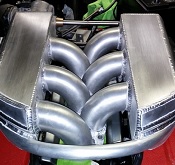
Let me know if you are interested in seeing the pics.
Last edited by gerzand; Nov 23, 2009 at 11:52 AM.
I don't think he's dealing with Burnt valves. But, give this a shot.. I learned this in school so don't hold me 100% on this. If you suspect burnt valves to the point they cause a pretty good misfire hold a rag in your palm, place your palm with the rag still in it right infront of your muffler and if the rag gets pulled into the muffler then comes out again you have burnt valves. The exhaust will suck in as well as push out lol.
Three Wheelin'
Joined: Jun 2009
Posts: 1,360
Likes: 47
From: NYC
I don't think there's burn valves. Diagnosing misfires is a pain in the ass. There's too many causes, some of the which have kinda been covered.
Coils looked good
Plugs were installed new
I can't see that there could be any broken pistons/bad rings (stuck or whatnot), because there isn't enough blow-back to indicate such, and I know for a fact if that was the case, you'll see steam/smoke blowing outta the valve covers.
The EGR, even though there is no codes, it doesn't mean its working properly, (Al, Ill try and find my spare EGR just so you can't try it)
Compression is low on 5&6 but not too low, which is why the misfires aren't so drastic to begin with and not always there. At the lack of sufficient compression on 2 cylinders, you'll really feel a very sluggish low end, coming off idle (you don't have that, at least when I drove it) and you'll really feel a lot of vibration from the motor, and CEL won't stop blinking at every red light you ever stop.
It's not your timing either (i guess you're referring to timing belt), 1-tooth off and you won't miss hearing it, I promise you this. Anything more than 1 tooth off, especially 3 or more, I won't even start.
Another thing that could be the issue is, the head is warped if the motor ever over heated. This may have happened in the past, and all it really takes is the thermostat to get stuck shut for a few mins, and boom. Now it's gotten worse, and compression could be leaking through the gasket. It would be nice if this was the issue, for the leak to go into the coolant side. It would blow out half the antifreeze from built up pressure in the cooling system, but at least you would know.
A reason I doubt this is the fact that, if it ever over heated, I'd expect the rear head to warp first, since it runs much hotter back there.
I have to lean towards bent/bad seated valves.
The only way to see this is pull the head (if this happens, both heads gotta come off)
A meachine shop would do a vaccuum test on the valves, and see. If anything's not sitting right, they can be cut to seat perfect. If anything's bent, they can be changed.
Another reason I lean towards this is (what you said to me after I asked you, and you laughed lol) which would explain why only 2 cylinders were effected, since it wasn't so exessive, and may have been caught on time before it bent all the exhaust valves
In addition to what 04WDPSeDaN said:
That would also indicate bent valves. Burnt valves obvioulsy won't sealt/seat right, which would cause a leak. When the piston travel's downwards at intake stroke, if exhaust valve's don't seal, sucktion would be created in the exhaust. This however has to be extreme, to where all exhaust valves on all cylinders don't seal right, such as when over reving and causing all your exhaust valves to severy bend, that would cause some pretty good sucktion in the exhaust. What makes matters worse when exhaust valves are bent, is the fact that at valve overlap they will be even more outta whack, allowing even more exhaust gasses back into the combustion chamber which would lean out the mixture even more, which starts with knocking. This is bad if left untreated and pushed to its limits lol
By the way, his vaccuum was about 23 at idle, at full warm up
Which is good on a healthy 3G
Coils looked good
Plugs were installed new
I can't see that there could be any broken pistons/bad rings (stuck or whatnot), because there isn't enough blow-back to indicate such, and I know for a fact if that was the case, you'll see steam/smoke blowing outta the valve covers.
The EGR, even though there is no codes, it doesn't mean its working properly, (Al, Ill try and find my spare EGR just so you can't try it)
Compression is low on 5&6 but not too low, which is why the misfires aren't so drastic to begin with and not always there. At the lack of sufficient compression on 2 cylinders, you'll really feel a very sluggish low end, coming off idle (you don't have that, at least when I drove it) and you'll really feel a lot of vibration from the motor, and CEL won't stop blinking at every red light you ever stop.
It's not your timing either (i guess you're referring to timing belt), 1-tooth off and you won't miss hearing it, I promise you this. Anything more than 1 tooth off, especially 3 or more, I won't even start.
Another thing that could be the issue is, the head is warped if the motor ever over heated. This may have happened in the past, and all it really takes is the thermostat to get stuck shut for a few mins, and boom. Now it's gotten worse, and compression could be leaking through the gasket. It would be nice if this was the issue, for the leak to go into the coolant side. It would blow out half the antifreeze from built up pressure in the cooling system, but at least you would know.
A reason I doubt this is the fact that, if it ever over heated, I'd expect the rear head to warp first, since it runs much hotter back there.
I have to lean towards bent/bad seated valves.
The only way to see this is pull the head (if this happens, both heads gotta come off)
A meachine shop would do a vaccuum test on the valves, and see. If anything's not sitting right, they can be cut to seat perfect. If anything's bent, they can be changed.
Another reason I lean towards this is (what you said to me after I asked you, and you laughed lol) which would explain why only 2 cylinders were effected, since it wasn't so exessive, and may have been caught on time before it bent all the exhaust valves
In addition to what 04WDPSeDaN said:
I don't think he's dealing with Burnt valves. But, give this a shot.. I learned this in school so don't hold me 100% on this. If you suspect burnt valves to the point they cause a pretty good misfire hold a rag in your palm, place your palm with the rag still in it right infront of your muffler and if the rag gets pulled into the muffler then comes out again you have burnt valves. The exhaust will suck in as well as push out lol.
By the way, his vaccuum was about 23 at idle, at full warm up
Which is good on a healthy 3G
Thread Starter
Joined: Oct 2008
Posts: 2,596
Likes: 187
From: Rahway, NJ
LMAO thanks for the post bro. did you reattach your vacuum gauge yet  LMAO.
LMAO.
if work dont stop me today ima go get my codes read and check if anything new came up. i have Acpimpin 's TL for the week so ima change out my EGR with his and see if anything else comes up. while im there gonna take his coils too for a just in case. after this, it looks like there is nothing I can do except warranty work.
Now i will just need a mechanic
oh i'll also try the rag trick just to check.
LMAO.if work dont stop me today ima go get my codes read and check if anything new came up. i have Acpimpin 's TL for the week so ima change out my EGR with his and see if anything else comes up. while im there gonna take his coils too for a just in case. after this, it looks like there is nothing I can do except warranty work.
Now i will just need a mechanic
oh i'll also try the rag trick just to check.

practicing nihilist
Joined: Dec 2005
Posts: 990
Likes: 5
From: Jax, FL
Infamous,
I battled an EGR issue with my wifes Pilot for almost a year. Since the 3.5 is very similar to our 3.2, maybe give it a shot:
Pilot was throwing all codes associated with misfires on all cylinders and the car misfired when at a constant throttle/speed above around 35 mph. The shuddering got so bad that I had to disconnect the EGR lead. Fixed the misfires but disable AWD with CEL, AWD being something I wanted working for my wife in Florida. I replaced the EGR valve - twice, no luck. Dealership told me it was probably a broken/freyed wire. Even bought the entire engine wiring harness but it was like a 6 hour job.
Then I got the timing belt replaced and the mechanic hooked me up. He said that the EGR port running from beneath the valve back up to manifold was clogged, which creates a pressure diff in the cylinders causing engine to misfire (sic). Talked to some guy on the Pilot Forum and a guy gave told me how he cleans the port.
Disconnect Battery
Remove IM
Fill EGR port with Sea Foam and let sit for couple hours, overnight if needed.
Clean IM cover and ports while it's off.
Remove EGR valve - get a towel for the Sea Foam that will leak
Cut about a 2 ft section of weed eater line and chuck it down tight in a drill motor
Fish line down EGR port and spin drill while working line in and out
If you have a compressor, cover the exit port and shoot air into port
Let it dry, re-install EGR and IM.
This fixed my EGR nightmare and it hasn't returned. I love Honda engines but they build carbon like it's their job. Everytime I pull the IM cover off my TL or Pilot, it's black. The EGR bypass kit from eBay has potential if it works.
This will cost you about $5 for the Sea Foam and 30 minutes of actual work.
Good luck
I battled an EGR issue with my wifes Pilot for almost a year. Since the 3.5 is very similar to our 3.2, maybe give it a shot:
Pilot was throwing all codes associated with misfires on all cylinders and the car misfired when at a constant throttle/speed above around 35 mph. The shuddering got so bad that I had to disconnect the EGR lead. Fixed the misfires but disable AWD with CEL, AWD being something I wanted working for my wife in Florida. I replaced the EGR valve - twice, no luck. Dealership told me it was probably a broken/freyed wire. Even bought the entire engine wiring harness but it was like a 6 hour job.
Then I got the timing belt replaced and the mechanic hooked me up. He said that the EGR port running from beneath the valve back up to manifold was clogged, which creates a pressure diff in the cylinders causing engine to misfire (sic). Talked to some guy on the Pilot Forum and a guy gave told me how he cleans the port.
Disconnect Battery
Remove IM
Fill EGR port with Sea Foam and let sit for couple hours, overnight if needed.
Clean IM cover and ports while it's off.
Remove EGR valve - get a towel for the Sea Foam that will leak
Cut about a 2 ft section of weed eater line and chuck it down tight in a drill motor
Fish line down EGR port and spin drill while working line in and out
If you have a compressor, cover the exit port and shoot air into port
Let it dry, re-install EGR and IM.
This fixed my EGR nightmare and it hasn't returned. I love Honda engines but they build carbon like it's their job. Everytime I pull the IM cover off my TL or Pilot, it's black. The EGR bypass kit from eBay has potential if it works.
This will cost you about $5 for the Sea Foam and 30 minutes of actual work.
Good luck

Thread Starter
Joined: Oct 2008
Posts: 2,596
Likes: 187
From: Rahway, NJ
i'll try that tonight. Thanks Ned. hopefully i get out of work soon so i can get my codes read. if the P0401 came back on, i think that is going to be my main problem and hopefully i can get that done tonight. Seafoam deep creep FTW!
practicing nihilist
Joined: Dec 2005
Posts: 990
Likes: 5
From: Jax, FL
btw, I had 02 sensor related "lean bank" codes related to a cracked weld on my V1 pre-cats. doesn't sound totally related to your situation but check for seal and weld integrity on your PCD's. the V2's are much stronger.
Three Wheelin'
Joined: Jun 2009
Posts: 1,360
Likes: 47
From: NYC
NedShneebly makes a good point about the EGR port being clogged.
This was common on accords. (prob still is)
A friend of mine (honda tech) brough up this issue, and said after a few cases, they drilled a hole on the port.
Now, that could and might be the reason of all the random misfires.
I keep my attention towards the valves for one reason: The lower cylinder pressure numbers on cylinder 5 & 6. Even if EGR is where misfires are coming from, the pressure on those cylinders is still low compared to the rest.
The very reason why I said, even though there isn't any EGR codes, it doesn't mean its working properly. So this might end the misfires. But eventually, the low cylinder pressure on 5 & 6 will have to be addressed.
Thread Starter
Joined: Oct 2008
Posts: 2,596
Likes: 187
From: Rahway, NJ
yea i read that the 2G TL had the drilling of the egr port problem and a sleeve. i got out of work late yet again. fucking major companies wanting service right before holidays!!!!!!!! FUCK THEM!! but either way, hopefully this week, i'll be able to touch her. Thanks for everything guys.
Thread Starter
Joined: Oct 2008
Posts: 2,596
Likes: 187
From: Rahway, NJ
alright so i read the codes. 12 Codes all ranged from 300-306 ALL misfires. Today i also tested the EGR Valve and that worked. put 12VDC to pin 4 and grounded pin 6. valve popped right out (scared me at first fucking thing shoots out!!) Also tested the pipes by uses a hose and put it from exhaust side to intake side of the valve but watched a little firework show shooting out the exhaust side first (blue flames) . car started to stutter and shut down after i put the hose on!! so that means its good. Also no EGR codes. i will take my IM off this weekend and clean it real good and stick a cleaner in all the ports while in there and see what happens.
Three Wheelin'
Joined: Jun 2009
Posts: 1,360
Likes: 47
From: NYC
alright so i read the codes. 12 Codes all ranged from 300-306 ALL misfires. Today i also tested the EGR Valve and that worked. put 12VDC to pin 4 and grounded pin 6. valve popped right out (scared me at first fucking thing shoots out!!) Also tested the pipes by uses a hose and put it from exhaust side to intake side of the valve but watched a little firework show shooting out the exhaust side first (blue flames) . car started to stutter and shut down after i put the hose on!! so that means its good. Also no EGR codes. i will take my IM off this weekend and clean it real good and stick a cleaner in all the ports while in there and see what happens.
loldid you clean all your grounds? do that, just grease them up, and re-tighten them.
use your orange insulated ratchet set from Emersson,
lmaooo and next time you start the car without the EGR, dont forget to wear the arc resistant suit and mask lol
Thread Starter
Joined: Oct 2008
Posts: 2,596
Likes: 187
From: Rahway, NJ
11 Cal suit kid FTW lol. dont make fun of my $1000 electrically insulated lifetime warranty tools that i got for free! HATE HATE HATE!! lol thats also my torque wrench.
nah i was going to redo my grounds this weekend too DAMN i knew i forgot something. at a site today, we left a cap tray wired up but it was trash and it had some lugged nice 600V 105C 8g and 12g cables. ima go pick it up on friday.
pulling heads, you fucking crazy bro
nah i was going to redo my grounds this weekend too DAMN i knew i forgot something. at a site today, we left a cap tray wired up but it was trash and it had some lugged nice 600V 105C 8g and 12g cables. ima go pick it up on friday.
pulling heads, you fucking crazy bro
Thread Starter
Joined: Oct 2008
Posts: 2,596
Likes: 187
From: Rahway, NJ

http://www.licensedelectrician.com/S...ges/BBK_lg.jpg
this is why i wear the suit and use these tools
http://www.youtube.com/watch?v=PHs14ZTo96M
Last edited by InFaMouSLink; Nov 25, 2009 at 07:53 PM.
Three Wheelin'
Joined: Jun 2009
Posts: 1,360
Likes: 47
From: NYC
that on the video isn't just an arc... looks like the guy is racking-in the transfer switch, after being serviced or whatever. It looks like one of those transfer switches with a MBP Switch. Either 2 things happened, First there's about 2000 amps of load that weren't bypassed on the MBP first, and he racked in the transfer switch with load, until the knives hit the buss, or a bad freaking TS, that blew apart the coils lol
oh well, wear ur suit then lol
oh well, wear ur suit then lol